Grind
Retail, hospitality and subscription, together
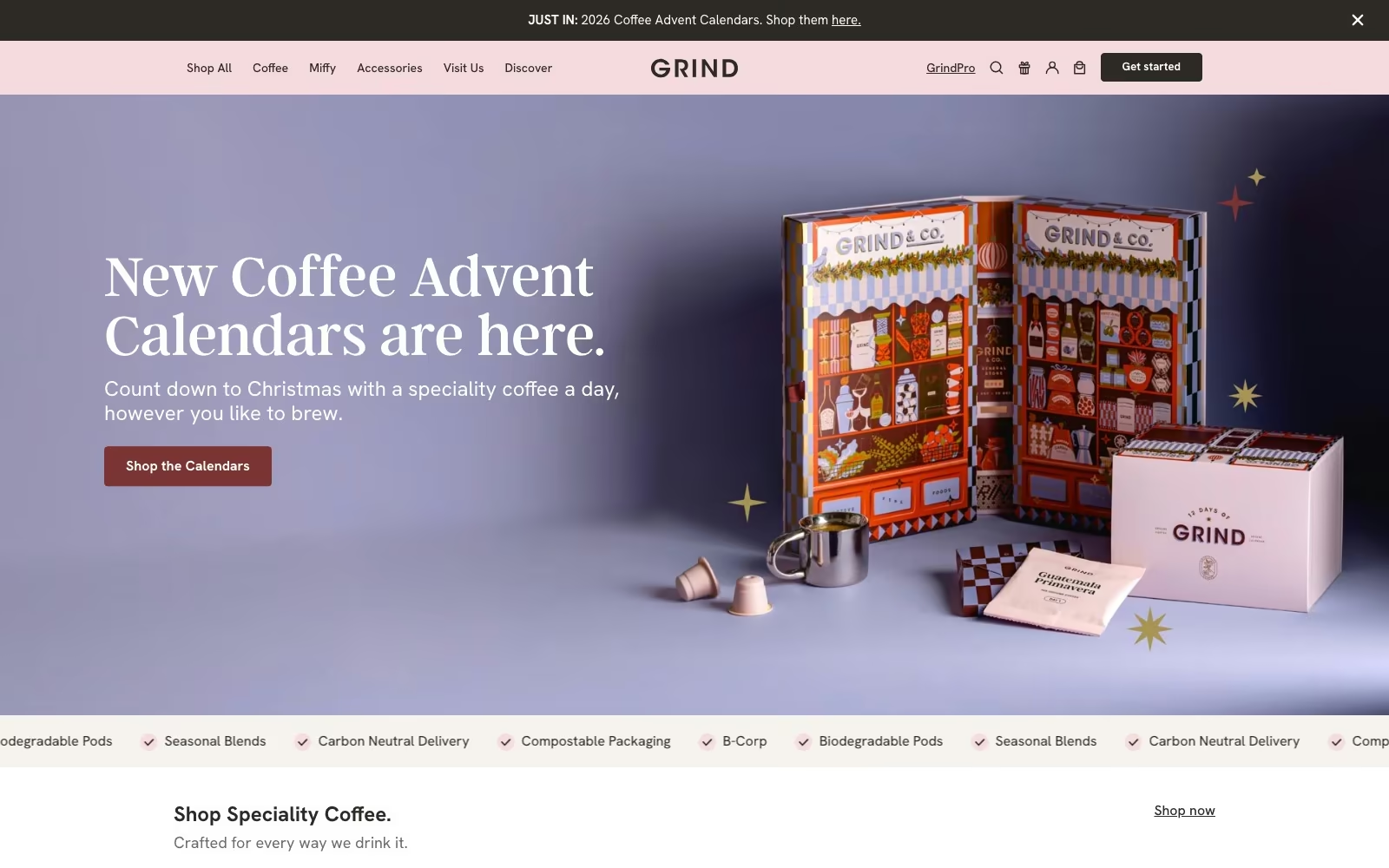
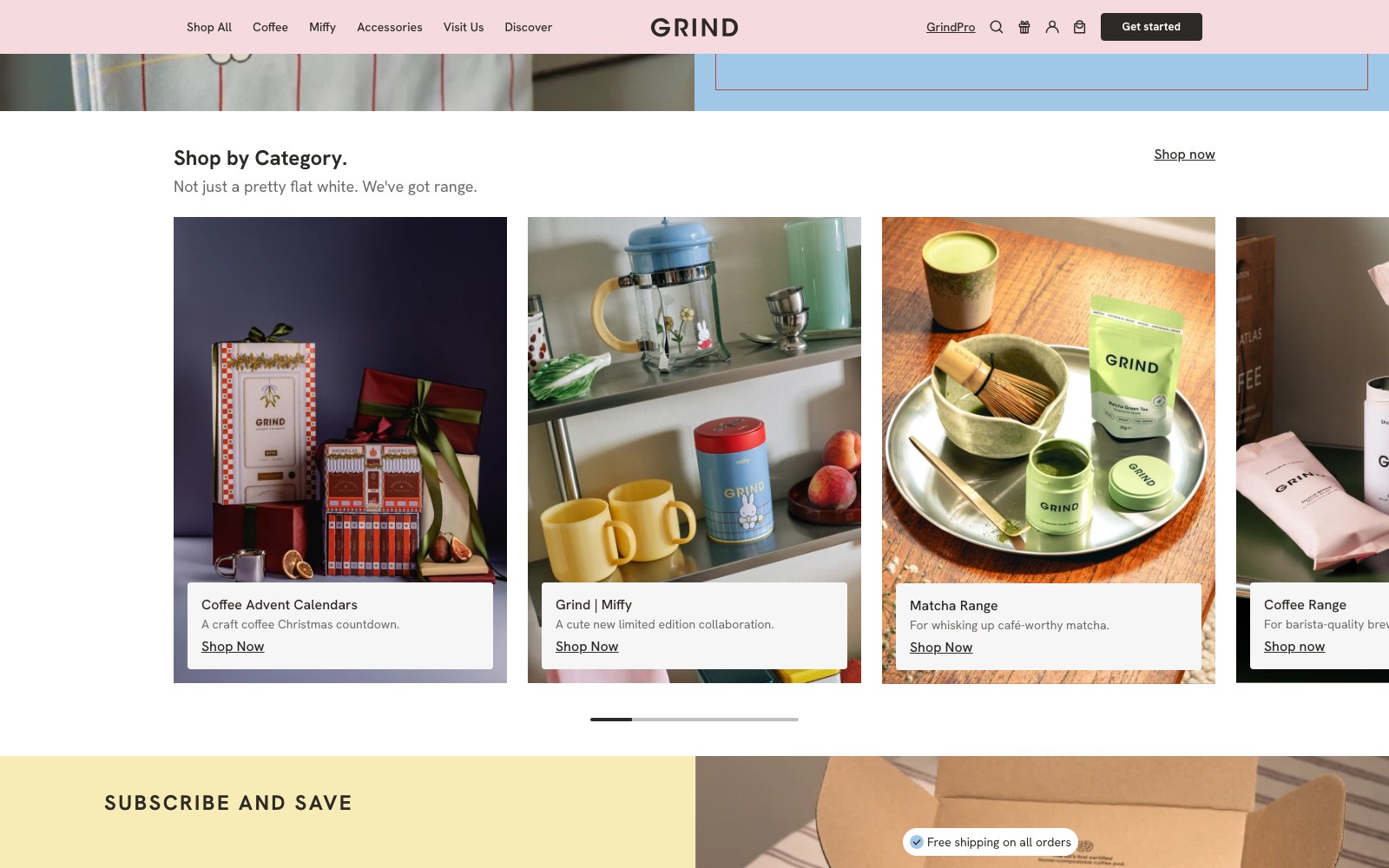
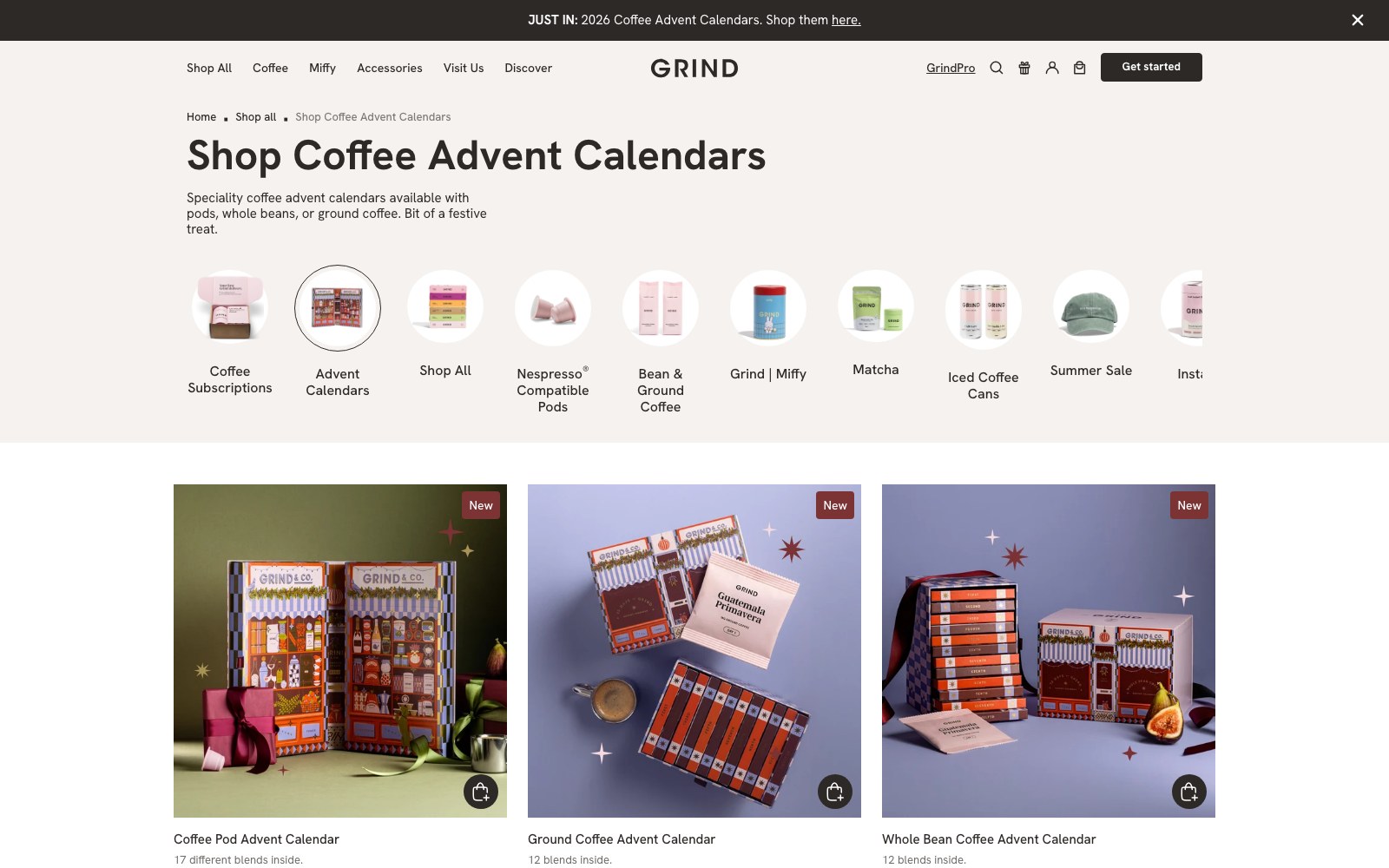
Grind started as one café in Shoreditch and became a coffee brand stocked in most major UK grocers. The site has to do two very different jobs at once: convert a recurring pod subscription, and send Londoners to the right café.
01 — The challenge
Two businesses, one storefront, and a subscription hiding behind both.
Most coffee sites sell bags. Grind sells a habit: home-compostable Nespresso®-compatible pods on a refill subscription, where the real decision a visitor makes is not "which blend" but "is this better than what I already buy".
At the same time the same domain carries a hospitality group — cafés, restaurants, cocktail bars, concessions and trucks across London — each with its own address, menu, opening hours and booking flow. Left unstructured, the retail store buries the venues and the venues distract from the subscription.
The brand is one thing to a subscriber and something completely different to someone looking for brunch in Shoreditch. Both had to feel native.
*
2
Businesses served by one Shopify storefront: DTC subscription and hospitality
*
14+
London venues with their own page, menu and booking flow
*
1
Subscription flow carried across the whole site
02 — Our approach
Make the comparison the hero, and give the cafés their own map.
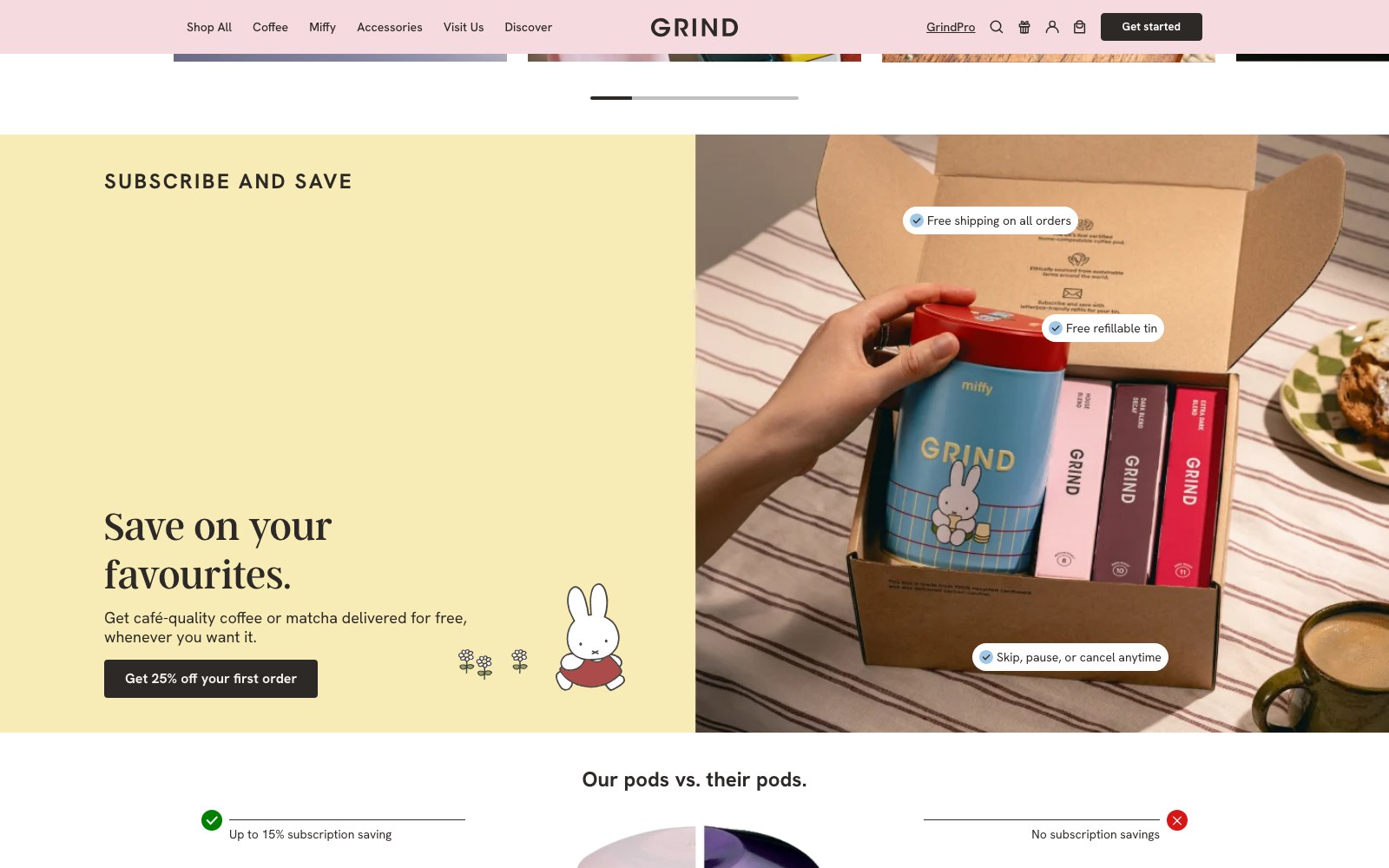
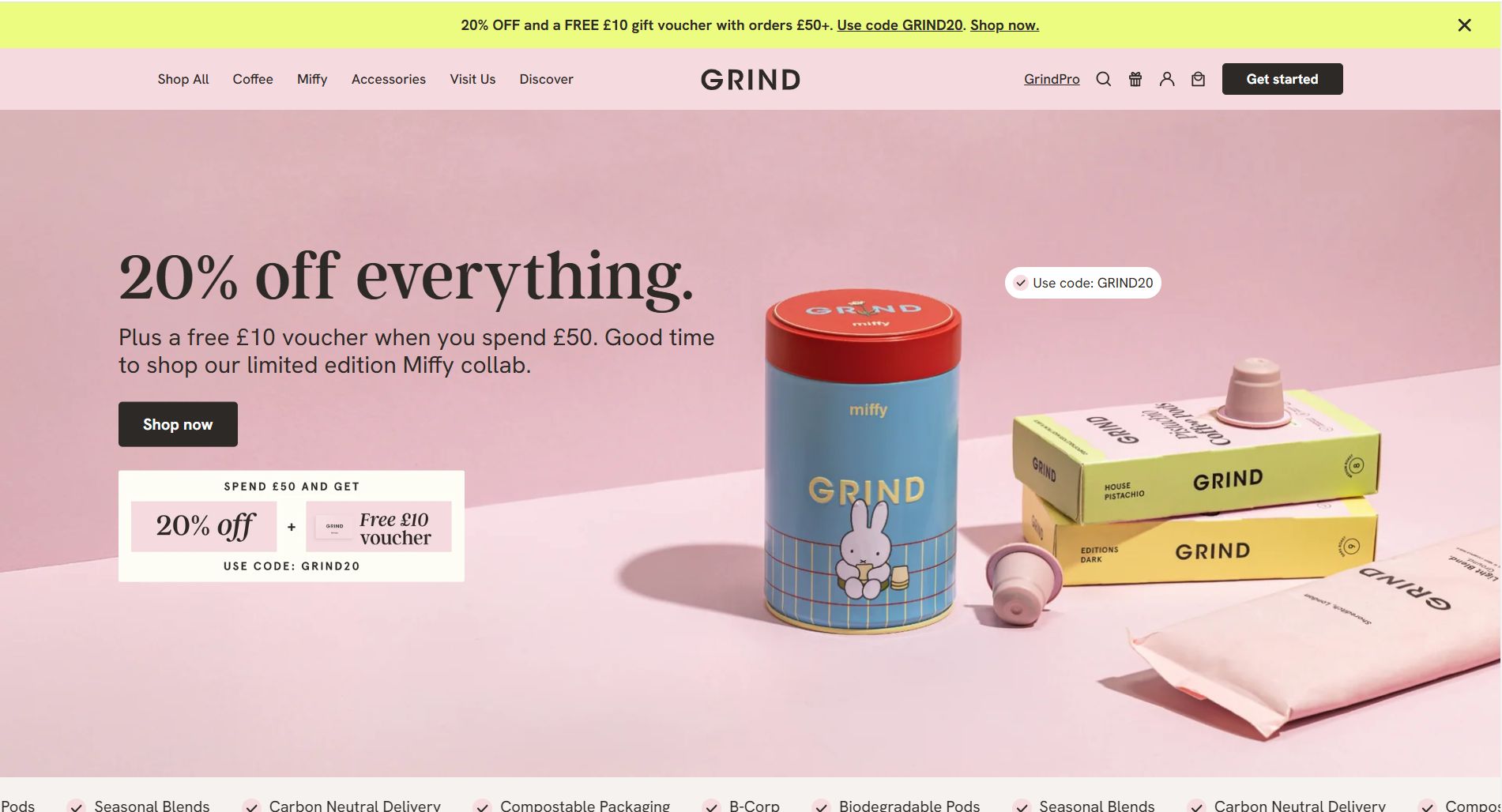
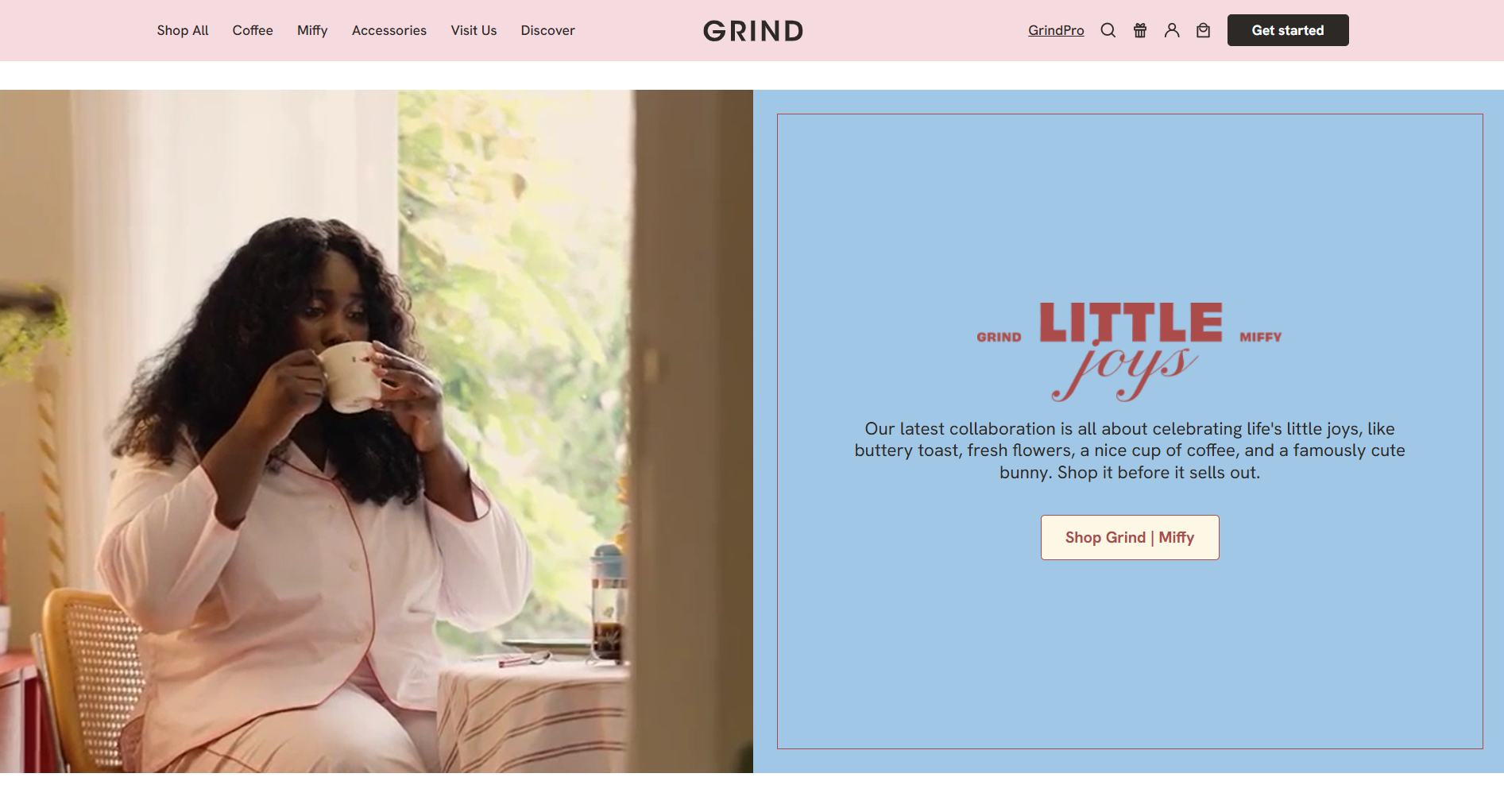
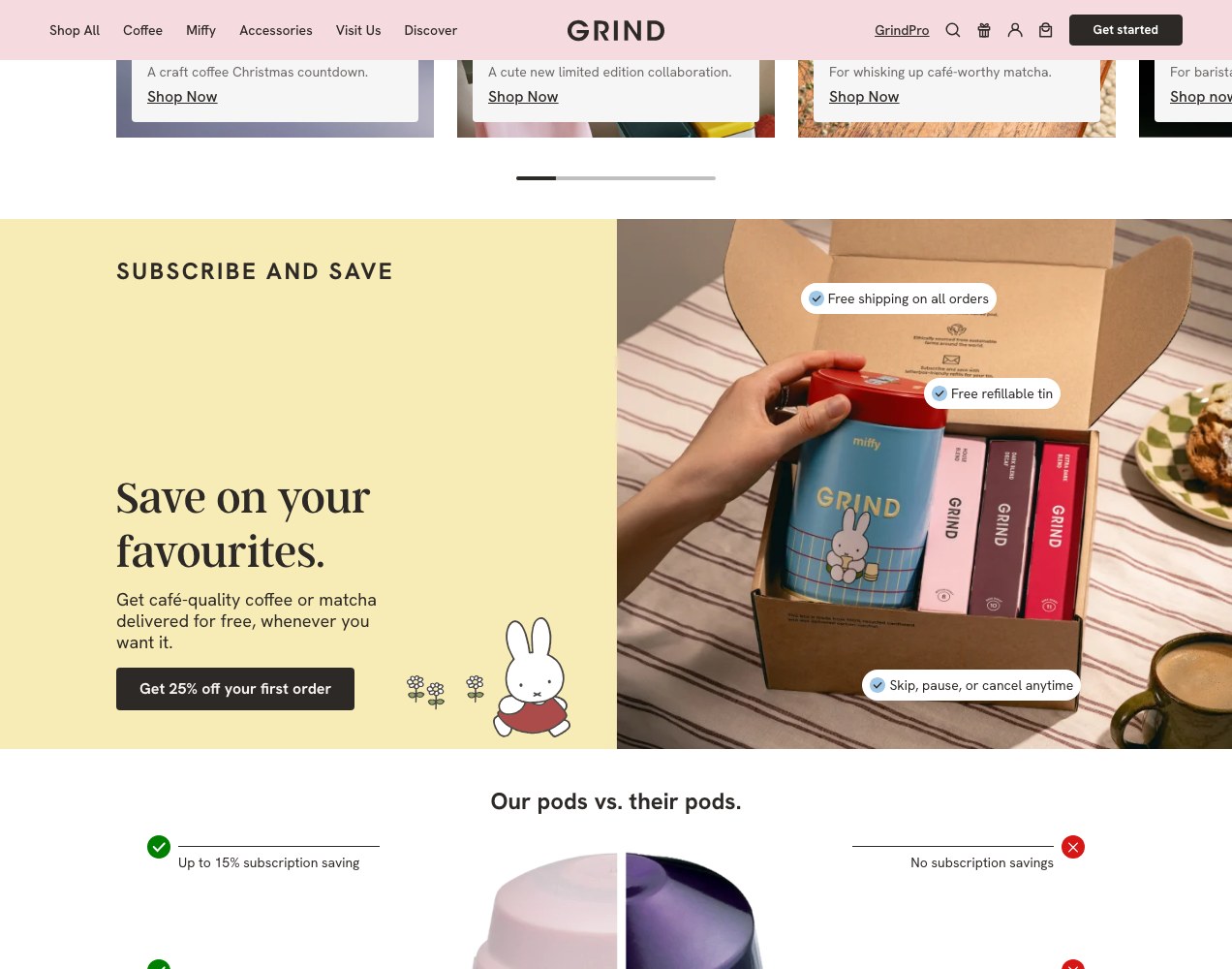
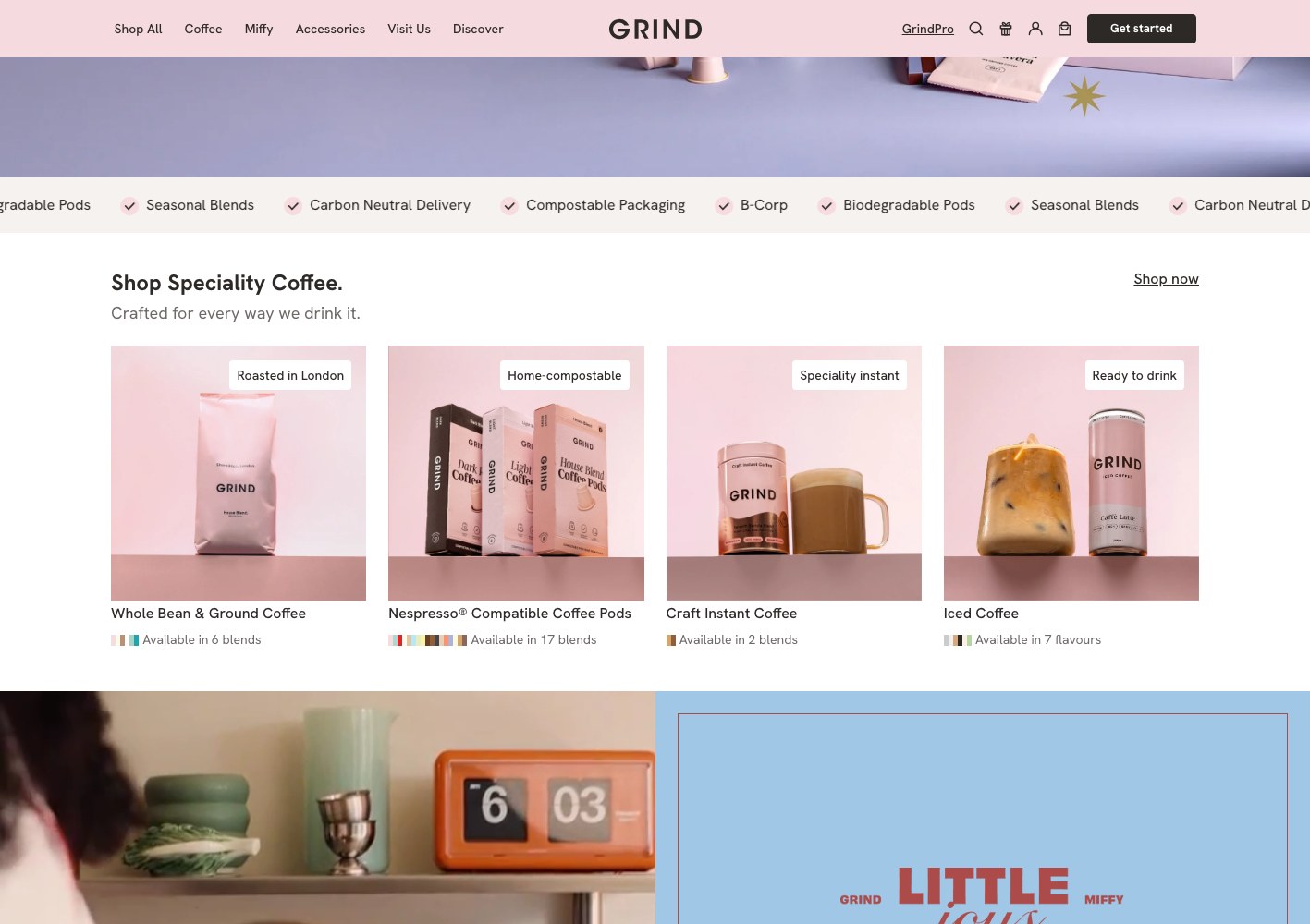
On the retail side we built the homepage around the argument that actually converts: a direct, honest comparison between Grind pods and the pods a visitor already buys — compostable versus aluminium, speciality-grade versus commodity, carbon-positive shipping, price per pod. Subscribe & Save sits immediately after it, with pause, skip and cancel stated up front so the recurring commitment stops feeling like a trap.
The sustainability story is not a badge in the footer. The Better Coffee Foundation counter — ocean-bound plastic recovered — runs on the homepage as live proof, then resolves into the About page where the founder story, the roastery and the press coverage carry the credibility.
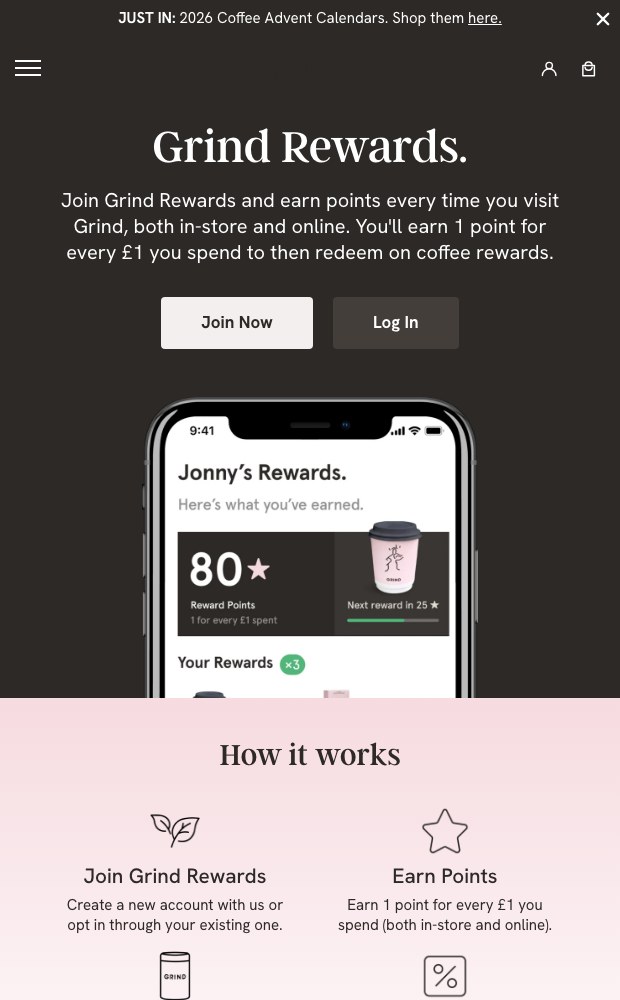
On the hospitality side we gave the group a proper locator: restaurants and cocktail bars, coffee shops, concessions and trucks, each on its own venue page with address, hours, menus and reservations. The Grind app and rewards programme is threaded through both sides, so an in-café customer and an online subscriber end up in the same loyalty loop.
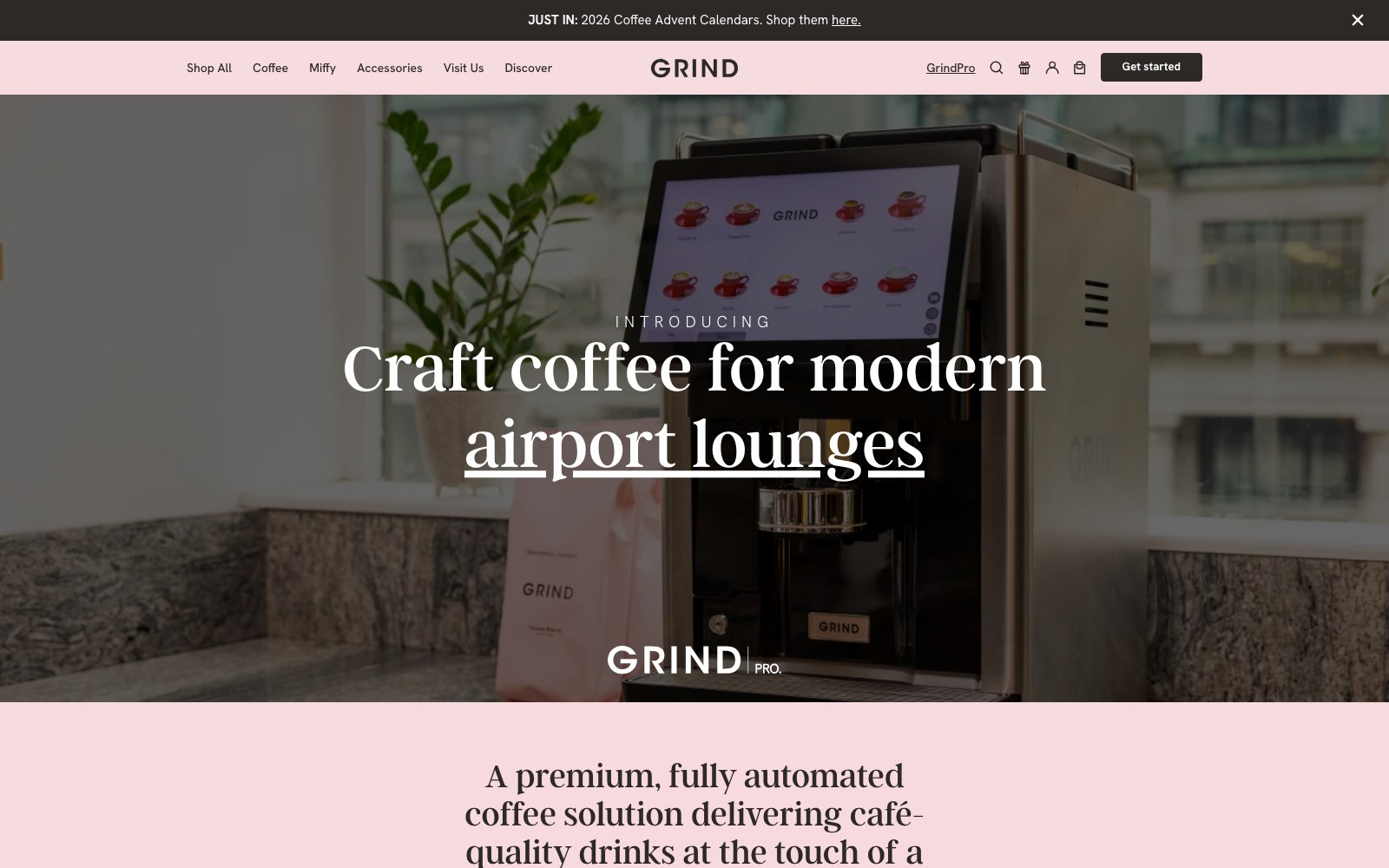
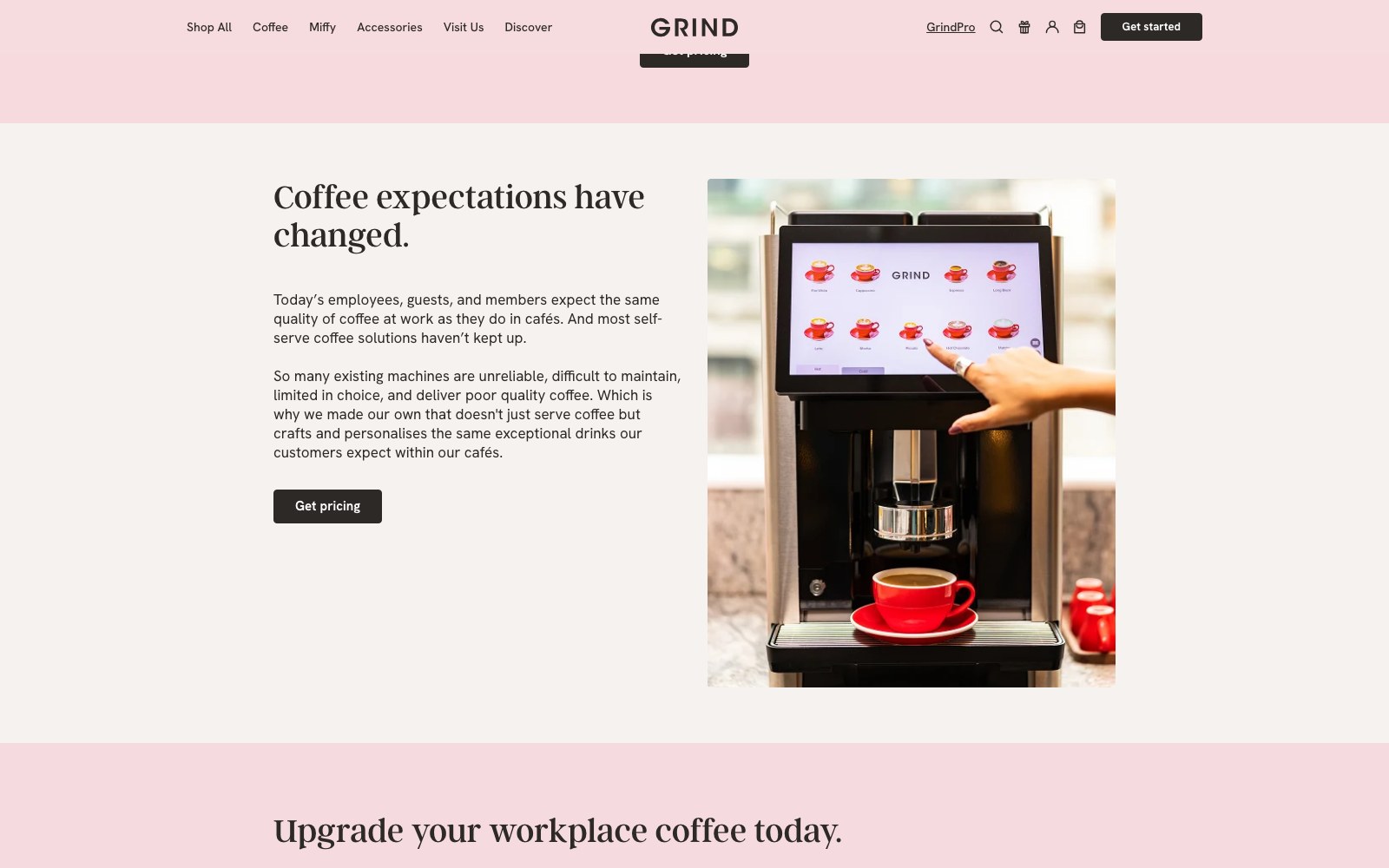
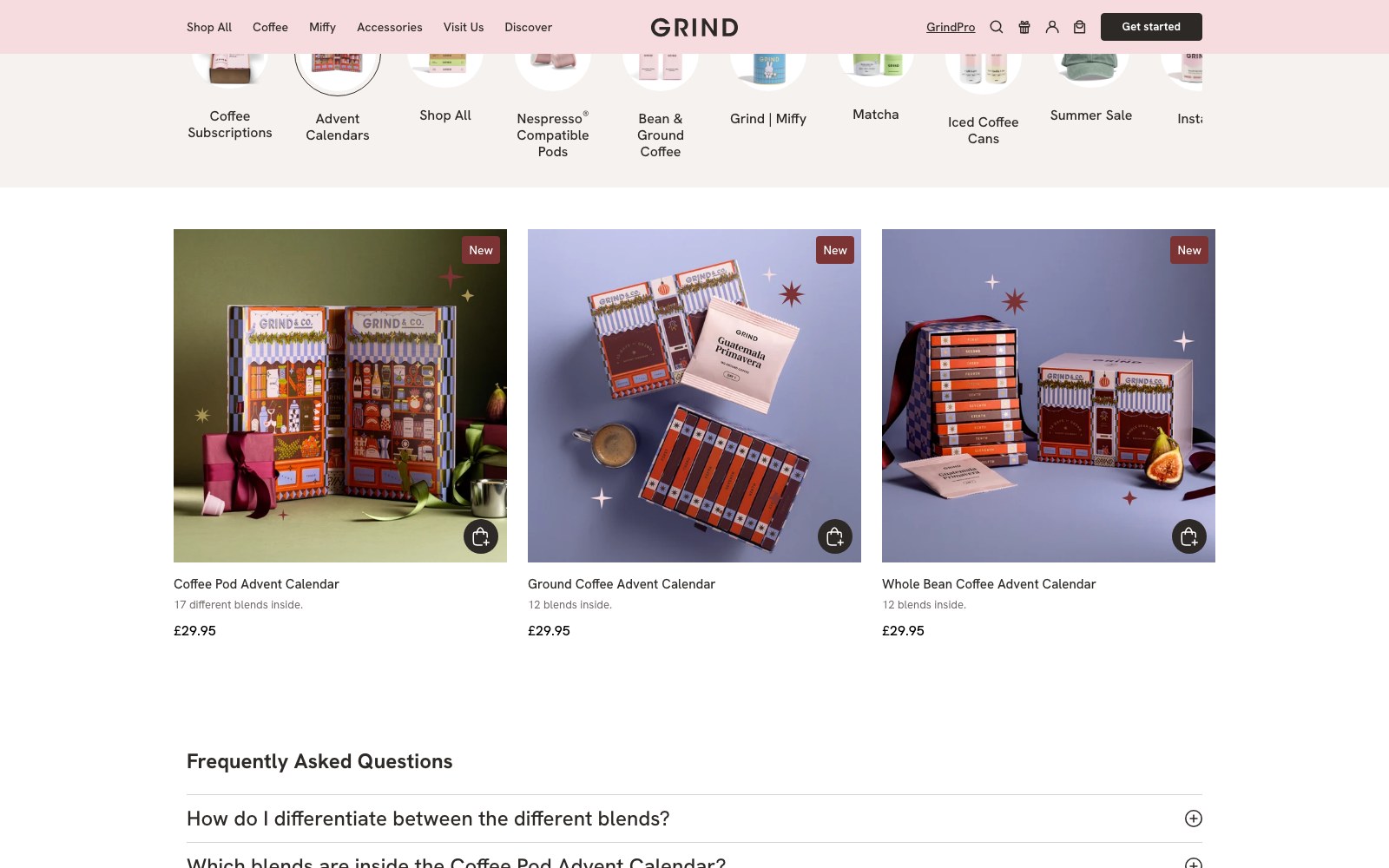
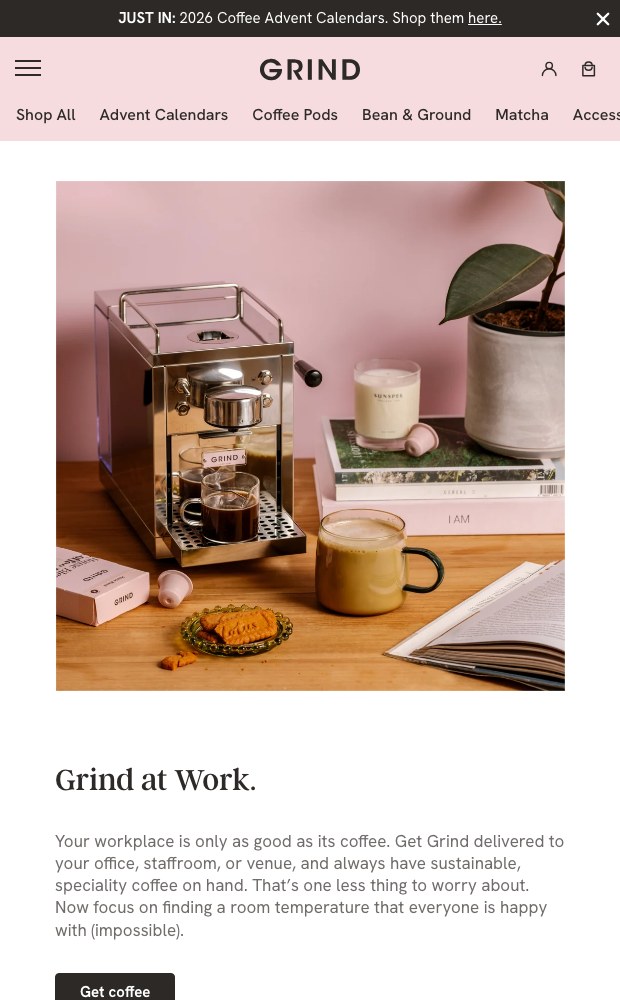
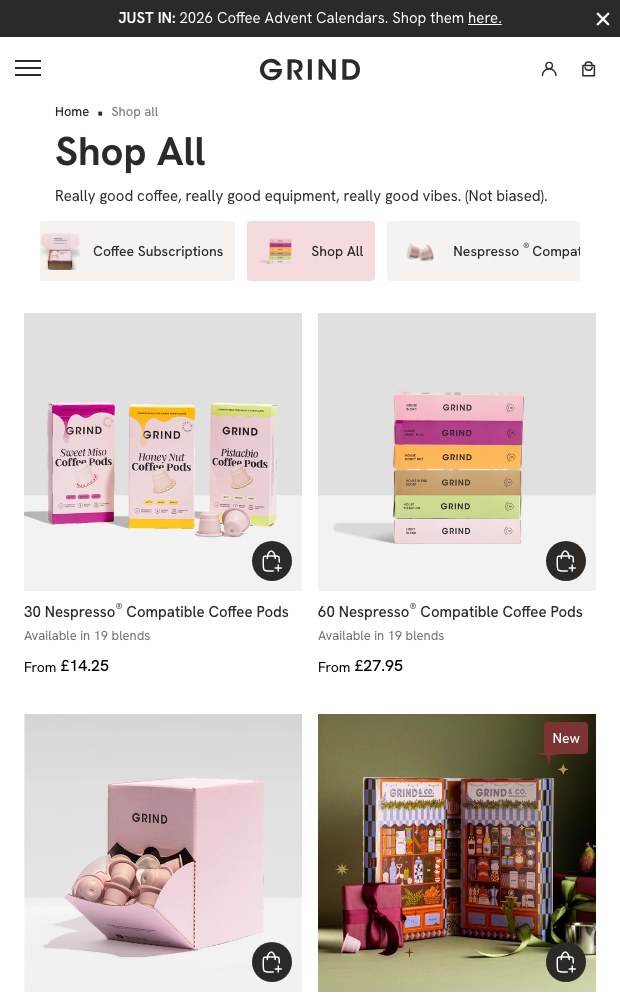
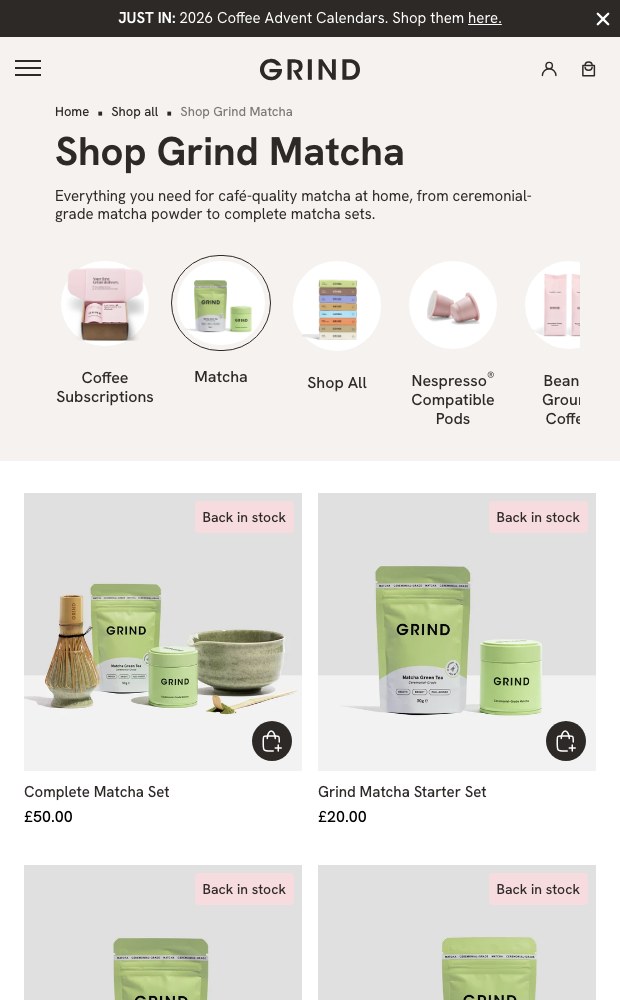
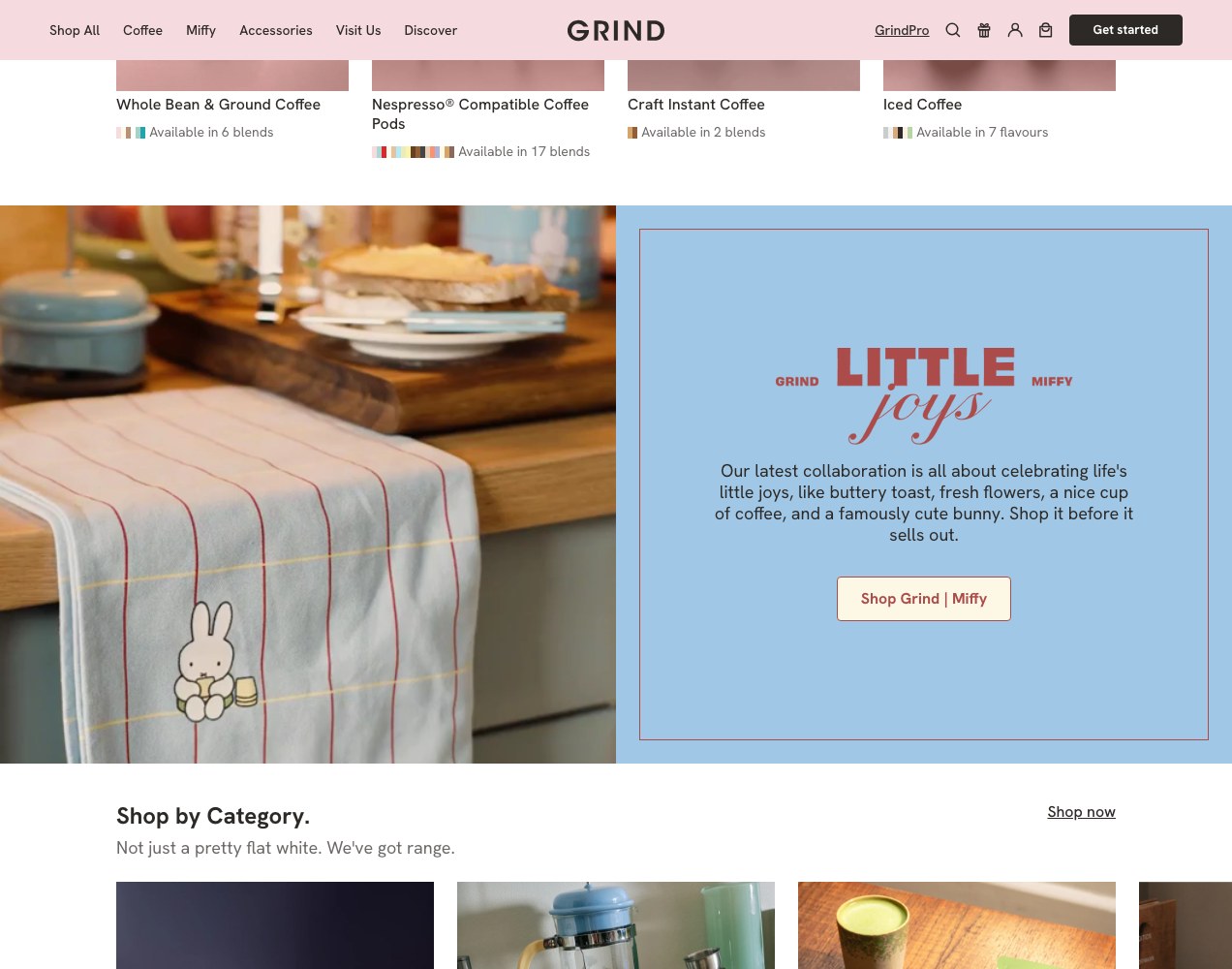
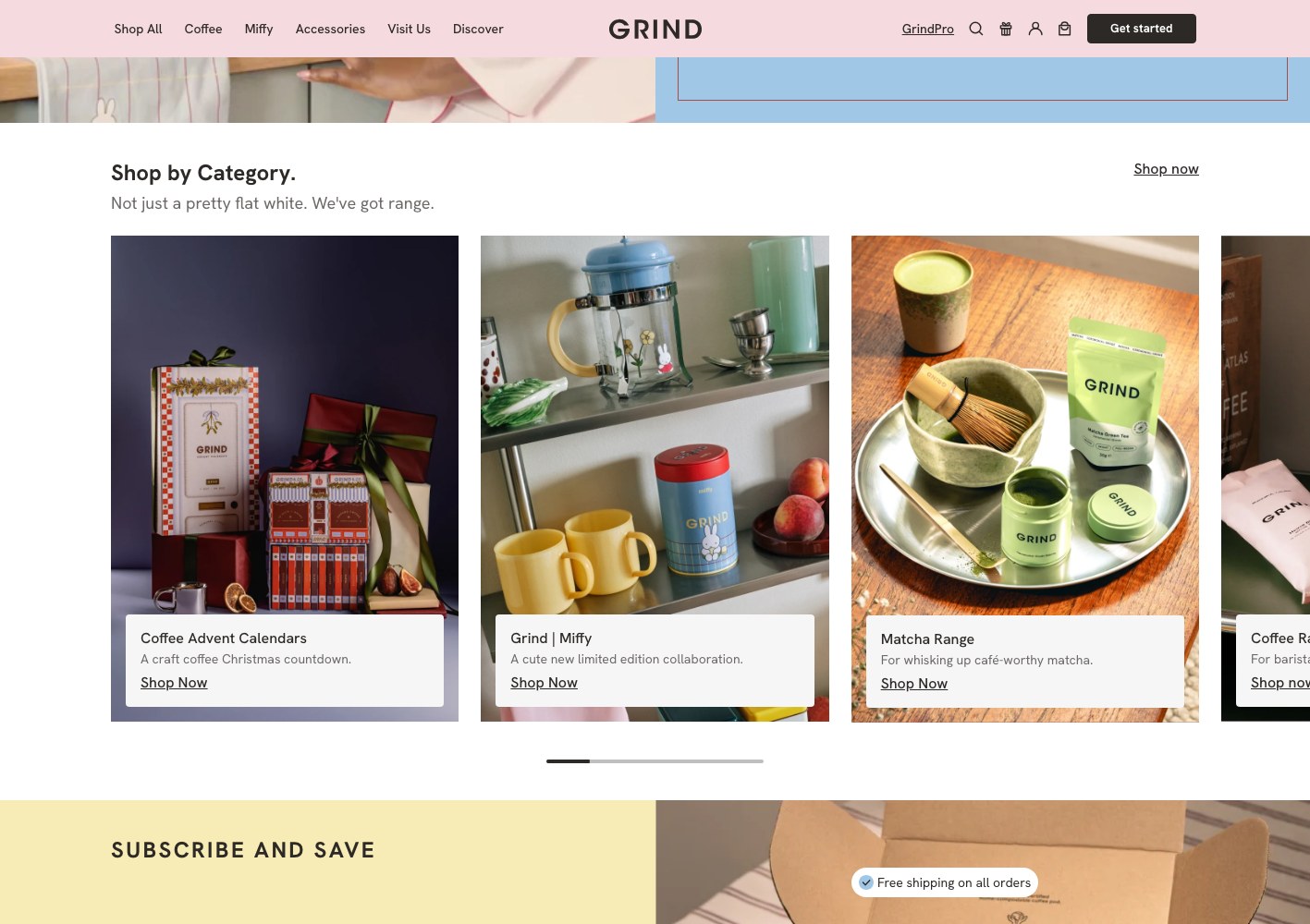
Everything runs on Shopify in the Grind design language — pink, cream, editorial serif headlines, real photography of the cafés and the product rather than stock.
More on this work: Web Design · Web Development.
Two businesses, one domain
A subscription store and a café
map, under one roof.
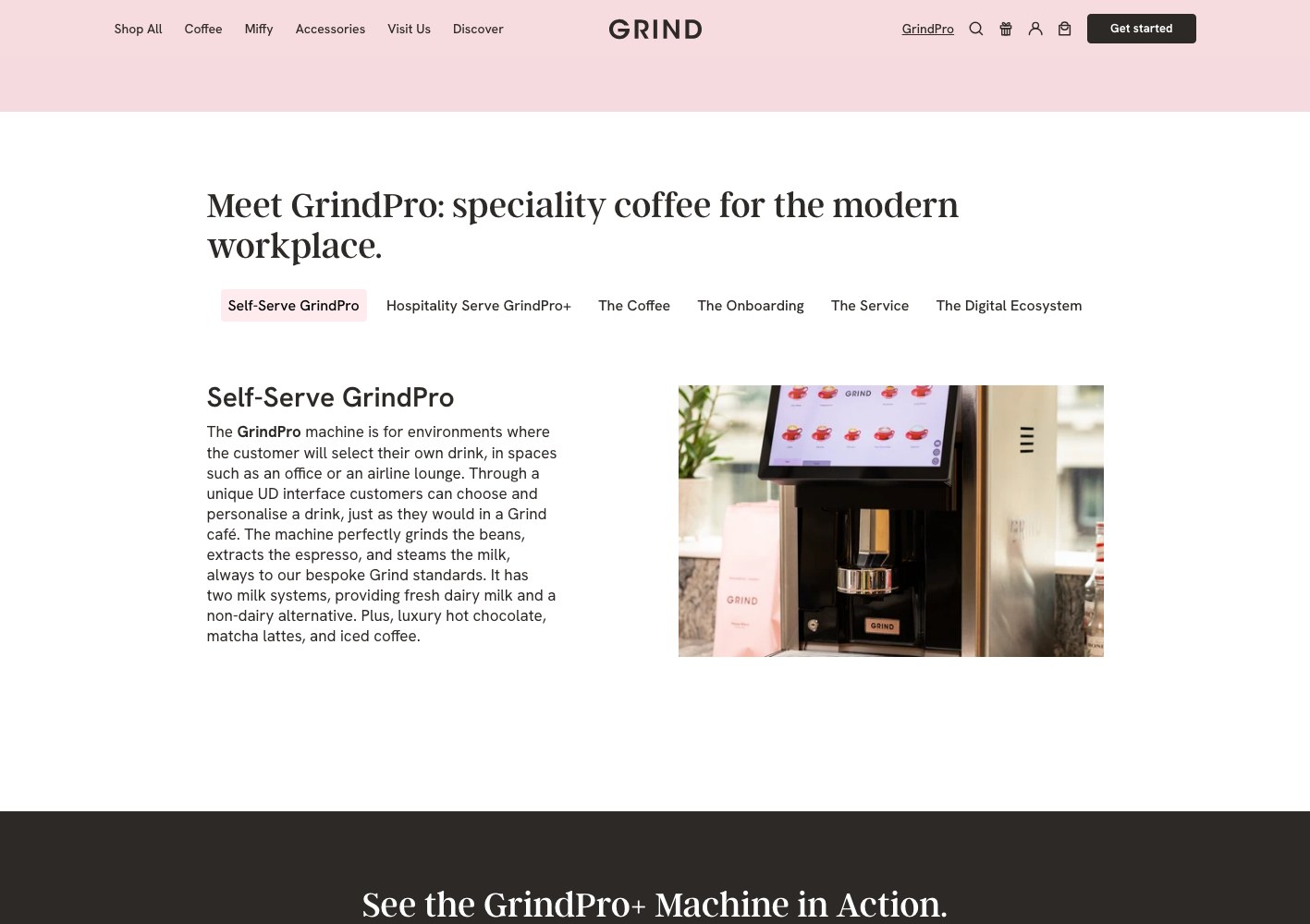
We built the homepage around the comparison that converts: Grind pods versus the aluminium capsules a visitor already buys. The sustainability counter runs live on the homepage showing ocean-bound plastic recovered. The hospitality side got a proper locator — coffee shops, restaurants, cocktail bars, concessions and trucks — each with its own venue page, address, hours and booking flow.


03 — The results
One Shopify site now sells the refill and fills the room.
The retail store and the hospitality group now share one storefront without burying each other. Subscribe & Save sits behind an honest comparison that states pause, skip and cancel up front. The Better Coffee Foundation story runs as live proof instead of a footer badge.
Fourteen London venues each have their own page with menus and reservations. The Grind app and rewards programme thread through both sides, so an in-café customer and an online subscriber land in the same loyalty loop.
CASE STUDIES
Case studies
Website Portfolio
Video Ads
Static Ads



















































.webp)
.webp)