BrainLinks
A hard idea, explained simply
BrainLinks delivers the Arrowsmith Program — neuroscience-based cognitive exercises that strengthen the learning functions behind dyslexia, dyscalculia, attention deficits and executive-function difficulties — online to children and adults across the UAE and the wider Middle East.

01 — The challenge
Parents arrive looking for tutoring. The programme is not tutoring.
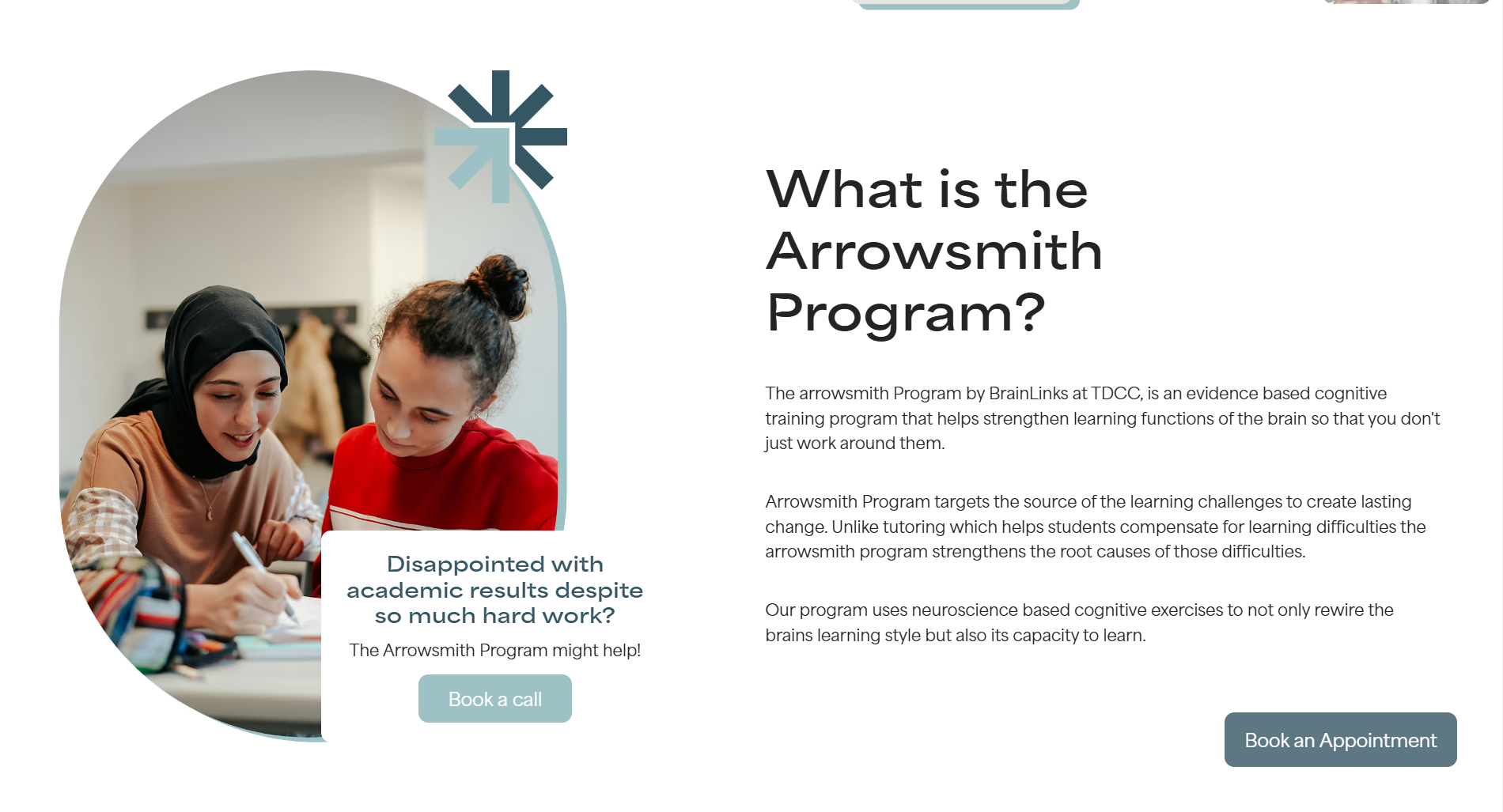
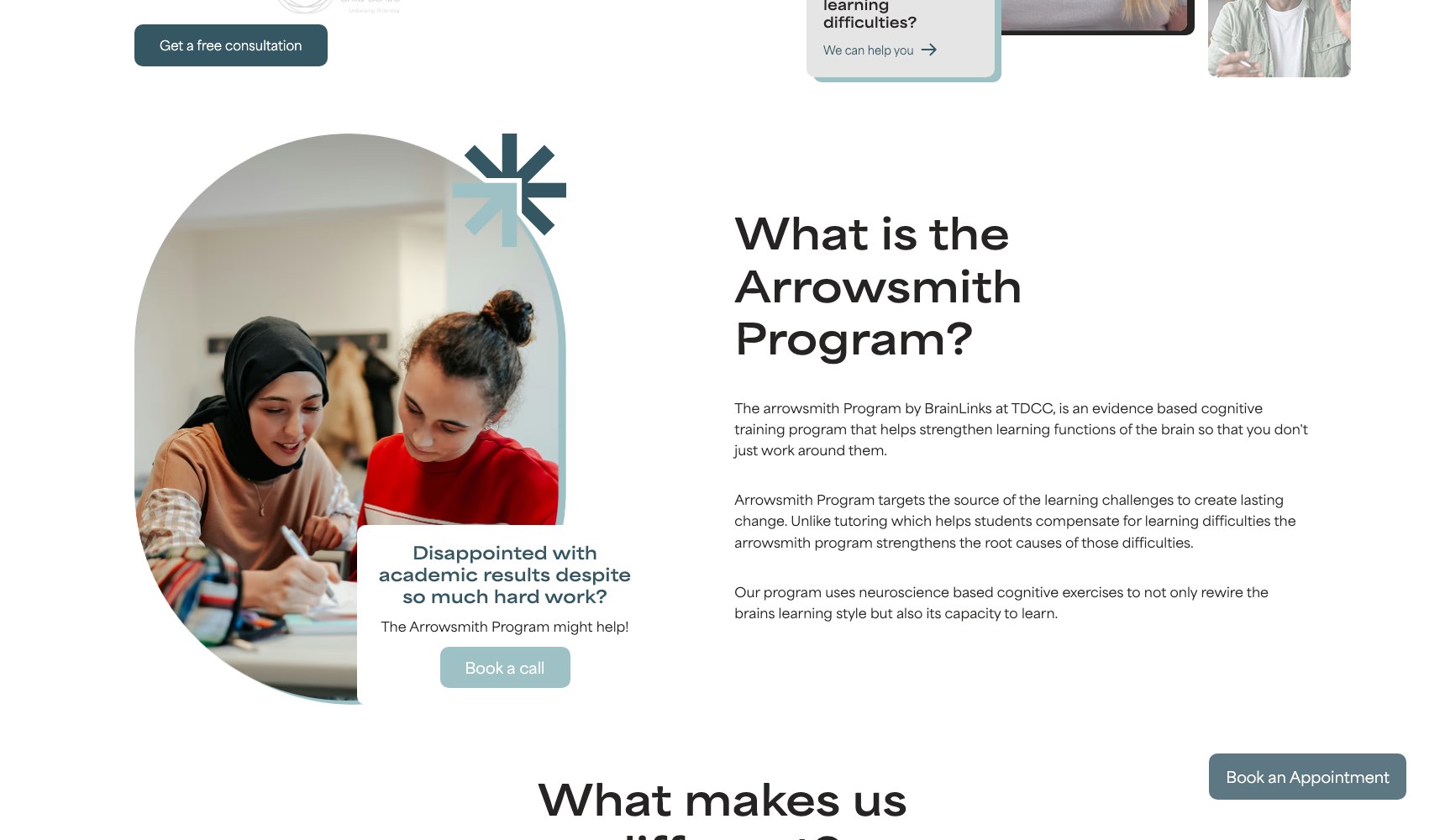
The Arrowsmith Program is not a tutor, not a study-skills course and not a diagnosis. It is cognitive training that targets the source of a learning difficulty rather than compensating for it. That distinction is the whole sales argument — and it is the one thing a parent searching at 11pm has no reason to already know.
So the site had a harder job than most: explain a clinical, science-heavy method to a worried, non-specialist reader, prove that real people with real credentials deliver it, and do all of that before asking for a consultation booking.
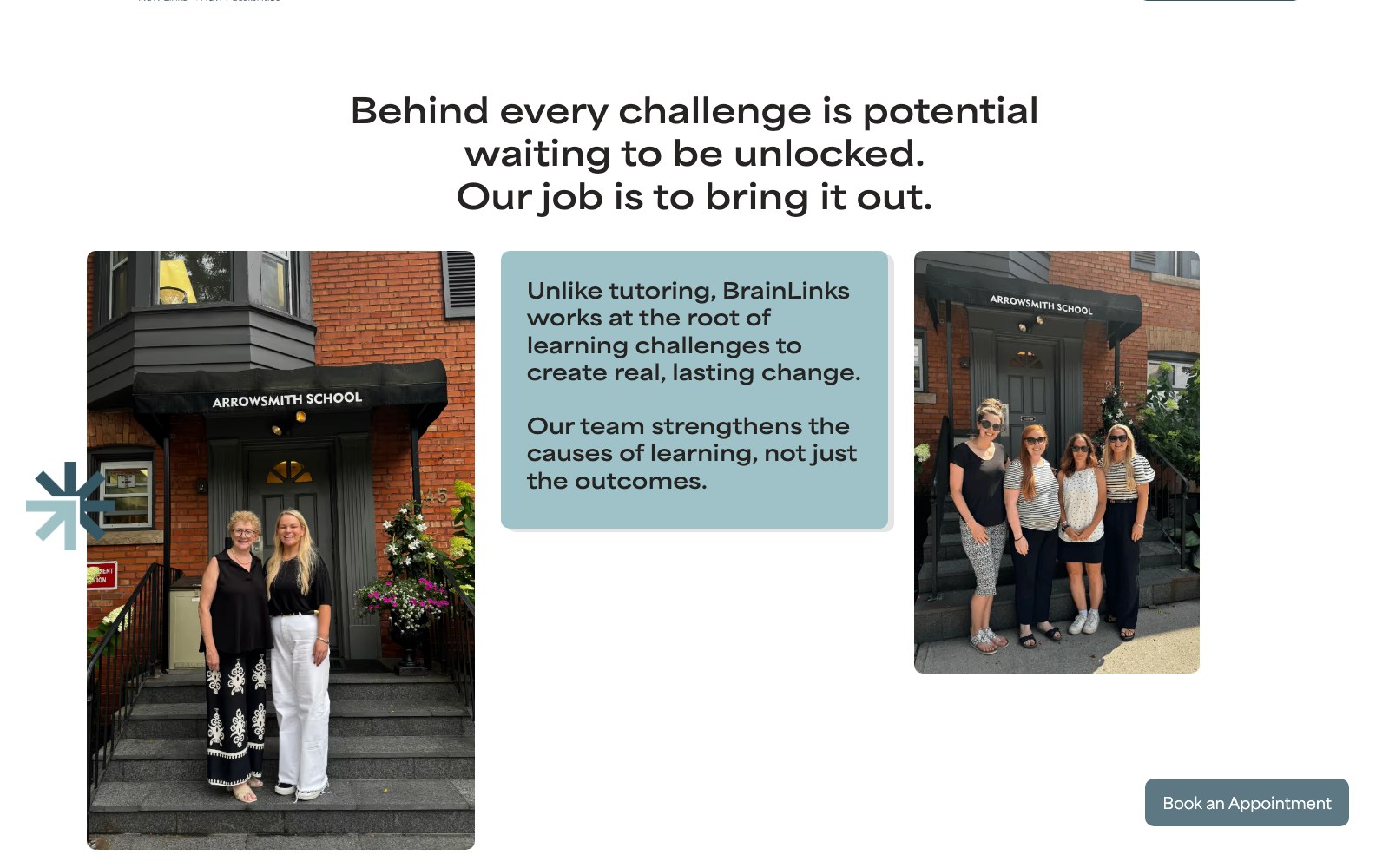
Unlike tutoring, BrainLinks works at the root of learning challenges — the site has to earn that sentence, not just print it.
*
5
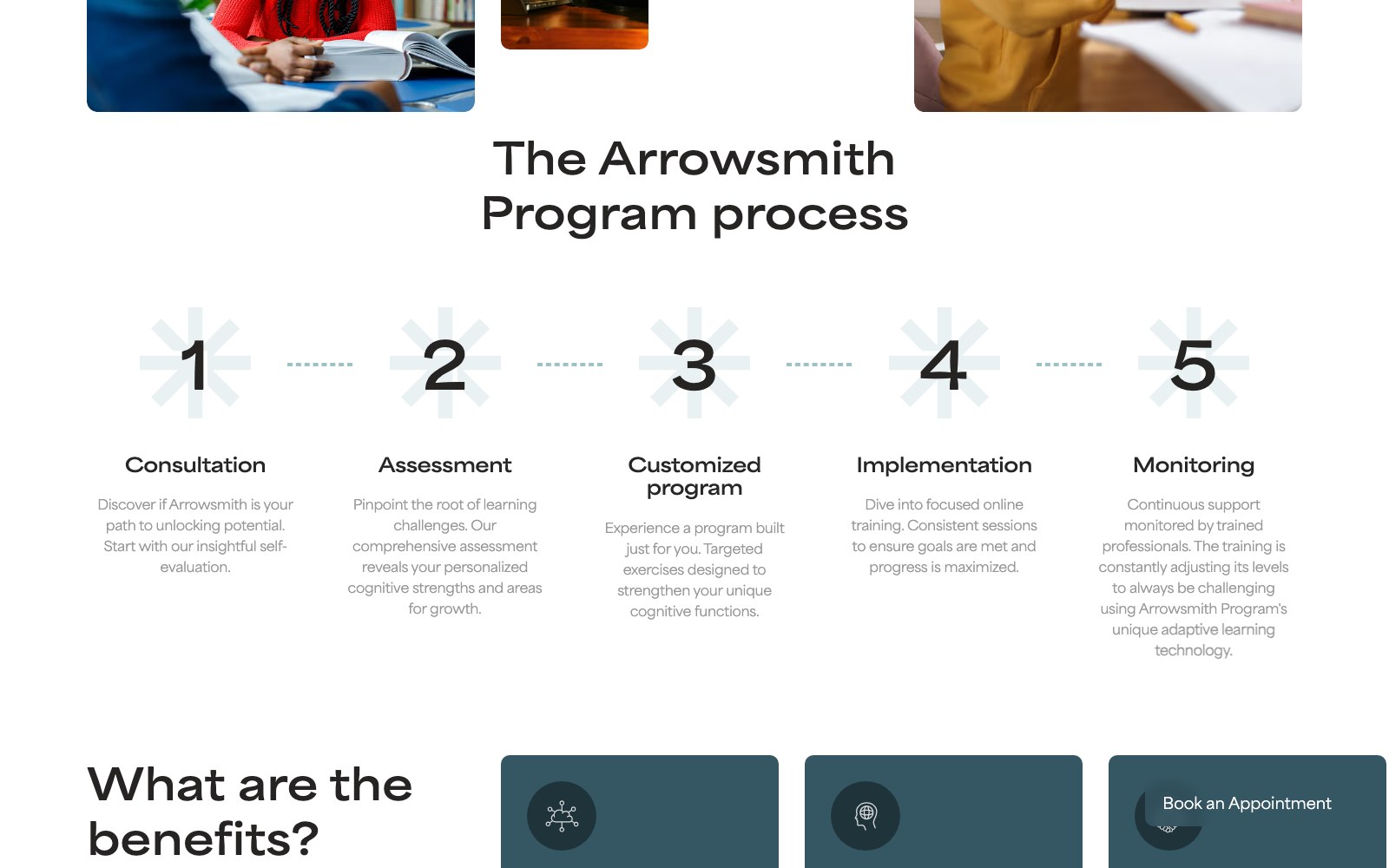
Programme steps explained on the page — consultation, assessment, customized program, implementation, monitoring
*
7
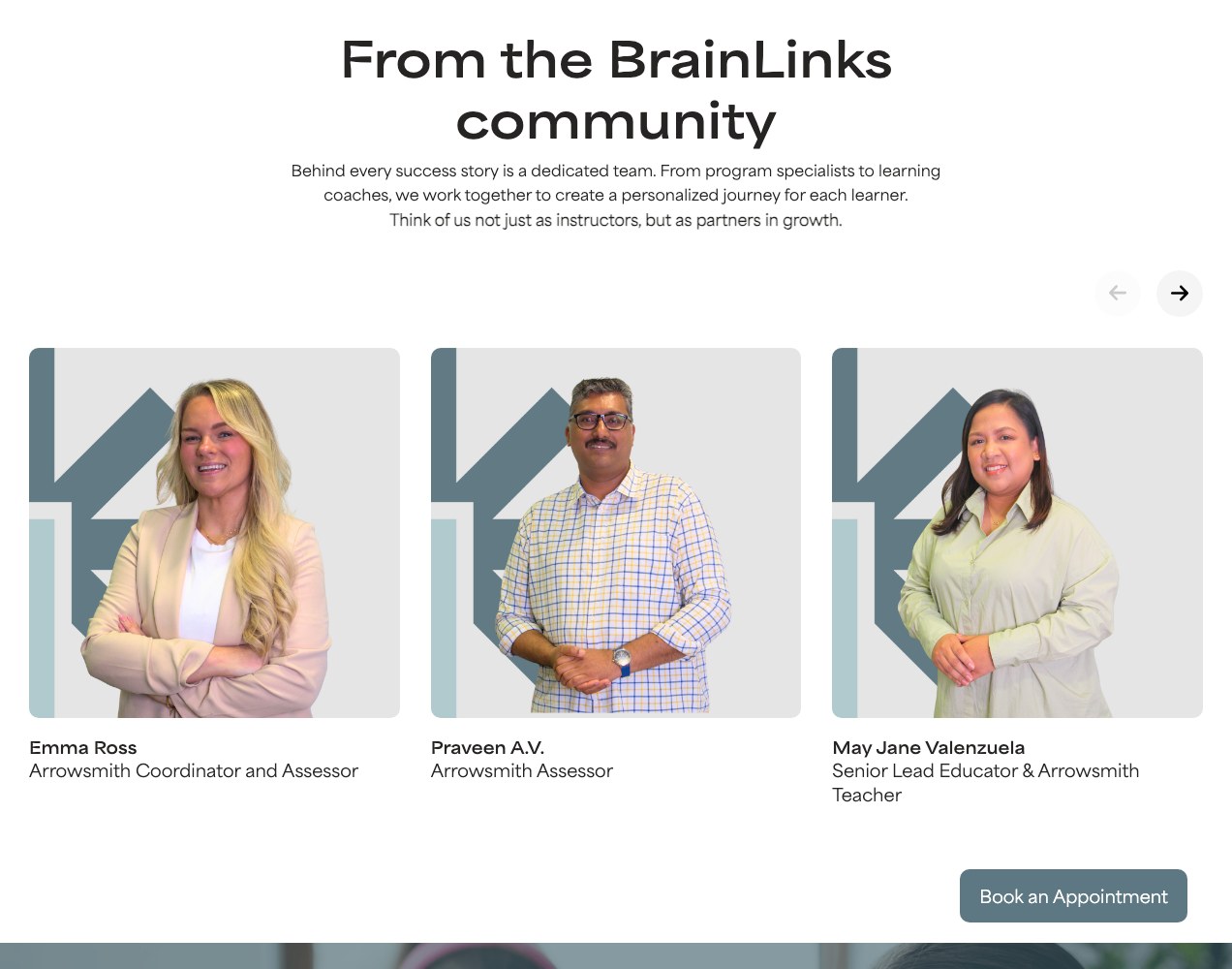
Instructor profiles published on their own template
*
4.7
Google rating shown as social proof, from 1,456 client-reported reviews

02 — Our approach
Teach first, then ask for the booking.
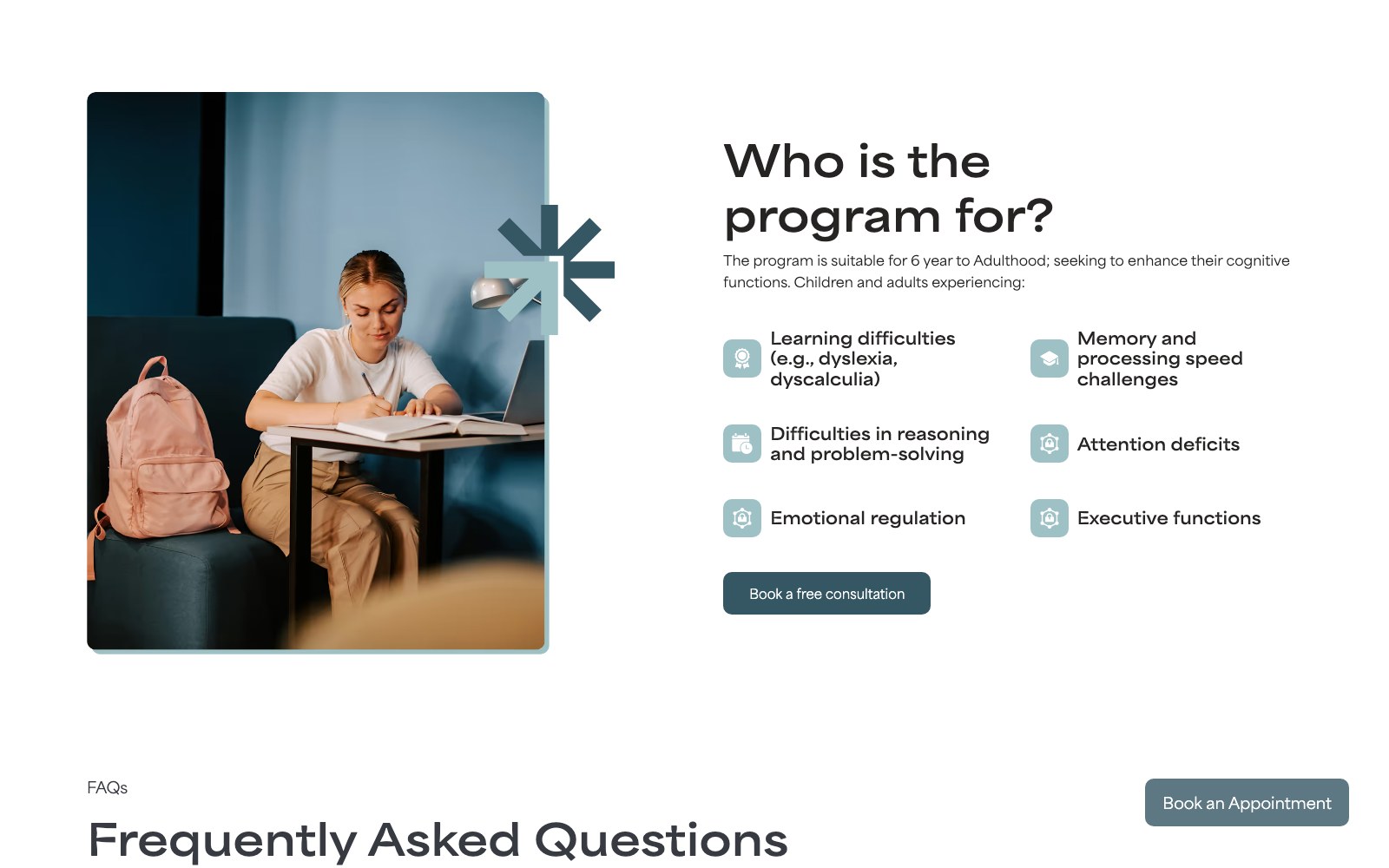
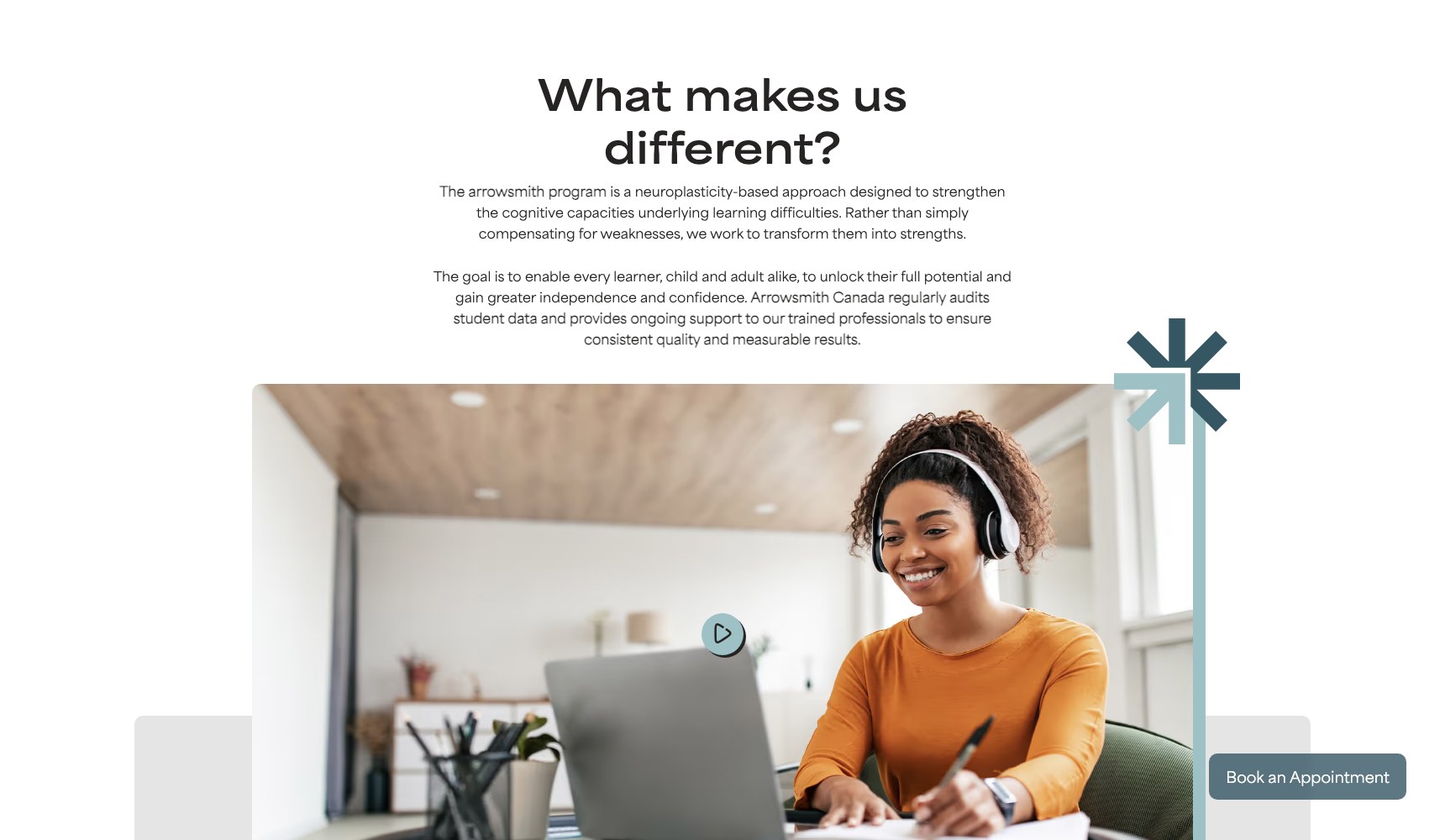
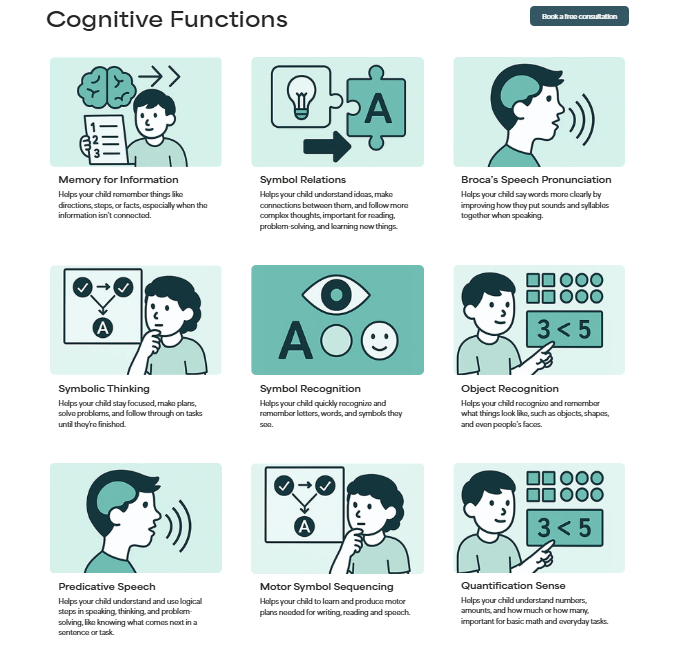
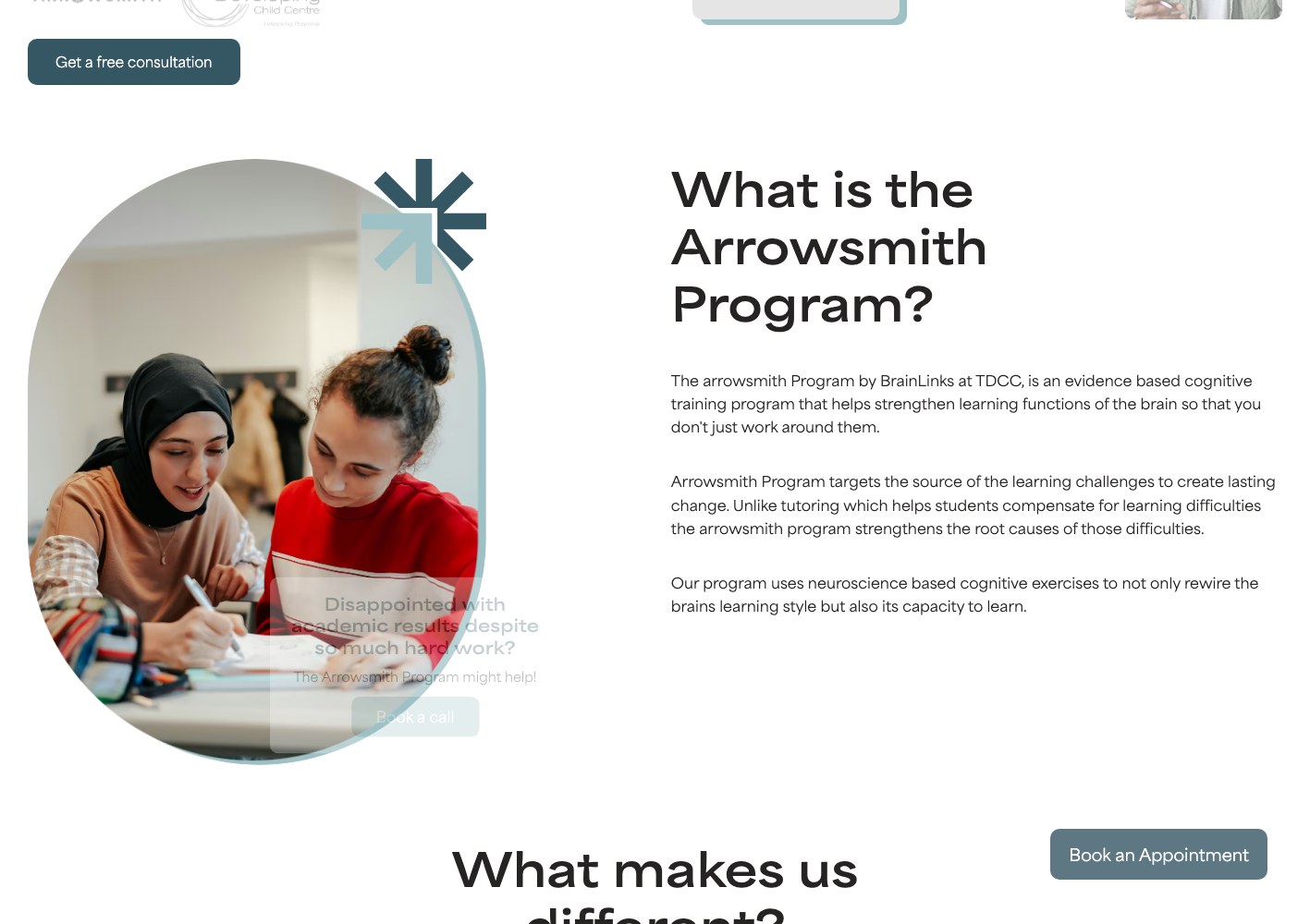
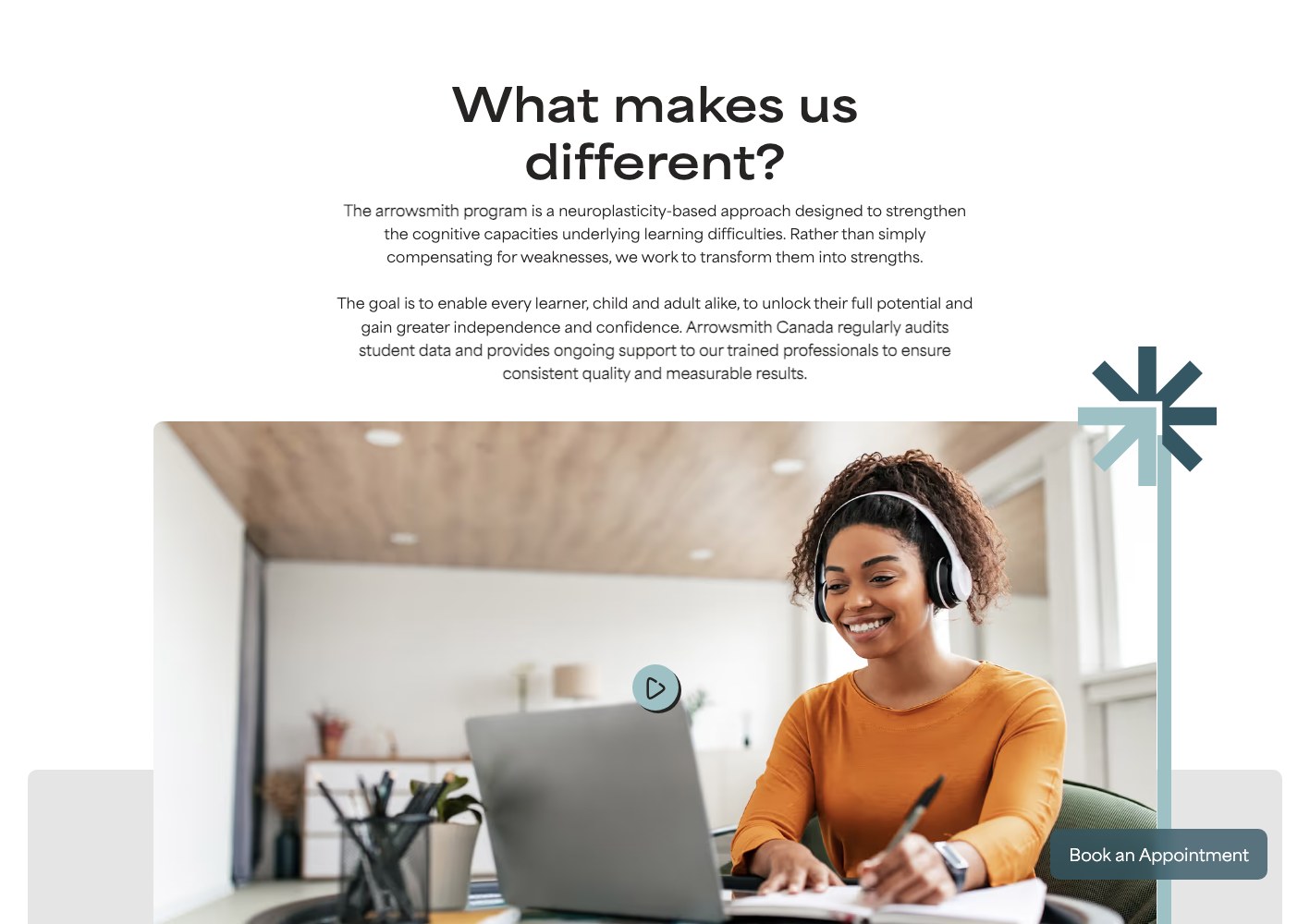
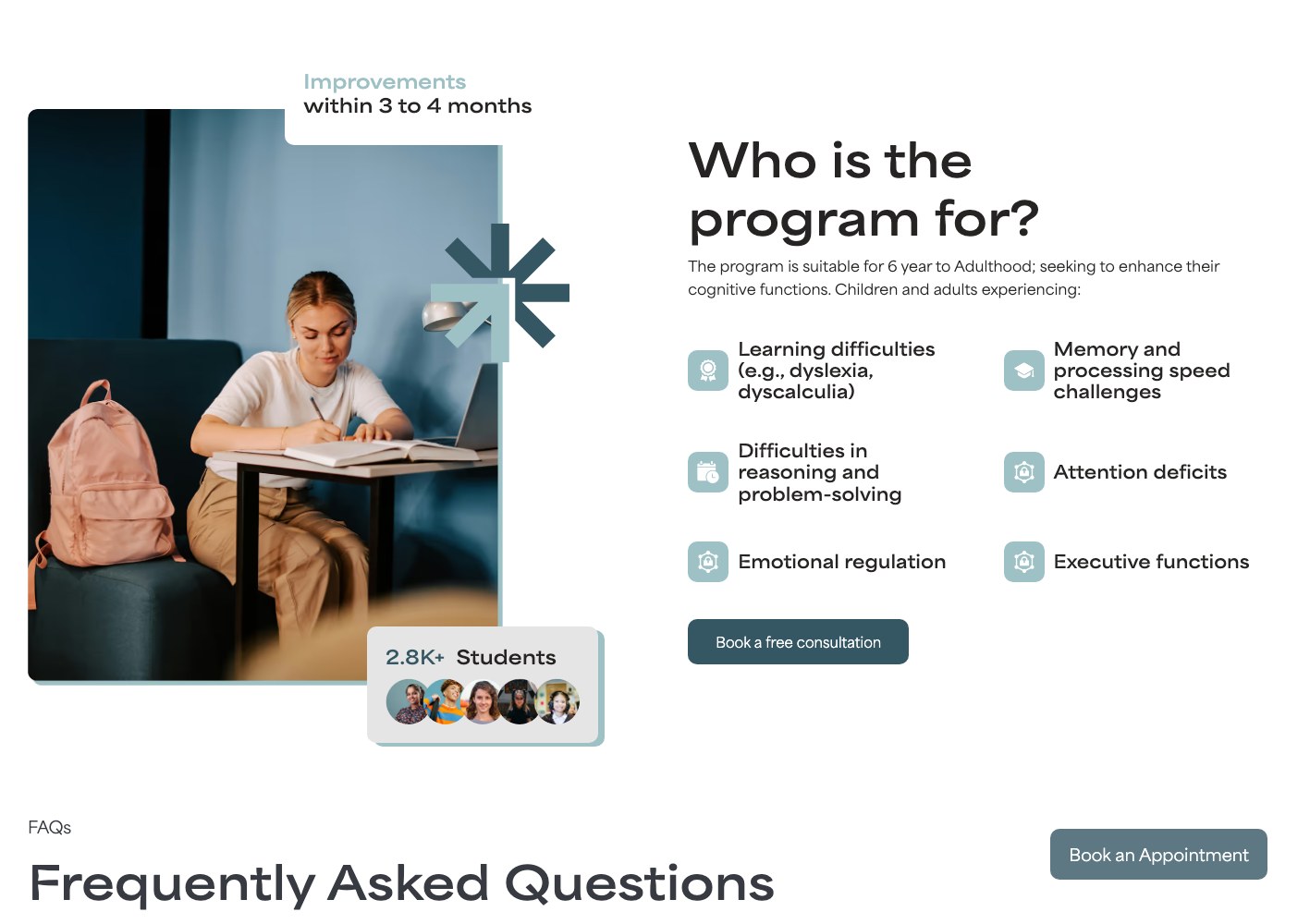
We built the homepage as a teaching sequence in Webflow: what neuroplasticity actually changes, what the Arrowsmith Program is and how it differs from tutoring, the five-step journey from consultation to monitoring, the benefits a parent can recognise in a report card, and finally who the programme is for — dyslexia, dyscalculia, processing speed, attention, emotional regulation, executive function. A parent can answer "is this us?" without ever calling.
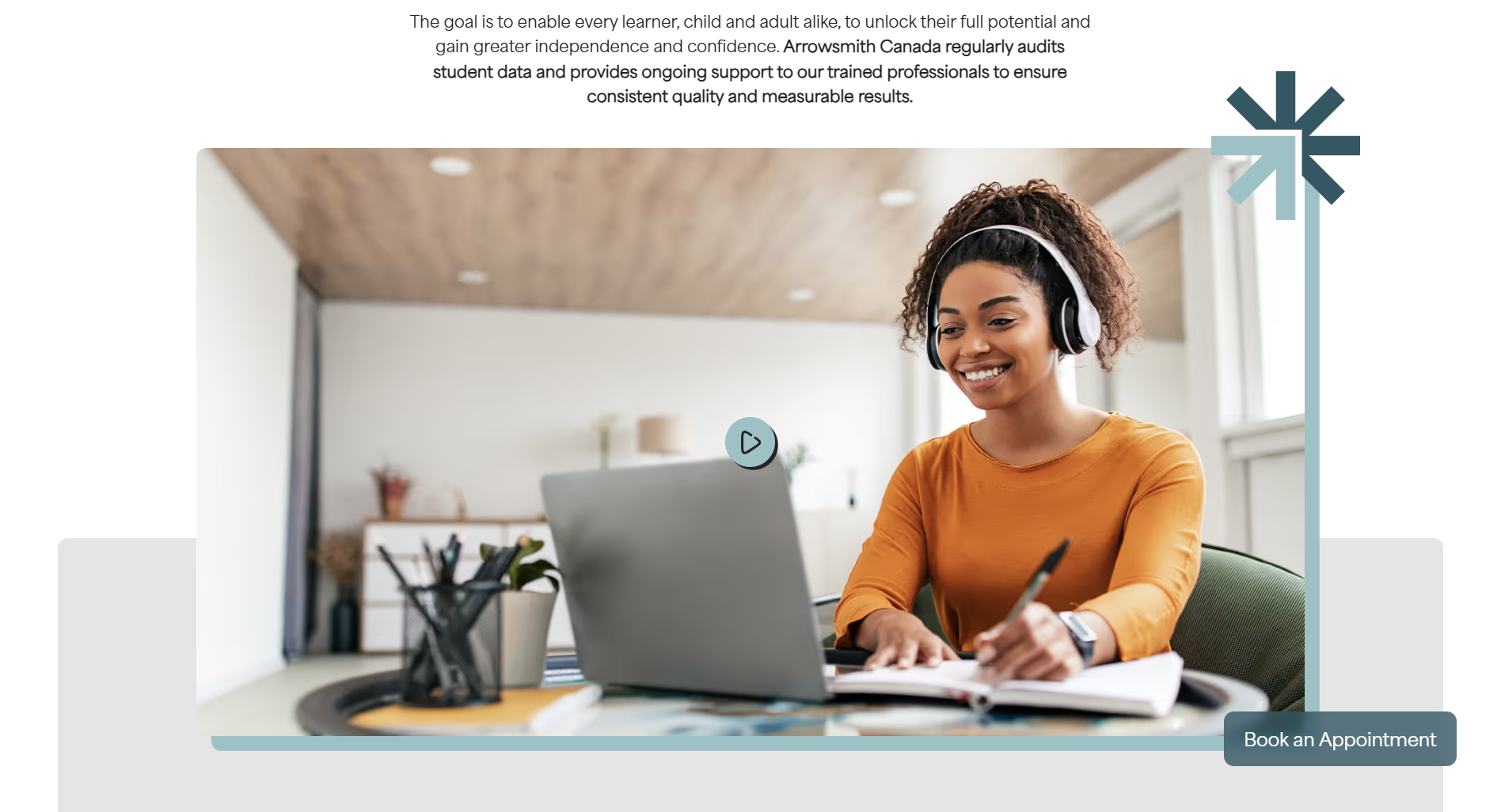
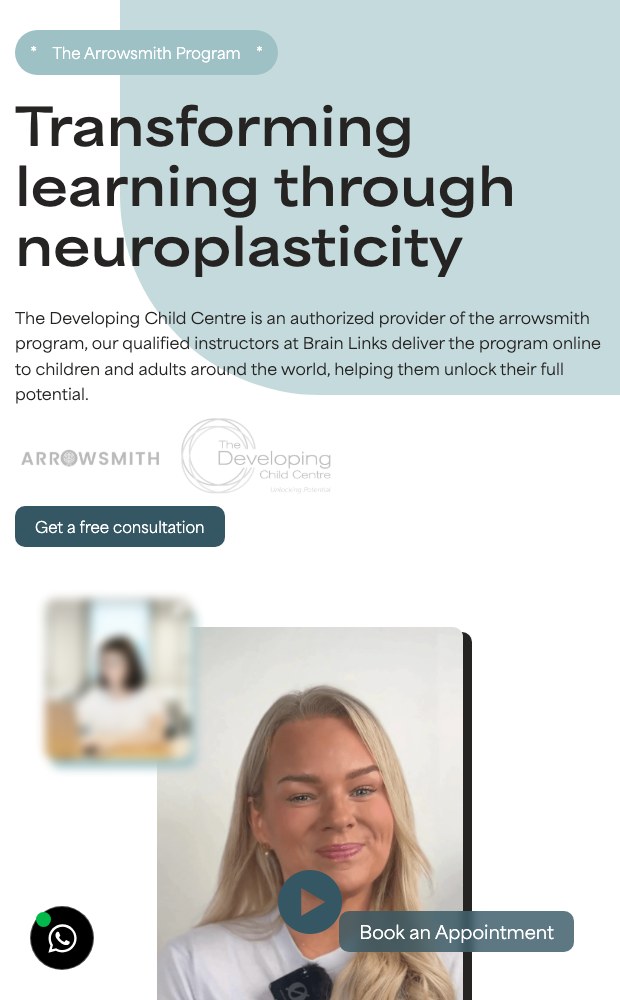
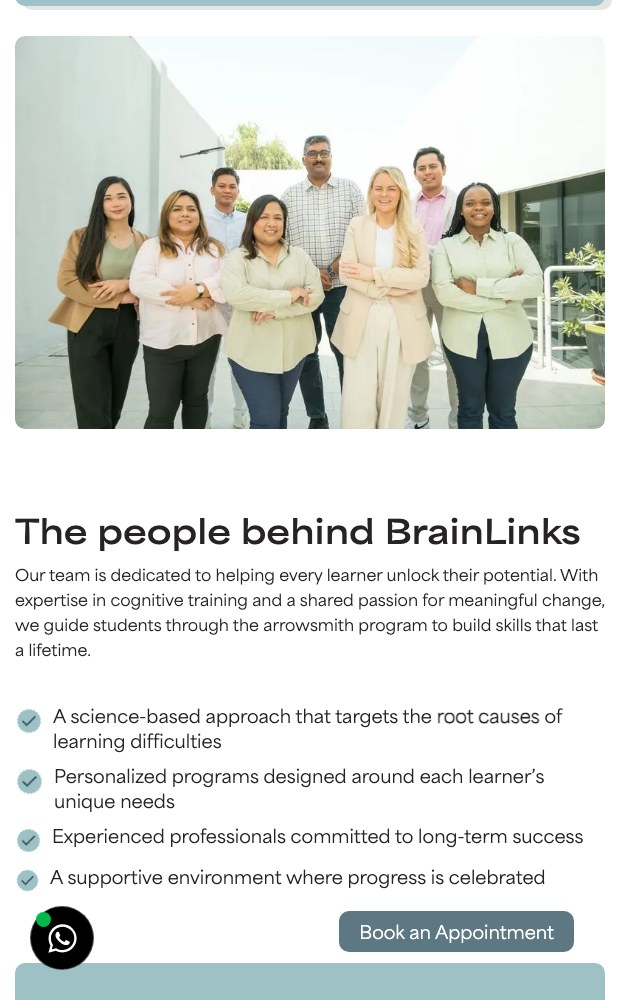
Credibility carries the second half. A dedicated instructor template gives every assessor and lead educator a real profile page with degrees, certifications and their own words about the work, so the programme is attached to named professionals rather than a faceless clinic. Review counts and worldwide student numbers sit next to that, and every section ends in the same soft, repeated call to action: book a free consultation.
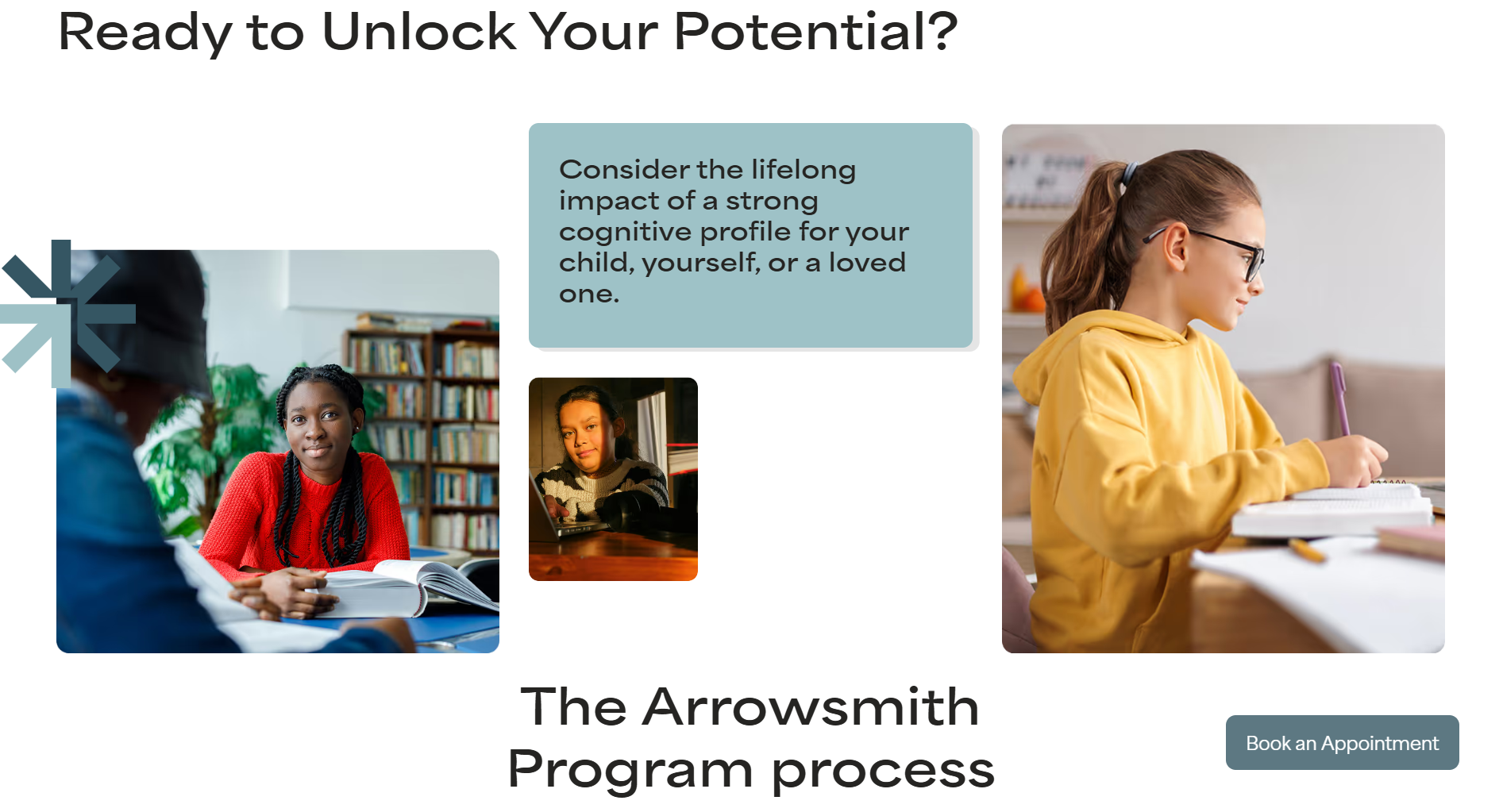
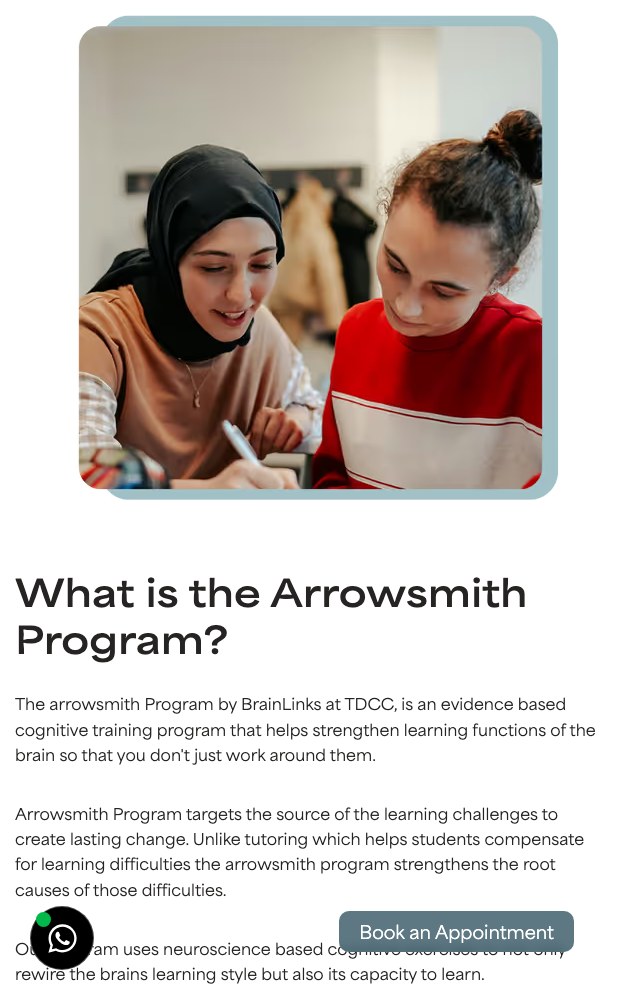
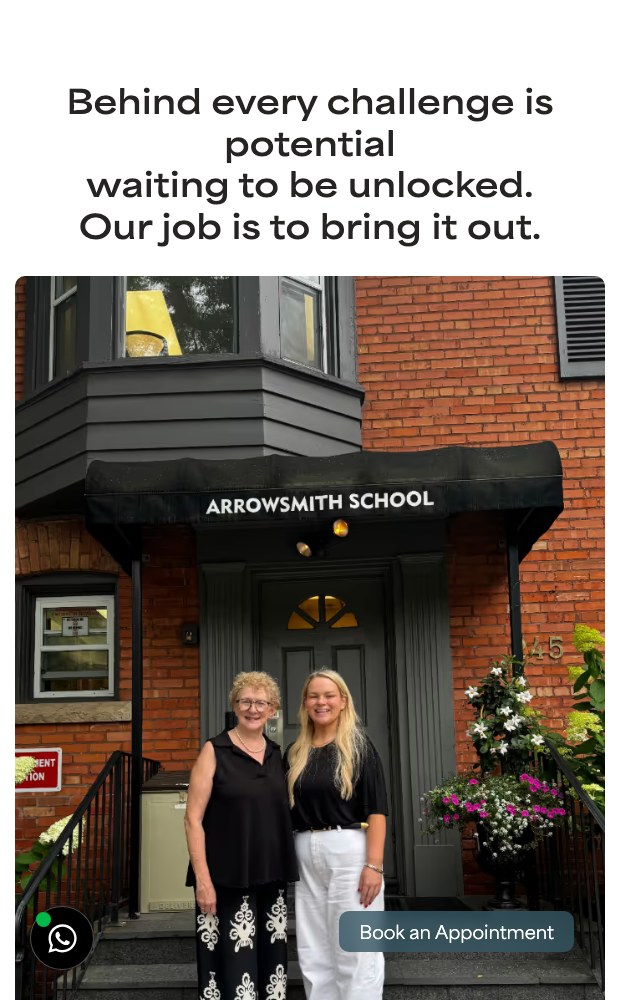
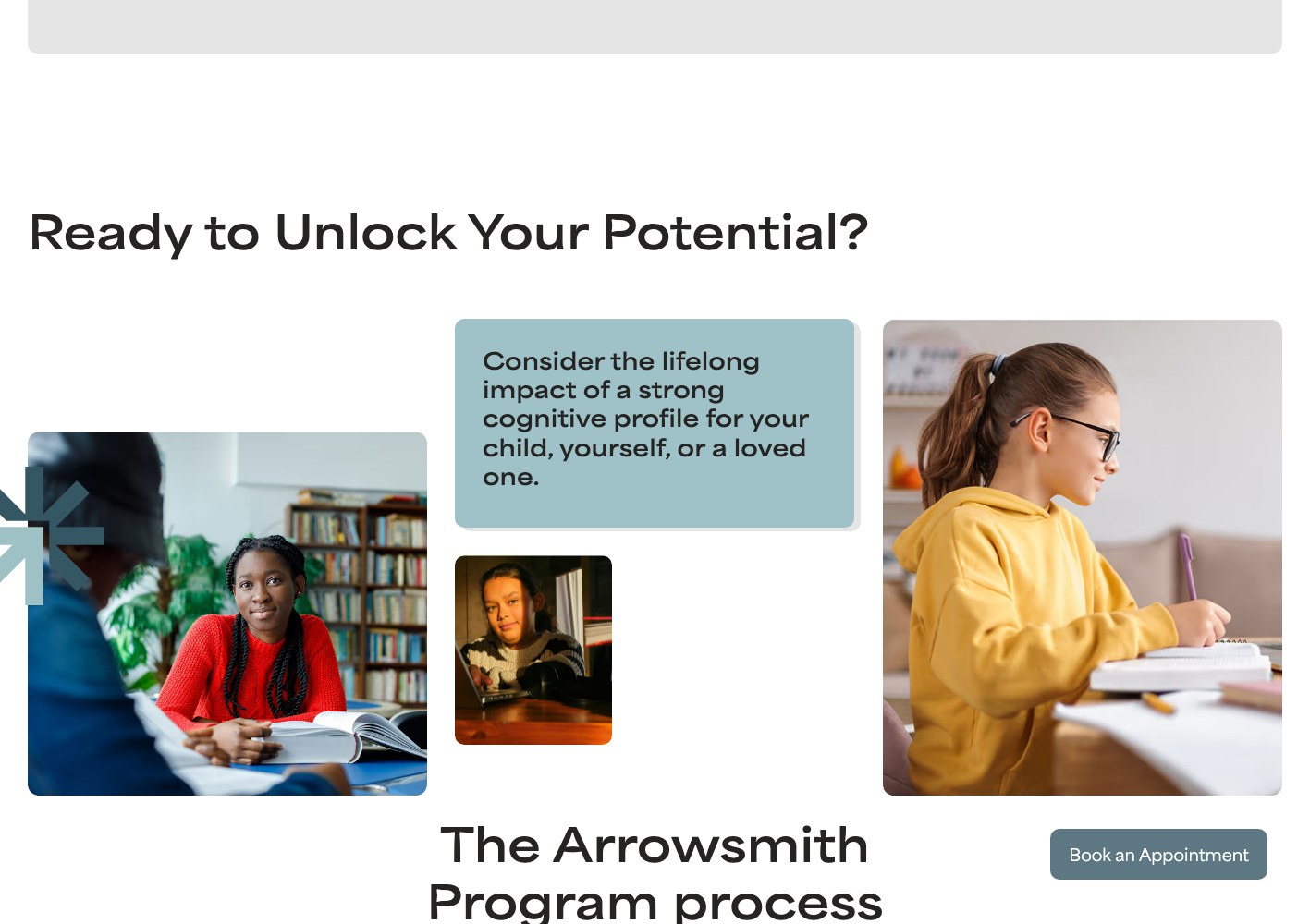
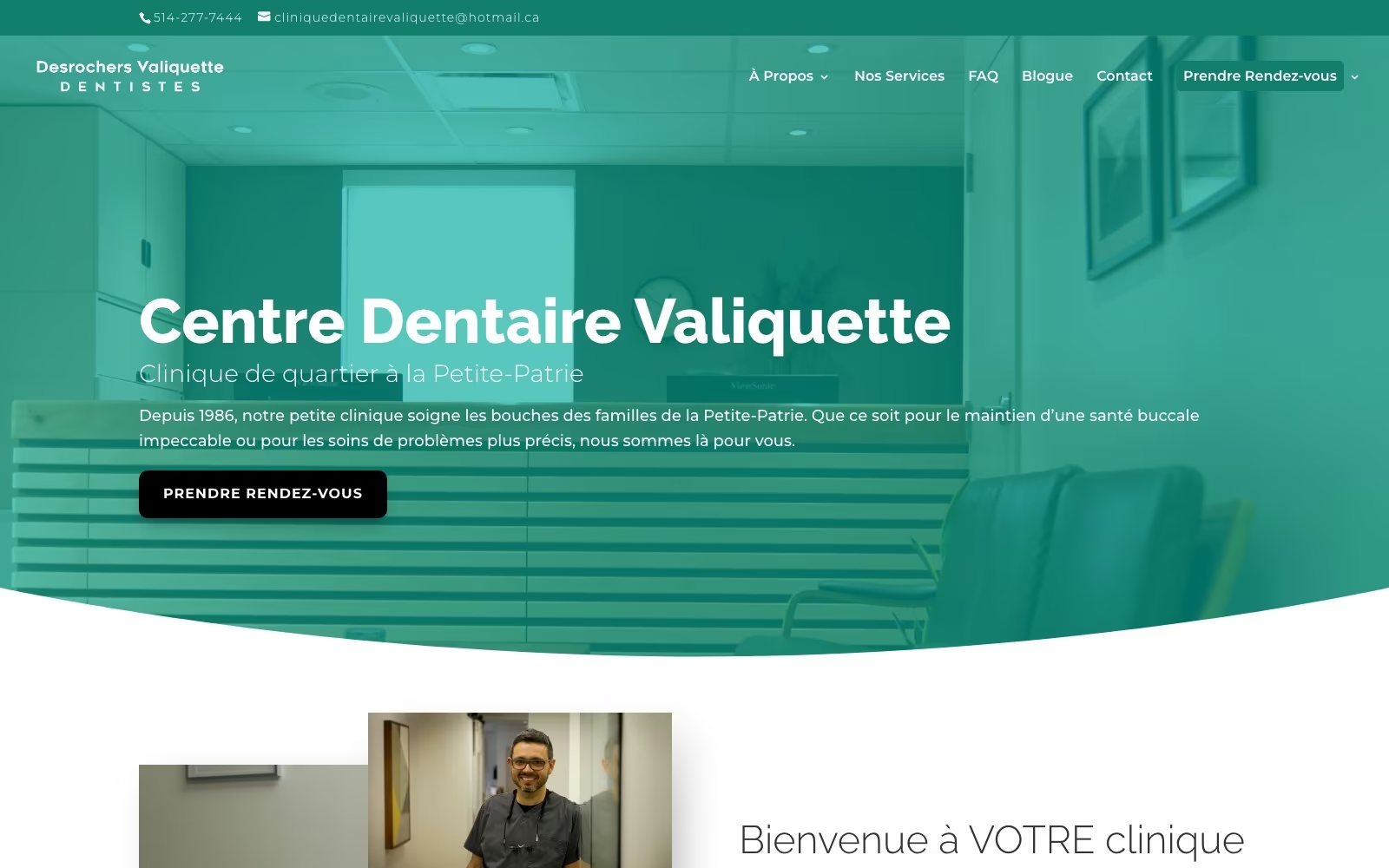
Visually the build stays deliberately calm — clinical teal, generous whitespace, photography of real learners, and a light geometric mark that keeps a science-led subject feeling human rather than medical.
More on this work: Web Design.
Named professionals, own template
Credibility carries
the second half.
A dedicated instructor template gives every assessor and lead educator a real profile page — degrees, certifications and their own words about the work — so the programme attaches to named professionals instead of a faceless clinic. Clinical teal, generous whitespace and photography of real learners keep a science-led subject human rather than medical.



03 — The results
A specialist programme that now explains itself before it asks.
The homepage runs as a teaching sequence: what neuroplasticity changes, how the Arrowsmith Program differs from tutoring, the five steps from consultation to monitoring, then who it is for — dyslexia, dyscalculia, processing speed, attention, emotional regulation, executive function. A parent can answer "is this us?" without calling.
Review counts and worldwide student numbers sit beside the instructor profiles, and every section closes on the same soft, repeated call to action: book a free consultation. The distinction that used to need a phone call is now made on the page.
CASE STUDIES
Case studies
Website Portfolio
Video Ads
Static Ads




















































.webp)
.webp)