Somebody describes a symptom, then asks where to go now.
where to go now
A parent describes a fever at 9pm and asks whether it needs an emergency room or an urgent care centre nearby. We run ChatGPT Ads and answer visibility for urgent care operators so your clinic, its hours and its services are described accurately in that conversation. Commercial-intent conversations inside ChatGPT rose from 13.9% to 19.2% in a year.






Tell us a little about your brand and we'll be in touch within 24 hours to lock in a time.


FOUR WORKSTREAMS
Four workstreams behind assistant advertising for an urgent care centre.
an urgent care centre
The questions patients actually type, healthcare advertising that clears review, a local record an assistant can read correctly, and measurement that never touches clinical detail.
Patient question mapping
Compliant placements
Local record and answer visibility
Private, honest measurement
What people type instead of a keyword.
Urgent care demand has never been tidy. People do not search urgent care near me first; they describe a symptom, a work injury, a DOT physical they need before Friday, or a child who will not keep fluids down, and only then ask where to go. An analysis of 36,153 answers found even purely informational questions drew an advert 69.5% of the time.
We map that question set by service line — walk-in illness, occupational health, imaging, physicals, paediatric visits — and by who is asking, then decide where a placement helps a patient reach the right level of care and where clear published content does the job for free.
- Symptom-led and service-led questions mapped separately
- Emergency-versus-urgent triage language handled carefully
- Insurance, self-pay and wait-time questions answered honestly
- Occupational health and employer questions kept distinct
19.2%
of ChatGPT conversations now carry commercial intent
Healthcare review settled before spend.
Healthcare advertising is reviewed more strictly than most categories, and urgent care carries a specific risk: copy that reads as clinical advice, or that discourages somebody from calling emergency services. We settle the review position, the claim language and your medical director's sign-off route before a single impression is bought.
Then we buy against the questions where an advert is genuinely useful. Budgets follow your real opening hours rather than a flat daily spend, geography follows drive time rather than a round radius, and every line of copy names the location, the hours, the services and the payment position instead of promising a wait time nobody can guarantee.
- Healthcare review position confirmed before launch
- Copy reviewed by your medical director
- Emergency signposting kept in every relevant answer
- Budgets and geography aligned to open hours and drive time
3,770
active advertisers on ChatGPT in one measured week
46%
week-over-week growth after the spend floor dropped
Assistants read your Google Business Profile too.
Ask an assistant for urgent care in a suburb and it assembles the answer from your website, your Google Business Profile, directory listings, insurer directories and reviews. Every urgent care operator we audit has at least one clinic whose hours, services or accepted plans are wrong somewhere in that chain — and wrong hours send a patient to a competitor at 8pm.
Our AI search visibility and local SEO teams correct that record clinic by clinic: hours, holiday hours, services, imaging on site, paediatric ages seen, insurance and self-pay pricing, all published plainly and marked up so a model can read it.
- Hours and holiday hours corrected per location
- Service lines and on-site imaging published clearly
- Accepted insurance and self-pay prices stated
- Assistant descriptions monitored per clinic
4.04%
average urgent care search ad click-through rate
6.40%
average conversion rate on those clicks
Measured to a visit, not a click.
Urgent care is one of the few healthcare categories where paid acquisition already works on unit economics: benchmarks put urgent care search clicks at $4.44 and cost per acquisition at $69.40, and cost per lead near $56, the lowest of any specialty measured. The number that matters is the patient who actually walks in.
We measure to that with call tracking, check-in attribution and store-visit signals configured so no symptom, diagnosis or clinical parameter reaches an advertising platform. Our analytics and privacy teams build it together, per clinic.
- Call and check-in tracking configured for health privacy
- No symptom or clinical detail passed to ad platforms
- Cost per visit reported per clinic, not per account
- A written monthly read, not a dashboard link
$69.40
benchmark cost per acquisition on urgent care search
$48.50
search cost per acquisition in a second 2026 dataset
benchmark cost per acquisition on urgent care search in 2026
industry-average conversion rate across urgent care campaigns
Written read on cost per visit by clinic
Ad accounts, content and tracking in your name
We made the difference for those brands

B2B software, fintech, insurance

Healthcare & regulated services

B2B software, fintech, insurance

Beauty, personal care & wellness

Consumer tech and platforms

Creative, content, arts & culture

Home essentials, appliances, kitchen & pet

B2B software, fintech, insurance

Food & beverage

Retail & commerce

Travel & mobility

Healthcare & regulated services

B2B software, fintech, insurance

Consumer tech and platforms

B2B software, fintech, insurance

B2B software, fintech, insurance
Travel & mobility

B2B software, fintech, insurance

Food & beverage

B2B software, fintech, insurance

Apparel and lifestyle

Retail & commerce

Creative, content, arts & culture

Beauty, personal care & wellness

Consumer tech and platforms

Retail & commerce

Beauty, personal care & wellness

Healthcare & regulated services

Creative, content, arts & culture

Travel & mobility

Creative, content, arts & culture
01 — The challenge
High volume, thin margins, and a first conversation you cannot see.
Urgent care lives on volume and proximity. Patient churn within 18 months reaches 65%, so the funnel must refill constantly, and it refills through whoever answers the question where do I go right now. That question increasingly gets answered by an assistant, and 72% of US ChatGPT answers already carry an advert.
“A patient told us the chatbot said we closed at six. We have been open until ten for two years.”
That is the real exposure: not absence from the answer, but a confident wrong detail nobody at the clinic has seen. A fifth of these conversations now carry commercial intent.
02 — Our approach
Fix the record, clear the review, then buy the questions.
We start by recording how the major assistants describe each of your clinics today: hours, services, imaging, paediatric ages, insurance, self-pay pricing and how they compare you with the hospital emergency department down the road. On a multi-site operator that transcript almost always finds errors nobody has been told about.
Then we correct the record at source. Website location pages, Google Business Profile entries, insurer directory listings and aggregator profiles get aligned clinic by clinic, marked up properly, and given the details patients actually ask for — wait expectations, what a visit costs without insurance, what you cannot treat and where to go instead. That work lifts local search at the same time and costs nothing per click.
Only then do we buy placements, against the questions where an advert helps someone reach appropriate care, with emergency signposting intact. Tracking is configured with privacy obligations first and per-clinic visit reporting second, and you receive a written monthly read. Accounts, content and data stay in your name.
03 — What we did
Record, correct, review, then buy.
How assistants describe each clinic today, the local record corrected, healthcare review settled, and placements measured to visits per site.
Weeks 1-2 / Baseline
How assistants describe each clinic
Answers recorded per location for hours, services, imaging and insurance, with every wrong detail documented before anything changes.

Weeks 2-6 / Evidence
Hours, services and prices, corrected everywhere
Website, Google Business Profile, insurer directories and aggregators aligned clinic by clinic and marked up for machines.

Month 2 / Review
Healthcare review and medical sign-off
Ad review position confirmed, copy approved by your medical director, privacy-safe tracking configured before launch.

Ongoing / Prove
Cost per visit, reviewed monthly per clinic
Calls, check-ins and visits attributed by source and site, read against your existing search and referral channels.
WHAT YOU GET
Deliverables you keep, whatever happens next.
you keep
The ad accounts, the location content, the tracking configuration and the documentation are in your name from the first week.

Assistant description audit
What ChatGPT and other assistants say today about each clinic, with every wrong hour, service or plan listed.

Patient question map
The symptom-led and service-led questions patients ask, grouped by service line, payer position and urgency.

Location record rebuild
Hours, services, imaging, insurance and self-pay pricing corrected across every profile and marked up.

Ad review pack
Healthcare review position, approved copy and a documented medical sign-off route for every advert.

Privacy-safe tracking
Call, form and check-in attribution configured so no symptom or clinical detail reaches an ad platform.

Monthly reporting pack
Cost per visit by clinic and service line, with a written note on what moved and what happens next.
HOW WE WORK
Operating standards, not promises.
Operating standards


Single-site clinics
One centre competing on drive time, opening hours and whether the answer names you at all.
ExploreMulti-site groups
Regional operators where hours, services and accepted plans differ per clinic and must stay accurate everywhere.
ExploreOccupational health
Employer contracts, DOT physicals and workers' compensation, where the buyer is an HR manager rather than a patient.
Explore

















Built on trust. Proven by results.
We partner with SMBs and Fortune 500 companies to deliver more than reach — we bring clarity, execution, and measurable outcomes. Every successful partnership starts with a strong culture fit and a shared drive to grow.





CASE STUDIES
Case studies
Website Portfolio
Video Ads
Static Ads

































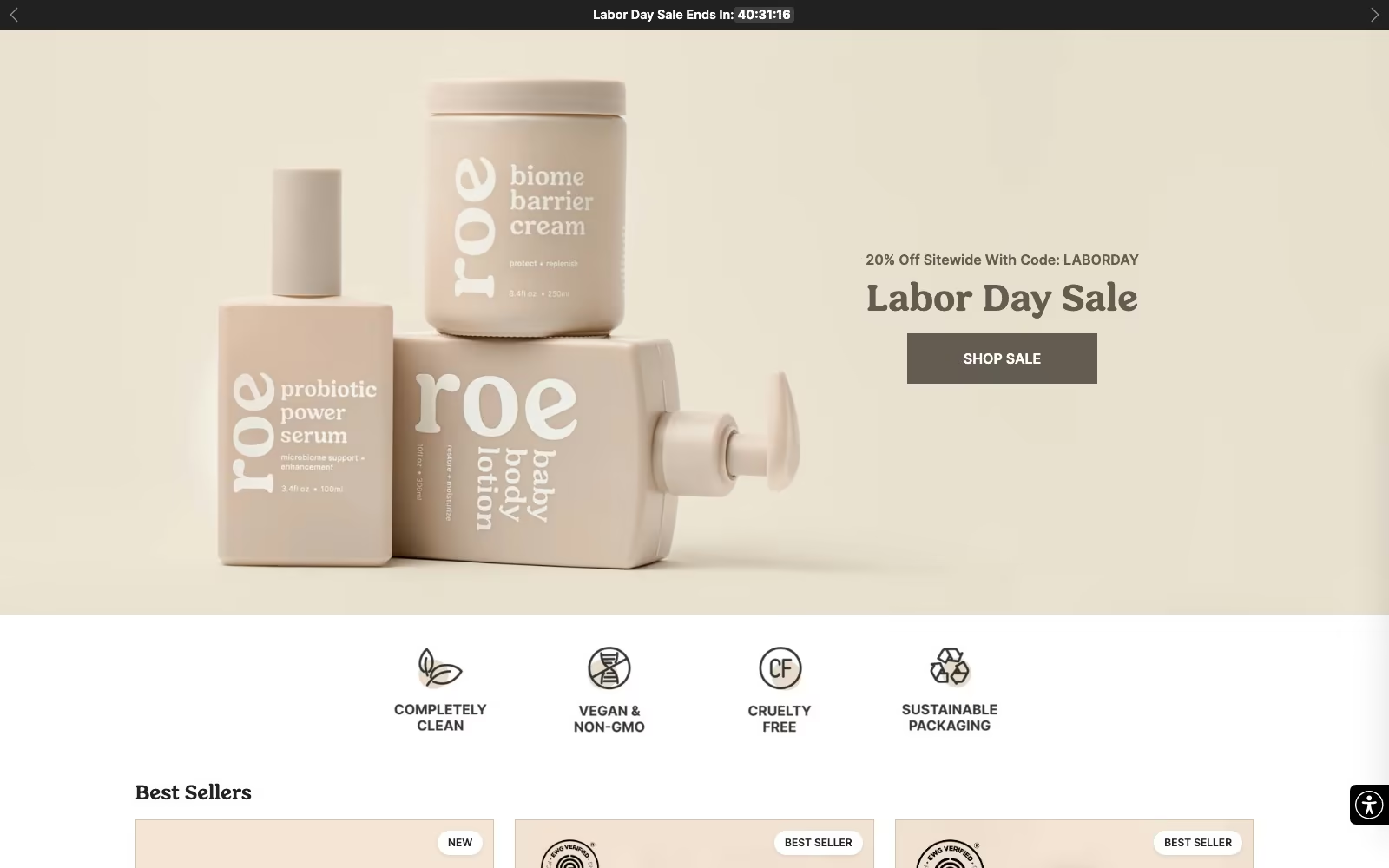

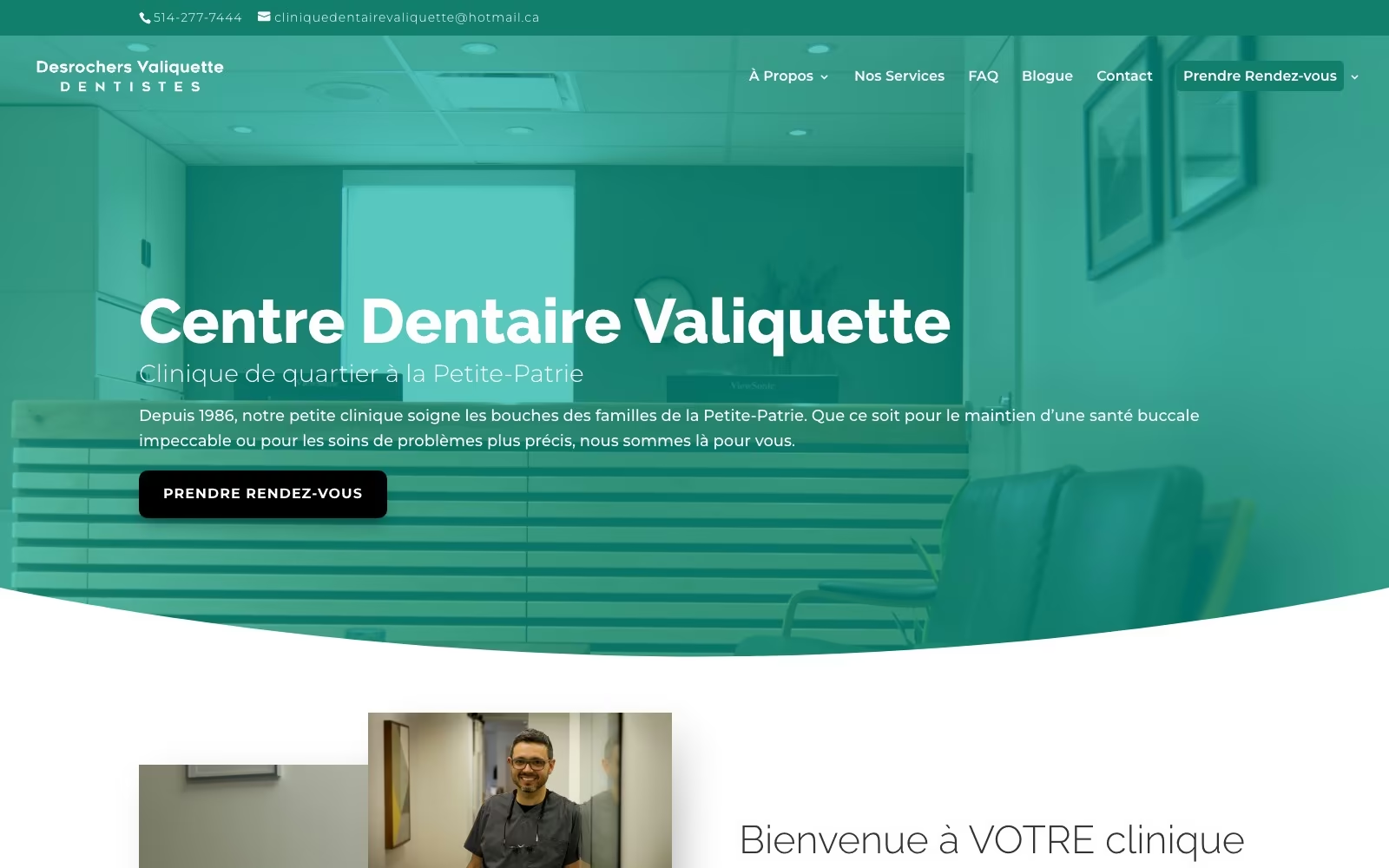

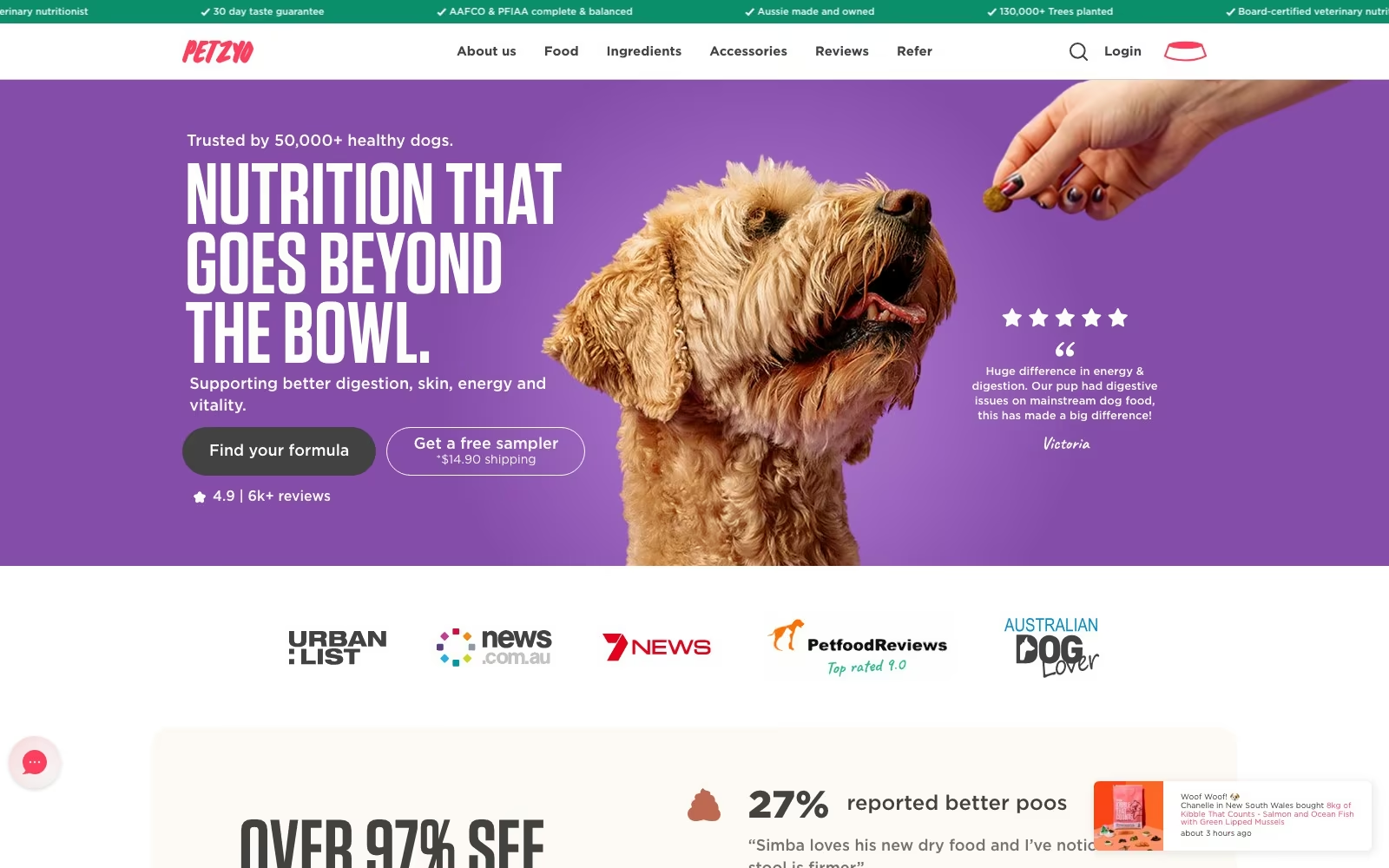

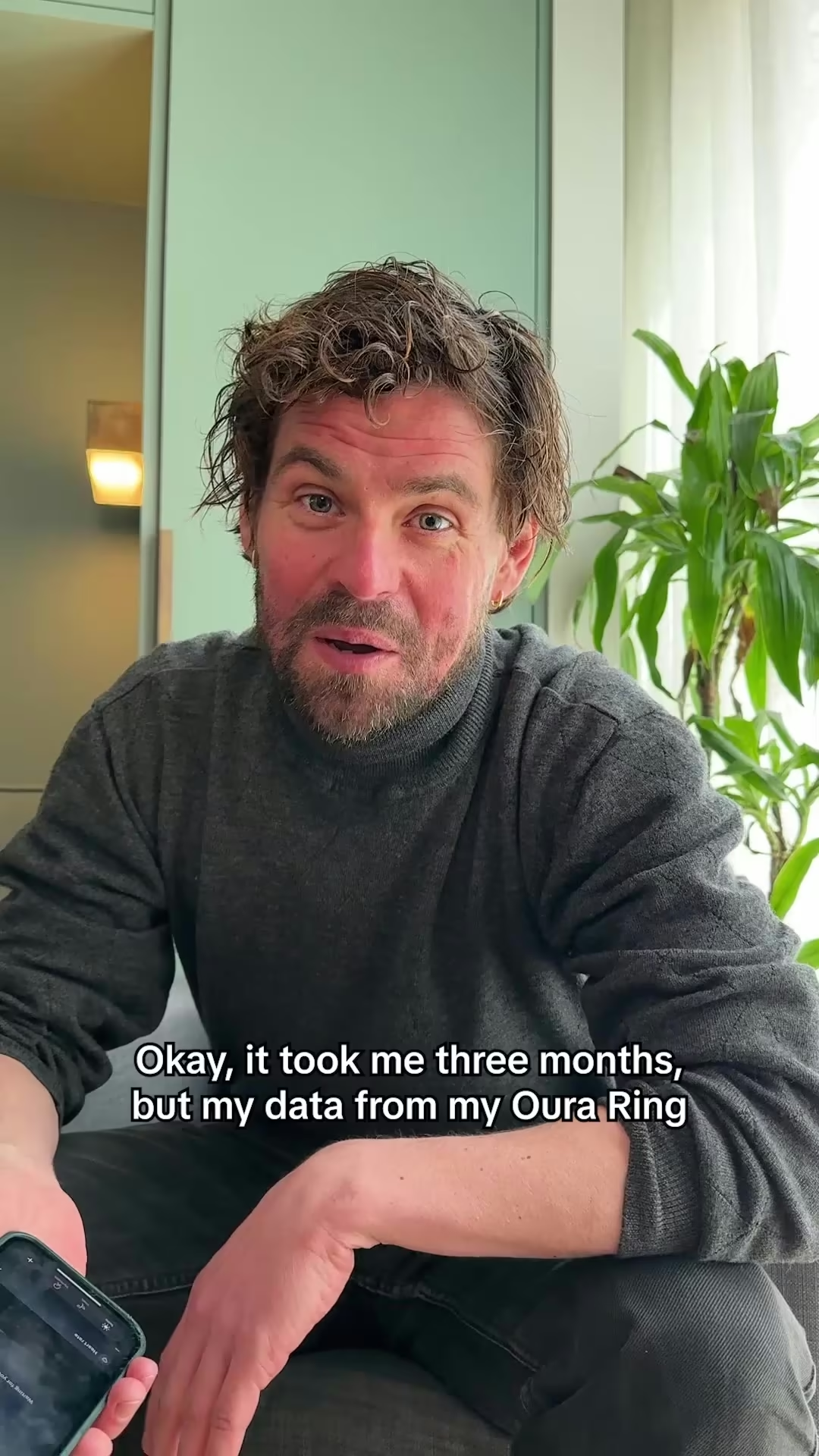











EN

EN

EN


FR
FR
FR

FR

FR

FR

FR

FR

EN
FAQ
Questions urgent care operators ask us
Can an urgent care centre advertise inside ChatGPT at all?
Yes, under healthcare advertising rules that are reviewed case by case, and handling that review is part of the work rather than an obstacle you face alone. We confirm the position, prepare claim language your medical director can approve, and keep emergency signposting in every relevant answer. Where a placement is not appropriate, we say so and put the budget into visibility work that keeps paying either way.
What if ChatGPT gets our hours or services wrong?
That is the most common finding on multi-site operators, and it is entirely fixable. Assistants assemble answers from your website, your Google Business Profile, insurer directories and aggregators, so one stale profile becomes a confident wrong answer. We record what is being said per clinic, list every wrong hour, service or accepted plan, then correct the record at source so the answer improves.
How is this different from our local SEO work?
It shares the same foundation and we run them as one plan. Accurate location pages, a complete Google Business Profile, consistent listings and structured markup are what both an assistant and a search engine read, so operators already running local SEO start well ahead. The addition is prompt-level demand mapping and paid placement inside assistant conversations, reported separately.
Will your copy discourage someone from calling emergency services?
Never. Triage safety is a hard rule in our copy standards: adverts and published answers state plainly what urgent care treats and name the emergency department for chest pain, stroke symptoms, major trauma and the rest. It is the right thing to do, it is what platform review expects, and in practice it also builds the trust that makes somebody choose you for the visit that is appropriate.
What does this cost compared with Google Ads?
Search is the reference point and it is efficient here: urgent care clicks average $4.44 with a 6.40% conversion rate and a $69.40 cost per acquisition, and cost per lead sits near $56. Assistant placements are far less contested today, which is why testing them now is sensible. We run both and let cost per visit decide the split each quarter.
How do you handle patient privacy?
Privacy configuration comes before measurement. Call tracking, forms and check-in attribution are set up so no symptom, diagnosis or sensitive parameter is passed to an advertising platform, and our privacy team documents the configuration for your compliance officer. Reporting works at the level of sources, calls and visit counts, which is enough to run budgets responsibly.
We run twelve clinics. Does this scale?
It is actually easier at twelve than at one, because the work is systematic. The audit runs per location, the record corrections are templated and then checked by hand, and reporting is built per clinic from the start so a high-performing site never hides a weak one. Budgets follow each clinic's opening hours and drive-time catchment rather than one account-wide setting.
Do employers and occupational health count here?
Yes, and they are usually under-served. DOT physicals, pre-employment screening, drug testing and workers' compensation are searched by HR managers and safety officers using entirely different language from patients, often comparing providers in a single assistant conversation. We map those questions separately and give them their own content and their own line in the reporting.
How long before this shows results?
The record corrections often show inside a quarter, because assistants re-read your published details as they improve, and wrong-hours fixes can change behaviour immediately. Placements can produce calls in weeks. We report the two separately so you always know which part is paying, and in month one we would rather show well-attributed visits than a large click count nobody can trace.
Do we need to change our website?
Usually the location pages, not the whole site. What matters is that each clinic states hours, holiday hours, services, on-site imaging, paediatric ages seen, accepted insurance and self-pay pricing in plain language a model can read. Where a rebuild genuinely helps, our web design team scopes it separately so you can decide on its own merits.
Are other urgent care groups already doing this?
Very few, which is the opportunity while it lasts. Active advertisers across every category rose from 2,585 to 3,770 in a single week worldwide, which is a small field beside the number of urgent care centres in the United States alone. The accuracy work in particular compounds, and the operators who do it first are the ones assistants describe confidently.
Who will be working on our account?
A named senior strategist with a healthcare compliance specialist and a local search lead alongside, and the same people stay with your group. You will know their names, you can email them directly, and the person who wrote your plan is the person reviewing cost per visit with your operations team each month.

.webp)
.webp)