A roofing website should book work while you are on a roof.
book work
We design roofing websites that turn visitors into inspections instead of sitting there looking tidy. Web design for roofing companies, built around the questions a homeowner asks before they call. The typical roofing site converts about 2.9% of its visitors.






Tell us a little about your brand and we'll be in touch within 24 hours to lock in a time.



FOUR WORKSTREAMS
Four workstreams behind a roofing website that sells.
that sells
A structure built from the jobs you sell, design and photography that prove the craft, conversion paths a busy homeowner can follow on a phone, and the technical base your search visibility depends on.
Structure and content
Design and photography
Conversion paths
Technical base and SEO
One page per job, one page per town.
Most roofing company websites are a home page, an about page and a single services page that tries to cover repair, replacement, gutters, siding and commercial work at once. Search engines cannot rank that, and visitors cannot navigate it.
We map the site to what you actually sell and where you actually work: a real page for each roofing service, a real page for each town your crews drive to, and content written for the person reading it. Material pages for shingle, metal and flat roofing give the site the depth that both people and search engines look for.
- A page per roofing service, written not templated
- Town pages for the areas your crews cover
- Material and warranty content that answers real questions
- Navigation a worried homeowner can follow in ten seconds
108,600
roofing businesses competing for the same searches
Your finished work, not a stock roof.
High quality images of your own jobs are the single biggest difference between a roofing website that feels real and one that feels like a template someone bought. We arrange the photography: your crews, your streets, before and after pairs on houses your visitors recognise.
Around that, a design that keeps the phone number in reach, puts your licence, insurance and warranty details where people look for them, and reads properly on a phone in a driveway. In a study of 200 contractor sites, 68% of the traffic was mobile.
- Photography of your own completed roofs
- Before and after galleries by service
- Licence, insurance and warranty shown plainly
- Designed on the phone layout first
68%
share of contractor website traffic on mobile
Ninety-seven visitors in a hundred leave.
That is the real problem with most roofing websites, and it is fixable. An audit of 1,040 roofing company websites across seven states found 96.3% were missing leads on their own site — no fast contact route, forms nobody completes, nothing for the visitor who is not ready to phone.
We build several honest ways to make contact: a tap-to-call header, a short form your estimator can actually work from, an inspection booking route, and a financing enquiry. Sites saying plainly that they work with all insurance companies converted 22% better, so that message goes where people see it.
- Tap-to-call fixed in the mobile header
- Short forms, not eleven-field questionnaires
- Insurance and finance messaging placed up front
- Every enquiry route tracked and attributed
96.3%
of audited roofing sites were missing leads
22%
conversion lift from clear insurance messaging
Fast, indexable, and yours to edit.
A beautiful roofing website that takes six seconds to load on a phone in a driveway is a lost lead. We build on a CMS your office manager can update without calling anyone, keep the pages light, and get the technical groundwork right: clean URLs, proper headings, schema, an SSL certificate, and conversion tracking configured to record enquiries rather than page views.
The structure is set up so search visibility can be built on it afterwards, whether that work is ours or yours.
- Built for speed on a mid-range phone
- Editable by your team, no developer needed
- Schema, headings and clean URLs done properly
- Analytics recording enquiries, not page views
2.9%
typical conversion rate on a roofing website
$124
average paid roofing lead the site has to convert
of 1,040 audited roofing websites were missing leads
size of the US roofing market this year
Every layout designed and tested on mobile before desktop
Site, hosting, photography and analytics in your own accounts
We made the difference for those brands

Consumer tech and platforms

Healthcare & regulated services

Consumer tech and platforms

B2B software, fintech, insurance

Apparel and lifestyle

B2B software, fintech, insurance

Apparel and lifestyle

Food & beverage

Healthcare & regulated services

B2B software, fintech, insurance

Food & beverage

B2B software, fintech, insurance

Consumer tech and platforms

Food & beverage

Consumer tech and platforms

Consumer tech and platforms

Food & beverage

B2B software, fintech, insurance

Creative, content, arts & culture

Apparel and lifestyle

Healthcare & regulated services

Healthcare & regulated services

Food & beverage

Home essentials, appliances, kitchen & pet

Consumer tech and platforms

Healthcare & regulated services

Home essentials, appliances, kitchen & pet

Beauty, personal care & wellness

B2B software, fintech, insurance

Healthcare & regulated services
01 — The challenge
The website is usually the leak, not the marketing.
Roofing companies rarely have a traffic problem. They have a site that loses the people already on it. Roofing websites convert about 2.9% of visitors, so 97 of every hundred homeowners you paid to attract leave without a call or a form. When a paid lead already costs over a hundred dollars, that is not a rounding error.
The causes repeat. Every service crammed onto one page. A contact form asking eleven questions. No photography of the company's own work. Nothing about finance, warranty or insurance where a homeowner would look.
“People kept telling us the site looked great. Almost nobody was filling in the form.”
And it is nearly always read on a phone, often standing outside looking at the damage. A design signed off on a desktop monitor rarely survives that moment, which is why we build the phone layout first and check it in the conditions it will actually be used in.
02 — Our approach
Build it around the homeowner's decision, then prove the craft.
We start by writing down the decision your visitor is making. A leak at eleven at night is not the same visit as a family pricing a replacement three months out, and a facilities manager pricing a flat deck is different again. Each of those gets its own page, its own proof and its own next step.
Then we go and get the raw material. Photography of your finished roofs, before and after pairs, your crews on site, and short written detail on materials, warranty and how insurance claims work with you. That content is what separates a roofing website from a template with a different logo, and it is the part most agencies skip.
The build itself is unglamorous and deliberate: phone layout first, fast pages, a tap-to-call header that never scrolls away, short forms, and clear insurance and financing messaging. Structure, headings and schema are set up so search visibility can be built on top later.
Then we watch it. Enquiry routes are tracked from launch, so within a month you know which pages produce work and which need another pass, and we keep testing rather than declaring the project finished.
03 — What we did
From a tidy brochure to a working site.
The same sequence whether we are rebuilding an old roofing website or starting from nothing.
01
What the current site loses
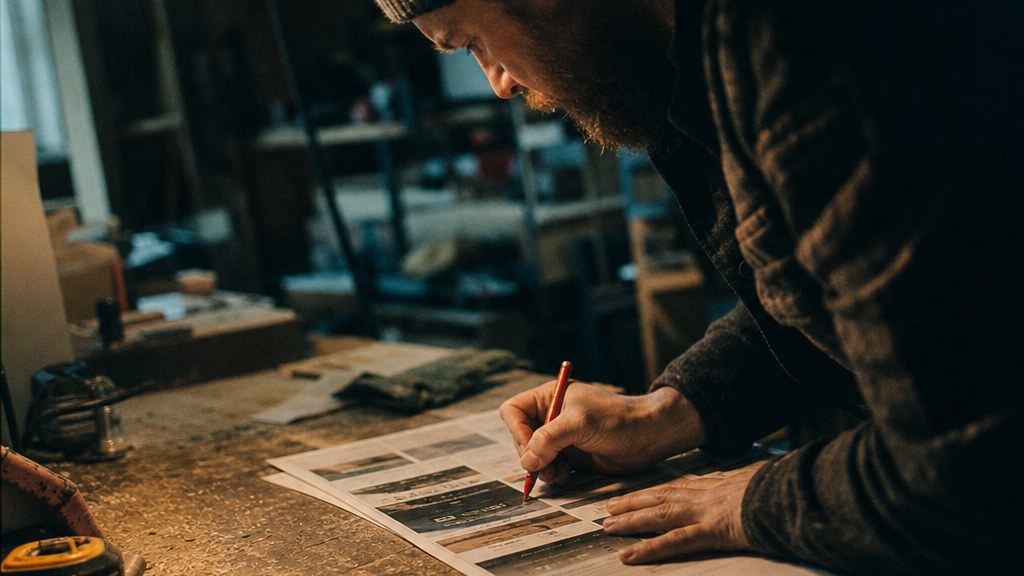
Your existing pages reviewed on phone speed, enquiry routes, content depth and search structure, with every drop-off point listed plainly before any design work starts.
02
Photography and proof
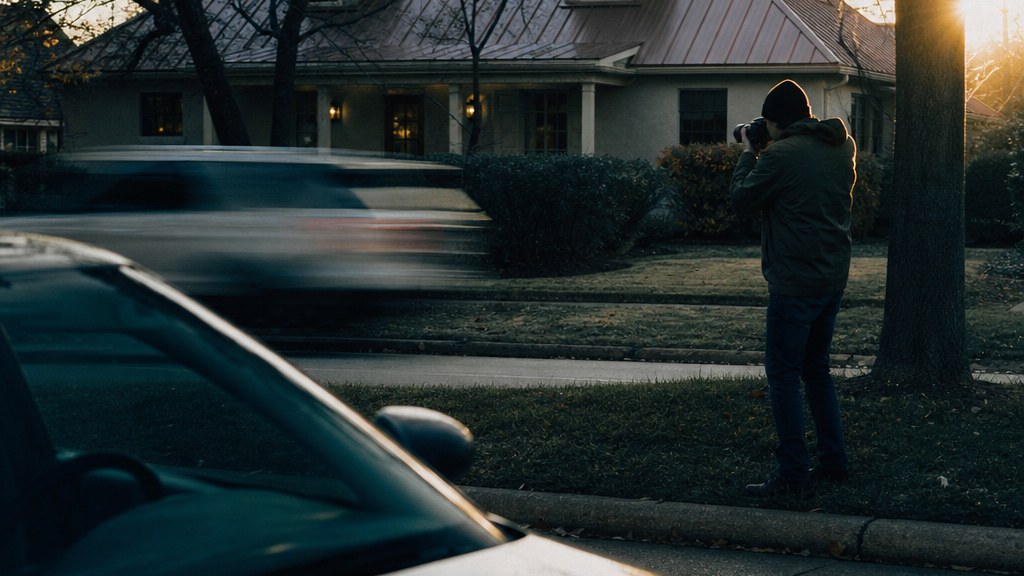
A shoot across your finished roofs and live crews, plus before and after pairs, warranty detail and the material content that makes the site unmistakably yours.
03
Built phone-first
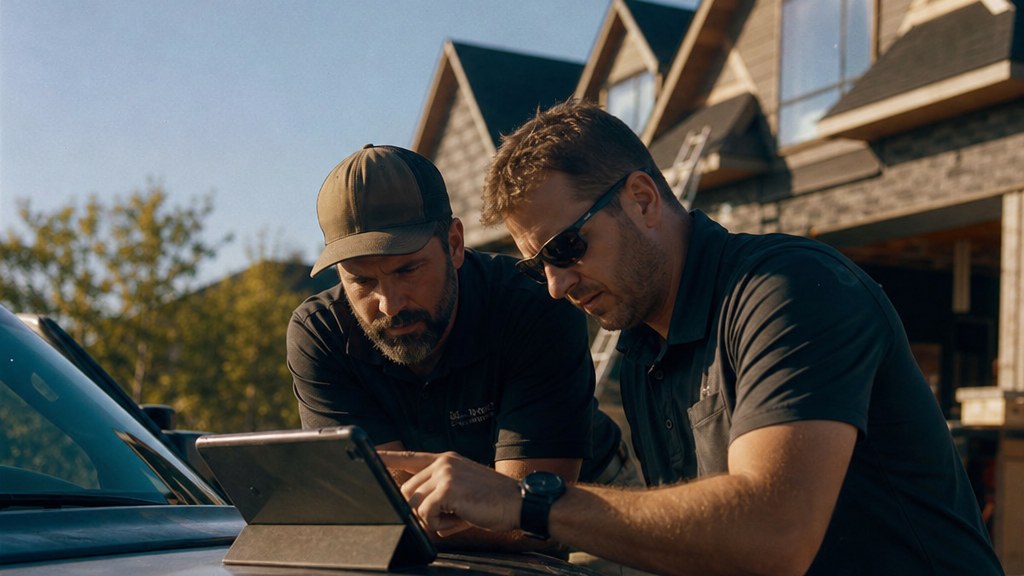
A page per service and per town, tap-to-call in the header, short forms, insurance and finance messaging placed high, on a CMS your team can edit without a developer.

04
Measured and improved
Every enquiry route tracked from launch, monthly reads on which pages produce booked inspections, and steady testing rather than a site left untouched for three years.
WHAT YOU GET
Deliverables you keep, whatever happens next.
you keep
The site, the hosting, the photography and the analytics are yours from the first day, in your own accounts.

Website and conversion audit
Your current roofing website reviewed on phone speed, enquiry routes, content depth and search structure, with the drop-off points named in writing.

Sitemap and content plan
The site mapped to the services you sell and the towns you cover, with the questions each page has to answer written out before anyone opens a design tool.

Design and photography
A phone-first design plus a photography day on your own roofs, giving you before and after galleries and crew imagery you can use well beyond the website.

Build on an editable CMS
A fast, secure build your office manager can update without a developer, with clean URLs, proper headings, schema and an SSL certificate in place.

Conversion and tracking setup
Tap-to-call, short forms, inspection booking and financing enquiries, each one tracked in Google Analytics so you can see which page produced the job.

Post-launch review
A written monthly read on traffic, enquiries and the pages producing booked inspections, with the next round of improvements named rather than implied.
HOW WE WORK
Operating standards, not promises.
Operating standards


Residential roofing
Repair and replacement pages built around finance, warranty and the proof a homeowner looks for.
ExploreStorm and insurance
Claim-handling content that says plainly how you work with insurers, because it converts better.
ExploreCommercial roofing
Flat deck and maintenance pages written for facilities buyers who want evidence and references.
Explore

















Built on trust. Proven by results.
We partner with SMBs and Fortune 500 companies to deliver more than reach — we bring clarity, execution, and measurable outcomes. Every successful partnership starts with a strong culture fit and a shared drive to grow.






CASE STUDIES
Case studies
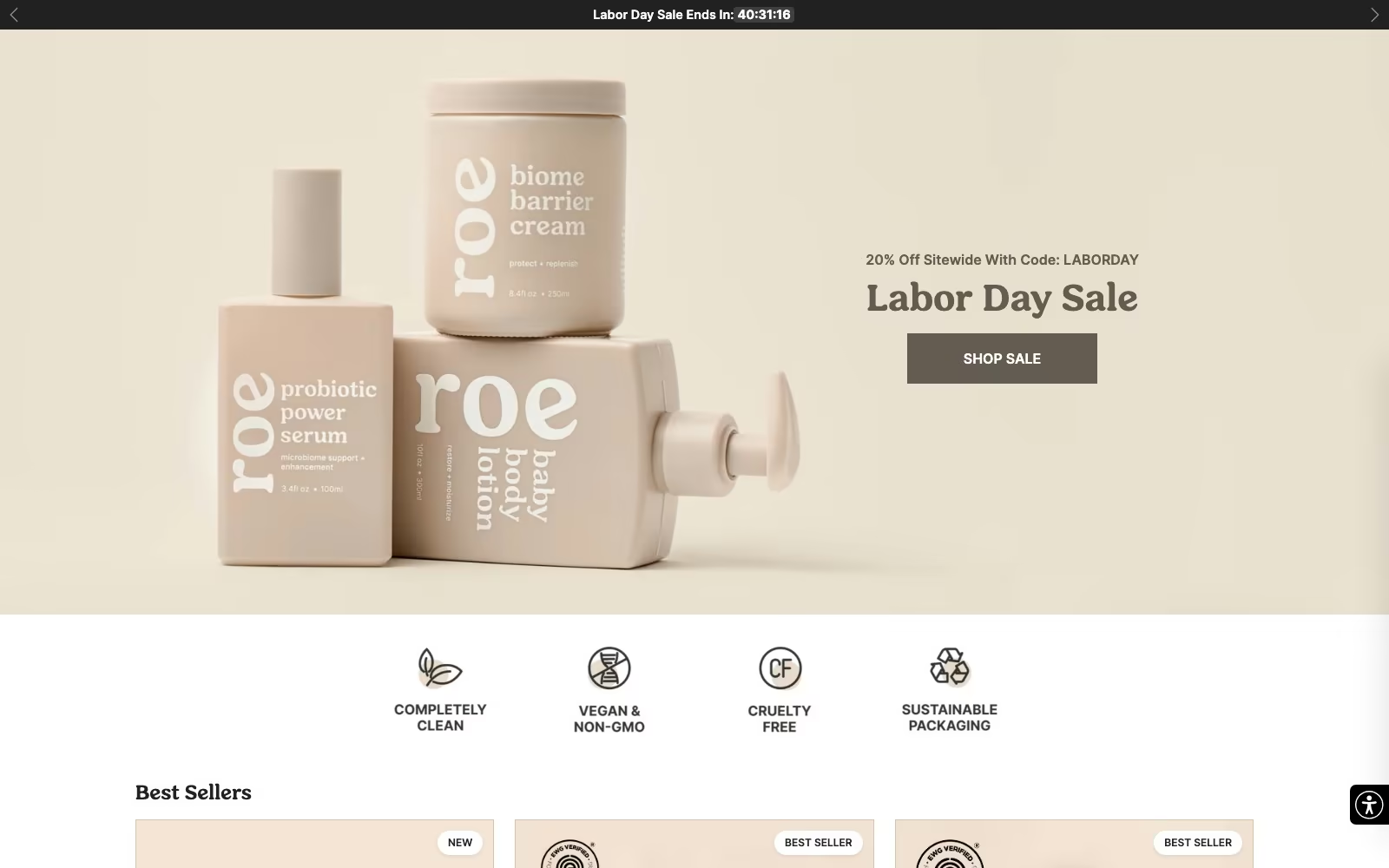
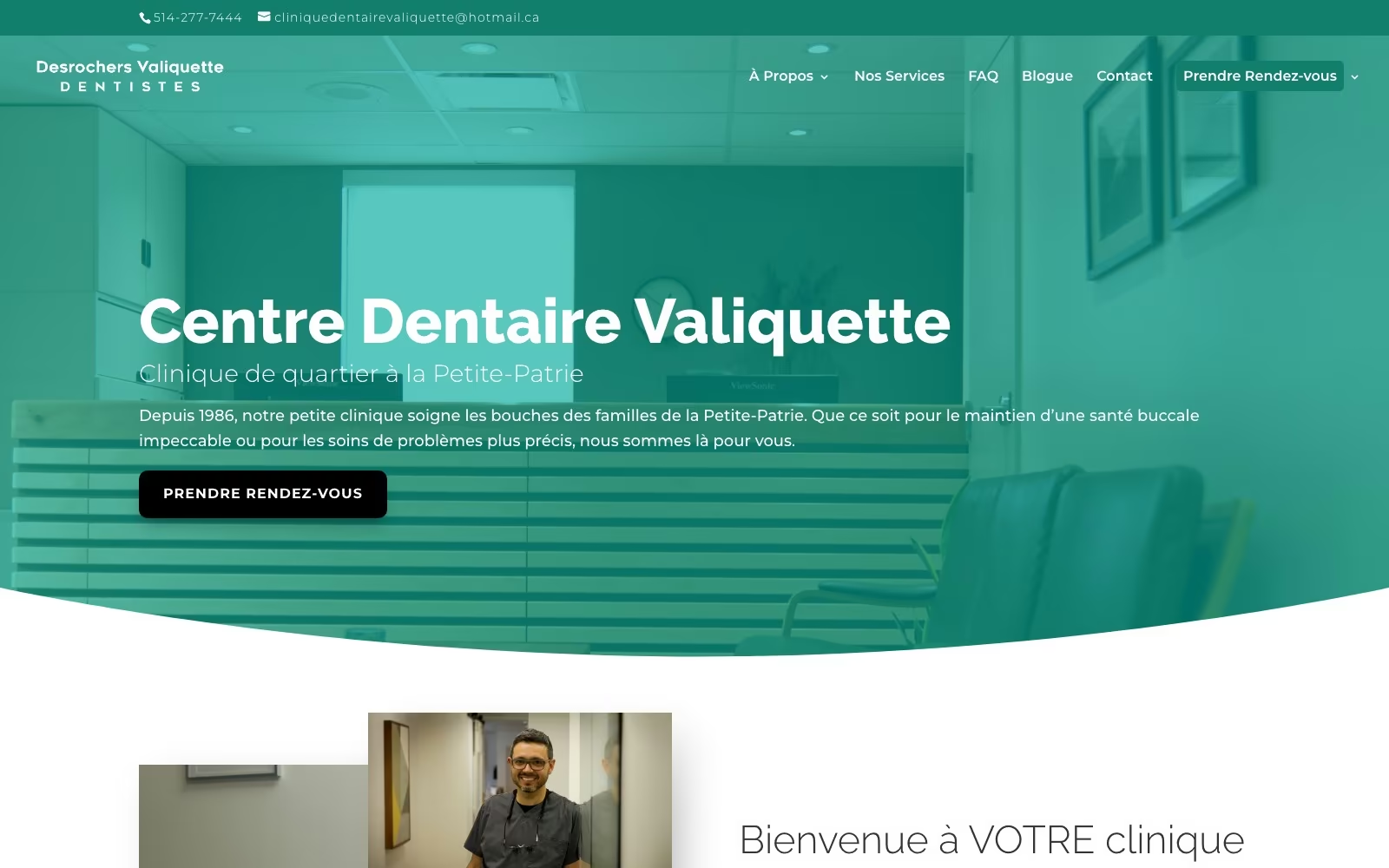
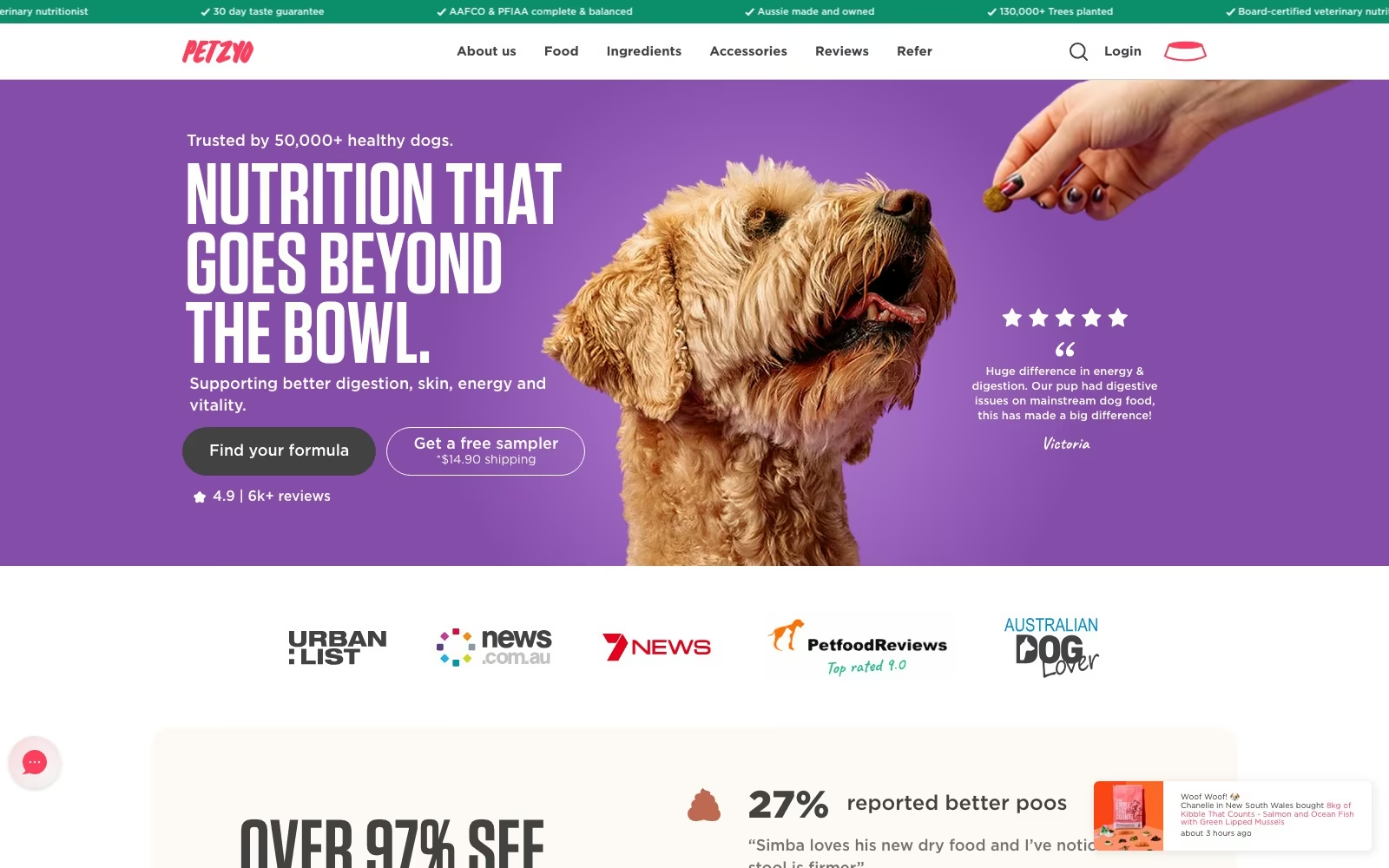
Website Portfolio
Video Ads
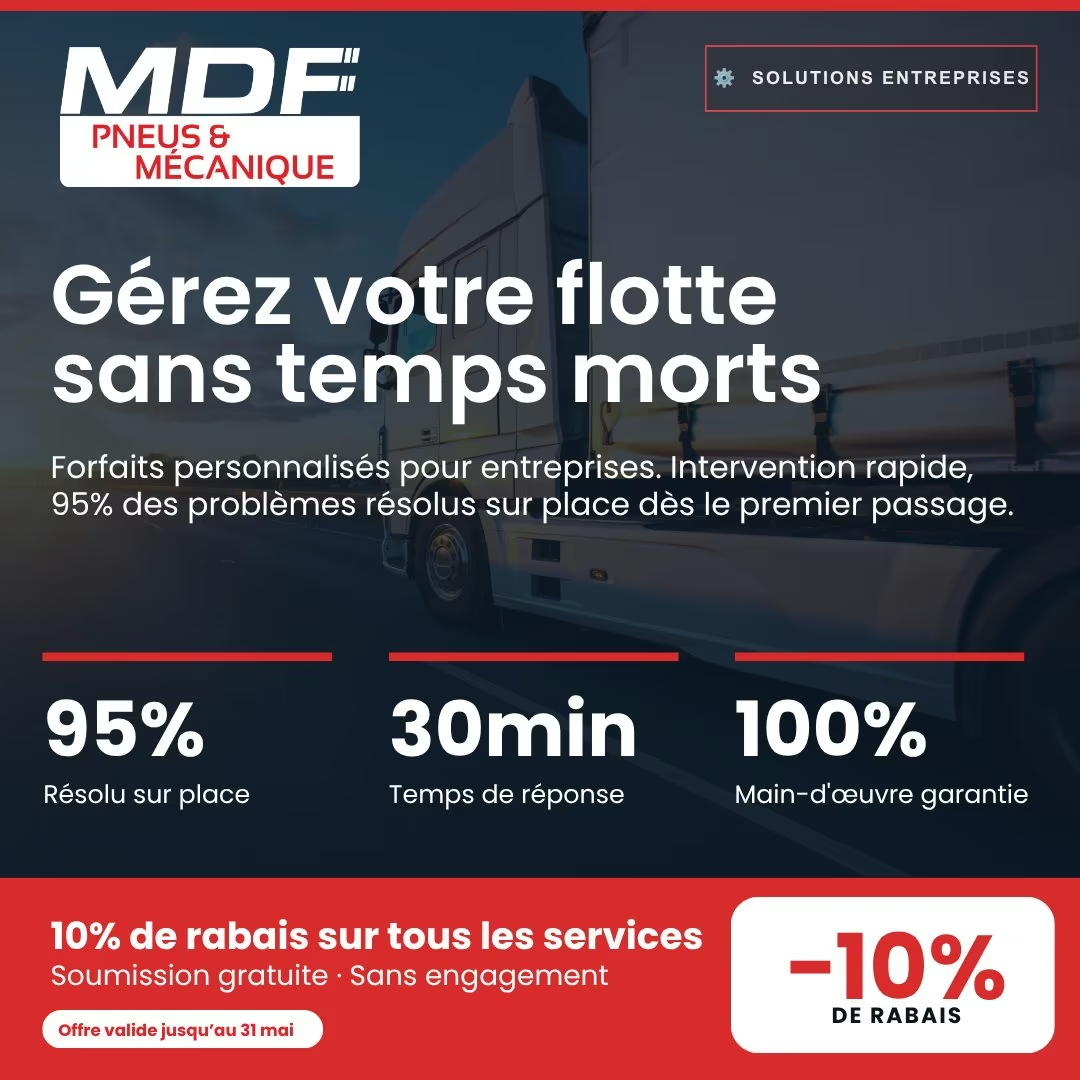
Static Ads



















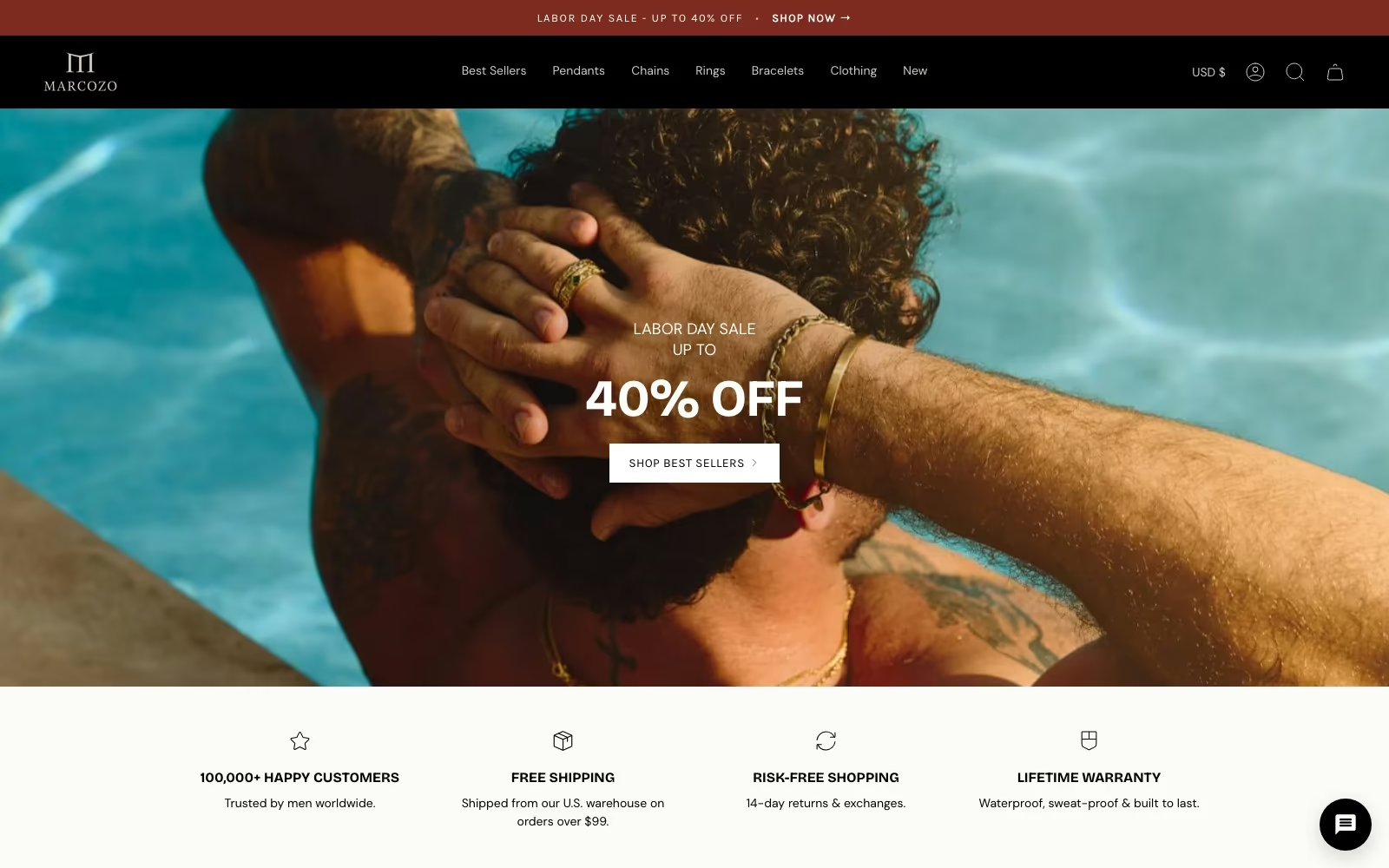

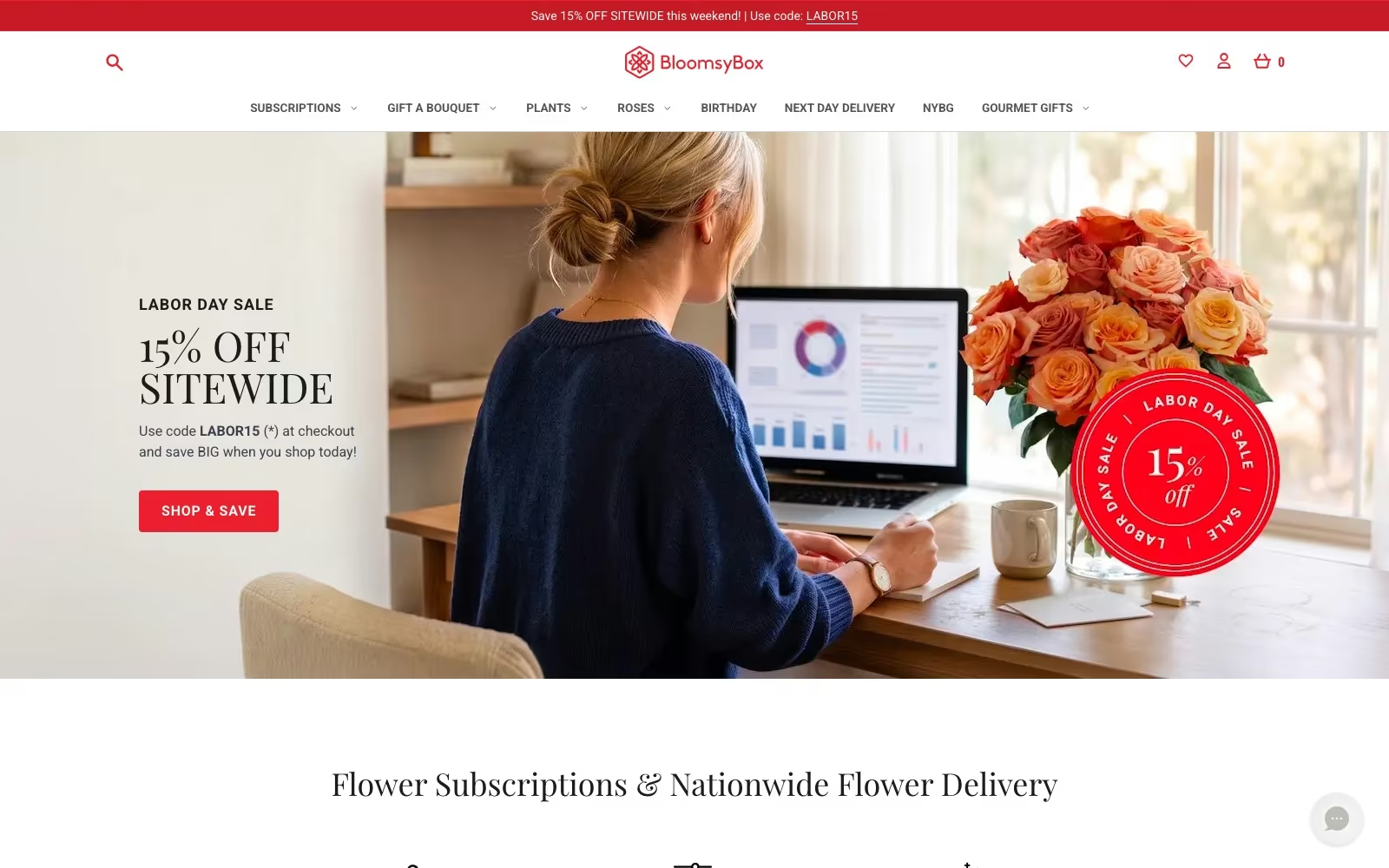

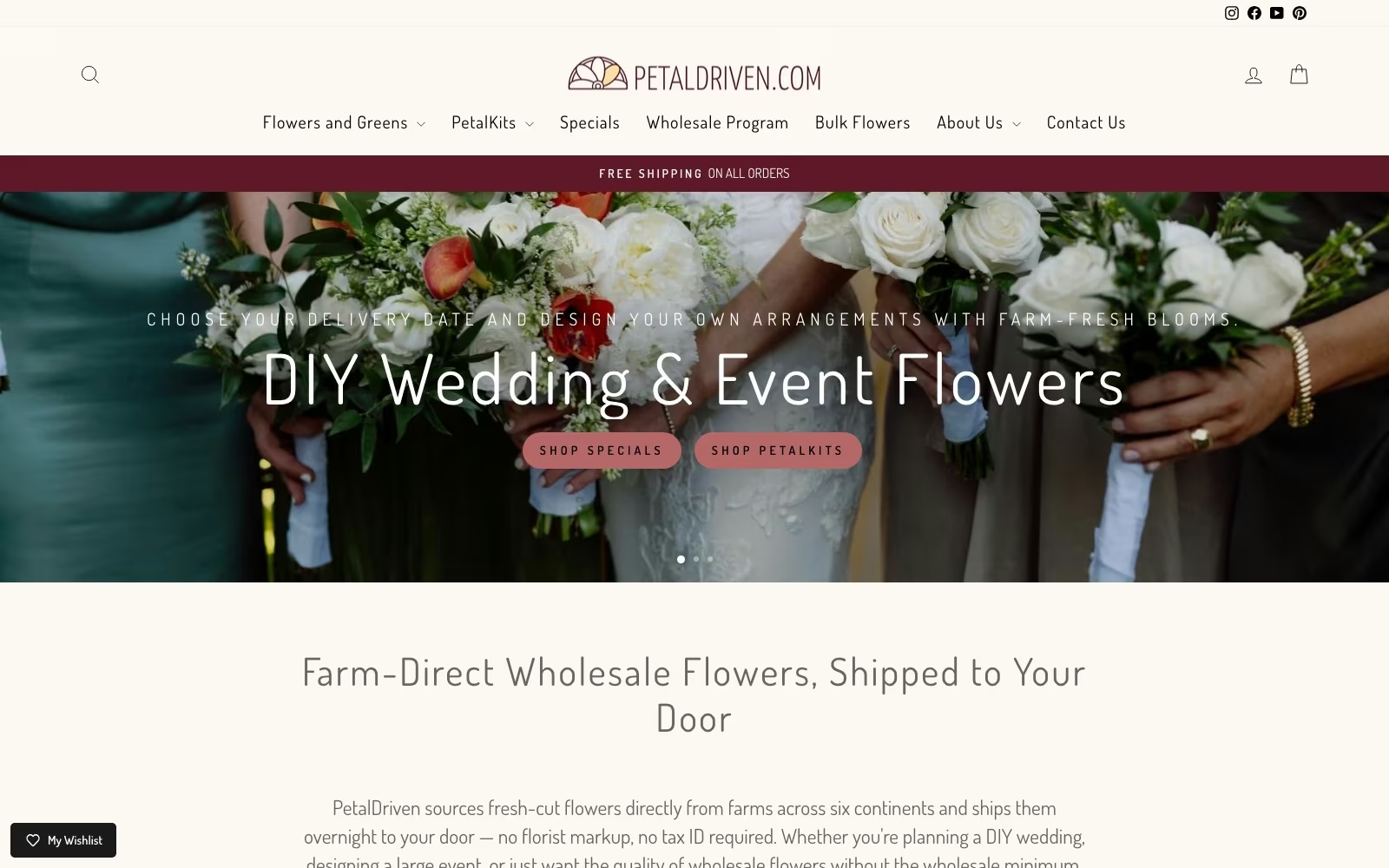



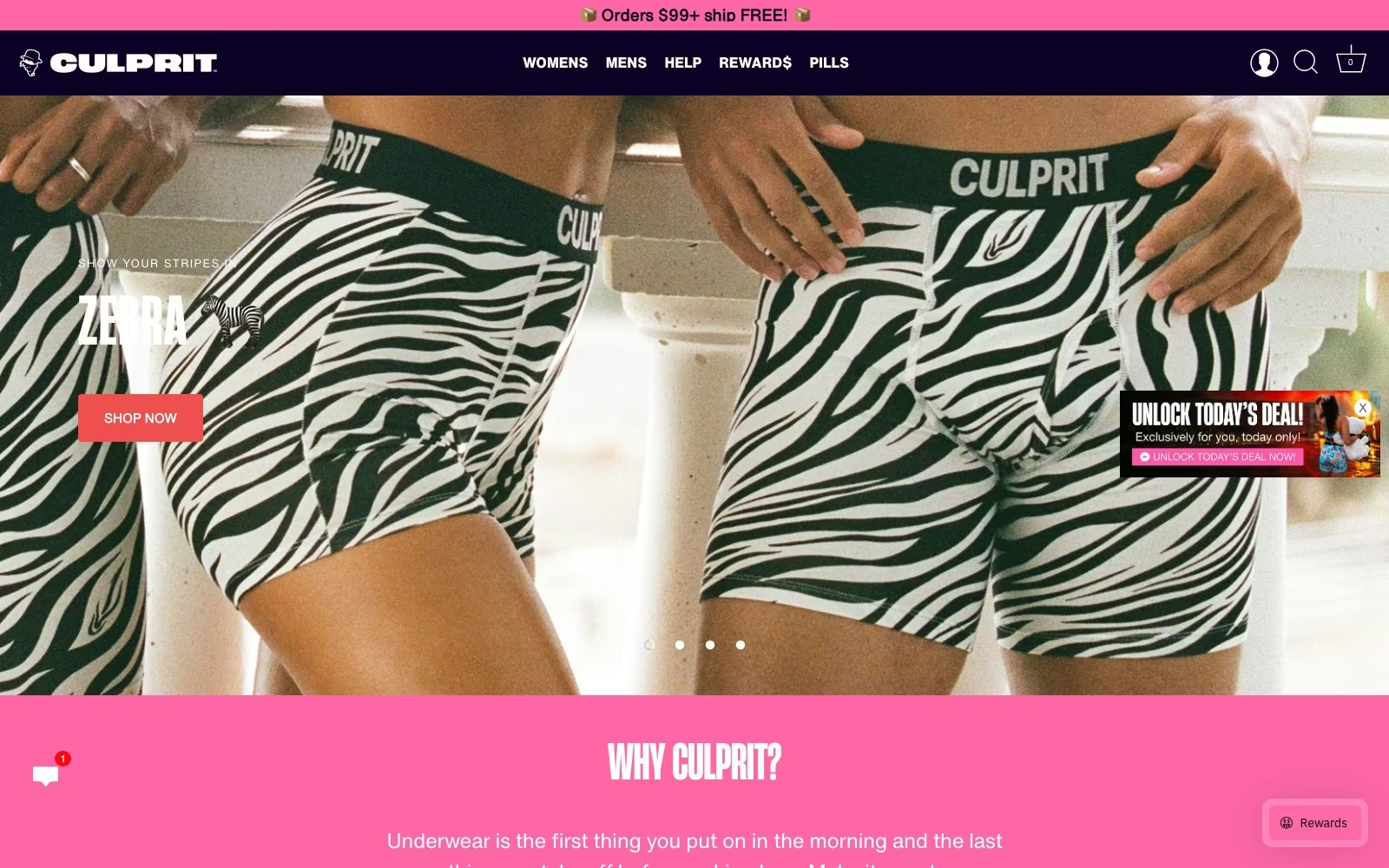






















EN

EN

EN


FR
FR
FR

FR

FR

FR

FR

FR


EN
FAQ
Questions contractors ask us
What does a roofing website actually need to do?
Turn a worried homeowner into a booked inspection in under a minute, on a phone. Everything else — the galleries, the material pages, the reviews — exists to support that. We design against that single job rather than against a mood board.
Why is our conversion rate so low?
It is the industry norm rather than a reflection on you: roofing sites average about 2.9%. The usual causes are a long form, no fast call route on mobile, one page covering every service, and nothing addressing insurance or financing. Those are all fixable, and fixing them is cheaper than buying more traffic.
Do we need separate pages for each town?
For the towns your crews genuinely serve, yes. A visitor wants to see their own area named and a job you finished nearby, and search engines need something specific to rank. We write them properly rather than spinning a hundred near-identical pages, which does more harm than good.
Can we keep our current domain and email?
Yes, and we handle the move carefully. Redirects are mapped page by page before launch so the rankings and links you have already earned carry across, and your email is untouched.
Will a redesign hurt our existing rankings?
Handled properly it protects them and usually improves them. We map every existing URL to its replacement, keep the pages that already earn traffic, and run the redirects and indexing checks the week of launch. The risk people worry about comes from skipping that step, and we do not skip it.
How long does a roofing website take?
Typically six to ten weeks from kickoff, and the pace is usually set by the photography day and by getting your warranty and material detail confirmed. We give you the dates at the start and tell you early if anything moves.
Do you write the content or do we?
We write it, from an interview with you and your estimators. You review every page before it goes live. Nobody outside your business knows your warranty terms or how you handle a claim, so we take that from you rather than inventing it.
What about our reviews and galleries?
Both get real space. Reviews pull through automatically so the page never goes stale, and galleries are organised by service and by area so a visitor can find a roof like theirs on a street like theirs.
Will the site be fast enough on a phone?
That is a build requirement rather than a hope. We test on a mid-range phone on mobile data, keep the imagery compressed properly, and treat a slow page as a defect to fix before launch.
Can you handle our paid traffic as well?
If you want. Many clients pair the site with roofing PPC or roofing SEO so the traffic and the pages are designed together, and plenty take the website alone and keep their current agency.
What happens after launch?
You get a written monthly read on enquiries by page and a rolling list of improvements. A roofing website is worth revisiting each season as your service mix and your towns change, and we would rather keep it current than hand it over and disappear.
Who works on it?
A named senior designer and writer who have been on your sites and met your estimators, supported by a developer and our analytics team. You have their direct line throughout the project and afterwards.

.webp)
.webp)