The first conversation now happens with an assistant.
with an assistant
At two in the morning, a mother asks ChatGPT what detox involves and whether insurance covers it. We run ChatGPT Ads and answer-visibility work for treatment providers so your programme is described accurately in that conversation. Commercial-intent conversations inside ChatGPT rose from 13.9% to 19.2% in a year.





Tell us a little about your brand and we'll be in touch within 24 hours to lock in a time.



FOUR WORKSTREAMS
Four workstreams behind assistant advertising for a treatment provider.
a treatment provider
The questions families really ask, compliance settled before anything runs, the clinical evidence that lets an assistant describe you correctly, and measurement that respects patient privacy.
Prompt and demand mapping
Compliance and placements
Clinical evidence and answer visibility
Private, honest measurement
What a family types at two in the morning.
These are not keywords. They are paragraphs: what withdrawal feels like, whether a partial hospitalisation programme is different from intensive outpatient, whether a job is protected, what a policy will actually pay. An analysis of 36,153 answers found even purely informational questions drew an advert 69.5% of the time, so these conversations are already commercial surfaces.
We map that question set by level of care, by payer situation and by who is asking — the person themselves, a parent, a spouse, an employer, a referring clinician — then use it to decide where a placement is appropriate and where clear published clinical content will do the work instead.
- Question sets built per level of care
- Family, patient and referrer conversations separated
- Insurance and cost questions mapped honestly
- Crisis-language prompts excluded from advertising
19.2%
of ChatGPT conversations now carry commercial intent
Certification and clinical review before spend.
Advertising addiction treatment is a certified activity. LegitScript certification is required before treatment ads can run on the major platforms, and health advertising sits under stricter review everywhere else. We settle that paperwork, the claim language and your clinical sign-off process before a single impression is bought.
Only then do we buy. Placements are set against the questions where an advert genuinely helps someone find care, budgets follow the hours your admissions team answers, and every line of copy names the level of care, the location and the payer position rather than promising an outcome nobody can promise.
- Certification status confirmed before launch
- Claim language reviewed by your clinical lead
- No outcome or success-rate claims, anywhere
- Budgets aligned to staffed admissions hours
3,770
active advertisers on ChatGPT in one measured week
46%
week-over-week growth after the spend floor dropped
Assistants describe you from what you publish.
When someone asks about treatment options in your state, the model assembles an answer from your programme pages, your accreditation records, directory listings and reviews. If your levels of care, licences, staff credentials and admissions process are not written plainly, the description will be vague or simply wrong — and you will not know.
We fix that evidence base with our AI search visibility and SEO teams: accurate clinical content, structured data, consistent listings across the 21,205 facilities catalogued in SAMHSA's national survey, and monitoring of how assistants describe you month to month.
- Levels of care and licences written in plain language
- Accreditation and staff credentials published clearly
- Directory and listing details made consistent
- Assistant descriptions monitored for accuracy
21,205
treatment facilities in SAMHSA's national survey
15,953
of those providing substance use treatment
Measured to admission, without exposing anyone.
Behavioural health has some of the most expensive paid demand in healthcare. 2026 benchmarks put addiction treatment search clicks at $94.50 with a 4.10% conversion rate and a $285 cost per lead, while the widely cited addiction recovery benchmark sits at $120.30 per lead across smaller outpatient programmes.
We measure to admission, not to clicks, using call tracking and form attribution configured so no clinical detail ever reaches an advertising platform. Our analytics and privacy teams set that up together, and you get a written monthly read.
- Call and form tracking configured for health privacy
- No clinical detail passed to advertising platforms
- Cost per enquiry and per admission reported by programme
- A written monthly read, not a dashboard link
$285
benchmark cost per lead for addiction treatment search in 2026
$94.50
benchmark cost per click in the same dataset
benchmark cost per addiction treatment lead on search in 2026
treatment facilities recorded in SAMHSA's national survey
Written read on enquiries and admissions
Ad accounts, content and tracking in your name
We made the difference for those brands

Consumer tech and platforms

Creative, content, arts & culture

B2B software, fintech, insurance

Home essentials, appliances, kitchen & pet

Home essentials, appliances, kitchen & pet

Retail & commerce

Home essentials, appliances, kitchen & pet

Beauty, personal care & wellness

B2B software, fintech, insurance

Beauty, personal care & wellness

Consumer tech and platforms

Creative, content, arts & culture
B2B software, fintech, insurance

Retail & commerce

Beauty, personal care & wellness

B2B software, fintech, insurance

Beauty, personal care & wellness

Home essentials, appliances, kitchen & pet

Creative, content, arts & culture

Food & beverage

Home essentials, appliances, kitchen & pet

Healthcare & regulated services
Creative, content, arts & culture

Home essentials, appliances, kitchen & pet

Food & beverage

Retail & commerce

B2B software, fintech, insurance

Apparel and lifestyle

B2B software, fintech, insurance

Beauty, personal care & wellness
01 — The challenge
The most expensive clicks in healthcare, and a new front door.
Treatment marketing has been priced like litigation for years. Addiction treatment search clicks average $94.50 and leads $285 in 2026. Meanwhile the first conversation a family has is increasingly with an assistant, not a search box, and 72% of US ChatGPT answers already carry an advert.
“A family arrived saying the chatbot had explained our programme to them. Half of what it said was out of date.”
That is the real risk here: not absence, but an inaccurate description you never see. A fifth of these conversations now carry commercial intent.
02 — Our approach
Accuracy first, certification second, spend last.
We begin by recording how the major assistants describe your programmes today, state by state and level of care by level of care. That transcript is usually the most useful document in the engagement, because it shows exactly where your published clinical information is thin, dated or contradictory.
Then we correct the record. Levels of care, licences, accreditations, staff credentials, admissions steps and payer positions get written plainly and marked up properly, so an assistant can describe you without guessing. That work also lifts ordinary search, and it costs nothing per click.
Only after certification and clinical sign-off do we buy placements, against the questions where an advert genuinely helps someone reach care. Tracking is configured with your privacy requirements first, admissions reporting second, and you receive a written monthly read. Accounts, content and data stay in your name throughout.
03 — What we did
Record, correct, certify, then buy.
How assistants describe you today, the clinical record corrected, compliance settled, and placements measured through to admission.
Weeks 1-2 / Baseline
How assistants describe you today
Answers recorded for each programme, state and level of care, with every inaccuracy documented before anything changes.

Weeks 2-6 / Evidence
The clinical record, written plainly
Levels of care, licences, credentials and admissions steps published clearly and marked up so models read them correctly.

Month 2 / Compliance
Certification and clinical sign-off
Certification confirmed, claim language reviewed by your clinical lead, and privacy-safe tracking configured before launch.

Ongoing / Prove
Cost per admission, reviewed monthly
Enquiries and admissions attributed by source and read against your existing search and referral channels.

WHAT YOU GET
Deliverables you keep, whatever happens next.
you keep
The ad accounts, the clinical content, the tracking configuration and the documentation are in your name from the first week.

Assistant description audit
What ChatGPT and other assistants say today about your programmes, with every inaccuracy listed.

Family question map
The questions patients, parents and referrers ask, grouped by level of care and payer situation.

Clinical content rebuild
Levels of care, licences, credentials and admissions steps written plainly and marked up properly.

Compliance pack
Certification status, reviewed claim language and a documented clinical sign-off route for every advert.

Privacy-safe tracking
Call and form attribution configured so no clinical detail reaches an advertising platform.

Monthly reporting pack
Cost per enquiry and per admission by programme, with a written note on what moved and what happens next.
HOW WE WORK
Operating standards, not promises.
Operating standards


Residential and detox
Inpatient enquiries where families need clarity on medical supervision, length of stay and cost.
ExploreOutpatient and IOP
Partial hospitalisation and intensive outpatient, where schedule, travel and work protection decide the choice.
ExploreClinical referrers
Physicians, therapists and employers who need your levels of care and admissions route stated precisely.
Explore

















Built on trust. Proven by results.
We partner with SMBs and Fortune 500 companies to deliver more than reach — we bring clarity, execution, and measurable outcomes. Every successful partnership starts with a strong culture fit and a shared drive to grow.



CASE STUDIES
Case studies
Website Portfolio
Video Ads
Static Ads
























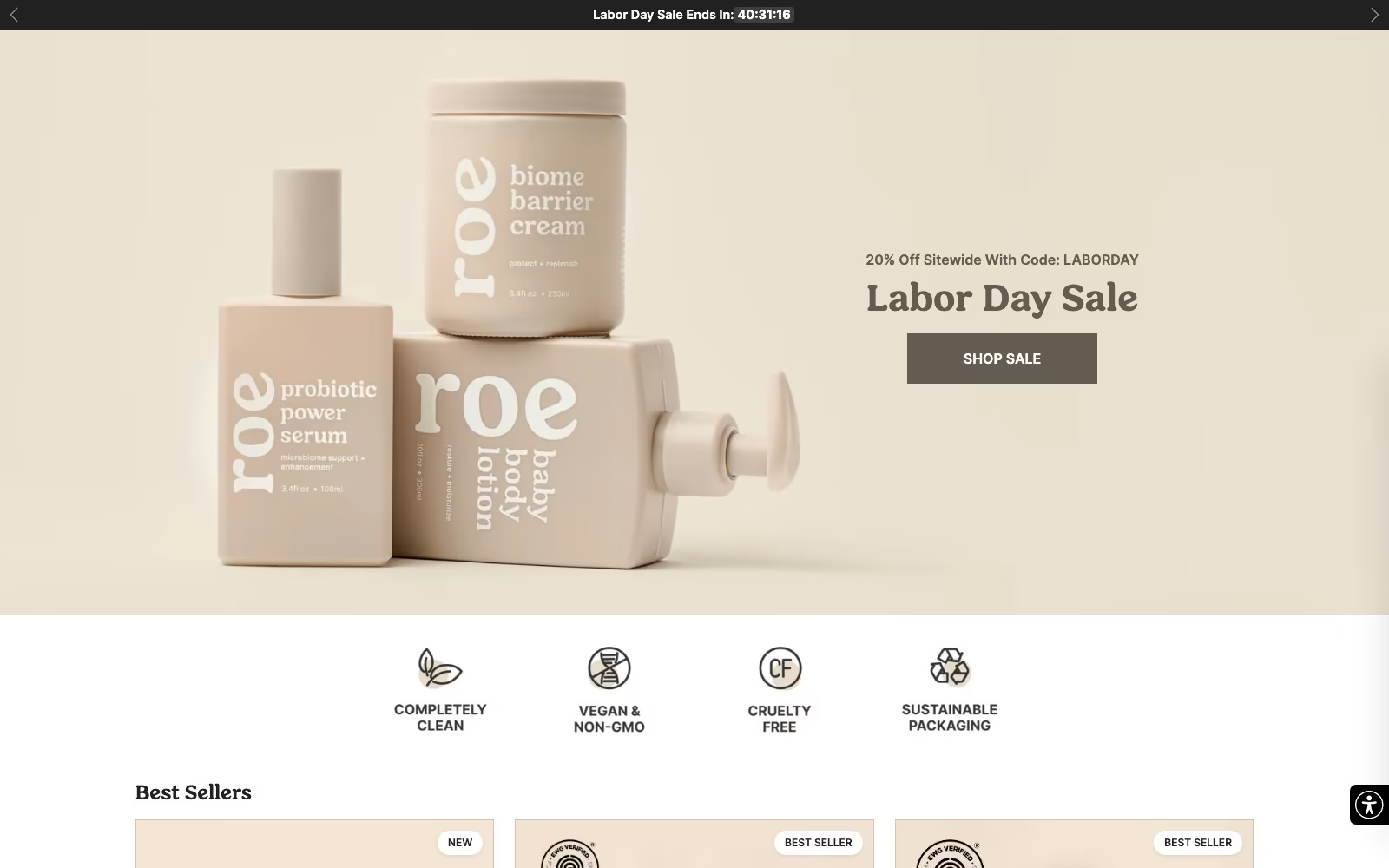

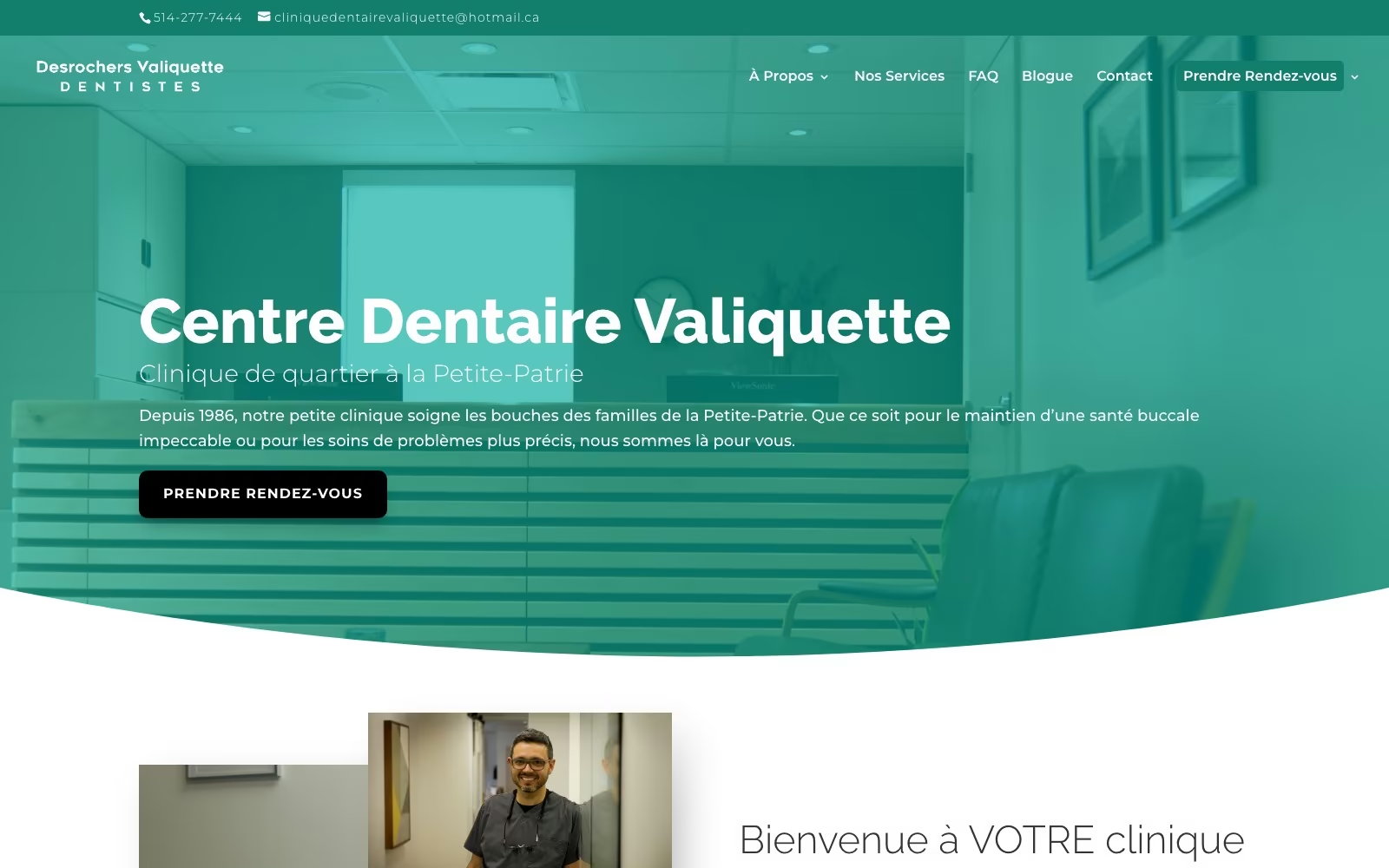

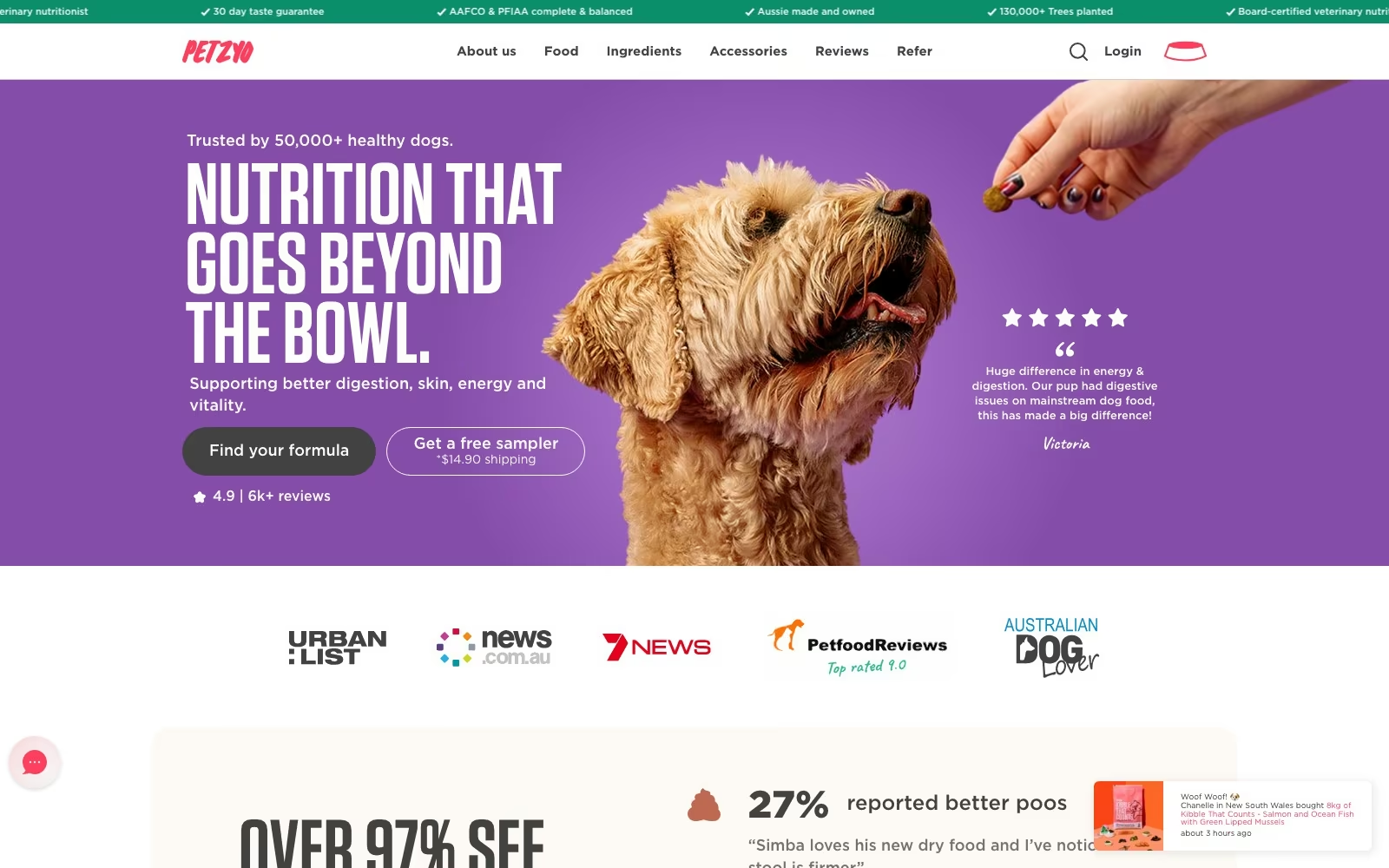

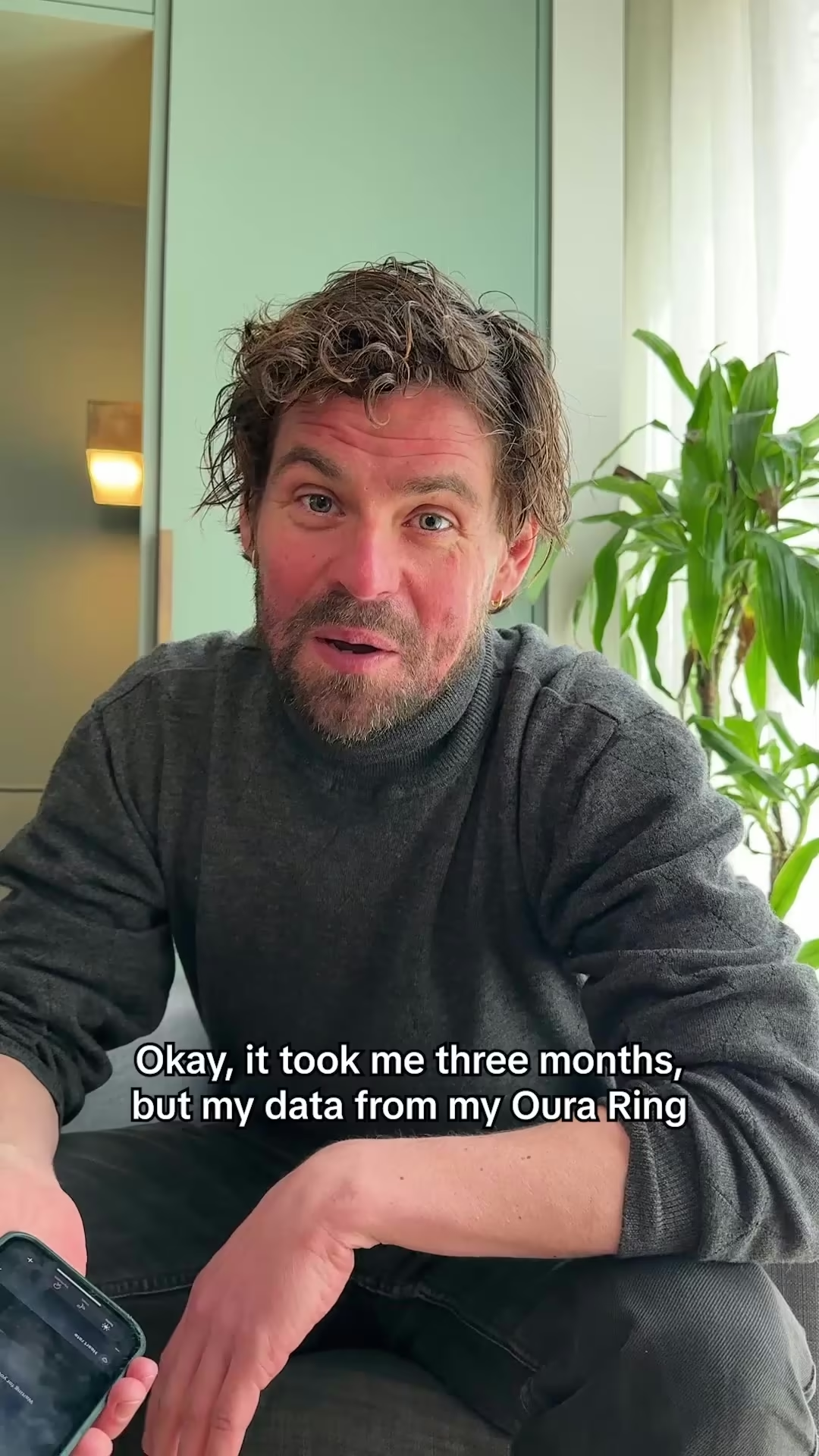







EN
EN

EN


FR
FR
FR

FR

FR

FR

FR

FR

EN
FAQ
Questions treatment providers ask us
Can a treatment centre advertise inside ChatGPT at all?
Health advertising is permitted but certified and reviewed, and the rules keep moving as the platform matures. LegitScript certification is the baseline requirement for advertising addiction treatment, and we confirm your status, your claim language and your clinical sign-off route before anything is bought. Where a placement is not appropriate, we say so and put the budget into visibility work instead.
What if ChatGPT describes our programme inaccurately?
That is the most common finding, and it is fixable. Assistants assemble descriptions from what you publish, from directories and from accreditation records, so vague or dated programme pages produce vague or dated answers. We record the current descriptions, list every inaccuracy, then correct the underlying record with plain clinical content and proper markup so the description improves at the source.
How do you handle patient privacy in tracking?
Privacy configuration comes before measurement. Call tracking and form attribution are set up so no clinical detail, diagnosis or sensitive parameter is ever passed to an advertising platform, and our privacy team documents the setup for your compliance officer. Reporting works at the level of enquiry sources and admissions counts, which is enough to run a budget responsibly.
Will you make claims about outcomes or success rates?
Never. We do not write success-rate, sobriety or guarantee language in any format, because it is unverifiable, it breaks platform policy and it damages the trust families arrive with. Copy describes levels of care, medical supervision, licences, accreditations, location, admissions steps and payer positions — concrete facts your clinical lead can approve line by line.
What does this cost compared with paid search?
Search in this field is expensive: clicks average $94.50 with leads at $285 in 2026, and the wider addiction recovery benchmark sits at $120.30 per lead for smaller outpatient programmes. Assistant placements are far less contested today, which is precisely why testing them now is sensible. We run both and let cost per admission decide the split.
Who is actually asking these questions?
In our mapping it is rarely only the patient. Parents, partners, adult children, employers and referring clinicians all ask, and each needs different information: medical supervision and safety for a parent, work protection and schedule for a partner, levels of care and admissions route for a referrer. We separate those conversations rather than writing one page addressed to everybody.
How long before this shows results?
The visibility work usually shows within a quarter, because assistants re-read your published record as it improves. Placements can produce enquiries in weeks. We report the two separately so you always know which part is paying, and in the first month we would rather show a small number of well-attributed admissions conversations than a large click count nobody can trace.
Do we need to change our website for this?
Usually a section of it, not all of it. The pages that matter are the ones describing levels of care, clinical staff, licences, insurance and the admissions process, and those often need rewriting for clarity rather than redesigning. Where a rebuild genuinely helps, our web design team scopes it separately so you can decide on its own merits.
How does this relate to our SEO programme?
It shares a foundation. Accurate clinical content, consistent listings, accreditation records and structured markup are what both an assistant and a search engine read, so providers already running SEO start well ahead. We run one content plan across both rather than duplicating work, and report assistant visibility alongside ordinary rankings.
Are other providers already doing this?
Very few, which is the opportunity while it lasts. Active advertisers across all categories rose from 2,585 to 3,770 in a single week worldwide, a small field beside the 15,953 substance use treatment facilities recorded in SAMHSA's survey of the US alone. Behavioural health is barely represented in assistant advertising today.
What happens if platform policy changes?
We plan for that. Because the visibility half of this programme is your own published clinical record, it keeps working whatever a platform decides about health advertising, and it is the part we build first. Placements are treated as a test that can be paused without losing anything, and we track policy changes for you rather than discovering them through a disapproval.
Who will be working on our account?
A named senior strategist with a healthcare compliance specialist and a content lead alongside, and the same people stay with your account. You will know their names, you can email them directly, and the person who wrote your plan is the person reviewing the numbers with your admissions team each month.

.webp)
.webp)