A plumbing website built for the phone in her hand.
the phone in her hand
Your visitor is standing in a wet hallway holding a torch. We build websites for plumbing companies around that moment, not around a design award. Most plumbing sites convert under 2% of visitors while well-built ones clear 10%.






Tell us a little about your brand and we'll be in touch within 24 hours to lock in a time.



FOUR WORKSTREAMS
Four workstreams behind a plumbing website that books work.
books work
A phone-first design built for people in a hurry, service and area pages that answer real questions, speed treated as a conversion lever, and a site search engines can rank from the day it launches.
Mobile-first design
Service and area pages
Speed and conversion
Search-ready from day one
Designed for a wet thumb and one bar of signal.
Between 70% and 80% of plumbing website traffic is mobile, and a sticky tap-to-call bar on its own can lift conversions by 30%. That single detail is worth more to a plumbing business than any amount of visual polish, and most sites we are asked to review still do not have one.
We draw the phone layout first and let the desktop version follow. The number stays on screen, the emergency route is one tap from every page, forms are short enough to finish one-handed, and the coverage area is stated plainly so nobody has to guess whether you come to their town.
- Tap-to-call fixed on screen across every page
- Layouts drawn on a handset before a desktop
- Forms short enough to complete one-handed
- Coverage area stated in plain language, not a map widget
70-80%
of plumbing website traffic comes from a phone
30%
conversion lift from a sticky tap-to-call bar alone
Every trade you sell deserves its own page.
A single services page listing twelve trades ranks for none of them and convinces nobody. Drain clearing, water heater replacement, repipes, bathroom installation and commercial maintenance each get a real page: what the job involves, what it usually costs, how quickly you can be there, and photographs from your own vans.
Around 72% of homeowners search online before hiring a plumber, so the page is doing the selling long before anyone rings. Our content team writes them from interviews with your engineers rather than from whatever your competitors published.
- A genuine page for each trade you actually sell
- Plain answers on cost, timing and what happens on the day
- Photographs from your own jobs, never stock plumbing images
- Area pages only for towns you can properly reach
72%
of homeowners research online before hiring a plumber
64%
of plumbing leads arrive from a mobile device
Three seconds is the whole budget.
53% of visitors abandon a site that takes longer than three seconds to load on mobile, and every additional second costs roughly 7% of conversions. On an emergency plumbing site that is not a technical statistic, it is the difference between your phone ringing and the next company's.
We build light pages, compress the job photography properly, and test on a real handset on a poor connection rather than a laboratory score. Our site speed specialists stay involved after launch, because a fast site slowly fills up with plugins and images if nobody is watching.
- Speed measured on a real phone on a weak connection
- Job photography compressed without turning to mush
- Enquiry and form actions tracked from the first day
- Performance rechecked after every content change
53%
of mobile visitors leave a site slower than three seconds
12-16%
site-to-lead conversion on well-built plumbing sites
A relaunch should not cost you rankings.
The most expensive plumbing website is the beautiful one that drops out of the map results. Redirects, page structure, service schema and business profile alignment are planned before the build starts, not patched afterwards, and profile signals carry around 32% of local pack ranking weight so the two are designed together.
Your existing rankings are mapped, every old address is redirected, and the new pages go live already matched to the search terms that were earning you calls. Our technical SEO team signs the launch off, and the plumbing SEO programme picks up from there.
- Existing rankings mapped before a single page moves
- Redirects written for every old address
- Service and review structured data built in
- Launch signed off against a technical checklist
55%
of plumbing search traffic goes to the Map Pack
32%
of local ranking weight sits in your business profile
conversion reached by properly built plumbing websites
average plumbing job ticket in the 2026 benchmark
Handover, training and files you own outright
Website, design files, content and data in your name
We made the difference for those brands

B2B software, fintech, insurance

Home essentials, appliances, kitchen & pet

Food & beverage

Healthcare & regulated services

B2B software, fintech, insurance

Food & beverage

B2B software, fintech, insurance

B2B software, fintech, insurance

Consumer tech and platforms

Creative, content, arts & culture

Retail & commerce

Creative, content, arts & culture

B2B software, fintech, insurance

B2B software, fintech, insurance

B2B software, fintech, insurance

Healthcare & regulated services

Consumer tech and platforms

Consumer tech and platforms

Food & beverage

Retail & commerce

Consumer tech and platforms

Apparel and lifestyle

Healthcare & regulated services

Home essentials, appliances, kitchen & pet

Beauty, personal care & wellness

Beauty, personal care & wellness

Travel & mobility

B2B software, fintech, insurance

Beauty, personal care & wellness

Healthcare & regulated services
01 — The challenge
A smart-looking plumbing site that quietly loses the call.
The design looks fine on a laptop. On a phone, in a hallway, with water spreading, the number is three scrolls down. Most plumbing websites convert under 2% of visitors while properly built ones clear 10% — and 53% of people leave if the page takes more than three seconds.
“We paid for a redesign, the traffic stayed the same and the phone went quieter.”
The urgency is the whole point: 70-80% of plumbing service calls are urgent rather than planned.
02 — Our approach
Design the phone screen, protect the rankings.
We start with the two things that decide whether a plumbing website earns its keep: what a panicking visitor sees in the first three seconds on a phone, and whether search engines can still find you the week after launch. Everything else is detail arranged around those.
The build is phone-first by default. The number stays fixed to the screen, each trade you sell gets a real page written from interviews with your engineers, and photographs come from your own jobs rather than a stock library. Coverage areas are stated plainly, and area pages are built only for the towns you can genuinely reach.
Before anything moves we map your existing rankings and write redirects for every old address, so a relaunch adds visibility instead of resetting it. Speed is tested on a real handset, call and form tracking is live from day one, and the site is handed over documented and in your name, with our analytics team reporting on what it actually books.
03 — What we did
Mapped, designed, launched, measured.
Rankings and enquiry data recorded first, a phone-first design built around your trades, a launch that protects your visibility, and reporting that ends at booked plumbing jobs.
Weeks 1-2 / Baseline
What the current site earns you
Rankings, call volume and conversion recorded page by page before anyone opens a design tool.

Weeks 3-6 / Design
The handset layout, first
Handset screens drawn and tested before desktop, with the number and the emergency route always in reach.

Weeks 5-8 / Content
A page for every trade you sell
Service and area pages written from your engineers' answers, with photographs from your own call-outs.

Launch / Prove
Live without losing rankings
Redirects mapped, structured data in place, speed tested on a real handset, and enquiries tracked from day one.

WHAT YOU GET
Deliverables you keep, whatever happens next.
you keep
The website, the design files, the content and the tracking are all in your name from the first week onwards.

Website and ranking audit
What your current plumbing site earns today, page by page, with the rankings a relaunch has to protect.

Phone-first design
Screens drawn for a phone in a hurry, with the number and the emergency route always within reach.

Service and area pages
A genuine page for each trade and each town, written from interviews with your own engineers.

Speed and performance build
Light pages and compressed job photography, tested on a real handset on a poor connection.

Migration and redirects
Every old address redirected and structured data in place so the launch protects your visibility.

Tracking and handover
Enquiry and form tracking live from day one, with documentation and training so your team can run the site.
HOW WE WORK
Operating standards, not promises.
Operating standards


Emergency plumbing
Burst pipes and blocked drains, where the visible phone number wins the job.
ExplorePlanned installations
Water heaters, repipes and bathrooms, where photographs and prices do the selling.
ExploreCommercial and property
Facilities and property managers, who read the credentials page before they call.
Explore

















Built on trust. Proven by results.
We partner with SMBs and Fortune 500 companies to deliver more than reach — we bring clarity, execution, and measurable outcomes. Every successful partnership starts with a strong culture fit and a shared drive to grow.






CASE STUDIES
Case studies
Website Portfolio
Video Ads
Static Ads




























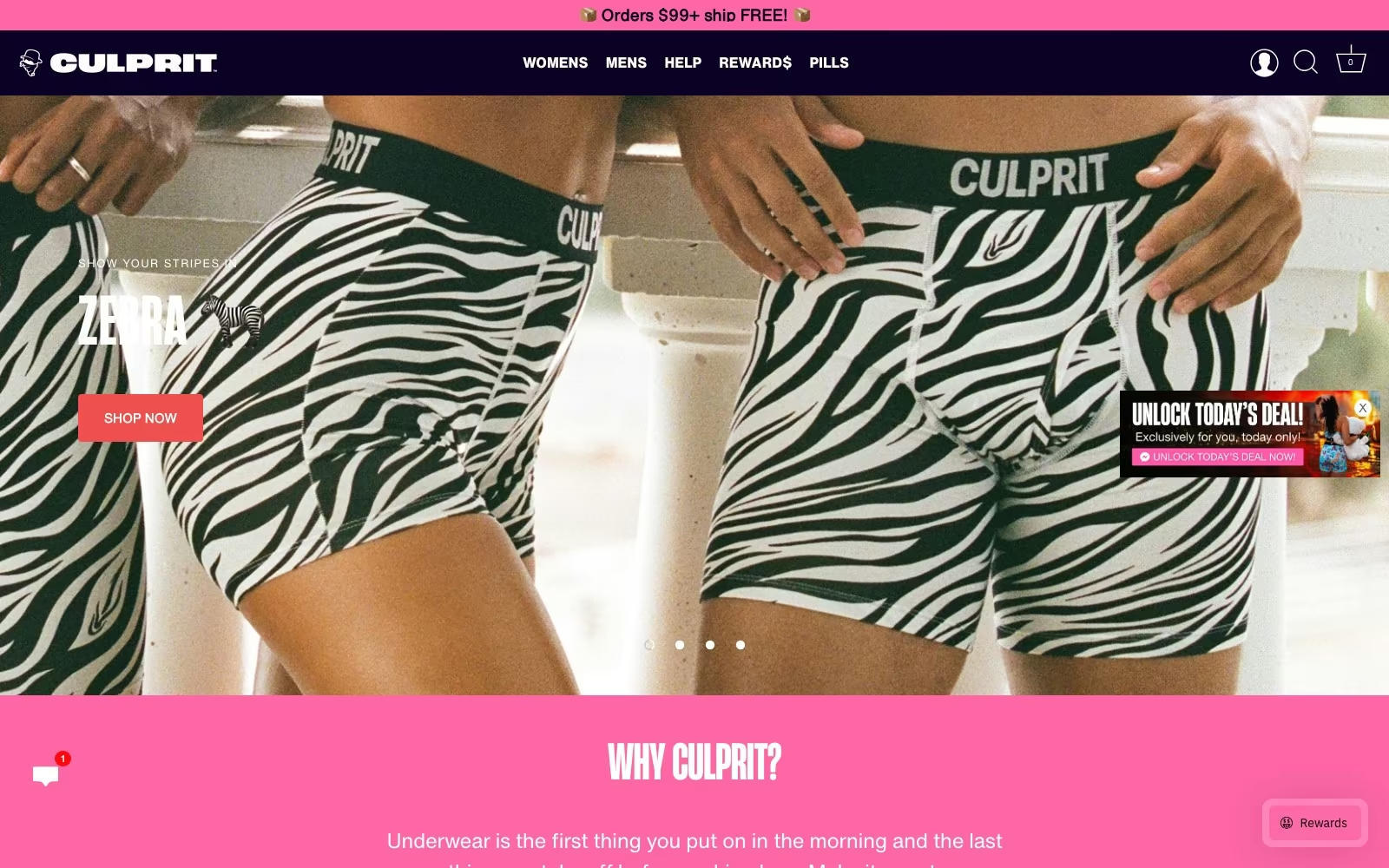





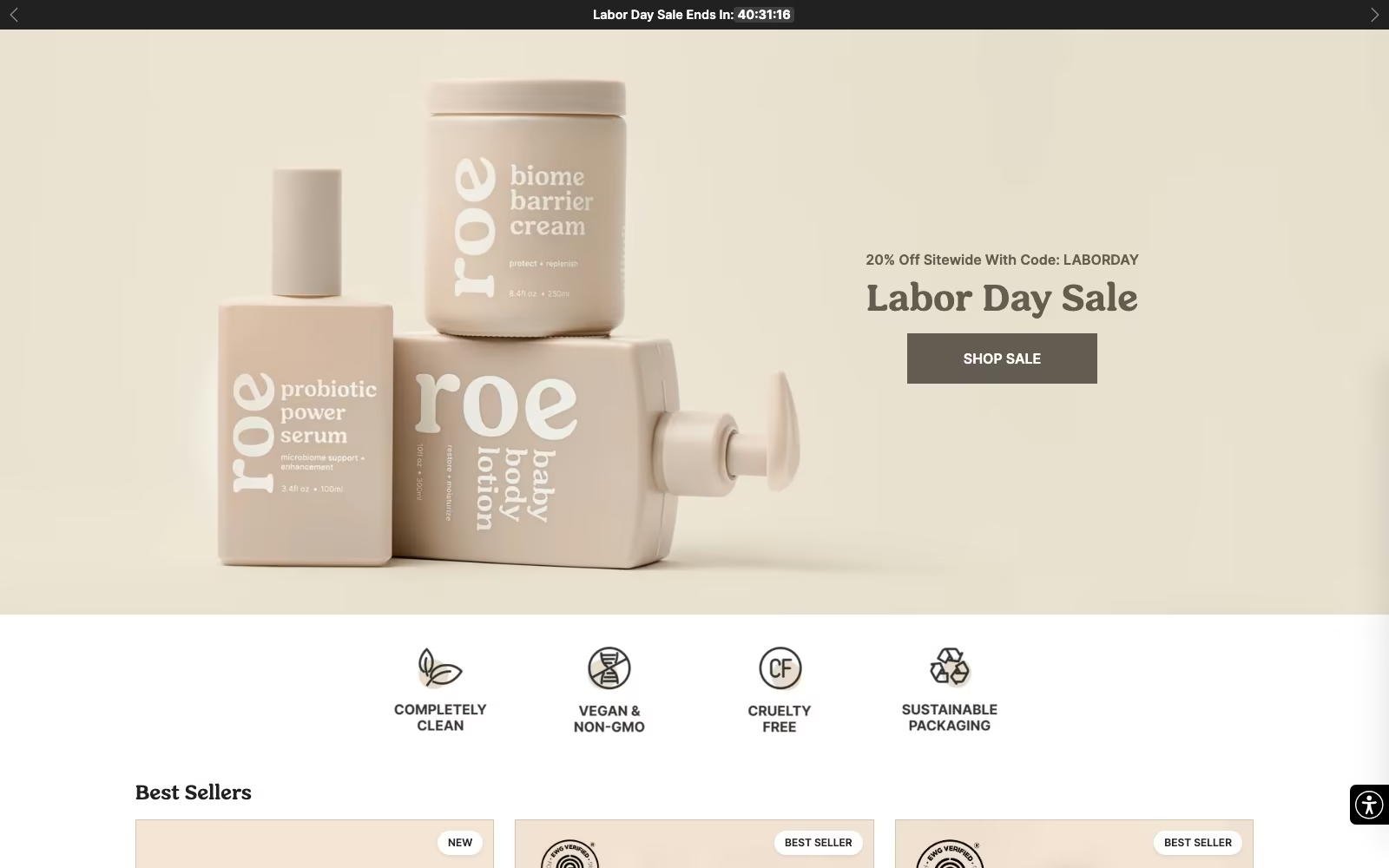

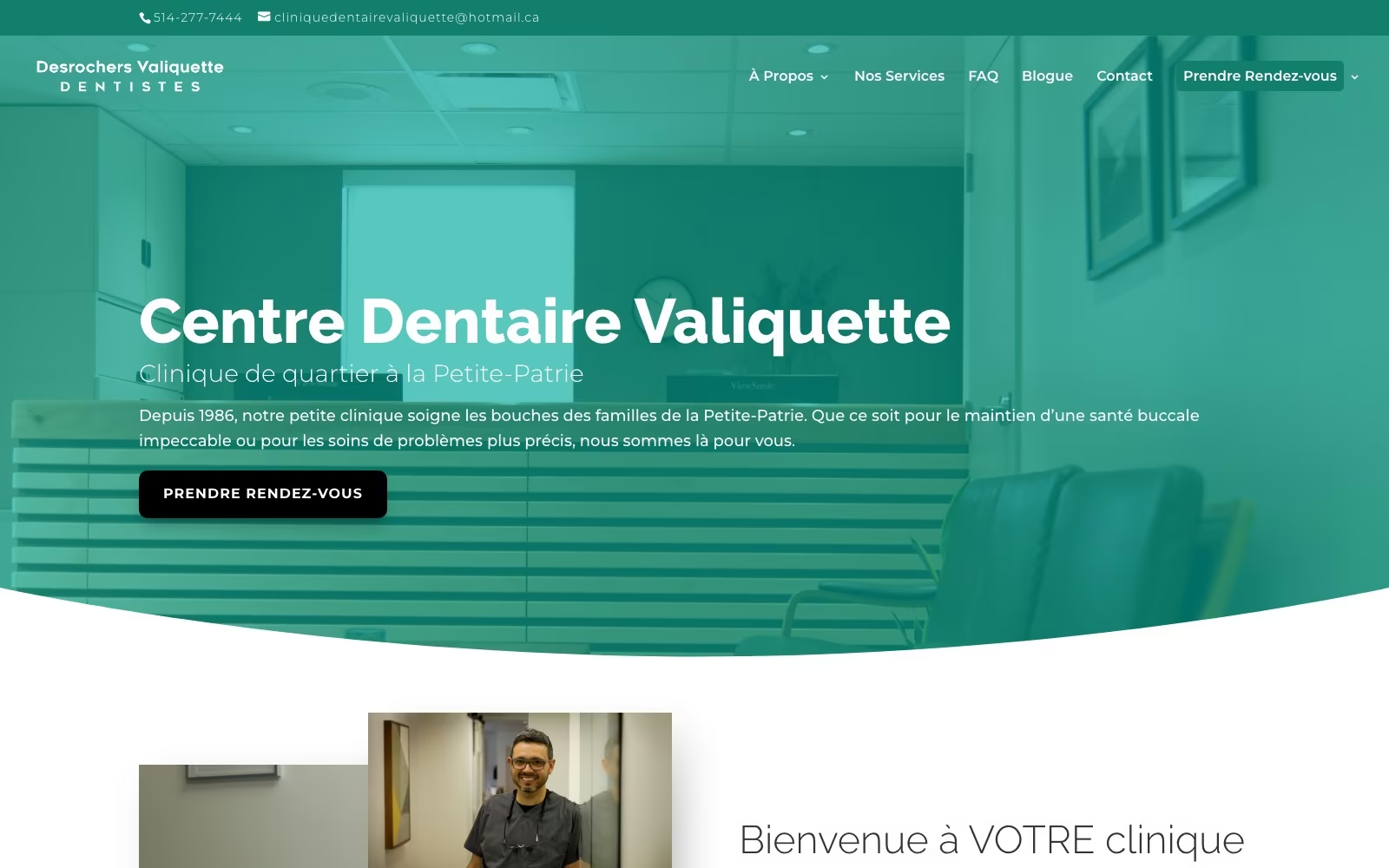

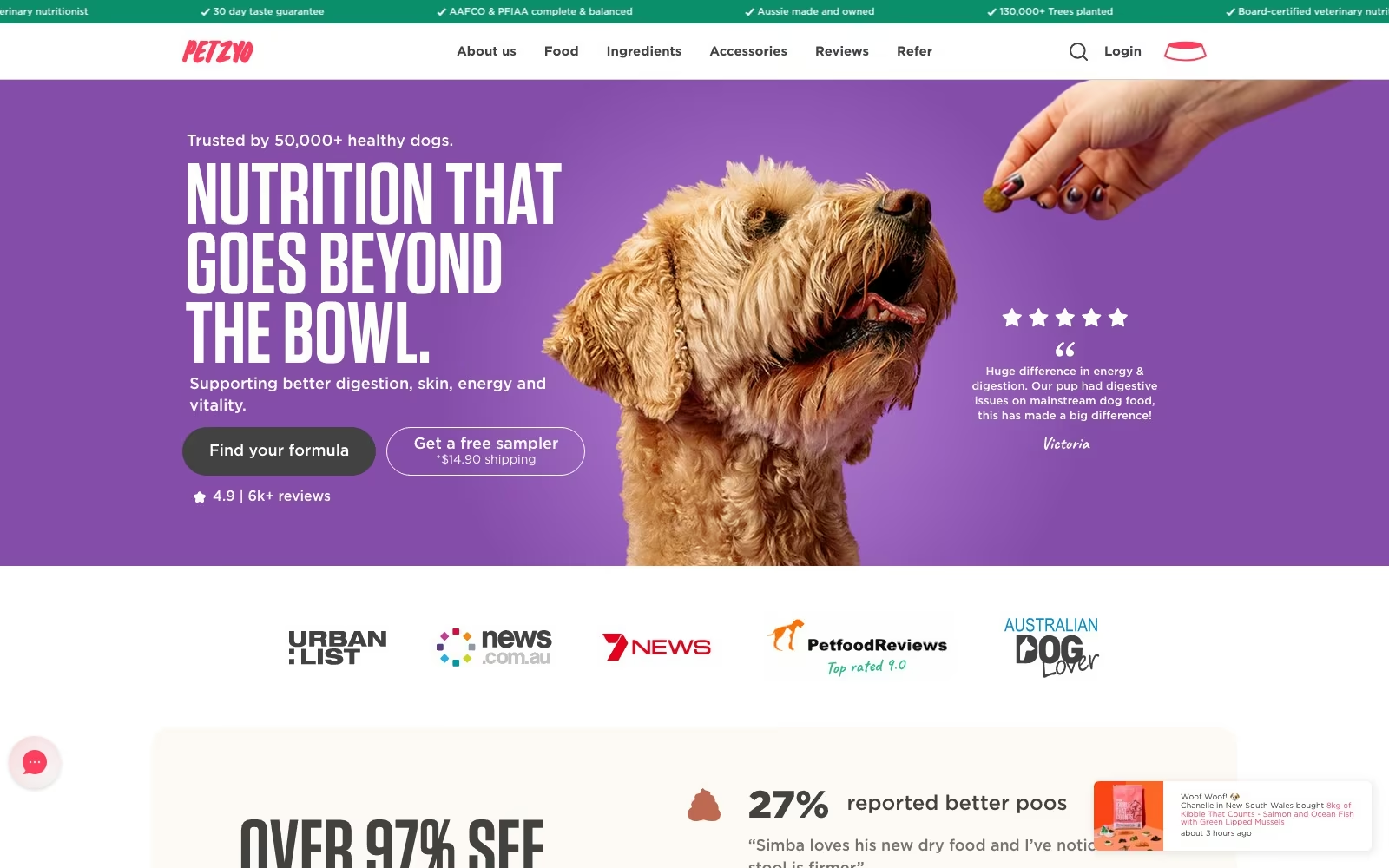















EN

EN

EN


FR

FR

FR

FR

FR

FR

FR

FR


EN
FAQ
Questions plumbing companies ask us
Will a new website hurt the rankings we already have?
Handled properly a rebuild lifts them, and protecting them is the first thing we plan rather than the last. Every current ranking and page is mapped before a design begins, redirects are written for every old address, and the new pages launch already matched to the search terms earning your calls. That matters because the Map Pack takes roughly 55% of plumbing search traffic and you cannot afford to disappear from it for a fortnight.
How long does a plumbing website take to build?
Six to ten weeks for most companies. The design and build are rarely the bottleneck; the honest answer is that the schedule depends on how quickly we can get half an hour with the person who books your jobs and photographs from a few real call-outs. Give us those in week one and the whole thing runs at the fast end of the range.
What does a plumbing website cost?
It scales with how many trades and towns need their own page, and we will tell you when a smaller build is the right starting point. The return is easy to model in this trade: the average plumbing ticket is $2,208 and 41.5% of leads become booked jobs, so a site that lifts conversion by a couple of points usually pays for itself inside a season. We agree the target before we quote.
Can you work with our existing website instead of rebuilding?
Often, and we will say so when it is the better value. Plenty of plumbing sites need a sticky call bar, faster pages and proper trade pages rather than a new platform — and a sticky tap-to-call bar alone can lift conversions by 30%. Where the platform itself is the constraint we will show you why before recommending a rebuild.
What platform do you build on?
Usually Webflow or WordPress, chosen around who will edit the site afterwards rather than around our preference. If your office manager is going to be updating opening hours and adding job photographs, that person's comfort matters more than any technical argument. Either way you get the accounts, the files and training on how to use them.
Do we need a page for every town we cover?
Only for the towns you genuinely serve well. Thin duplicated area pages with the place name swapped in are easy to spot and rarely rank, and they generate calls from places your engineers cannot reach in time. We build fewer, better area pages carrying real local jobs and honest response times, then add more as your coverage grows.
How do you decide what goes on the homepage?
By what the visitor is doing when they arrive. With 64% of plumbing leads coming from a mobile device, the homepage's job is to get an urgent visitor to the right trade page or the phone in one tap, and to reassure a planned-work visitor that you do that kind of job properly. Everything else — history, values, accreditation detail — earns its place further down.
Will the site be fast enough on a bad signal?
That is exactly what we test on. Lab scores are reassuring and largely irrelevant; we check real handsets on a throttled connection because that is where your customers are. Every extra second of mobile load time costs roughly 7% of conversions, so speed work continues after launch with our site speed team rather than stopping at handover.
Can we update the site ourselves afterwards?
Yes, and we would rather you could. Handover includes the accounts, the design files, written documentation and a training session with whoever will be making changes. Adding a job photograph, changing opening hours or publishing a new service page should not require an agency ticket, and if you would rather we handled it we will, at your pace.
How do we know the new site is working?
Enquiry and form tracking are live from day one, not added later, so you can compare enquiries against the baseline we recorded before the rebuild. Reporting comes from our analytics team and ends at enquiries and booked jobs rather than sessions. If a page is underperforming we will tell you and fix it rather than wait to be asked.
Should the website and our advertising be built together?
Ideally yes, because they share the same pages. Sending expensive emergency clicks to a slow homepage is the most common way plumbing companies waste ad budget, so we build campaign landing pages in the same system and hand them to our plumbing PPC team. One build, one set of tracking, one report.
Who will actually be designing our site?
A named senior designer and a developer, with a writer who will speak to your engineers directly. The same people stay with the project from the first call to handover, so nobody has to re-explain how your out-of-hours rota works. You will know their names and can email them without going through an account queue.

.webp)
.webp)