Nobody shares an advert about pipes. They share the reveal.
the reveal
We make the ad work that sells a plumber's craft: short films of the drain clearing, the slab leak found, the water heater swapped before dinner. Built for plumbing companies by our creative strategy team. Video ads carry 30-60% lower cost per lead than static images in the contracting trades.






Tell us a little about your brand and we'll be in touch within 24 hours to lock in a time.


FOUR WORKSTREAMS
Four workstreams behind ad work that sells a plumber's craft.
sells the job
Concepts drawn from the work you already do, filming on real jobs, editing to the platform, and testing that keeps the winners running and retires the rest before the audience tires of them.
Concepts from real jobs
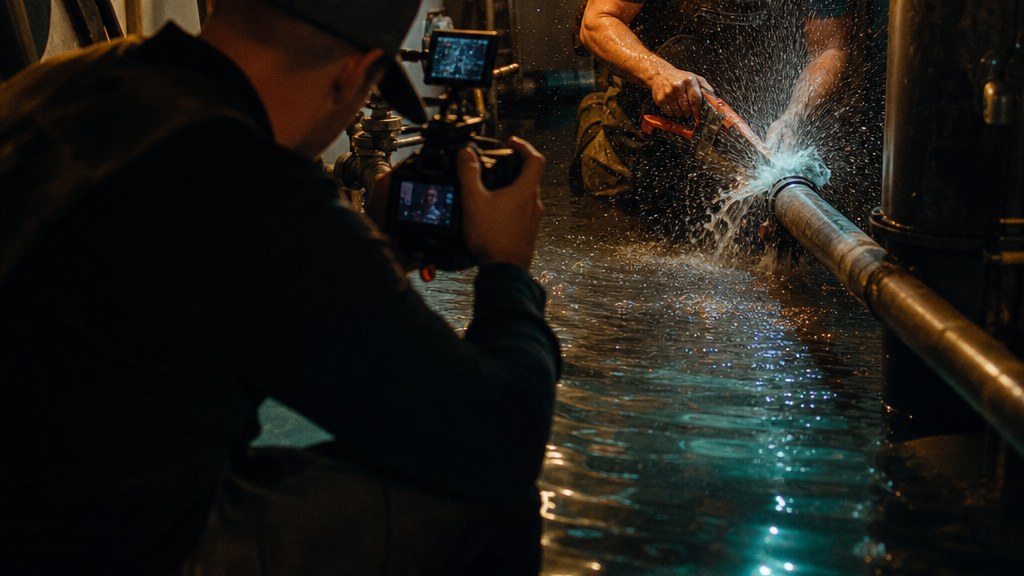
Filming on live jobs
Editing for each platform
Testing and refresh
The strongest ad work here is documentary.
A homeowner does not want a brand film. They want to see a blocked drain cleared, a slab leak traced under a kitchen floor, a bathroom put back together after a repair, a water heater installed properly. Those are the concepts we build a plumbing creative plan around, one per service you actually want more of.
It works because it is specific. Owner-on-camera videos run 25-40% lower cost per lead than agency-produced video in the contracting trades, which tells you exactly how much production polish is worth against a plumber explaining what he found and how he fixed it.
- A concept per trade you want more of, not one brand film
- Drain, water heater, repair and bathroom jobs planned separately
- Your own plumbers on camera rather than hired actors
- Scripts written around what the customer was worried about
25-40%
lower cost per lead from owner-on-camera video versus produced video
30-60%
lower cost per lead from video ads versus static images
Shot on the job, not in a studio.
We film on real plumbing jobs with a small crew, or we train your team to capture the moments properly on a phone. Water running clear after a drain clears. The old heater out and the new one in. A repair sealed and the bathroom left clean. Those beats do the selling; a voiceover about quality service does not.
Volume is the point. A plumbing business needs a library, not a showpiece, so we shoot in batches and cut many pieces from each day. Filming happens around your schedule and your customers' consent, and no job is ever delayed for a camera.
- Batch filming days planned around your real job board
- Customer consent handled before anything is filmed
- Phone-capture training so your plumbers keep feeding the library
- Before, during and after coverage on every shoot
70-80%
of call-outs are urgent, so filming plans around dispatch
$2,208
average ticket the advertising has to earn back
One shoot, many cuts.
The same job becomes a 15-second vertical reveal, a 30-second explainer, a set of stills for search and display, and a longer piece for your website. Each cut is edited for where it runs: captions on by default, the hook in the first second, the phone number and service area where a viewer expects them.
Format choice is a media decision, not a taste one. Reels reach 4-8% click-through in home services, the highest of any format, against 1.5-3.5% in feed, so the vertical cut usually leads and the rest support it. Our paid social team runs them.
- Vertical, square and landscape cuts from every shoot
- Captions burned in for silent viewing
- Hooks written and tested separately from the body
- Static and display assets cut from the same footage
4-8%
Reels click-through rate in home services, the highest of any format
1.5-3.5%
typical feed click-through rate for the same advertisers
Creative is tested, then retired on purpose.
Everything we make goes out as a test with a clear read: hook rate, cost per lead, and the one number that matters, cost per booked job. Plumbing and HVAC leads convert to booked jobs 41.5% of the time at a closed return on ad spend of 2.72x, so a cheap lead that never books is not a win and we report it as such.
Winners get more budget and more variations; tired creative is retired before performance sags rather than after. That cadence is why the library approach beats a single expensive film, and it keeps working when a competitor copies your best advert — because you already have the next six.
- Every concept launched as a measurable test
- Hook, body and offer tested as separate variables
- Cost per booked job reported, not just cost per lead
- A refresh calendar so nothing runs to exhaustion
41.5%
of leads that convert into a booked appointment
2.72x
closed return on ad spend in the 2026 plumbing benchmark
lower cost per lead from video ads than static images in the trades
average cost per lead on non-branded search in 2026
Written read on which concepts to scale or retire
Footage, edits, raw files and data in your name
We made the difference for those brands

B2B software, fintech, insurance

Food & beverage

Home essentials, appliances, kitchen & pet

B2B software, fintech, insurance
Travel & mobility

B2B software, fintech, insurance

B2B software, fintech, insurance

Consumer tech and platforms

Home essentials, appliances, kitchen & pet

Creative, content, arts & culture

Healthcare & regulated services

B2B software, fintech, insurance

Retail & commerce

Consumer tech and platforms

Consumer tech and platforms

Creative, content, arts & culture

Consumer tech and platforms

Beauty, personal care & wellness

B2B software, fintech, insurance

Healthcare & regulated services

Consumer tech and platforms

Retail & commerce

Healthcare & regulated services

Healthcare & regulated services

Creative, content, arts & culture

Home essentials, appliances, kitchen & pet

Food & beverage

Retail & commerce

B2B software, fintech, insurance

Apparel and lifestyle

Creative, content, arts & culture
01 — The challenge
Every advert in your market looks the same.
A stock photo of a smiling plumber, the words fast, reliable and insured, and a discount badge. When roughly 129,000 plumbing businesses are competing across the US, sameness is expensive: the homeowner has nothing to choose on except price, so the cheapest quote wins work you would rather have won on proof.
“We spend more on ads every year and the phone rings about the same.”
Media costs keep climbing meanwhile: non-branded search leads averaged $183 across 524 contractors in early 2026.
02 — Our approach
Film the work, cut it many ways, test it honestly.
We start with your job board rather than a mood board. Which services carry the margin, which ones you want more of next quarter, and which recent jobs would make a customer nod — the sewer line found without digging up the garden, the water heater replaced the same afternoon, the bathroom left cleaner than we found it.
Then we film in batches on live jobs, with consent agreed in advance and no job ever delayed for the camera. Your own plumbers appear on camera because that is what performs. Each shoot day yields a library: vertical reveals, explainers, stills for search and display, and longer pieces for your website and sales follow-up.
Everything launches as a test with a defined read, and we report cost per booked job rather than cost per click. Winners get more budget and more variations; anything tiring is retired on a schedule instead of being left to decay. The footage, the edits and the raw files stay yours, whoever runs your media next year.
03 — What we did
Concepts, shoot days, cuts, then a testing cadence.
A creative plan drawn from your real services, batch filming on live jobs, a library of cuts per platform, and a refresh calendar that keeps it working.
Weeks 1-2 / Plan
What your current creative earns
Existing ads reviewed against cost per lead and booked jobs, and the services worth building creative around agreed.

Weeks 3-4 / Shoot
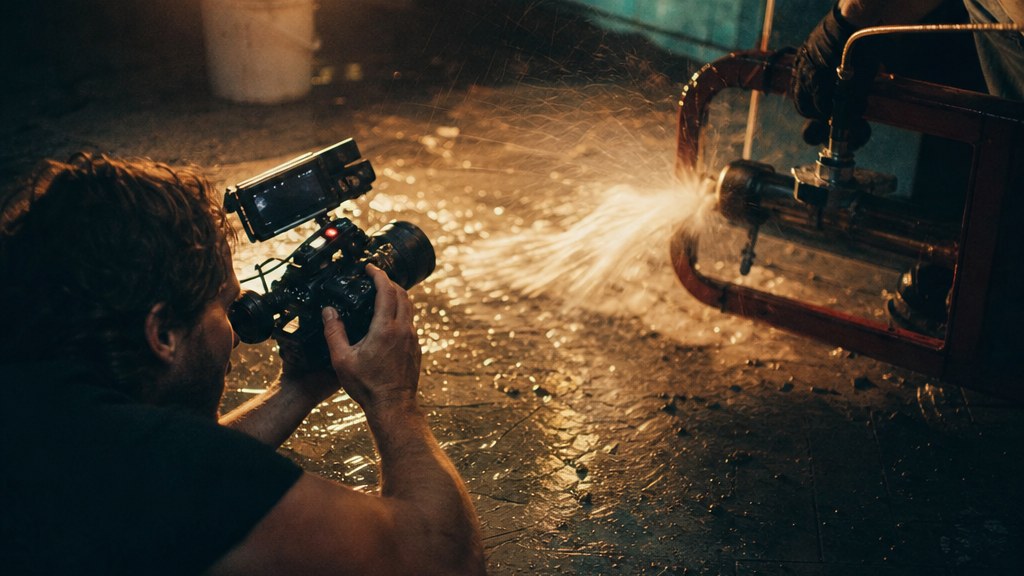
Filming on live plumbing jobs
A batch shoot day on real work, consent handled in advance, your own plumbers on camera rather than actors.
Month 2 / Cut
One shoot, a library of assets
Vertical, square and landscape cuts, captioned, with hooks written and versioned for testing.

Ongoing / Test
Winners scaled, tired ads retired
Everything measured to cost per booked job, with a refresh calendar so nothing runs to exhaustion.

WHAT YOU GET
Deliverables you keep, whatever happens next.
you keep
The footage, the edits, the raw files and the performance data are all in your name from the first shoot.

Creative and performance audit
What your current ads earn per lead and per booked job, and which concepts are worth keeping.

Creative plan by service
A concept per plumbing service you want more of, with the hooks and proof each one needs.

Batch shoot days
Filming on real jobs with consent handled in advance and your own plumbers in front of the camera.

Cut-down asset library
Vertical, square and landscape versions with captions, plus stills cut from the same footage.

Testing plan and results
Every concept launched as a measurable test, with hooks and offers versioned so you learn something each round.

Monthly reporting pack
Cost per lead and per booked job by concept, with a written note on what to scale and what to retire.
HOW WE WORK
Operating standards, not promises.
Operating standards

Emergency call-outs
Burst pipes and blocked drains, where the creative has to prove speed and competence in one second.
ExploreInstallations and remodels
Water heaters, repipes and bathroom projects, where before-and-after footage does the persuading.
ExploreMaintenance plans
Recurring service agreements, sold on prevention rather than rescue, with a different creative voice.
Explore

















Built on trust. Proven by results.
We partner with SMBs and Fortune 500 companies to deliver more than reach — we bring clarity, execution, and measurable outcomes. Every successful partnership starts with a strong culture fit and a shared drive to grow.





CASE STUDIES
Case studies
Website Portfolio
Video Ads
Static Ads
















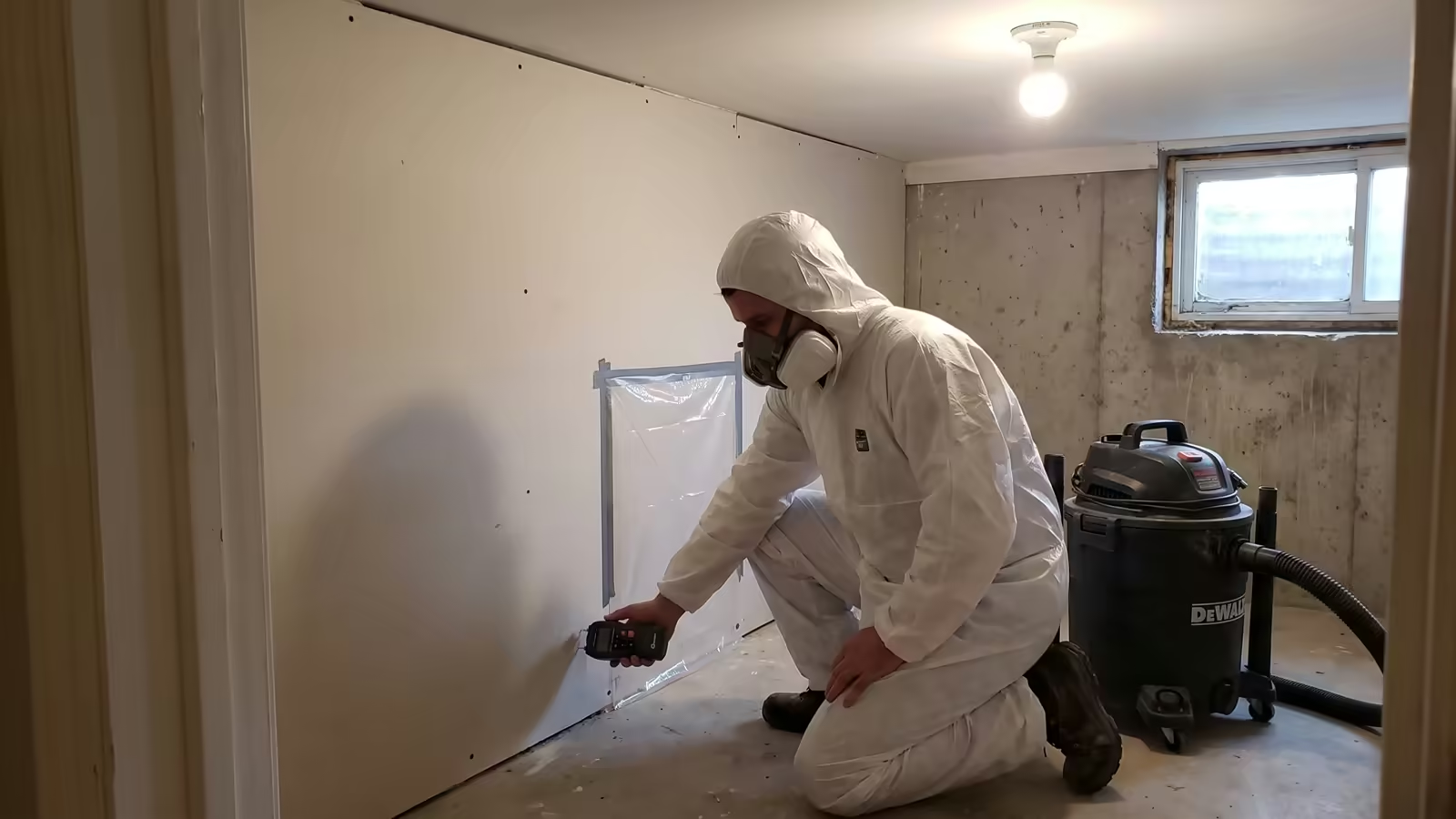

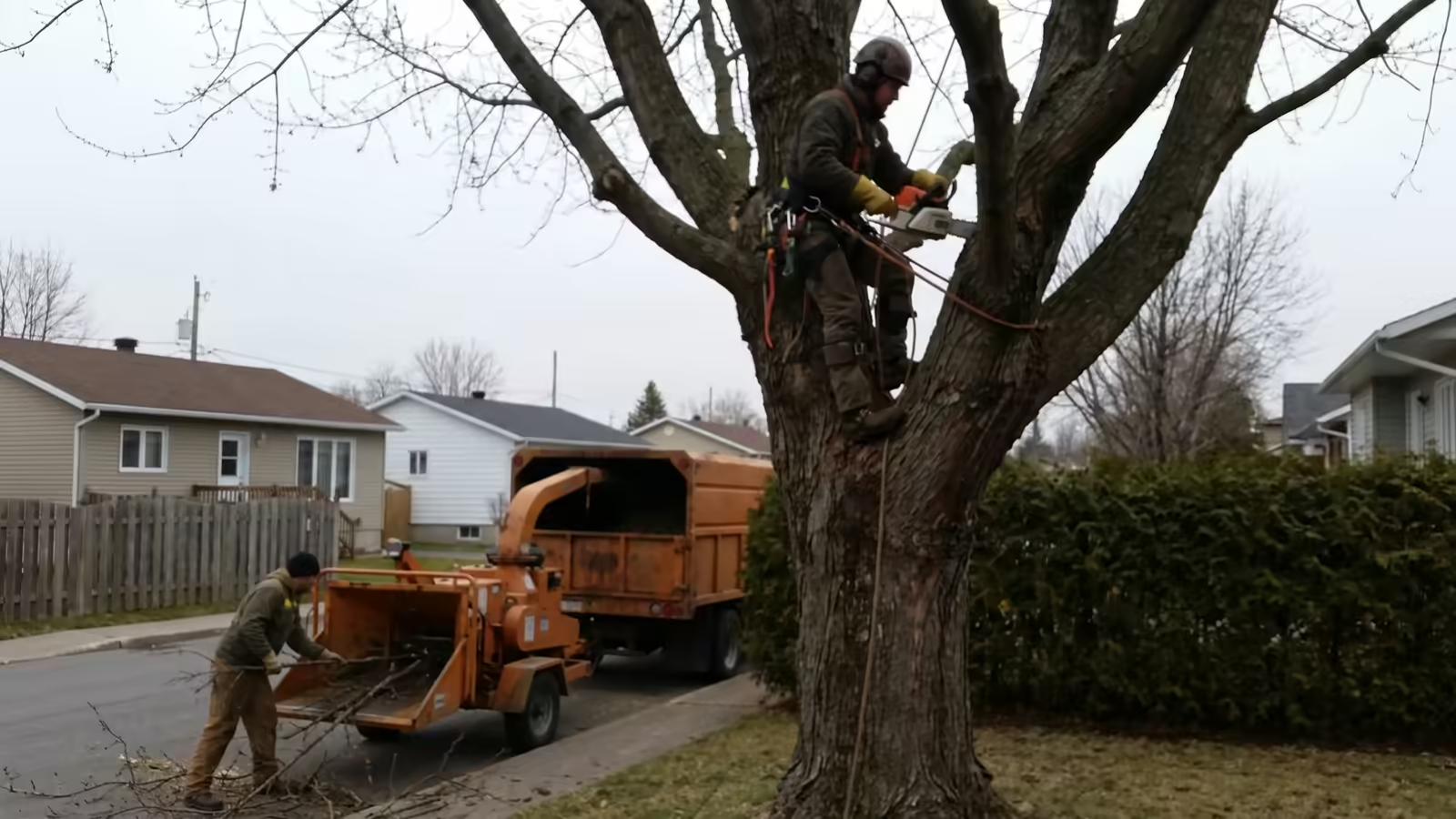



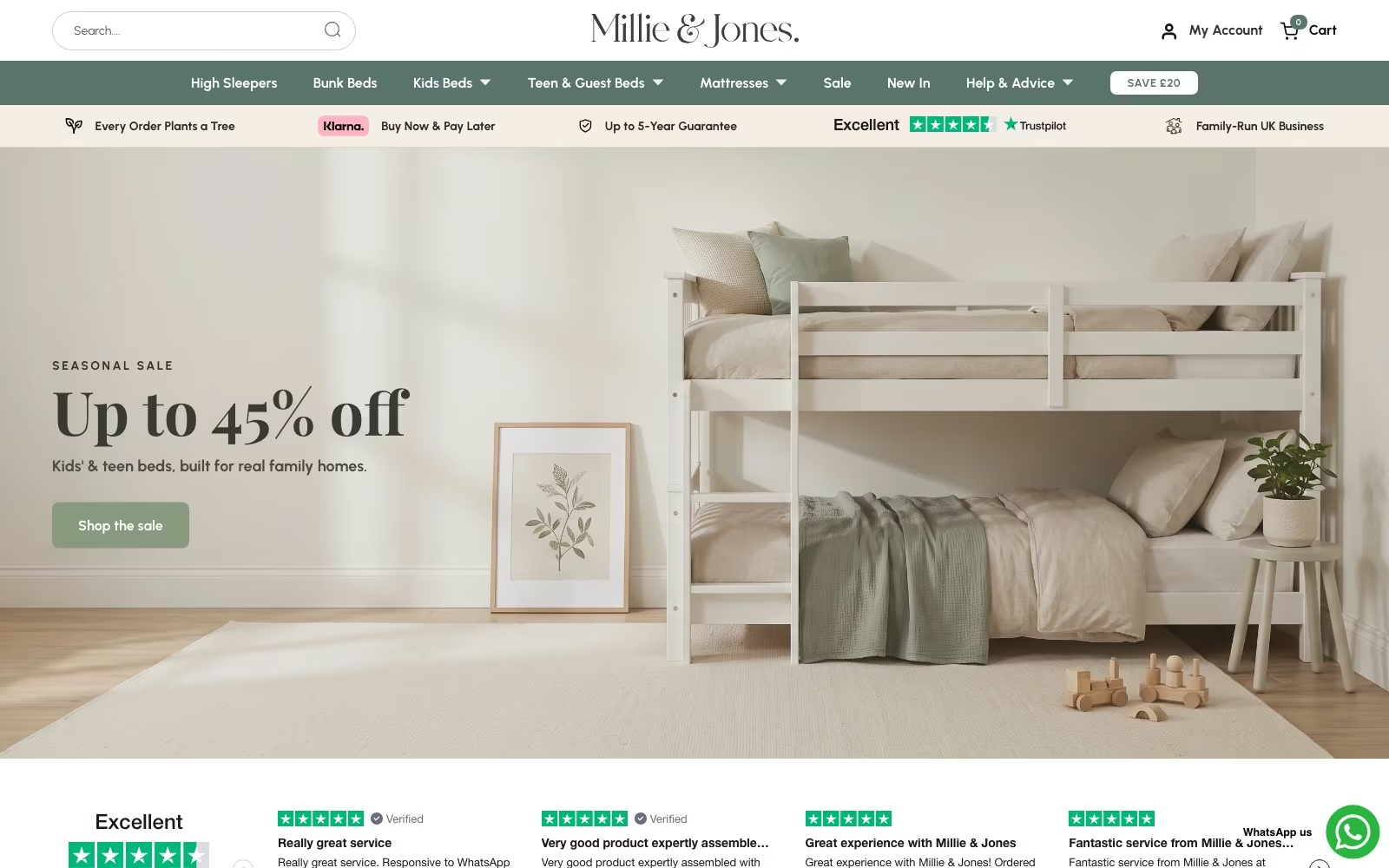

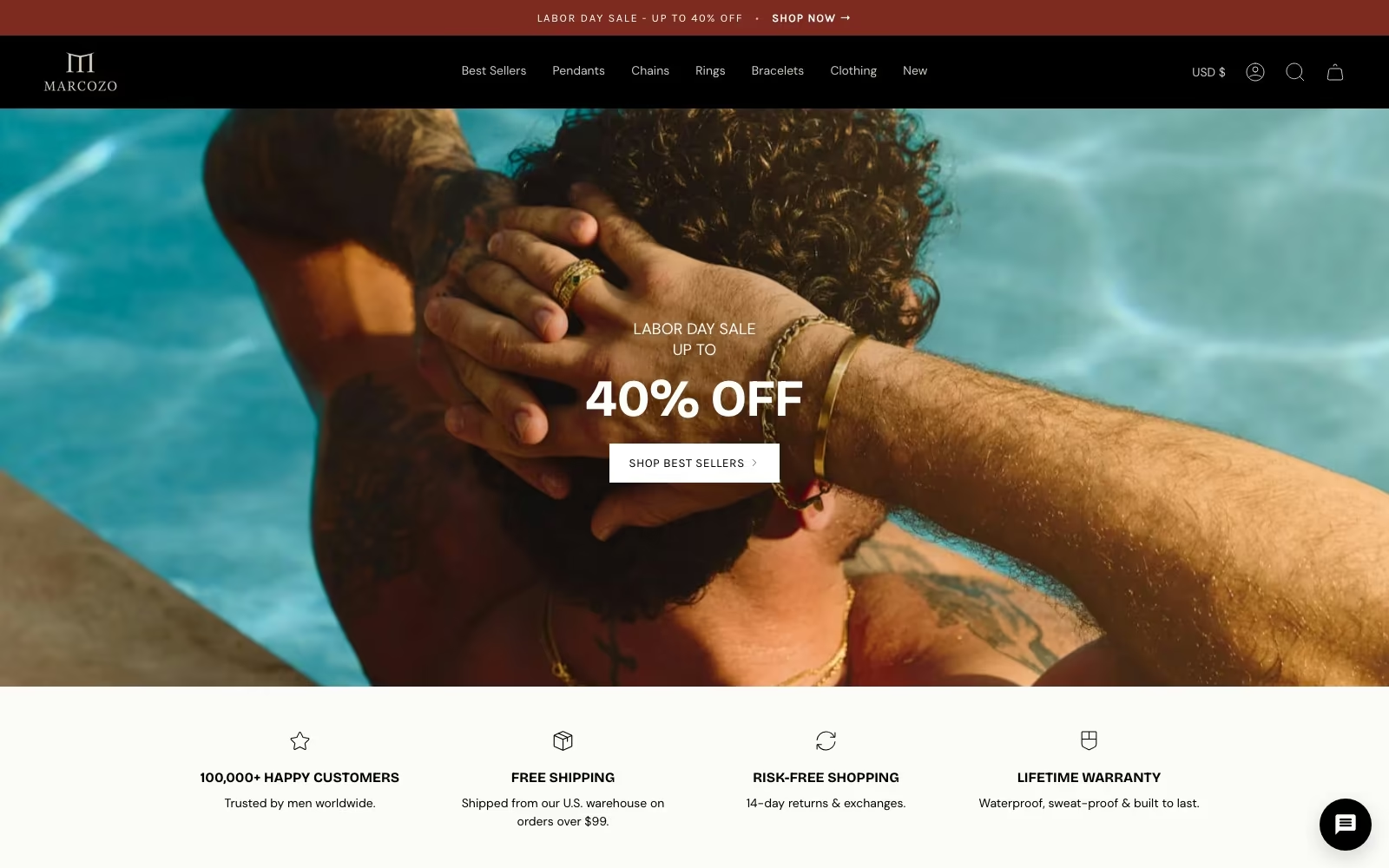

























EN

EN

EN


FR
FR
FR

FR

FR

FR

FR

FR


EN
FAQ
Questions plumbing companies ask us
What actually makes these adverts perform?
Specificity and proof. A homeowner scrolling past does not react to the words fast, reliable and insured, but they stop for a camera going down a blocked drain or a slab leak found without the floor coming up. The numbers back it: video ads carry 30-60% lower cost per lead than static images in the contracting trades, and owner-on-camera video runs 25-40% cheaper again than produced video. We build the plan around the jobs you already do well.
Do we have to appear on camera ourselves?
It is the single cheapest performance advantage available to a plumbing business, so we encourage it, but it is not compulsory and we never make anyone perform. Plenty of strong creative is built entirely around the work itself: hands, tools, water, before and after. If you or a lead plumber are willing to say a few sentences about what you found and how you fixed it, that is usually the best ad of the shoot.
How do you film without slowing our jobs down?
We plan filming around your dispatch board rather than the other way round, which matters in a trade where 70-80% of service calls are urgent. That usually means booking a shoot day against planned installation work and capturing emergency footage opportunistically on phones. Customer consent is agreed before anyone films inside a home, and if a job turns complicated the camera goes away.
How many ads do we need to run?
More than most companies expect, which is why we shoot in batches. Audiences in a local service market see the same advert quickly, so a single expensive film fatigues within weeks while a library of fifteen cuts keeps a channel healthy for months. One well-planned shoot day typically produces enough vertical, square and still assets for a quarter of testing.
Which services should the creative focus on?
The ones with margin and capacity, not the ones with the loudest demand. Job values differ enormously: drain cleaning averages $265, pipe repair $425, toilet replacement $380 and a sewer line repair $3,800. A campaign that fills the diary with $265 call-outs while the crew that does sewer work sits idle is a creative planning failure, not a media one. We start from your job mix.
How do you measure whether creative worked?
Cost per booked job, first and last. Hook rate and cost per lead tell us which concept to iterate, but they are diagnostics rather than results. Plumbing and HVAC leads book at 41.5% with a closed return on ad spend of 2.72x in the 2026 benchmarks, so a concept producing cheap leads that never book gets retired even if the dashboard looks flattering.
Can you work with footage we already have?
Yes, and it is often the fastest way to start. Most plumbing companies have years of job photos and phone clips sitting in a shared drive, and a surprising amount of it is usable once it is cut, captioned and given a proper hook. We audit what you have, build a first round of tests from it, and use what we learn to plan the shoot day properly.
Does this creative run on social only?
No. The same shoot feeds paid social, YouTube, display, your website and your quote follow-ups, and the stills cut from it work in paid search assets. Editing to each surface is part of the job rather than an afterthought, because a landscape cut dropped into a vertical feed is the most common way good footage is wasted.
How quickly can we launch?
Two to four weeks from kickoff to first test in most cases: a week to agree the plan and the services, a shoot day, then editing and launch. If you have existing footage worth using we often have a first round of tests running inside two weeks while the shoot is being scheduled around your job board.
Who owns the footage and the edits?
You do, including the raw files, from the first shoot day. We hand over an organised library rather than a folder of exports, so another team could pick it up tomorrow without recreating anything. There are no long-term lock-ins, because creative that has to be held hostage by a contract was not working hard enough to be renewed.
What about maintenance plans rather than one-off jobs?
They deserve their own creative voice, because you are selling prevention to someone with no emergency. That is a calmer, more explanatory format: what an annual check finds before it becomes a flood, what the plan covers, what it costs. We usually run it as a separate concept line to existing customers and past callers rather than mixing it with emergency advertising.
Who will be working on our creative?
A named senior creative strategist with an editor and a producer alongside, and the same strategist stays with the account rather than passing it down a queue. You will know their names, you can email them directly, and the person who planned your shoot is the person who reviews the results with you each month.

.webp)
.webp)