A site that gets the phone ringing.
the phone ringing
Nearly every mold enquiry starts on a phone, in a damp room, from someone who is worried. We build websites for mold removal and remediation companies that load fast, explain your process plainly and put a working call button in front of that person before they reach the next result.






Tell us a little about your brand and we'll be in touch within 24 hours to lock in a time.



FOUR WORKSTREAMS
Four workstreams behind a mold removal website that sells.
a mold removal website that sells
Design built for an anxious mobile visitor, a page for every service and place, speed treated as a revenue issue, and tracking that proves the site produced the call.
Design and conversion
Speed and technical build
Service and city pages
Tracking and after launch
Built for a worried person on a phone.
Restoration customers are not browsing. They want to know you cover their town, that you are certified, that a real crew exists and that someone will answer. Our layouts lead with that: service and area at the top, a call button fixed within reach, photographs of your own technicians, and the process explained in a few honest lines rather than industry language.
The emphasis on calling is deliberate. Click-to-call buttons convert at 8-12% on mobile, roughly three times mobile form submissions, and 71% of home service traffic is mobile. A beautiful desktop design that buries the number is a small business losing jobs quietly.
- Click-to-call in reach on every mobile screen
- Service area and certifications visible immediately
- Real crew photography instead of stock imagery
- Forms short enough to finish one-handed
8-12%
mobile conversion rate on click-to-call buttons
71%
share of home service website traffic on mobile
Seconds decide whether the call happens.
Emergency visitors arrive on mobile data, often from a basement. Speed is not a technical nicety in that situation, it is whether the business gets the enquiry. Across 200 contractor sites, pages loading under 2.5 seconds converted at 6.8% against 2.1% for pages over 4.5 seconds — the same traffic, three times the work.
Most of the industry has not solved this. In a review of 500 contractor websites the median site took 5.4 seconds to load and only 18% came in under three seconds. We build lean, compress imagery properly, defer the scripts that can wait, and hold Core Web Vitals in the green after launch, not just on launch day.
- Core Web Vitals treated as a lead metric
- Imagery compressed and served at sensible sizes
- Chat and tracking scripts deferred, not stacked
- Speed re-checked every month after launch
5.4s
median load time across 500 contractor websites
6.8%
conversion rate for contractor sites under 2.5 seconds
A page for every service you sell.
Mold inspection, testing, remediation, crawl space, attic, commercial and water damage restoration are different searches with different prices. One combined services page serves none of them well. We design a template that lets you hold a real page for each service in each city you cover, so search and paid traffic land somewhere specific.
Each page leads with the low-commitment step. A mold inspection typically runs $300-$800 and books at 55-70%, and it opens remediation work worth $3,000-$12,000, so asking for an inspection converts far better than asking for a five-figure decision.
- Templates for service pages and location pages
- Inspection-led calls to action throughout
- Certifications, containment and process explained plainly
- Structure your team can extend without a developer
55-70%
booking rate on mold inspection enquiries
$3,000-$12,000
typical remediation job an inspection can open
Proof the website earned its keep.
A rebuild that cannot be measured is a matter of opinion. We install call tracking, form and chat events, and where your field software allows it, connect booked inspections, so the site is judged in jobs. It matters because only 38% of answered home service calls are genuine leads, though 45% of those book on the call itself.
The commercial case is straightforward: paid mold remediation leads cost $55-$250 each, so a design change that lifts conversion is worth more than the same money spent on advertising. We keep improving the pages after launch instead of handing over a file and disappearing.
- Call, form and chat tracking live from launch day
- Booked jobs connected where your software allows
- Monthly review of speed, conversion and call quality
- Site, hosting and analytics in your name
38%
share of answered home service calls that are real leads
$55-$250
cost of a paid mold remediation lead, for comparison
share of contractor website visits arriving on mobile
load time above which contractor conversion falls away
Speed, conversion and call quality reviewed
Site, hosting, domain and analytics in your name
We made the difference for those brands

Consumer tech and platforms

Home essentials, appliances, kitchen & pet

Healthcare & regulated services

Beauty, personal care & wellness

Healthcare & regulated services

Beauty, personal care & wellness

B2B software, fintech, insurance

B2B software, fintech, insurance

B2B software, fintech, insurance

B2B software, fintech, insurance

Home essentials, appliances, kitchen & pet

Consumer tech and platforms

Consumer tech and platforms

B2B software, fintech, insurance

B2B software, fintech, insurance

Food & beverage

B2B software, fintech, insurance
Travel & mobility

B2B software, fintech, insurance

Retail & commerce

B2B software, fintech, insurance

Travel & mobility

Food & beverage
Creative, content, arts & culture

Healthcare & regulated services
Travel & mobility

Healthcare & regulated services

Home essentials, appliances, kitchen & pet

Creative, content, arts & culture

Beauty, personal care & wellness

B2B software, fintech, insurance

B2B software, fintech, insurance
01 — The challenge
The traffic arrives. The call does not.
Most remediation websites were built once, years ago, by someone who has since moved on. They load slowly on mobile, bury the phone number under a hero video, describe services in language a homeowner does not use, and have one page trying to cover seven services and a whole metro. So advertising and search both send visitors into a site that quietly loses them.
“We get the visits. I have no idea why so few of them call.”
It is usually not mysterious: 72% of restoration leads come from mobile during an emergency, and most contractor sites are still built desktop-first.
02 — Our approach
Design around the call, then prove it.
We start where the money is: which services you want more of, what a job is worth, where the crews travel, and what currently happens to visitors on the existing site. That produces a page structure and a set of conversion decisions before any design work begins, rather than a mood board and a guess.
Design is mobile-first and deliberately plain in the places that matter: service and area stated immediately, a call button always in reach, certifications and process visible without scrolling forever, and your own photographs doing the work stock imagery cannot. Templates let your team add services and locations later without paying a developer each time.
Build is lean and fast, tracking goes in before launch, and we keep working on the pages afterwards. Hosting, domain, analytics and the site itself are in your name from day one, so nothing about this relationship depends on you being locked in.
03 — What we did
Live in weeks, improved every month.
Structure and conversion decisions first, then mobile-first design, a lean build with tracking verified, and monthly improvement afterwards.
Weeks 1-2 / Discovery
What the current site loses
Speed, mobile behaviour and drop-off measured, services ranked by value, and the page structure agreed before design starts.

Weeks 2-5 / Design
Mobile-first layouts
Service and location templates designed around the call, with your crew photography and plain-language process copy.

Weeks 5-8 / Build
Fast build, tracking verified
Built lean, Core Web Vitals in the green, call and form tracking tested end to end before anything goes live.

Ongoing / Improvement
Kept sharp after launch
Monthly review of speed, conversion and call quality, with page changes made where the data points.

WHAT YOU GET
Deliverables you keep, whatever happens next.
you keep
The website, hosting, domain, analytics and call data are all in your name from the first week.

Structure and conversion plan
The pages you need, ranked by the value of the work, with the conversion decisions agreed before design begins.

Mobile-first design system
Layouts designed on the phone first, with templates for service pages and location pages you can reuse.

Plain-language site copy
Your process, certifications and containment explained the way a worried homeowner actually asks about them.

Fast, lean build
A site that loads quickly on mobile data, with Core Web Vitals in the green and imagery served sensibly.

Call and form tracking
Calls, forms and chats tracked from launch, with booked jobs connected where your software supports it.

Post-launch improvement
Monthly review of speed, conversion and call quality, with the changes made written down.
HOW WE WORK
Operating standards, not promises.
Operating standards


Residential remediation
Basement, bathroom and attic work, where the visitor is anxious and decides in minutes.
ExploreCommercial and property managers
Schools, offices and multi-unit buildings, where documentation and references win the job.
ExploreWater damage and insurance work
Claims-led remediation after water losses, where the site must explain coverage clearly.
Explore

















Built on trust. Proven by results.
We partner with SMBs and Fortune 500 companies to deliver more than reach — we bring clarity, execution, and measurable outcomes. Every successful partnership starts with a strong culture fit and a shared drive to grow.






CASE STUDIES
Case studies
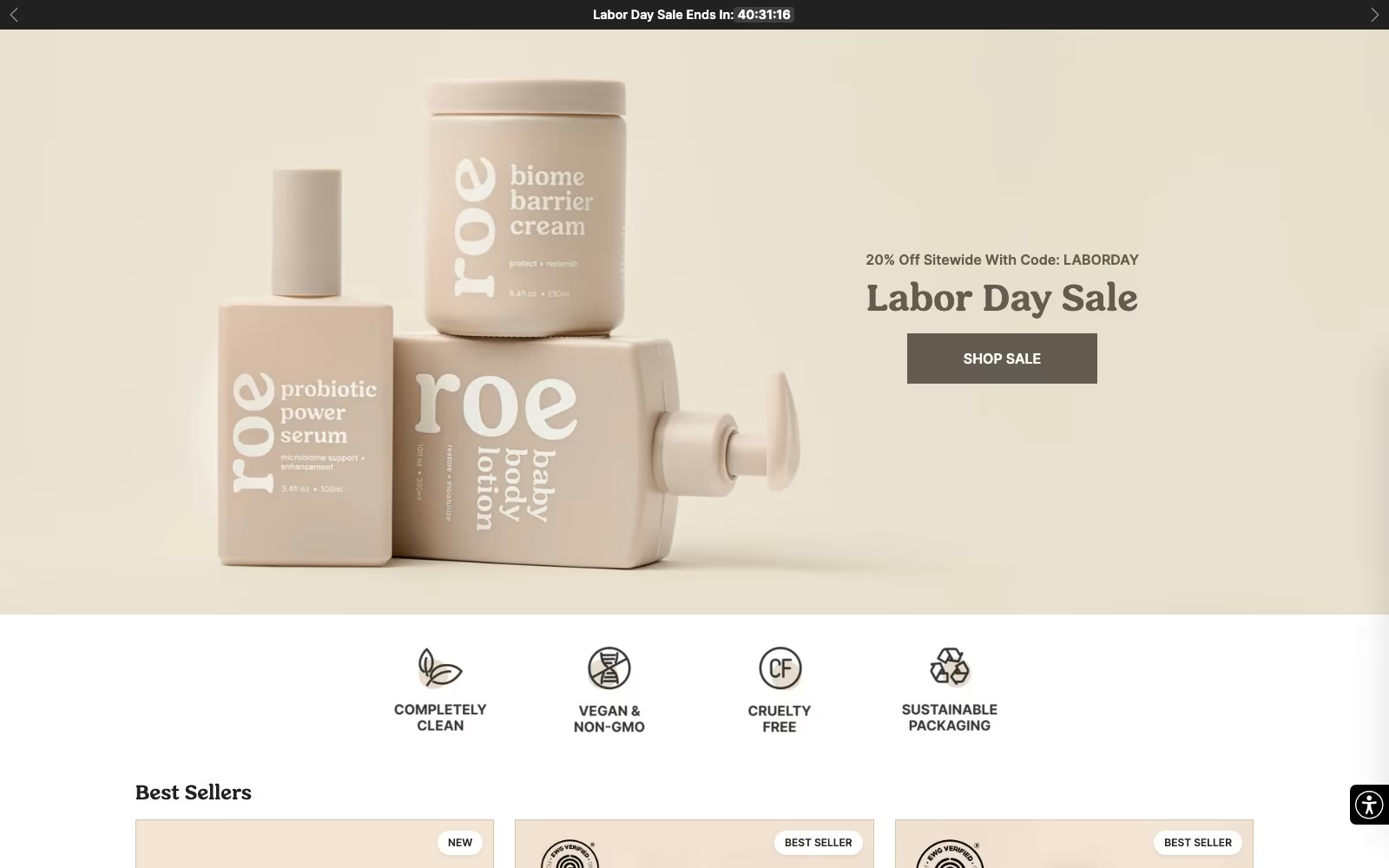
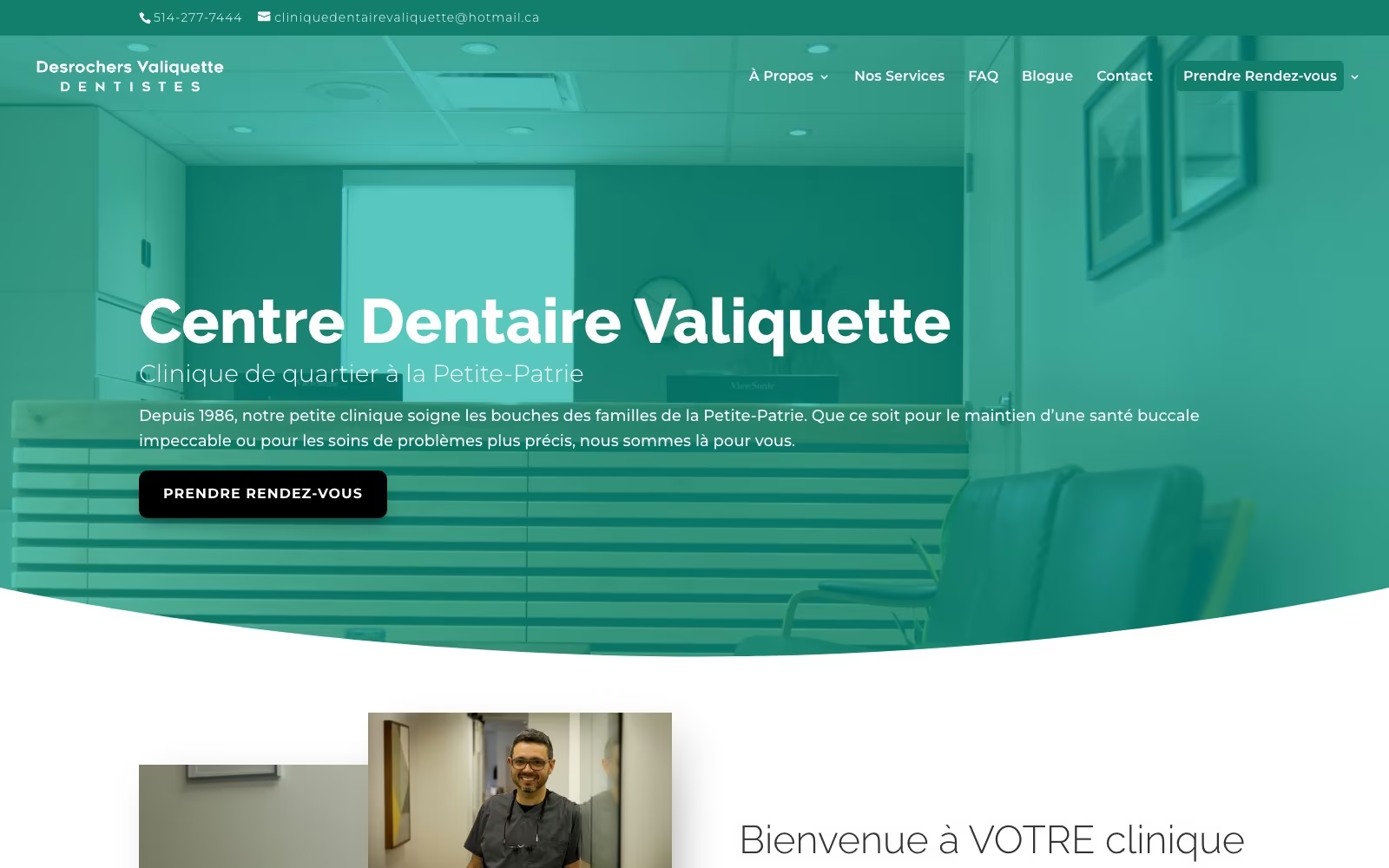
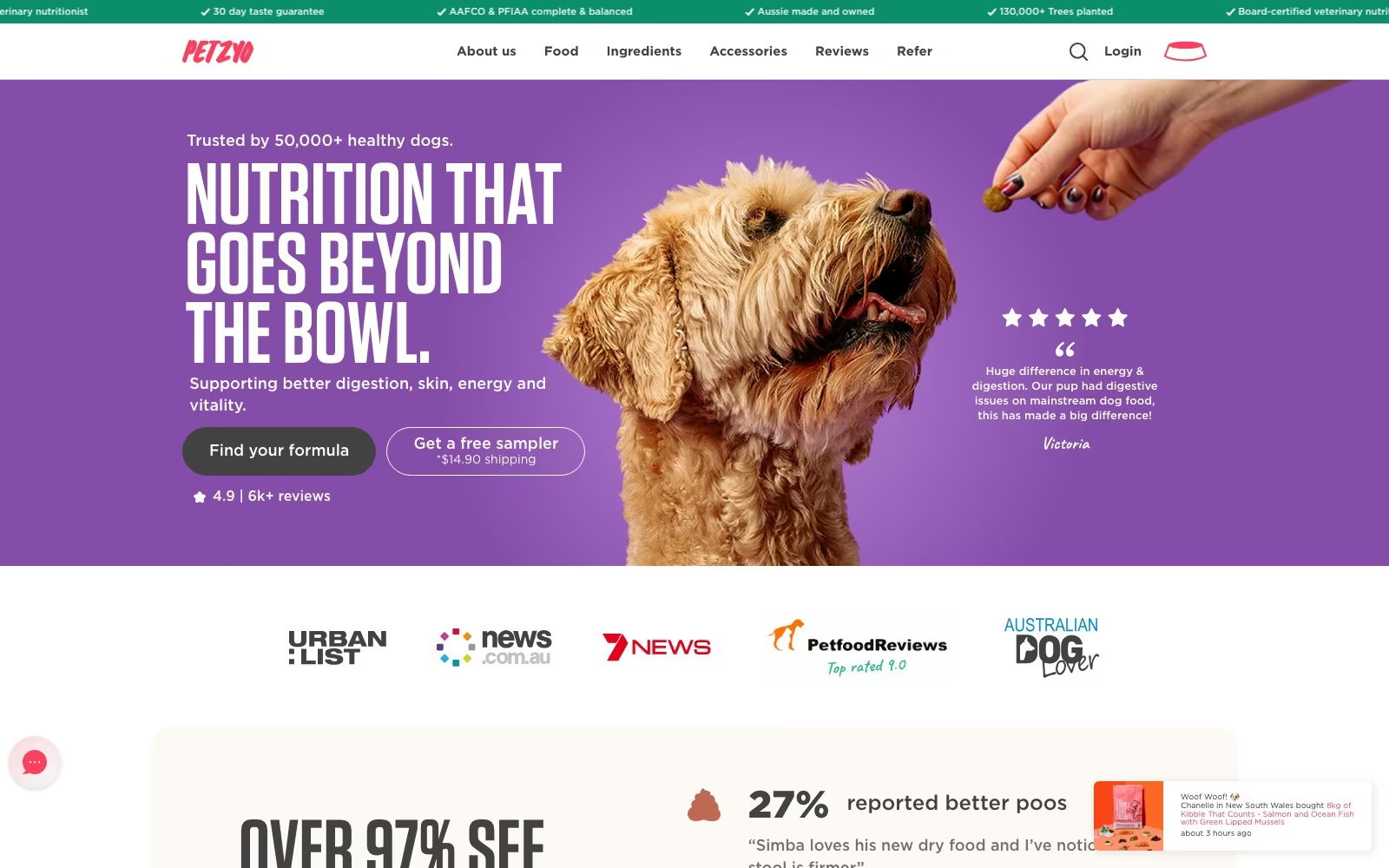
Website Portfolio
Video Ads
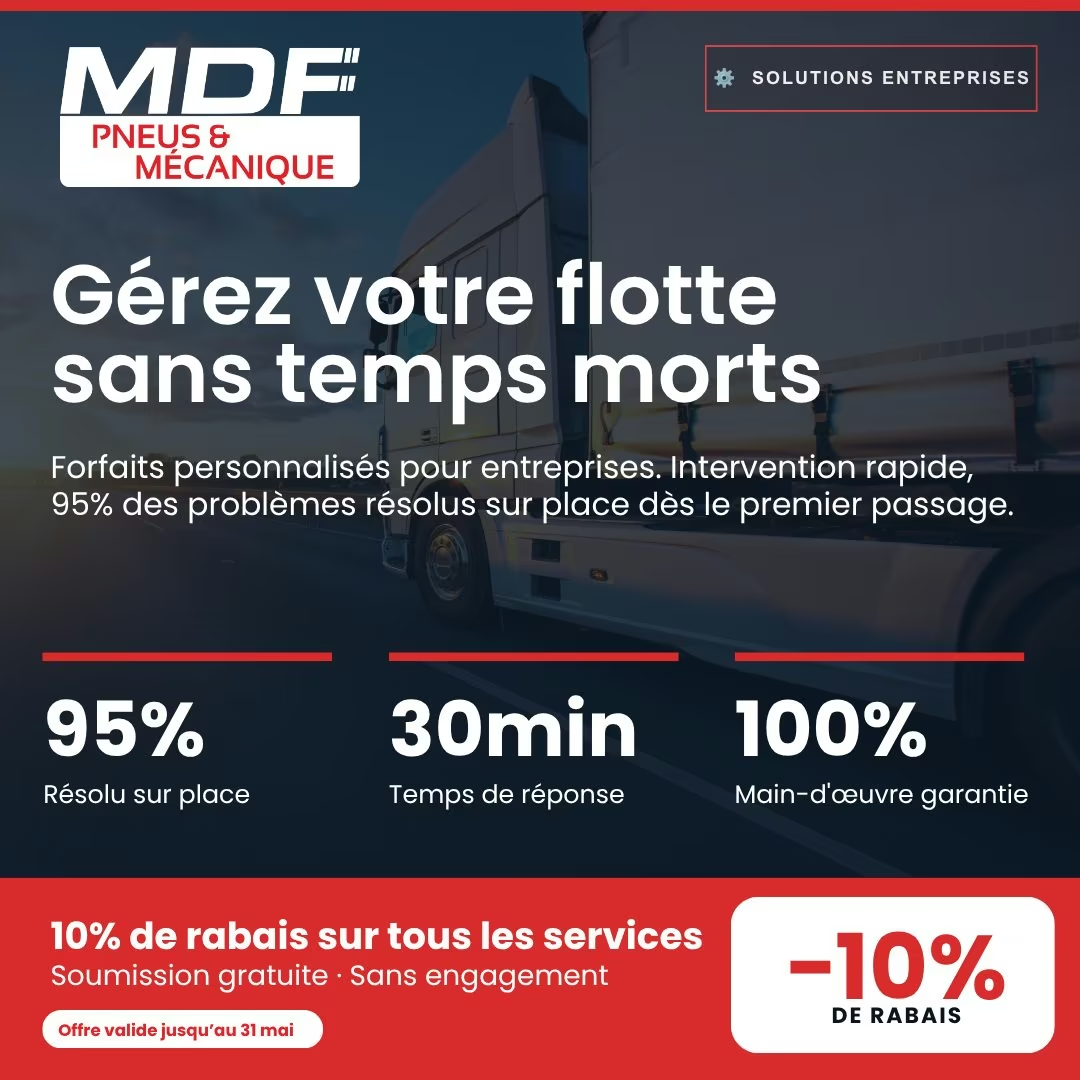
Static Ads













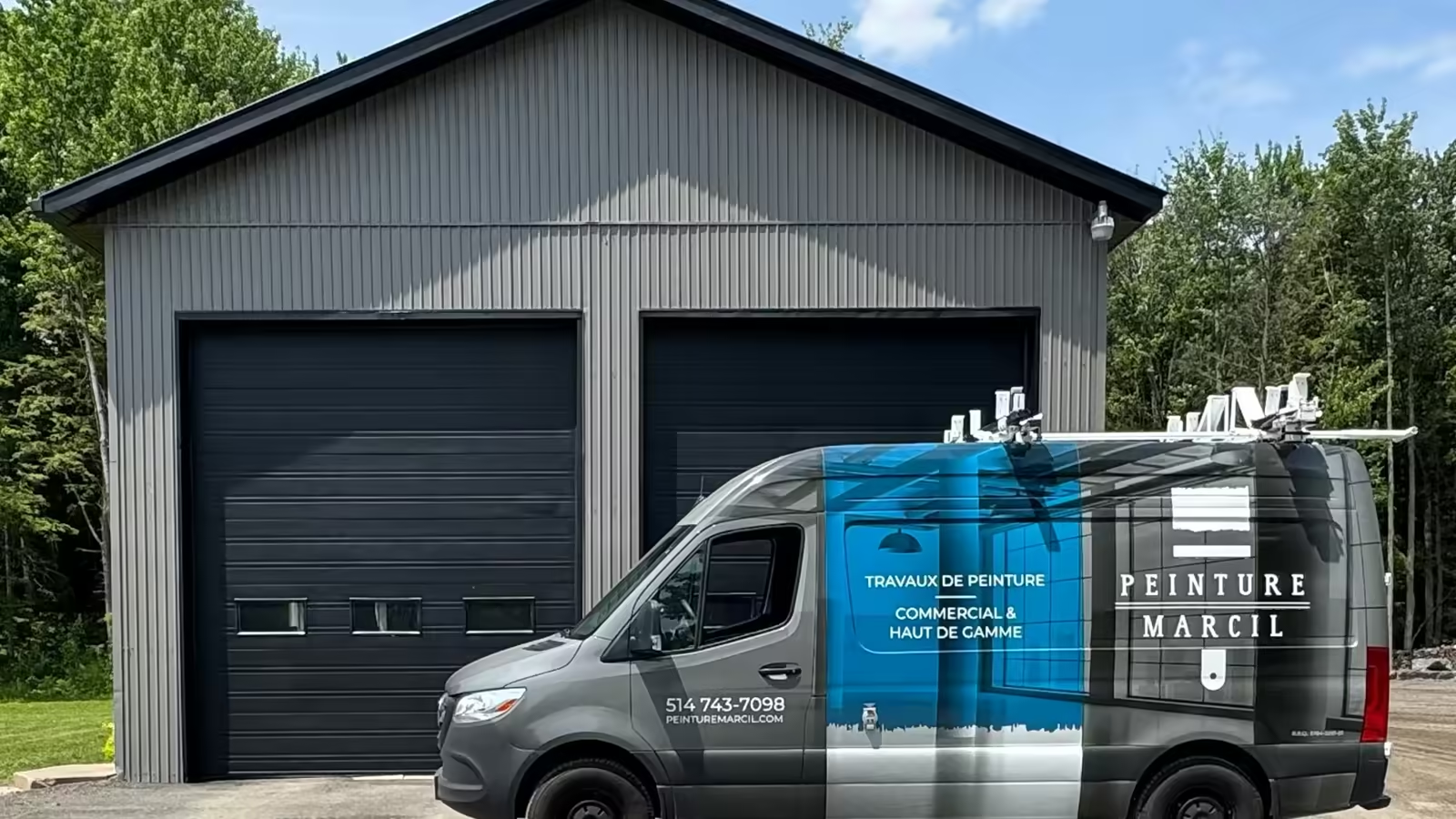
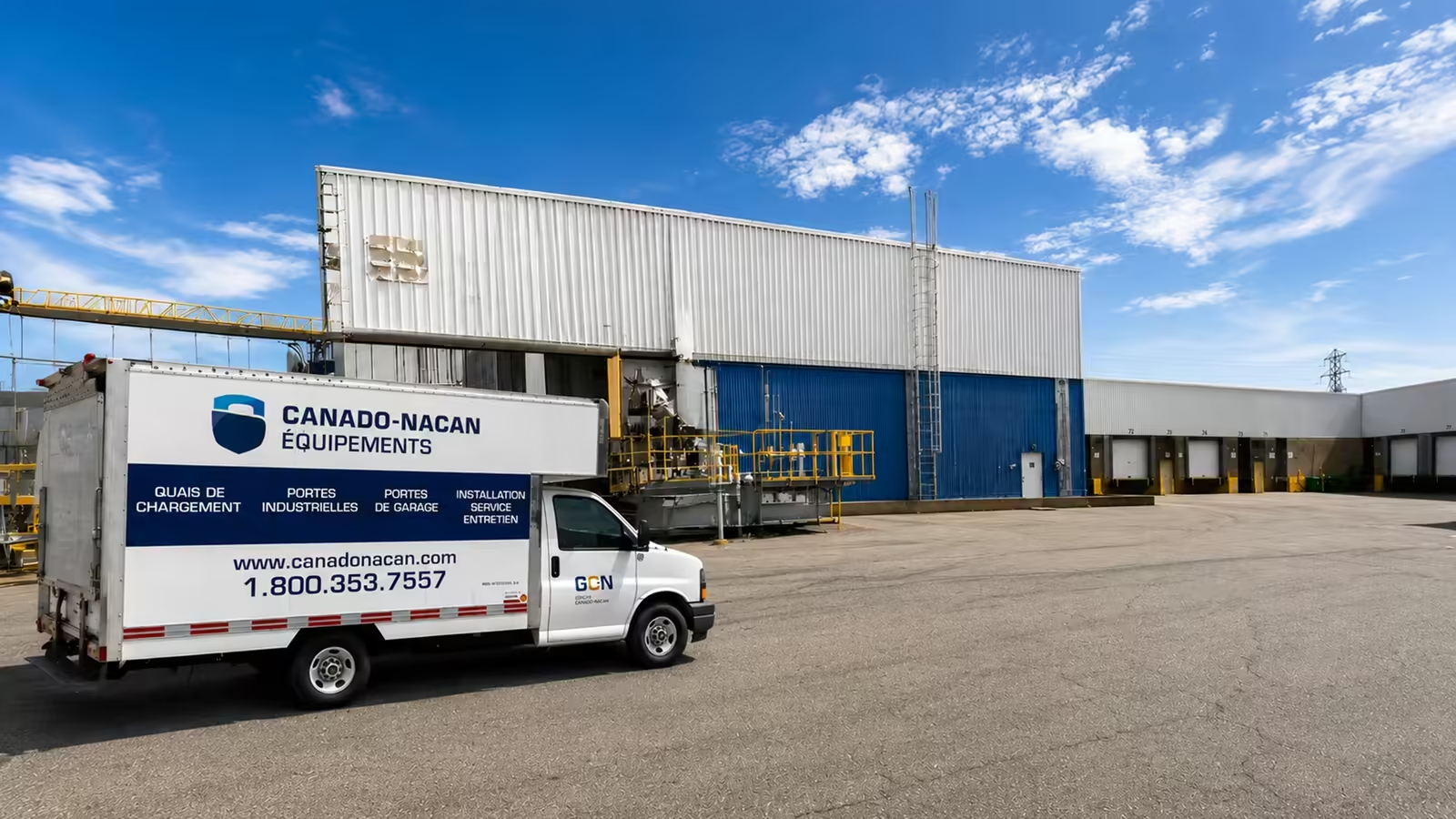

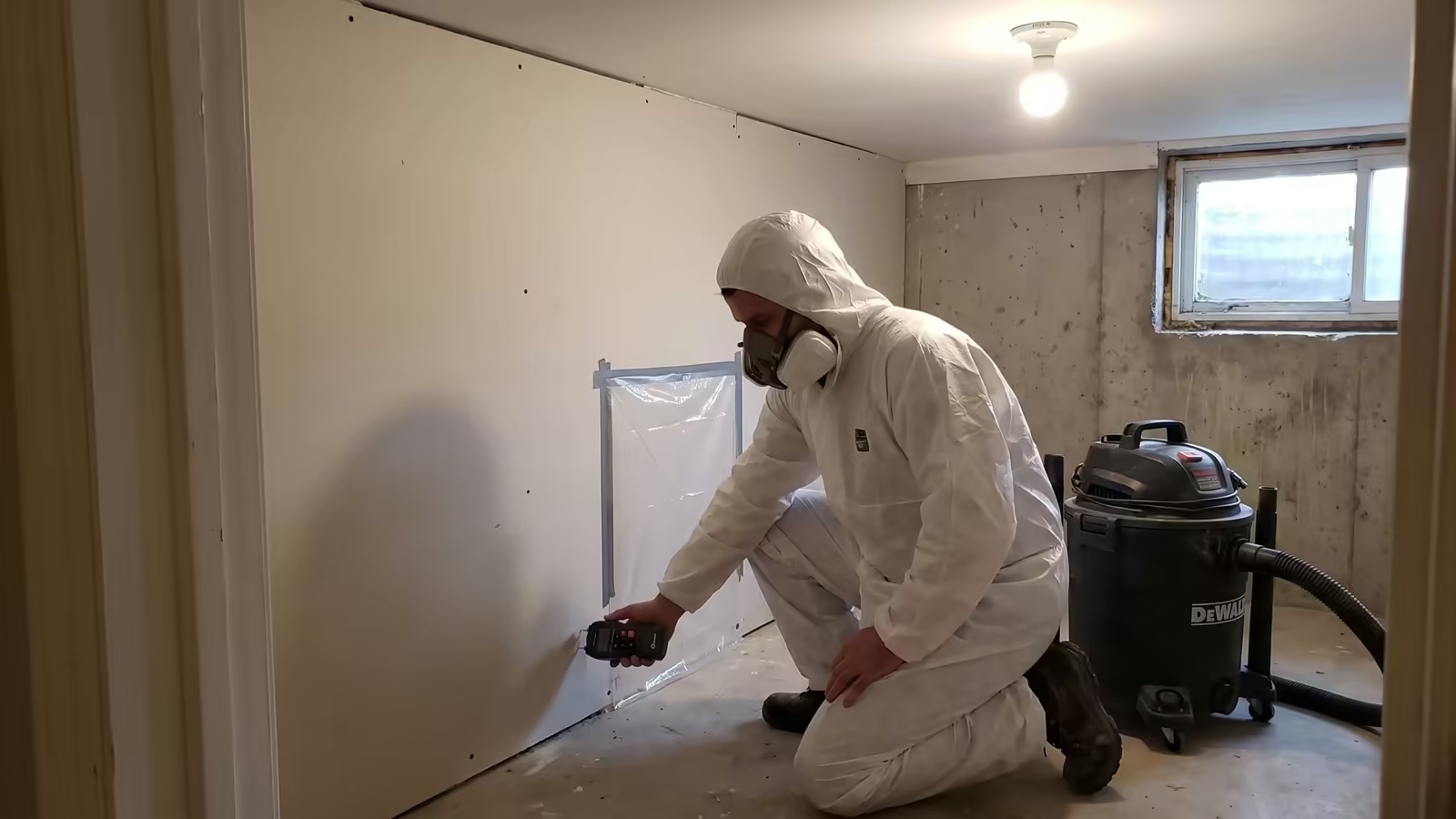


































EN

EN

EN


FR
FR
FR

FR

FR

FR

FR

FR


EN
FAQ
Questions remediation owners ask us
Will a redesign hurt our current rankings?
Handled properly it protects them and usually improves them, because speed and structure are ranking factors in their own right. We map every existing URL, redirect it, keep the content that earns traffic, and monitor search performance daily through launch. The risk people worry about comes from rebuilds that ignore the old site entirely, which is exactly the step we do not skip.
Can we keep our existing website and just improve it?
Often, yes, and we will say so if that is the better use of your money. Speed work, a proper mobile call button, real service pages and clearer process copy frequently lift enquiries without a rebuild. A full redesign earns its place when the platform itself is slow or your team cannot add pages — and with the median contractor site loading in 5.4 seconds, that is common.
What actually makes a mold removal website convert?
Speed, an obvious phone number, the service and city named at the top, real photographs of your crew in containment gear, certifications stated plainly, and an inspection offer rather than a demand for a big decision. Click-to-call converts at 8-12% on mobile against roughly a third of that for forms, so the design should push the call, not the contact page.
Do we need a page for every city we serve?
For the cities you genuinely work in, yes. Visitors want to see their own town named, and search engines reward a page that answers one place properly. What does not work is generating sixty near identical pages from a template — that reads as hollow to customers and thin to search engines. We build the template, write the important ones properly, and expand as your coverage grows.
Should the site talk about mold and health?
Yes, factually. Health worry is what drives the search, so ignoring it sends people elsewhere for the answer. We explain moisture as the cause, what an inspection or air test tells you, and how containment protects the rest of the property, anchored to public guidance rather than medical claims no contractor should make. It reads as competent, which is exactly the impression that books work.
Can our team update the site ourselves?
Yes, and it is part of how we build. Services, locations, team members, reviews and posts are editable without touching code, and we record short walkthroughs for your staff. Nothing in the design requires you to call us for a phone number change. Where you would rather we handled updates, our maintenance team does it on a fixed monthly basis.
How does the website work with our advertising?
The site is where advertising money either converts or evaporates. Paid campaigns need dedicated pages per service and city, fast on mobile, with tracking that ties a call back to a click. Given paid mold remediation leads cost $55-$250 each, a conversion improvement on the landing page is usually the cheapest growth available. Our paid search team builds both sides together.
What about SEO during and after the rebuild?
It is built in rather than bolted on. Page structure, internal linking, schema and speed all come from the search plan, so the new site launches ready to rank rather than needing repair afterwards. Our SEO team normally runs the content programme in parallel, so the pages start earning visibility the month they go live.
Do you write the content or do we?
We write it, using your process, your certifications and an interview with whoever knows the work best. Owners rarely have time to write, and the version that converts is usually written by someone who can hear what customers ask. You review everything before it goes live, and technical accuracy is your call — we will not publish a claim about your process you have not confirmed.
Will you use our own photographs?
Wherever possible, because it is the single biggest trust difference on a restoration site. Real technicians, real containment, real vans in the local street beat stock imagery every time. If you do not have usable photography we will guide a simple shoot, or our photography team can capture a day of jobs that supplies the whole site.
What platform will the site be built on?
Usually Webflow or WordPress, chosen for how your team works rather than what we prefer to build. Webflow suits companies who want speed and a clean editing experience; WordPress suits those with existing plugins, integrations or an in-house developer. Either way the hosting and account are in your name and you can take the site elsewhere whenever you wish.
How do you measure whether the new site worked?
By calls and booked inspections, compared against the same months before launch. We install call tracking and form events before go-live, grade the calls, and connect booked jobs where your software allows. Only 38% of answered home service calls are genuine leads, so counting raw calls flatters everyone; grading them is what makes the number honest.
We are a small business. Is this overkill?
Quite the opposite. A small remediation business feels every lost enquiry, and it competes for the same searches as national brands with far bigger budgets. A fast, clear, mobile-first site is the cheapest way to compete on the one thing that matters at midnight: who answers first. We scale the project to the number of services and cities you actually cover.
Who will be working on our project?
A named designer and developer, with a copywriter who interviews your team. You will know their names, you can email them directly, and the same people stay with the project through launch and the months afterwards. Your account is not handed to a rotating queue of juniors.
How quickly can we start?
Usually within two weeks. Discovery and structure take the first fortnight, design follows, and most remediation sites are live within six to ten weeks. Your current site keeps running the whole time, and if you are advertising we will improve the existing landing pages in week one so the spend is not wasted while the rebuild happens.

.webp)
.webp)