Fill the timetable, not the traffic report.
not the traffic report
Gym PPC is easy to spend and hard to do well. The searches that turn into members are a narrow, expensive slice, and most accounts we inherit are paying for the rest. We run Google Ads, Meta and Microsoft Ads campaigns for gyms, studios and multi-site operators — built around trial bookings and joins rather than clicks — with our paid search and conversion tracking teams.






Tell us a little about your brand and we'll be in touch within 24 hours to lock in a time.



FOUR WORKSTREAMS
Four workstreams behind paid campaigns that fill classes.
that fill classes
High-intent search capture, paid social that creates demand rather than waiting for it, landing pages built to convert on a phone, and the measurement that tells you which of those actually produced a member.
Google Ads and Microsoft Ads
Meta and paid social
Landing pages and conversion
Tracking and performance management
Buy the searches that end in a signup.
Search is where the intent already exists: somebody typing a gym query near your postcode is further down the decision than anyone scrolling a feed. It is also where budget leaks fastest, because broad match will happily buy job seekers, equipment shoppers and people looking for a gym three cities away.
We build tight campaign structures around the terms that convert, with negatives maintained weekly rather than at setup. Benchmarks give the target: Pilotium puts average gym Google Search Ads cost per lead at $27.66, with the 10th to 90th percentile spanning $14 to $52 — the spread between those two numbers is the account management, not the market.
- Campaign structure built around intent, not around services
- Search term review and negatives every week
- Local radius and schedule targeting matched to your catchment
- Microsoft Ads run where the audience justifies it
$27.66
average gym cost per lead on Google Search Ads
$14-$52
10th to 90th percentile range on the same channel
Create the demand search cannot wait for.
Only a fraction of your catchment is actively searching for a gym this week. Paid social reaches the far larger group who have been meaning to start, which is why it usually carries the cheaper lead and the longer nurture. Fitness and recreation averages $19.50 cost per lead on Meta against an all-industry average of $27.66, and Pilotium's channel table puts gym Facebook and Instagram leads at $12.80 on average.
Cheap enquiries are only useful if they show up, so we build the offer and the follow-up together with your front desk rather than handing over a list of names.
- Offers designed to attract members, not discount hunters
- Creative shot in your gym, refreshed before it fatigues
- Retargeting for people who viewed pricing but did not book
- Lead follow-up process agreed with the front desk
$19.50
average fitness cost per lead on Meta, against $27.66 all-industry
$12.80
average gym Facebook and Instagram cost per lead
The page decides whether the click was worth it.
Most gym ad budgets die on the landing page: a homepage with a tour of the building, no pricing, and a contact form that asks for eight fields on a phone. The performance ceiling of a paid campaign is set there, not in the account.
The range is enormous. Gym landing pages convert at 11.2% on average, 18.5% in the top quartile and 26.0% in the top decile — more than doubling conversion is a page problem, not a bidding problem. We build pages for the offer, on mobile first, with our landing pages team.
- One page per offer, matched to the ad that sent the click
- Pricing and contract terms stated, not hidden behind a form
- Booking in as few taps as your software allows
- Continuous testing of headline, offer and form length
11.2%
average gym landing page conversion rate
26.0%
top-decile gym landing page conversion rate
Count members, not form fills.
A gym's paid account will optimise towards whatever you tell it to count. Tell it to count form submissions and it will find you the cheapest form submissions in the city, most of which never walk in. The accounts that work feed real outcomes back: trial booked, trial attended, joined, still a member in month three.
Costs are rising industry-wide — WordStream's 2026 benchmarks across 13,000+ search campaigns put the average cost per lead at $66.69 and average CPC at $5.42, more than double the CPC of ten years ago — which makes measuring the difference between a lead and a member the whole ball game.
- Conversion tracking rebuilt and verified before spend scales
- Offline joins fed back to the ad platforms where possible
- Reporting on cost per member, not just cost per lead
- Weekly optimisation with a monthly written read
$66.69
average Google Ads cost per lead across industries in 2026
$5.42
average Google Ads cost per click in 2026
average gym lead cost on Facebook and Instagram (Pilotium)
landing page conversion rate of the top quartile of gyms
Search term review and negative list maintenance
Ad accounts, pixels and creative stay in your name
We made the difference for those brands

B2B software, fintech, insurance

Home essentials, appliances, kitchen & pet

Consumer tech and platforms

Retail & commerce

B2B software, fintech, insurance

Retail & commerce

B2B software, fintech, insurance

Healthcare & regulated services

Consumer tech and platforms

Food & beverage

Consumer tech and platforms

Healthcare & regulated services

B2B software, fintech, insurance

Creative, content, arts & culture

Apparel and lifestyle

B2B software, fintech, insurance

Travel & mobility

B2B software, fintech, insurance

B2B software, fintech, insurance

B2B software, fintech, insurance

Healthcare & regulated services

Retail & commerce

Apparel and lifestyle

Consumer tech and platforms

Apparel and lifestyle

Apparel and lifestyle

Healthcare & regulated services

Creative, content, arts & culture

Consumer tech and platforms

Retail & commerce
01 — The challenge
The enquiries were cheap. The members never arrived.
This is the most common story we hear from gym owners who have run ads before. The dashboard looked healthy, the price per enquiry was low, and the front desk spent six weeks calling prospects who wanted a free week and nothing more. The campaign was optimising perfectly — towards the wrong thing.
“We got 200 enquiries last month and signed eleven of them.”
Retention is what makes the maths work, and it varies hugely by model: monthly churn runs 6.2% at budget gyms against 3.9% at boutique studios and 2.7% in personal training. An enquiry that joins and leaves in eight weeks was never a good lead, however cheap the visit was.
02 — Our approach
Fix the measurement, then buy the demand worth buying.
We start with tracking, because everything after it is guesswork otherwise. That means verifying what is actually being counted, connecting your booking or membership software where it allows, and agreeing with you what a real conversion is — usually a trial attended or a membership started, not a form fill. Until that is right, we would rather not scale spend.
Then we rebuild the account around intent. Search campaigns take the people already looking, structured tightly with negatives maintained weekly. Paid social carries the offer to the much larger group who have been meaning to start, with creative shot in your gym and refreshed before it fatigues. Every campaign points at a landing page built for that specific offer, on mobile, with the price on it.
After that it is management: weekly optimisation, a monthly written read on cost per member rather than cost per click, and honest advice about when to stop spending. The ad accounts, pixels and creative stay in your name.
03 — What we did
Four weeks to a clean account, then a weekly rhythm.
Audit and tracking, build, launch, then scale — with weekly optimisation and a monthly written read on what the spend produced.
Week 1 / Audit
Where the current budget is going
Search terms, geography, devices and conversion actions reviewed, with the wasted spend and the mis-set conversions listed plainly.

Week 2 / Build
Offer, structure and pages
Campaign structure rebuilt around intent, the offer agreed with you, and a landing page written for each one rather than pointing at the homepage.

Weeks 3-4 / Launch
Live, with the front desk ready
Campaigns go live once tracking is verified and the follow-up process is agreed, so enquiries reach a person quickly instead of an inbox.

Ongoing / Manage and scale
Weekly optimisation, monthly read
Negatives, bids, creative refresh and budget shifted towards whatever is producing members, reported on cost per member.

WHAT YOU GET
Deliverables you keep, whatever happens next.
you keep
Ad accounts, pixels, creative and landing pages stay in your name from day one.

Account and tracking audit
What the current campaigns are really buying, and every conversion action that is counting the wrong thing.

Campaign and budget plan
Which channels get what, the offers behind them, and the cost per member each one needs to hit to be worth running.

Ad creative built for fitness
Copy and creative shot in your gym, produced in enough volume to keep testing rather than running one ad to exhaustion.

Offer landing pages
A mobile-first page per offer with pricing visible and booking in as few taps as your software allows.

Reporting on cost per member
Enquiries, trials, joins and spend in one view, with a written note on what moved rather than a wall of platform charts.

Lead follow-up playbook
The call and message sequence your front desk runs, because response speed decides what the click was worth.
HOW WE WORK
Operating standards, not promises.
Operating standards


Boutique studios
Higher price, lower churn, and an offer that has to be sold rather than discounted.
ExploreMulti-site operators
Several clubs, one budget, and a need to know which location each pound produced.
Explore

















Built on trust. Proven by results.
We partner with SMBs and Fortune 500 companies to deliver more than reach — we bring clarity, execution, and measurable outcomes. Every successful partnership starts with a strong culture fit and a shared drive to grow.





CASE STUDIES
Case studies
Website Portfolio
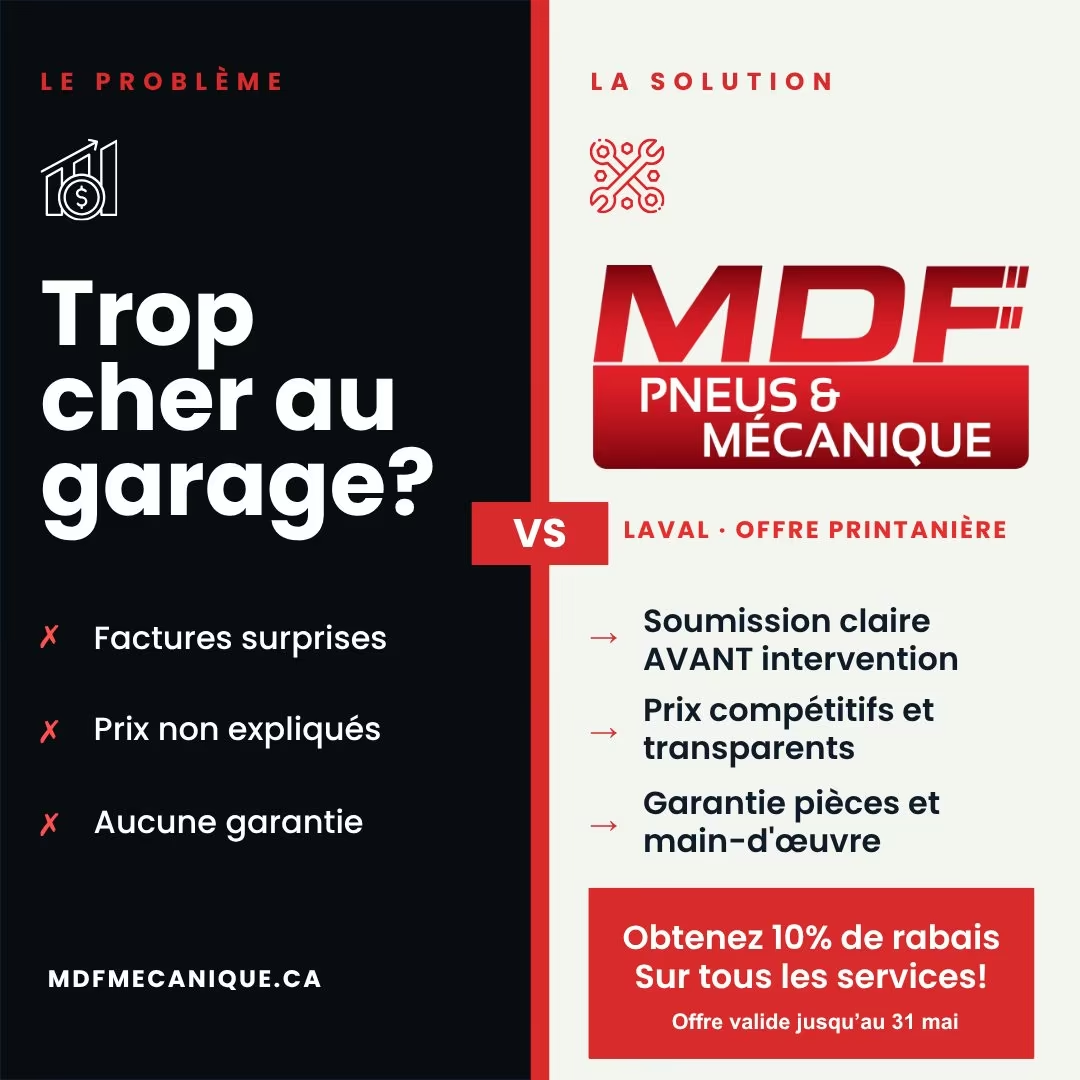
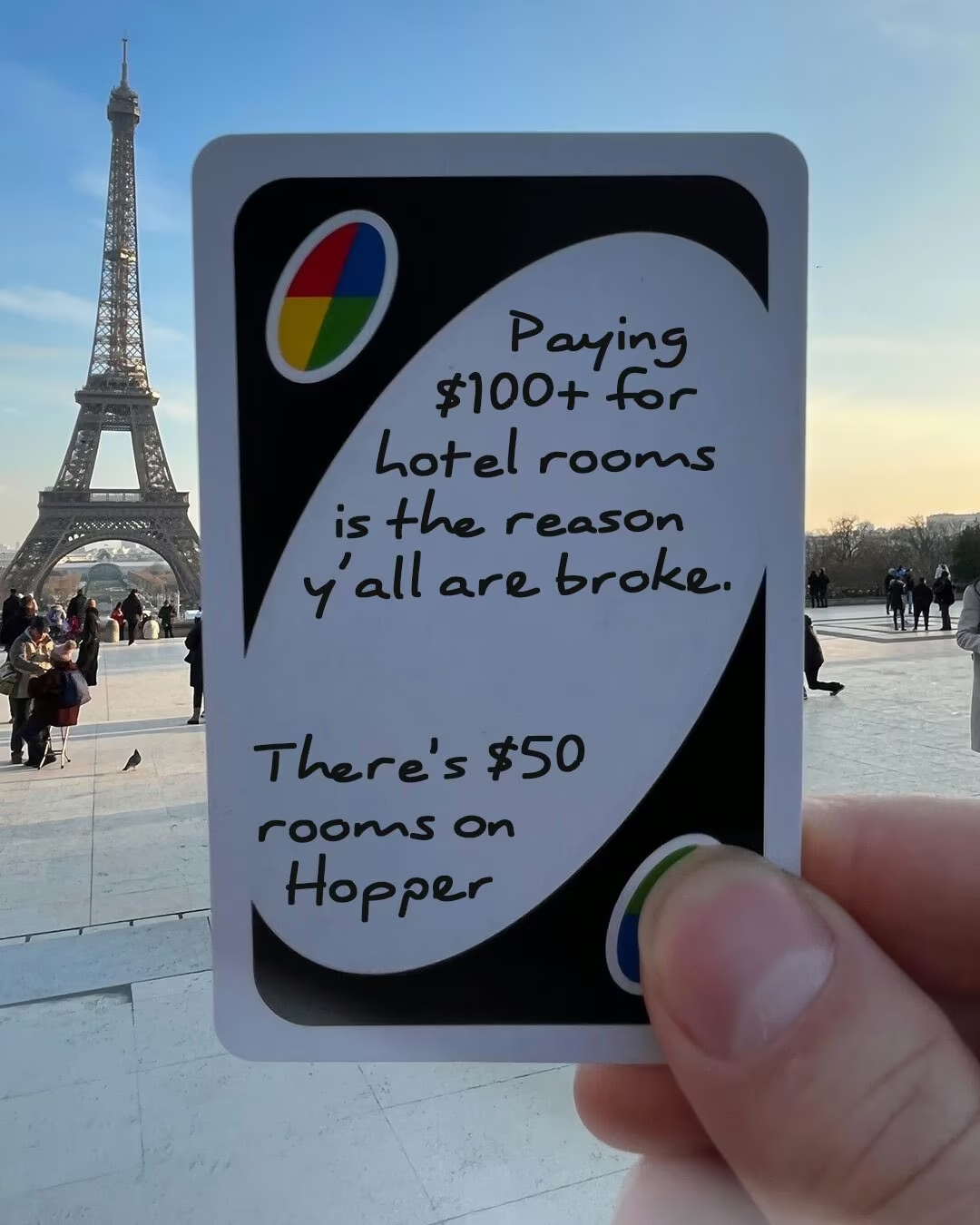
Video Ads
Static Ads





























































FAQ
Questions gym owners ask us
How much should a gym spend on PPC each month?
Enough to gather real data in your catchment rather than a trickle that proves nothing. We scope it from your membership value, your target number of joins and how contested your area is. For context, industry spend runs around 8-12% of revenue for smaller gyms and 4-7% for larger operators, and we will tell you if your target needs more budget than you planned.
Should we run Google Ads or Meta ads?
Most gyms should run both, because they solve different problems. Search harvests existing intent at a higher cost per lead. Paid social generates demand from people who were not searching yet, usually cheaper but needing better follow-up. We start with whichever is closest to producing members for you and add the other once it is working.
How quickly do gym PPC campaigns produce members?
Enquiries typically start within the first two weeks of launch. A fair judgement of the campaign takes eight to twelve weeks, because the real measure is how many enquiries became members who stayed past the first month. We report both the early signals and the slower truth so nothing looks better than it is.
Why were our previous ads producing poor-quality enquiries?
Almost always because the account was told to optimise for form fills. Platforms are extremely good at finding more of whatever you count, so counting the cheapest possible action produces the cheapest possible prospects. Fixing the conversion definition is normally the single biggest improvement available in an inherited account.
Do you handle the ad creative as well?
Yes. Copy, static and video creative are produced as part of the programme, ideally shot inside your gym with your coaches and members rather than stock footage. Volume matters as much as polish, because the only reliable way to find a winning ad is to test several honest ones.
What is a good cost per lead for a gym?
It depends entirely on channel and membership value. Pilotium's benchmarks put gym Facebook and Instagram leads at $12.80 on average and Google Search Ads at $27.66, with wide ranges either side. The more useful question is cost per member: a $40 lead that joins on a $90 monthly membership beats a $9 lead that never visits.
Do you need access to our membership software?
Where it allows it, yes, and it makes a real difference. Feeding actual joins back to the ad platforms lets them optimise towards members instead of enquiries. Where a system will not integrate, we build the closest reliable proxy and say clearly that it is one.
Will you lock us into a long contract?
No. The ad accounts, pixels, creative and landing pages are yours from the start, so you can take the whole programme elsewhere. We ask for a fair window — usually a quarter — because paid campaigns need learning time to be judged honestly.
Can PPC work for a brand-new gym with no reviews?
It is often the fastest channel available to a new site, precisely because it does not depend on the authority a new business has not built yet. Ads can be live before opening day and fill a founding-member intake. We usually pair it with local search groundwork so the free channel starts compounding at the same time.
How does PPC fit alongside SEO for a gym?
Paid buys immediate volume and lets you test which offers and messages actually convert; those learnings then shape the organic content. Over time gym SEO lowers what you need to spend to hit the same number of joins. Most of our fitness clients run the two together for that reason.
What conversion rate should our landing page hit?
Use the industry spread as a target rather than a hope. Gym landing pages average 11.2%, with 18.5% in the top quartile and 26.0% in the top decile. If yours sits in single digits, the page is where your next improvement is, not the bidding strategy.
How do we choose a gym PPC agency?
Ask who manages the account day to day, how often search terms get reviewed, and what they report on. An agency that reports cost per click and impressions is measuring its own activity; one that reports cost per member is measuring your business. Also confirm the ad accounts will be in your name before you sign anything.
Is there a best time of year to advertise a gym?
January is the obvious peak and the most expensive auction of the year. September is often the better value intake, and summer is when boutique and outdoor-adjacent offers do well. We plan budget across the year so you are not paying peak prices for every member you sign.
What is the market actually like right now?
Healthy, which is why the auctions are competitive. 81 million Americans held a fitness facility membership in 2025, with penetration at 26.1%, and churn fell to a decade low of 7.1% with average tenure at five years. Members are worth more than they were, which justifies paying more to acquire the right ones.
Do you run Microsoft Ads too?
When the numbers justify it. Microsoft Ads carries less volume but often a lower cost per click and an older, higher-income audience that suits premium and rehabilitation-adjacent offers. We test it once Google is working rather than splitting a small budget across platforms on day one.
What makes a good PPC agency for fitness businesses?
Look for a data-driven agency that can explain its keyword and targeting logic in plain language, shows you real clients in comparable local businesses, and reports on business outcomes rather than platform vanity metrics. Strong communication matters more than most brands expect: weekly visibility of what changed and why is what separates good digital marketing agencies from invoice generators.
How do you improve the quality of the enquiries, not just the volume?
Three levers. Keyword and negative keyword work so the targeting only reaches high intent demand in your location. Offer design that attracts people who want a membership rather than a freebie. And optimization against real joins, so the platform learns what a good prospect looks like. Quality growth is slower than volume growth and worth far more.
Do you work with fitness brands outside single gyms?
Yes — studios, franchises, personal training businesses, physio and recovery clinics and multi-location operators. The advertising principles hold across them; what changes is membership value, local competition and how joins are recorded. We adapt the performance targets to each business rather than reusing one template.
What happens in the first month?
Audit, tracking rebuild, offer and page build, then launch. You get the wasted-spend findings, a campaign and budget plan with targets, new landing pages and a follow-up playbook for the desk. Spend stays deliberately modest until the measurement is proven.
Who will actually be running our account?
A named senior paid media strategist, who is also in the monthly session. You will know who writes your ads and who touches the budget. Nothing gets handed to an anonymous queue once the pitch is over.

.webp)
.webp)