Be the firm the assistant names.
the assistant names
Families now ask an assistant what happens next long before they call anyone. We work that surface honestly for funeral providers: first the eligibility check, because paid placements are kept away from sensitive conversations, then the answer layer that decides whether your firm is the one described — and paid placement only where the platform genuinely opens it. Measured with our analytics team.






Tell us a little about your brand and we'll be in touch within 24 hours to lock in a time.



FOUR WORKSTREAMS
Four workstreams for a surface that answers first.
answers first
This service is four jobs in order: read what the platform will and will not allow for an end-of-life provider, make the firm legible to assistants, hold the local search foundation those answers are drawn from, and measure the enquiries that arrive without a click you can see.
Eligibility & policy check
Answer & retrieval layer
Local foundation
Measurement without a clean click
What the platform allows, in writing, first.
Before anyone builds a campaign, the honest question is whether a provider in this category can run one at all. OpenAI states that ads are not eligible to appear near sensitive or regulated topics, including personal health and mental health, and a grieving family's conversation is squarely inside that boundary.
The rules are also moving. Search Engine Journal reported that an April update took a more precise approach, so medical, legal and financial advice contexts are no longer blocked by default while sensitive conversations stay excluded. We track that changelog, tell you plainly what is open this quarter, and never sell a placement that policy does not allow.
- Written eligibility read against current platform policy
- Category and creative restrictions documented
- Changelog monitored, findings shared each month
- No campaign promised before policy permits it
Excluded
Ads are not eligible near sensitive or regulated topics
Being described accurately is the real placement.
Where advertising cannot reach, the answer still gets written. An assistant asked which providers handle a direct cremation in a given town assembles its reply from pages, profiles, reviews and third-party sources it can verify. If your prices, service area and options are not stated plainly, the description will come from somewhere less careful.
We make the firm legible: clear service and pricing pages, structured data, consistent business information, obituaries and resources written for people rather than for keywords. Families reward that clarity — 82.4% say they are more likely to engage a firm that posts its General Price List online.
- Service, pricing and options stated plainly on your site
- Structured data and consistent business information
- Third-party sources assistants read kept accurate
- Monthly check of how the firm is described
82.4%
more likely to engage a firm that posts its price list online (NFDA)
66.4%
of consumers visit funeral home websites (NFDA)
The answers come from the local basics.
Assistants lean on the same signals local search does: an accurate profile, real reviews answered with care, service areas stated clearly, hours that are correct at two in the morning. For this profession that work is delicate, and it is also where most of the enquiry volume still comes from.
It has to reflect what families actually choose. The cremation rate is projected to reach 63.4% against a 31.6% burial rate, so a website organised around traditional burial alone will be poorly described by any system trying to answer a cremation question.
- Profiles, hours and service areas kept accurate
- Reviews requested and answered with real care
- Cremation, burial and memorial choices each given a page
- Pages that load quickly on a phone at any hour
63.4%
projected U.S. cremation rate for 2025 (NFDA)
31.6%
projected burial rate in the same report
Counting the calls that arrive quietly.
Assistant-driven demand rarely arrives with a tidy referrer. Someone reads an answer, types the firm's name into a browser, and calls. Judged by a last-click report, that enquiry looks like it came from nowhere, and the work that produced it gets cut.
We measure it the way it behaves: branded search trends, direct traffic and calls tracked per location, referrals from assistant surfaces where they are visible, and an intake question asked at the arrangement. That matters more each year — nearly 30% of families now complete arrangements online, with 31.8% preferring a hybrid approach.
- Branded search and direct traffic tracked as signals
- Call tracking that keeps listing data consistent
- One intake question, asked gently, recorded properly
- Monthly written summary instead of a dashboard link
~30%
of families now complete arrangements online (NFDA via Tribute Technology)
31.8%
prefer a hybrid of online and in-person arranging
Website, profiles and accounts stay in the firm's name
A written summary, not a dashboard nobody opens
Working session with the people doing the work
Long-term lock-ins
We made the difference for those brands

Apparel and lifestyle

B2B software, fintech, insurance

Home essentials, appliances, kitchen & pet

Retail & commerce

Home essentials, appliances, kitchen & pet

B2B software, fintech, insurance

Creative, content, arts & culture

Creative, content, arts & culture

Consumer tech and platforms

B2B software, fintech, insurance

Consumer tech and platforms

B2B software, fintech, insurance

B2B software, fintech, insurance
Travel & mobility

Consumer tech and platforms

B2B software, fintech, insurance

Consumer tech and platforms

Travel & mobility

Travel & mobility

Retail & commerce

B2B software, fintech, insurance

Healthcare & regulated services

Consumer tech and platforms

Consumer tech and platforms

Food & beverage

Retail & commerce

Food & beverage

Travel & mobility

B2B software, fintech, insurance

Healthcare & regulated services

Home essentials, appliances, kitchen & pet
01 — The challenge
A family asked an assistant. Your firm was not mentioned.
The call volume is steady, the reputation locally is good, and yet the first conversation about the death now happens somewhere you cannot see — a chat window at midnight, with someone typing a question they have never had to ask before.
“They arrived knowing the price, the options and the name of another firm.”
Two things are happening at once. Families expect clarity before they call — 33.2% say online reviews solidified their choice of provider — and assistants now assemble that first answer from whatever sources they can verify. A firm that states nothing plainly is simply harder to describe.
02 — Our approach
Eligibility first, then the answer layer, then placement.
We begin with a written assessment of what this category may and may not do on the platform this quarter, because promising placements that policy forbids helps nobody. Then we test the questions families really ask — what a direct cremation costs here, what happens in the first hour, whether a service can be held on a Sunday — and record how the firm is currently described, if at all. From there the work is unglamorous and effective: state services, options and prices plainly, give cremation, burial and memorial choices their own pages, fix the structured data and business information, keep profiles and reviews accurate, and make sure the pages open quickly on a phone at three in the morning. Where paid placement is genuinely open to the category, we build it carefully, with sober creative and no urgency tactics. Measurement runs alongside through branded demand, tracked calls per location and one gentle intake question, reported in a written monthly note. Every account, page and profile stays in the firm's name.
03 — What we did
Six weeks to a firm that answers clearly, then a monthly cadence.
Eligibility check, answer audit, page and profile work, then measurement — with a monthly session and a written note of what changed.
Weeks 1-2 / Read
What is allowed, and how you are described today
A written policy summary for the category plus a record of how assistants answer the questions families ask about your area.

Week 3 / Plan
The questions worth being the answer to
The handful of decisions a family makes in the first day, mapped to the pages and profile fields that decide who gets described.

Weeks 4-6 / Build
Plain pages, correct data, real reviews
Service, option and pricing pages written plainly, structured data and listings corrected, and a review programme handled with care.

Ongoing / Measure
Watching the answer and the phone
Monthly re-testing of how the firm is described, alongside branded demand, tracked calls and what families say at intake.

WHAT YOU GET
Deliverables written for people, not dashboards.
written for people
Everything below is delivered in working files and accounts that stay in the firm's name if you ever leave.

Eligibility and policy check
A written statement of what this category may run today, what is excluded, and what changed since last month.

Answer audit
How assistants currently answer the questions families ask locally, and which sources they draw the description from.

Plain-language page set
Service, option and pricing pages written so a family understands them and a machine can quote them.

Profile and review programme
Accurate listings, careful review requests and responses that sound like the people who wrote them.

Monthly written summary
Branded demand, calls per location and the current answer, explained in a page rather than a dashboard link.

Staff handbook
How to ask for a review, what to record at intake, and what to publish after a service, written for busy directors.
HOW WE WORK
Operating standards, not promises.
Operating standards


Independent firms
One or two locations, a long local reputation, and a website that has not kept up.
ExploreCremation providers
Direct cremation and memorial services, where clarity about price wins the call.
Explore

















Built on trust. Proven by results.
We partner with SMBs and Fortune 500 companies to deliver more than reach — we bring clarity, execution, and measurable outcomes. Every successful partnership starts with a strong culture fit and a shared drive to grow.






CASE STUDIES
Case studies
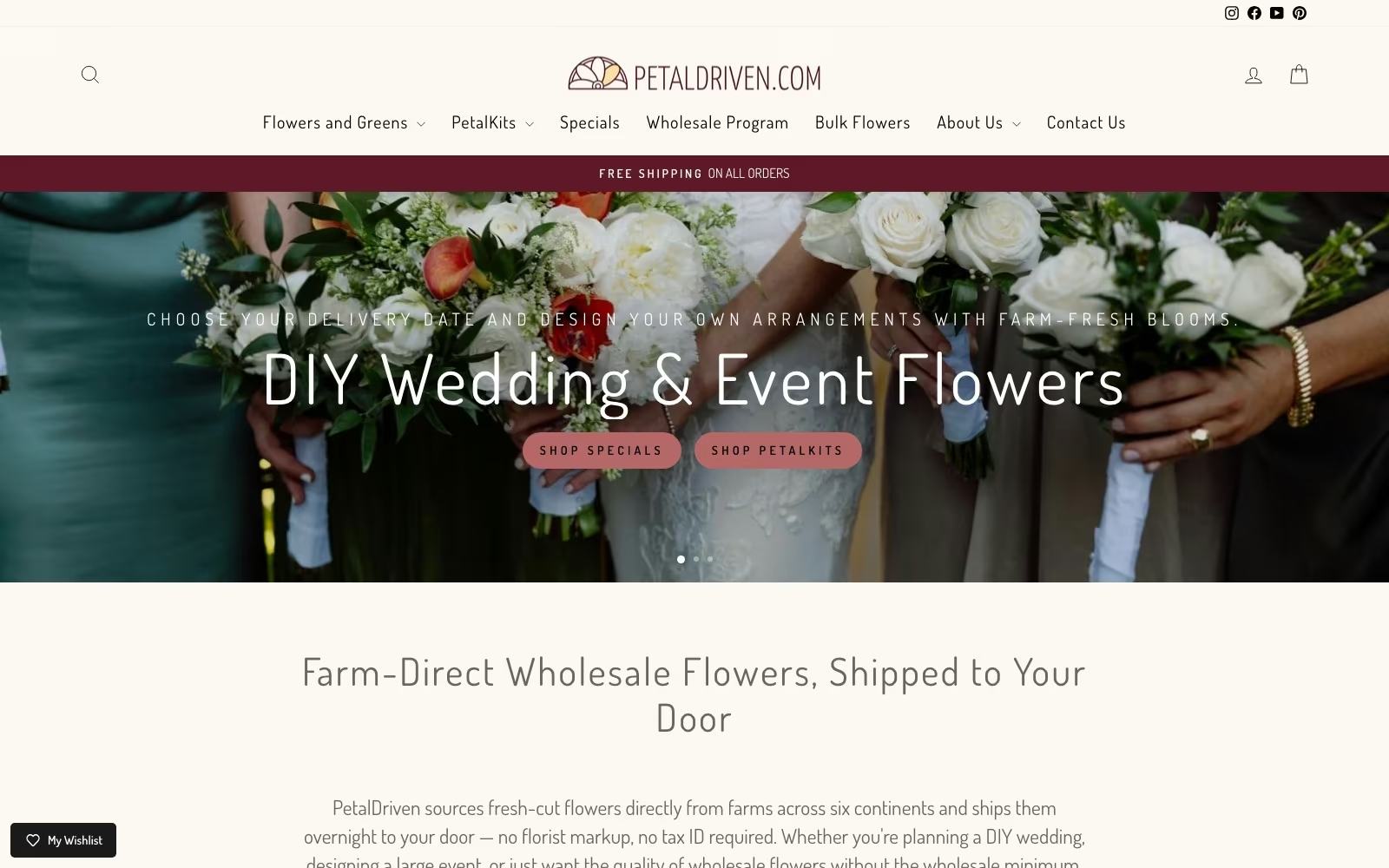
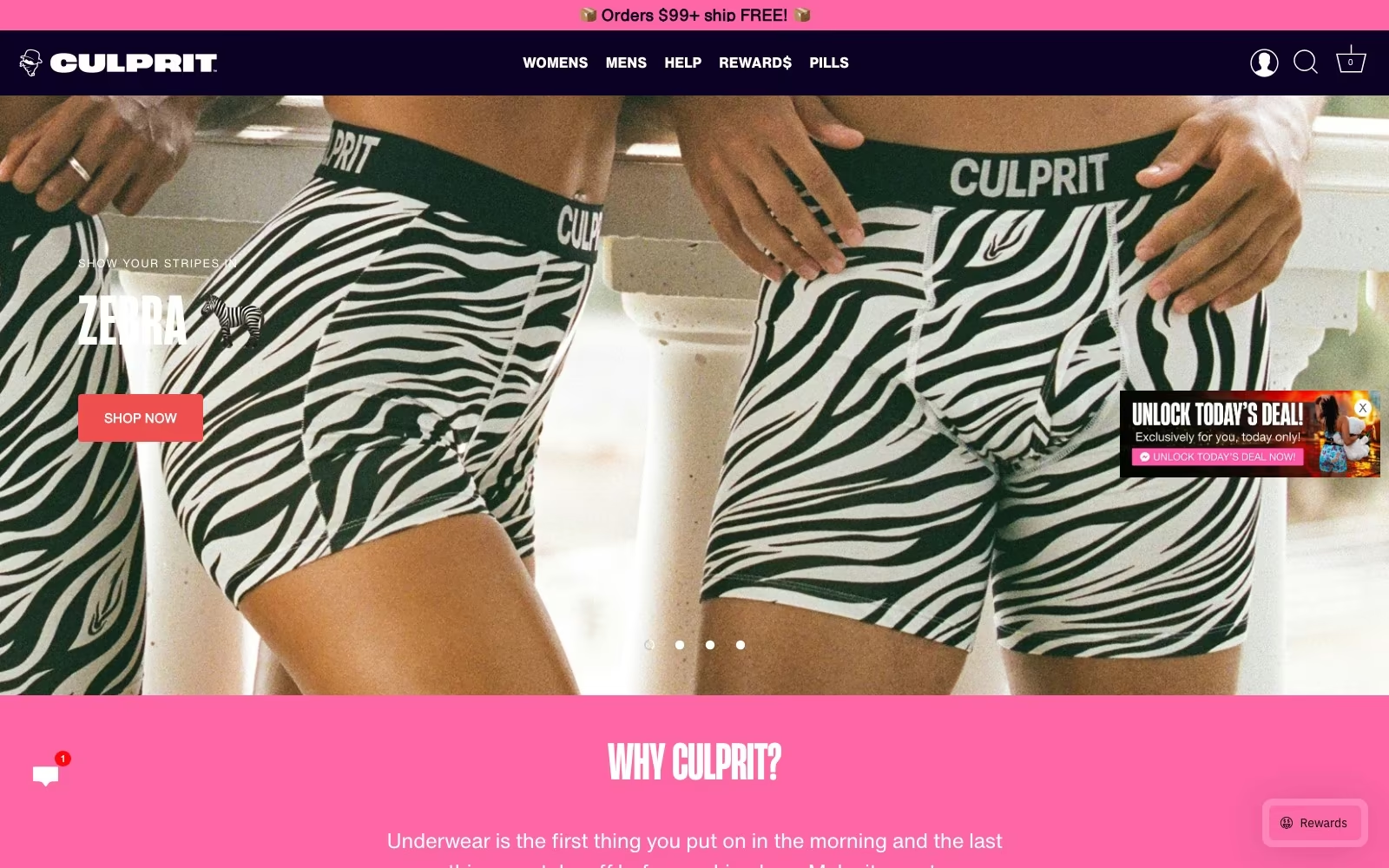
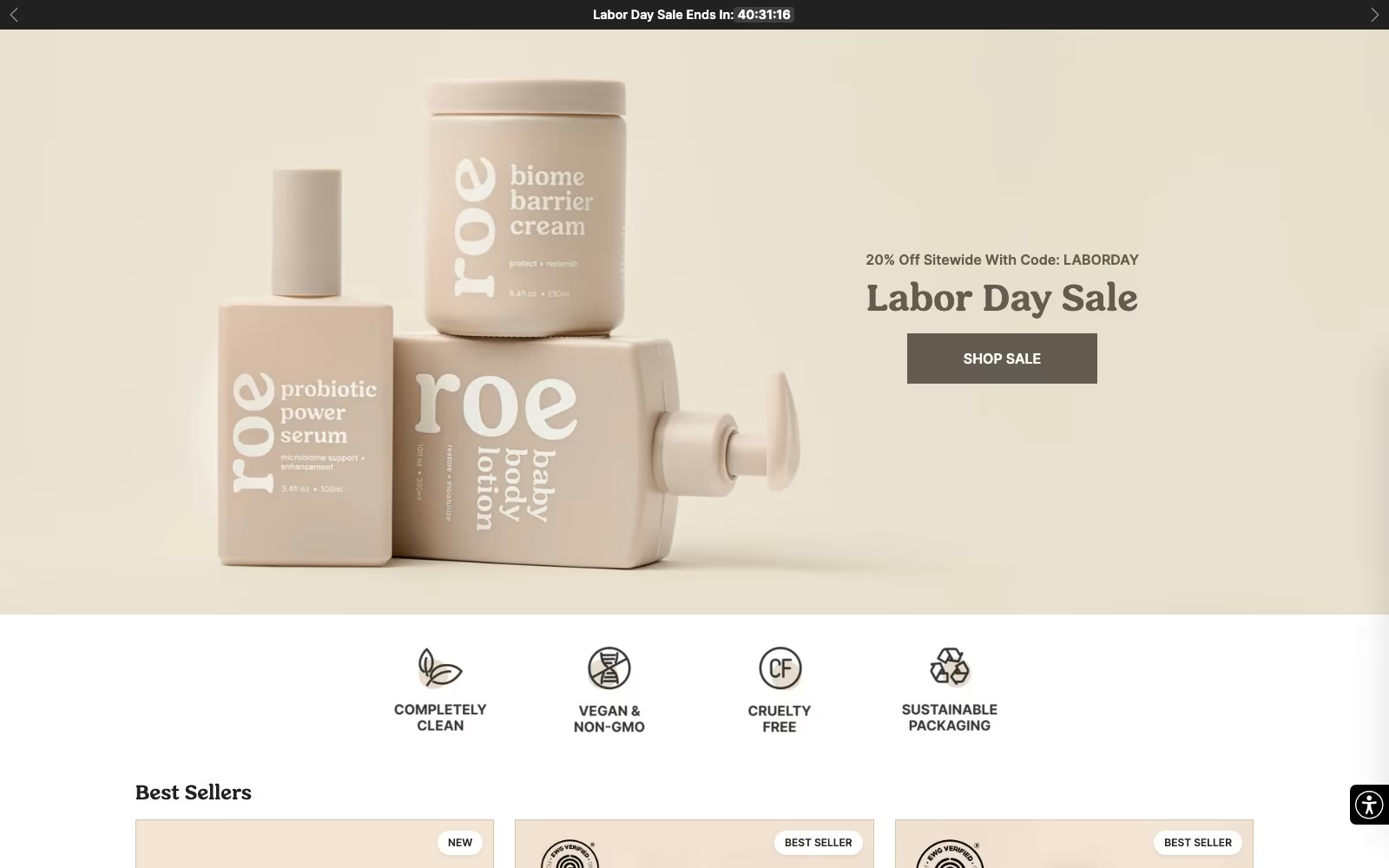
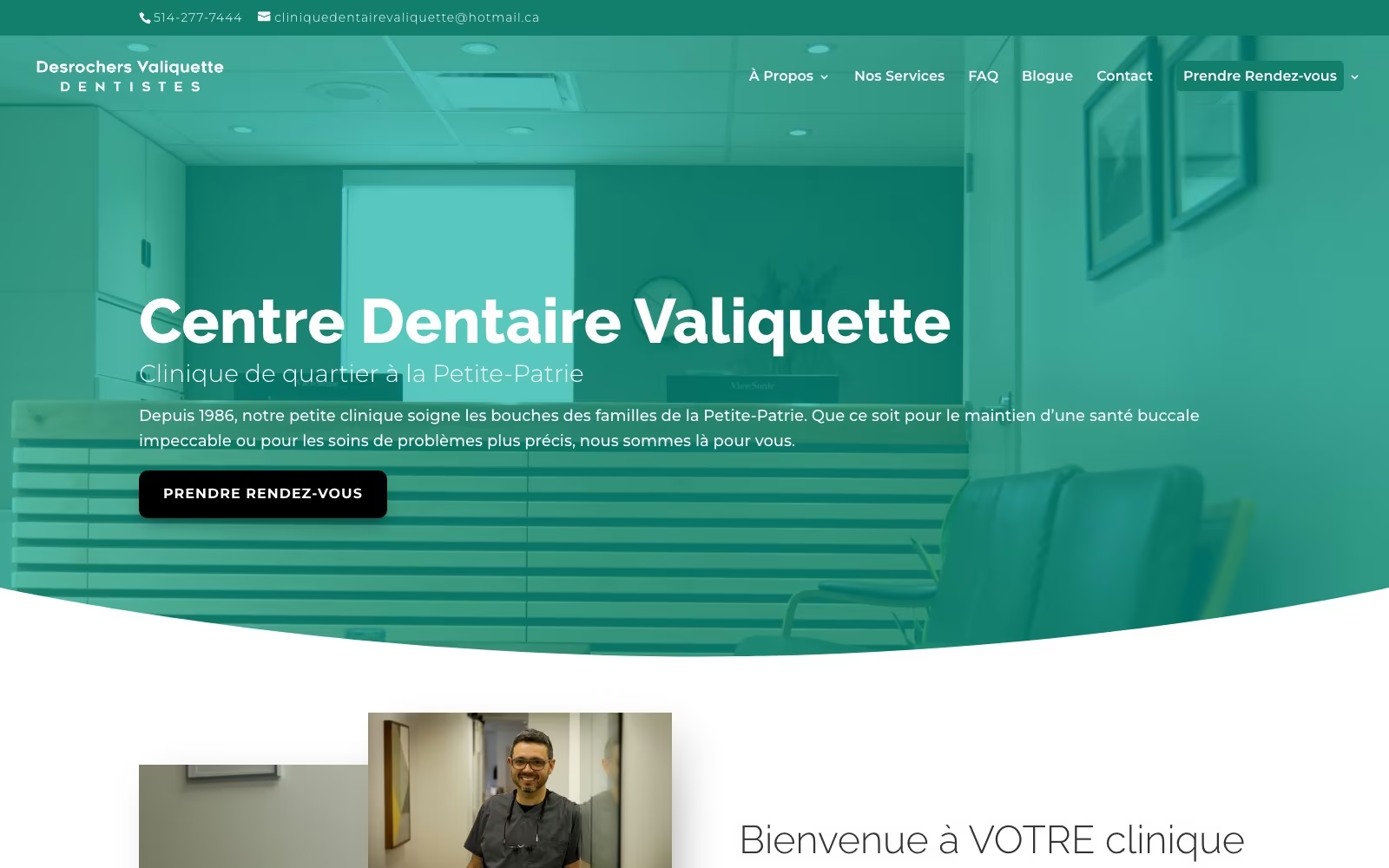
Website Portfolio
Video Ads
Static Ads

























































FAQ
What funeral directors ask us first.
Can a funeral home actually run ads inside ChatGPT?
Sometimes, and less often than vendors imply, which is why we start with a written eligibility assessment. OpenAI states that ads are not eligible near sensitive or regulated topics such as personal and mental health, and a conversation about a death sits inside that boundary. The rules do move: an April update opened medical, legal and financial advice contexts that had been blocked by default. We watch the changelog and build only what is genuinely permitted at the time.
If we cannot buy placement, what are we paying for?
The part that decides the outcome anyway: whether an assistant can describe your firm accurately when a family asks. That work is concrete — plain service and pricing pages, cremation and memorial options given their own explanations, correct structured data, accurate listings, reviews answered properly, and pages that open quickly at any hour. It improves ordinary search and the experience of every family who visits the site, so the investment is useful whatever the platform decides next quarter.
How do you keep this dignified?
By treating the work as service information rather than persuasion. No countdowns, no scarcity language, no imagery that trades on grief, no retargeting somebody who read an obituary. What we publish is what a family needs at two in the morning: what happens in the first hour, what the options are, what they cost, who to call. Every piece of copy is written to be read by someone in the worst week of their life, and reviewed by your directors before it goes live.
Should we publish our prices online?
Yes, and the evidence is unusually clear. 82.4% of consumers say they are more likely to engage a firm that posts its General Price List online, and a family who arrives already comfortable with the numbers has an easier arrangement conversation. Assistants can only quote what they can read, so a published, well-structured price list is also the single strongest thing you can do to be described accurately. We help present it clearly and keep it current.
How do families actually find us now?
Through a mix that keeps shifting toward the screen before the phone. 66.4% of consumers visit funeral home websites, and 33.2% say online reviews solidified their choice of provider, while nearly 30% now complete arrangements online with 31.8% preferring a hybrid approach. Personal recommendation and prior experience still matter enormously; they simply get checked online before anyone calls.
How do you measure something with no clean click?
By reading the signals honestly instead of pretending one number settles it. We watch branded search demand and direct traffic, track calls per location with numbers that stay consistent with your listings, capture any visible referrals from assistant surfaces, and add one gentle question at intake about how the family found you. Together those give a reliable picture. Where a month moved for a reason outside our work, the written note says so rather than taking credit.
Does this replace our local search programme?
No, it depends on it. Assistants draw on the same foundations local search uses — accurate profiles, real reviews, clear pages, consistent business information — so the two programmes are one programme with two outputs. Most firms should get the local foundation right first and let the answer layer follow. We run both together with our GEO and AEO and SEO teams rather than selling them as separate projects.
What does this cost?
A fixed monthly fee scoped to the number of locations and how much of the site needs rewriting, quoted before anything starts and separate from any media spend. For a single independent firm this is a modest engagement; for a group it scales with locations. Where the honest answer is a one-time audit and a page rewrite rather than a retainer, we scope it that way and say so. The website, the accounts and the profiles stay in the firm's name.
We serve mostly cremation families now. Does that change the work?
It changes the priorities considerably. The cremation rate is projected to reach 63.4% against a burial rate of 31.6%, and those families tend to compare providers and prices more actively before calling. That means direct cremation, witnessed cremation and memorial options each need their own clear page with pricing, rather than a paragraph inside a general services page. It is usually the fastest improvement available on a funeral home website.
Will AI answers put wrong information about our firm out there?
It happens, and it is usually fixable at the source. Wrong hours, a merged listing from a previous owner, an outdated price mentioned on a directory, a service you no longer offer — assistants repeat whatever they can verify. We audit the third-party sources, correct what can be corrected, publish the authoritative version on your own site, and re-test monthly. Most inaccuracies come from stale data nobody has looked at in years rather than from the model inventing something.
Who writes the content, and will it sound like us?
Our writers draft, your directors approve, and we interview before writing a word. The voice of a funeral home is specific to the family that runs it and to the community it serves, and generic industry copy is obvious to anyone reading it in distress. We work from a short conversation with the people who actually meet families, keep the language plain, and never publish anything you have not read. Approved copy is handed over in files you keep.
How long before we see anything?
Listing and profile corrections can change how you are described within weeks, because that data is re-read quickly. Page rewrites and pricing clarity typically show up in enquiries over one to two quarters. Where advertising becomes eligible, that moves faster but is capped by what policy allows. We publish the first written summary at the end of month one, so progress is visible long before the totals look impressive, and we would rather report a slow month honestly than dress it up.
What should our staff do differently?
Two small things, both covered in the handbook. Ask for a review at the right moment — weeks after the service, never during arrangement — with wording that gives families an easy way to decline. And record one line at intake about how the family found you. Neither takes more than a minute, both are the difference between a marketing programme measured properly and one argued about, and directors usually find the intake note useful for their own reasons too.
Do you work with cemeteries and cremation providers as well?
Yes, and the approach is the same with different emphasis. Cemeteries need clarity about plots, options and pre-planning; cremation providers compete on plain pricing and speed of response; full-service homes need to explain the range without burying it. Across all three the constant is trust, and the numbers reflect it — 75.9% of consumers say they would contact a funeral director for help if a death occurred today. The task is being the one they can find and understand.
How does this fit the rest of our digital marketing?
It sits on top of it rather than beside it. A funeral home's marketing strategy is usually a small number of things done consistently: a clear website, an accurate Google listing, reviews, obituaries published well, and a modest budget for the searches that matter locally. The assistant layer reuses every one of those assets. We would rather improve that foundation than sell a separate AI project, and any agency suggesting otherwise is selling technology rather than results.
Which tools do you use, and do we need to buy anything?
We work in your own Google and analytics accounts, add call tracking, and use our own licences for the crawling, monitoring and assistant-testing tools, so nobody has to buy a software stack to start. If your firm already pays for a funeral home website platform or a reputation product, we will use it rather than duplicate it. Everything produced — the copy, the audit, the monthly notes — arrives in files you keep, and no report is locked behind a login only we hold.

.webp)
.webp)