Be in the answer when a student asks which course to take.
in the answer
Prospective students now open a conversation before they open a browser: which programs fit their grades, whether an online degree is respected, what a course really costs. ChatGPT advertising lets your institution appear inside that conversation while the shortlist is still being written. We install the measurement, buy the intent that leads to applications, and report cost per enrollment beside your paid search programme.






Tell us a little about your brand and we'll be in touch within 24 hours to lock in a time.



FOUR WORKSTREAMS
Four workstreams turn conversational advertising into a channel.
into a channel
The surface is new, the discipline is familiar: measurement first, intent mapping second, a destination that converts third, then reporting honest enough to survive a board meeting.
Measurement & setup
Intent & coverage
Destination & inquiry path
Economics & reporting
Measurement before media, every time.
Buying inside ChatGPT is mechanically simple — click-based buying through the OpenAI ads manager, conversion bidding once enough events flow, a web pixel with automatic advanced matching for new installs. What sinks education accounts is measurement: an inquiry, an application start and a completed application counted as one thing, so nobody can tell which campaigns produce enrolled students.
We separate those events, connect the CRM so downstream enrollment comes back into reporting, and only then let spend build. The platform is already crowded enough to be taken seriously: Adthena counted 7,378 distinct advertisers in one week of July 2026, with placements up 97 times in a quarter.
- Web pixel installed with advanced matching enabled
- Inquiry, application start and completion tracked separately
- CRM connected so enrollment data returns to reporting
- Click-based buying until conversion volume supports bidding
7,378
distinct advertisers counted in one week of July 2026
97x
growth in ad placements across a single quarter
Students ask questions, not keywords.
The conversation looks nothing like a keyword list. A student asks whether a two-year program is enough for the job they want, whether their grades qualify them, whether financial aid covers the gap. An analysis of 36,153 answers found 72% of US responses now carrying an ad, so those questions are inventory.
We map the questions your admissions team hears every week, weight them by which programs need enrollment, and hold coverage to the audiences you can actually serve — in-state, online, international, or a specific professional cohort.
- Question and objection language mapped from admissions calls
- Coverage weighted by which programs need enrollment
- Audiences held to those you can enroll and support
- Weekly check of what the platform is matching
72%
of US answers now carry an ad, across 36,153 analysed
The click arrives informed. Meet it properly.
A student who has just been told your program looks like a fit does not need a homepage carousel. They need that program page: entry requirements, real cost, start dates, what graduates do next, and a short inquiry form or a direct application link.
Our landing page team builds one destination per question cluster. Speed of follow-up matters as much as the page — the conversation happened at midnight, and the reply that lands at nine the next morning is competing with three other institutions.
- One fast destination per question cluster, not a homepage
- Requirements, cost and start dates above the fold
- Short inquiry form and a direct application path
- Follow-up speed measured and reported
$6.23
average education cost per click on Google search in 2026
11.4%
average education conversion rate, up 43.87% year over year
Judged on enrollment, not on inquiries.
Inquiry volume is the easiest number to inflate and the least useful. Your benchmark is public: education clicks on Google search averaged $6.23 in 2026, a 40% rise, against an 11.4% conversion rate. A new surface has to beat that on cost per enrolled student, not on form fills.
Costs here move quickly as advertisers arrive — active advertisers rose from 2,585 to 3,770 in a single week once the minimum spend threshold dropped — so the early advantage is genuine but temporary, and reporting has to be monthly and blunt.
- Measured against your current cost per enrollment
- Budget capped until the numbers justify more
- Monthly written summary, including when to stop
- Everything left in accounts your institution owns
$6.23
education cost per click benchmark to beat
3,770
advertisers active in one week, up from 2,585 seven days earlier
Ad accounts, pixel and analytics stay in your institution's name
Cost per enrolled student is the metric we are judged on
Weekly working session with the people doing the buying
Long-term lock-ins
We made the difference for those brands

Apparel and lifestyle

Consumer tech and platforms

Consumer tech and platforms

B2B software, fintech, insurance

B2B software, fintech, insurance

Consumer tech and platforms

Home essentials, appliances, kitchen & pet

B2B software, fintech, insurance

Beauty, personal care & wellness
B2B software, fintech, insurance

Beauty, personal care & wellness

Healthcare & regulated services

Beauty, personal care & wellness

B2B software, fintech, insurance
Food & beverage

B2B software, fintech, insurance
Healthcare & regulated services

Travel & mobility

Apparel and lifestyle
Home essentials, appliances, kitchen & pet

Healthcare & regulated services

Healthcare & regulated services

Creative, content, arts & culture

Home essentials, appliances, kitchen & pet

Beauty, personal care & wellness

Home essentials, appliances, kitchen & pet

Creative, content, arts & culture

B2B software, fintech, insurance

Beauty, personal care & wellness

Apparel and lifestyle
01 — The challenge
The course search moved into a chat window.
Applications still arrive through your portal, but the shortlist is now often written somewhere your analytics cannot see. A student describes their grades, their budget and the career they want, and receives a tidy comparison of institutions in reply. If yours is missing from that answer, no amount of retargeting later puts it back on the list.
“Half our applicants say they already knew which program they wanted. Nobody can tell us where they learned it.”
The shift is measured, not anecdotal: AI use in the college hunt rose from 26% to 46% of high-school students inside a year, and among international students 96% of those who used AI said the guidance matched or beat official institutional sources. That is a trust problem and an advertising opportunity in the same sentence.
02 — Our approach
Measure, cover the questions that matter, then scale carefully.
Week one is unglamorous: the web pixel installed with advanced matching, inquiry, application start and completed application separated as events, the CRM connected so enrollment comes back into reporting, and a baseline taken from your existing channels so the comparison is fair. Then we map demand as students describe it — entry requirements, cost, format, career outcomes — and weight coverage toward the programs that need enrollment rather than the ones that already fill. Destinations are built per question cluster: the program page a student actually needs, with requirements, real cost, start dates and a short inquiry form. Spend stays capped while we buy on clicks, and only moves to conversion bidding once there are enough events for it to learn from. Every month you get one written summary: what it spent, what it produced at inquiry and enrollment stage, how it compares with your other channels, and whether it deserves more budget. When the answer is no, we say so.
03 — What we did
A first term with a clear verdict at the end.
Measurement, coverage, destinations, then a monthly summary — with a working session every week and a written note of what changed.
Week 1 / Measurement
Events separated and the CRM connected
Pixel installed with advanced matching, inquiry and application events split apart, enrollment data flowing back from the CRM, and a baseline pulled from your current channels.

Weeks 2-4 / Coverage
Demand mapped the way students ask about it
Questions and objections taken from admissions calls, coverage weighted toward programs that need enrollment, and audiences held to those you can genuinely serve.

Weeks 3-6 / Destinations
One page per question cluster, built to convert
Program pages with entry requirements, real cost, start dates and outcomes, plus a short inquiry form and a direct application path for students ready to act.

Ongoing / Verdict
Cost per enrollment, next to your other channels
A monthly written summary comparing this platform with your existing media, a budget that grows only when the numbers justify it, and a recommendation to stop if they do not.

WHAT YOU GET
Deliverables your enrollment team can audit.
can audit
Everything below lands in accounts your institution owns and stays yours if you ever leave.

Setup and tracking build
Pixel installed with advanced matching, inquiry and application events separated, and CRM enrollment data connected to reporting.

Question and objection map
What prospective students actually ask, ranked by the programs that need enrollment, with the coverage plan that follows.

Campaign build and management
Campaigns launched on click-based buying, audiences held tight, and budgets capped until performance earns an increase.

Destination pages
One fast page per question cluster with requirements, cost, start dates and a short inquiry form.

Copy and offers
Ad and page wording in the language students use, tested against the commitments your admissions team can honour.

Monthly verdict report
Cost per inquiry and per enrollment against your other media, with a clear recommendation to scale or stop.
HOW WE WORK
Operating standards, not promises.
Operating standards


Undergraduate recruitment
Question-led coverage for students comparing programs, entry requirements and cost.
ExploreOnline & continuing education
Adult learners researching format, credibility and career outcomes before they inquire.
ExploreInternational recruitment
Coverage for students who research in a chat window long before contacting an agent.
Explore

















Built on trust. Proven by results.
We partner with SMBs and Fortune 500 companies to deliver more than reach — we bring clarity, execution, and measurable outcomes. Every successful partnership starts with a strong culture fit and a shared drive to grow.



CASE STUDIES
Case studies
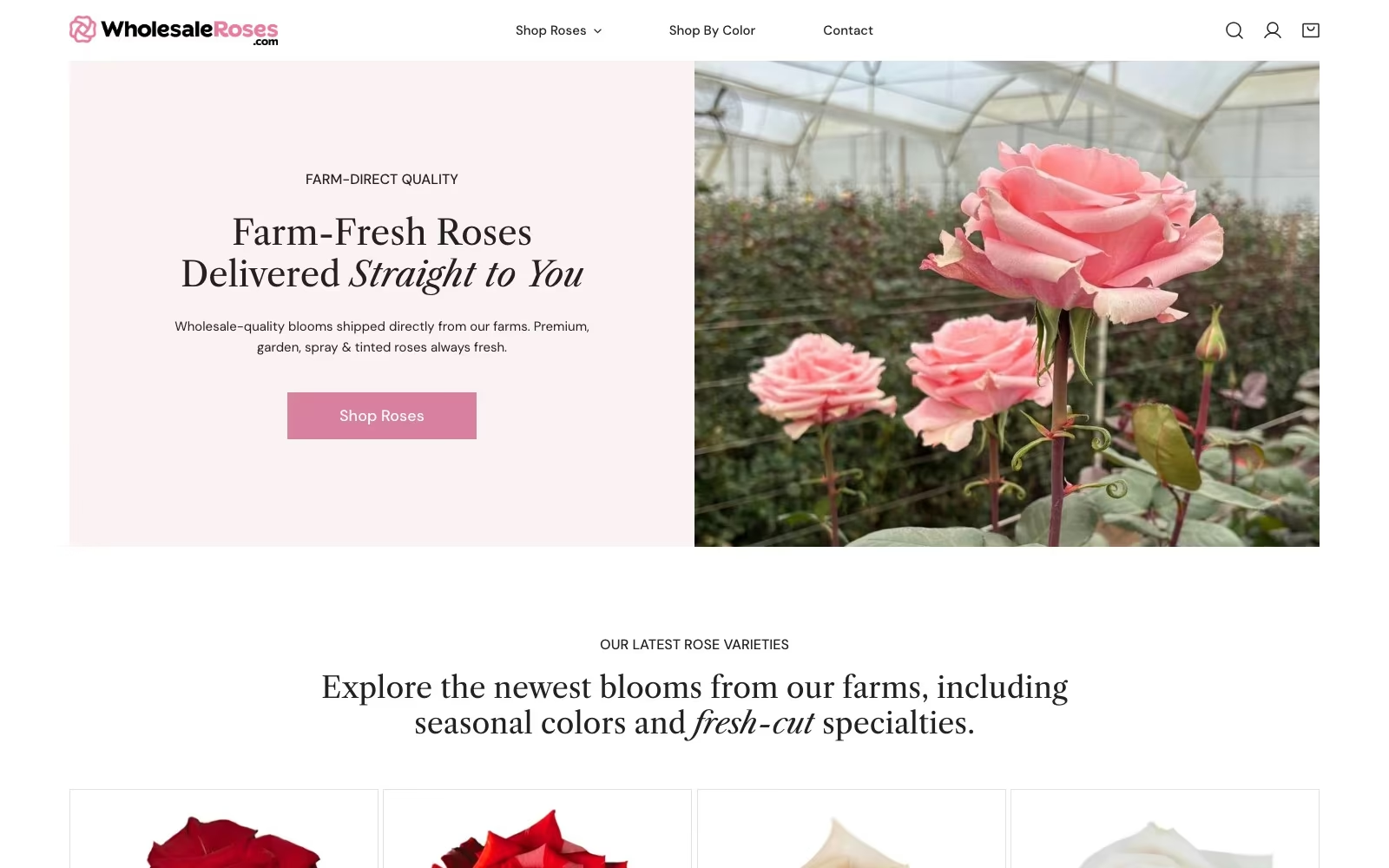
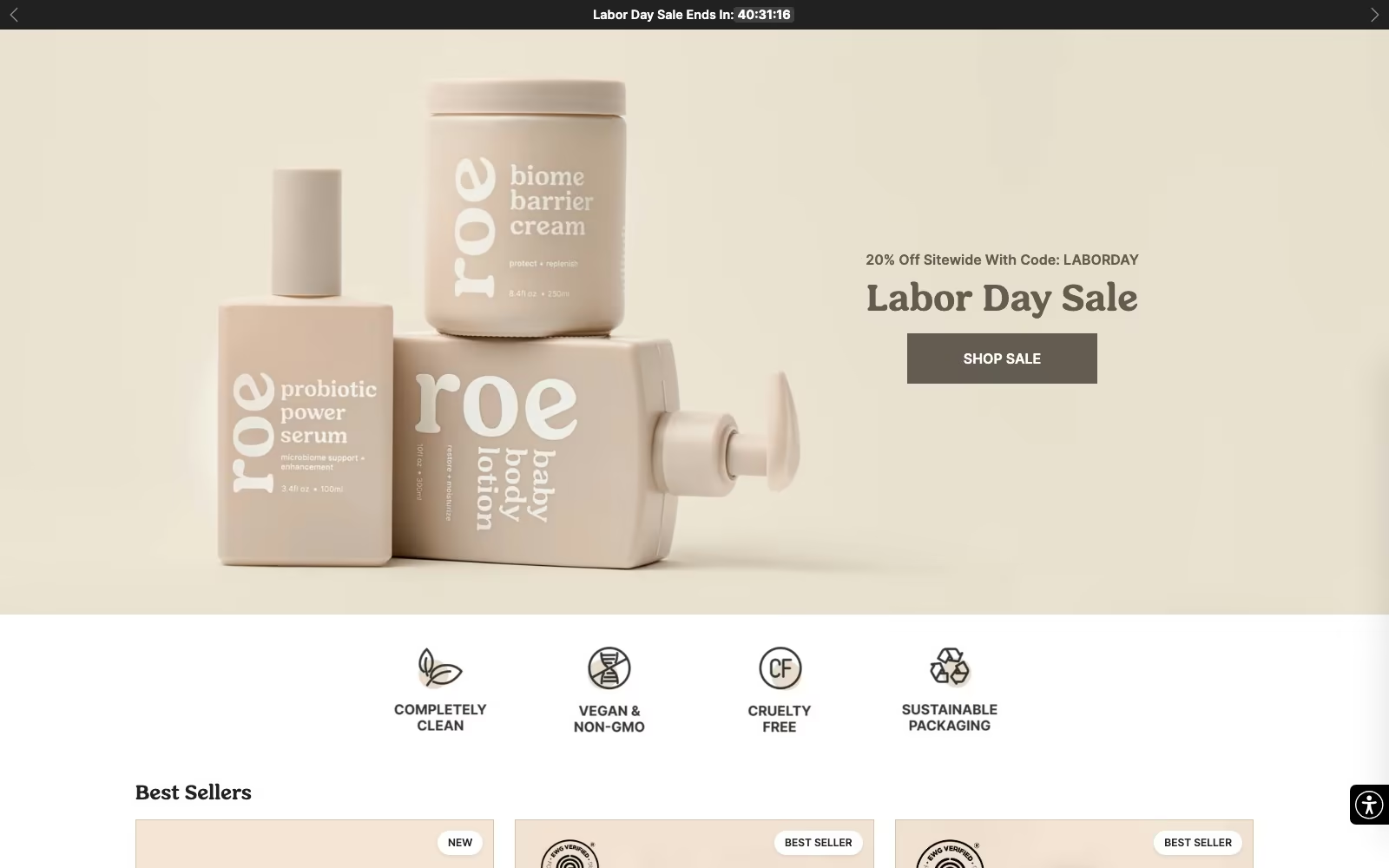
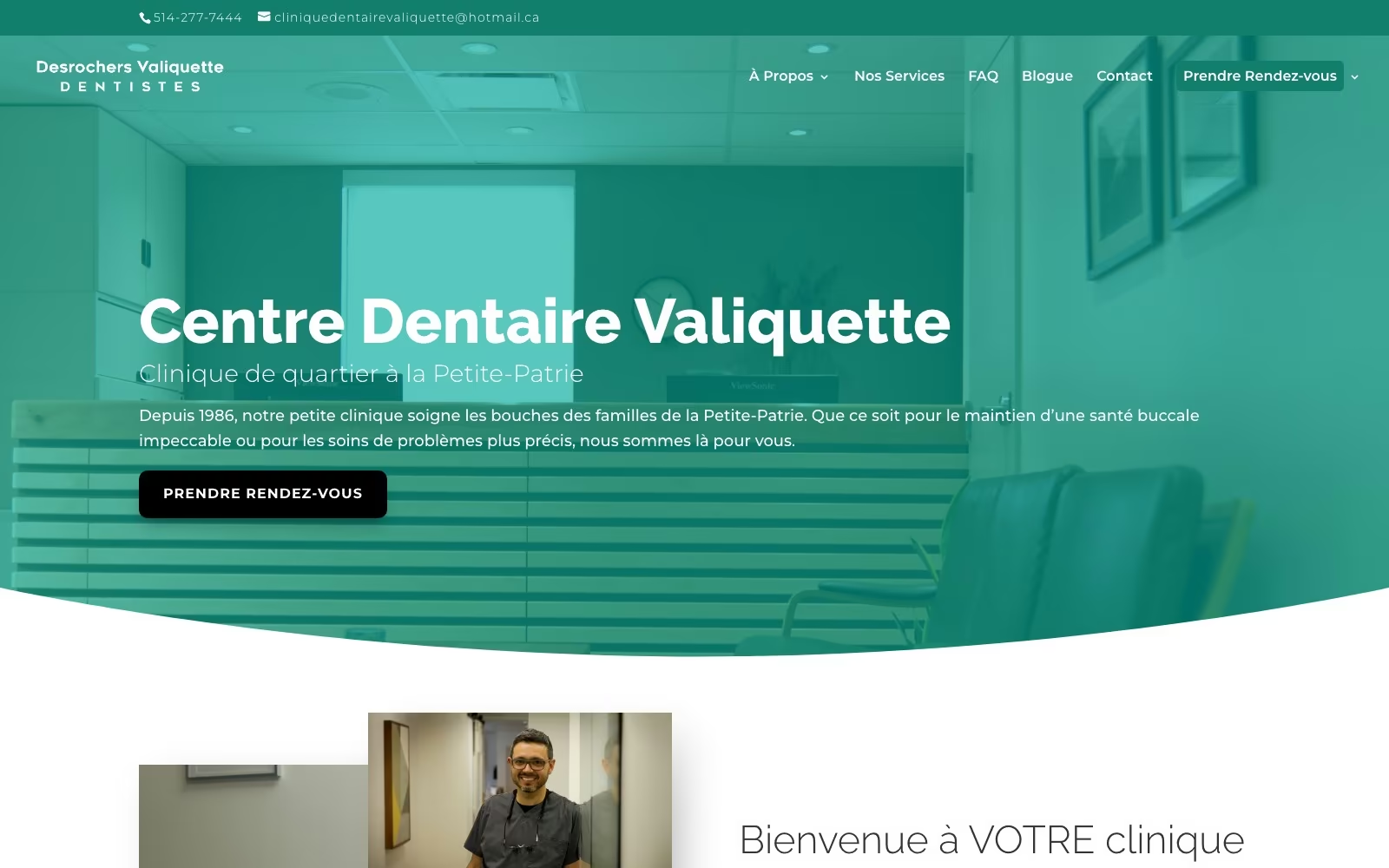
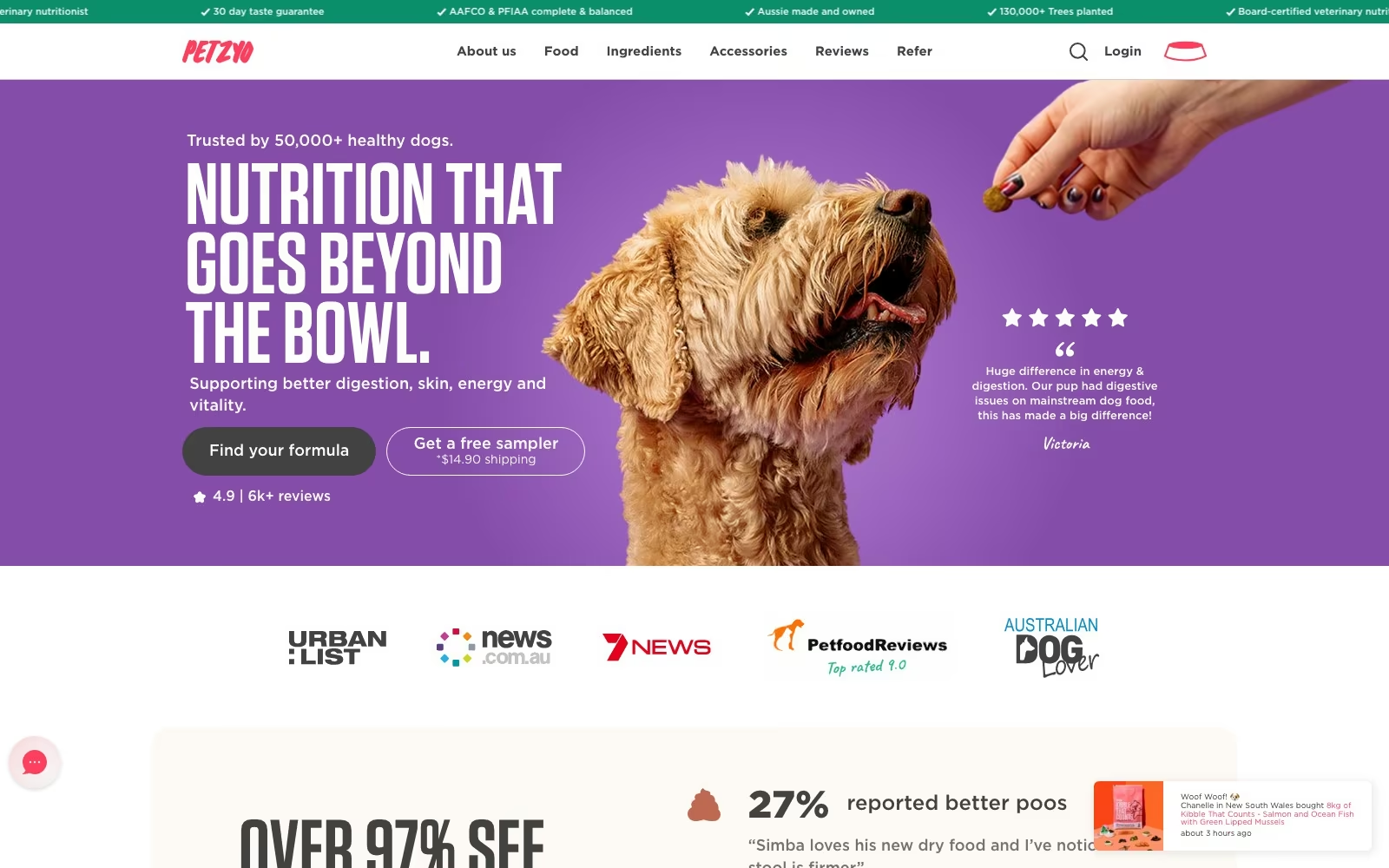
Website Portfolio
Video Ads
Static Ads
















































FAQ
What institutions ask us first.
Do students really use AI assistants to choose where to study?
Increasingly, yes, and the change happened fast: AI use in the college hunt went from 26% of high-school students in spring 2025 to 46% by the end of the year. Among international students the pattern is stronger still, with 96% of AI users saying the guidance matched or beat official sources. Advertising there does not replace your website; it makes sure you are in the comparison being drawn.
How does targeting work without keywords or interest audiences?
By context rather than by list. The placement is matched to the conversation, so we build coverage from the questions your admissions team hears — entry requirements, cost, format, transfer credit, career outcomes — and weight it toward programs that need students. There are no lookalike audiences and no interest targeting yet, which is exactly why your own measurement has to carry the weight.
What can this platform not do yet?
Plenty, and it is better said plainly. No video placements, no lookalike or interest audiences, thinner reporting than mature platforms, and creative options that are limited compared with paid social. That is why we keep the budget capped, buy on clicks first, and lean on the pixel, the event structure and the destination page for performance.
How is success measured for an enrollment funnel this long?
By separating the stages and being patient about the last one. Inquiry and application events are tracked distinctly, enrollment comes back from the CRM, and the benchmark is your existing cost per enrolled student rather than a platform metric. For context, education search clicks averaged $6.23 in 2026 at an 11.4% conversion rate, so a cheaper inquiry that never enrolls is easy to spot and easy to cut.
Will this cannibalise our paid or social budget?
Some overlap is expected and worth monitoring rather than fearing. Because one team holds the channels, we can see whether total applications rise against a flat combined budget, which is the only cannibalisation test that means anything. If the new platform simply reshuffles the same students at a higher price, we move the money back and say why.
What budget should an institution start with?
Small, steady and honest. A modest monthly cap held for a full recruitment cycle produces a usable answer; a large burst that ends before applications close does not. We size it against your current spend in the first session, and the cap never moves without your approval — useful when the budget has to survive a committee.
Is advertising inside AI answers appropriate for an institution?
Handled carefully, yes, and carefully is the operative word. Placements are labelled as advertising, the claims we make are limited to what your prospectus already says, and cost and requirement information stays accurate because a student who feels misled becomes a complaint rather than an enrollment. We keep admissions in the approval loop for every message.
Do we need to change our website first?
Usually a handful of program pages rather than a rebuild. The click arrives from a conversation where requirements and cost have already been discussed, so the page has to confirm those quickly and offer a short next step. We build those destinations alongside the campaigns and hand them over documented.
How quickly do costs on this platform change?
Faster than in mature channels. Advertiser numbers went from 2,585 to 3,770 in one week when the minimum spend dropped, and prices follow competition. So we review weekly during a test rather than monthly, and treat the current pricing as a window rather than a permanent state.
Can you run this alongside our other channels?
Yes, and that is the sensible way to buy it. Our paid search, AI search and analytics teams work from one plan, so an application is attributed once instead of claimed by three vendors. Taking this platform on its own is equally fine, and everything stays in accounts you own.
Does organic visibility in AI answers still matter if we advertise?
It matters more, not less. Assistants lean on what they can read about you, so accurate program information, clear cost pages, outcomes data and third party coverage all shape the unpaid part of the answer. The two work together: advertising buys presence now, while our AI search team improves what the model says about you when nobody is paying.
What does a ChatGPT ads programme cost, and what is included?
Two lines only: a fixed monthly management fee scoped to the number of programs in play, and the media budget, which stays capped and is paid by your institution directly to OpenAI. There is no percentage of spend, so our incentive stays pointed at efficient enrollment rather than volume. Included is the measurement build, the question map, campaign management, the destination pages and a monthly written summary. Excluded is anything we would have to invent: we do not promise application numbers before a term of real data exists.
How do we choose between this, paid search and paid social?
Ask what each channel buys. Traditional paid listings buy people already using your program vocabulary; paid social buys attention from an audience that was not looking; conversational advertising inside ChatGPT buys the research stage, where a student is comparing higher education options and forming a shortlist. A sensible mix keeps search funded first, holds a creative testing budget on social, and treats this platform as the cheap early-mover experiment while placements are still underpriced. We will tell you when the marketing mix does not need a fourth channel.
Who does the day-to-day work on our account?
A named senior buyer who knows education marketing, supported by our measurement and creative specialists. You meet them in the first session and they stay on the account — no handover to a junior team once the contract is signed, and no ticket queue. Weekly working sessions are with the people making the changes, so questions get answered by whoever pressed the button.
What happens at the end of the test?
You get a written verdict with three options: scale, hold at the current cap, or stop — each argued from the numbers, including the ones that do not flatter us. Everything built along the way stays useful regardless: the event structure, the question map and the destination pages all keep working for your other channels.

.webp)
.webp)