SEO that fills carts, not dashboards.
fills carts
An online store lives or dies on the pages nobody writes about: the category listing, the filtered view, the product page that has to out-argue a marketplace. We build ecommerce SEO around those pages — the keyword and category architecture, the technical work that lets search engines crawl a large catalog, and the content that earns the click — reported next to revenue with our analytics team.






Tell us a little about your brand and we'll be in touch within 24 hours to lock in a time.



FOUR WORKSTREAMS
Four workstreams behind organic revenue you can bank on.
organic revenue
Ecommerce SEO is four jobs running together: get the category architecture right, make a large catalog crawlable, write product and content pages that convert, and earn the brand authority that keeps the rankings once you have them.
Category & keyword architecture
Technical SEO at catalog scale
Product & content pages
Authority & brand search
Start with the category tree, not the blog.
Most stores inherit a category structure built for the warehouse rather than for demand: three near-identical collections competing for one keyword, a filtered view generating thousands of thin URLs, and the page that should own the head term buried two clicks down. We map real search demand to the catalog, decide which collection owns which keyword, and turn the filters that have genuine demand into indexable landing pages.
That is where the traffic actually sits. Across 41 ecommerce stores, category pages produced 60-70% of organic sessions — which is why a blog-only strategy rarely moves store revenue.
- Keyword demand mapped onto the category tree
- One collection owns one head term, cannibalisation resolved
- High-demand filters turned into indexable pages
- Internal linking that pushes authority to commercial pages
60-70%
of organic sessions came from category pages (41 stores)
1.8-4.2%
organic conversion rate range in the same study
Make a big catalog legible before asking it to rank.
A catalog breaks search engines in predictable ways. Faceted navigation multiplies URLs, out-of-stock products vanish without a plan, pagination hides half the range, variant pages duplicate each other word for word, and a theme update quietly removes the internal links holding a collection together.
We audit crawl budget, indexation and rendering across the whole site, set canonical and parameter rules that hold, give discontinued products a destination instead of a 404, and keep Core Web Vitals inside the range shoppers notice. Unglamorous work, and usually where the first movement comes from.
- Crawl budget, indexation and render audit across the catalog
- Faceted navigation rules that stop thin URL sprawl
- Out-of-stock and discontinued product handling
- Core Web Vitals monitored, not screenshotted once
35-55%
organic share of revenue-generating sessions at established stores
Pages written to win the click and the sale.
Manufacturer copy pasted onto a product page is the single most common ecommerce SEO problem, and it means your page is competing against twenty identical ones. We rewrite the pages that matter with the detail shoppers search for — sizing, materials, compatibility, delivery, comparisons — and add buying guides that answer the question a category page cannot.
The same detail protects the checkout. With an average documented cart abandonment rate of 70.22% across 50 studies, a page that settles doubts before the cart is worth more than one that ranks and stays quiet.
- Product descriptions rewritten around real buying questions
- Category copy that helps a shopper choose, not filler text
- Buying guides and comparisons mapped to the catalog
- Structured data on products, reviews and FAQs
70.22%
average documented cart abandonment (Baymard, 50 studies)
Authority earned by being worth citing.
Retail SERPs are crowded with marketplaces and review sites, and the thing separating position seven from position two is usually how many credible websites reference the brand. We build assets worth linking to — original data, a genuinely useful tool, a guide nobody else has written — then run outreach and digital PR around them. No bought link networks, ever.
The same work feeds answer engines, which matter but need proportion: across 94 ecommerce websites, ChatGPT referrals produced $474,000 in revenue against $32.1 million from non-branded organic search. Worth covering, not worth reorganising the strategy around.
- Linkable assets built before outreach starts
- Digital PR and partner placements, no link networks
- Brand entity work across the sites AI engines read
- Monthly report of links earned and pages lifted
68x
more revenue from non-branded organic than ChatGPT referrals (94 stores)
Content, accounts and tracking stay in your name
A written read on organic revenue, not a rankings screenshot
Working session with the people doing it
Long-term lock-ins
We made the difference for those brands

Consumer tech and platforms

Food & beverage

Creative, content, arts & culture

Beauty, personal care & wellness

Consumer tech and platforms

Healthcare & regulated services

B2B software, fintech, insurance

Beauty, personal care & wellness

Retail & commerce

Creative, content, arts & culture

Beauty, personal care & wellness

Food & beverage

Beauty, personal care & wellness

B2B software, fintech, insurance

Beauty, personal care & wellness

Retail & commerce

B2B software, fintech, insurance

Consumer tech and platforms

Beauty, personal care & wellness

Healthcare & regulated services

B2B software, fintech, insurance

Beauty, personal care & wellness

B2B software, fintech, insurance

Consumer tech and platforms

Consumer tech and platforms

Apparel and lifestyle

B2B software, fintech, insurance

Consumer tech and platforms
B2B software, fintech, insurance

Creative, content, arts & culture
01 — The challenge
The traffic chart is up. The revenue line is flat.
Two years of blog posts, a respectable sessions graph, and a store that still buys most of its orders through ads. Nobody can say what SEO is worth, so the budget quietly moves back to paid.
“We rank for plenty of things. Not one of them is a thing people buy.”
Almost always the same cause: the content was written for a calendar while the category and product pages were left as the theme shipped them. Organic search is 35-55% of revenue-generating sessions at established online retailers, so the gap is not the channel — it is which pages the work was spent on.
02 — Our approach
Category architecture first, then technical, then the pages that sell.
We start by mapping search demand onto your catalog: which collection should own each head term, where two pages are competing for one keyword, and which filters have enough demand to deserve an indexable page of their own. That becomes a ranked roadmap with expected revenue attached, so it can be staffed and defended rather than argued about. Next comes the technical layer that decides whether a large store can rank at all — crawl budget, faceted navigation, pagination, canonical rules, variant duplication, out-of-stock handling, page speed. Then we rewrite the commercial pages: category copy that helps a shopper choose, product descriptions built around the real buying questions, buying guides that catch demand a collection page cannot, and structured data throughout. Authority work runs alongside, earning links with assets worth citing. Every decision is reported against SEO orders and revenue by page type, not against a rankings screenshot.
03 — What we did
Six weeks to a working search program, then a monthly cadence.
Audit, architecture, page work and authority — in sequence, with a monthly working session and a written note of what moved.
Weeks 1-2 / Audit
What the catalog can and cannot rank for today
Crawl, indexation and render review across every template, a link profile read, and a list of the pages already close enough to move.

Week 3 / Architecture
One page owns one keyword
Search demand mapped onto the category tree, cannibalisation resolved, and the filters worth indexing turned into real landing pages.

Weeks 4-6 / Page work
Commercial pages rewritten first
Category and product copy built from the questions shoppers actually ask, plus structured data and the buying guides that feed them.

Ongoing / Authority
Assets worth citing, then outreach
Original data, tools and guides pushed through digital PR and partner placements, reported against the pages they lifted.

WHAT YOU GET
Deliverables your team can pick up and run.
pick up and run
Everything below is delivered in working files and accounts that stay yours if you ever leave.

Category and keyword map
Every head term matched to the one collection that should own it, with search demand, intent and expected revenue attached.

Technical audit and fix list
Crawl budget, faceted navigation, pagination, canonicals and speed, handed over in the order your developers should ship them.

Product and category copy
Commercial pages rewritten around the questions shoppers ask before they buy, with structured data included.

Link earning and digital PR
Assets worth citing, outreach and partner placements aimed at authority in your category rather than raw link counts.

Revenue reporting by page type
Organic orders and revenue split by collection, product and guide, so the channel is judged the way the rest of the store is.

In-house playbook
Briefs, description templates and the review checklist your team needs to keep new products optimised without us.
HOW WE WORK
Operating standards, not promises.
Operating standards



















Built on trust. Proven by results.
We partner with SMBs and Fortune 500 companies to deliver more than reach — we bring clarity, execution, and measurable outcomes. Every successful partnership starts with a strong culture fit and a shared drive to grow.






CASE STUDIES
Case studies
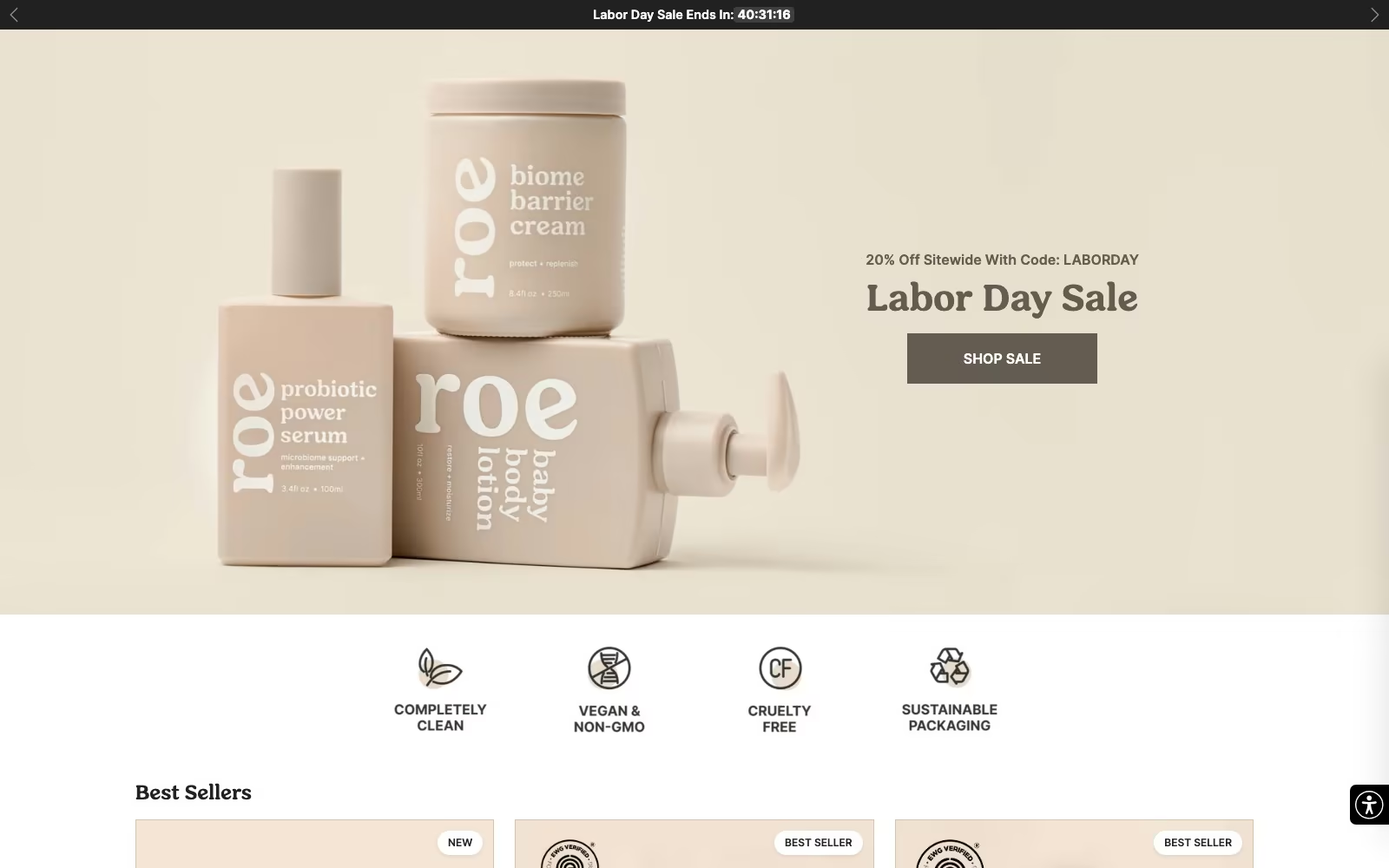
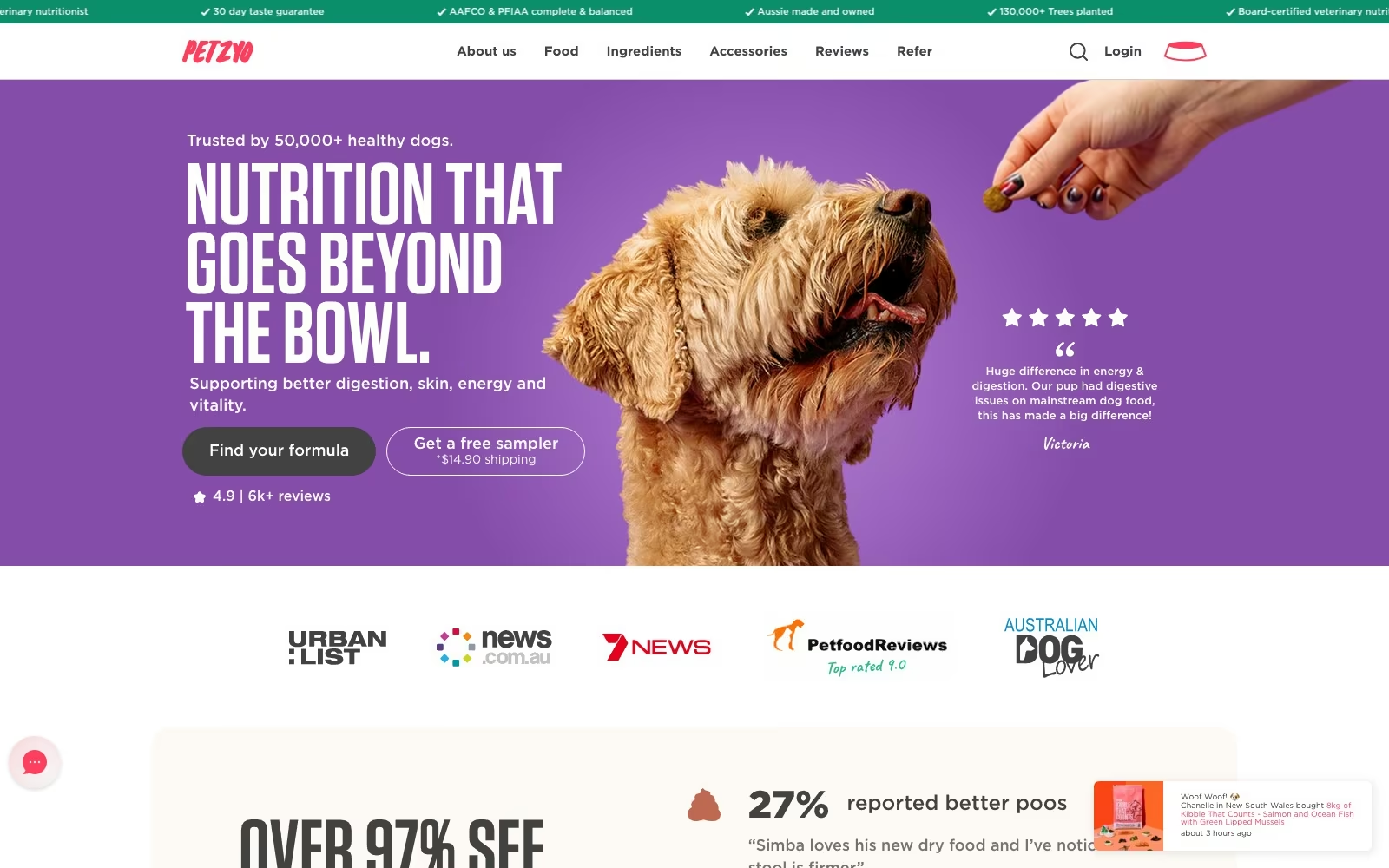
Website Portfolio
Video Ads
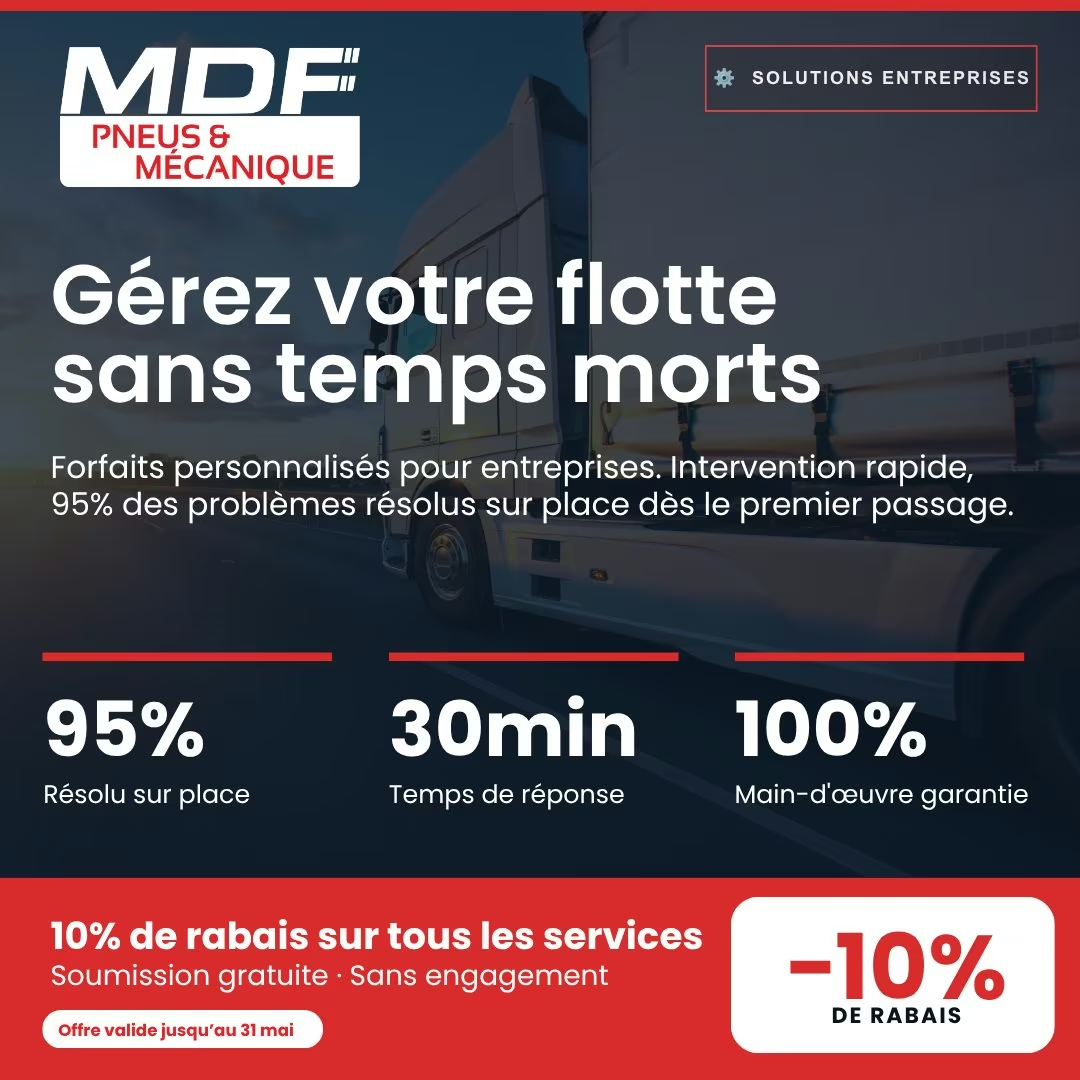
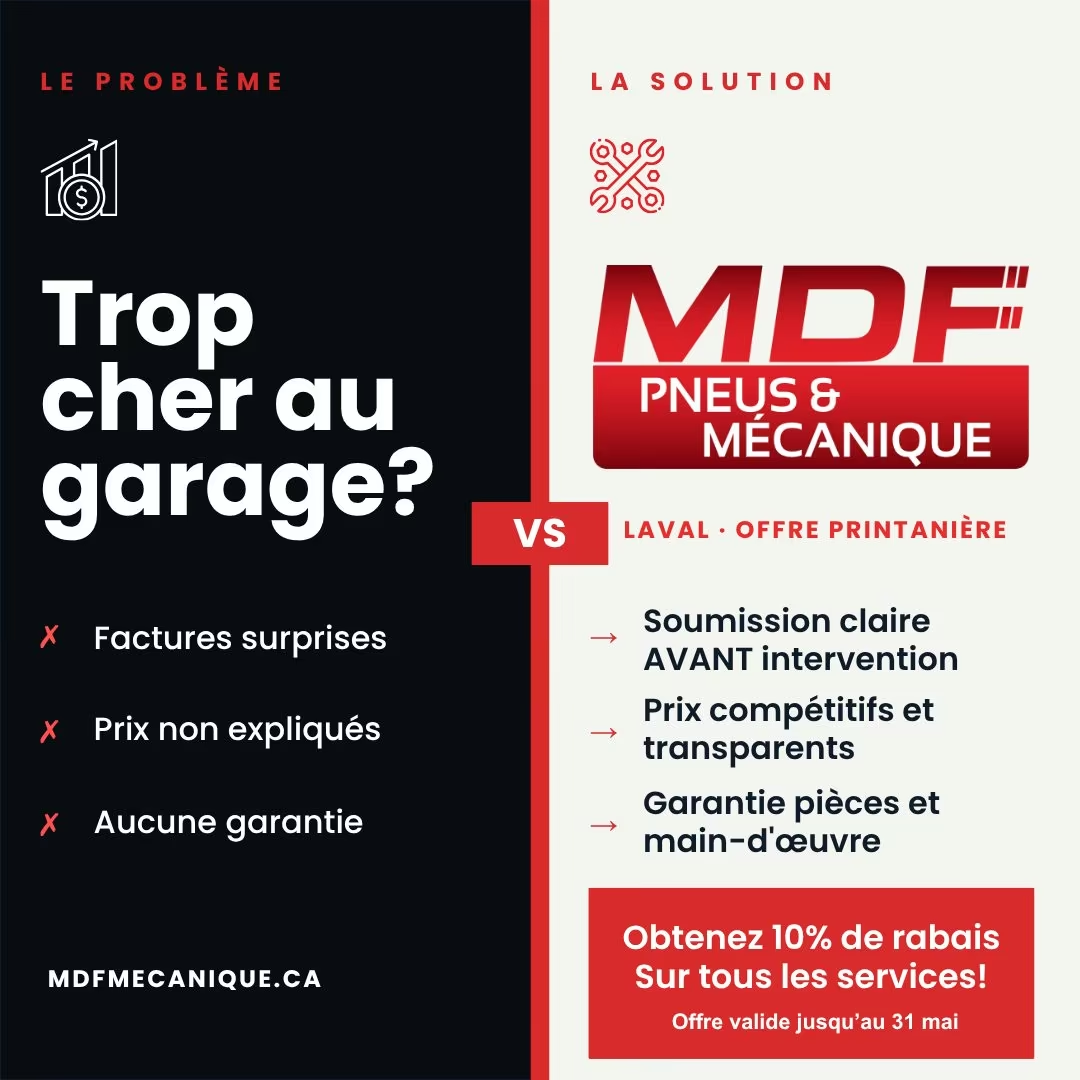
Static Ads


































































FAQ
What store owners ask us first.
How long does ecommerce SEO take to produce revenue?
Technical fixes and pages already sitting on page two can move within weeks; a new category cluster usually takes two to three quarters to earn its position, then keeps compounding. The useful framing is that search is a balance-sheet channel rather than a monthly one — organic search accounts for 35-55% of revenue-generating sessions at established retailers, and that share grows while click costs rise. We publish a monthly read on SEO orders from the first month so you can see the trend long before the totals look impressive.
Should we optimise category pages or write blog content first?
Category pages, almost every time. They sit closest to the purchase, they carry the head terms, and they are the pages a shopper lands on with a card in hand. In a benchmark of 41 stores, category pages produced 60-70% of organic sessions, which is the number that settles the argument. Content still matters, but its job is to answer the questions a collection page cannot and to feed authority into it — a buying guide that links to three collections is worth ten news posts.
How do you choose an ecommerce SEO agency?
Ask three questions. What will you measure — an answer about traffic and rankings is a report, an answer about organic orders and revenue by page type is a channel. Which pages will you work on first, and why those? And what is the link building method, in detail? Then ask what they would stop doing on your store today. A useful answer arrives with reasoning attached, which tells you more about the next twelve months than any logo wall in a deck.
What does ecommerce SEO cost?
A fixed monthly fee scoped to the roadmap, quoted before anything starts and separate from any media spend. Scope tracks catalog size and how much page rewriting is needed rather than an arbitrary tier, and after a first review you get a plan, a ranked roadmap and a target. Where the honest engagement is an audit and a category map rather than a retainer, we scope it that way and say so. Content, tracking and accounts stay in your name throughout.
What do you do about faceted navigation and filter pages?
We treat filters as a demand question before a technical one. A filter combination people genuinely search for — a size, a colour, a material, a compatibility — deserves a real indexable page with its own copy and internal links. Everything else gets parameter and canonical rules so it stops eating crawl budget and stops competing with the collection it came from. Getting this wrong is the most common reason a large catalog has thousands of indexed URLs and very little organic traffic.
Our product descriptions come from the manufacturer. Is that a problem?
It is, and it is fixable in priority order. Identical copy means your page brings nothing to the SERP that twenty other listings do not, and it leaves the shopper's real questions — fit, materials, compatibility, what is in the box, how it ships — unanswered. We rewrite the products that carry search demand or margin first, give your team a description template and checklist for everything else, and keep the manufacturer specs as structured data underneath rather than as the whole page.
How does SEO work alongside our paid campaigns?
They share buyer research and should share reporting. Paid tells you within days which queries and product sets convert, which sharpens the organic roadmap; organic then takes over the terms where click costs are punishing and holds them for years. We run both with our ecommerce PPC team on one plan, and the monthly review looks at blended cost per order rather than letting each channel claim the same sale twice.
What about AI search and answer engines?
Same discipline, wider surface, and worth keeping in proportion. Across 94 ecommerce websites, ChatGPT referrals generated $474,000 against $32.1 million from non-branded organic search — real, growing, and still a fraction. Answer engines cite clearly written, well structured, corroborated pages, which is what good category and guide work produces anyway. We add the structured data and entity consistency those systems read and track citations through our GEO and AEO work.
Does site speed really change organic sales?
It changes the sales more reliably than it changes the rankings. Speed is one modest signal among many for search engines, but on a phone in a shop queue a slow collection page is simply abandoned, and that shows up in revenue per session immediately. We measure field data rather than a lab score, fix the heaviest offenders — uncompressed imagery, third-party scripts, render-blocking apps — and check the result against add-to-cart rate, which is where the money is.
Do you buy links?
No, and we will decline the request politely. Bought links from networks are the one tactic that can cost a store its organic channel outright, and the sites selling them are the sites algorithms are best at spotting. What we do instead is make something worth citing — original data, a useful tool, a guide that does not exist yet — and put it in front of journalists, newsletter writers and partners. Slower to start, and it does not evaporate in an update.
What happens to products that go out of stock or get discontinued?
They get a plan instead of a 404. A temporarily unavailable product keeps its page, states the situation honestly and offers a notify option, because deleting it throws away rankings you will want back next season. A discontinued line is redirected to the closest replacement or to its parent collection, never to the homepage, and the internal links pointing at it are updated. Seasonal ranges stay live year-round with dated content, which is how they rank on day one of the next season.
Can our in-house team do the work with your strategy?
Often the best arrangement, and we scope for it. You get the category map, briefs, description templates, the review checklist and the technical fix list, while we handle editing, structured data and authority outreach. Store teams with a strong merchandiser usually save money that way and produce better pages, because nobody knows the range like the person buying it. Where writing capacity genuinely is not there, our writers cover it and still interview your team first.
How do you measure organic when shoppers see ads too?
By reporting source and influence separately instead of pretending one model settles it. We tag every commercial page, split organic orders and revenue by page type, compare year over year rather than month over month, and read the post-purchase survey next to the analytics. Where a competitor leaves a SERP or Google changes a layout, we say so rather than take credit. That habit is why most of our clients keep the same reporting view for years.
What happens in the first ninety days?
Weeks one and two are the audit: crawl, indexation, render, links and the pages already close enough to move. Week three delivers the category and keyword map with expected revenue per cluster. From week four the commercial page rewrites begin while developers work the fix list, and authority work starts with whichever asset your data supports. By day ninety you have measurable movement on existing pages, a rebuilt collection set and a reporting view that reads in orders.
Which tools do you use, and do we need our own?
We work in your Google Search Console and analytics accounts — those two are non-negotiable and stay yours — plus our own licences for keyword research, crawling and backlinks, so nobody has to buy a tool stack to begin. If your team already pays for one of the large platforms we will use it rather than duplicate it. Everything we produce, from the keyword sheet to the crawl exports, is delivered in files you keep, and no report sits behind a login only the agency holds.

.webp)
.webp)