An accounting website that wins the meeting before it happens.
wins the meeting
Every referral you receive looks you up first. So does every business owner who searched for a CPA at eleven at night. What they find is usually a site built four years ago, slow on a phone, vague about what the firm actually does and silent on price. We design and build accounting websites that answer those questions quickly, look like the practice you are today, and turn a visit into a booked consultation — then we hand you the keys. It runs alongside your search work, on one plan.






Tell us a little about your brand and we'll be in touch within 24 hours to lock in a time.



FOUR WORKSTREAMS
Four workstreams separate a brochure from a business asset.
Four workstreams
Structure that matches how clients buy, design that earns trust in seconds, content written by people who do the work, and a build that is fast and easy to update. Miss one and the site becomes a cost rather than a channel.
Structure & journey
Design & trust
Build & speed
Conversion & measurement
One page per service, one page per client type.
Most accounting websites are organised the way the firm is organised: departments, partners, a services list eleven items long. Clients do not buy that way. They arrive with one problem — a catch-up bookkeeping mess, a sales tax letter, a business about to be sold — and want to see that exact problem named.
We map the site around services and client types, give each one a page that states what the engagement includes and roughly what it costs, and cut the pages nobody reads. That structure is also what makes the site rankable: search and design are the same job here, which is why 48% of CPA firm traffic arriving from organic search is a design constraint, not a marketing afterthought.
- Site map built from services and client types
- A page for every engagement worth selling
- Fee posture stated instead of hidden
- Dead pages retired, not carried over
48%
of CPA firm website traffic comes from organic search
28%
arrives direct — usually a referral checking you out
Credibility is decided in the first few seconds.
In the largest study of its kind, Stanford researchers found the “design look” of a site was mentioned in 46.1% of credibility comments from 2,684 participants — more than any other factor, including the information itself. For a profession whose entire product is trust, that is the argument for doing this properly.
So we design for reassurance rather than decoration: real photography of your people and your office instead of stock, credentials and affiliations visible without hunting, plain typography a sixty-year-old business owner can read on a phone, and proof — named clients, reviews, specialisms — placed where the decision is actually made.
- Photography of your actual team and office
- Credentials and affiliations visible on every page
- Accessible type sizes and contrast, tested on mobile
- Reviews and named proof near every call to action
46.1%
of credibility comments were about how the site looked (Stanford)
Fast, editable, and yours to run.
Accounting sites have a specific reputation for being slow: a 2026 study of 320 small business homepages found accounting and tax sites were the slowest vertical measured, with a median time to first byte of 1,389 milliseconds, and one in ten sites had no mobile viewport tag at all. Visitors leave before they read a word.
We build on a platform your team can edit without a developer, keep the page weight honest, serve compressed and correctly sized assets, and test on a mid-range phone rather than a designer's monitor. Hosting, domain and the content system stay in your name.
- Editable by your team without a developer
- Core web vitals in range at launch and after
- Tested on a mid-range phone, not just desktop
- Hosting, domain and CMS in the firm's own name
1,389 ms
median time to first byte on accounting and tax sites
10.9%
of small business sites had no mobile viewport tag
A visit should end in a booked consultation.
The most common leak in an accounting site is the last step: a contact form with nine fields, an email address in the footer, and no way to book a time. We put a two-minute booking path on every service page, keep the phone number tappable, and write the form to ask only what a first conversation needs.
Then we measure it. Analytics, call tracking and your CRM are wired together at launch so enquiries are attributed to the page that produced them. The bar is public — the accounting landing page conversion benchmark is 3.20% — and a site that beats it is worth more than one that merely looks new.
- Two-minute booking path on every service page
- Short forms that ask only what is needed
- Analytics, call tracking and CRM connected at launch
- Conversion reviewed after launch, not assumed
3.20%
landing page conversion benchmark in accounting
$101
average cost to acquire a client via search ads
Domain, hosting and content system stay in your name
A consultation is the measure of the site, not a compliment
Weekly working session while the build runs
Long-term lock-ins
We made the difference for those brands

Consumer tech and platforms

B2B software, fintech, insurance

Retail & commerce

Retail & commerce

Consumer tech and platforms

B2B software, fintech, insurance

Food & beverage

B2B software, fintech, insurance

Retail & commerce

Healthcare & regulated services

Travel & mobility

B2B software, fintech, insurance

Healthcare & regulated services

B2B software, fintech, insurance

Beauty, personal care & wellness

Food & beverage

Apparel and lifestyle

Consumer tech and platforms

Beauty, personal care & wellness

Beauty, personal care & wellness

Creative, content, arts & culture

Beauty, personal care & wellness

B2B software, fintech, insurance

Beauty, personal care & wellness

Home essentials, appliances, kitchen & pet

Beauty, personal care & wellness

B2B software, fintech, insurance
Travel & mobility

Consumer tech and platforms

Home essentials, appliances, kitchen & pet

B2B software, fintech, insurance
01 — The challenge
The firm grew up. The website did not.
The site was built when the practice was three people doing returns. It is now twelve people doing advisory work for companies with real complexity, and the homepage still says “tax, accounting and bookkeeping services” over a photograph of a skyline nobody recognises. Partners apologise for it in meetings.
“I would rather nobody looked at our site before the first call.”
They look anyway, and it costs work. Nearly half of CPA firm traffic arrives from search and another 28% comes direct — a referral typing the firm's name in to check you out before they call. That audience is already interested; the site only has to not lose them. Stanford's credibility research put design look ahead of every other trust factor, which is why a redesign so often pays for itself in meetings booked rather than in compliments.
02 — Our approach
Understand the practice, map the journey, design for trust, build to be owned.
We start with interviews rather than a moodboard: which engagements the firm wants more of, which it quietly wants less of, what clients ask on the first call, and what the partners think makes the practice different. From that comes a site map built around services and client types instead of the internal org chart, with a page for every engagement worth selling and a plan for the pages that should quietly retire. Design follows the trust test, not a trend: real photography of your people, credentials in view, plain typography, and proof placed next to the moments where somebody decides to get in touch. We write with your partners so the words sound like the firm and not like a template, then build on a platform your team can actually edit, fast on a mid-range phone, with analytics, call tracking and the CRM connected before launch. Afterwards we watch the real behaviour for a few weeks and fix what the data shows, because launch day is the start of the job. Domain, hosting and content system stay in the firm's name throughout.
03 — What we did
From first interview to a site your partners will send people to.
Discovery, structure, design and content, build and launch — with a working session every week and a written note of what changed.
Weeks 1-2 / Discovery
Interviews and a site map that matches how clients buy
Partner interviews, the engagements worth selling, the questions asked on first calls, and a structure built around services and client types rather than departments.

Weeks 3-5 / Design & content
Design for trust, copy written with your partners
Real photography, credentials in view, plain readable type, and service pages drafted with the people who do the work and signed off by them.

Week 6 / Conversion
Booking paths, proof and short forms
A two-minute booking step on every service page, a tappable phone number, reviews and named proof beside each call to action, and forms cut to what a first conversation needs.

Weeks 7-8 / Build & launch
Fast build, clean migration, measured from day one
Speed and accessibility checks, redirects mapped so rankings survive the move, analytics, call tracking and CRM connected, and training so your team can edit it themselves.

WHAT YOU GET
Deliverables your managing partner can audit.
can audit
Everything below lands in your own accounts and stays yours if you ever leave.

Site map and journey plan
A structure built from the engagements you want, with every page justified and the dead ones retired.

Design system
Page designs, components and a type and colour system your team can extend without breaking it.

Copy written with your partners
Service pages, client-type pages and profiles drafted from interviews and signed off inside the firm.

Build, speed and accessibility
A fast, editable build tested on a mid-range phone, with core web vitals in range at launch.

Migration and redirects
Every old URL mapped so search visibility survives the move, checked again a fortnight after launch.

Measurement and training
Analytics, call tracking and CRM connected, plus a session teaching your team to run the site.
HOW WE WORK
Operating standards, not promises.
Operating standards


Tax practices
Built for the January peak: a fast booking path, clear pricing posture and a checklist page clients actually use.
ExploreBookkeeping & outsourced finance
Productised packages presented as products, with pricing tiers a small business owner can compare.
ExploreAdvisory & CFO services
Longer sales cycles, so the site leads with proof, named specialisms and the people behind the work.
Explore

















Built on trust. Proven by results.
We partner with SMBs and Fortune 500 companies to deliver more than reach — we bring clarity, execution, and measurable outcomes. Every successful partnership starts with a strong culture fit and a shared drive to grow.






CASE STUDIES
Case studies
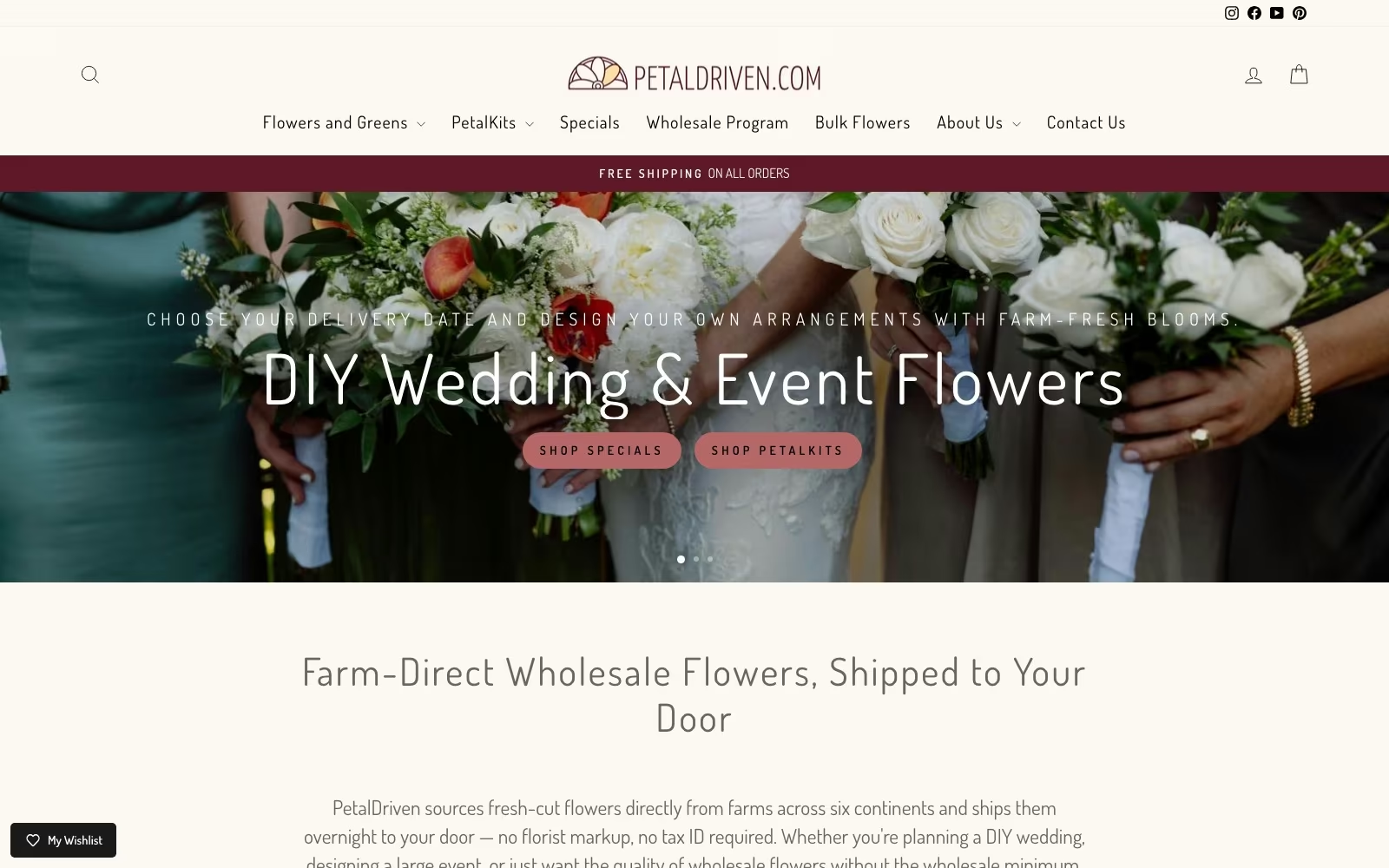
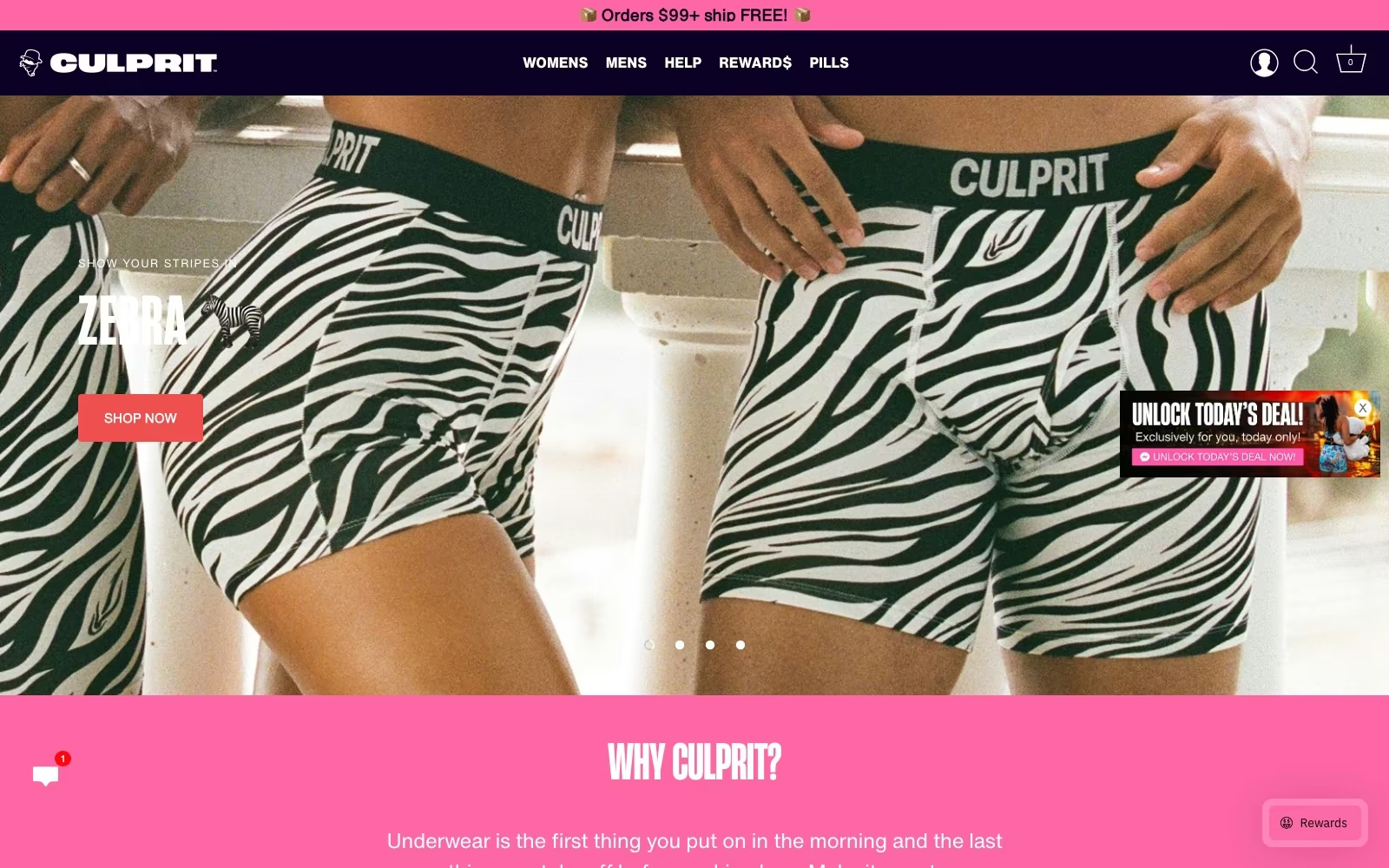
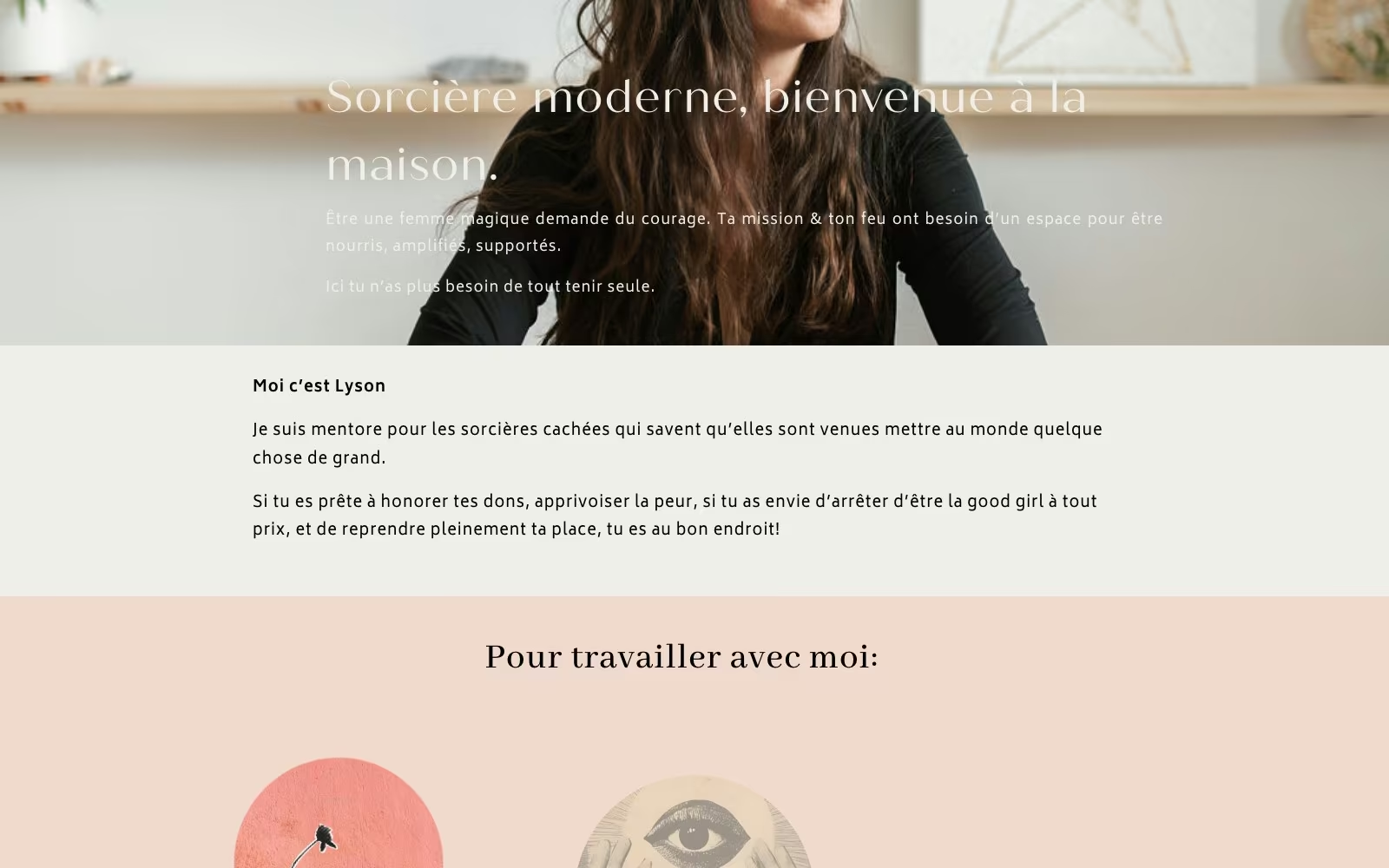
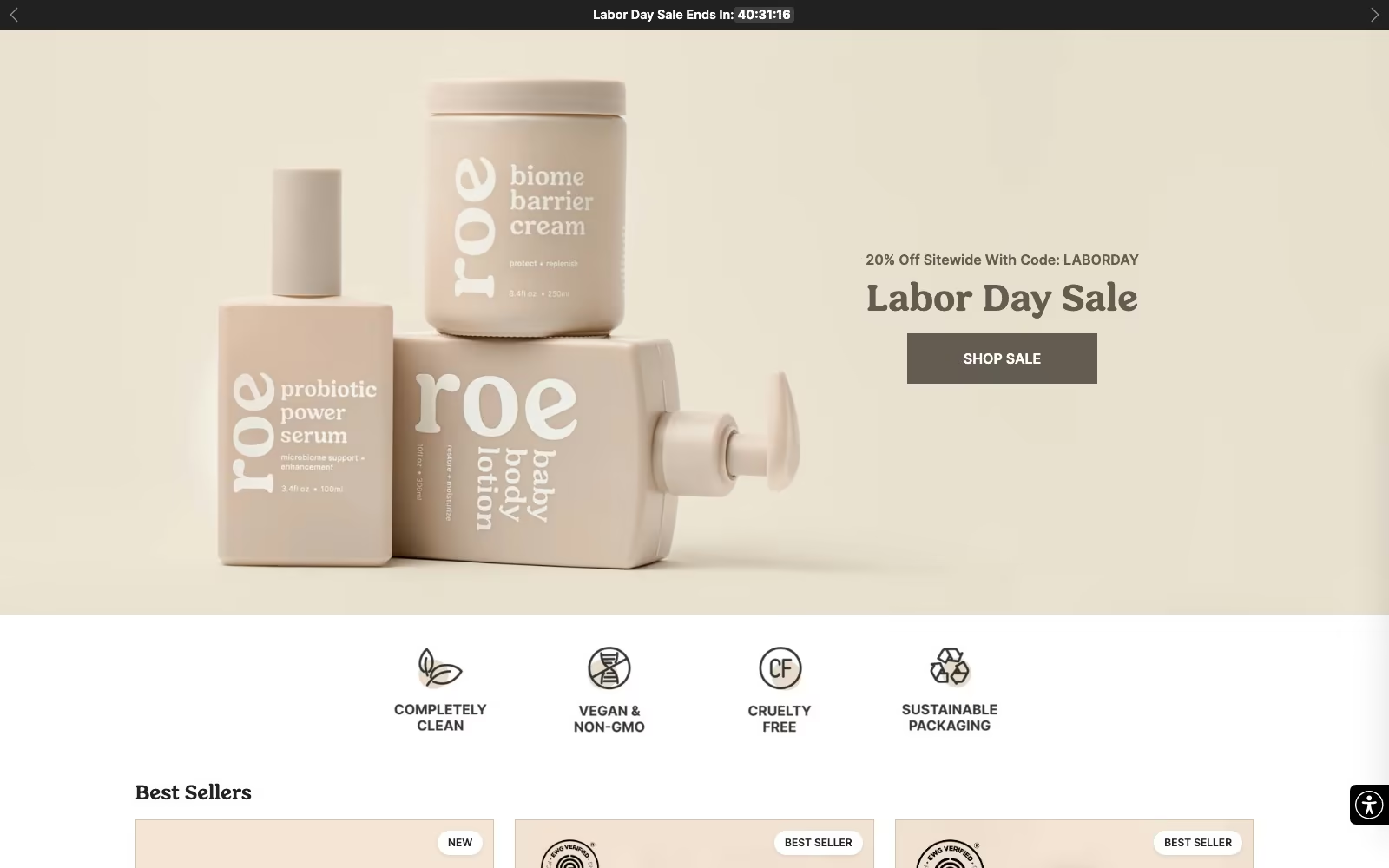
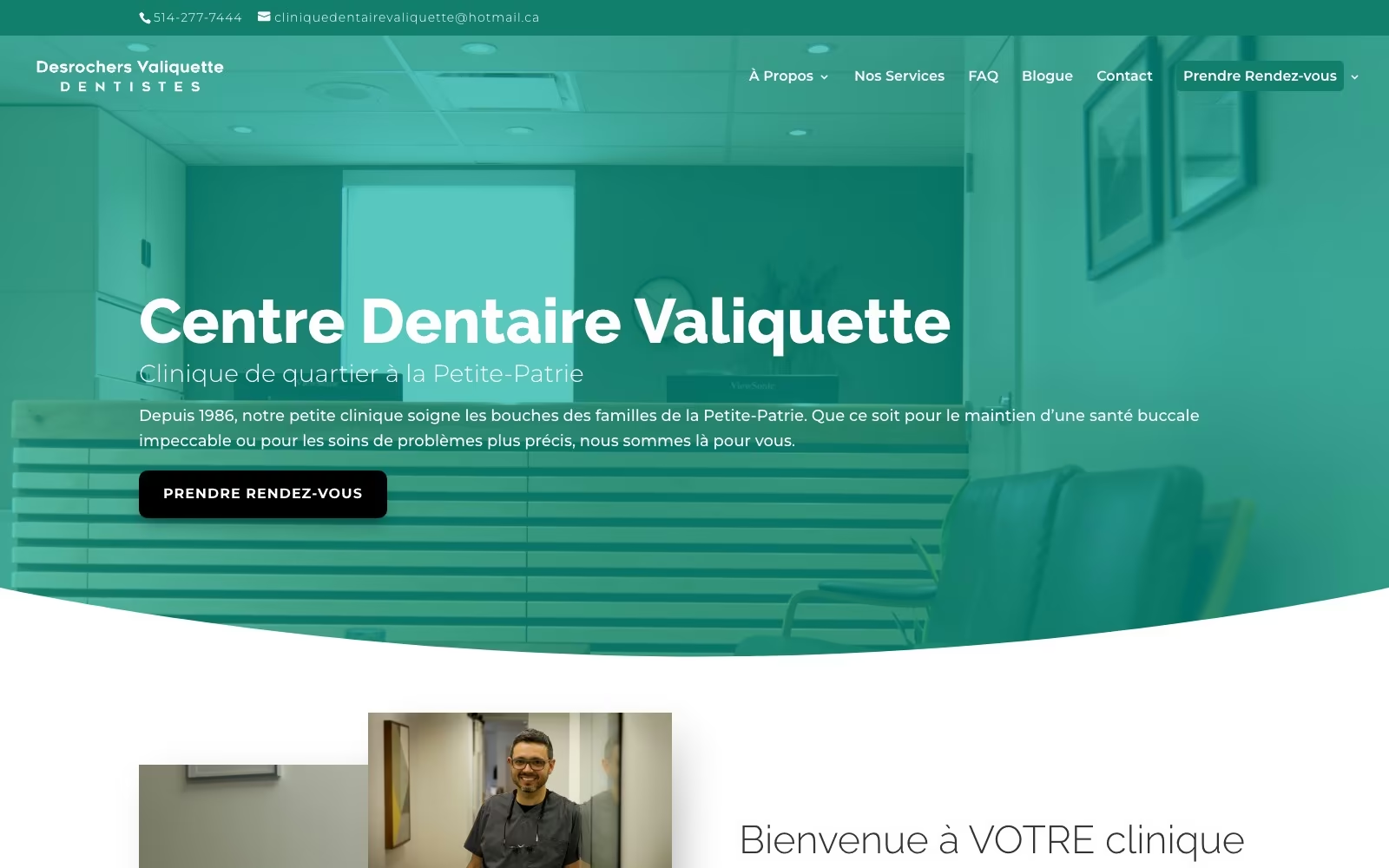
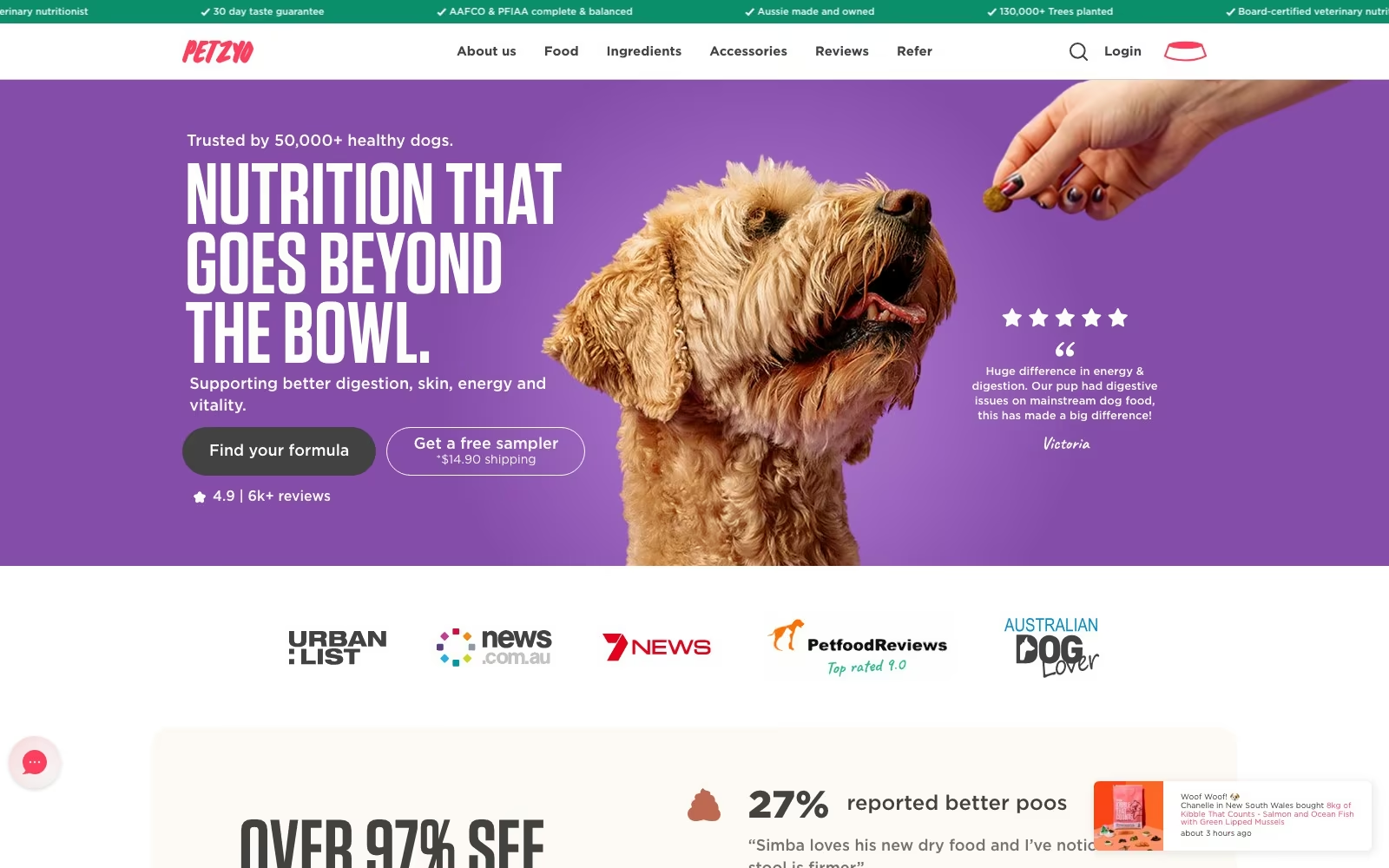
Website Portfolio
Video Ads
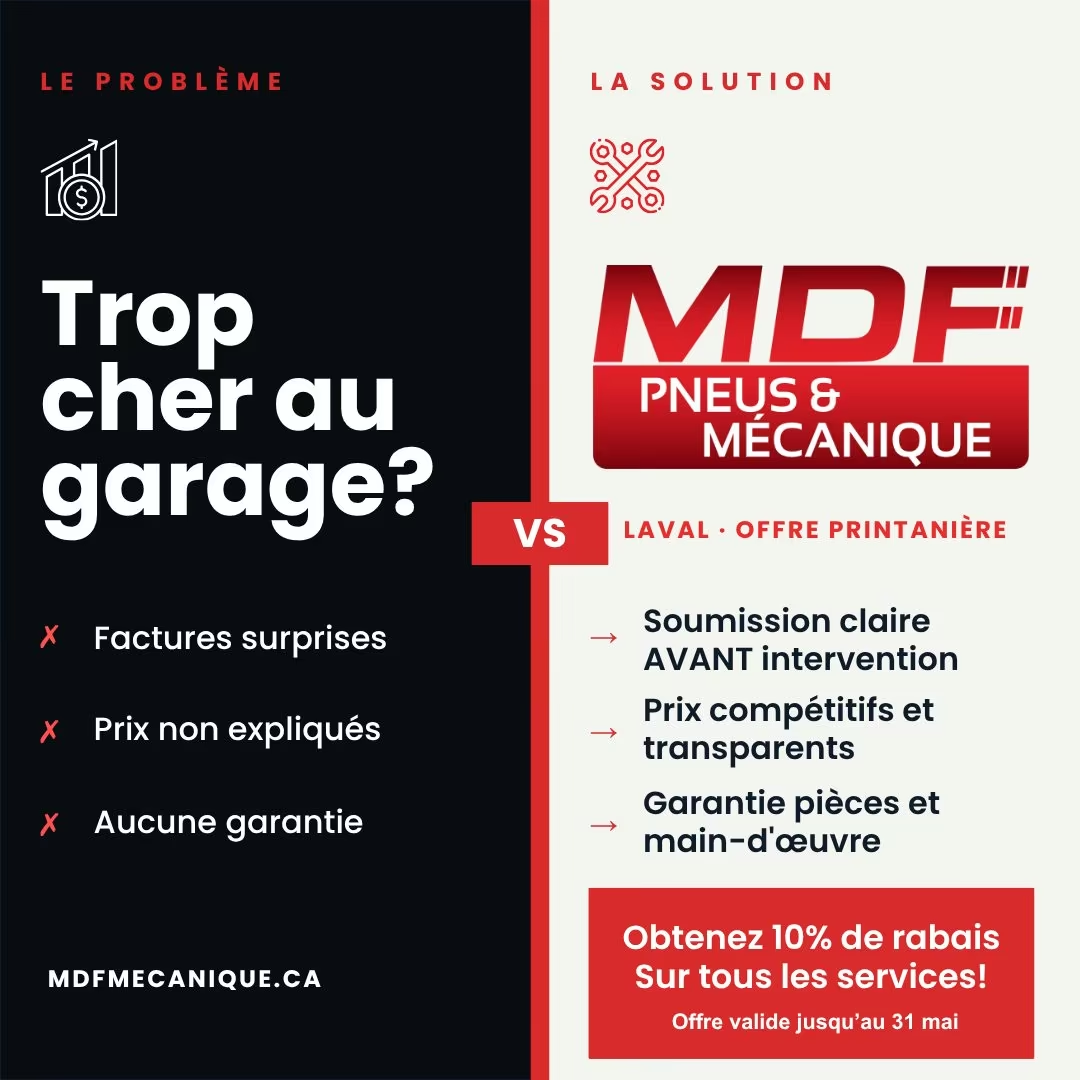
Static Ads































































FAQ
What firms ask us first.
How long does an accounting firm website take to build?
Six to ten weeks for most practices, from the first interview to launch, and the variable is almost never design — it is how quickly copy gets reviewed inside the firm. We plan around that by drafting from interviews rather than sending blank templates, and by booking review sessions in advance instead of chasing partners between engagements. Larger multi-office builds, or a site with a client portal integration, run longer and we scope those honestly at the start.
Will a redesign hurt the rankings we already have?
Handled properly it protects them, and often improves them. Rankings are at risk when a site moves without a redirect map, and that is a planning failure rather than an unavoidable cost of redesigning. Every existing URL is inventoried, mapped to its new home and redirected, the content that already earns visibility is carried across rather than shortened for aesthetics, and we re-check index coverage a fortnight after launch. The faster, better-structured site that results usually gains ground within a couple of months.
Can our team update the site without paying a developer?
Yes, and that is a build decision, not a promise. Pages are assembled from components your team can reorder, so adding a service page, a team member or a new office is a fifteen-minute job. We record a short training session against your actual site rather than handing over a generic manual, and the platform, domain and hosting are all in the firm's name. We are happy to stay on for maintenance, but you should never be stuck with us to change a phone number.
Do we really need to show prices?
You need a posture, which is not the same as a price list. Business owners comparing three firms will discard the two that say nothing, because silence reads as expensive and unpredictable. A starting-from figure, a typical range for a defined engagement, or an explanation of what drives the fee all work, and they filter out the enquiries your team would otherwise spend an hour disqualifying. Firms that add this usually get fewer enquiries and more of the ones they wanted.
What does it cost, and what makes the price move?
A fixed project fee quoted after discovery, with the drivers stated: number of pages, how much photography is needed, integrations such as a booking system or client portal, and how much copy we write versus how much exists. Judged against acquisition, the arithmetic is usually straightforward — at a $101 average cost to acquire an accounting client through search ads, a site that converts better pays for itself in clients rather than in compliments. Where a full rebuild is not warranted, we will scope a smaller fix and say so.
Is a template not good enough for a small practice?
A template can be a perfectly sensible starting point, and we use well-built ones where budget is tight. What a template cannot do is decide your structure, name the engagements you want, write your service pages or make the trust signals specific to your firm — and that is where nearly all the commercial value sits. The failure mode we see is not an ugly template; it is a beautiful template with nine identical service blurbs and no booking path.
How fast should our site be, and does it matter for a professional firm?
It matters more than most firms expect. A 2026 study of 320 small business homepages found accounting and tax sites were the slowest vertical measured, at a median 1,389 milliseconds to first byte, with 14.1% serving the homepage uncompressed. The visitor who leaves before the page paints never sees your credentials. We hold builds to core web vitals in range on a mid-range phone at launch, and re-test after content is added, because that is when sites usually get slow again.
Can you use photographs of our own people?
Please do — it is the single cheapest credibility gain available. Stock portraits are recognisable as stock and quietly undermine everything else on the page, whereas a straightforward photograph of your actual office and your actual team reassures somebody about to hand over their financial records. We will brief a local photographer, direct the shoot if it helps, and design the layouts around the images we know we are getting rather than hoping something fits.
What about accessibility and compliance requirements?
Built in from the start, because retrofitting it is far more expensive. Contrast, type sizes, keyboard navigation, form labels and alt text are part of the build standard rather than an add-on, and we test with a screen reader before launch. Where your jurisdiction or professional body requires specific disclosures, licence details or privacy language, those are placed as part of the design rather than bolted into a footer nobody reads.
What happens after launch?
We watch how people actually use it. For the first weeks after launch we read the real behaviour — where visitors stop, which service pages convert, whether the booking path works on a phone — and fix what the data shows rather than what we assumed in a design review. The target is public: the accounting landing page conversion benchmark is 3.20%. After that, firms either take the site in-house with our training or keep us on a light maintenance and improvement retainer.
Can the site handle multiple offices or a client portal?
Yes. Multi-office firms get a real page per location with its own address, team and enquiry path — much better for local search than one contact page listing three addresses — and the structure scales as you acquire. Client portals are almost always a separate product you already pay for, so the sensible pattern is a clean, obvious login rather than rebuilding the portal inside the website. We integrate with the practice software you use instead of asking you to change it.
Can you handle our marketing as well as the build?
Yes, and the site converts better when the same team holds both. Our SEO, paid search and analytics specialists work from one plan with the design team, so the pages are built to rank and to receive paid traffic rather than retrofitted afterwards. Hiring us for the build alone is completely fine too — everything is documented and left open in your name for whoever runs it next.

.webp)
.webp)