Accounting SEO that brings you the clients you actually want.
the clients you actually want
Most accounting practices are found the same two ways: somebody is referred, or somebody searches. The referral half you already run well. The search half is usually a website nobody has touched since the last rebrand, a Google Business Profile with three reviews, and service pages that read like a brochure. We fix the second half — the structural base, the pages that answer real client questions, the map footprint and the content your partners already know by heart — and we measure it in booked consultations rather than rankings. It sits beside your paid search, not against it.






Tell us a little about your brand and we'll be in touch within 24 hours to lock in a time.



FOUR WORKSTREAMS
Four workstreams decide whether an accounting firm ranks.
Four workstreams
Ranking a professional practice is not mysterious. A site crawlers can read, pages that match what people actually type, a presence that shows up in the map, and content that proves the firm knows its craft. Everything else is commentary.
Technical base
Service pages & content
Local & profile
Measurement & AI search
The site has to be readable before anything else counts.
Accounting websites tend to carry the same faults: a slow host, a template nobody pruned, duplicated service pages left over from an old site, and internal links that go nowhere. A 2026 study of small-company homepages found accounting and tax sites were the slowest vertical measured, with a median time to first byte of 1,389 milliseconds, so this is not a theoretical problem in this profession.
We crawl the site, fix what blocks indexing, flatten the duplicate pages into one page per service, repair the internal linking so the important pages get the most links, and get the core web vitals into shape. Nothing about this is glamorous, and skipping it makes every later effort cost more.
- Full crawl, index coverage and redirect clean-up
- One page per service, duplicates consolidated
- Internal links pointing at the pages that earn fees
- Speed and core web vitals brought into range
1,389 ms
median time to first byte on accounting and tax sites (2026 study)
48%
of CPA firm website traffic arrives from organic listings (CUFinder, 2026)
Pages written for the question, not for the brochure.
A prospective client does not look up “full-service accounting solutions”. They type whether an S-corp saves them money, what a bookkeeping catch-up costs, how to handle a sales tax nexus letter, or who does R&D credits for software companies. Each of those is a page, and each page has an owner inside your firm who answers that question every week.
We build the page set around the services that carry fee value, write them with your own people rather than around them, and keep them specific enough to be worth reading. It pays twice: the accounting benchmark for landing page conversion is 3.20%, and better pages lift the paid account and the organic one at the same time.
- Page map built from services and client types
- Written with your partners, reviewed by them
- Fee posture stated instead of hidden
- One clear next step on every page
3.20%
landing page conversion benchmark in accounting
The map result is half the battle nearby.
For a practice with an office, the map pack is where the high-intent searches land. That means the Google Business Profile is complete and categorised correctly, the office details match everywhere they appear online, reviews arrive steadily rather than in one burst, and there is a real page for each location rather than one contact page with three addresses on it.
The upside is concentrated at the top: an audit of 40 CPA practices put the top three organic positions at 45-60% of clicks on high-intent queries. Fourth place is a very different business to third, which is why this is a standing task rather than a one-off setup.
- Business profile completed, categorised and posted to
- Consistent name, address and phone across directories
- A review routine your team can actually keep
- A real page per office, not one shared contact page
45-60%
of clicks taken by the top three organic results
42%
of US CPA firm traffic is organic
Rankings are not the report. Booked clients are.
We report on enquiries and booked consultations by source, not on a ranking screenshot. Search Console, analytics and your CRM are wired together so an enquiry that came from an organic listing for your service page is visible as such, and so is the one that came from the map.
The same content now has a second audience: 58% of small business owners use AI tools to research accounting services, and assistants cite pages that answer a question cleanly. That is the same discipline, judged by the same test — is this the clearest available answer? — which is why our AI search programme runs from the same plan.
- Search Console, analytics and CRM connected
- Enquiries and booked clients attributed by source
- Assistant and AI overview visibility tracked
- One monthly review in plain language
58%
of small business owners use AI tools to research accounting services
9-12 mo
typical time for organic lead flow to stabilise
Website, analytics and business profile stay in your name
A consultation is the metric, never a ranking screenshot
Weekly working session with the people doing the work
Long-term lock-ins
We made the difference for those brands

Creative, content, arts & culture

Consumer tech and platforms

B2B software, fintech, insurance

Retail & commerce

Travel & mobility

Beauty, personal care & wellness

Beauty, personal care & wellness

Apparel and lifestyle

Consumer tech and platforms

Consumer tech and platforms

Creative, content, arts & culture

Retail & commerce

Beauty, personal care & wellness

Consumer tech and platforms

B2B software, fintech, insurance

Food & beverage

Travel & mobility

Consumer tech and platforms

B2B software, fintech, insurance

B2B software, fintech, insurance

Food & beverage

Beauty, personal care & wellness

Retail & commerce

Travel & mobility

Food & beverage

Retail & commerce

Apparel and lifestyle

Creative, content, arts & culture

B2B software, fintech, insurance

Food & beverage
01 — The challenge
The referrals still come. They are just not enough any more.
Almost every firm we meet says a version of the same thing: the practice was built on word of mouth, the partners are busy, and yet the pipeline feels thinner and the enquiries that do arrive are smaller than the engagements they want. Nobody has touched the website in three years because nobody could prove it was doing anything.
“We know we should be higher on Google. We just do not know what to fix.”
The fix is usually less dramatic than expected. Organic discovery is already the largest single source of traffic to accounting websites at 48% globally and 42% in the US, so the audience is there and the site is simply not equipped to receive it. The comparison that makes the case internally is the paid one: at $4.44 a click and a $101 acquisition on accounting search ads, every organic enquiry is money the firm keeps.
02 — Our approach
Fix the base, build the pages, own the map, then compound.
We start with an audit that produces a list, not a lecture: what is broken technically, which pages exist, which services have no page at all, and where the firm stands locally against the practices it competes with for real clients. The first eight weeks go on the base — indexing, speed, duplicate pages, internal links and the profile — because that is the part that makes everything after it cheaper. Then we build the page set, one page per service and client type, written with your partners rather than by a stranger, with the fee posture stated and a booking step that takes two minutes. Local upkeep runs continuously: profile posts, a review routine, consistent details wherever the firm is listed. From month three the content programme takes over, answering the questions your team fields for free every week, and every article is written to be the clearest answer available rather than to hit a word count. Throughout, the report is enquiries and booked consultations by source. Search is slow money and honest money; we would rather show you a flat month than dress one up.
03 — What we did
A first quarter that builds a base, not a backlog.
Audit, repair, the page set, map presence and a monthly read — in sequence, with a working session every week and a written note of what changed.
Weeks 1-4 / Foundation
Crawl, clean-up and one page per service
Index coverage repaired, duplicated service pages consolidated, internal links pointed at the pages that carry fees, and speed brought into range.

Weeks 4-8 / Page set
Service pages written with your partners
One page per service and client type, in your firm's own language, with the fee posture stated and a booking step that takes two minutes.

Ongoing / Local
Profile, listings and a review routine
Business profile completed and posted to, office details made consistent across directories, and a review routine your team can keep during tax season.

Monthly / Read
Enquiries by source, in plain language
Search Console, analytics and the CRM in one report: enquiries and booked consultations by source, what we changed, and what we are doing next.

WHAT YOU GET
Deliverables your managing partner can audit.
can audit
Everything below lands in your own accounts and stays yours if you ever leave.

Technical audit and repair
Full crawl, index coverage, redirects, duplicate pages and speed fixed, with the change log to show for it.

Keyword and page map
The searches worth owning, ranked by fee value, mapped one to one against the pages your site needs.

Service pages written
One page per service and client type, drafted with your partners and reviewed before anything is published.

Local search programme
Business profile, consistent listings, a review routine and a real page for every office you operate.

Content programme
The questions your team answers for free every week, published as the clearest answer available on the topic.

Monthly reporting
Enquiries and booked consultations by source, next to what changed and what happens next month.
HOW WE WORK
Operating standards, not promises.
Operating standards


Tax practices
Seasonal demand handled deliberately, with the January to April peak planned for in September.
ExploreBookkeeping & outsourced finance
Productised, priced offers where a specific page beats a generic services list every time.
ExploreAdvisory & CFO services
Longer cycles and larger fees, measured on booked consultations rather than sessions.
Explore

















Built on trust. Proven by results.
We partner with SMBs and Fortune 500 companies to deliver more than reach — we bring clarity, execution, and measurable outcomes. Every successful partnership starts with a strong culture fit and a shared drive to grow.






CASE STUDIES
Case studies
Website Portfolio
Video Ads
Static Ads


























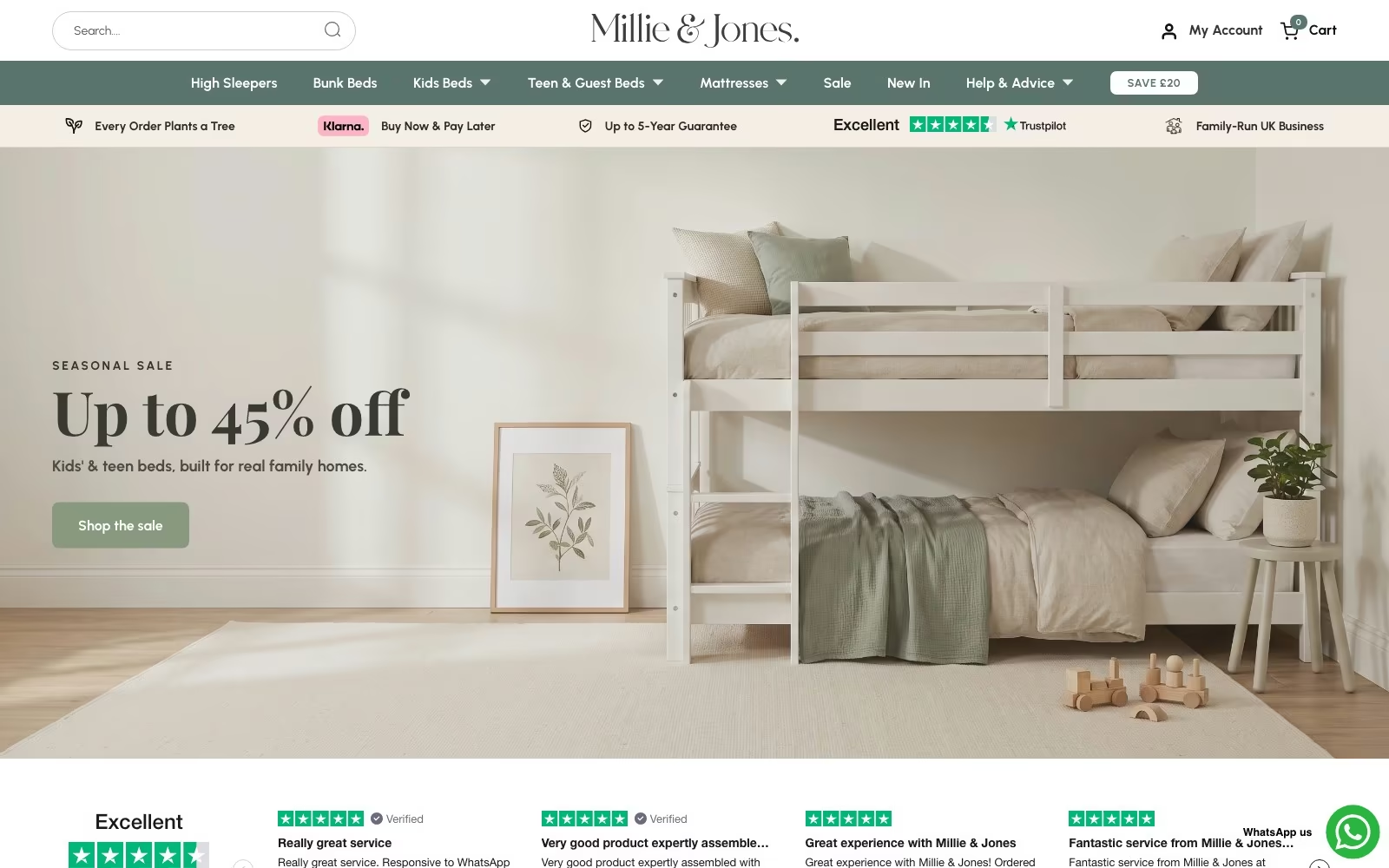

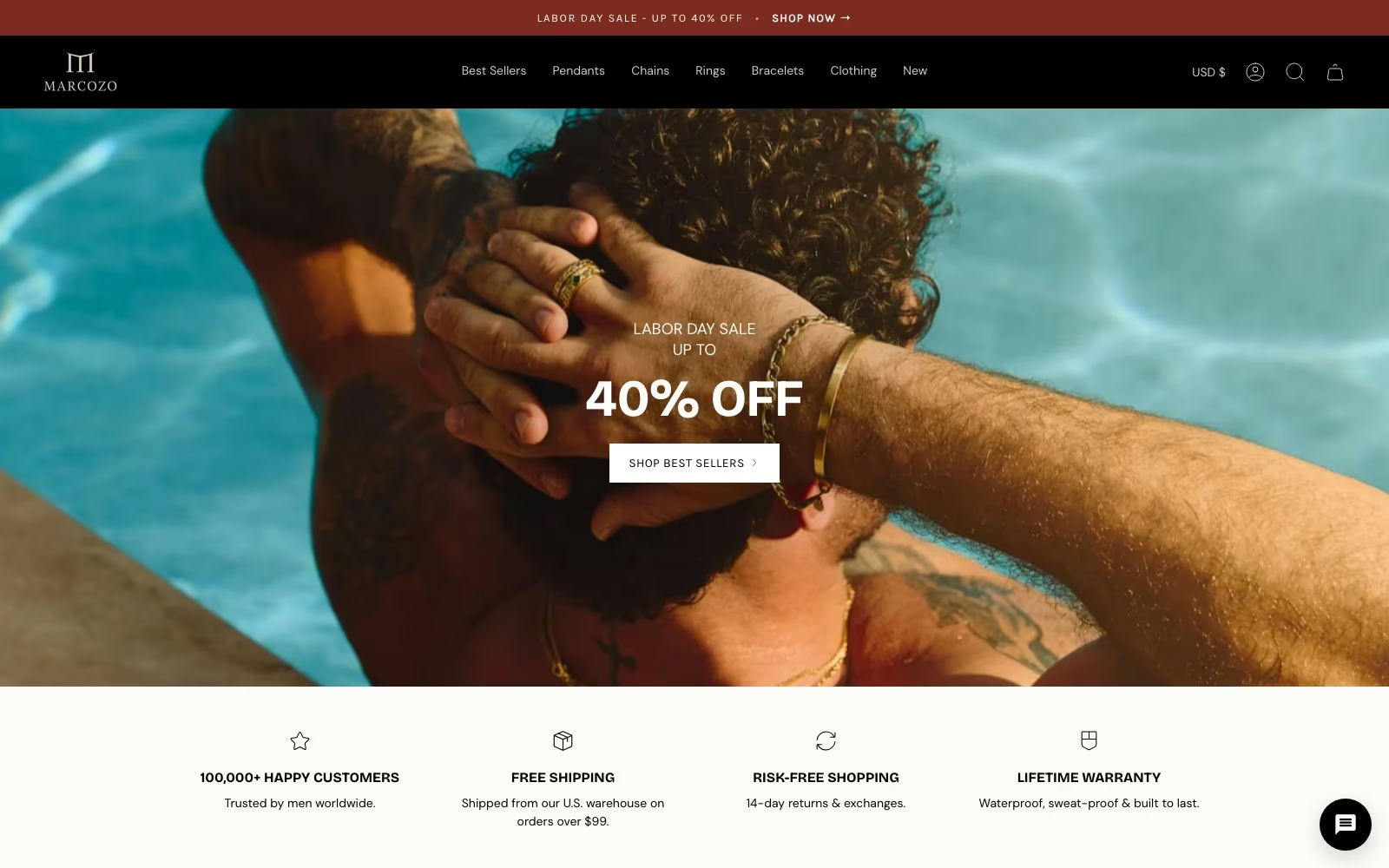

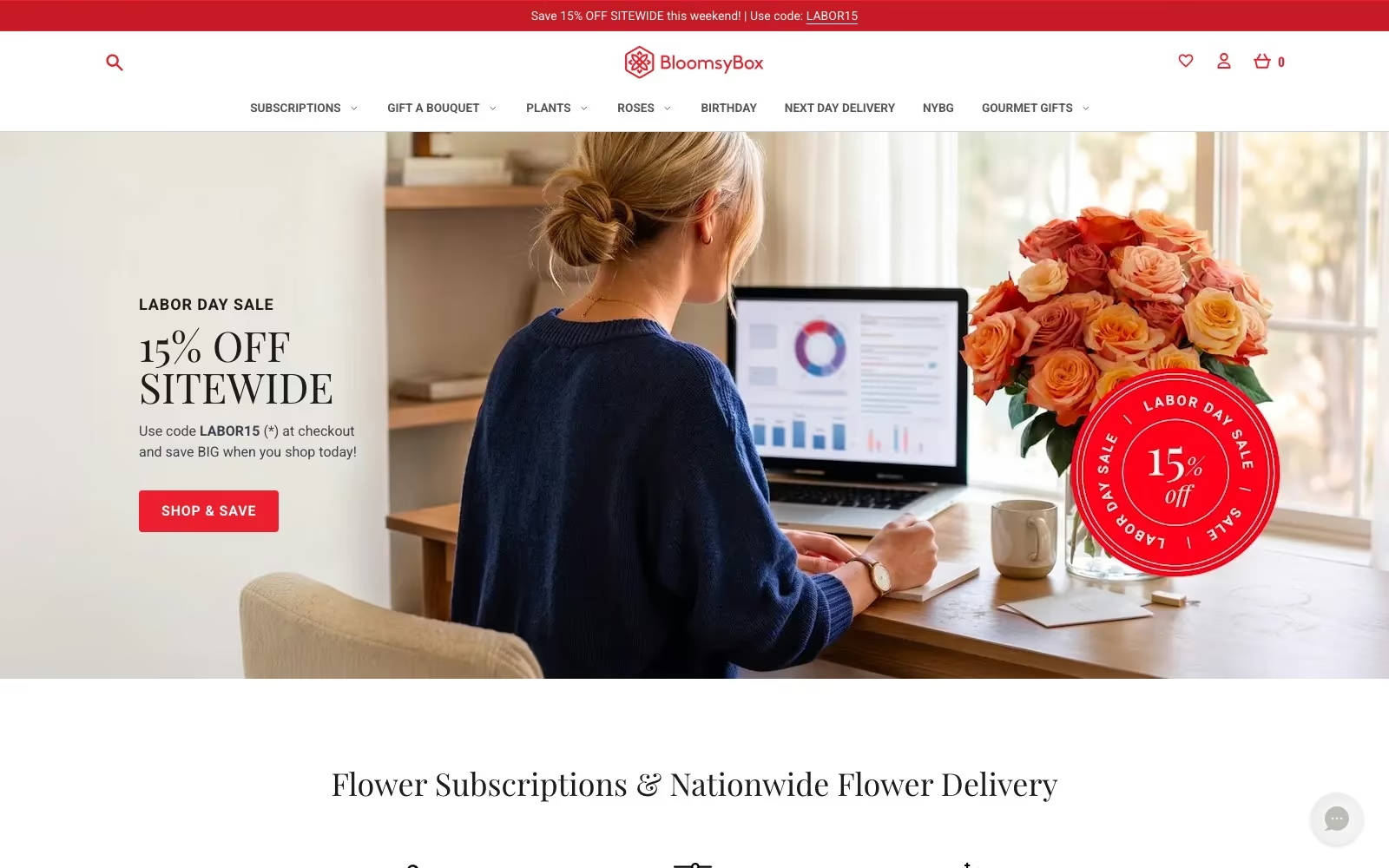











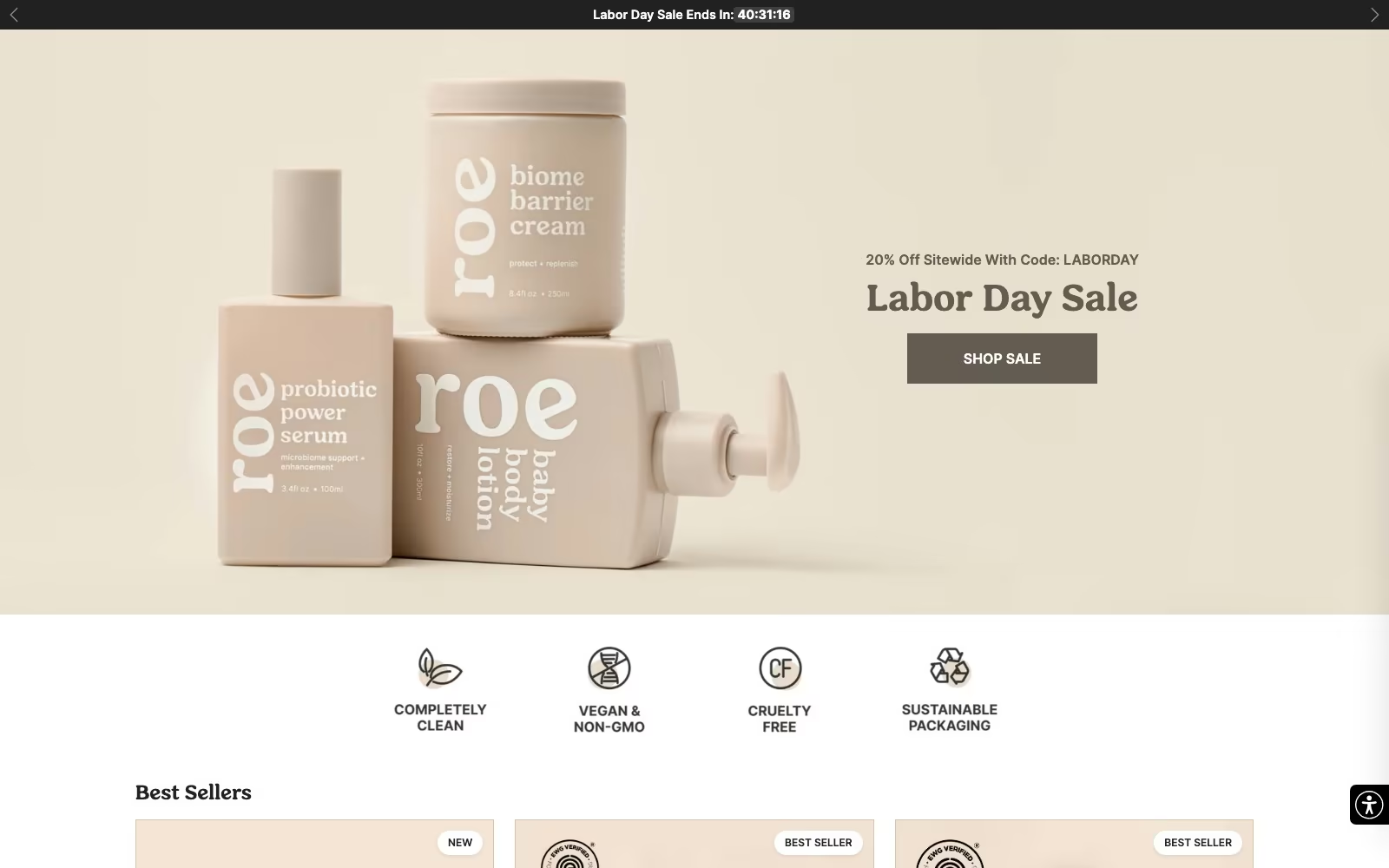




























FAQ
What firms ask us first.
How long before SEO produces real enquiries for an accounting firm?
Technical improvements show inside weeks, new service pages usually start ranking within two to three months, and an audit of 40 CPA practices found organic lead flow stabilises in nine to twelve months. That is the honest range, and it is why we agree the leading indicators up front — indexed pages, impressions on the searches that matter, map views and enquiries — so nobody is waiting a year for the first sign of life. Firms that already have a clean site and a well-kept profile tend to sit at the fast end of that range.
Is search really worth it when most of our clients come from referrals?
Referrals and search are not rivals; the referred prospect looks you up before they call, and what they find decides how the first meeting goes. Beyond that, organic search is already the largest single traffic source for practices in this profession at 48% of website traffic globally and 42% in the US, and it compounds instead of resetting each month. The practices that do best keep both: a strong referral culture, and a presence in the results that makes the referral easy to say yes to.
What does an accounting SEO programme cost, and how do we judge it?
A fixed monthly fee scoped to the work, quoted after the audit rather than off a rate card, plus any one-off build. Judge it against the paid alternative you would otherwise buy: accounting search ads run about $4.44 a click at a $101 acquisition, so once organic enquiries arrive they keep arriving without a media bill attached. We set the target as cost per booked consultation, report it monthly, and will tell you when the useful scope is a one-off fix rather than a retainer.
Do we need a whole new website first?
Usually not, and we would rather spend the budget on the pages that earn. Most firms need a technical clean-up, three to six new service pages and a better contact path — work that sits on the site you already have. A rebuild is worth it when the platform is genuinely blocking you: unfixable speed, no way to add pages, or a design that no longer matches the firm you have become. In that case our web design team handles it with the ranking work running in parallel, so nothing is lost in the move.
Who writes the content — will it sound like our firm?
Our writers draft it, your partners shape it, and nothing publishes without a name inside the firm signing it off. The raw material comes from the questions your people already answer on the phone every week, collected in a short interview rather than invented by someone who has never filed a return. That is the difference between content that ranks and content that also wins the meeting. Where a topic needs a licensed opinion, we flag it for sign-off before it goes near the site.
How does the local map result fit into this?
For a practice with an office it is often the single highest-intent surface, because searches with nearby intent show the map before the blue links. The work is unglamorous and continuous: a complete and correctly categorised profile, consistent details wherever the firm is listed, photographs that look like the actual office, regular posts, and a review routine your team can keep during tax season rather than one burst in June. Multi-office practices get a real page per location instead of one contact page carrying three addresses.
What about AI assistants and AI overviews — are we invisible there?
Not if the pages answer questions cleanly, which is the same standard good content has always been held to. 58% of small business owners now use AI tools to research accounting services, and those tools quote sources that state a clear answer with the detail attached — pricing posture, who the service is for, what happens next. We track assistant visibility beside traditional rankings through our AI search tracking, so you can see where the firm is being cited rather than guess.
We are a small practice competing with national firms. Is that hopeless?
The opposite, as long as you are specific. National brands win generic head terms and are weak everywhere that requires local proof or a narrow specialism, which is exactly where the profitable searches live: restaurant bookkeeping in one metro, R&D credits for software companies, sales tax for ecommerce sellers, expat filings. A two-partner firm that owns three specific niches will out-earn a generalist chasing “accountant”. We pick the niches with you based on the engagements you want more of, and we hold category exclusivity by market so we are not running a competing practice next door.
How do you report, and what will we actually see each month?
One page, in plain language: enquiries and booked consultations by source, the searches gaining and losing visibility, map performance, what we changed and why, and what happens next month. Underneath it sit Search Console, analytics and your CRM, connected so an enquiry can be traced back to the page that produced it. We also say plainly when a month was flat — this channel has slow quarters, and a report that only ever contains good news is not a report.
Can you handle tax season, when everything happens at once?
It is planned for rather than survived. Benchmark data puts 60% or more of annual acquisition in the January to April window, so the pages, the profile and the booking path have to be finished in the autumn, not fixed in February. During the season we run a lighter touch: no risky site changes, content queued in advance, review requests automated so nobody on your team has to remember, and a shorter weekly note. The heavy build resumes in May when your people can breathe again.
What if we already work with another agency or an in-house marketer?
That works well and we do it often. Where there is an in-house marketer we take the specialist load — engineering, content production, local — and leave brand and events with them, with one shared plan so nobody duplicates work. Where another agency runs paid, we align on the conversion definition so a booked consultation is counted once rather than claimed twice. Everything we build lives in accounts you own, documented well enough that another supplier could pick it up, because a programme only we can operate is not an asset.
Which pages actually bring in new engagements?
In our experience, four kinds. Service pages that state what the engagement includes and roughly what it costs. Niche pages for a specific client type — dentists, restaurants, ecommerce sellers, contractors. Location pages when there is a real office behind them. And question content: entity choice, catch-up bookkeeping, notices from a tax authority, what to bring to a first meeting. Those last ones look like education and behave like sales, because the person reading them is mid-decision. We build them in that order, since the first two convert fastest and fund the rest.
Can you run our other channels too?
Yes, and the numbers get more honest when one team holds them. Our paid search, landing page and analytics specialists work from the same plan as the organic team, so a booked consultation is attributed once instead of claimed by three suppliers. It is equally fine to hire us for search alone while somebody else keeps the rest — we document the setup and leave every account open in your name.

.webp)
.webp)