Engineers finish most of the buying before you know they exist.
before you know
Manufacturers and industrial suppliers rarely lack activity. They lack a marketing strategy that says which segments matter, what the company is actually better at, and what gets funded next year. We run a fixed-scope marketing strategy consulting engagement and hand over a written marketing plan with positioning and messaging, owners, budgets and dates. Advisory only: no campaign management, no media buying and no lean or operations consulting inside the engagement. Book a meeting and bring twelve months of pipeline, quote and spend data.






Tell us a little about your brand and we'll be in touch within 24 hours to lock in a time.


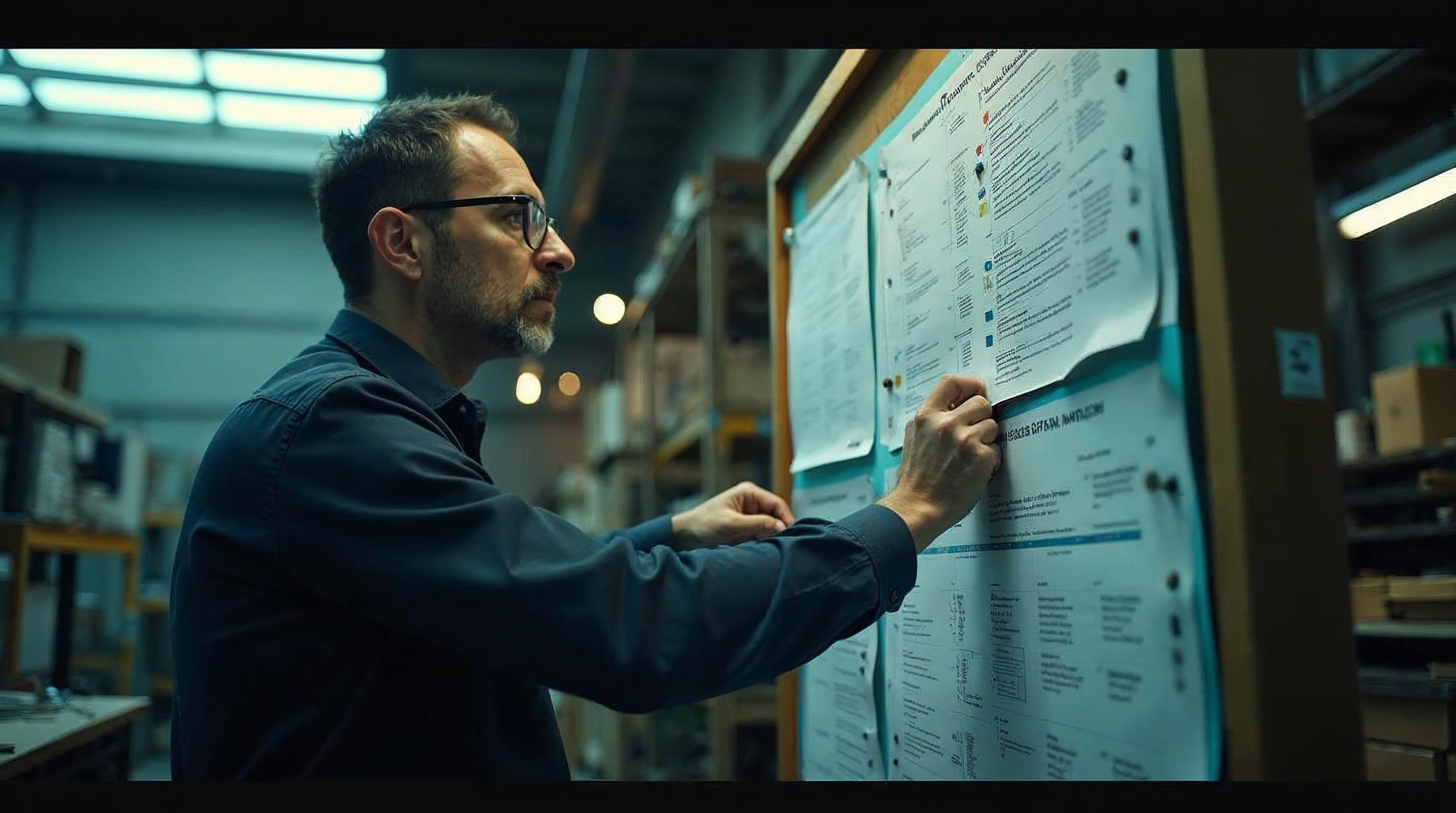
WHAT WE EXAMINE
Four decisions a manufacturing marketing strategy has to settle.
has to settle
Industrial buying has moved before the first conversation. In the 2026 State of Marketing to Engineers, technical buyers reported spending 62% of the buying process online before engaging with sales, 69% used generative AI during the purchase, and 53% said brand familiarity influenced their most recent purchase. Strategy is how you decide what those buyers find, and about which products, before anyone quotes.
Segment and product priority
Positioning and messaging
Demand and content strategy
Budget, measurement and the plan itself
Which markets and product lines get the money.
We start with your own revenue: margin by product line, industry served and customer size, quote volume against win rate by segment, customer concentration, replacement and aftermarket revenue against new equipment, and the gap between the markets leadership talks about and the markets that pay. That analysis produces a ranked list of segments and product lines, not a wish list.
The ideal customer profile is then written as a decision, with the sectors, applications, volumes and buying roles named. Everything downstream, from the content strategy to the trade show calendar, is judged against it.
- Margin and win rate by product line and industry served
- Customer concentration and aftermarket share measured
- Ideal customer profile written as a decision, not an adjective
- Segments ranked, with the ones you are declining named
62%
of the industrial buying process happens online before sales contact
Why an engineer should specify you rather than the incumbent.
Most industrial messaging is a capability list every competitor could publish. We build positioning from evidence: what your quality, lead times, tolerances, certifications, engineering support and service network actually deliver, verified against customer interviews and lost-quote reasons, then written as claims a buyer can check.
Checkable is the operative word. In Kula Partners' Q1 2026 Industrial Buyer Pulse, buyers asked for the single proof they trust most at the earliest stage put independent third-party validation or certification first at 29%, customer references at 20% and AI-generated comparisons at 19%, with supplier-authored documentation fourth at 15%. The messaging plan therefore specifies which proof to earn, not only what to say.
- Positioning built from verified capability, not adjectives
- Messaging by buying role: engineer, procurement, plant leadership
- Proof plan covering certifications, references and test data
- Lost-quote reasons fed back into the claims
29%
of industrial buyers trust third-party validation most at the earliest stage
What to publish, where, for which stage of a long cycle.
We map the technical buying journey your products actually follow, then specify the content and channels that carry it: specification and selection material, application notes, CAD and datasheet access, search and AI-answer visibility, distributor and rep enablement, trade media, webinars and email. The plan states what to produce, in what order and for which segment, with the existing library audited before anything new is commissioned.
Technical audiences reward this. The same 2026 research found 94% of technical buyers subscribe to newsletters, 85% will provide their information for technical content they find valuable, and 91% attend at least one work-related webinar a year, with 49% attending more than three.
- Buying journey mapped by segment and product line
- Existing content audited before new production is scoped
- Search and AI-answer visibility treated as a specification channel
- Distributor and rep enablement written into the plan
94%
of technical buyers subscribe to newsletters in their field
Owners, budgets and dates, or it is a deck.
The last section is the one that decides whether anything happens. We set the budget by segment and channel, define the small number of metrics leadership will review, specify the tracking that has to exist to report them honestly, name an owner for every workstream and put the whole thing on a calendar with quarterly checkpoints.
Measurement is where industrial marketing usually breaks. Across 500 marketing leaders in the Haus 2026 Decision Confidence Index, only 49% said they can measure marketing's effect on business outcomes and 74% had killed an initiative they could not measure.
- Budget allocated by segment, channel and quarter
- A short metric set leadership will actually review
- Tracking gaps named, with the minimum fix scoped
- Named owners and dates on every workstream
55%
of industrial buyers say the proof needed to approve a 2026 investment has risen
Fixed scope with a defined end date, agreed in writing
Twelve months of revenue, quotes and pipeline before any recommendation
Advisory only, so the plan can recommend spending less
Sales and engineering interviewed, not surveyed by email
We made the difference for those brands

Home essentials, appliances, kitchen & pet

Creative, content, arts & culture

Food & beverage

Retail & commerce

B2B software, fintech, insurance

Beauty, personal care & wellness

B2B software, fintech, insurance

Consumer tech and platforms

Healthcare & regulated services

Home essentials, appliances, kitchen & pet

Healthcare & regulated services

Creative, content, arts & culture

Creative, content, arts & culture

Creative, content, arts & culture

Consumer tech and platforms

Food & beverage

Creative, content, arts & culture

Beauty, personal care & wellness

Consumer tech and platforms

B2B software, fintech, insurance

B2B software, fintech, insurance

Consumer tech and platforms

Healthcare & regulated services

Creative, content, arts & culture

Travel & mobility

Retail & commerce

Beauty, personal care & wellness

Consumer tech and platforms

Food & beverage

Food & beverage
01 — The challenge
Plenty of marketing activity, no marketing strategy.
The pattern is familiar in manufacturing and industrial businesses. Sales owns the customer relationships, engineering owns the product story, and marketing owns the trade show booth, the brochure refresh and the website that was replatformed two years ago. The target market is described as anyone who needs the product. Content is produced when a sales manager asks for it. Distributors write their own descriptions. Nobody can say which segments the company is deliberately not serving, which is another way of saying there is no strategy to execute against.
“We have a website, a newsletter and four trade shows. What we do not have is a plan anyone can argue with.”
The budget is usually available; the case for releasing it is not. Kula Partners found the Q1 2026 Budget Confidence Index holding at 0.47 with 82% of industrial buyers expecting at least modest budget growth, while 55% said the proof required to approve a major investment had risen against 13% reporting a lower bar. A written strategy is how a manufacturer wins that internal argument, on its own side of the table as much as the buyer's.
02 — Our approach
Evidence, then decisions, then a written marketing plan. Four to six weeks.
Fixed scope, one senior consultant in every session, no execution work inside the engagement. Week one is evidence. We take twelve months of revenue by product line and industry, quote and win-loss records, CRM pipeline, website and search data and every line of marketing spend, interview leadership, sales, engineering and the marketing team, speak to distributors or reps where they carry the product, and read the competitive set the way an engineer meets it online. Week two is analysis: margin and win rate by segment, the customer profile that actually buys, positioning tested against real differentiation and lost-quote reasons, a content and channel audit, and a review of what is measurable today. Week three is the decision session with your leadership team, covering which segments and product lines lead, what the positioning is, which channels are funded, what sales needs from marketing and what marketing needs from engineering. The final weeks produce the written plan: a segment and product priority, a positioning and messaging platform with a proof plan, a content and channel plan by quarter, a budget by segment, a measurement framework, and a one-page brief any agency or distributor can be held to. We do not run campaigns, we do not buy media, and we give no operations, lean or supply chain advice. Everything is handed over in editable files that stay yours.
03 — What we did
How the engagement actually runs.
Revenue evidence before opinions, positioning tested against lost quotes, then one plan your leadership has already argued through.
Week 1 / Evidence
Revenue, quotes and pipeline read together
Twelve months of revenue by line and industry, win-loss records, CRM data and interviews with sales, engineering and leadership.

Week 2 / Analysis
Segment ranking and positioning tested against reality
Margin and win rate by segment, the profile that really buys, and claims checked against lost-quote reasons and customer interviews.

Week 3 / Decisions
Priorities, positioning and funding decided by leadership
Which segments lead, what the positioning says, which channels are funded and who owns each number from next quarter.

Weeks 4-6 / Plan
The written marketing plan and its measurement framework
Positioning platform, content and channel plan by quarter, budget by segment, metrics and a brief any agency can be held to.

WHAT YOU GET
Six deliverables, all editable, all yours.
all yours
Written for your product lines, your industries and your sales channel, in files your team can change without calling us.

Written marketing plan
What marketing will do over the next four quarters, by segment and product line, with a named owner and a date on every workstream.

Segment and product priority
Margin and win rate by industry served and product line, with the segments you are deliberately declining written down.

Positioning and messaging platform
The claim, the evidence behind it, and messaging by buying role for engineers, procurement and plant leadership.

Content and channel plan
What to publish, where and in what order across search, technical content, trade media, webinars, email and distributor enablement.

Budget and measurement framework
Spend by segment and quarter, the metrics leadership reviews, and the tracking that has to exist to report them honestly.

Agency and distributor brief
A one-page brief that lets any agency, rep or distributor execute the strategy without reinterpreting it.
HOW WE WORK
Operating standards, not promises.
Operating standards


Component and equipment manufacturers
Where engineers specify, procurement approves, and the marketing plan has to serve both without turning into a brochure.
Industrial distributors and channel businesses
Where line cards overlap, suppliers compete for attention and the strategy has to say which lines get the marketing.
Contract manufacturers and industrial services
Where capability sounds identical to every competitor until quality, lead time and engineering support are written as checkable claims.


















Built on trust. Proven by results.
We partner with SMBs and Fortune 500 companies to deliver more than reach — we bring clarity, execution, and measurable outcomes. Every successful partnership starts with a strong culture fit and a shared drive to grow.







CASE STUDIES
Case studies
Website Portfolio
Video Ads
Static Ads























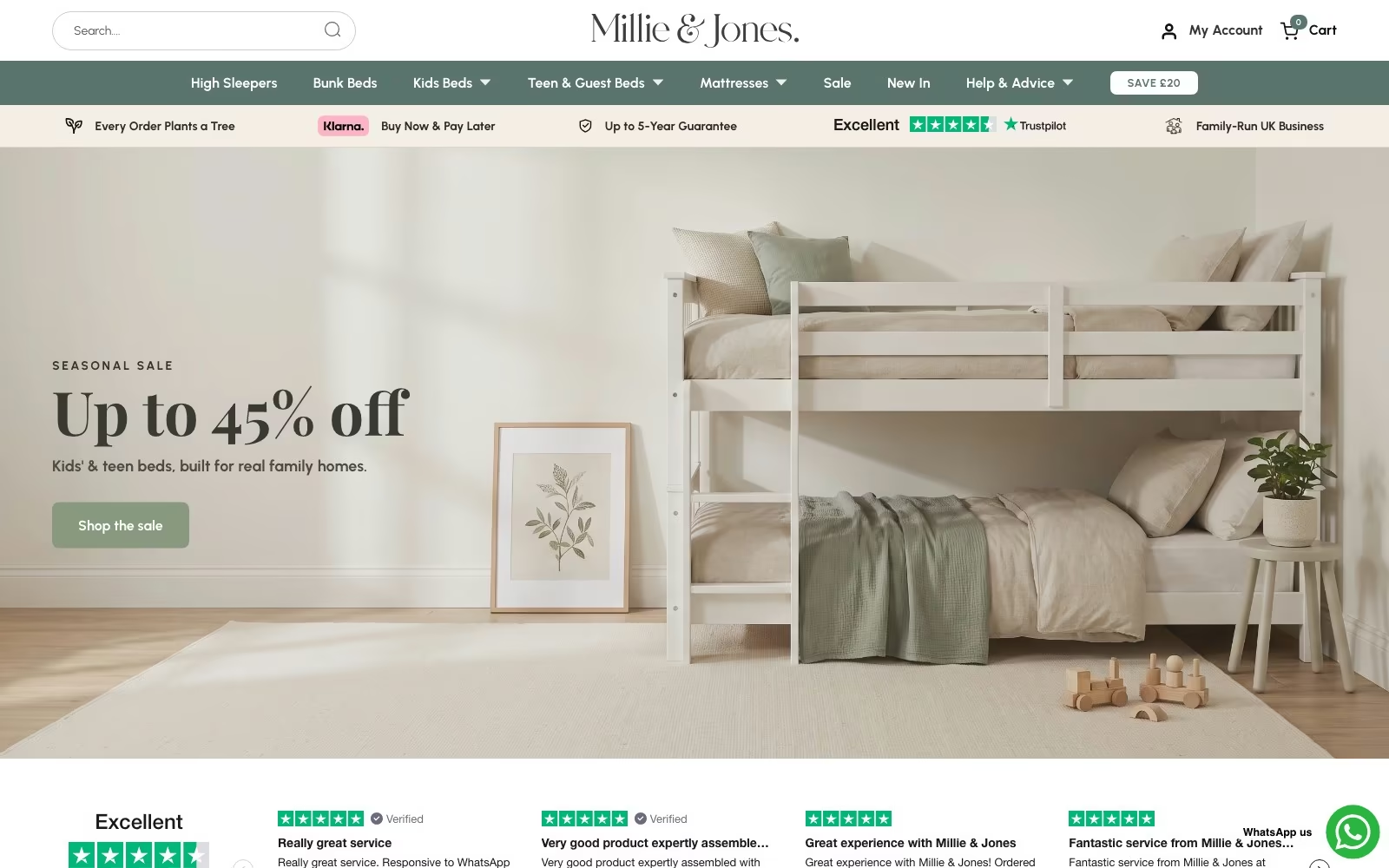

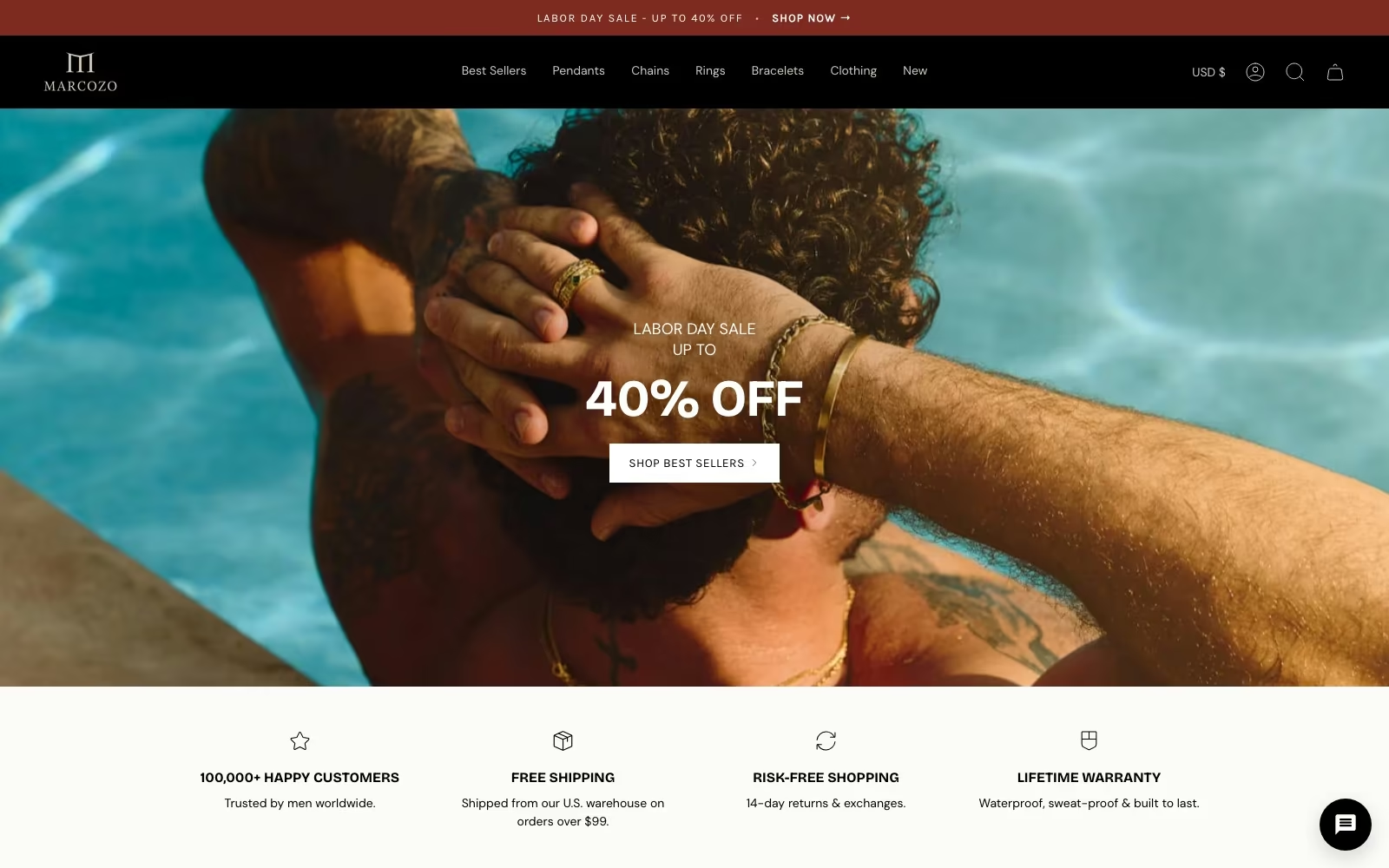

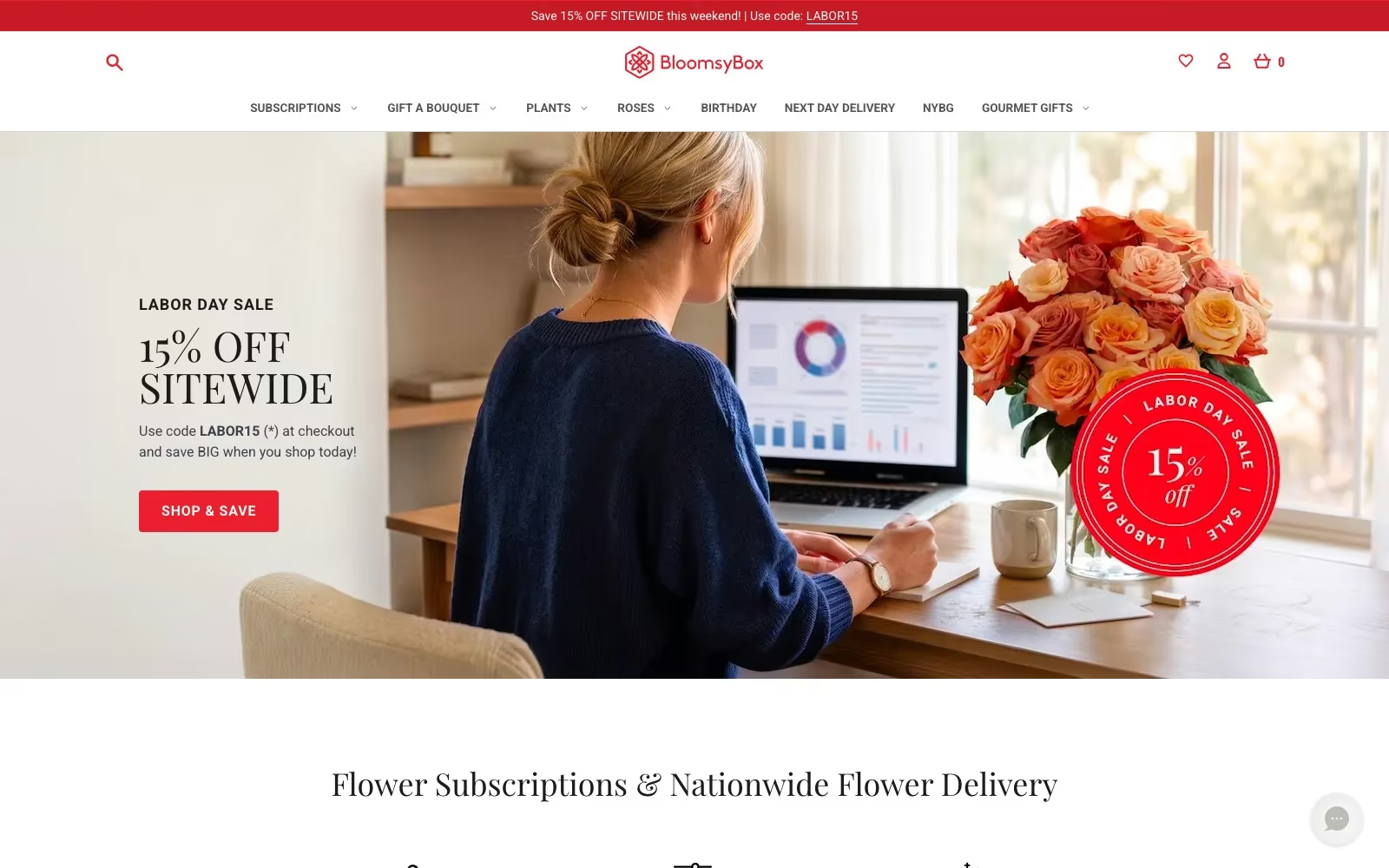

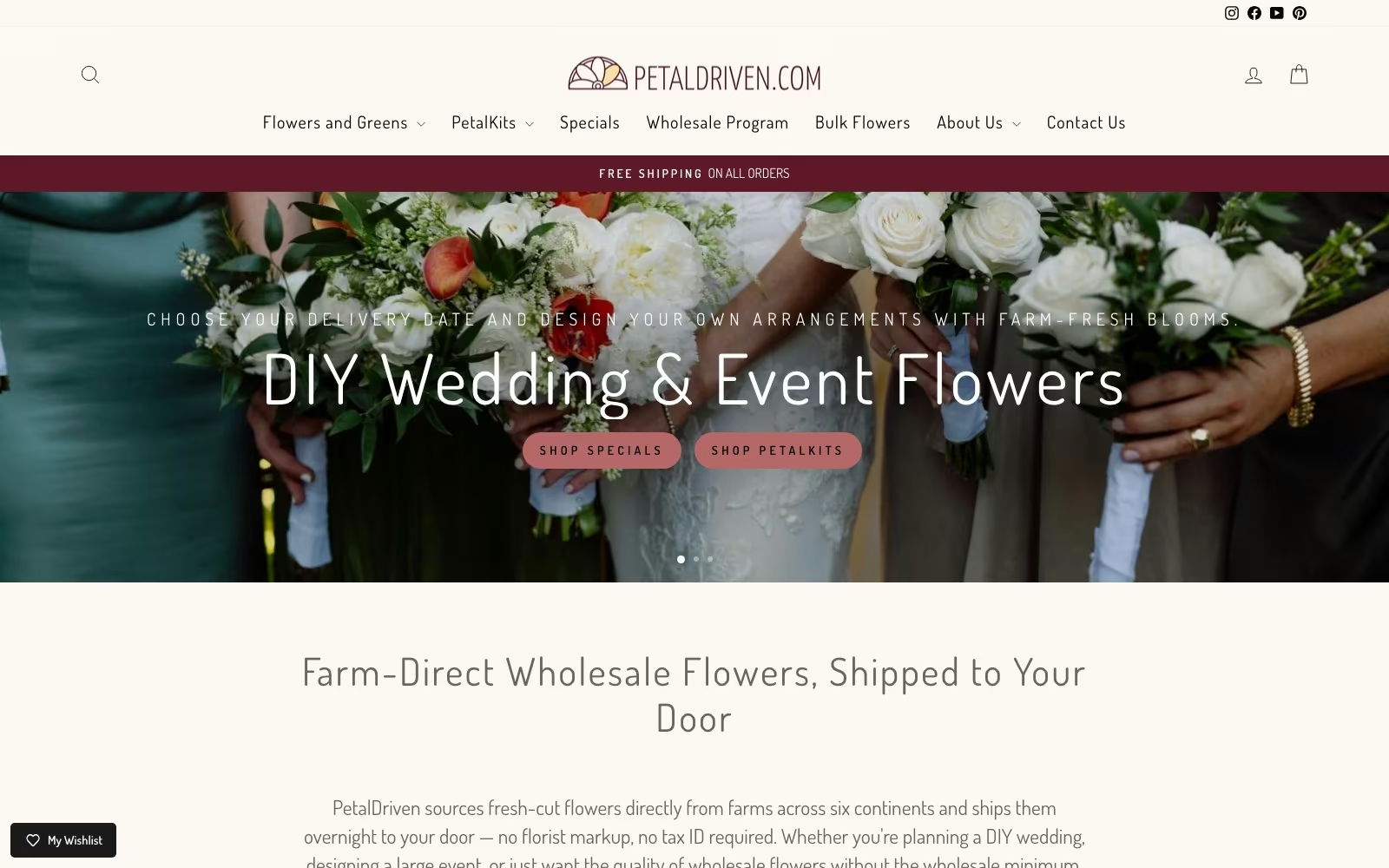



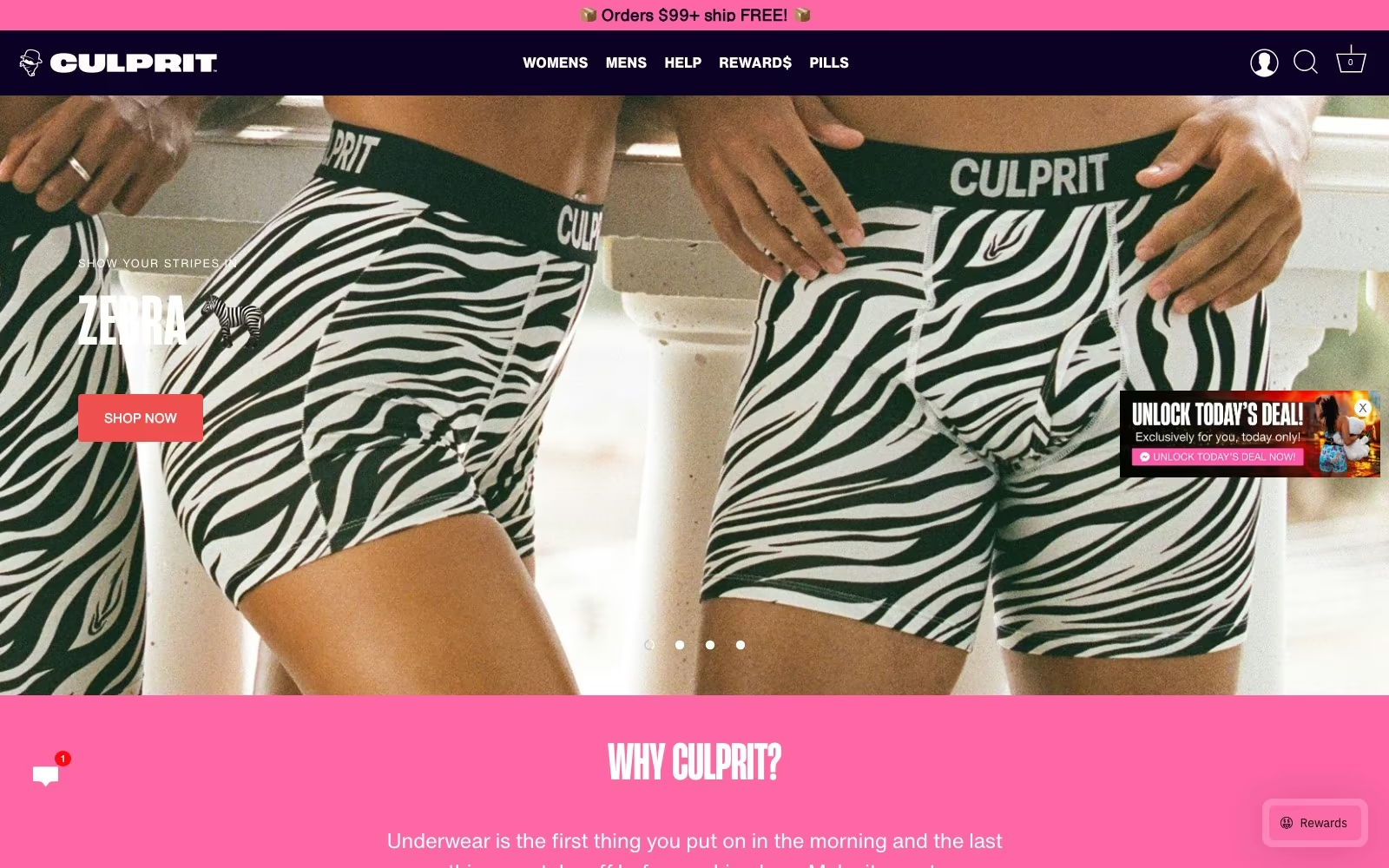





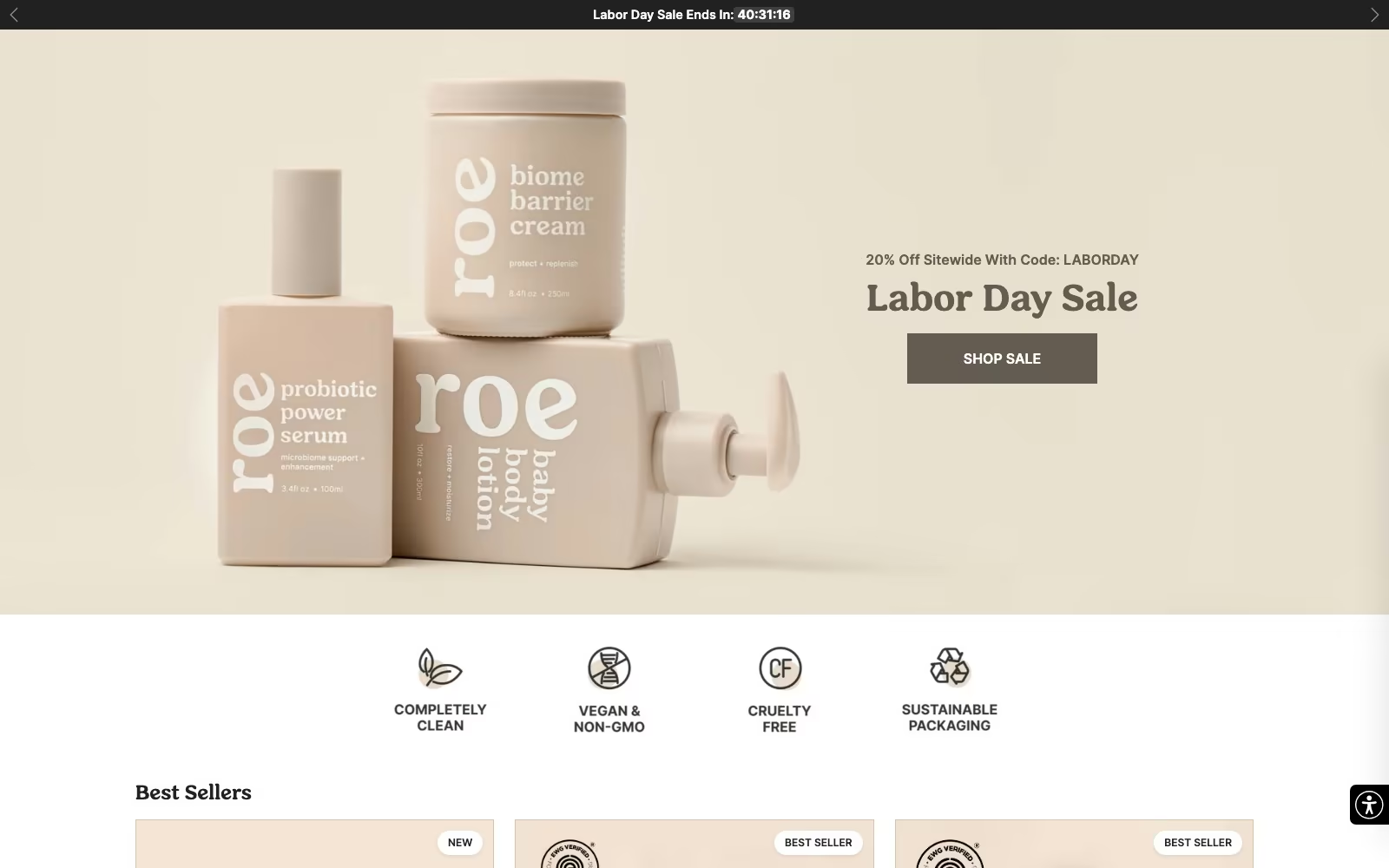

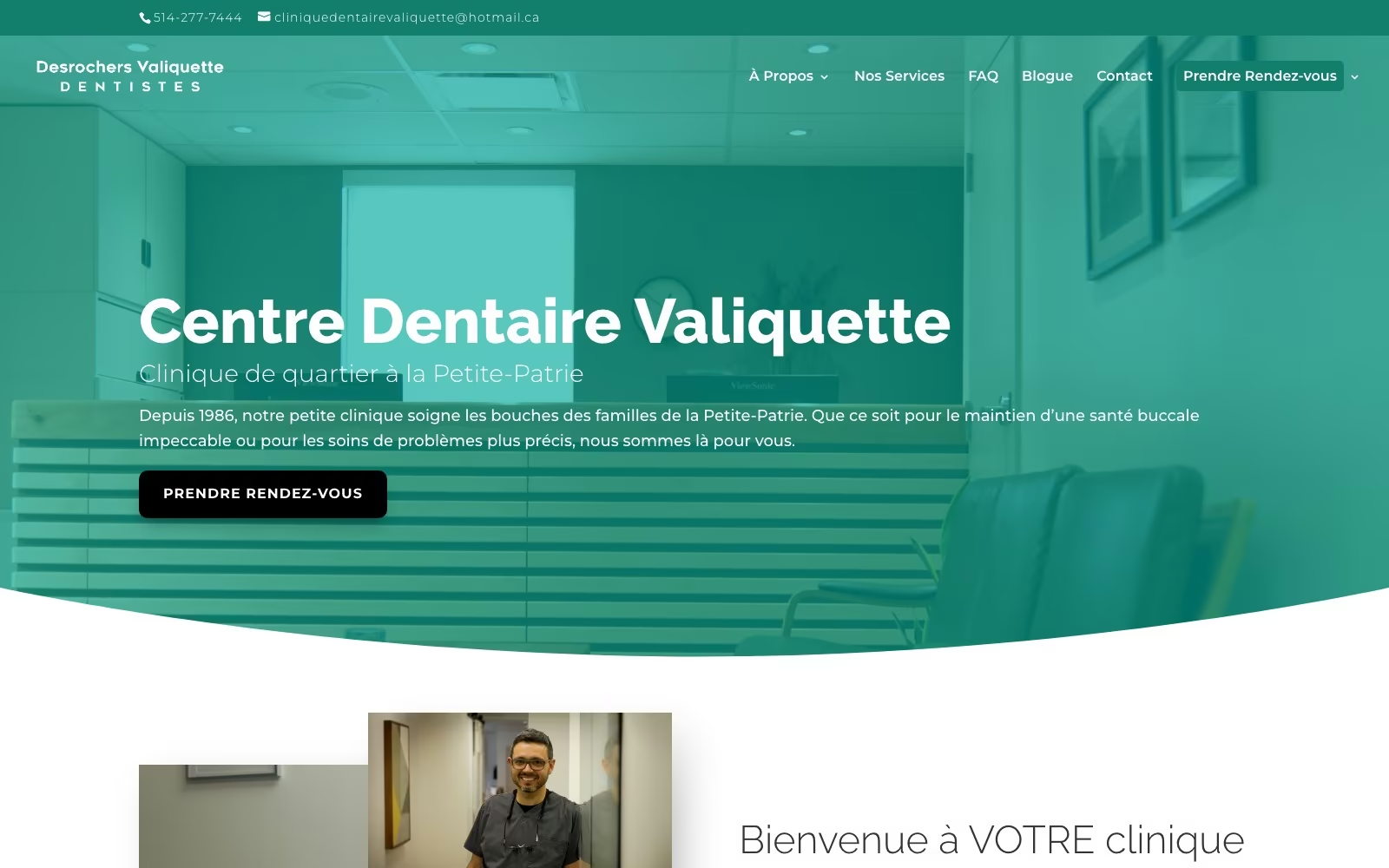

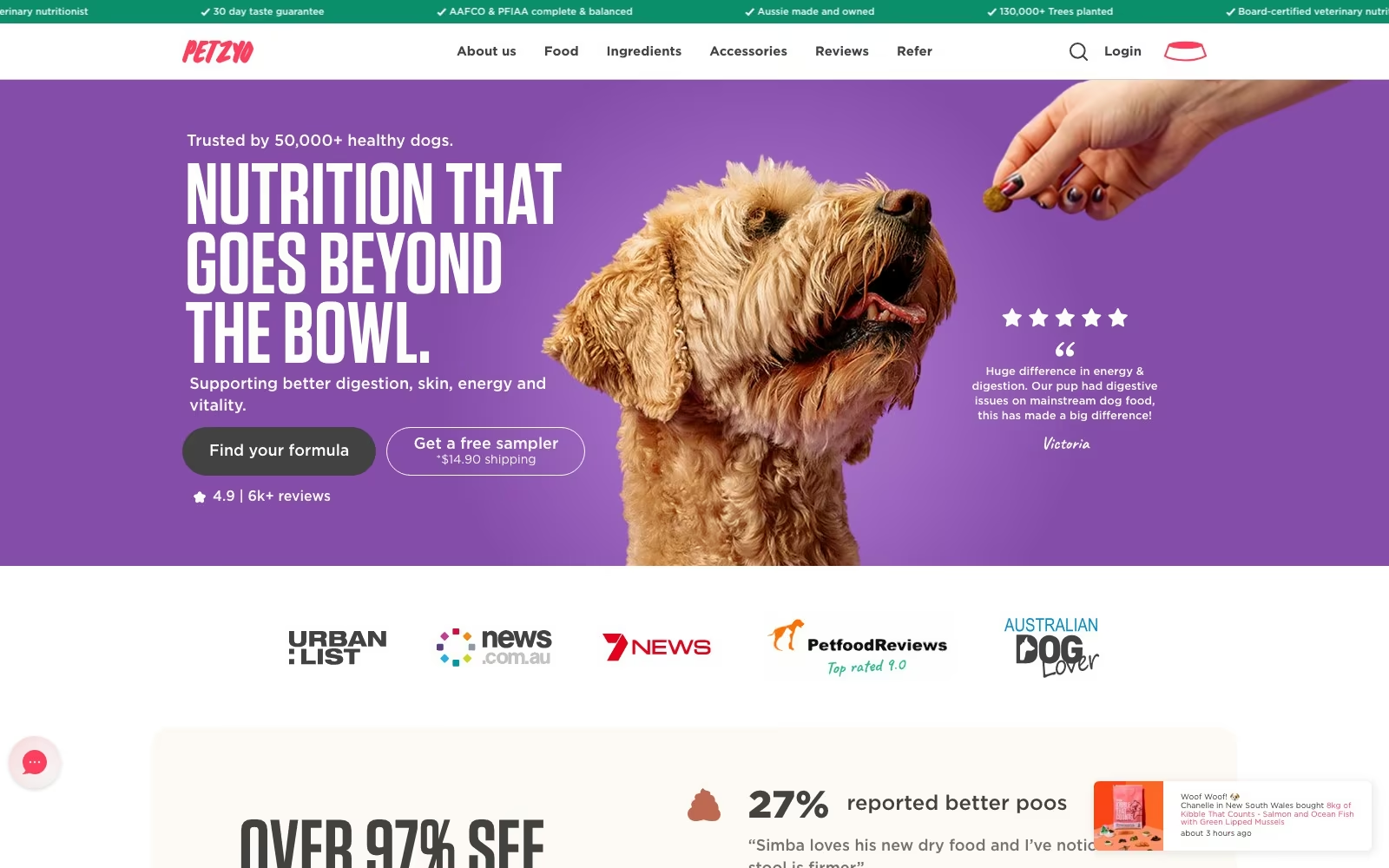















EN

EN

EN


FR

FR
FR

FR

FR

FR

FR

FR


EN
FAQ
What manufacturers ask before buying marketing strategy consulting.
What does marketing strategy consulting cover for a manufacturer?
Four decisions and a plan. Segment and product priority, meaning which industries and product lines get funded and which are declined; positioning and messaging, meaning why an engineer should specify you rather than the incumbent; demand and content strategy, meaning what to publish where across a long technical cycle; and budget and measurement, meaning owners, spend by quarter and the metrics leadership will review. The output is a written marketing plan, not a workshop summary.
Are you operations or lean manufacturing consultants?
No. We do not advise on lean manufacturing, continuous improvement, supply chain design, plant layout or manufacturing operations, and nothing here is engineering advice. Our scope is commercial: the marketing strategy, the positioning, the demand plan and the measurement behind them. Manufacturers frequently run this alongside an operations improvement programme, and the two engagements do not overlap.
How is this different from hiring an industrial marketing agency?
An agency executes a plan. This engagement writes one, and because we take no execution work inside it, the plan is free to say that two channels should be cut and one product line should stop being marketed at all. The deliverable includes a one-page brief written so any agency, including your current one, can deliver against it. Execution is scoped separately afterwards if you want us to do it.
What does the engagement cost?
A fixed fee quoted after a scoping call, with deliverables and dates written down before you commit. It varies with the number of product lines, industries and regions in scope and the state of your CRM and analytics data, so publishing a rate would mislead most readers. For budget context, The CMO Survey puts marketing at 9.0% of company revenue on average, with manufacturing well below that. Book a meeting for a scope and a number.
Our sales cycle is eighteen months. Can a plan account for that?
It has to. The plan is built around the specification and approval sequence your products actually follow, with stage-appropriate content and leading indicators such as specification requests, sample and quote volume and shortlist appearances rather than only closed revenue. Kula Partners found 76% of industrial buyers shortlist at least one supplier before any live interaction, above 90% among C-level and VP buyers, so the early stages are measurable if you choose the right measures.
Do you talk to our customers and distributors?
Yes, within the agreed scope. Customer and lost-quote interviews are the fastest route to a positioning claim that survives contact with an engineer, and distributor or rep conversations show how the product is actually described downstream. We agree the list with you, keep the interviews short and confidential, and feed the findings into the positioning platform rather than publishing them.
Where does AI fit into an industrial marketing strategy?
Two places, both practical. First, visibility: buyers now research through AI answers as well as search, so the plan specifies the technical content and third-party evidence that gets a supplier cited. The 2026 State of Marketing to Engineers reports 69% of technical buyers using generative AI during the purchase while rating their trust in its answers 4.7 out of 10. Second, internal use, which is scoped in AI marketing advisory rather than here.
How is this different from growth advisory?
Different question. Industrial growth consulting looks for the commercial constraint on growth wherever it sits, including pricing, product mix and the sales system. Marketing strategy consulting assumes the commercial model and answers what marketing should do about it: segments, positioning, channels, budget and measurement. Companies that already know their constraint usually want this one.
Will the plan tell us to stop doing trade shows?
Sometimes, and always with the numbers attached. Trade shows are frequently the largest single line in an industrial marketing budget and the least measured. We reconcile the cost of each show, including staff time, against the opportunities and revenue it can be shown to have influenced, then recommend which to keep, which to attend without a booth and which to replace with content, webinars or targeted outreach. Your leadership decides.
Who from our side needs to be involved?
A sponsor, usually the president, general manager or commercial director; the sales leader; someone from engineering or product who can speak to real differentiation; and whoever owns marketing today, even if that is a coordinator with a long list. Expect two hours of interviews each in week one and a half-day decision session in week three. If the sponsor cannot attend that session, we move it rather than run it without them.
We have no marketing team. Is this premature?
No, it is often the right first step, because the plan states what the first hire has to do. Where the question is really about structure and sequencing of hires, marketing team advisory covers it, and where you need someone to lead the function while you build it, a fractional CMO is the engagement. Those are quoted separately and neither is required to use the plan.
Our data is messy. Can you still write a strategy?
Yes, and we will say so plainly where it limits a conclusion. We work from financial records first, reconcile CRM and analytics against them, and label which findings are solid and which are directional. Where tracking is genuinely absent, part of the plan is the minimum measurement change that makes next quarter reportable, and marketing operations consulting is the engagement that implements it.
Do you do this for other industries?
Yes. The parent engagement is marketing strategy consulting, and the same method runs in other verticals with the buying mechanics changed, for example B2B SaaS growth consulting and electrical growth consulting.
What happens after the plan?
Your team runs it, and every workstream has a named owner on your side. Many manufacturers book a review at ninety days to check the leading indicators and adjust the sequence, which takes half a day and is optional. Where you want a standing numbers habit instead, scorecard advisory sets one up and hands it back. Execution, if you want us to do it, is scoped separately.
How do we know the plan is not a template?
Because it is built on your revenue, your lost quotes and your interviews, and it names your product lines, industries and competitors. A template cannot say which two of your six product lines should carry next year's budget, or which certification your buyers want you to hold. Every recommendation in the document carries the evidence it came from, so your leadership can disagree with the reasoning rather than with the conclusion.

.webp)
.webp)