/
Water Damage Restoration Marketing Strategy Consulting
Emergency demand is not a marketing strategy. Neither is another lead package.
not a marketing strategy
Water damage work arrives when it arrives, which makes it easy to run a whole company on whoever answers the phone fastest and whatever vendor sold the last package. What is usually missing is a written marketing strategy saying which job types and referral segments get funded in each territory, what the company can prove to a homeowner, an adjuster and a property manager, and which numbers leadership reviews every week. We run a fixed-scope marketing strategy consulting engagement and hand over a marketing plan with positioning and messaging, owners, budgets and dates. Advisory only: no campaigns, no listing management, and we do not perform restoration work. Book a meeting and bring twelve months of job, margin and spend data.






Tell us a little about your brand and we'll be in touch within 24 hours to lock in a time.



WHAT WE EXAMINE
Four decisions a water damage marketing strategy has to settle.
has to settle
Most water damage marketing plans are a channel list with a monthly retainer attached. That is how a company can keep every crew and every air mover working and still lose gross margin year over year. Nobody decided which jobs and which sources of work the marketing exists to win, or what the business is prepared to prove. A strategy engagement settles these four decisions and writes them down, with the commercial model taken as given.
Job type and segment priority
Positioning and proof
Channel roles and the demand plan
Budget, measurement and the plan itself
Which water jobs you want more of, and which you want less of.
We start with your own numbers: gross margin by job type across category one and category three losses, mitigation only against mitigation plus reconstruction, mold remediation, contents, and commercial losses; margin by source of work, meaning third-party administrator and programme work, adjuster and agent referrals, plumbers and property managers, and direct homeowner calls; average invoice and drying days by branch; and how much crew and equipment capacity each segment consumes.
Mix decides margin more reliably than volume does. Cleanfax's 2026 benchmarking survey found water damage is the most profitable service for 52% of respondents, up from 47%, while 19% of restorers now report gross margins under 20%, against 12% a year earlier. The output is a ranked set of job types, segments and territories, with the work you are deliberately declining written down.
- Gross margin by job type, branch and source of work
- Capacity and equipment consumed per segment, not revenue alone
- Programme work priced against direct and referral demand
- The job types and accounts you stop chasing
52%
of restorers say water damage is their most profitable service, up from 47%
Why this company, at 2am, instead of whoever picks up first.
Water damage messaging collapses into 24/7 emergency water damage service, IICRC certified, we bill your insurance. Every competitor says it, which is why so many companies compete only on answering speed. We build positioning from what the company can substantiate: measured answer and arrival times, crew and drying equipment capacity, moisture documentation and drying standards, the ability to carry a job from extraction through reconstruction under one contract, and the specific reason a plumber, a property manager or an adjuster sends the next loss to you.
Each audience buys a different proof. A homeowner standing in water wants certainty about time, cost exposure and what happens to their home; an adjuster wants documentation that survives review; a property manager wants one number and a predictable process across many buildings. The plan writes the claim, the evidence and the messaging for each of them.
- Claims built from measured response, capacity and documentation
- Separate messaging for homeowners, adjusters, agents, property managers and plumbers
- Mitigation plus reconstruction positioned as one contract
- What you will not promise stated explicitly
1 in 60
insured homes files a water damage or freezing claim in a year, at $13,954 average severity
What each channel is for, and what it is not for.
Every channel gets a named job. Search and maps capture the emergency that is already happening and defend the brand term in each service territory. Paid search buys incremental emergency volume at a known job margin, not at a cost per lead. Intake is treated as a channel in its own right, because an unanswered call at 2am is lost revenue no budget can recover. Referral development owns plumbers, adjusters, agents and property managers, which is still where the work comes from: Cleanfax reports referrals as the dominant lead source at 93%, while adjuster and agent relationships fell to 55% from 68%. Commercial and multi-site agreements get their own plan, because they are sold rather than searched.
The plan also states which channels to reduce or stop, and which territories should not be funded the same way. That recommendation is only credible because we do not sell the media.
- One named job per channel, per territory and quarter
- Call answering and after-hours intake planned as a channel
- Paid channels priced on job margin, not cost per lead
- Channels, territories and accounts to reduce named explicitly
93%
of restorers name referrals as their dominant source of work
Owners, budgets and dates, or it is a deck.
The last section decides whether anything happens. We set budget by territory, job type and quarter, define the short metric set leadership reviews weekly, specify the tracking and reporting changes needed to read job margin, source of work and documentation-to-payment rather than form fills, name an owner for every workstream, and put the plan on a calendar with quarterly checkpoints.
That discipline is rare. Among 500 marketing and finance leaders in the Haus 2026 Decision Confidence Index, only 49% said they can measure marketing's effect on business outcomes and 74% had killed an initiative they could not measure. In water damage work the cash cycle compounds it: a little over 3% of restorers are paid within one to two weeks while over 18% wait more than eight weeks, so a booked job and a collected job are not the same event.
- Budget allocated by territory, job type and quarter
- Source of work captured on every job, not guessed
- Job margin and collected revenue reported, not lead counts
- Named owners and dates on every workstream
49%
of marketing leaders can measure marketing's effect on business outcomes
Fixed scope with a defined end date, agreed in writing
Channels judged on job margin, never on cost per lead
Advisory only, so the plan can recommend spending less
Every measure cut by territory and job type, never left blended
We made the difference for those brands

Creative, content, arts & culture

Consumer tech and platforms

Creative, content, arts & culture

B2B software, fintech, insurance

Consumer tech and platforms

Home essentials, appliances, kitchen & pet

Home essentials, appliances, kitchen & pet

B2B software, fintech, insurance

B2B software, fintech, insurance

Consumer tech and platforms

B2B software, fintech, insurance

Apparel and lifestyle

Healthcare & regulated services

Consumer tech and platforms

Creative, content, arts & culture

Beauty, personal care & wellness

Retail & commerce

Home essentials, appliances, kitchen & pet

B2B software, fintech, insurance

B2B software, fintech, insurance

Home essentials, appliances, kitchen & pet

Consumer tech and platforms

Food & beverage

Healthcare & regulated services

B2B software, fintech, insurance

Retail & commerce

B2B software, fintech, insurance

Consumer tech and platforms

Food & beverage

Home essentials, appliances, kitchen & pet
01 — The challenge
The trucks are busy, the margin is thinner, and nobody has decided anything.
The pattern repeats across multi-crew and multi-branch water damage operators. Budget follows whichever vendor called most recently, so the strategy is last quarter's package list. Reporting counts calls and forms, so cheap volume looks efficient until job margin and days to payment come into it. Mitigation-only work fills the schedule because it is easy to say yes to, and the reconstruction revenue that would have carried the margin goes to someone else. Referral development is a set of friendships rather than a plan with targets. The target customer is described as anyone with water in their building. Not one of those is a channel problem; it is the absence of a decision.
“Every crew was out every day for a year. We finished with more revenue, less cash, and no idea which of our referral sources actually paid for itself.”
The pressure is documented, not anecdotal. The 2026 State of the Industry report found over 80% of restorers anticipating revenue growth while Verisk measured overall claim volume down approximately 20% in 2025, and by the end of 2024 nearly three-quarters of restorers waited 30 days or more to be paid, while insurance industry data puts water damage and freezing claims at about 1.61 per 100 insured homes a year, roughly one home in sixty, at an average severity of $13,954. Steady underlying demand and falling claim volume is exactly the market that punishes an undecided strategy.
02 — Our approach
Evidence, then decisions, then a written marketing plan. Four to six weeks.
Fixed scope, one senior consultant in every session, no execution work inside the engagement. Week one is evidence. We take twelve months of revenue and gross margin by job type, territory and source of work, job counts and average invoice, drying days and cycle time, days to payment, crew and equipment utilisation, your job management records, call handling and after-hours answer data, review volume by location, and every line of marketing spend including agency and listing invoices. We interview the owner or chief executive, finance, operations, the referral or business development team and whoever owns marketing today.
Week two is analysis: margin by job type and source, which referral relationships produce profitable work, how much revenue is lost between the first call and the dispatched crew, whether mitigation-only work is subsidising someone else's reconstruction, positioning tested against what homeowners and adjusters were actually told, a channel audit priced on job margin, and an honest assessment of what can be measured. Week three is a decision session with your leadership team: which job types and segments lead, what the positioning says, which channels and territories are funded and when, and who owns each number. The final weeks produce the written plan, budget and measurement framework, plus a one-page brief any agency or in-house hire can be held to. We run no campaigns, manage no listings, perform no restoration work, and give no claims, insurance or legal advice. Everything is handed over in editable files that stay yours.
03 — What we did
How the engagement actually runs.
Margin, drying days and source of work read together before opinions, positioning tested against what your referral partners were actually told, then one plan your leadership has already argued through.
Week 1 / Evidence
Margin, capacity and source of work read together
Twelve months of gross margin by job type, territory and source, drying days and days to payment, crew and equipment utilisation, and every agency and listing invoice.

Week 2 / Analysis
Job types ranked and positioning tested with referral partners
Margin by job type and source, which relationships produce profitable work, and claims checked against what homeowners, adjusters and plumbers were told.

Week 3 / Decisions
Priorities, positioning and funding decided by leadership
Which job types and segments lead, what the positioning says, which territories and channels are funded in which quarter, and who owns each number.

Weeks 4-6 / Plan
The written marketing plan and its measurement framework
Positioning platform, channel plan by territory and quarter, budget, metrics, and a brief any agency can be held to.

WHAT YOU GET
Six deliverables, all editable, all yours.
all yours
Written for your job mix, your territories and your referral base, in files your team can change without calling us.

Written marketing plan
What marketing will do over the next four quarters, by territory, job type and segment, with a named owner and a date on every workstream.

Job type and segment priority
Gross margin by job type, territory and source of work, with the work you are deliberately declining written down.

Positioning and messaging platform
The claim, the evidence behind it, and separate messaging for homeowners, adjusters, agents, property managers and plumbers.

Channel and demand plan
One named job per channel across search and maps, paid search, intake, referral development, commercial agreements and reputation, sequenced by quarter.

Budget and measurement framework
Spend by territory and quarter, the numbers leadership reviews weekly, and the tracking changes needed to report job margin and source of work.

Agency and in-house brief
A one-page brief that lets any agency or new marketing hire execute the strategy without reinterpreting it.
HOW WE WORK
Operating standards, not promises.
Operating standards


Multi-crew water damage operators
Where dispatch decides the day and nobody has decided which jobs the marketing is supposed to bring in.
Multi-branch and PE-backed platforms
Where each branch inherited its own vendors and referral base, and the reporting layer cannot compare them.
Franchisees and large regional restorers
Where programme and TPA work competes with direct emergency demand for the same crews and equipment.


















Built on trust. Proven by results.
We partner with SMBs and Fortune 500 companies to deliver more than reach — we bring clarity, execution, and measurable outcomes. Every successful partnership starts with a strong culture fit and a shared drive to grow.







CASE STUDIES
Case studies
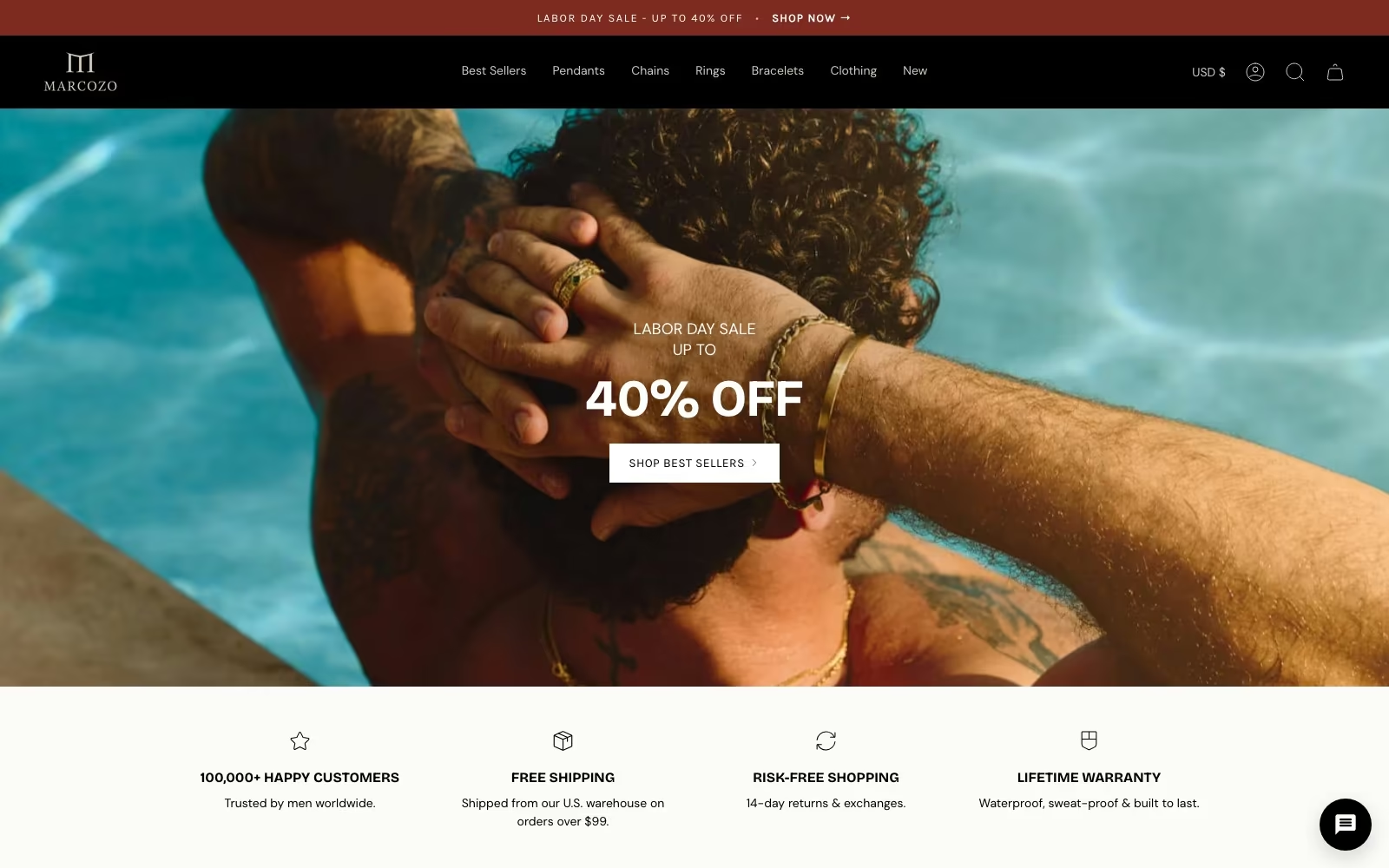
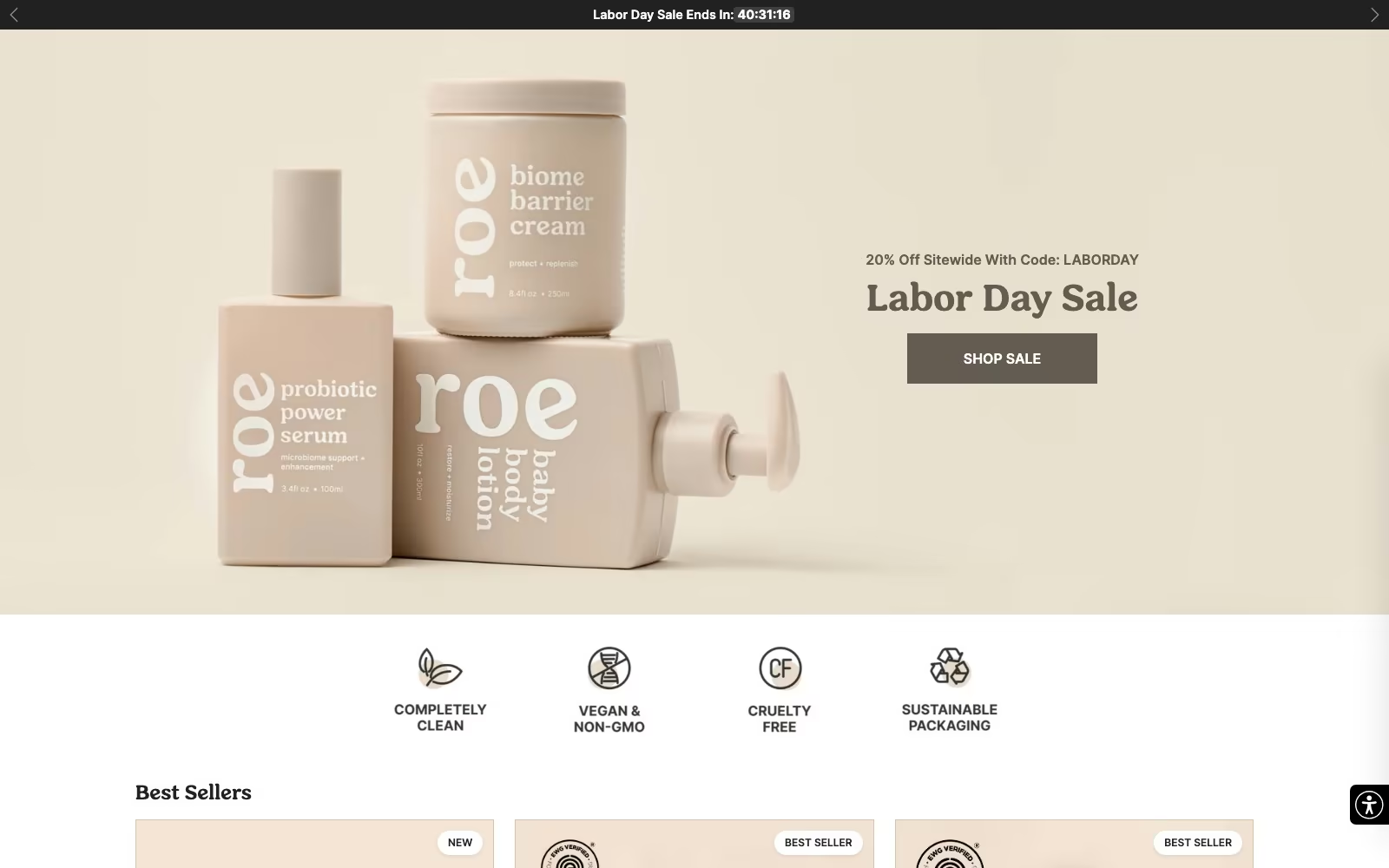
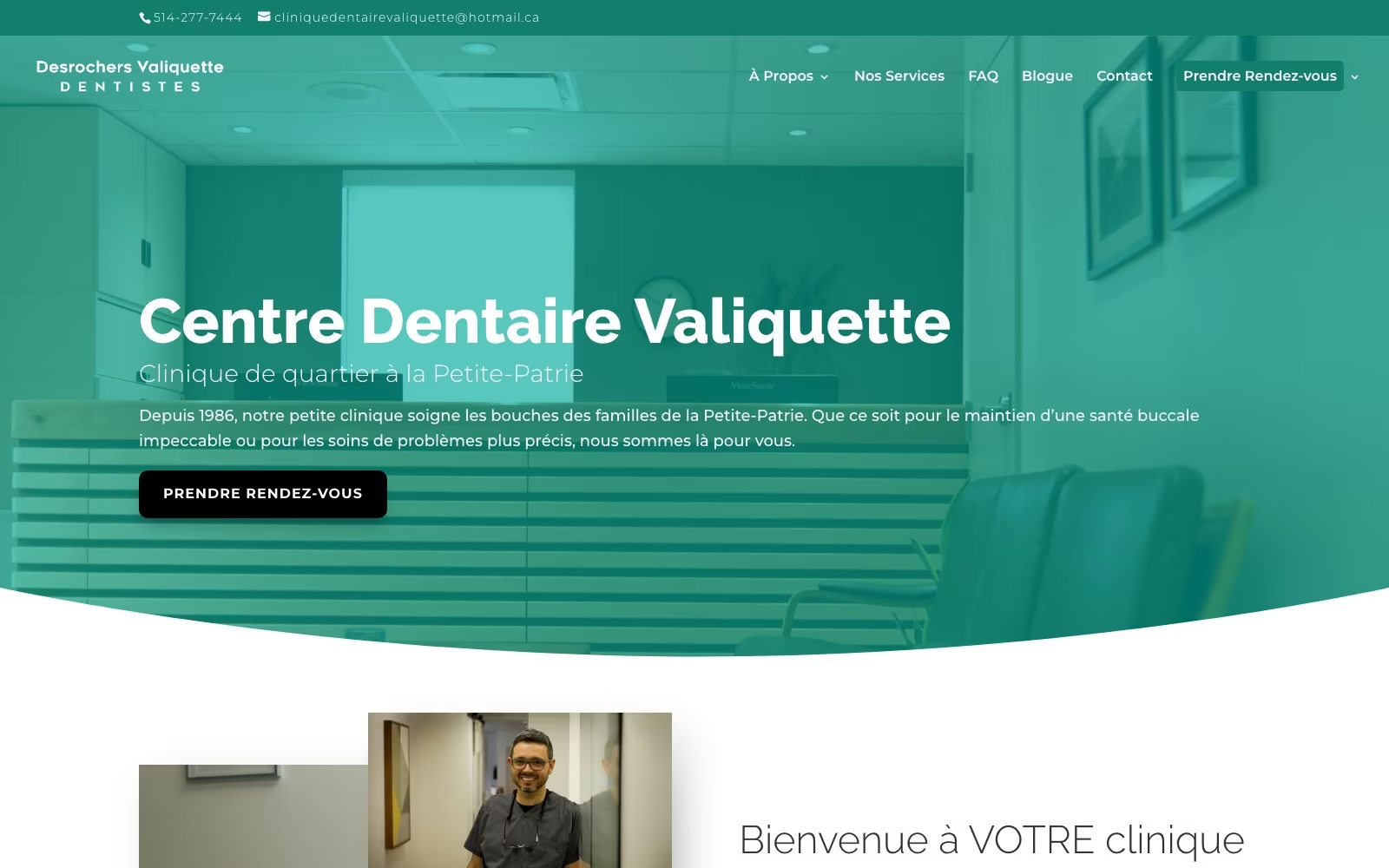
Website Portfolio
Video Ads
Static Ads
















































EN

EN

EN


FR
FR
FR

FR

FR

FR

FR

FR


EN
FAQ
What water damage companies ask before buying marketing strategy consulting.
What does marketing strategy consulting cover for a water damage company?
Four decisions and a plan. Job type and segment priority, meaning which losses and which sources of work get funded and which are declined; positioning and proof, meaning why a homeowner, plumber or adjuster should choose you at 2am; channel roles, meaning what search, paid media, intake and referral development are each for; and budget and measurement, meaning owners, spend by territory and the numbers leadership reviews weekly. The output is a written marketing plan, not a workshop summary.
How is this different from hiring a restoration marketing agency?
An agency executes a plan. This engagement writes one, and because we take no media, listing or execution work inside it, the plan can say that a channel should be cut, that a territory is overfunded, or that next quarter's money belongs in intake and referral development rather than paid search. The deliverable includes a one-page brief written so any agency, including your current one, can deliver against it. Execution is scoped separately afterwards if you want us to do it.
Do you do our local SEO or Google Business Profile work?
Not inside this engagement. The plan states what each territory's local search and maps presence has to achieve, what service and proof information belongs on it, and how it is measured, then hands that to whoever executes. Keeping strategy separate from the listing retainer is the point: a plan written by the team that also bills for the retainer tends to recommend the retainer.
Our phone rings during every storm. Why would we need a strategy engagement?
Because storm volume hides mix. Once gross margin, drying days and days to payment come into it, the ranking of work usually changes and some of the busiest job types turn out to consume crews and equipment at close to breakeven. Cleanfax's 2026 survey found 19% of restorers reporting gross margins under 20%, up from 12% a year earlier, while 22% report margins above 50%. The spread between those two groups is a strategy difference, not a demand difference.
Is intake really a marketing decision?
On emergency water work, yes, and the plan treats it as one. An unanswered call at 2am, a voicemail on a Sunday or a twenty-minute callback on a category-three loss is lost revenue that no amount of additional spend recovers. We measure answer rates, after-hours handling and time to dispatch, then set the standard the plan holds you to. We do not staff or operate your call centre.
What does the engagement cost?
A fixed fee quoted after a scoping call, with deliverables and dates written down before you commit. It varies with the number of territories, crews and job types in scope and the state of your data, so publishing a rate would mislead most readers. For budget context, The CMO Survey puts marketing at 9.0% of company revenue on average across industries, with 33.6% of digital activity run by outside agencies. Book a meeting for a scope and a number.
How do you treat our TPA and programme work?
As a commercial input, priced honestly. We read margin, cycle time and days to payment on programme work against direct and referral work, then state what share of capacity it should hold and what the company would have to build to depend on it less. The 2026 State of the Industry report found 64% of restorers using third-party administrators, with 61% of those users saying they would not recommend them. We give no claims handling, insurance or legal advice.
Do you talk to our plumbers, adjusters and property managers?
Yes, within the agreed scope, and it is usually the fastest route to a positioning claim that survives contact with the market. Referral partners will say plainly why the last loss went to someone else, which is rarely what your website says. Interviews are short and confidential, and findings feed the positioning platform rather than being published.
Does the plan cover reconstruction as well as mitigation?
Yes, and the split is often the most valuable decision in the engagement. Mitigation fills the schedule; reconstruction frequently carries the margin. The plan states which losses you want to carry end to end, what capability that requires, how the offer is presented to a homeowner at the worst moment of their week, and what you stop taking to protect that capacity.
Is this business coaching for restoration owners?
No. Coaching sells a repeatable operating programme, peer groups and accountability against someone else's playbook. This is a fixed-scope consulting engagement that reads your own numbers and produces one written marketing strategy for your company, then ends. There is no ongoing programme attached and nothing you are required to buy afterwards.
How is this different from growth advisory?
Different question. Water damage restoration growth advisory looks for the commercial constraint on growth wherever it sits, including job margin and drying discipline, intake response, referrals and documentation-to-payment. Marketing strategy consulting takes the commercial model as given and answers what marketing should do about it: job type and segment priority, positioning, channel roles, budget and measurement. Companies that already know their constraint usually want this one.
We also do fire, mold and contents. Should we buy the wider engagement?
If water is one line among several in a multi-service platform, disaster restoration marketing strategy consulting is the better fit, because the mix decision spans service lines. This page is the right engagement when water damage is effectively the business. Note that water damage returned to 64% as the top service category in the 2026 State of the Industry report, so the two overlap more than they compete.
Our data is messy and spread across several systems. Can you still write a strategy?
Yes, and we will say plainly where it limits a conclusion. We work from financial records first, reconcile the job management system, call tracking, ad platforms and analytics against them, and label which findings are solid and which are directional. Where the reporting layer itself needs rebuilding, marketing operations consulting implements it.
We have no marketing leadership. Is this premature?
No, it is often the right first step, because the plan states what the first senior hire has to do and what stays with agencies. Where the question is really structure and sequencing of hires, marketing team advisory covers it, and where you need someone to lead the function while you build it a fractional CMO is the engagement. Both are quoted separately and neither is required to use the plan.
What happens after the plan?
Your team runs it, and every workstream has a named owner on your side. Many companies book a review at ninety days to check the leading indicators and adjust the sequence, which takes half a day and is optional. Where you want a standing numbers habit instead, scorecard advisory sets one up and hands it back. The parent engagement is marketing strategy consulting, and execution, if you want us to do it, is scoped separately.
Where do our website, local visibility and digital advertising vendors fit?
They are inputs to the plan, not the plan. We review what your website, local search visibility, email and text programmes and digital advertising currently do in each territory, what each channel costs, and which services they actually promote across water damage, mold remediation and reconstruction. Many restoration contractors buy the same package in every market regardless of the local competitive picture. The plan states what each of those channels is for, what online visibility is worth in that territory, and which vendors should be renewed, renegotiated or stopped.

.webp)
.webp)