One brand, two hundred opinions about marketing.
two hundred opinions
A franchise system does not usually lack marketing. It lacks a written marketing strategy that says what the ad fund buys, what a franchisee owns locally, what the brand can actually prove, and which numbers head office reviews every week. We run a fixed-scope marketing strategy consulting engagement and hand over a marketing plan with positioning and messaging, owners, budgets and dates. Advisory only: no campaign management, no media buying, no operations work inside the engagement. Book a meeting and bring twelve months of unit-level revenue, lead and spend data.






Tell us a little about your brand and we'll be in touch within 24 hours to lock in a time.



WHAT WE EXAMINE
Four decisions a franchise marketing strategy has to settle.
has to settle
Franchising is consolidating into the hands of larger operators. FRANdata's 2026 outlook for the International Franchise Association reports that 19.3% of franchisees now operate multiple units and control 58.8% of all franchised locations, inside a system projected to reach roughly 845,000 establishments and more than $920 billion of economic output. Multi-unit owners read numbers, which raises the standard a brand's marketing plan has to meet.
Segments, services and unit priority
Positioning and messaging
Channel roles, national and local
Budget, measurement and the plan itself
Which customers, which services, which units get the money.
We start with your own numbers: revenue and gross margin by service or product line, average ticket and repeat rate, unit-level performance spread from the top decile to the bottom, cohort performance by opening year, and territory maturity. In most systems the spread between the best and worst units is wider than any channel effect marketing could produce, so the plan has to say whether money goes to growth markets, to underperforming units or to development.
The output is a ranked set of customer segments and unit priorities, with the work and the markets you are deliberately not funding written down.
- Margin, ticket and repeat rate by service line
- Unit performance spread and cohort curves measured, not averaged
- Growth markets separated from turnaround units in the budget
- Consumer demand and franchise development treated as two different jobs
58.8%
of franchised locations are controlled by multi-unit franchisees
One brand promise, provable in every territory.
Franchise messaging fails in two directions. Nationally it drifts into claims no unit can keep, and locally it fragments into whatever each owner's cousin designed. We build positioning from what the system can prove — service standards, guarantees, training and certification, review volume across the network, tenure of operators, the categories where you genuinely win — then write the messaging platform with the parts that are fixed, the parts a franchisee may adapt, and the parts they may not.
Development marketing gets its own message, aimed at the multi-unit operator and the candidate profile that actually succeeds in your system rather than at anyone who fills in a form.
- Claims built from provable service, guarantee and training facts
- Fixed, flexible and forbidden elements defined for local use
- Consumer and franchise development messaging written separately
- Review and reputation strategy set per location, measured nationally
845,000
US franchised establishments projected in 2026, up about 1.5%
What the ad fund buys, and what the owner buys.
Every channel gets a named job and a level. Brand and category demand, national search and social, the website and its location pages, local search and the business profile per unit, paid search by territory, local sponsorship and community presence, email and loyalty, and the development funnel each sit at national, regional or unit level with a budget and an owner. The plan also answers the question every franchisee asks: what exactly am I getting for my contribution.
It states which channels to reduce or stop. That recommendation is only credible because we do not sell the execution, so nothing in it depends on which channel we would run for you.
- One named job per channel at national, regional and unit level
- Ad fund scope written in language a franchisee advisory council can read
- Approved local playbook for new openings, ramp and mature units
- Channels to reduce or stop named explicitly
8.9M
people employed by US franchised businesses, up about 1.8%
Owners, budgets and dates, or it is a deck.
The last section decides whether anything happens. We set budget by level, market and quarter, define the short metric set leadership and the advisory council review, specify the call tracking, CRM and point-of-sale connections needed to report unit revenue rather than lead counts, name an owner for every workstream, and put the plan on a calendar with quarterly checkpoints.
That discipline is rarer than it should be. Among 500 marketing and finance leaders in the Haus 2026 Decision Confidence Index, only 49% said they can measure marketing's effect on business outcomes and 74% had killed an initiative they could not measure, while Validity's 2026 research found 62% losing revenue to poor CRM data quality and only 41% with a data governance owner.
- Budget allocated by level, market and quarter
- Unit-level reporting that a franchisee can see and trust
- Revenue and retained customers, not lead count, as the reported numbers
- Named owners and dates on every workstream
49%
of marketing leaders can measure marketing's effect on business outcomes
Fixed scope with a defined end date, agreed in writing
Twelve months of unit revenue, calls and spend before any recommendation
Advisory only, so the plan can recommend spending less
Owners interviewed directly, including at least one struggling unit
We made the difference for those brands

Apparel and lifestyle

Creative, content, arts & culture

Food & beverage

Consumer tech and platforms

B2B software, fintech, insurance

B2B software, fintech, insurance

Retail & commerce

Creative, content, arts & culture

Food & beverage

Consumer tech and platforms
Retail & commerce

Healthcare & regulated services

Consumer tech and platforms

Healthcare & regulated services

Healthcare & regulated services

B2B software, fintech, insurance

Beauty, personal care & wellness

Retail & commerce

Beauty, personal care & wellness

Food & beverage

Creative, content, arts & culture

Home essentials, appliances, kitchen & pet

Beauty, personal care & wellness

Creative, content, arts & culture

Beauty, personal care & wellness

Home essentials, appliances, kitchen & pet

Apparel and lifestyle

Apparel and lifestyle

Beauty, personal care & wellness

Creative, content, arts & culture

B2B software, fintech, insurance
01 — The challenge
The ad fund is spent, the council is unhappy, and nobody can show what it bought.
The pattern is familiar in systems past their first hundred units. National marketing reports impressions and leads, franchisees report that the phone is quiet, and the advisory council meeting turns into a debate about fairness rather than about strategy. Strong units buy their own local marketing on the side, weak units buy nothing, and the brand ends up with as many messages as it has owners. Meanwhile development marketing chases candidate volume rather than the operator profile that succeeds. Not one of those is a channel problem; it is the absence of a decision.
“Every quarter we explain what the ad fund spent. We have never once explained what it decided.”
The economics make that gap expensive. FRANdata projects franchise output above $920 billion in 2026 with franchise GDP rising from $549.9 billion to $558.4 billion, close to 3% of US GDP. A system competing for good operators and for consumers in the same territories cannot run on activity reports.
02 — Our approach
Evidence, then decisions, then a written marketing plan. Four to six weeks.
Fixed scope, one senior consultant in every session, no execution work inside the engagement. Week one is evidence. We take twelve months of unit-level revenue and margin, the performance spread across the network, cohort curves by opening year, CRM and point-of-sale records, call recordings and booking rates, the development funnel from enquiry to signed agreement, review profiles by location, website and local search data, and every line of national and local marketing spend including vendor invoices. We interview brand leadership, the development lead, field or operations consultants, marketing staff and a cross-section of franchisees, including at least one struggling operator. Week two is analysis: margin and repeat rate by service line, the real spread between top and bottom units, the customer profile that actually pays, positioning tested against reviews and lost calls, a channel audit priced against unit revenue, the development funnel measured by cost per signed operator rather than per lead, and an honest assessment of what can be measured. Week three is a decision session with your leadership: which segments and units lead, what the brand promise says, what sits at national, regional and unit level, and what the ad fund buys. The final weeks produce the written plan — segment and unit priority, a positioning and messaging platform, a channel plan by level and quarter, a budget, a measurement framework, and a one-page brief any agency or in-house hire can be held to. We sell no franchises, run no campaigns, buy no media, are not franchise brokers or M&A advisers, and give no FDD, franchise law, securities or accounting advice. Everything is handed over in editable files that stay yours.
03 — What we did
How the engagement actually runs.
Unit economics, calls and the development funnel read together before opinions, positioning tested against real reviews, then one plan your leadership and your council have already argued through.
Week 1 / Evidence
Unit performance, calls and the development funnel
Twelve months of unit-level revenue and margin, cohort curves by opening year, booking rates from real calls, candidate flow and every vendor invoice.

Week 2 / Analysis
Segments ranked and the brand promise tested against reviews
Margin and repeat rate by service line, the spread between top and bottom units, and claims checked against reviews and lost calls.

Week 3 / Decisions
National, regional and unit responsibilities decided
Which segments and markets lead, what the ad fund buys, what a franchisee owns locally, and who owns each number.

Weeks 4-6 / Plan
The written marketing plan and its measurement framework
Positioning platform, channel plan by level and quarter, budget, metrics, and a brief any agency can be held to.

WHAT YOU GET
Six deliverables, all editable, all yours.
all yours
Written for your brand, your territories and your franchisees, in files your team can change without calling us.

Written marketing plan
What marketing will do over the next four quarters at national, regional and unit level, with a named owner and a date on every workstream.

Segment and unit priority
Margin, ticket and repeat rate by service line, the unit performance spread, and the markets you are deliberately not funding.

Positioning and messaging platform
The brand promise, the evidence behind it, and what a franchisee may adapt locally against what stays fixed.

National and local channel plan
One named job per channel at each level, plus an approved local playbook for openings, ramp and mature units.

Ad fund and measurement framework
Spend by level, market and quarter, the numbers leadership and the advisory council review, and the tracking changes needed to report them.

Agency and in-house brief
A one-page brief that lets any agency or new marketing hire execute the strategy without reinterpreting it.
HOW WE WORK
Operating standards, not promises.
Operating standards


Franchisors and brand head offices
Where the ad fund has to be defensible to an advisory council and legible to a board at the same time.
ExploreLarge multi-unit operators
Where twenty or eighty units across several brands need one marketing plan instead of one per location.
ExploreEmerging systems scaling development
Where consumer demand and franchise development compete for the same budget and need separating.
Explore

















Built on trust. Proven by results.
We partner with SMBs and Fortune 500 companies to deliver more than reach — we bring clarity, execution, and measurable outcomes. Every successful partnership starts with a strong culture fit and a shared drive to grow.







CASE STUDIES
Case studies
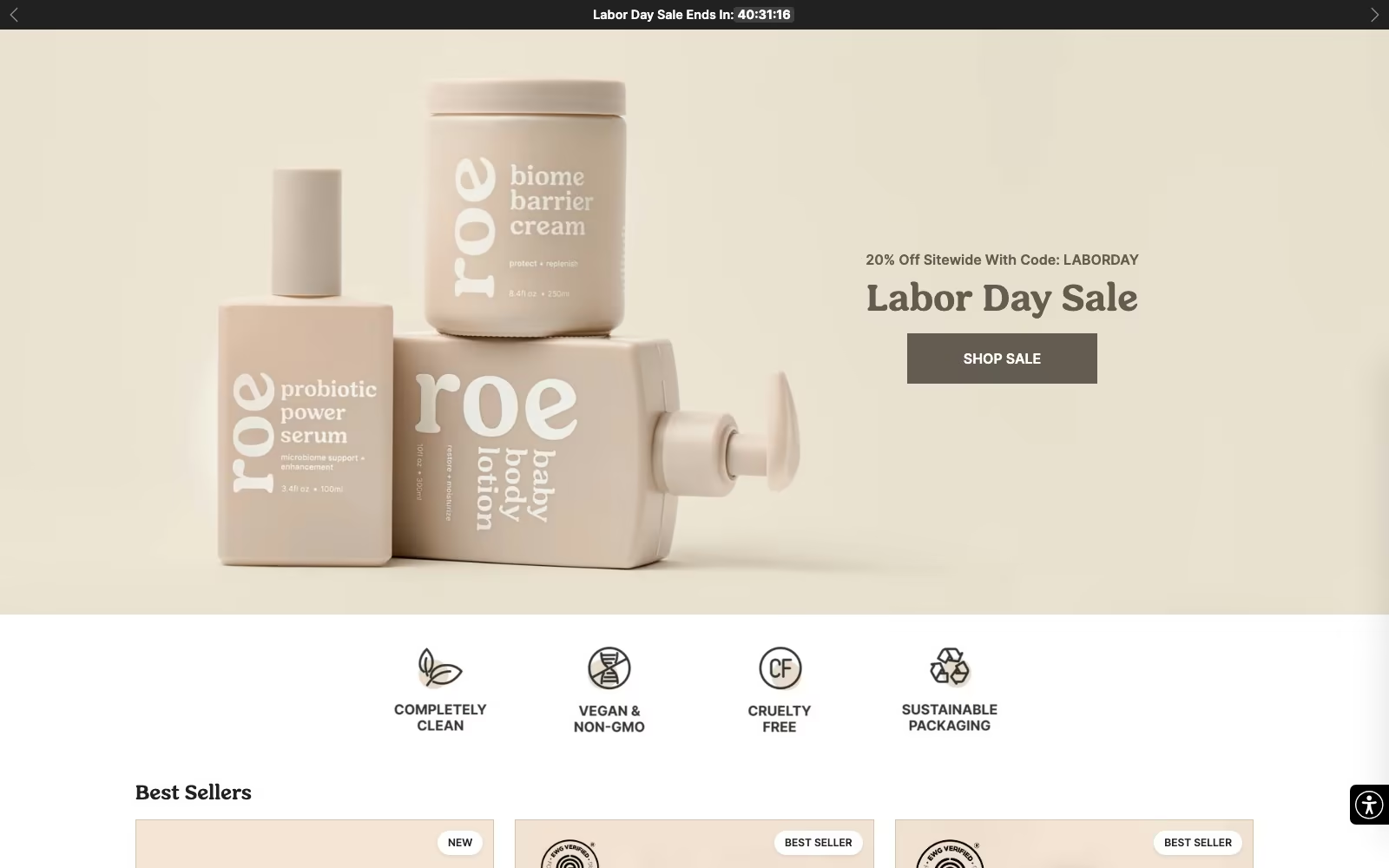
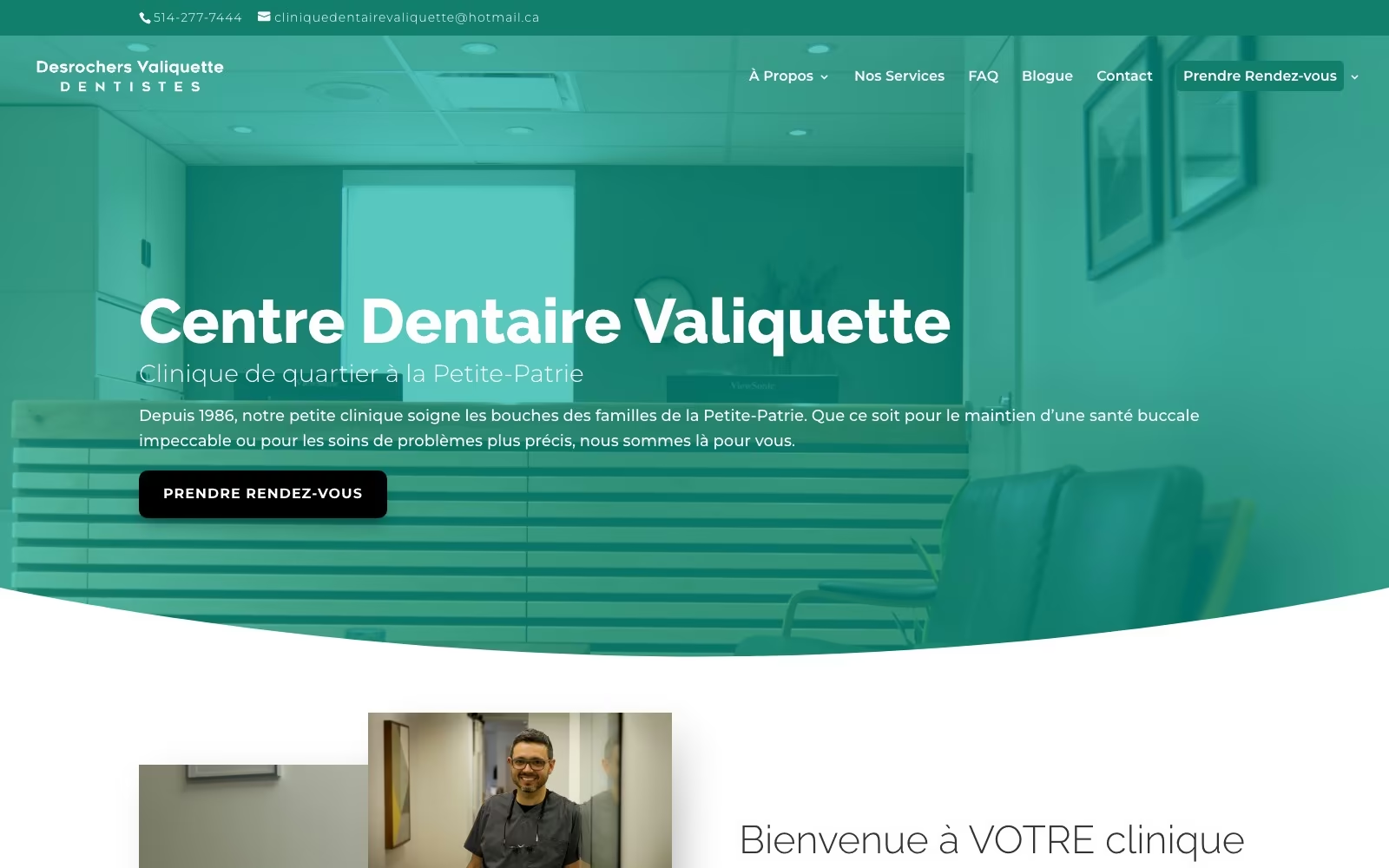
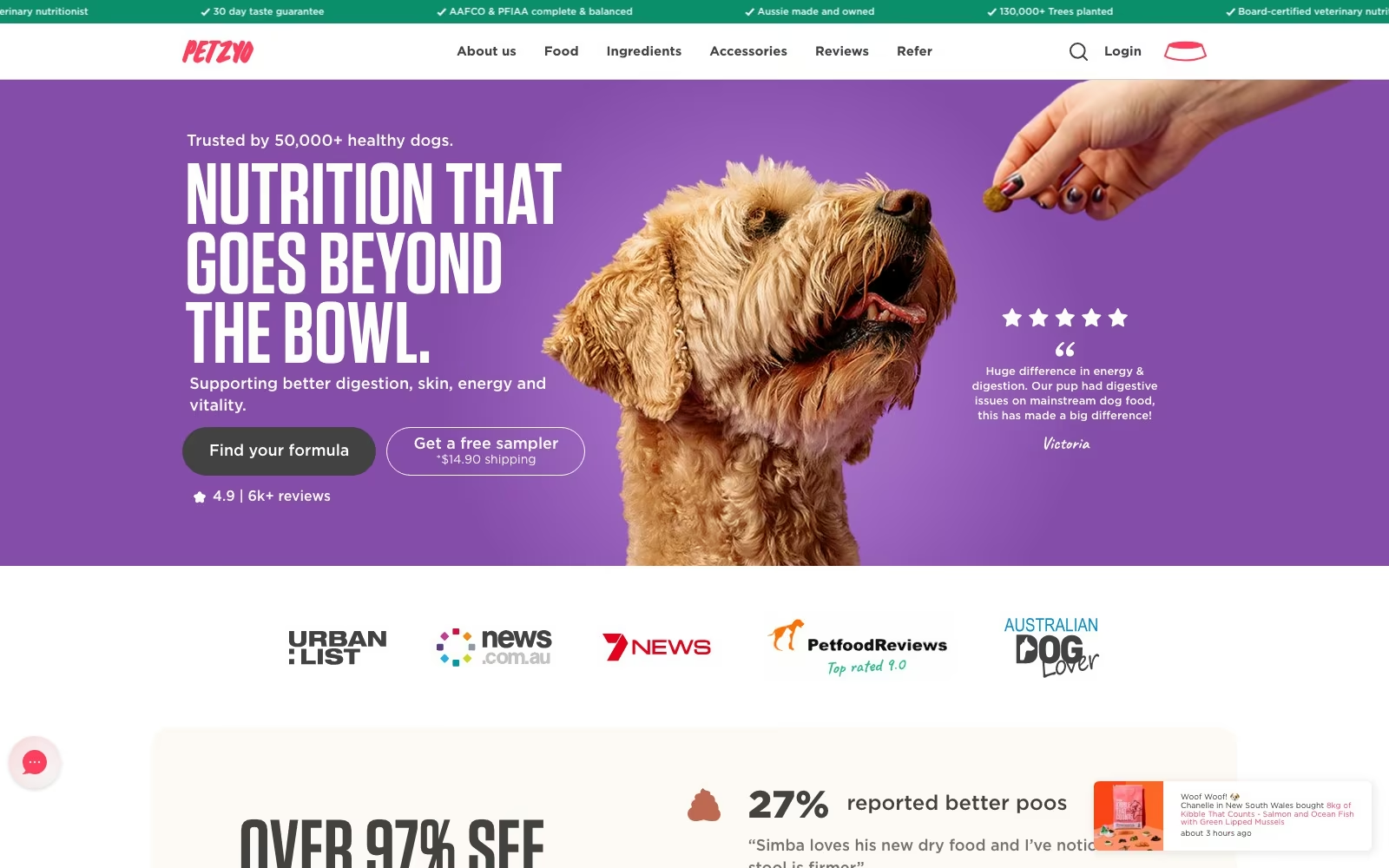
Website Portfolio
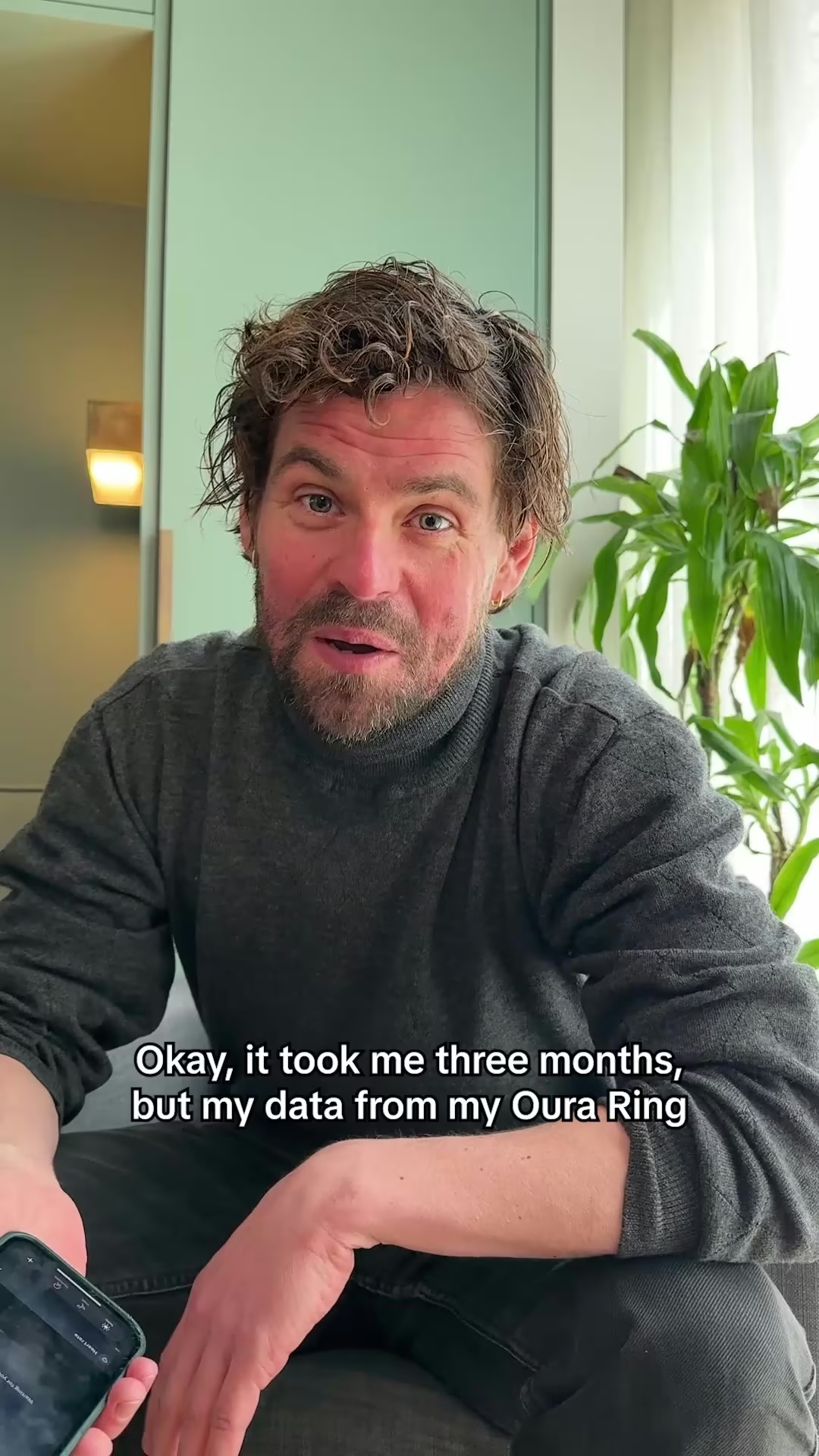
Video Ads
Static Ads


















































EN

EN

EN


FR
FR
FR

FR

FR

FR

FR

FR

EN
FAQ
What franchise leaders ask before buying marketing strategy consulting.
What does marketing strategy consulting cover for a franchise brand?
Four decisions and a plan. Segments, services and unit priority, meaning which customers and which markets get funded; positioning and messaging, meaning the brand promise and what a franchisee may adapt; channel roles at national, regional and unit level, meaning what the ad fund buys and what the owner buys; and budget and measurement, meaning owners, spend by quarter and the numbers head office reviews. The output is a written marketing plan, not a workshop summary.
Do you sell franchises or place candidates?
No. We are not franchise brokers, not a franchise development consultancy selling territories, and we take no commission on a signed agreement. We give no advice on your franchise disclosure document, franchise law, registration or financial performance representations. What we do is decide how the brand markets itself to consumers and how development marketing is targeted and measured, then write it down.
How is this different from hiring a franchise marketing agency?
An agency executes a plan. This engagement writes one, and because we take no execution work inside it, the plan can say that a channel should be cut or that national spend should move to unit-level support. The deliverable includes a one-page brief written so any agency, including your current one, can deliver against it. Execution is scoped separately afterwards if you want us to do it.
What does the engagement cost?
A fixed fee quoted after a scoping call, with deliverables and dates written down before you commit. It varies with the number of units, brands and countries in scope and the state of your reporting, so publishing a rate would mislead most readers. For budget context, The CMO Survey puts marketing at 9.0% of company revenue on average across industries, with 33.6% of digital activity run by outside agencies. Book a meeting for a scope and a number.
How do you handle the national versus local budget argument?
By turning it into a written division of labour instead of a standing grievance. Each channel is assigned to national, regional or unit level with an owner and a measurable job, the ad fund's scope is described in plain language a franchisee advisory council can read, and local marketing gets an approved playbook by unit stage. We do not rewrite your franchise agreement or advise on what the fund is legally permitted to fund; that is for your counsel.
Our best and worst units are worlds apart. Does marketing fix that?
Rarely on its own, and the plan says so. We measure the spread and separate the part that is demand from the part that is operations, staffing or territory quality. Marketing money aimed at a unit that cannot answer its phone or staff its schedule produces complaints, not revenue. With multi-unit franchisees controlling 58.8% of locations, the plan is written for operators who will check that logic.
Can one brand promise really work across every territory?
The promise can, the proof is local. We write a single positioning platform built on what the system can prove, then define what changes by market: which services lead, which local evidence is used, which offers are permitted. Franchisees get freedom where it helps and clear limits where inconsistency costs the brand. Nearly 30% of US franchise establishments sit in the Southeast, so regional weighting is usually a real question rather than a theoretical one.
Our marketing reports leads. Why is that a problem?
Because a lead is not revenue and the cheapest leads are usually the least profitable customers. We rebuild reporting around unit revenue, average ticket, repeat rate and margin by service line, and on the development side around cost per signed operator who is still trading two years later. That reversal usually changes which markets and channels look successful.
How is this different from growth advisory?
Different question. Franchise growth consulting looks for the commercial constraint on growth wherever it sits, including unit economics, the ad fund model and the sequence of territories. Marketing strategy consulting takes the commercial model as given and answers what marketing should do about it: segments, positioning, channel roles, budget and measurement. Brands that already know their constraint usually want this one.
Do you talk to our franchisees?
Yes, within the agreed scope, and it is the most useful hour of the engagement. We agree the list with you and include strong, average and struggling operators, because the last group knows exactly which brand promises the network cannot keep. Interviews are short and confidential, and findings feed the positioning platform and the local playbook rather than being published.
Who from our side needs to be involved?
A sponsor, usually the brand president or chief executive; the development lead; operations or field consulting; whoever owns marketing today; and a small group of franchisees. Expect around two hours of interviews each in week one and a half-day decision session in week three. If the sponsor cannot attend that session, we move it rather than run it without them.
We have a small head office marketing team. Is this premature?
No, it is often the right first step, because the plan states what the team has to do and what stays with vendors. Where the question is really about structure and sequencing of hires, marketing team advisory covers it, and where you need someone to lead the function while you build it a fractional CMO is the engagement. Both are quoted separately and neither is required to use the plan.
Our unit data is inconsistent. Can you still write a strategy?
Yes, and we will say plainly where it limits a conclusion. We work from financial records first, reconcile point-of-sale, CRM and call tracking against them, and label which findings are solid and which are directional. Validity's 2026 research found 62% of organisations losing revenue to poor CRM data and 67% having campaigns delayed or scrapped because of it, so this is normal rather than disqualifying. Marketing operations consulting implements the fix.
Does the plan cover franchise development marketing?
Yes, as a separate audience with its own funnel, message and budget. We define the operator profile that succeeds in your system, write the message aimed at that profile rather than at candidate volume, assign channel roles from portals and search through to referrals from existing franchisees, and measure cost per signed operator instead of cost per enquiry. We stop at marketing: qualification, disclosure and award decisions stay with your development team and your counsel.
What happens after the plan?
Your team runs it, and every workstream has a named owner on your side. Many brands book a review at ninety days to check the leading indicators and adjust the sequence, which takes half a day and is optional. Where you want a standing numbers habit instead, scorecard advisory sets one up and hands it back. The parent engagement is marketing strategy consulting, and execution, if you want us to do it, is scoped separately.

.webp)
.webp)