In a franchise system, the growth problem is almost never the ad channel.
almost never the ad channel
It is the spread between your best units and your median units, an ad fund whose contribution nobody can defend to the franchisee council, and franchise development targets that were set before anyone measured unit economics. We diagnose the commercial mechanics of the system and write a growth plan your leadership team owns. Advisory only, no campaigns inside the engagement. Book a meeting and bring twelve months of unit-level data.






Tell us a little about your brand and we'll be in touch within 24 hours to lock in a time.



WHAT WE EXAMINE
Four places franchise growth actually leaks.
actually leaks
Franchising itself is growing steadily rather than dramatically. The 2026 Franchising Economic Outlook projects about 845,000 US franchise establishments, up roughly 1.5%, with franchise GDP rising 1.8% to $558.4 billion. In a system growing at that pace, the difference between brands is made inside the company, not by the category.
Unit economics and the performance spread
Ad fund and local marketing
Territory, mix and opening sequence
Candidate pipeline and franchisee satisfaction
What a good unit really earns, and why the median one does not.
We rebuild unit economics from what the units actually report: revenue, average ticket or transaction value, customer frequency, local labour and occupancy cost, and contribution before royalty. Then we look at the spread between the top quartile and the median, because that spread is usually the largest and cheapest growth opportunity in the system, and it is almost never a marketing spend difference.
The comparison has to be honest about market and vintage. A unit opened last year in a thin trade area is not evidence about the model, and a legacy unit with an unrenewable lease is not a target to copy. We segment before we compare, then name the practices the top quartile has that the rest do not.
- Contribution by unit, cohort, market type and vintage
- Top-quartile versus median gap quantified, then explained
- Average ticket, frequency and local labour cost compared
- The practices worth codifying into the operating standard
845,000
US franchise establishments projected for 2026, up about 1.5%
What the fund buys, and what a franchisee can hold you to.
The national ad fund is the most politically exposed budget in franchising, so we treat it as a portfolio: what each programme is meant to do, what it measurably returns at unit level, how much reaches the trade areas that contribute the most, and how brand-level spend and local co-op spend overlap or cancel each other out. The output is a defensible allocation, in language a franchisee council can audit.
Only 49% of senior leaders say they can measure how marketing drives business outcomes, and 69% feel pressure to deprioritise brand building. In a franchised network that pressure arrives as a monthly question from operators about where their contribution went.
- Ad fund allocation mapped against unit-level contribution
- National, regional and local co-op spend deduplicated
- Local marketing requirements tested for what they really cost
- A reporting pack the franchisee council can actually audit
58.8%
of franchised locations controlled by multi-unit franchisees
Which markets earn the next opening, and which do not.
Expansion decisions are usually made on availability rather than evidence. We compare markets on the measures that actually predict unit performance for your model, look at cannibalisation between adjacent territories, examine service or product mix by market type, and check whether the territory definitions still reflect how customers travel and buy.
Growth is regionally uneven and that is measurable: the Southeast alone accounts for nearly 30% of all US franchise establishments. A sequence built on where demand and operator supply overlap beats a map built on white space.
- Market scoring built from your own unit performance data
- Cannibalisation between adjacent territories measured
- Product or service mix compared by market type
- An opening sequence tied to operator supply, not white space
30%
of US franchise establishments sit in the Southeast alone
The pipeline that fills units, and the reason operators stay.
Two funnels decide growth here: the customer funnel inside each unit and the candidate funnel that adds units. We measure the second one properly, from enquiry through discovery to signed agreement and open, including where qualified candidates drop out and how long each stage really takes. Then we look at who is buying: existing operators expanding, or new entrants.
As of 2025, 19.3% of franchisees operate multiple units and collectively control 58.8% of all franchised locations, so satisfaction and unit-level profitability are development strategy, not an HR topic. Your best growth channel is usually an operator who already trusts the model.
- Candidate funnel measured stage by stage, with real timings
- Multi-unit expansion tracked as its own growth channel
- Franchisee satisfaction signals tied to unit economics
- Support model and onboarding gaps named, then sequenced
8.9 million
workers employed by US franchised businesses in 2026
Fixed scope with a defined end date, agreed in writing
Twelve months of unit-level data, not a system average
Advisory only, so the plan can recommend spending less
We interview operators, including one that is struggling
We made the difference for those brands

Beauty, personal care & wellness

Home essentials, appliances, kitchen & pet

B2B software, fintech, insurance

B2B software, fintech, insurance

Home essentials, appliances, kitchen & pet

B2B software, fintech, insurance

Consumer tech and platforms

Food & beverage

Food & beverage
Creative, content, arts & culture

Home essentials, appliances, kitchen & pet

B2B software, fintech, insurance

Creative, content, arts & culture

Beauty, personal care & wellness

B2B software, fintech, insurance

Retail & commerce

B2B software, fintech, insurance

Creative, content, arts & culture

Beauty, personal care & wellness

B2B software, fintech, insurance

Retail & commerce

Food & beverage

Apparel and lifestyle

B2B software, fintech, insurance

Healthcare & regulated services

Creative, content, arts & culture

Home essentials, appliances, kitchen & pet

Apparel and lifestyle

B2B software, fintech, insurance

Consumer tech and platforms

Travel & mobility
01 — The challenge
Unit count is up. The franchisee council wants to know what the fund bought.
A common picture in a growing franchise system: the company has added units for three years, the sales team is hitting its signing target, and the top-performing operators are pulling further away from the median while nobody can explain why. The national ad fund has grown with the units, so the monthly question from the council is sharper every quarter. Marketing reports impressions and leads. Operations reports compliance. Finance reports royalty. Nobody reports contribution per unit in a form the brand president can act on.
“We are opening units faster than we can explain what makes one succeed.”
The reporting gap is structural rather than lazy. 62% of organizations report losing revenue directly because of poor CRM data quality, 67% have had campaigns delayed or scrapped for the same reason, and only 41% have a dedicated data governance owner. In franchising the data is also federated across independent businesses, several point-of-sale systems and a dozen local agencies, which is why the honest first step is measurement rather than a new campaign.
02 — Our approach
Measure the units, model the fund, then a plan the brand leadership owns. Four to six weeks.
Fixed scope, one senior advisor in every session, no campaign work inside the engagement. Week one is measurement. We take twelve months of unit-level revenue, transaction, lead and ad fund data, pull what the point-of-sale and CRM systems really contain rather than what the dashboard shows, test the customer experience the way a prospect would in three different territories, and interview the president, the marketing lead, development, an operations coach and a spread of franchisees including one top performer and one struggling unit. Week two is economics: contribution by unit, cohort and market type, the top-quartile to median gap, ad fund programmes mapped against unit outcomes, and the candidate funnel measured stage by stage. Week three is the decision session with brand leadership, covering fund allocation, what local marketing requirements should actually require, which markets earn the next openings and what the support model has to change. The final week produces the written plan: the fund allocation and its reporting pack, the unit playbook drawn from your own top quartile, the expansion sequence, a candidate funnel plan, a marketing brief any agency or local vendor can be held to, and a monthly scorecard with defined metrics. We do not run campaigns here, we do not sell franchises for you and we do not touch your franchise disclosure documents. Everything is handed over in editable files that stay yours.
03 — What we did
How the engagement actually runs.
Units measured before opinions, economics before targets, then one written plan brand leadership has already argued through.
Week 1 / Measurement
Unit performance sorted, segmented and compared
Revenue, ticket, frequency and contribution by unit, cohort, market type and vintage, before anyone explains it.

Week 2 / Economics
Ad fund programmes mapped against unit outcomes
What each programme is meant to do, what it returns at unit level, and where national and local spend overlap.

Week 3 / Decisions
Territory comparison and the leadership decisions
Which markets earn the next openings, which territories cannibalise, and what the support model must change.

Weeks 4-6 / Plan
The written plan and a scorecard the brand maintains
Fund allocation, unit playbook, expansion sequence, candidate funnel plan, a marketing brief and a monthly scorecard.

WHAT YOU GET
Six deliverables, all editable, all yours.
all yours
Written for your system, your markets and your operators, in files your team can change without calling us.

System growth plan
Where growth comes from over the next four quarters, in what order, with a named owner for each workstream.

Unit economics analysis
Contribution by unit, cohort and market type, with the top-quartile to median gap explained rather than described.

Ad fund allocation and reporting pack
What the fund buys, what it returns at unit level, and a report the franchisee council can audit.

Local marketing playbook
What every unit must do locally, drawn from your own top performers, with the cost and effort stated.

Candidate funnel plan
The candidate funnel stage by stage, where qualified prospects drop out, and how multi-unit expansion is worked.

Monthly operating scorecard
A short set of defined numbers, from unit contribution to candidate conversion, your team maintains without help.
HOW WE WORK
Operating standards, not promises.
Operating standards


Franchisors and leadership teams
Where the ad fund, the unit playbook and the opening sequence all need one defensible set of numbers behind them.
Multi-unit and multi-brand operators
Where several units and sometimes several brands share staff and budget, and the question is which location earns the next investment.
Private equity backed franchise platforms
Where the sponsor needs to know which acquired model to standardise on, and what the integration plan should fix first.


















Built on trust. Proven by results.
We partner with SMBs and Fortune 500 companies to deliver more than reach — we bring clarity, execution, and measurable outcomes. Every successful partnership starts with a strong culture fit and a shared drive to grow.







CASE STUDIES
Case studies
Website Portfolio
Video Ads
Static Ads




































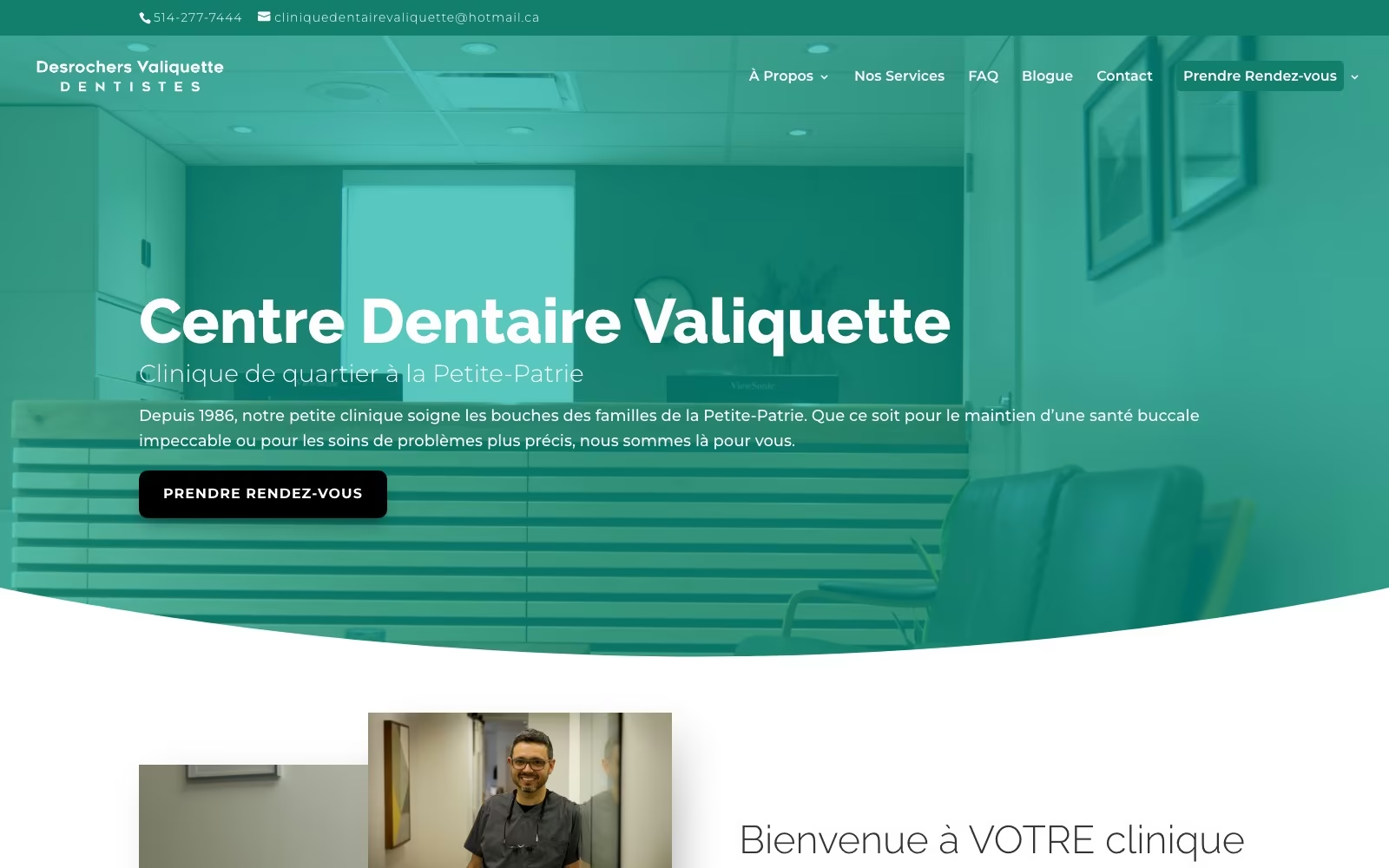

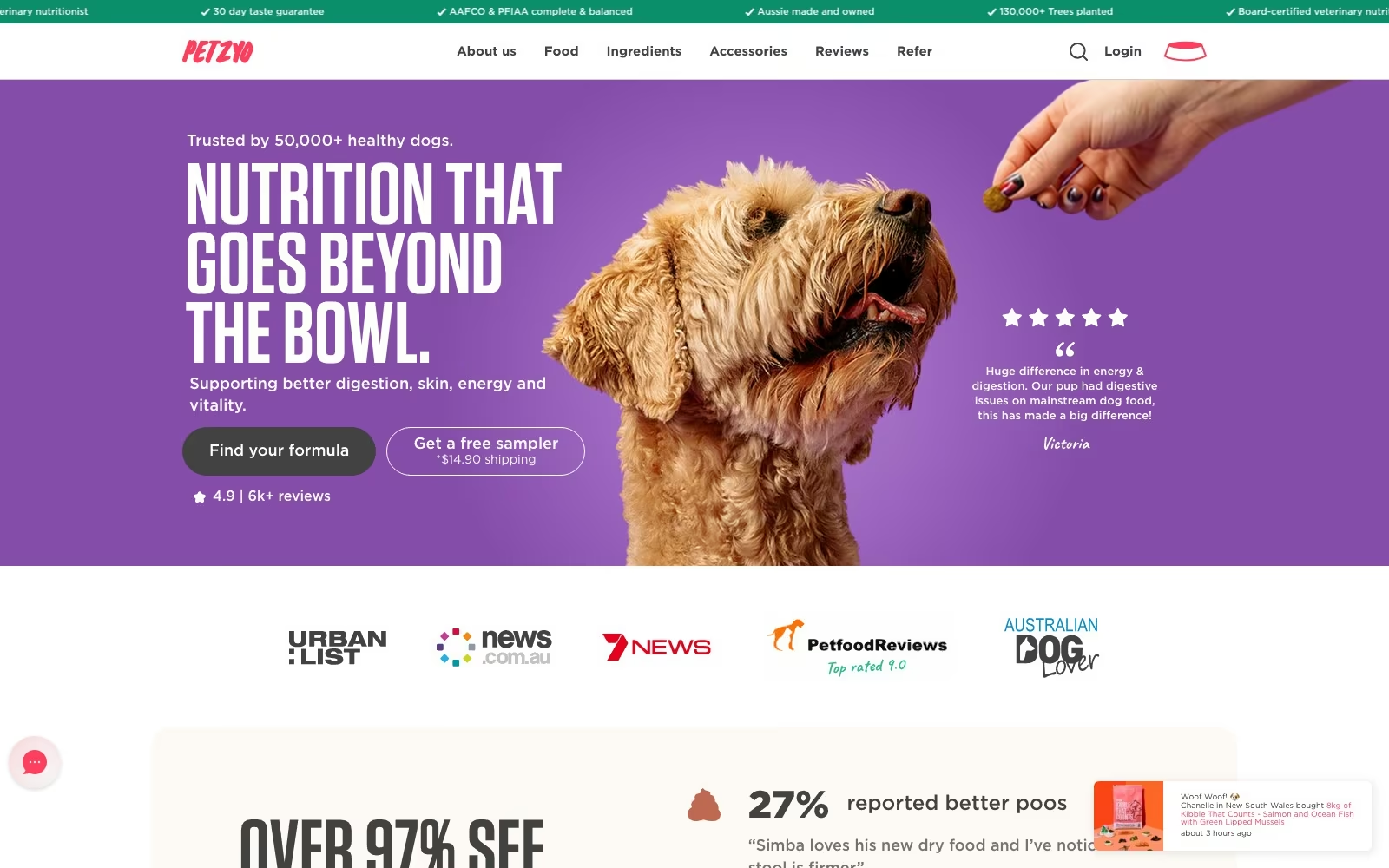















EN

EN

EN


FR
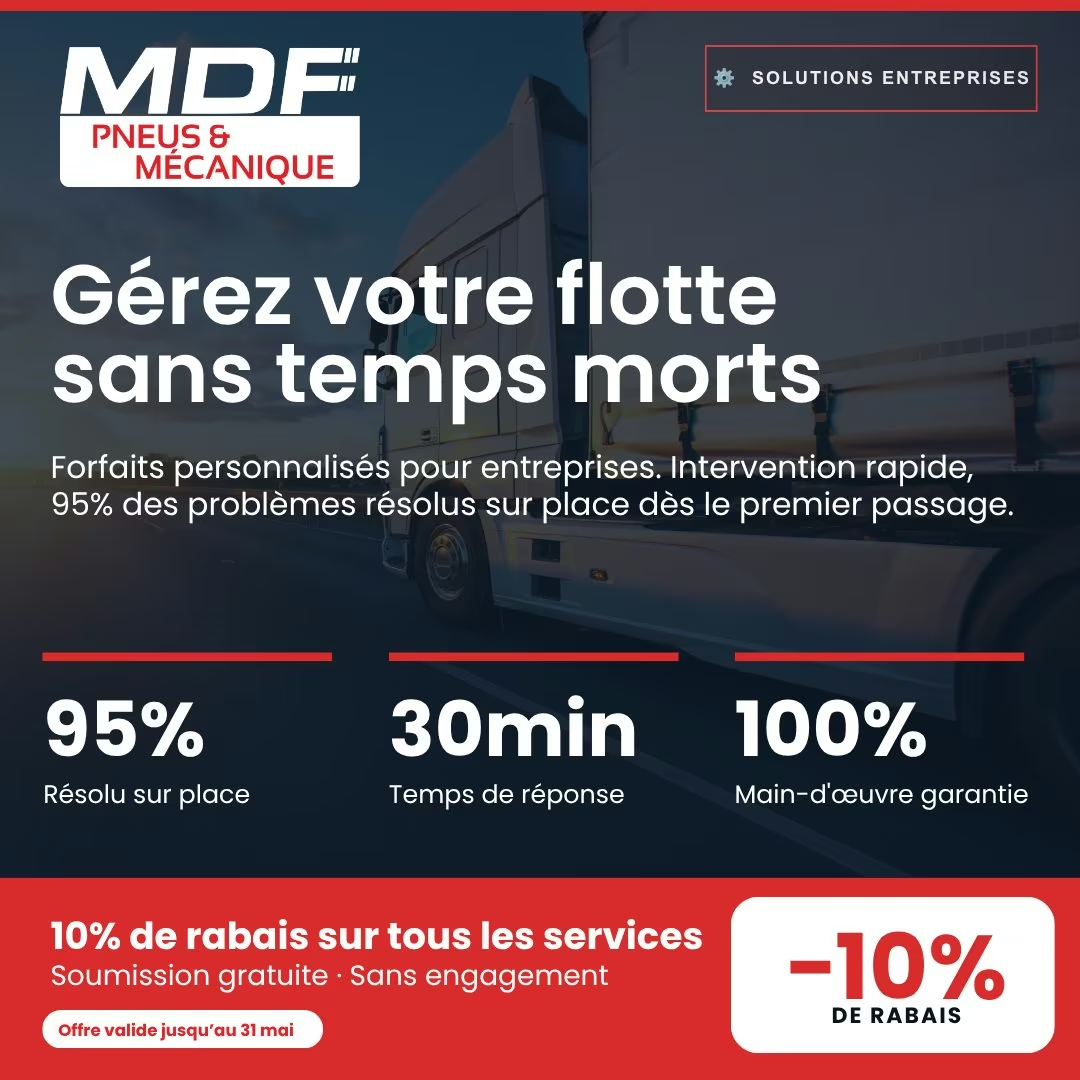
FR
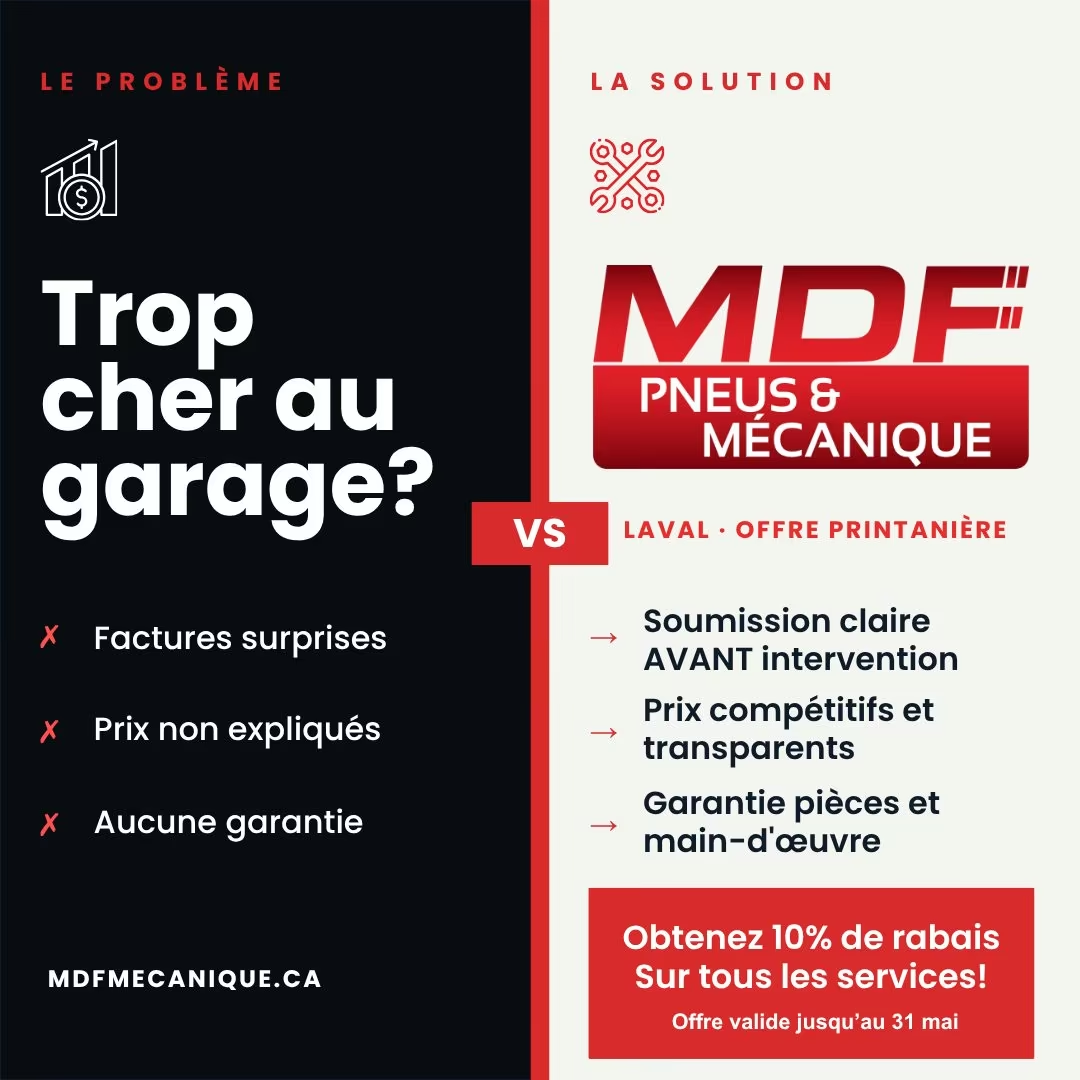
FR

FR

FR

FR

FR

FR


EN
FAQ
What franchise leaders ask before buying growth consulting.
What does franchise growth consulting actually cover?
Four areas and a plan. Unit economics, meaning contribution by unit, cohort and market type and the gap between your top quartile and your median; the ad fund, meaning what each programme returns at unit level and how it is reported to operators; territory and mix, meaning which markets earn the next openings and where adjacent units cannibalise; and candidate pipeline work, meaning the candidate funnel and multi-unit expansion. The output is a written plan with owners, a marketing brief your vendors can be held to, and a monthly scorecard.
Are you franchise brokers or franchise sales consultants?
No. We do not sell franchises, we do not place candidates, we take no commission on a signed agreement and we have no interest in your unit count going up for its own sake. We measure the development funnel and recommend how to improve it, and your own team or your existing partners do the selling. That separation is deliberate: it is what lets the plan say that a market is not ready or that support has to improve before more units open.
Do you advise on our FDD, franchise agreement or legal structure?
No, and we will say so quickly if a question heads that way. We are not lawyers and nothing here is legal, tax or securities advice, so franchise disclosure documents, agreement terms, registration states and fee structures stay with your franchise counsel. Where our commercial findings have implications for a local marketing requirement or a fund contribution, we write them up plainly so your counsel can review the wording before anything changes.
How is this different from a marketing agency?
An agency is paid to buy media and generate leads for the brand or the units. This engagement is paid to find out where the system actually loses money, and in franchising that is usually unit-level execution, pricing or the support model rather than reach. Because we take no execution work inside the engagement, the plan can conclude that the fund should spend less nationally and more on enabling units. If you want execution afterwards it is scoped separately, and the brief is written so any agency, including your current one, can deliver against it.
How do you get data out of independent franchisees?
Carefully, and with the brand's cooperation rather than around it. Most systems already hold more than they use: point-of-sale or booking data, royalty reporting, call tracking and the local marketing spend reported for compliance. We start there, then ask a sample of operators for the missing pieces, and we tell them what they get back. Where the data is thin we say which findings are solid and which are directional rather than smoothing over the gap.
Our operators do not trust the ad fund reporting. Can this fix that?
It can improve it materially, because most fund disputes are reporting problems before they are allocation problems. We rebuild the fund as a portfolio of programmes with a stated purpose, a measured unit-level outcome and a named owner, then design a monthly pack that answers the council's questions before they are asked. Only 49% of senior leaders say they can measure how marketing drives business outcomes, so the bar is lower than it feels.
What does the engagement cost?
A fixed fee quoted after a scoping call, with deliverables and dates written down before you commit. It varies with the number of units and markets in scope, whether one brand or several are included and the state of the unit data, so publishing a rate would mislead most readers. For budget context, The CMO Survey puts marketing at an average 9.0% of company revenue, with 33.6% of digital activity run by outside agencies. Book a meeting for a scope and a number.
We are an emerging brand with a few dozen units. Is this too early?
It is early enough to be useful and cheap enough to be decisive, provided there are enough operating units for the comparison to mean something. With twenty to fifty units the most valuable outputs are usually the unit playbook drawn from your own best operators and an honest view of what the fund can do at its current size. Below that, a smaller piece of work on the model and the candidate funnel is the more honest recommendation, and we will say so at scoping.
How do you handle a private equity backed platform or a multi-brand group?
The same method, run per brand and then compared, because that comparison is the point of a platform. Unit contribution, fund efficiency, candidate conversion and support cost are cut by brand and by market, which shows which model deserves to become the standard and which integration assumption is not supported. The plan is written so a sponsor's operating partner can read it and act on it, and the marketing brief is portable across the group.
Will you tell us to open fewer units?
Sometimes, and only where the evidence supports it. The more common finding is that the sequence is wrong rather than the ambition: openings are being placed where territory is available instead of where demand, operator quality and support capacity line up, and two adjacent units are splitting one trade area. Fixing sequence and operator selection usually raises system revenue faster than raising the signing target, and it does it without a franchisee relations cost.
Do you touch operations, training or the support model?
We analyse them and recommend, and your operations leadership decides and delivers. We are not an operations consultancy, we do not rewrite your training curriculum and we do not manage your field coaches. What the plan does is name where support capacity is the growth ceiling, sequence what has to change before more units open, and flag where a marketing recommendation would break if onboarding or field support are not ready for it.
Is franchising actually growing, or are we fighting for share?
Steady growth rather than a boom, which is exactly the condition where internal execution decides the winner. The 2026 Franchising Economic Outlook projects about 845,000 establishments, employment approaching 8.9 million and output above $920 billion, with franchise GDP up 1.8% to $558.4 billion. A system that closes its own top-quartile to median gap grows faster than that without opening a single extra unit.
Who from the brand needs to be involved?
The president or whoever can decide on fund allocation and expansion, the marketing lead, development, an operations coach who knows the field, and whoever owns the numbers. We also want a spread of franchisees, including one top performer and one who is struggling, because the difference between them is the engagement. Expect a kickoff, a data pull, several short interviews, one decision session and a final review.
How is this different from a marketing audit?
A marketing audit examines what is currently running and what it returns. This engagement is wider: it covers unit economics, fund allocation, territory and development, which is where franchise growth is usually decided, and it ends in a plan rather than findings. Brands that want positioning work rather than commercial mechanics should look at marketing strategy consulting, and systems whose reporting is the real blocker at marketing operations consulting.
What happens after the plan?
Your team runs it, and every workstream has a named owner on your side. Many brands book a review at ninety days to re-measure unit contribution and candidate conversion, which takes half a day and is optional. Where you want ongoing marketing leadership rather than a project, a fractional CMO or scorecard advisory is the next engagement, quoted separately. The parent version of this page is growth advisory, and multi-unit service brands often read the plumbing and HVAC versions alongside it.

.webp)
.webp)