Three reasons personal injury firms stall, and none of them is ad spend.
and none of them is ad spend
Growth in a personal injury law firm usually breaks in one of three places: intake that loses signed cases the marketing already paid for, a case mix that keeps the calendar full and the fee revenue flat, or capacity that cannot carry the volume the firm is buying. We diagnose all three, then write a growth plan your leadership team can run. Advisory only, no campaigns inside this engagement, and no legal advice. Book a meeting and bring twelve months of intake data.






Tell us a little about your brand and we'll be in touch within 24 hours to lock in a time.



WHAT WE EXAMINE
Four places personal injury growth actually leaks.
actually leaks
The market is not short of demand or advertising. It is short of firms that convert the contact they already generate. In a 2026 study that placed 1,000 after-hours calls to personal injury firms across 25 cities and 17 states, 40.9% of firms gave no live answer, and of the firms advertising 24-hour availability, 29.2% failed to pick up. That is the growth problem, and no media plan fixes it.
Intake performance
Case mix and economics
Referral and reputation
Capacity and case management
What happens between the call and the signed retainer.
We measure the intake funnel as it really runs: answer rate by hour and day, speed to first human contact, how many callers reach voicemail and never hear back, how quickly web forms and chat get a reply, and the conversion from contact to consultation to signed case, split by source and case type.
Speed is the whole game. In a five-year benchmark of law firm response times, 25% of firms reply to online leads in under five minutes and 33% within ten minutes, while 39% take more than two hours or never respond at all, with a median of 13 minutes.
- Answer rate measured by hour, day and channel
- Speed to first human contact, not first automated reply
- Contact to consultation to signed case, split by source
- Voicemails and abandoned forms counted in lost cases
40.9%
of personal injury firms gave no live answer to an after-hours call
Which cases pay for the firm, and which fill the calendar.
Then the economics. We rebuild fee revenue by case type, referral source and attorney: motor vehicle, premises liability, medical malpractice, workplace and the rest, each with its own acquisition cost, cycle time, resolution rate and attorney hours consumed. Firms are often surprised by which category is subsidising which.
That analysis then sets the marketing decision: what a signed case in each category is worth, what it is reasonable to pay to acquire one, and which case types the firm should stop chasing even though the phone rings for them.
- Fee revenue by case type, source and attorney
- Acquisition cost and cycle time modelled per category
- Attorney and paralegal hours loaded into each case type
- The categories to grow, hold or decline, named
13 min
median law firm response time to an online lead
The sources that do not appear in an ad account.
Most strong personal injury firms are carried by channels no dashboard reports: prior clients, treating physicians and chiropractors, co-counsel and fee-sharing relationships, and reputation in a specific community. We map where those cases actually come from, how consistently they are asked for, and what happens to a referral once it arrives.
Attribution is usually the blocker. 62% of organizations report losing revenue directly because of poor data quality, and only 41% have a dedicated data governance owner. In a law firm that shows up as a case management system where the source field is optional.
- Referral sources mapped and quantified in fee revenue
- Co-counsel and medical relationships reviewed for consistency
- Review generation checked against your bar's advertising rules
- Source capture fixed in the case management system
62%
of organizations lose revenue directly because of poor data quality
Whether the firm can carry what the marketing is buying.
Growth that outruns capacity produces slower resolutions, unhappy clients and worse outcomes, which eventually shows up in reviews and referrals. So we look at open files per attorney and per paralegal, average time in each phase, the bottleneck between demand package and negotiation, and what the case management system does and does not automate.
Where the honest recommendation is to hire before spending more, the plan says so and sequences it. If the constraint is structure rather than volume, marketing team structure advisory is the more useful engagement.
- Open files per attorney and paralegal, by phase
- Cycle time from signing to demand to resolution
- Bottlenecks named, with the volume each one caps
- Hiring sequenced against the growth plan, not after it
29.2%
of firms advertising 24-hour availability did not answer the call
Fixed scope with a defined end date, agreed in writing
We measure your real response times, we do not ask for them
We are not lawyers; bar rules stay with you and your counsel
Advisory only, so the plan can recommend spending less
We made the difference for those brands

Healthcare & regulated services

B2B software, fintech, insurance

Healthcare & regulated services

Consumer tech and platforms
Retail & commerce

B2B software, fintech, insurance

Consumer tech and platforms

Beauty, personal care & wellness

Creative, content, arts & culture

Beauty, personal care & wellness

Food & beverage

B2B software, fintech, insurance

Food & beverage

Food & beverage

Food & beverage

Travel & mobility

B2B software, fintech, insurance

Creative, content, arts & culture

Home essentials, appliances, kitchen & pet

B2B software, fintech, insurance

Consumer tech and platforms

Retail & commerce

Healthcare & regulated services

Healthcare & regulated services

Home essentials, appliances, kitchen & pet

B2B software, fintech, insurance

Creative, content, arts & culture

Home essentials, appliances, kitchen & pet

Consumer tech and platforms

Retail & commerce

Apparel and lifestyle
01 — The challenge
The advertising works. The firm is not growing.
A familiar picture in personal injury: the firm spends heavily, the phone rings, and signed cases have been flat for two years. Intake is three people who are also doing other jobs. Nobody can say what a signed motor vehicle case costs to acquire compared with a premises liability case. The case management system has a source field that half the staff leave blank. And the marketing vendor reports leads, which is a number the firm cannot tie to fee revenue in any month.
“We are paying for the same case twice, once to get the call and once to lose it.”
The measurement gap is not unique to law firms. Only 49% of senior marketing and finance leaders say they can measure how marketing drives business outcomes, and 74% have abandoned or scaled back an initiative because they could not measure it. In a contingency-fee business, where revenue arrives long after the spend, that gap is expensive enough to decide which firms grow.
02 — Our approach
Measure intake, model the case mix, then a plan the partners own. Four to six weeks.
Fixed scope, one senior advisor in every session, no campaign work inside the engagement. Week one is measurement. We take twelve months of intake records and case data from the case management system, listen to a sample of recorded intake calls where your policy allows it, test your own response times through the public channels a potential client would use, and interview the intake team, a case manager, the marketing lead and the partners. The response test alone often reframes the project, because firms rarely know what happens to a call at seven in the evening or on a Friday. Week two is economics: fee revenue by case type, source and attorney, acquisition cost per signed case, cycle time by phase, and capacity per attorney and paralegal, so the growth target can be checked against what the firm can actually carry. Week three is the decision session with the partners, covering which case types to grow, which to decline, what intake must look like, where referral relationships need real work and what has to be hired. The final week produces the written plan: intake standards with target response times and staffing, the case mix decision, the referral and reputation plan, the capacity sequence, a marketing brief for whoever runs the advertising, and a monthly scorecard with defined metrics. We do not run campaigns here and we do not touch your cases. We are not lawyers and we give no legal advice: where advertising, solicitation or fee-sharing rules apply, we flag the question and your firm and its bar association decide. Everything is handed over in editable files that stay yours.
03 — What we did
How the engagement actually runs.
Intake measured before opinions, economics before targets, then one written plan the partners have already argued through.
Week 1 / Measurement
Intake tested the way a potential client experiences it
Answer rates by hour and day, speed to a human, and the conversion from contact to consultation to signed case.

Week 2 / Economics
Fee revenue and cost by case type and source
What each category earns, what it costs to acquire, how long it takes and how much attorney time it consumes.

Week 3 / Decisions
Referral, reputation and the partner decisions
Where cases really come from, which relationships to invest in, and which case types the firm will stop chasing.

Weeks 4-6 / Plan
The written plan and a scorecard the firm maintains
Intake standards, case mix, capacity sequence, a marketing brief and a short monthly scorecard. Then we hand over.

WHAT YOU GET
Six deliverables, all editable, all yours.
all yours
Written for your firm, your case mix and your market, in files your team can change without calling us.

Firm growth plan
Where growth comes from over the next four quarters, in what order, with a named owner for each workstream.

Intake audit and standards
Measured response times by channel and hour, the conversion gaps, and the standards and staffing to close them.

Case mix economics
Fee revenue, acquisition cost, cycle time and attorney load by case type, source and attorney.

Referral and reputation plan
Where cases actually originate, which relationships to build, and how reviews are asked for consistently.

Marketing brief for your vendors
What to buy, for which case types, at what cost per signed case, written so any agency can be held to it.

Monthly firm scorecard
A short set of defined numbers, from answer rate to signed cases by source, your team maintains without help.
HOW WE WORK
Operating standards, not promises.
Operating standards


Single-office firms scaling past the founder
Where growth depends on intake standards and a case mix decision the founding attorney has been making by instinct.
Multi-office and multi-state firms
Where performance varies by market and the question is which office model to replicate and which to fix first.
Referral-led and co-counsel practices
Where most fee revenue arrives through relationships, and the plan is about consistency rather than advertising volume.


















Built on trust. Proven by results.
We partner with SMBs and Fortune 500 companies to deliver more than reach — we bring clarity, execution, and measurable outcomes. Every successful partnership starts with a strong culture fit and a shared drive to grow.







CASE STUDIES
Case studies
Website Portfolio
Video Ads
Static Ads




























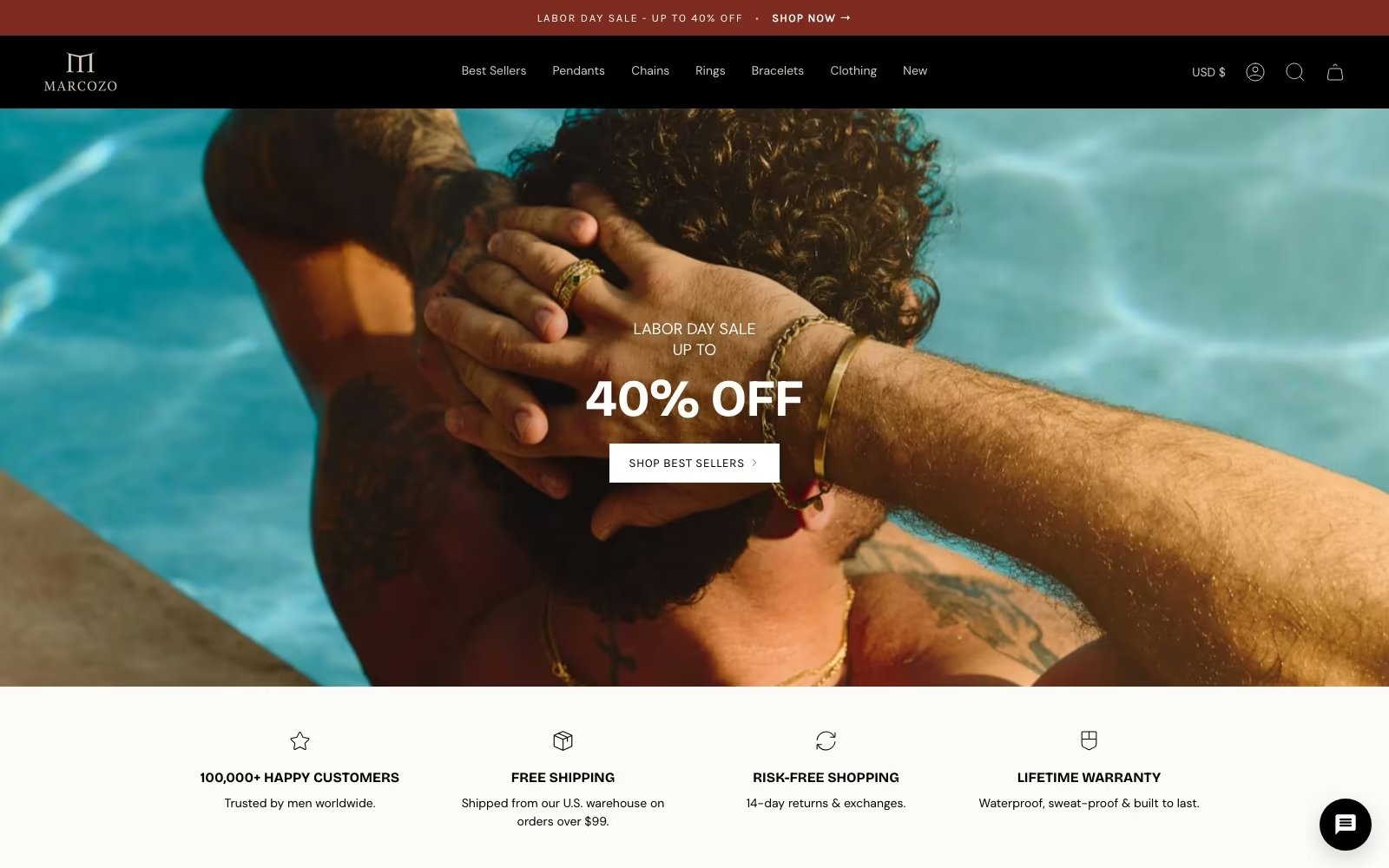













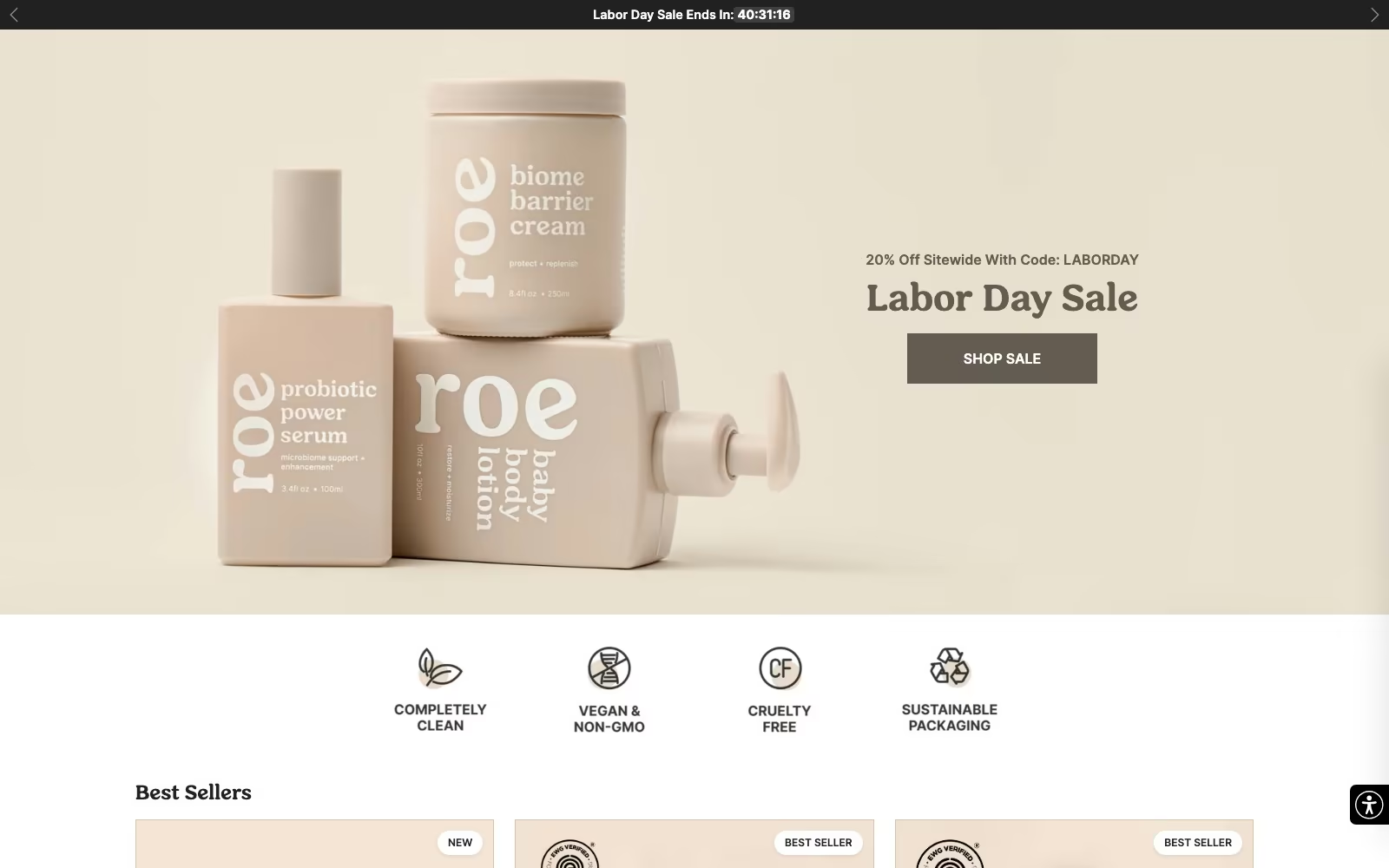



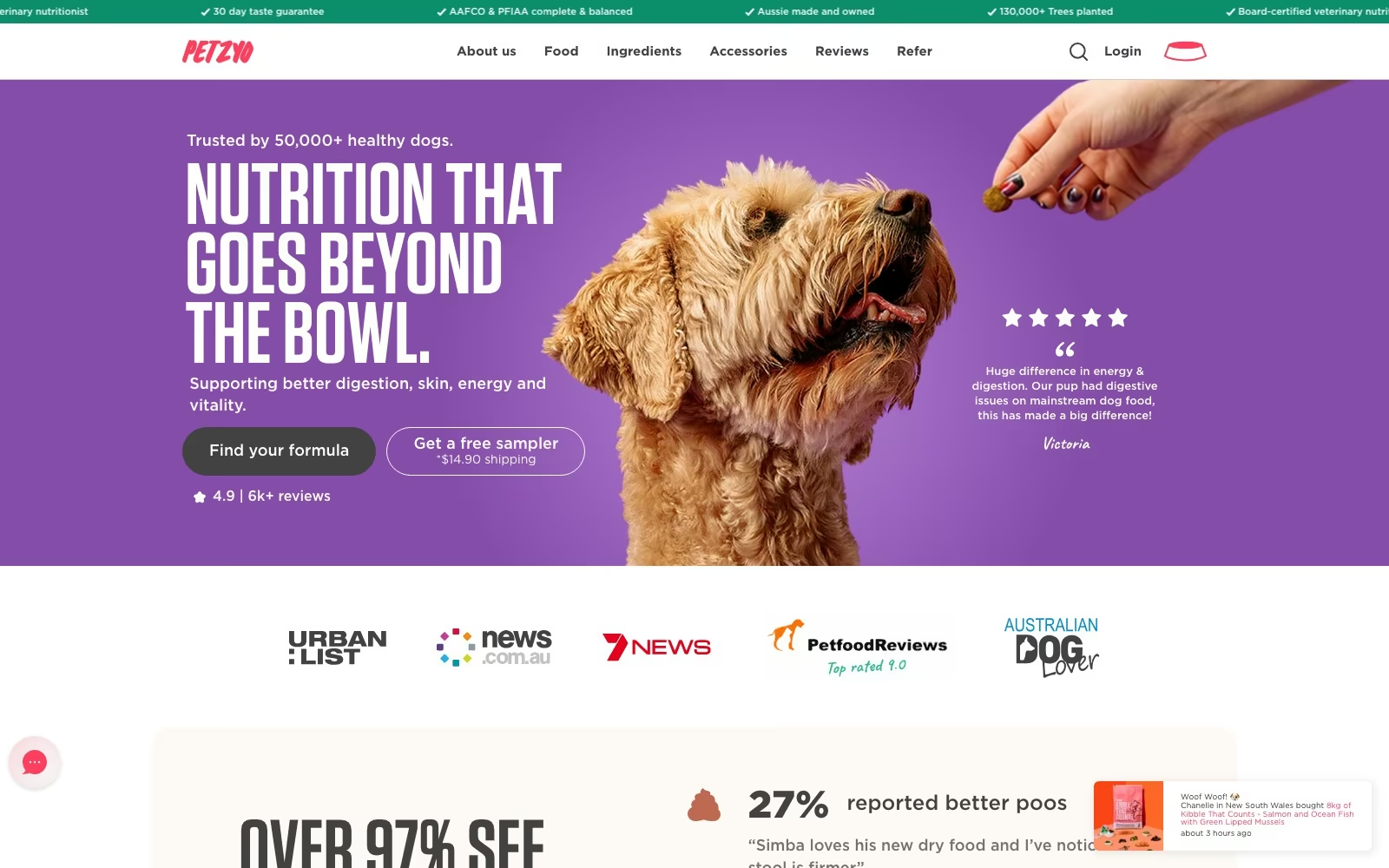















EN

EN

EN


FR

FR

FR

FR

FR

FR

FR

FR


EN
FAQ
What managing partners ask before buying growth consulting.
What does personal injury growth consulting actually cover?
Four areas and a plan. Intake performance, measured through your real channels rather than reported by your team; case mix economics, meaning fee revenue, acquisition cost, cycle time and attorney load by case type and source; referral and reputation, including the sources no ad account reports; and capacity, so the growth target matches what the firm can carry. The output is a written plan with owners, a marketing brief your vendors can be held to, and a monthly scorecard.
How is this different from a legal marketing agency?
An agency is paid to buy media and produce leads. This engagement is paid to find out where the firm actually loses cases, and in personal injury that is usually intake, mix or capacity rather than reach. Because we take no execution work inside the engagement, the plan can conclude that you should spend less and staff intake properly. If you want execution afterwards it is scoped separately, and the marketing brief is written so any agency, including your current one, can deliver against it.
We already advertise heavily. Will you tell us to stop?
Rarely to stop, often to redirect. The common finding is that spend is pointed at case types the firm converts poorly or resolves slowly, while the categories that pay for the firm are underfunded. The other common finding is leakage: 39% of law firms take more than two hours to respond to an online lead or never respond at all, so the first return usually comes from converting contacts you are already paying for.
How do you measure our intake without disrupting it?
Mostly from data you already hold, plus a controlled response test through your public channels. We review call and form records, recorded calls where your policy permits, and case management data, then place a small set of test contacts across different hours and days. Timing matters more than most firms expect: in a 1,000-call study, Friday had the lowest answer rate of any day at 45%. Nothing interferes with a live client matter.
What does the engagement cost?
A fixed fee quoted after a scoping call, with deliverables and dates written down before you commit. It varies with the number of offices, how many case types are in scope and the state of the case management data, so publishing a rate would mislead most readers. For budget context, The CMO Survey puts marketing at an average 9.0% of company revenue, with 33.6% of digital activity run by outside agencies. Book a meeting for a scope and a number.
Do you give legal or ethics advice on advertising rules?
No. We are marketing advisors, not lawyers, and we do not interpret your state bar's rules on advertising, solicitation, referral fees or fee sharing. What we do is flag every recommendation that touches those rules so your firm or your ethics counsel can review it before anything is implemented. Firms operating across several states get the flags marked by jurisdiction, because the rules are not uniform.
Should we bring intake in house or use an answering service?
It depends on volume, hours and how well your current arrangement performs, which we measure rather than assume. Outsourced intake works when it is held to standards and audited; it fails when it is a voicemail with a company name. Among firms advertising 24-hour availability, 29.2% did not answer an after-hours call, and only 2.9% of sampled firms had any AI answering system in place. The plan sets the standard first and the staffing model second.
Can you help us decide which case types to take?
We provide the economics and the partners make the call, which is the correct division of responsibility. The analysis shows fee revenue, acquisition cost, cycle time and attorney hours by category, so a decision to decline a case type is made on numbers rather than instinct. Firms often keep a category that looks weak because it feeds referrals or serves the community they practise in, and that is a legitimate reason once it is visible.
Our case management system data is unreliable. Is that a blocker?
No, and fixing it is usually part of the value. We work with what exists, reconcile against financial records, and state plainly which findings are solid and which are directional. Only 41% of organizations have a dedicated data governance owner, so this is the norm rather than an embarrassment. The plan includes the small set of field and process changes that make next year's analysis reliable, or marketing operations consulting if the rebuild is larger.
Who from the firm needs to be involved?
The managing partner or whoever can decide on case mix, the intake lead, a case manager who knows the files, whoever owns marketing, and the person who handles the firm's numbers. Expect a kickoff, a data pull, several short interviews, one decision session with the partners and a final review. We work around court schedules and take read-only access through your own accounts.
How does this work for a multi-office or multi-state firm?
The same method, run per market and then compared, because performance differs sharply by location. Answer rates, case mix, cycle time and cost per signed case are cut by office, which usually shows one location running a model worth copying and another with a fixable intake or staffing problem. Where advertising and solicitation rules differ by state, recommendations are flagged by jurisdiction for your counsel.
How long before we see results?
Intake changes show within weeks because answer rate and speed to contact move immediately, and signed cases follow soon after. Case mix and referral work take one to three quarters, and fee revenue lags further because resolution does. That is why the scorecard tracks leading indicators such as answer rate, signed cases by source and cost per signed case, rather than fee revenue, which reports on a delay long after the decision was made.
Do you work with firms outside personal injury?
Yes, though the diagnosis changes shape. Contingency practices live or die on intake speed and case mix, while hourly and flat-fee practices turn on utilisation, realisation and matter mix. The engagement structure is the same and the parent version is growth advisory. Tell us the practice area at the scoping call and we will say honestly whether the industrial-strength intake analysis is worth paying for.
How is this different from a marketing audit?
A marketing audit examines what is currently running and what it returns. This engagement is wider: it covers intake, case mix, referral relationships and capacity, which is where personal injury growth is usually decided, and it ends in a plan rather than findings. Firms that want positioning and brand work rather than commercial mechanics should look at marketing strategy consulting instead.
What happens after the plan?
Your firm runs it, and every workstream in the plan has a named owner on your side. Many firms book a review at ninety days to re-measure intake and check signed cases by source, which takes half a day and is optional. Where you want ongoing marketing leadership rather than a project, a fractional CMO or scorecard advisory is the next engagement, quoted separately.

.webp)
.webp)