When an HVAC group plateaus, agreements and replacement mix explain most of it.
agreements and replacement mix
Large HVAC companies rarely stall for lack of demand. They stall because the maintenance base is not renewing, replacement quotes are closing at a lower rate than anyone believes, or one branch is subsidising the group. We diagnose the commercial mechanics of the business and write a growth plan your leadership team runs. Advisory only, no campaigns inside the engagement. Book a meeting and bring twelve months of job and agreement data.






Tell us a little about your brand and we'll be in touch within 24 hours to lock in a time.



WHAT WE EXAMINE
Four places HVAC growth actually leaks.
actually leaks
The constraint in this market is conversion and mix, not awareness. In an analysis of contractor platform data, top performers book 62% of their inbound lead calls while everyone else books 39%, and they close 77% of estimates on the same visit against 62%. Those two gaps are worth more than any increase in advertising, and they are decided by process rather than by media.
Maintenance agreements
Replacement and quote conversion
Residential and commercial mix
Branch performance and capacity
The recurring base that decides whether a slow season hurts.
Maintenance agreements are the strategic asset in an HVAC business. We measure the base properly: member count and renewal rate by branch, agreement price against the true cost of delivering the visits, attachment rate by technician, how many visits are actually performed, and how much replacement revenue originates from members compared with cold demand.
87.5% of top-performing contractors run an active service agreement or membership program with paying members, against 68.7% of the rest. In most groups the programme exists but nobody owns the renewal calendar, so the base leaks quietly every year.
- Member count, renewal rate and lapse rate by branch
- Agreement pricing tested against real visit delivery cost
- Attachment rate by technician, with the training gap named
- Replacement revenue traced back to the maintenance base
87.5%
of top-performing contractors run an active service agreement program
Where the largest tickets are won or quietly lost.
Equipment replacement carries the margin, and it is where measurement is usually weakest. We rebuild quote volume, close rate, average ticket and time to decision by technician, branch, lead source and system type, then look at how options are presented and how often financing is offered at the table.
Presentation moves the number. Financed jobs carry a median ticket 64% higher than comparable unfinanced work, with HVAC contractors seeing a 66% increase, and 51% of contractors used financing in 2025. If your comfort advisors offer it inconsistently, that is a growth plan hiding in the sales process.
- Quote close rate by technician, branch and system type
- Option presentation and financing offer rate measured
- Average ticket and margin by equipment tier
- Time from quote to decision, and what stalls it
66%
higher median ticket on financed HVAC jobs than unfinanced ones
Which side of the business is really paying for the other.
Groups that run residential service, new construction and commercial mechanical work under one roof are running three businesses with different cash cycles, different sales motions and different labour requirements. We rebuild contribution by line after loaded labour and overhead, including retrofit and modernisation work driven by refrigerant and efficiency regulation, so the mix decision can be made on numbers.
The plan then sets what to grow, what to hold and what to decline, and what each choice demands of recruiting and training. Demand from data centres and large commercial projects can look attractive and still be the wrong fit for a residential service company's crews.
- Contribution by line after loaded labour and local overhead
- Cash cycle and working capital demand per line
- Retrofit and modernisation demand assessed honestly
- The lines to grow, hold or decline, named
62%
of inbound calls booked by top-performing contractors, against 39%
Which locations to replicate, and which to fix first.
In a multi-branch group or a platform, averages hide the answer. We cut booking rate, agreement attachment, quote close rate, technician utilisation, callback rate and contribution after local overhead by location, which usually identifies one branch running a model worth standardising and one with a fixable dispatch, staffing or service quality problem.
Where the honest recommendation is to recruit and train before spending more, the plan says so and sequences it. If the constraint is how the marketing function is organised across brands, marketing team structure advisory is the more useful engagement.
- Booking, attachment and close rates cut by branch
- Technician utilisation and overtime patterns compared
- Callback and warranty rates as a service quality signal
- Recruiting and training sequenced against the growth plan
41.3%
of 2026 HVAC services dealmaking came from private equity add-ons
Fixed scope with a defined end date, agreed in writing
We measure your real booking experience, we do not ask for it
Advisory only, so the plan can recommend spending less
We give no transaction, valuation or securities advice
We made the difference for those brands

Apparel and lifestyle

Healthcare & regulated services

Creative, content, arts & culture

B2B software, fintech, insurance

Consumer tech and platforms

B2B software, fintech, insurance

Beauty, personal care & wellness

Consumer tech and platforms

Creative, content, arts & culture

Consumer tech and platforms

Apparel and lifestyle

Apparel and lifestyle

Consumer tech and platforms

B2B software, fintech, insurance

Retail & commerce

Healthcare & regulated services

Consumer tech and platforms

Creative, content, arts & culture

Beauty, personal care & wellness

Home essentials, appliances, kitchen & pet

Apparel and lifestyle

Consumer tech and platforms

Consumer tech and platforms

B2B software, fintech, insurance

Home essentials, appliances, kitchen & pet

Beauty, personal care & wellness

Healthcare & regulated services

Food & beverage

Retail & commerce

Apparel and lifestyle
01 — The challenge
The season was good. The plan for next year is a guess.
A common picture in a multi-branch HVAC company: a hot summer carried the numbers, headcount grew to meet it, and now nobody can say which part of the business will carry a mild year. The maintenance base is reported as a member count with no renewal rate behind it. Replacement close rate is quoted from memory rather than from the field management system. Marketing reports calls, operations reports jobs, and the two numbers have never been reconciled to the same definition of a booked job.
“Every branch says it runs the same way, and every branch produces a different margin.”
The measurement gap is not specific to the trades. Only 49% of senior marketing and finance leaders say they can measure how marketing drives business outcomes, and 74% have abandoned or scaled back an initiative because they could not measure it. In a consolidating market it also decides valuation, because a buyer pays for a documented recurring base and discounts a number nobody can evidence.
02 — Our approach
Measure the base, model the mix, then a plan the owners own. Four to six weeks.
Fixed scope, one senior advisor in every session, no campaign work inside the engagement. Week one is measurement. We take twelve months of job, agreement, quote and call data out of your field management system, listen to a sample of booking calls where your policy allows it, test the booking experience through the public channels a customer would use, and interview the owner, the operations lead, a branch manager, a service manager, dispatch and whoever handles marketing. The booking test often reframes the project, because groups rarely know what happens to a call at seven in the evening in their third market. Week two is economics: contribution by service line and branch, maintenance agreement performance and renewal behaviour, quote close rate and average ticket by technician, technician utilisation, and the cost to acquire a booked job in each category. Week three is the decision session with the owners, covering the agreement programme, replacement sales process, which lines to grow or decline, and what has to be recruited or trained. The final week produces the written plan: the maintenance and renewal plan, the replacement sales standards, the mix decision, the capacity and hiring sequence, a marketing brief any agency can be held to, and a monthly scorecard with defined metrics. We do not run campaigns here, we do not manage your operations, and we are not M&A advisors. Everything is handed over in editable files that stay yours.
03 — What we did
How the engagement actually runs.
The recurring base measured before opinions, economics before targets, then one written plan the owners have already argued through.
Week 1 / Measurement
The maintenance base counted properly, branch by branch
Members, renewals, lapses, attachment rate and what an agreement really costs to deliver.

Week 2 / Economics
Replacement quotes, close rates and ticket
Close rate by technician and branch, option presentation, financing offer rate and margin by equipment tier.

Week 3 / Decisions
Branch comparison and the owner decisions
Which location model to standardise on, which to repair, and which lines the group will stop chasing.

Weeks 4-6 / Plan
The written plan and a scorecard the company maintains
Agreement plan, replacement standards, mix decision, hiring sequence, a marketing brief and a short monthly scorecard.

WHAT YOU GET
Six deliverables, all editable, all yours.
all yours
Written for your service lines, your branches and your markets, in files your team can change without calling us.

Company growth plan
Where growth comes from over the next four quarters, in what order, with a named owner for each workstream.

Maintenance agreement plan
Agreement pricing, attachment targets, renewal ownership and the calendar that keeps the base from lapsing.

Replacement sales analysis
Close rate, ticket and margin by technician, branch and equipment tier, with the process standards behind them.

Service line economics
Contribution, acquisition cost and labour load across residential, commercial and construction work.

Marketing brief for your vendors
What to buy, for which service lines, at what cost per booked job, written so any agency can be held to it.

Monthly operating scorecard
A short set of defined numbers, from booking rate to renewal rate by branch, your team maintains without help.
HOW WE WORK
Operating standards, not promises.
Operating standards


Multi-branch residential service groups
Where several locations share a call centre and a brand, and the group average hides which branch is funding the others.
Private equity backed platforms and roll-ups
Where the question is which acquired operating model to standardise on, and what the integration plan should fix in the first year.
Commercial mechanical and construction divisions
Where project work, service contracts and residential replacement compete for the same technicians and the mix has never been decided explicitly.


















Built on trust. Proven by results.
We partner with SMBs and Fortune 500 companies to deliver more than reach — we bring clarity, execution, and measurable outcomes. Every successful partnership starts with a strong culture fit and a shared drive to grow.







CASE STUDIES
Case studies
Website Portfolio
Video Ads
Static Ads


























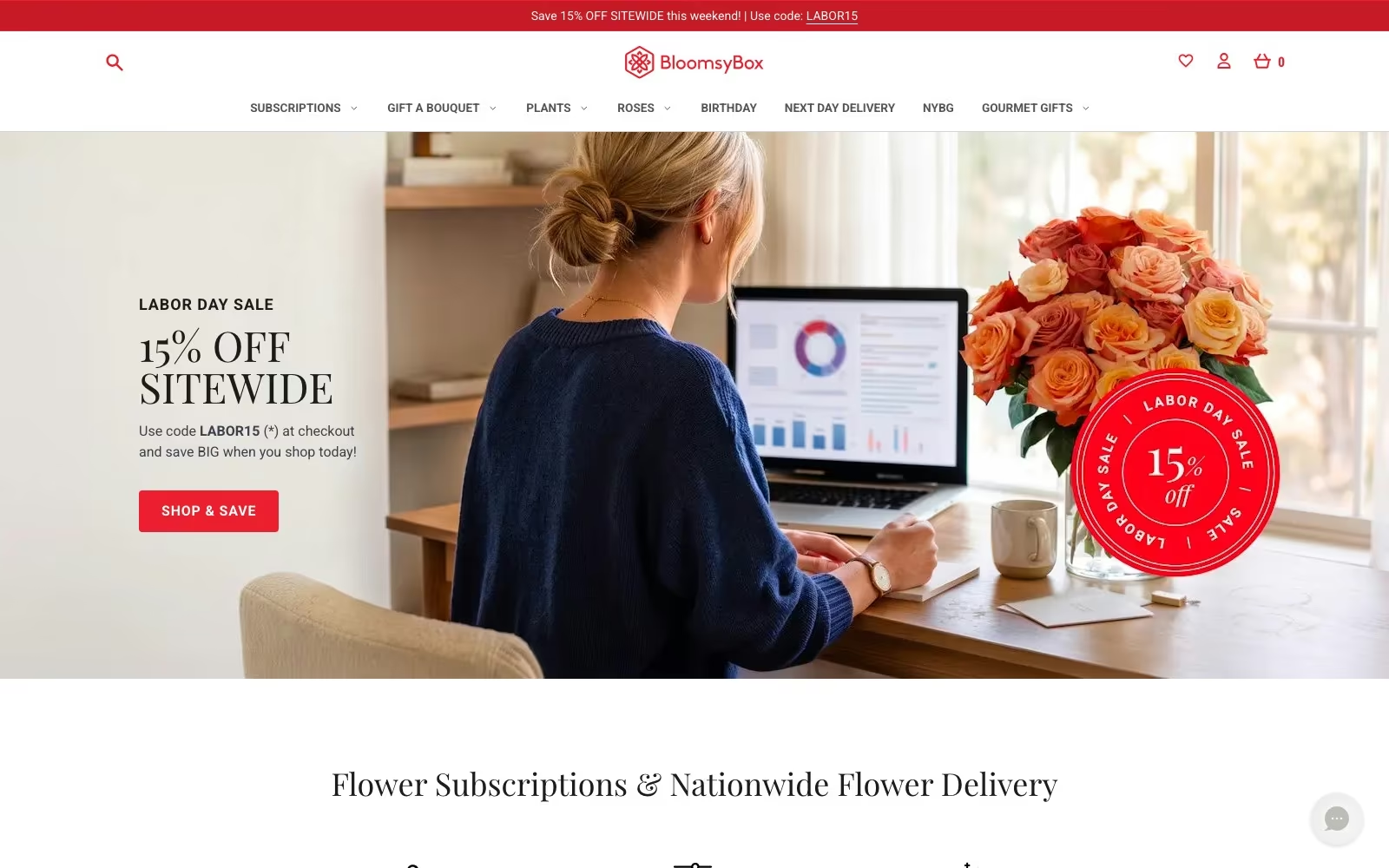











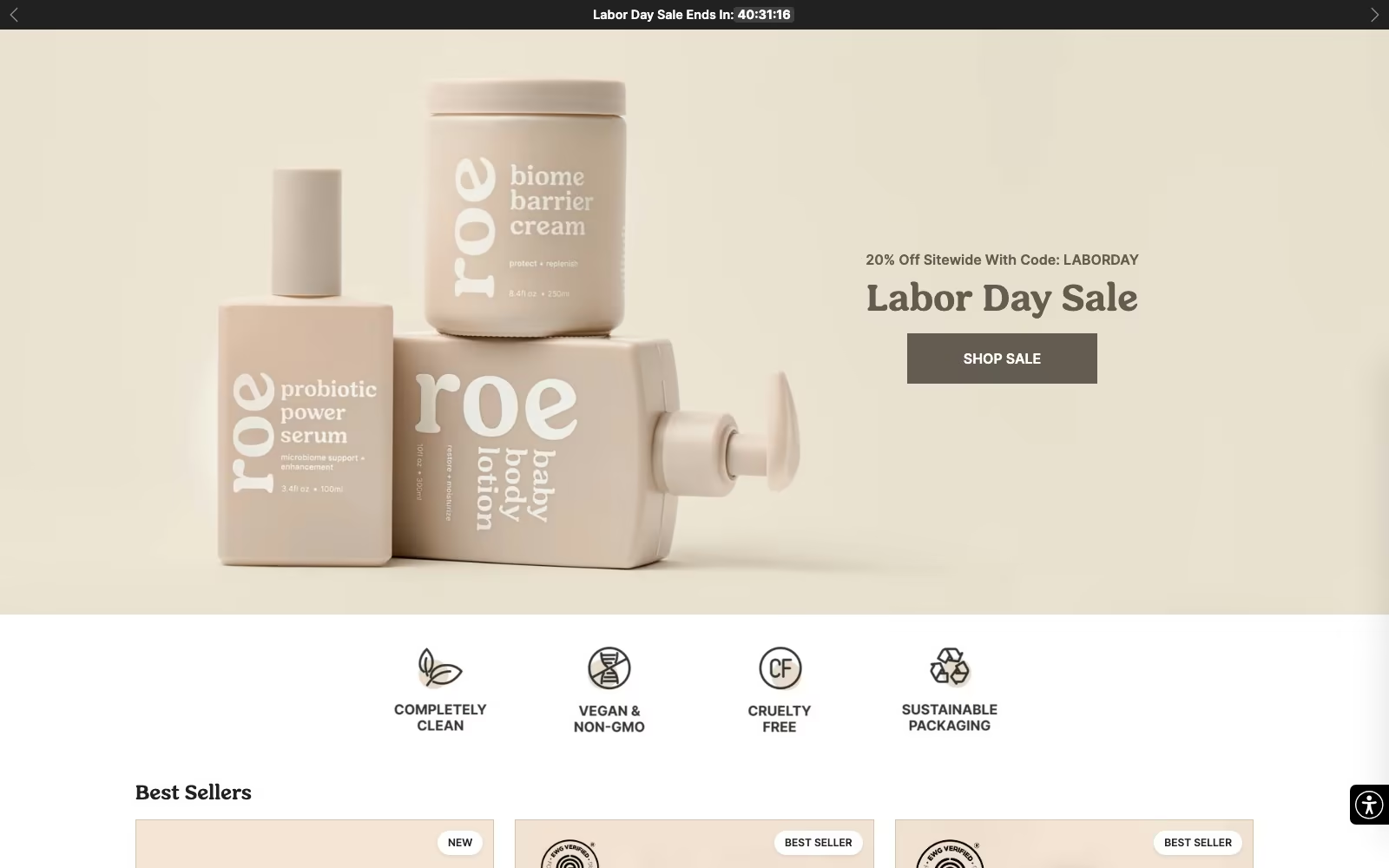



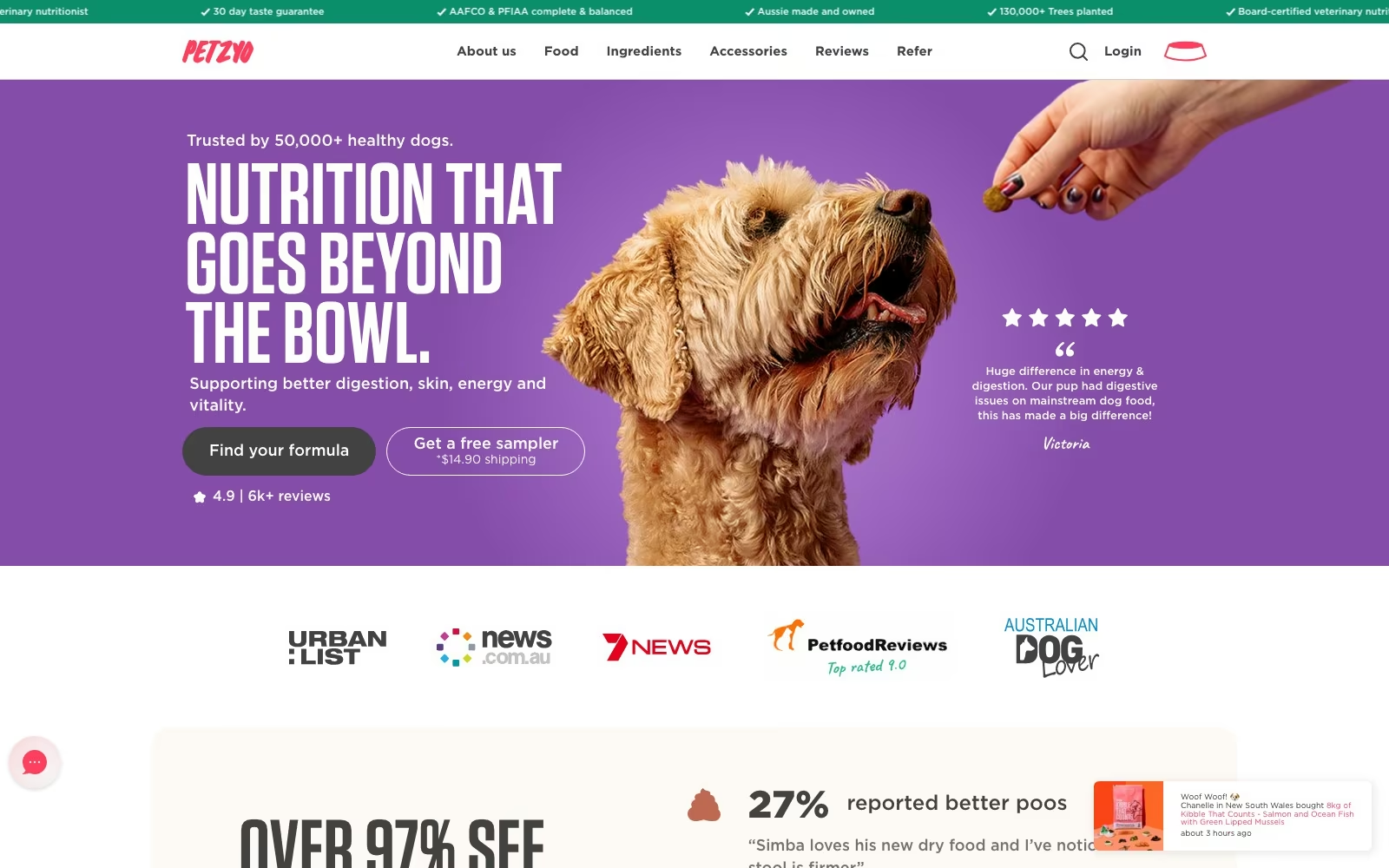















EN

EN

EN


FR
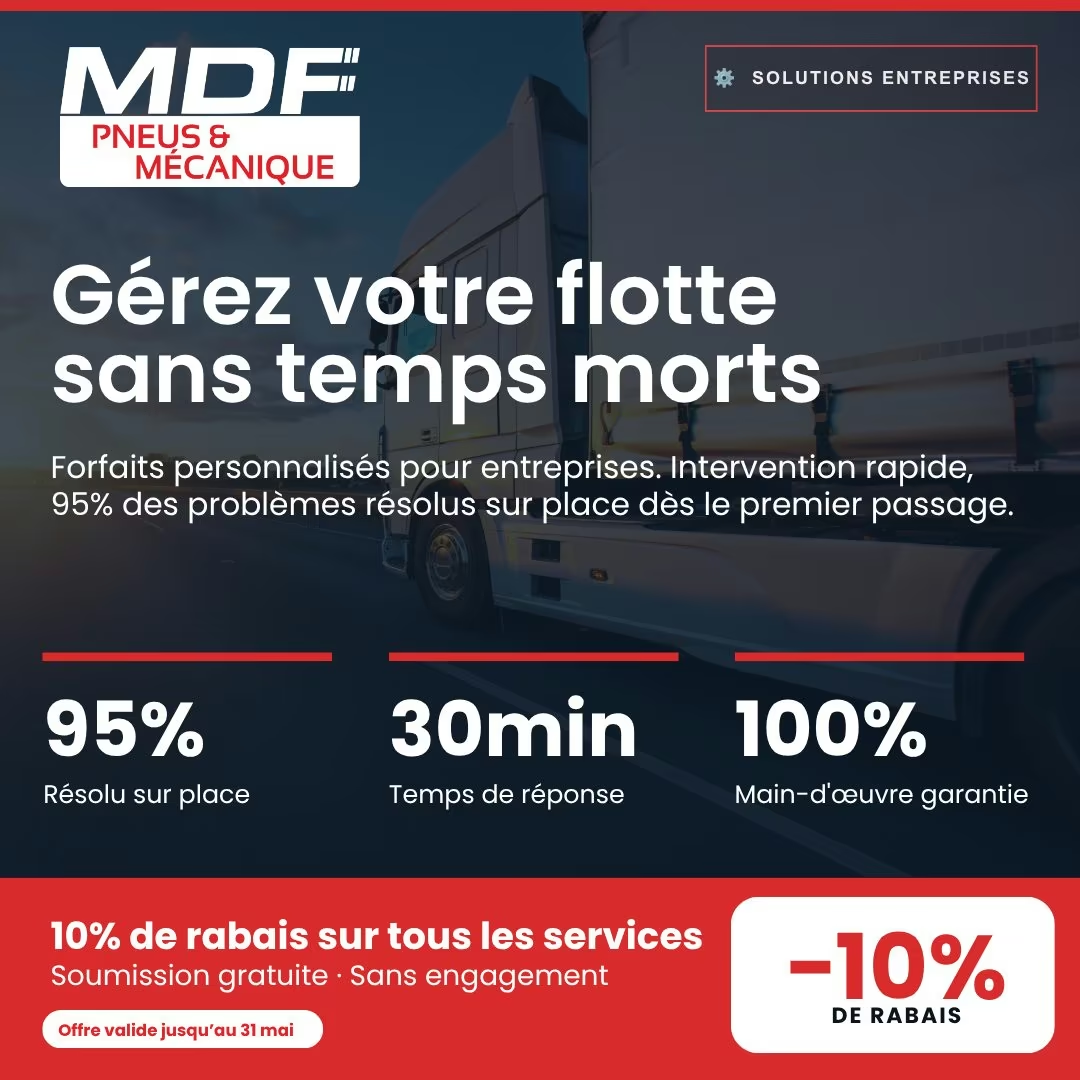
FR
FR

FR

FR

FR

FR

FR


EN
FAQ
What HVAC company owners ask before buying growth consulting.
What does HVAC growth consulting actually cover?
Four areas and a plan. The maintenance agreement base, measured by renewal and attachment rather than by member count; replacement sales, meaning quote volume, close rate, ticket and how options are presented; service line mix across residential, commercial and construction work; and branch capacity, so the growth target matches what your technicians can carry. The output is a written plan with owners, a marketing brief your vendors can be held to, and a monthly scorecard.
How is this different from HVAC business coaching or a best practice group?
Coaching programmes and peer groups work on the owner and the operating habits over months, and good ones change companies. This is a shorter project that produces a commercial diagnosis and a written plan from your own data, then ends. We do not run a membership community, sell training curricula or provide a standard playbook. Groups often run both, using the plan as the agenda their coach or peer group then holds them to.
How is this different from a marketing agency?
An agency is paid to buy media and generate calls. This engagement is paid to find out where the company actually loses money, and in HVAC that is usually the renewal rate, the close rate on replacement quotes or technician utilisation rather than reach. Because we take no execution work inside the engagement, the plan can conclude that you should spend less and fix attachment. Execution afterwards is scoped separately, and the brief is written so any agency can deliver against it.
What does the engagement cost?
A fixed fee quoted after a scoping call, with deliverables and dates written down before you commit. It varies with the number of branches, how many service lines are in scope and the state of the field management data, so publishing a rate would mislead most readers. For budget context, The CMO Survey puts marketing at an average 9.0% of company revenue, with 33.6% of digital activity run by outside agencies. Book a meeting for a scope and a number.
We are preparing for a sale or an acquisition. Is this useful?
It is useful preparation, and it is not transaction advice. We are not M&A advisors, we do not value companies and we do not represent either side of a deal. What the work produces is a documented recurring base, honest service line economics and a growth plan, which is exactly what a sophisticated buyer interrogates. The market is active: private equity add-ons accounted for 41.3% of HVAC services dealmaking in 2026, with 38 transactions year to date, so buyers in this sector have seen a lot of well-run companies.
How do you handle a private equity backed platform?
The same method, run per operating company and then compared, because that comparison is the point of a platform. Renewal rate, attachment, close rate, utilisation and contribution are cut by company and market, which shows which acquired model deserves to become the standard. Capstone Partners recorded 149 HVAC services transactions in a single year to date period, a 12.9% increase year over year, so most platforms are integrating faster than their reporting is maturing. The plan is written for a sponsor's operating partner to act on.
Our field management data is messy. Is that a blocker?
No, and fixing it is usually part of the value. We work with what exists, reconcile job and agreement data against invoices and the ledger, and state plainly which findings are solid and which are directional. 62% of organizations report losing revenue directly because of poor data quality, and only 41% have a dedicated data governance owner. The plan includes the field and process changes that make next year's analysis reliable, or marketing operations consulting if the rebuild is larger.
Will you tell us to raise prices?
Sometimes, and only where the data supports it. The more frequent finding is that pricing is inconsistent rather than low: the same replacement is quoted differently by technician and branch, options are presented on a minority of calls, and discounting rescues conversations that better presentation would have won. Fixing consistency, option presentation and financing availability usually moves the effective ticket more than a headline increase, without a customer satisfaction cost.
How much does seasonality distort the analysis?
Enough that we design around it. Twelve months of data is the minimum so cooling and heating seasons are both represented, and every measure that responds to weather, such as booking volume, ticket and utilisation, is read against the same period last year rather than against last month. The maintenance base is the part of the business that smooths seasonality, which is one reason the plan usually starts there rather than with demand generation.
Do you touch our operations, dispatch or recruiting?
We analyse them and recommend, and your operations leadership decides and delivers. We are not an operations consultancy, we do not restructure your dispatch team and we do not recruit technicians. What the plan does is name the capacity ceiling, sequence recruiting and training against the growth target, and flag where a marketing recommendation would break if the technicians or the call centre are not ready for it.
Who from the company needs to be involved?
The owner or whoever can decide on price and mix, the operations lead, a branch manager, the service manager who owns agreements, whoever runs dispatch or the call centre, and the person who owns the numbers. Expect a kickoff, a data pull, several short interviews, one decision session with the leadership team and a final review. We take read-only access through your own accounts.
How long before we see results?
Booking and quote process changes show within weeks because booking rate, option presentation and close rate move immediately. Agreement and mix work takes one to three quarters because renewals arrive on their own calendar, and the margin effect lags further. That is why the scorecard tracks leading indicators such as booking rate, attachment rate, close rate and contribution by branch, rather than a consolidated margin that reports too late to steer.
Do you work with other trades?
Yes. The mechanics are close enough that the same engagement runs for adjacent trades with the mix categories and seasonality changed. The parent engagement is growth advisory, and there is a sibling page for plumbing growth consulting, where drain, repipe and fixture work dominate the mix analysis instead of maintenance agreements and equipment replacement.
How is this different from a marketing audit?
A marketing audit examines what is currently running and what it returns. This engagement is wider: the recurring base, replacement sales, service line mix and branch capacity, which is where HVAC growth is usually decided, and it ends in a plan rather than findings. Companies that want positioning and brand work rather than commercial mechanics should look at marketing strategy consulting instead.
What happens after the plan?
Your team runs it, and every workstream has a named owner on your side. Many groups book a review at ninety days to re-measure booking rate, attachment and close rate, which takes half a day and is optional. Where you want ongoing marketing leadership rather than a project, a fractional CMO or scorecard advisory is the next engagement, quoted separately.

.webp)
.webp)