More treatments booked is not a strategy. This is.
not a strategy
Most medical spa groups have plenty of marketing activity and no written marketing strategy. Nobody has decided which treatments and which patients get funded, what the practice can actually prove, or which numbers leadership reviews every week. We run a fixed-scope marketing strategy consulting engagement for aesthetic practices and hand over a marketing plan with positioning and messaging, owners, budgets and dates. Advisory only: no campaign management, no media buying, no clinic operations work inside the engagement. Book a meeting and bring twelve months of revenue, patient and spend data.






Tell us a little about your brand and we'll be in touch within 24 hours to lock in a time.



WHAT WE EXAMINE
Four decisions a med spa marketing strategy has to settle.
has to settle
The aesthetics market is large enough to hide a bad plan for a while. AmSpa puts the medical aesthetics industry past $17 billion and growing by more than $1 billion a year, which means demand rarely fails first — the decision about who you serve, what you charge for and how you prove it does. A strategy engagement settles those four decisions and writes them down.
Service lines and patient priority
Positioning and proof
Channel roles and the demand plan
Budget, measurement and the plan itself
Which treatments and which patients get the money.
We start with your own numbers: revenue and gross margin by treatment and device, injectable versus energy-based versus skincare mix, average first visit value against lifetime value, membership and package penetration, consultation to treatment conversion, rebooking rate, and the same cut by location and by provider. Aesthetic practices routinely market the treatment with the loudest trend and the thinnest contribution, and a blended report hides it.
The output is a ranked set of service lines and patient segments, the work you are deliberately declining written down, and a demand shape that matches your provider and room capacity rather than fighting it.
- Margin by treatment, device and location
- First visit value against returning patient value, measured
- Membership and package penetration by location
- Treatments and patient segments you stop promoting
$1,681
average spend of patients who returned, against $355 for single-visit patients
Why a patient should choose your clinic and not the one two blocks away.
Aesthetic messaging collapses into discounts, syringe promotions and stock before-and-after imagery, so the scarce asset is credibility. We build positioning from what the practice can substantiate: who performs the treatment and under whose supervision, training and years of experience, device inventory and why it was chosen, consultation process, complication and correction protocols, aftercare, and review volume and sentiment by location.
Nothing on the page or in the plan is medical, clinical or advertising compliance advice — claims are drafted with your medical director and your counsel, and we simply refuse to build a claim your chart notes cannot support.
- Claims built from provable provider, device and protocol facts
- Messaging split by first-time, lapsed and member patients
- Education content that answers the question before the consultation
- Review and reputation strategy written per location
19.2%
median revenue growth among benchmarked medspa brands against roughly 6% industry average
What each channel is for, and what it is not for.
Every channel gets a named job. Local search and reviews carry the patient already comparing clinics. Search and educational content answer the treatment question before a consultation is booked. Social and video build familiarity with providers, not just results. Email and text carry rebooking, membership and lapsed patient recovery, which is where most aesthetic revenue actually sits. Paid media buys new patient volume at a known cost per treated patient, and events, referrals and physician relationships each get a role and a share of budget by quarter.
Intake is treated as a channel, because it is. In the CorralData H1 2026 aesthetics benchmark, a small group of practices answered new leads in under 13 minutes while the rest took between four hours and 24 days, and every practice answering within 15 minutes and booking over 30% of appointments online landed in the top half of growth.
- One named job per channel, by patient segment and quarter
- Existing patients, memberships and lapsed recovery planned first
- Paid media priced on treated patients, not on form fills
- Speed to lead and online booking treated as strategy, not admin
13 min
lead response time of the fastest benchmarked practices, against four hours to 24 days
Owners, budgets and dates, or it is a deck.
The last section decides whether anything happens. We set budget by location, service line and quarter, define the short metric set leadership reviews weekly, specify the practice management, CRM and call tracking changes needed to report treated revenue and retention rather than enquiry counts, name an owner for every workstream, and put the plan on a calendar with quarterly checkpoints.
That discipline is rarer than it should be. Among 500 marketing and finance leaders in the Haus 2026 Decision Confidence Index, only 49% said they can measure marketing's effect on business outcomes and 74% had killed an initiative they could not measure, while Validity's 2026 research found 62% losing revenue to poor CRM data quality and only 41% with a data governance owner.
- Budget allocated by location, service line and quarter
- Practice management, CRM and call tracking gaps named and scoped
- Retention and treated revenue reported, not enquiry volume
- Named owners and dates on every workstream
49%
of marketing leaders can measure marketing's effect on business outcomes
Fixed scope with a defined end date, agreed in writing
Acquisition sources judged on treated patients, never on enquiries
Advisory only, so the plan can recommend spending less
Providers, coordinators and front desk interviewed, not surveyed by email
We made the difference for those brands

Retail & commerce

Consumer tech and platforms

B2B software, fintech, insurance

Food & beverage

Creative, content, arts & culture

Home essentials, appliances, kitchen & pet

Consumer tech and platforms

Retail & commerce

Travel & mobility

Creative, content, arts & culture

Beauty, personal care & wellness

Consumer tech and platforms

Retail & commerce

Healthcare & regulated services

B2B software, fintech, insurance

B2B software, fintech, insurance

Retail & commerce

Beauty, personal care & wellness

Beauty, personal care & wellness

Home essentials, appliances, kitchen & pet

Healthcare & regulated services

Beauty, personal care & wellness

Home essentials, appliances, kitchen & pet

Food & beverage

Consumer tech and platforms

Beauty, personal care & wellness

Apparel and lifestyle

Home essentials, appliances, kitchen & pet

Retail & commerce

Beauty, personal care & wellness
01 — The challenge
A full appointment book and a thin idea of where the money comes from.
The pattern repeats across multi-location aesthetic groups. Marketing runs on offers, because offers work immediately and require no decisions. Every new device gets a launch campaign whether or not the room hours exist to fill it. Reporting counts leads and followers, so the cheapest enquiry source looks best until you measure how many of its patients ever return. Memberships are sold when a provider remembers to mention them. The target patient is described as anyone interested in looking better. Not one of those is a channel problem; it is the absence of a decision, and no agency can make it for you.
“We were fully booked and barely profitable. Nobody could tell me which treatments or which locations were actually carrying the group.”
The benchmark data says the same thing in numbers. Across 100-plus medspa brands and roughly 500 locations, the median practice grew revenue 19.2% while median new-patient growth was only 1.2%, single-visit patients spent $355 against $1,681 for those who returned, and members spent 2.5 times more than non-members while retaining 35 percentage points better. Growth in this sector is a retention and mix decision long before it is an acquisition campaign.
02 — Our approach
Evidence, then decisions, then a written marketing plan. Four to six weeks.
Fixed scope, one senior consultant in every session, no execution work inside the engagement. Week one is evidence. We take twelve months of revenue and margin by treatment, provider and location, practice management and CRM records from enquiry through consultation, treatment and rebooking, membership and package data, call recordings and booking rates, no-show and cancellation patterns, provider and room utilisation, review profiles by location, website and search data, and every line of marketing spend including vendor invoices. We interview ownership, the medical director, clinic managers, providers, the front desk or patient coordinator team and whoever owns marketing today. Week two is analysis: margin by service line, retention and lifetime value by acquisition source, treated revenue rather than enquiry volume, where the funnel leaks between enquiry and treatment, the patient profile that returns, positioning tested against reviews and lost consultations, a channel audit priced against treated patients, and an honest assessment of what can be measured. Week three is a decision session with your leadership team: which service lines and patient segments lead, what the positioning says, which channels are funded and when, what the clinic team owns, and what marketing owes each location. The final weeks produce the written plan — service line and segment priority, a positioning and messaging platform, a channel plan by quarter, a budget by location, a measurement framework, and a one-page brief any agency or in-house hire can be held to. We run no campaigns, buy no media, and give no medical, clinical, legal, licensing or advertising-compliance advice. Everything is handed over in editable files that stay yours.
03 — What we did
How the engagement actually runs.
Revenue, retention and provider capacity read together before opinions, positioning tested against real patient reviews, then one plan your leadership has already argued through.
Week 1 / Evidence
Revenue, retention and capacity read together
Twelve months of revenue by treatment, provider and location, patient records from enquiry to rebooking, booking rates from real calls, membership data and every vendor invoice.

Week 2 / Analysis
Service lines ranked and positioning tested against reviews
Margin by treatment and device, lifetime value by acquisition source, and claims checked against reviews, chart-supported outcomes and lost consultations.

Week 3 / Decisions
Priorities, positioning and funding decided by leadership
Which service lines and segments lead, what the positioning says, which channels are funded in which quarter, and who owns each number.

Weeks 4-6 / Plan
The written marketing plan and its measurement framework
Positioning platform, channel plan by quarter, budget by location, metrics, and a brief any agency can be held to.

WHAT YOU GET
Six deliverables, all editable, all yours.
all yours
Written for your treatments, your providers and your locations, in files your team can change without calling us.

Written marketing plan
What marketing will do over the next four quarters, by location, patient segment and service line, with a named owner and a date on every workstream.

Service line and segment priority
Margin by treatment, device and location, with the treatments and patient segments you are deliberately declining written down.

Positioning and messaging platform
The claim, the evidence behind it, and messaging for first-time, member and lapsed patients, including how you talk about results.

Channel and demand plan
One named job per channel across local search, content, social, email and text, paid media, events and referrals, sequenced by quarter.

Budget and measurement framework
Spend by location and quarter, the numbers leadership reviews weekly, and the practice management and call tracking changes needed to report retention.

Agency and in-house brief
A one-page brief that lets any agency or new marketing hire execute the strategy without reinterpreting it.
HOW WE WORK
Operating standards, not promises.
Operating standards


Multi-location med spa groups
Where each location has its own market, its own providers and its own retention problem, and one blended report hides all three.
ExploreMSO and investor-backed platforms
Where acquired clinics arrived with different brands, price lists and patient promises, and the plan has to decide which survives.
ExploreSingle-site clinics scaling up
Where the founder is still the brand and the second location will not work until the message stops depending on them.
Explore

















Built on trust. Proven by results.
We partner with SMBs and Fortune 500 companies to deliver more than reach — we bring clarity, execution, and measurable outcomes. Every successful partnership starts with a strong culture fit and a shared drive to grow.







CASE STUDIES
Case studies
Website Portfolio
Video Ads
Static Ads
























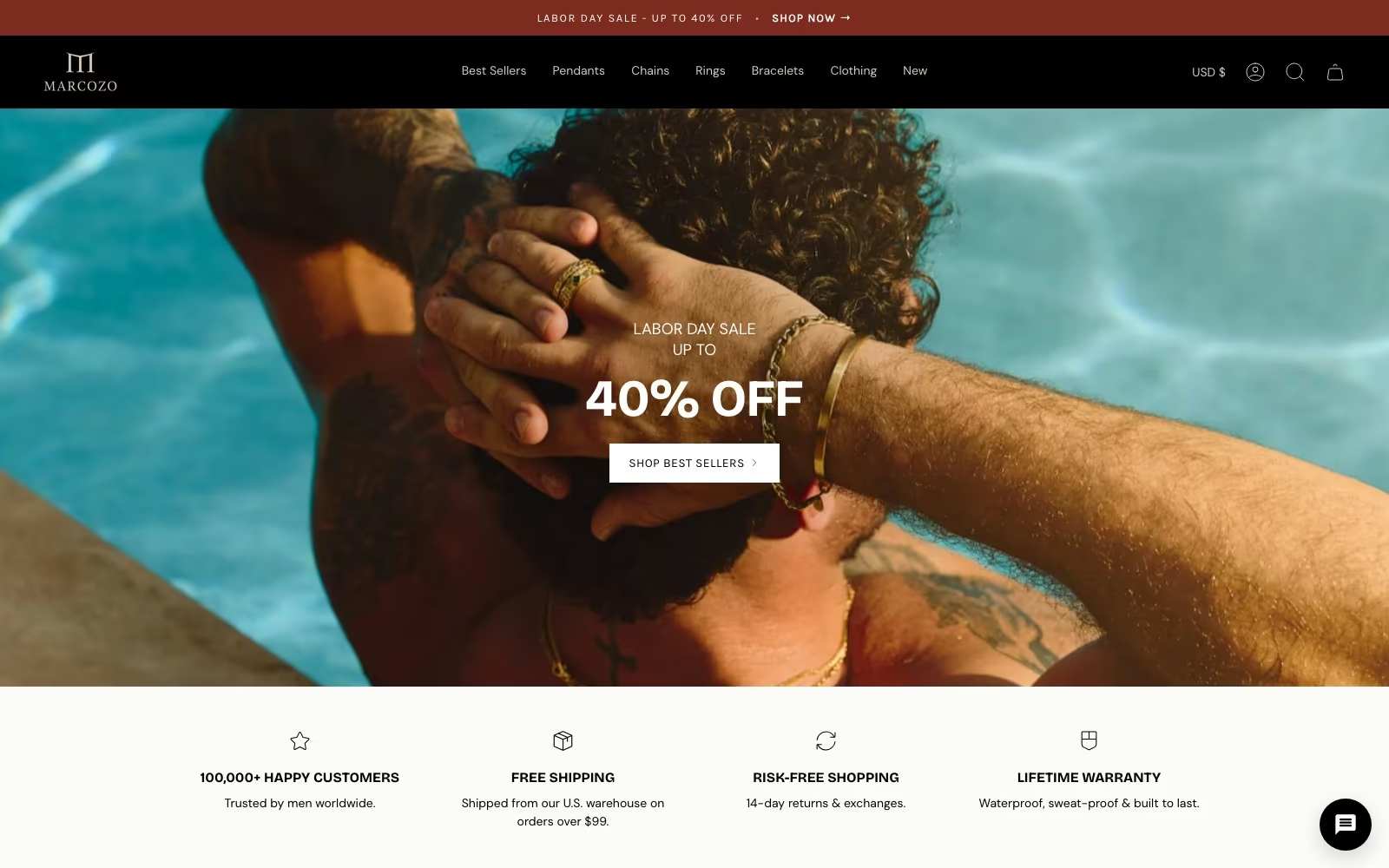

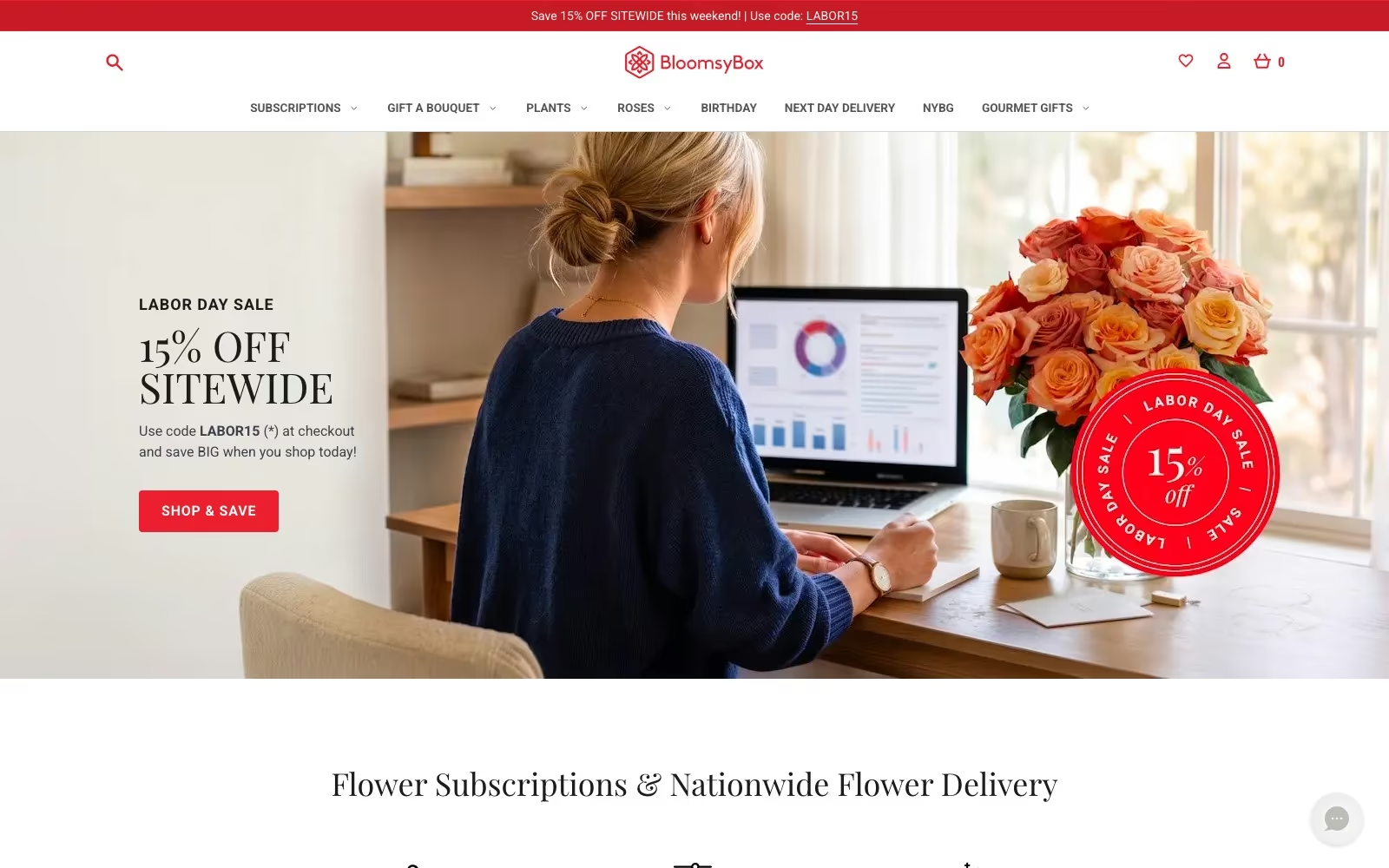

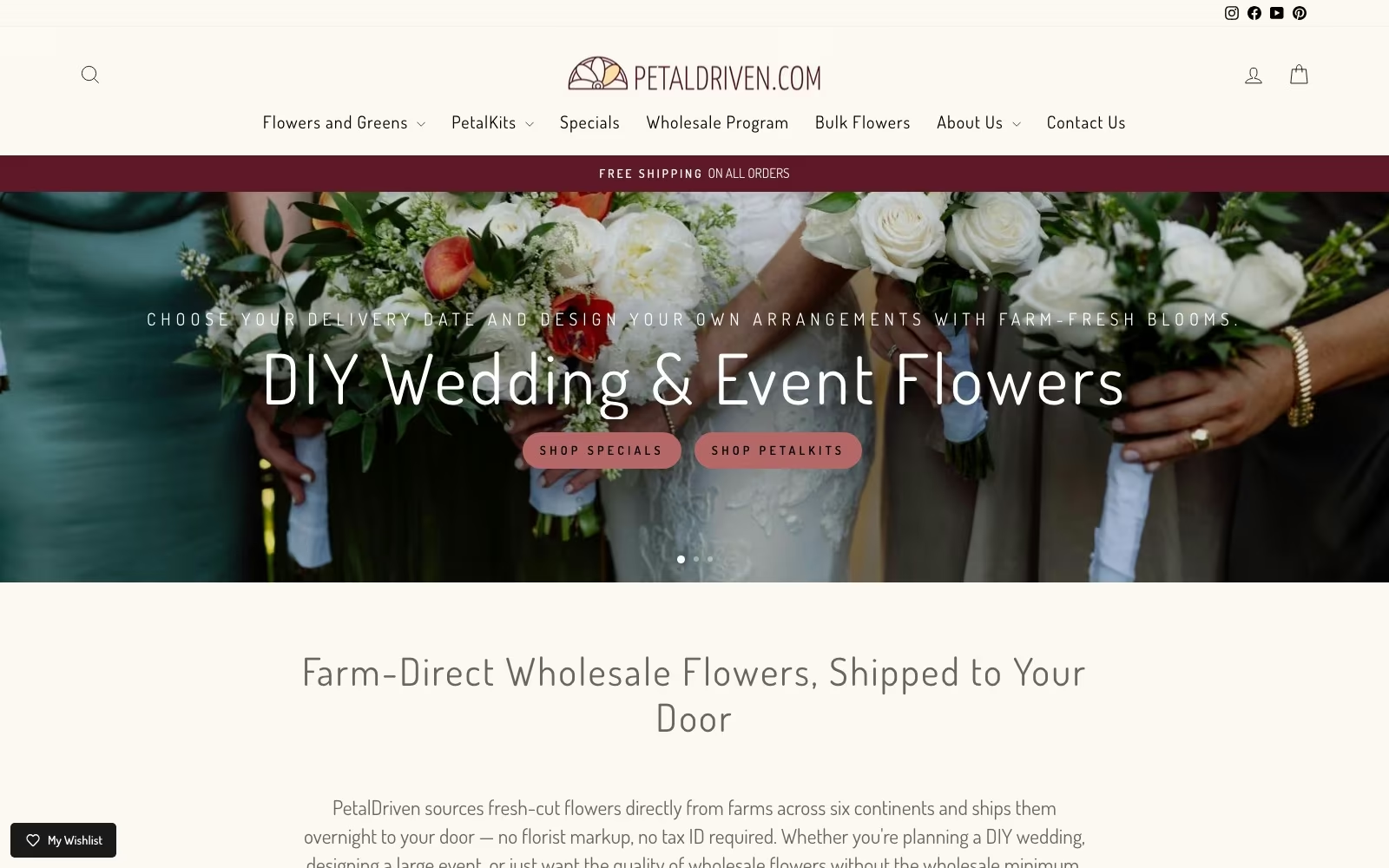



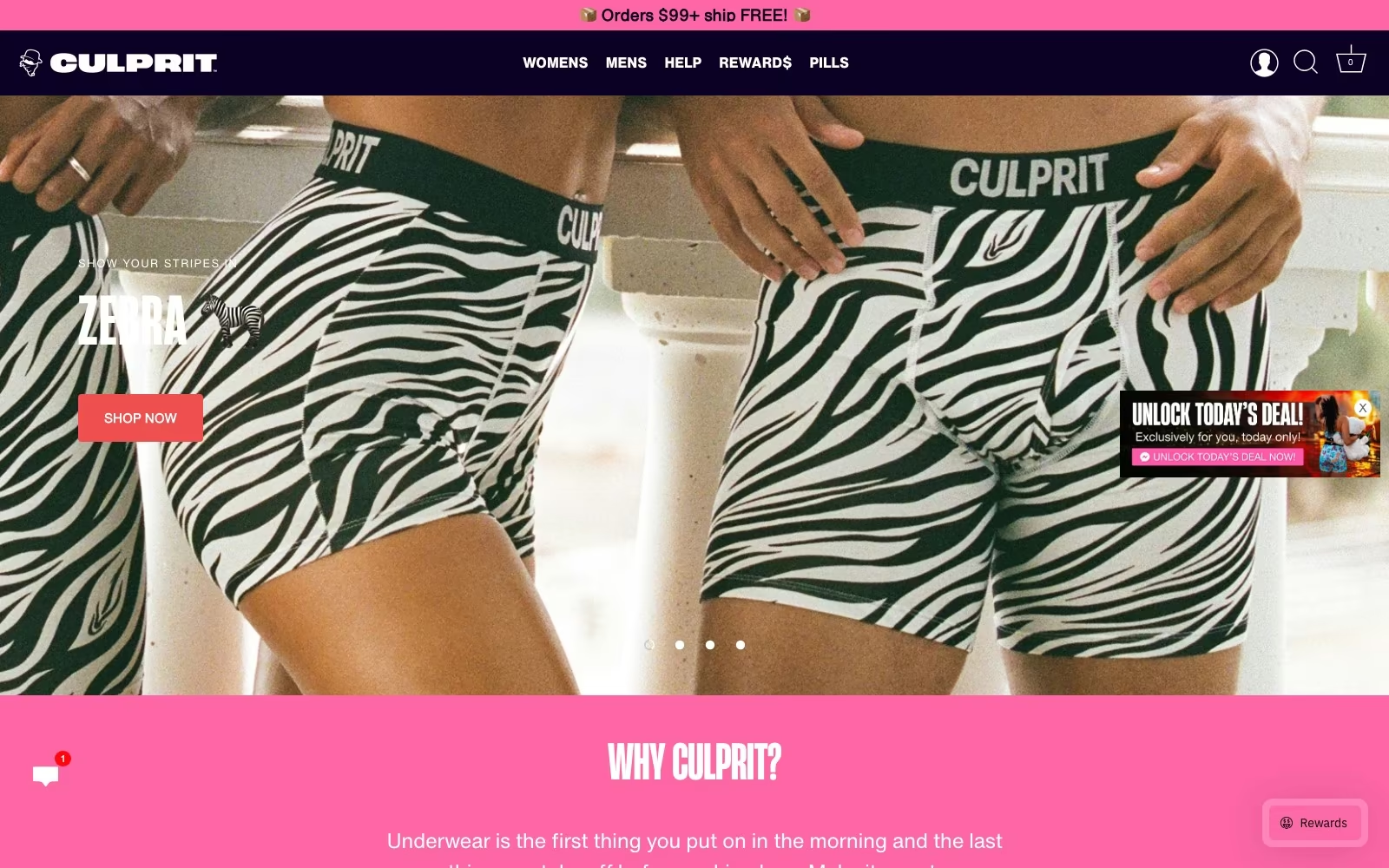





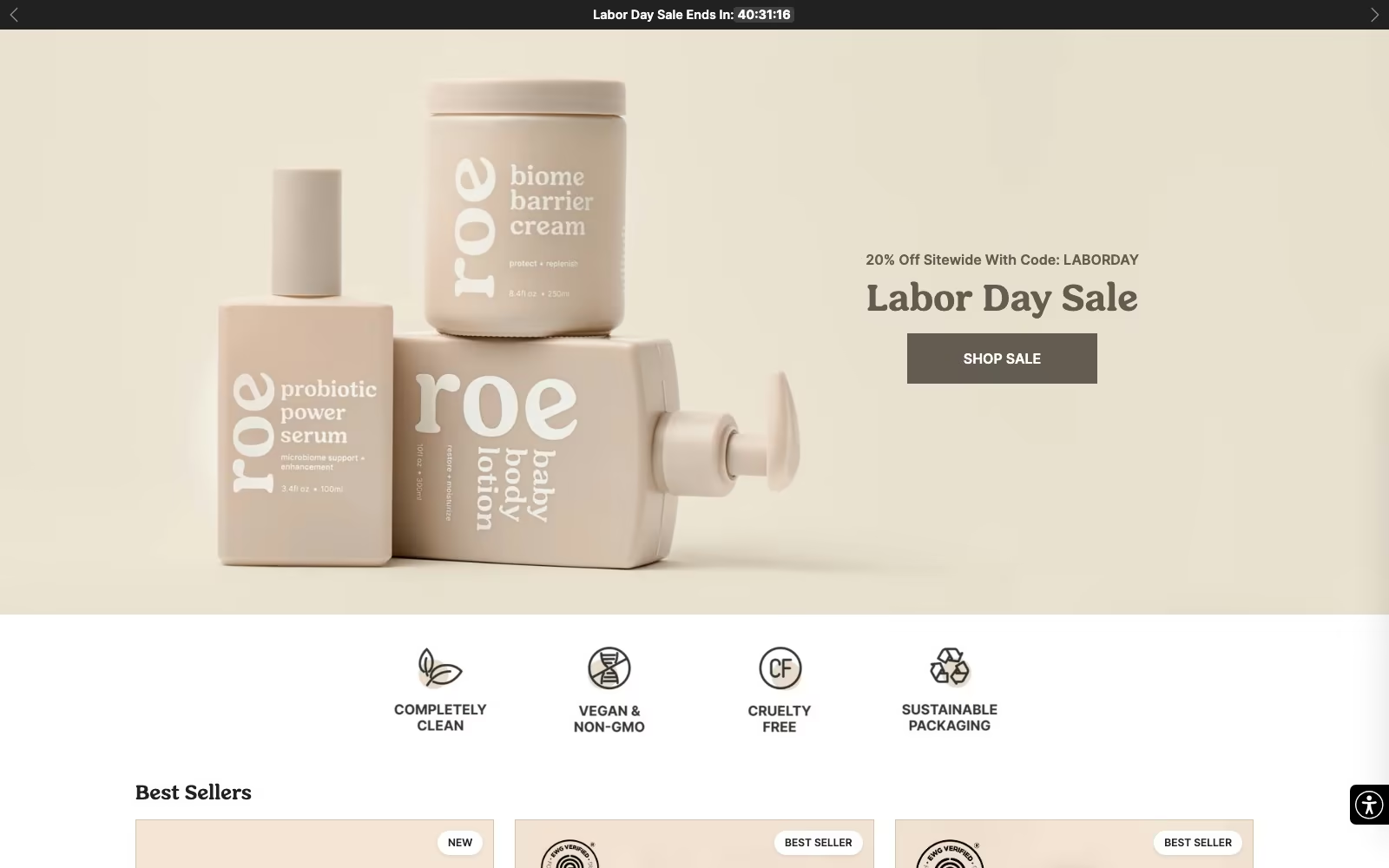

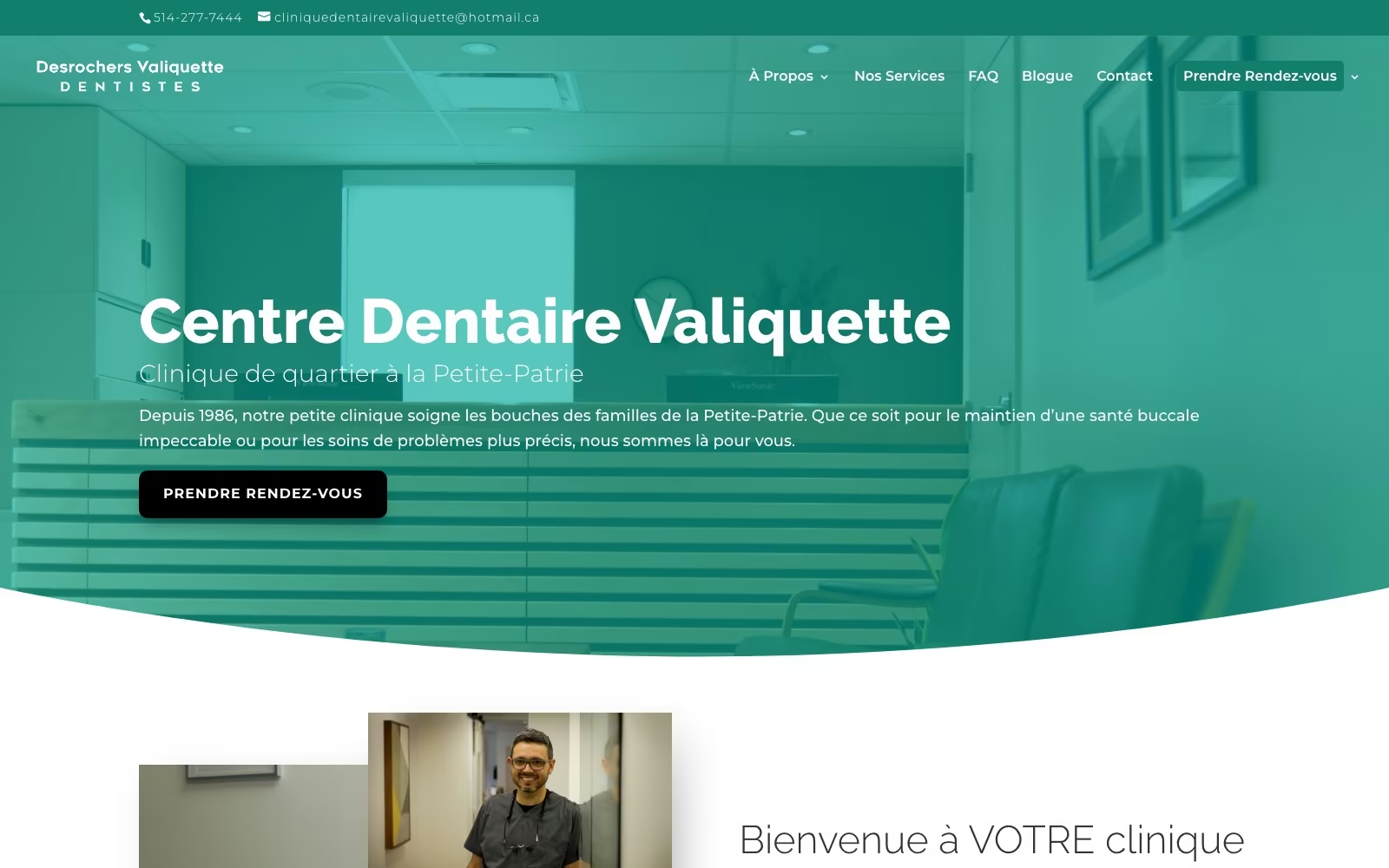

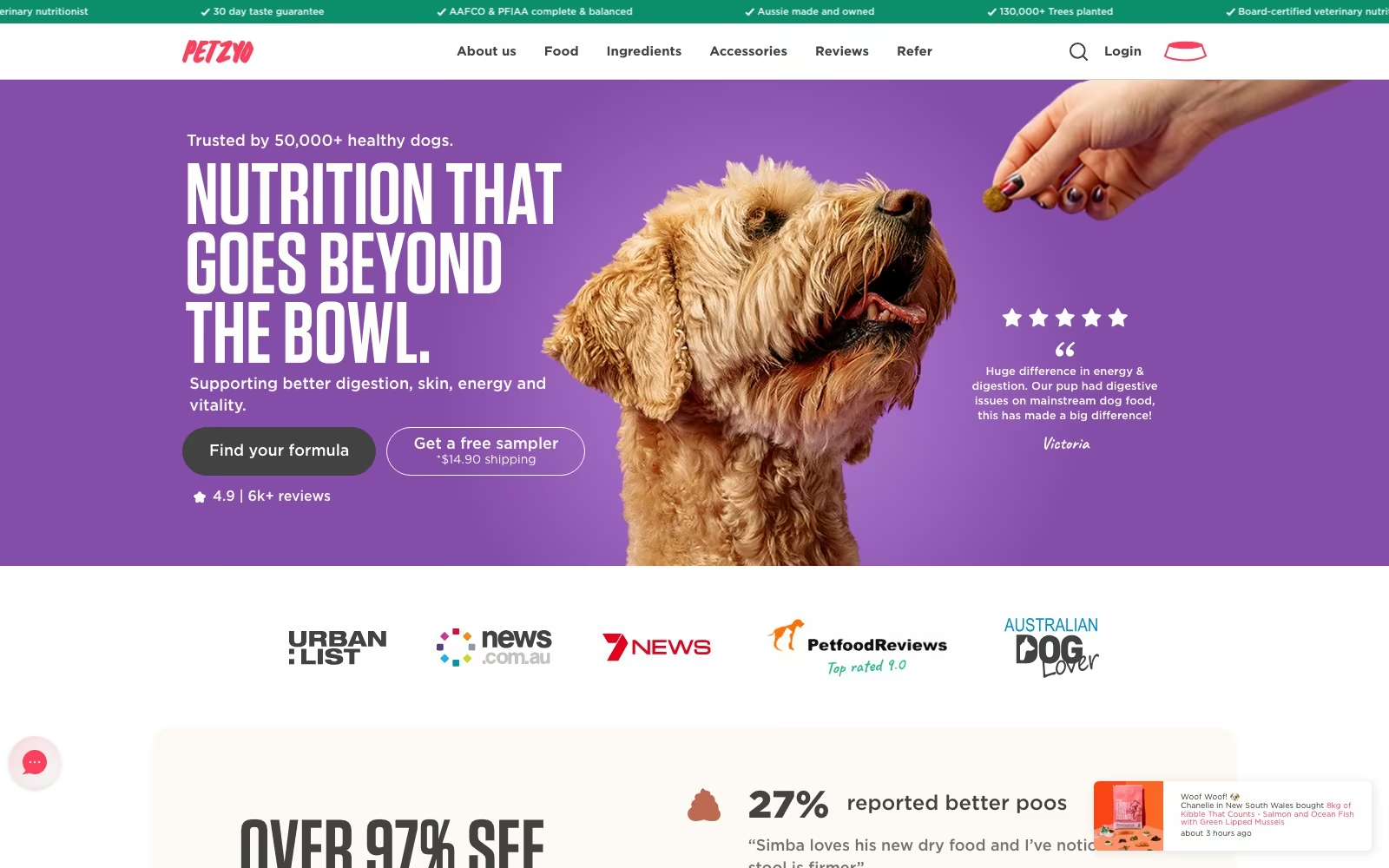

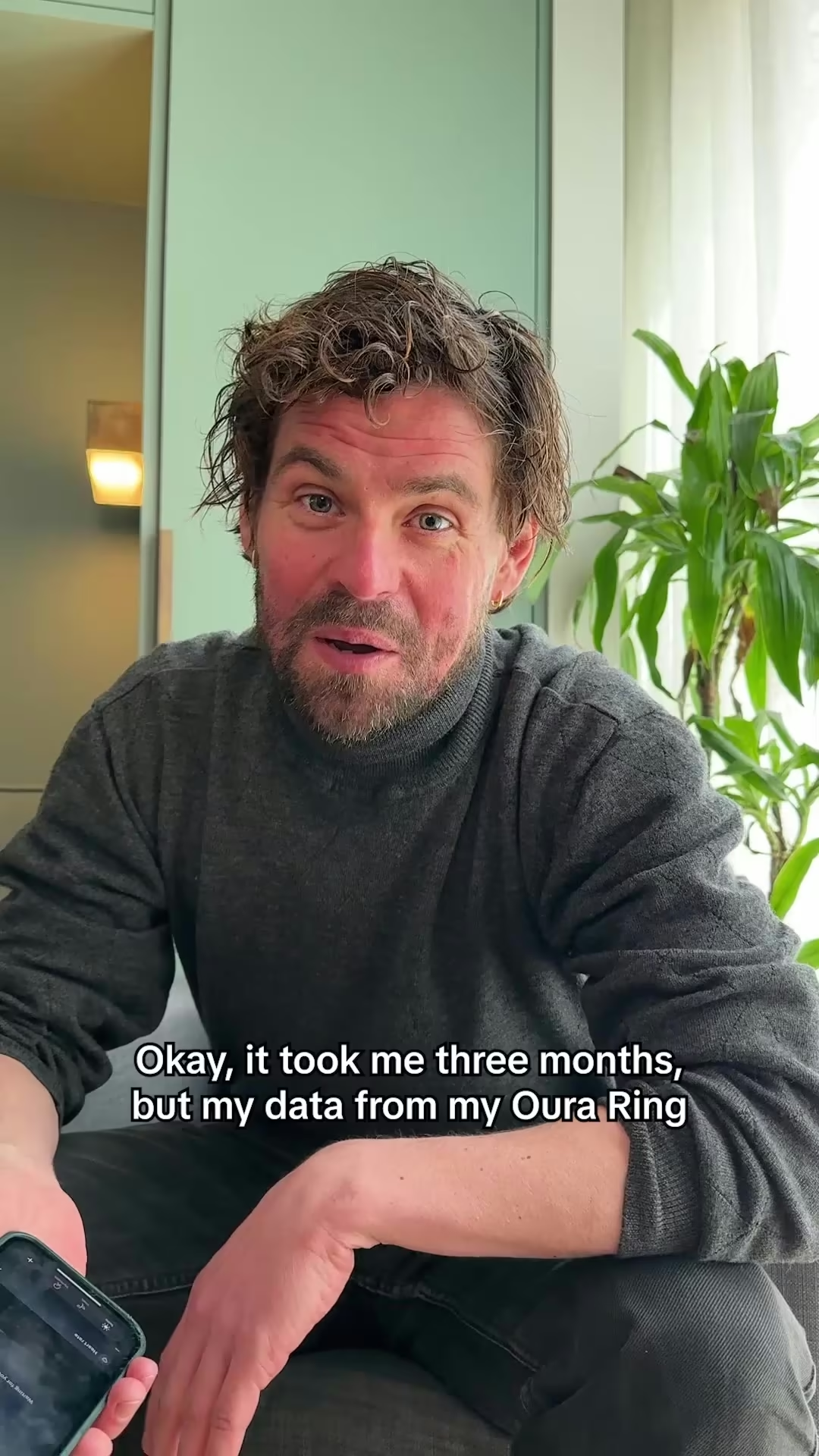













EN

EN

EN


FR
FR
FR

FR

FR

FR

FR

FR


EN
FAQ
What aesthetic practices ask before buying marketing strategy consulting.
What does marketing strategy consulting cover for a medical spa?
Four decisions and a plan. Service line and patient priority, meaning which treatments, devices and patient segments get funded and which are declined; positioning and proof, meaning why a patient should choose your clinic rather than the one two blocks away; channel roles, meaning what each channel is for and in which quarter; and budget and measurement, meaning owners, spend and the numbers leadership reviews weekly. The output is a written marketing plan, not a workshop summary.
Do you give medical, clinical or advertising compliance advice?
No. We give no medical, clinical, legal, licensing or advertising-compliance advice, and nothing here is guidance on scope of practice or supervision. Claims are drafted with your medical director and reviewed by your own counsel before anything is published. What we will do is refuse to build a positioning claim your records cannot support, which removes most of the risk before it reaches review.
How is this different from hiring a med spa marketing agency?
An agency executes a plan. This engagement writes one, and because we take no execution work inside it, the plan can say that a channel should be cut, that a device launch should wait, or that a location should stop advertising until its rebooking rate improves. The deliverable includes a one-page brief written so any agency, including your current one, can deliver against it. Execution is scoped separately afterwards if you want us to do it.
Are you med spa business coaches?
No. Coaching is a recurring relationship built around the operator: accountability, habits, motivation and general practice advice. This is a fixed-scope project that examines your revenue, retention and capacity data and produces a written marketing plan with owners, budgets and dates, then ends. Some clients use both, for different reasons. We are also not brokers, valuation advisors or transaction consultants.
What does the engagement cost?
A fixed fee quoted after a scoping call, with deliverables and dates written down before you commit. It varies with the number of locations, service lines and providers in scope and the state of your practice management data, so publishing a rate would mislead most readers. For budget context, The CMO Survey puts marketing at 9.0% of company revenue on average across industries, with 33.6% of digital activity run by outside agencies. Book a meeting for a scope and a number.
Our marketing reports leads. Why is that a problem?
Because in aesthetics a lead is a long way from revenue and even further from retention. We rebuild reporting around consultations attended, treatments performed, first visit value, rebooking rate and membership penetration by acquisition source, which usually reverses the ranking of channels. Discount-led sources are frequently cheapest per enquiry and worst per returning patient, and no campaign change fixes that until the reporting shows it.
How do you handle results claims and before-and-after imagery?
Conservatively, because they are where credibility is lost and where regulators look first. We build messaging around what your own records and consented patient imagery support, with your medical director signing off the clinical wording and your counsel reviewing the published version. Stock imagery presented as your work never survives a comparison-shopping patient, so the plan specifies what has to be photographed instead.
Should memberships be part of the marketing strategy?
Yes, and usually earlier than the acquisition work. In the CorralData H1 2026 benchmark, members spent 2.5 times more than non-members and retained 35 percentage points better, so membership design, enrolment moments and the message that supports them do more for revenue than another lead source. We decide who the programme is for and how it is sold; the pricing and clinical design of it stay with you.
How is this different from growth advisory?
Different question. Medical spa growth advisory looks for the commercial constraint on growth wherever it sits, including retention, membership design and provider and room utilisation. Marketing strategy consulting takes the commercial model as given and answers what marketing should do about it: service line priority, positioning, channel roles, budget and measurement. Practices that already know their constraint usually want this one.
Do you talk to our patients and front desk team?
Yes, within the agreed scope and with your consent process respected. Returning patients and lost consultations are the fastest route to a positioning claim that survives a consultation room, and coordinators and front desk staff know exactly which promises the schedule cannot keep. Interviews are short and confidential, findings feed the positioning platform, and no patient information is published.
Who from our side needs to be involved?
A sponsor, usually the owner or chief executive; the medical director; clinic or regional managers; the patient coordinator or front desk lead; and whoever owns marketing today. Expect around two hours of interviews each in week one and a half-day decision session in week three. If the sponsor cannot attend that session, we move it rather than run it without them.
We have no marketing team. Is this premature?
No, it is often the right first step, because the plan states what the first hire has to do and what stays with vendors. Where the question is really about structure and sequencing of hires, marketing team advisory covers it, and where you need someone to lead the function while you build it a fractional CMO is the engagement. Both are quoted separately and neither is required to use the plan.
Our practice management data is messy. Can you still write a strategy?
Yes, and we will say plainly where it limits a conclusion. We work from financial records first, reconcile practice management, CRM and call tracking against them, and label which findings are solid and which are directional. Validity's 2026 research found 62% of organisations losing revenue to poor CRM data and 67% having campaigns delayed or scrapped because of it, so this is normal rather than disqualifying. Marketing operations consulting implements the fix.
We are opening two more locations. Does the plan cover that?
Yes, and new locations are planned separately from mature ones because they need a different message, a different budget curve and a different measure of success in their first year. The plan states what has to be true before a launch gets funded, what the opening sequence looks like by channel, and which numbers tell you at ninety days whether the market is responding or the offer is wrong.
What happens after the plan?
Your team runs it, and every workstream has a named owner on your side. Many groups book a review at ninety days to check the leading indicators and adjust the sequence, which takes half a day and is optional. Where you want a standing numbers habit instead, scorecard advisory sets one up and hands it back. The parent engagement is marketing strategy consulting, and execution, if you want us to do it, is scoped separately.

.webp)
.webp)