A growth plan that survives the room it is presented in.
survives the room
Board packs and investor decks fall apart on the same three pages: the number that cannot be traced to a system, the forecast with one line called growth, and the channel plan nobody can defend under questioning. We build the growth plan behind those pages. Evidence first, then a model with the assumptions written down, then three scenarios and the operating plan that delivers the base case. We are a marketing advisory firm, not a broker-dealer, and we give no securities, tax or legal advice. Book a meeting and bring the deck you are worried about.






Tell us a little about your brand and we'll be in touch within 24 hours to lock in a time.



WHAT WE BUILD
Four things investors test, and how we make each one hold.
hold
Growth advisory for an investor audience is a different job to advising an owner. The plan has to be defensible line by line, because it will be read by people whose job is to find the weak assumption. FTI Consulting's survey of more than 550 senior private equity leaders found the firms that beat their business case deploy commercial levers at nearly twice the rate of their peers, including pricing optimization at 43% against 24% and sales force and marketing effectiveness at 53% against 29%. Commercial detail is no longer a soft section of the plan.
Evidence base
Growth model
Scenarios
Operating plan
Numbers that trace back to a system, not a slide.
Every figure in the plan is sourced to a place someone else can open: the ad platforms, analytics, the CRM, the billing system. Where two systems disagree we show both and say which one we trust and why. Where a number cannot be produced at all, that gap goes in the plan as a gap, because a discovered hole costs far more than a declared one.
The underlying risk is well documented. 62% of organizations report losing revenue directly because of poor CRM data quality, only 41% have a dedicated data governance owner, and 67% of C-suite respondents admit data is sometimes massaged before it reaches leadership. Investors know this, so they test it.
- Every metric traced to the system that produced it
- Definitions written down, including what counts as a lead
- Conflicts between systems shown rather than reconciled quietly
- Known gaps declared in the plan, with the cost of closing them
62%
of organizations report losing revenue because of poor CRM data quality
One model, with the assumptions visible and arguable.
We build the growth model as an editable spreadsheet, not a narrative: demand by source, conversion at each step, sales capacity, retention and expansion, and the cost to acquire at the volumes you are actually planning for. Each assumption carries its source and a sensitivity, so a reader can change one input and watch the plan move rather than take your word for it.
This is where most plans quietly fail. Only 49% of senior marketing and finance leaders say they can measure how marketing drives business outcomes, and 74% have abandoned or scaled back an initiative because they could not measure it.
- Editable model handed over, not a picture of one
- Assumptions sourced, dated and marked as measured or estimated
- Capacity constraints modelled, including hiring lead times
- Sensitivities on the three inputs that move the outcome most
49%
of leaders can measure how marketing drives business outcomes
Base, upside and downside, each with a trigger.
Three scenarios, each with the spend, the headcount, the timing and the result it produces, plus the observable trigger that tells you which one you are living in. Downside cases name what gets cut and in what order. Upside cases name the constraint that has to be released first, which is usually people or inventory rather than budget.
Time horizons have tightened. 63% of private equity leaders say value creation levers now deliver tangible impact within 12 months on average, up from 41% the previous year, and 62% name margin expansion as the most critical factor for value at exit, up from 46%.
- Base, upside and downside built from the same model
- An observable trigger for each, agreed in advance
- The cut sequence written before it is needed
- Capital allocation shown per scenario, by quarter
63%
of private equity leaders now expect levers to show impact inside 12 months
The quarter-by-quarter plan under the headline number.
A growth plan an investor believes is one someone can be held to. We write the operating layer: what happens in each quarter, who owns it, what has to be hired or bought, the reporting cadence, and the small set of leading indicators the board should see monthly instead of an eighty-slide deck.
Repeatability is what separates the top performers: high performers are 2.3 times more likely to maintain highly standardized playbooks, at 23% against 10% of their peers. Where the plan needs leadership rather than a document, a fractional CMO is the usual next step.
- Quarterly plan with a named owner per workstream
- Hiring and vendor decisions sequenced against cash
- A one page monthly board view, not a deck
- Leading indicators chosen so problems surface early
2.3x
more likely: high performers keeping standardized value creation playbooks
Fixed scope with a defined end date, agreed in writing
We pull the data ourselves rather than accept a summary
No securities, capital raising, tax or legal advice, ever
Model, plan and pack handed over in files you can change
We made the difference for those brands

Creative, content, arts & culture

Beauty, personal care & wellness

Creative, content, arts & culture

Travel & mobility

Consumer tech and platforms

Beauty, personal care & wellness

Creative, content, arts & culture

Healthcare & regulated services

B2B software, fintech, insurance

Home essentials, appliances, kitchen & pet

Beauty, personal care & wellness

Consumer tech and platforms

Travel & mobility

Creative, content, arts & culture

Healthcare & regulated services

Consumer tech and platforms

Home essentials, appliances, kitchen & pet

Healthcare & regulated services

B2B software, fintech, insurance

B2B software, fintech, insurance

B2B software, fintech, insurance

Home essentials, appliances, kitchen & pet

Consumer tech and platforms

Home essentials, appliances, kitchen & pet

Beauty, personal care & wellness

Home essentials, appliances, kitchen & pet

Food & beverage

B2B software, fintech, insurance

Consumer tech and platforms

Food & beverage
01 — The challenge
The plan reads well until somebody asks where the number came from.
You are two weeks from a board meeting, a raise or a diligence process. Marketing has a deck, finance has a model, and the two do not agree on how many customers arrived last quarter or what they cost. The pipeline definition changed in March and nobody wrote it down. The forecast assumes a conversion rate that was true for one good month in 2025. That is not dishonesty. It is what happens when reporting was built to run a team rather than to be examined by strangers.
“I believe the plan. I just cannot prove any of it in the time we have.”
The consequence is predictable. 74% of senior marketing and finance leaders have abandoned or scaled back an initiative because they could not measure it, and 69% feel pressure to deprioritise brand building. Under scrutiny, unprovable growth gets discounted to zero, and the safest-looking plan wins the argument even when it is the worse plan.
02 — Our approach
Evidence, model, scenarios, board pack. Four to six weeks, fixed scope.
One senior advisor runs the engagement and is in every session. Week one is evidence: we pull the raw data ourselves from the ad platforms, analytics, the CRM and billing, reconcile the definitions, and produce a short document that states what is measured, what is estimated and what cannot currently be produced. That document is deliberately unflattering, because it is the one investors will effectively rebuild themselves. Week two is the model: demand by source, step conversion, sales capacity, retention, expansion and cost to acquire at planned volume, built as an editable spreadsheet with every assumption sourced and dated. Week three is scenarios and the operating plan, argued through with your leadership team and, where they will engage, your investors or board members, so the base case is one they helped shape rather than one they receive. The final week produces the artefacts: the written plan, the board pack, a data room folder holding the evidence and definitions, and a short list of the questions we expect to be asked with the answers already prepared. We stay on the marketing and commercial side of the line. We are not a broker-dealer, we are not a registered investment adviser, we do not raise capital, we do not recommend or place securities, and we give no tax or legal advice. We also do not run the marketing during this engagement, which is what allows the plan to say spend less, hire later, or that the growth target is not reachable in the time available. Everything is handed over in editable files that remain yours.
03 — What we did
How the engagement actually runs.
Evidence before model, model before scenarios, scenarios before anything that gets presented to a board or an investor.
Week 1 / Evidence
Diligence-ready evidence, built before anyone asks
Raw data pulled from the source systems, definitions reconciled, and the gaps declared in writing rather than discovered later.

Week 2 / Model
An editable growth model with visible assumptions
Demand, conversion, capacity, retention and cost to acquire, each assumption sourced, dated and open to challenge.

Week 3 / Scenarios
Base, upside and downside with agreed triggers
Three futures from one model, each with the spend, the headcount and the observable signal that says which one you are in.

Week 4-6 / Board pack
The plan, the pack and the expected questions
A written plan, a board pack, a data room folder and the hard questions with answers already prepared. Then we step back.

WHAT YOU GET
Six deliverables, all editable, all yours.
all yours
Written for your business and your investors, in files you can change without calling us, and in language a board reads without a translator.

Written growth plan
The thesis, the market read, where growth comes from and what has to be true for the base case to land.

Editable growth model
Demand, conversion, capacity, retention and cost to acquire, with every assumption sourced and sensitivity tested.

Scenario set
Base, upside and downside, each with spend, headcount, timing and the trigger that tells you where you are.

Evidence and definitions pack
Where every number came from, what each metric means, and the gaps we could not close, stated plainly.

Board and investor pack
A short pack built for reading rather than presenting, with a one page monthly view for the quarters ahead.

Expected questions and answers
The questions we expect from investors or a diligence team, with the answer and the supporting evidence attached.
HOW WE WORK
Operating standards, not promises.
Operating standards


Sponsor-backed B2B companies
Where the plan has to reconcile a sales-led pipeline with marketing-sourced demand and survive a quarterly operating review.
Consumer and ecommerce brands
Where contribution margin, repeat rate and paid efficiency at higher volume decide whether the growth case is real.
Founder-led companies preparing a first round
Where the job is often to build the evidence base for the first time, before any plan can be written honestly.


















Built on trust. Proven by results.
We partner with SMBs and Fortune 500 companies to deliver more than reach — we bring clarity, execution, and measurable outcomes. Every successful partnership starts with a strong culture fit and a shared drive to grow.







CASE STUDIES
Case studies
Website Portfolio
Video Ads
Static Ads












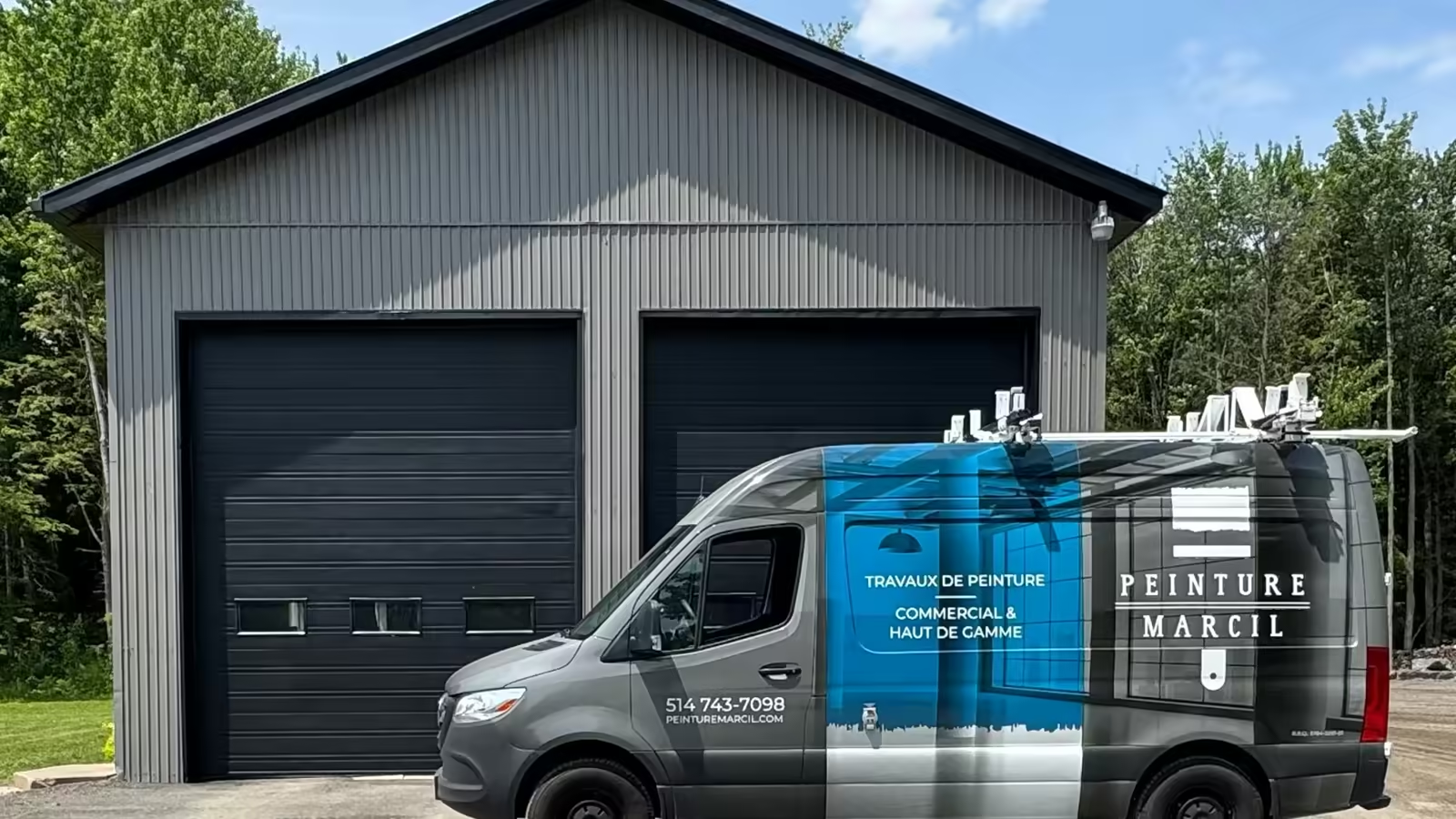













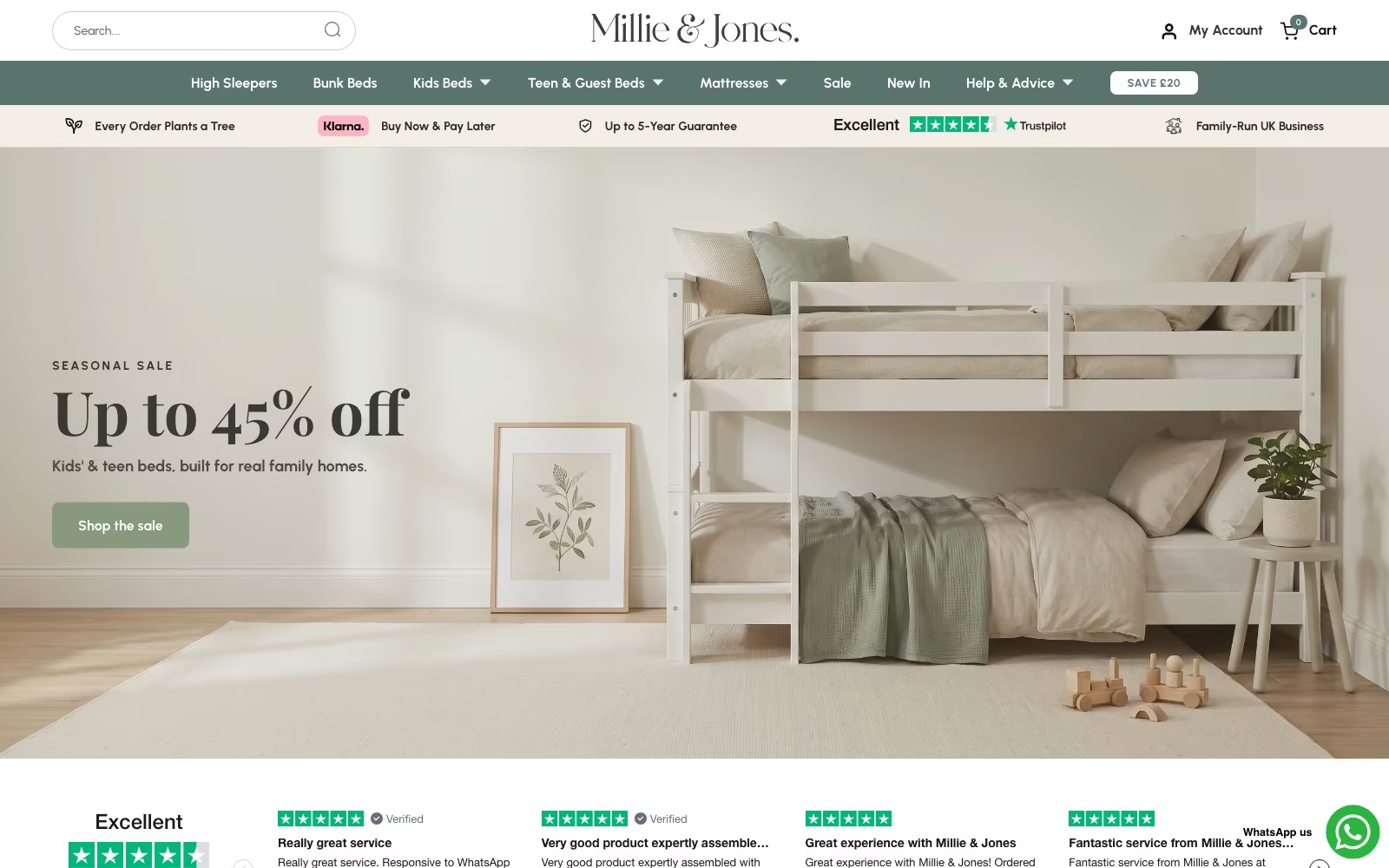

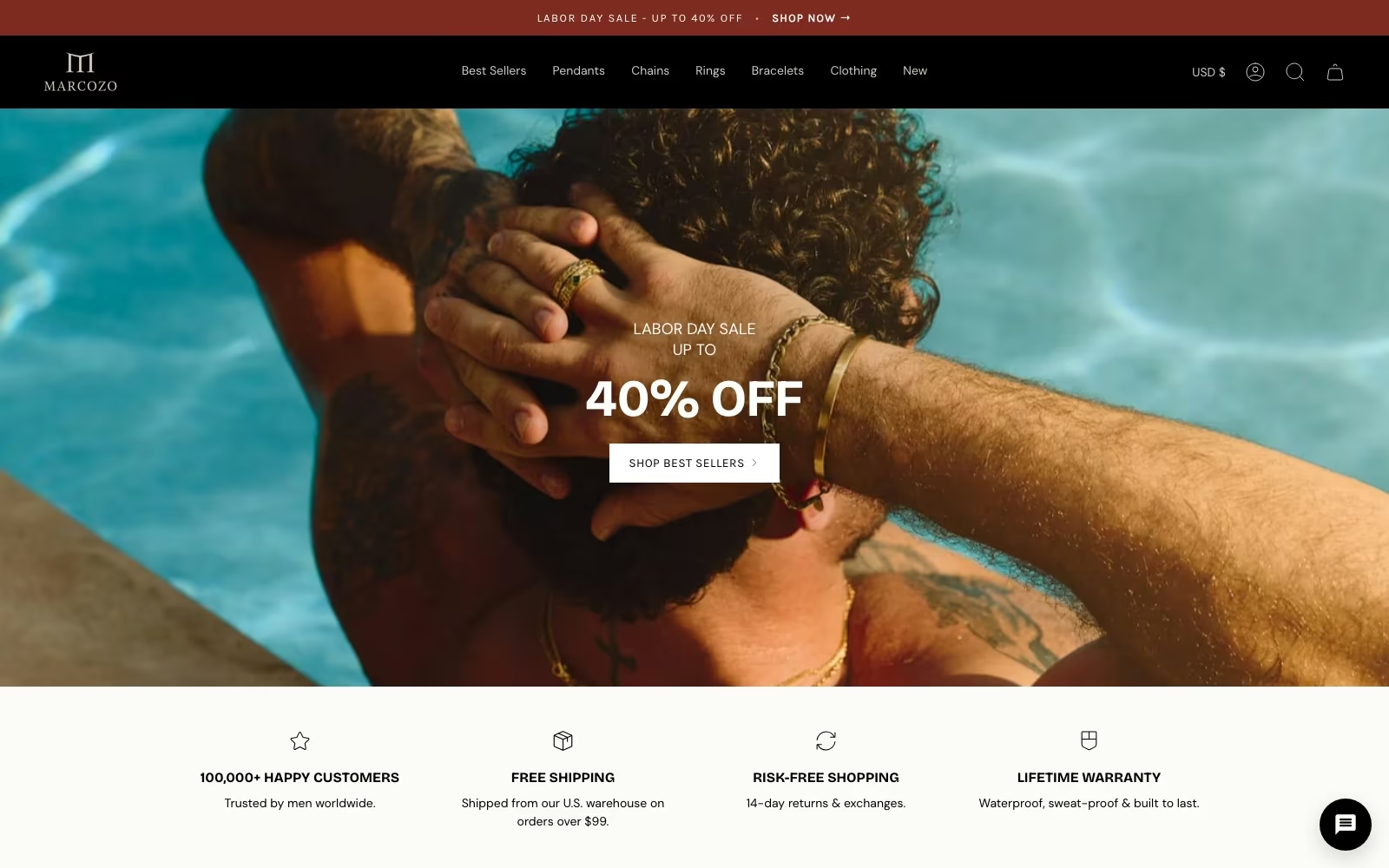

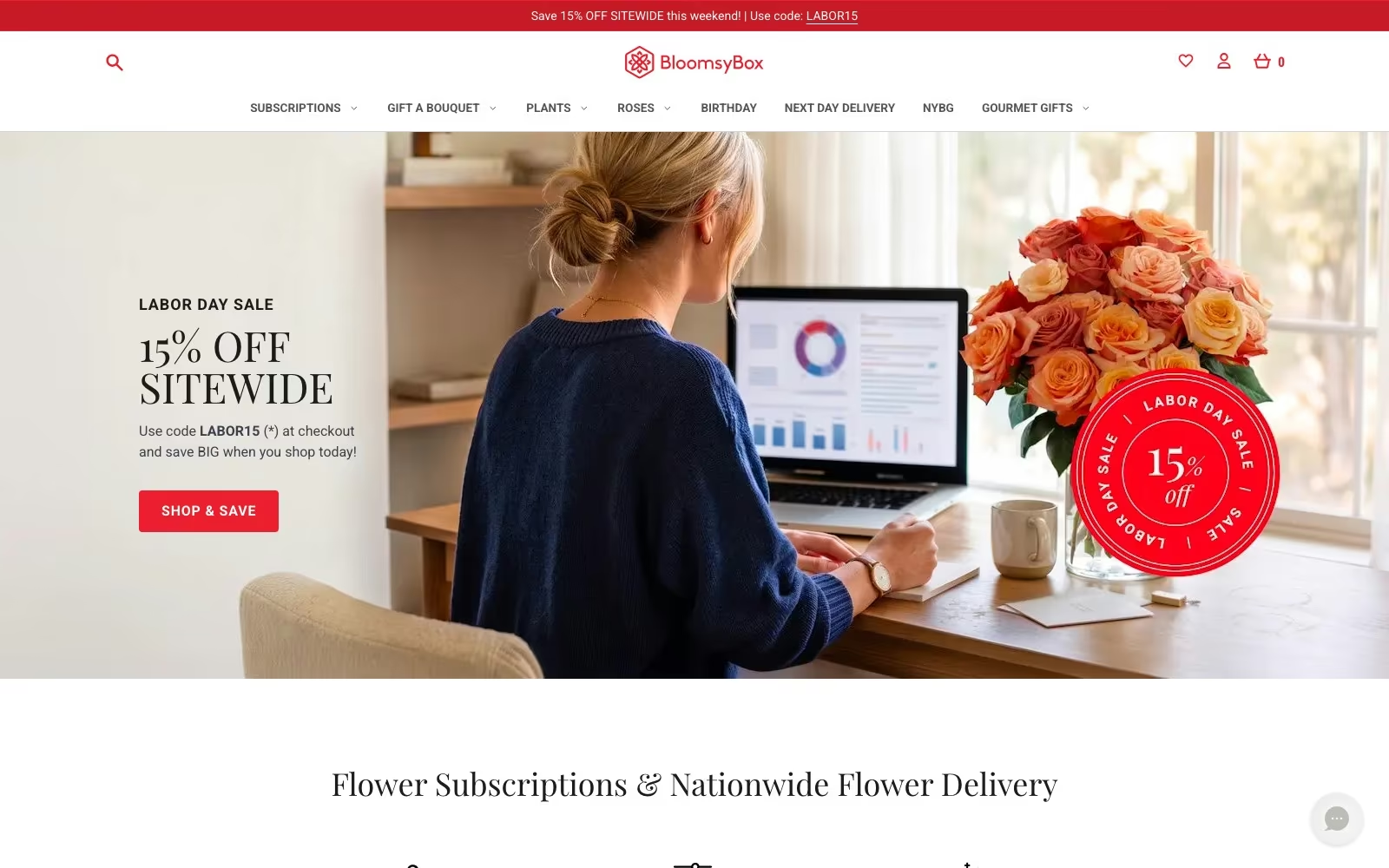


























EN

EN

EN


FR
FR
FR

FR

FR

FR

FR

FR


EN
FAQ
What boards and investors ask before this engagement starts.
What exactly is an investor-ready growth plan?
A commercial plan written so that a reader whose job is to find the weak assumption can still believe it. That means four layers: an evidence base where every number traces to a system, an editable model with sourced assumptions, three scenarios with agreed triggers, and an operating plan with owners and a reporting cadence. It is a marketing and commercial document, not a financial instrument, and it sits alongside the financial model your finance team or adviser owns rather than replacing it.
Are you a broker-dealer, an investment bank or an M&A adviser?
No, and this matters enough to say twice. Web Tonic is a marketing advisory firm. We are not a registered broker-dealer, not a registered investment adviser, and not a member of any securities regulator's programme. We do not raise capital, we do not introduce investors, we do not advise on buying or selling securities or businesses, and we give no tax or legal advice. What we do is build the growth plan and the commercial evidence that your bankers, advisers, board or diligence team will read.
We are in diligence in three weeks. Can you compress it?
Sometimes, and we will tell you honestly at the scoping call. A compressed version prioritises the evidence base and the model and defers the operating plan, because a plan without evidence is the thing that fails in the room. What we will not do is produce a polished document over data we have not checked. If the timeline only allows the evidence pack, that is what we deliver, and it is still the most useful three weeks you can spend.
What does the engagement cost?
A fixed fee quoted after a scoping call, with deliverables and dates written down before you commit. It moves with the number of business lines, how many systems the evidence has to be pulled from and whether the plan has to satisfy an external diligence process, so publishing a rate would mislead most readers. For context on the surrounding budget, The CMO Survey puts marketing at an average 9.0% of company revenue, with 33.6% of digital marketing activities performed by outside agencies. Book a meeting for a scope and a number.
Our data is a mess. Do we need to fix it first?
No. Finding out precisely how messy it is forms the first week, and the result is often the most valuable single deliverable, because it converts a vague worry into a list. Where the plumbing is the real constraint we scope marketing operations consulting as a separate piece of work rather than pretending a plan can be built on top of it. Context: only 41% of organizations have a dedicated data governance team or owner.
Will you talk to our investors or board directly?
Yes, with your agreement, and we find the plan gets stronger when we do. Usually that means one or two conversations during the scenario stage so the base case reflects what the board actually believes about the market, and a rehearsal before the meeting where we take the role of the sceptic. We do not present on your behalf. It is your plan, and the credibility belongs to the person who has to deliver it.
How is this different from a marketing audit?
A marketing audit looks backwards and tells you what is working, what is wasted and what is broken. This engagement looks forward and produces a plan a third party can test. They share the first week, so clients who need both usually buy the audit and let the plan build on it. If the question is what to do rather than how to prove it, marketing strategy consulting is the closer fit.
Do you cover the whole business or only marketing?
Marketing and the commercial layer around it: demand, pricing exposure, sales capacity, retention and expansion, and the handoffs between them. We do not model manufacturing, supply chain, headcount outside the commercial function or the capital structure, and we say so in the plan. In practice the marketing and sales sections are where investor questions concentrate anyway, because that is where the growth assumption lives.
What if the honest answer is that the growth target is not achievable?
Then the plan says so, with the arithmetic that shows it and the target that is achievable instead. That is the main reason this engagement excludes execution: an adviser who will be paid to run the campaigns has an interest in the ambitious number. Boards generally take a downgrade with evidence better than they take a miss with excuses, and the conversation is far cheaper in week four than in quarter three.
Who from our side needs to be involved?
Less time than you expect, but the right people. We need whoever owns marketing, the sales lead, the person who owns data or reporting, and someone from finance who can reconcile revenue. Expect a kickoff, two or three working sessions, a scenario workshop with leadership and a final review. System access is read-only and arranged through your own accounts, and everything we produce is treated as confidential.
How do you handle assumptions you cannot verify?
They are labelled. Every input in the model is marked measured, benchmarked or estimated, with a source and a date, and estimates carry a range rather than a single number. Anyone reading can then see exactly how much of the plan rests on judgement, which is the question a diligence team asks first. We never present a benchmark as if it were your data, and we do not use figures we cannot link to a published source.
Does the plan cover long term growth or just the next few quarters?
Both, weighted toward the period people can be held to. The model runs across two to three years, but the operating detail is quarterly for the first year because that is the horizon investors now judge on. 63% of private equity leaders say levers deliver tangible impact within 12 months, up from 41% a year earlier. Long term growth still appears in the plan, as the brand and retention work that protects the base case rather than as a separate wish list.
Can you help after the plan, when we are executing it?
Yes, quoted separately and never bundled into this engagement. Some clients take the plan and run it with their own team, which is a good outcome. Others want ongoing leadership, in which case a fractional CMO or a fractional head of growth is the right shape, and a few want the reporting habit built and coached, which is scorecard advisory.
What do private equity sponsors specifically look for?
Repeatability and speed. Firms that beat their business case use commercial levers at roughly twice the rate of their peers, including pricing optimization at 43% against 24% and customer health and churn work at 42% against 24%, and they are 2.3 times more likely to run standardized playbooks. So the plan is written to show which levers you have already pulled, what they returned, which remain and what each requires. Vague statements about scaling marketing get discounted immediately.
We are pre-revenue or very early. Is this the wrong engagement?
Usually, yes, and we will say so rather than sell it. With little history there is no evidence base to build, and the honest deliverable is a market read plus a testing plan, which is smaller and cheaper. The point at which this engagement earns its keep is when you have enough history that the numbers can be argued about: several quarters of spend, a working sales motion and revenue that can be attributed to something.
What happens after the six weeks?
You own the plan, the model, the evidence pack and the board pack, and your team runs the quarter. Many clients book a short review before the next board meeting to update the model with real results and re-test the scenario triggers, which takes half a day and is optional. Nothing in the engagement obliges you to buy anything else from us, including the execution work.

.webp)
.webp)