A marketing audit judged on signed cases, not on leads.
on signed cases
A marketing audit for a personal injury law firm is a systematic review of the whole marketing function: the data you report on, the spend across search, Local Services Ads, social media and television or radio, the website and the intake process behind it, your local visibility and Google Business Profile, and the firms taking the cases you never heard about. Every finding is judged against cost per signed case by case type. You get a severity-classified findings workbook and a 90-day plan with owners, in seven days, with no campaign work attached. Book a meeting and we will scope it honestly.






Tell us a little about your brand and we'll be in touch within 24 hours to lock in a time.


WHAT WE AUDIT
Four questions a legal marketing audit has to answer.
has to answer
Every marketing audit we run works through the same four questions, in this order, because answering them out of order produces confident advice built on numbers that were never true. At a personal injury firm the order matters more than usual: leads are abundant, signed cases are not, and the two are frequently reported as if they were the same thing.
Data, intake and measurement
Spend and cost per signed case
Website, local presence and the client journey
Organic, AI answers and competitors
Can you trust the numbers before you act on them?
We start with measurement, because a marketing audit that skips it is guesswork with charts. That means Google Analytics configuration, call tracking and recording coverage, form and chat conversion tracking, Google Ads and Local Services Ads reporting, and whether marketing's numbers reconcile with the signed cases in your case management system. We place live test calls and submit test forms, and we time what happens next.
Intake is where most of the loss sits. Claire AI placed 1,000 live after-hours calls to personal injury firms across 25 cities in February 2026 and found 40.9% gave no live answer, while 29.2% of firms advertising 24-hour availability failed to answer. An audit that reports cost per lead while calls go unanswered is measuring the wrong end of the process.
- Call tracking, forms and chat checked against live test contacts
- Every enquiry traced from click to intake record to signed case
- After-hours and weekend answer rates measured, not assumed
- A list of numbers you should stop reporting until they are fixed
40.9%
of personal injury firms gave no live answer to an after-hours call in 2026
Where the money goes, and what it signs.
Then the spend: Google Ads and Microsoft search, Local Services Ads, paid social media, display and retargeting, television, radio and out of home where you run it, lead vendors and case brokers, plus the agency fees layered on top. We rebuild the numbers from platform data and invoices, identify waste by campaign, search term, audience and geography, and calculate cost per signed case by case type rather than cost per lead.
The category is expensive and getting more so. The American Tort Reform Association counted more than $2.5 billion spent on over 26.9 million legal services ads in 2024, with spending up roughly 39% since 2020 even as total ad quantity fell, and one firm accounting for 8% of all legal services ads in the country. Buying the same keywords as that budget without an efficiency answer is a plan to lose slowly.
- Waste identified by campaign, search term, audience and geography
- Cost per signed case by case type, not blended cost per lead
- Lead vendors and case brokers priced against retained cases
- A reallocation model for the budget you already have
$2.5B
spent on legal services advertising in the United States in 2024
What happens after the click, step by step.
Traffic is rarely the problem. We walk the journey the way an injured person does, on a phone first: the practice area and location pages, the case results and attorney profiles, the forms, chat and click-to-call, page speed on a real connection, the Google Business Profile for each office, and the first sixty seconds after contact. Then the intake script, the qualification questions, the follow-up sequence, and how a signed case is recorded.
We also test whether the site earns trust for the case types you want. A firm that wants trucking and premises cases but reads like a general accident practice will keep paying for the cases it does not want, and the audit shows that in the enquiry data rather than as an opinion.
- Every step from click to intake contact timed and recorded
- Forms, chat and click-to-call tested on mobile and desktop
- Google Business Profile and local presence checked per office
- Practice area pages judged against the case types you want
29.2%
of firms advertising 24-hour availability failed to answer an after-hours call
The demand you are not capturing, and who is.
The last block is demand. A technical and content audit of the site's health, indexation, practice area and local coverage and internal links, your visibility in Google and in AI answers, the local search and Local Services Ads landscape in each market you serve, and a competitor teardown covering their offer, their paid media, their organic footprint and their content.
Context for the squeeze: The CMO Survey reports marketing spending grew just 1.7% in the prior twelve months with budgets at 9.0% of revenue, so for most firms the realistic answer is to redirect effort rather than add it. The audit ends with the gap: the searches, questions and comparisons where other firms appear and you do not.
- Technical and content findings ranked by traffic at risk
- Coverage against real case type and local demand
- Visibility in AI answers as well as classic search results
- Competitor teardown with the specific gaps to attack first
1.7%
marketing spending growth across industries in the prior 12 months
Fixed scope with a defined end date, agreed in writing
Covered every time, so a weak area is a finding not a gap
Every channel judged on cost per signed case by case type
A project, not a retainer, so findings cannot bend toward a sale
We made the difference for those brands

Creative, content, arts & culture

Creative, content, arts & culture

B2B software, fintech, insurance

B2B software, fintech, insurance

Travel & mobility

B2B software, fintech, insurance

Apparel and lifestyle

Consumer tech and platforms

Healthcare & regulated services

Consumer tech and platforms

Healthcare & regulated services

B2B software, fintech, insurance

Healthcare & regulated services

Consumer tech and platforms

B2B software, fintech, insurance

Healthcare & regulated services

Healthcare & regulated services

Retail & commerce

B2B software, fintech, insurance

Beauty, personal care & wellness

Healthcare & regulated services

Retail & commerce

B2B software, fintech, insurance

Beauty, personal care & wellness

Apparel and lifestyle

Retail & commerce

Creative, content, arts & culture

B2B software, fintech, insurance

Beauty, personal care & wellness

Creative, content, arts & culture
01 — The challenge
Leads are up, signed cases are flat, and nobody can say why.
The pattern repeats at personal injury firms. The agency reports leads and the intake team reports calls, and neither number ties to the cases actually signed. Local Services Ads, search, social media and a lead vendor all claim the same client. Nobody has separated cost per signed case by case type, so the marketing that produces soft tissue volume looks like the best performer and the marketing that produced one trucking case looks expensive. After-hours calls go to voicemail. Somebody suggests a marketing audit, and what arrives is a generic checklist with no numbers from your firm in it.
“Three vendors, four reports, and not one of them could tell me what a signed trucking case costs us.”
The stakes are practical. The CMO Survey finds executives cut expenses 53.1% of the time when profits miss, and marketing is the category cut 45.4% of the time, while only 49% of senior marketing and finance leaders can measure how marketing drives business outcomes and 74% have killed an initiative they could not measure. A marketing audit with evidence behind every finding is what turns that conversation from a reflex into a decision.
02 — Our approach
Seven days, evidence first, then a 90-day plan.
Fixed scope, a named senior lead, a start date, and no execution work attached. Day one is access and reconstruction: analytics, Google Ads and Local Services Ads, social platforms, Search Console, call tracking, the case management or intake system, your reporting and your marketing invoices including lead vendors and broadcast buys, so the audit argues from what happened rather than what was reported. Days two and three test measurement end to end: live test calls placed inside and outside office hours, test forms and chats, each traced through tags, call tracking and intake to a named owner. Days three to five cover the spend, the website and the client journey, intake scripts and follow-up, local presence and Google Business Profile per office, organic and AI search visibility, and a competitor teardown built from live assets. Day six is judgement: every finding written with the measured evidence beside it, a severity band, the cost of leaving it alone, and the specific fix. Day seven is the plan and the handover call.
Nine areas are covered every time, so a weak one is a finding rather than a blind spot: measurement, paid search, paid social, spend efficiency, website and funnel, organic and AI search, offer and positioning, competitors, and lifecycle. We review marketing and intake only. We give no legal, ethics or bar-advertising compliance advice, we recommend no case acquisition arrangement, and your own ethics counsel signs off anything the plan touches in that territory. We also do not run the campaigns afterwards, which is what lets the workbook state that a channel we sell is not worth funding for you.
03 — What we did
How the seven days actually run.
Access and reconstruction, then measurement and intake testing, then the money and the journey, then a plan your team can start on Monday.
Days 1-2 / Reconstruct
Your own data, rebuilt from the sources that can be trusted
Analytics, ad platforms, call tracking, the case management system and every marketing invoice including lead vendors, pulled into one view.

Days 2-3 / Verify
Test calls and forms followed from click to intake record
Live calls placed in and out of hours, forms and chats submitted, each traced through tracking and intake, then what cannot be relied on is listed.

Days 3-6 / Findings
Every finding with evidence, severity and a cost of inaction
Spend, site, intake, local presence, organic and competitors, written one finding at a time and banded urgent, critical, needs attention or monitor.

Day 7 / Plan
A 90-day plan with owners and acceptance tests
Each action names the findings it closes, what done means as a number or a verified state, an owner and an effort estimate. Then a handover call.

WHAT YOU GET
Six deliverables, all editable, all yours.
all yours
One workbook, one plan and the working files behind them, written for your case types, your markets and your intake team in plain language.

Findings workbook
Every finding with the measured evidence, a severity band, the cost of inaction, the fix, an owner and an effort estimate.

90-day action plan
Phased across three months, each action linked to the findings it closes and to an acceptance test rather than a vague outcome.

Budget reallocation model
What the same budget returns moved between search, Local Services Ads, social media, broadcast and vendors, with the assumptions visible.

Cost per signed case framework
How cost per signed case is calculated by case type and market, what feeds it, and the tracking repairs needed before it can be trusted.

Intake findings and call evidence
Answer rates by day and hour from live test calls, recording review notes, and where enquiries are lost between contact and signature.

Competitor teardown
Firm by dimension: offer and case types, paid media, site and intake, organic and AI visibility, with what each finding means for you.
HOW WE WORK
Operating standards, not promises.
Operating standards


Single-office injury firms
One market, several vendors, and no agreed number for what a signed case costs.
Multi-market and multi-state firms
Dozens of local markets, one reporting layer, and spend decisions made without market-level truth.
Firms shifting toward higher-value case types
Where the marketing still reads like a general accident practice and the enquiries prove it.


















Built on trust. Proven by results.
We partner with SMBs and Fortune 500 companies to deliver more than reach — we bring clarity, execution, and measurable outcomes. Every successful partnership starts with a strong culture fit and a shared drive to grow.







CASE STUDIES
Case studies
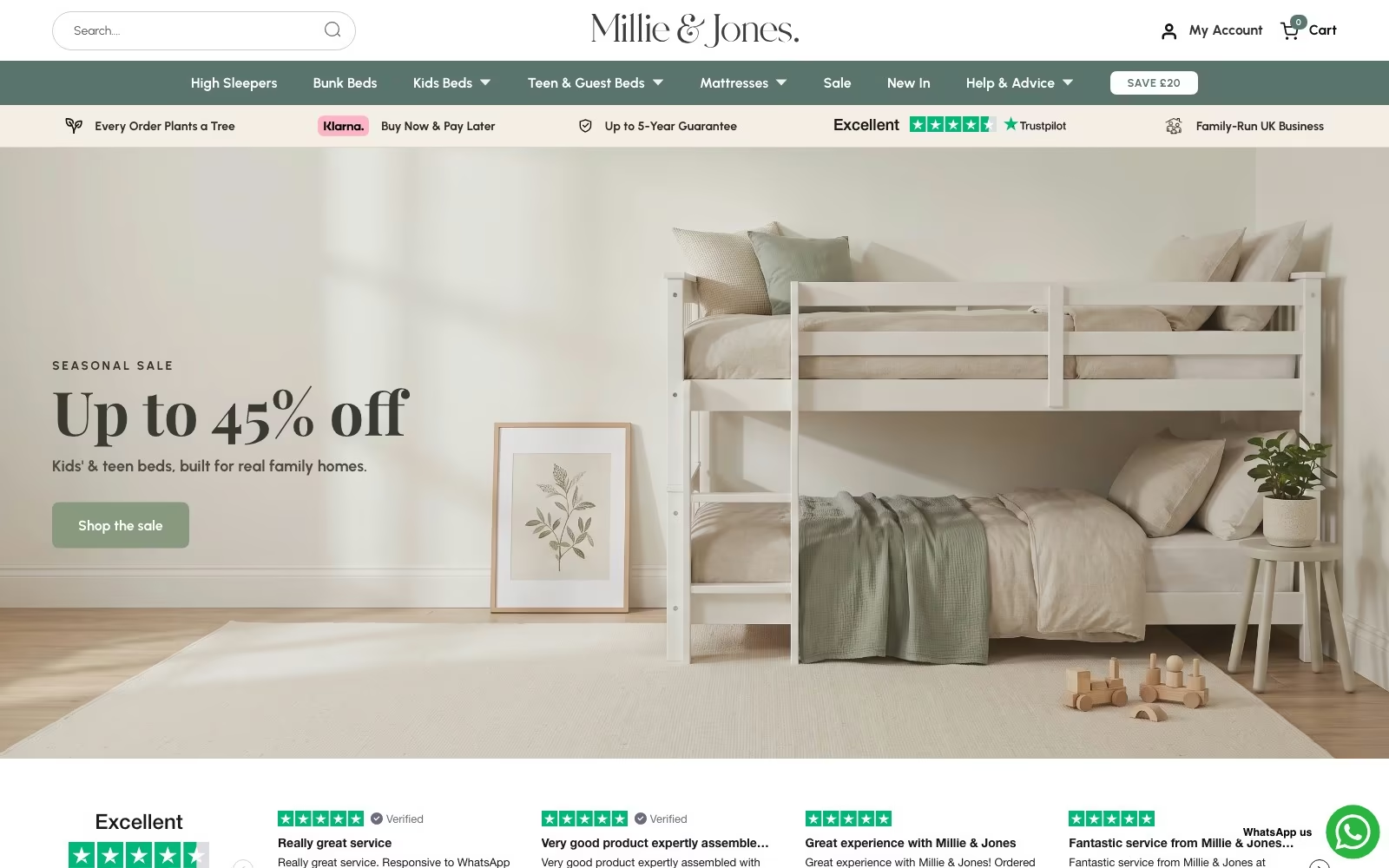
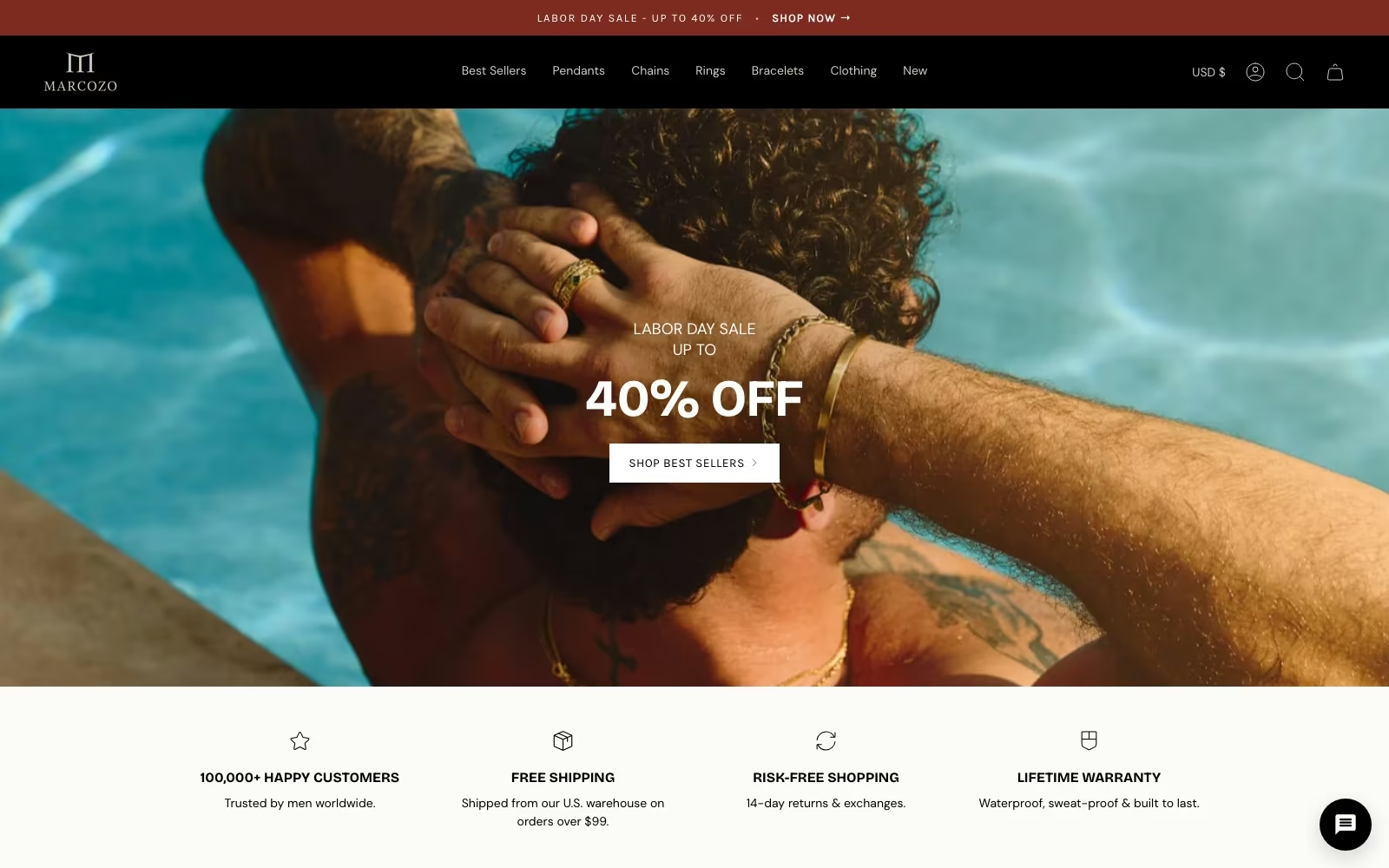
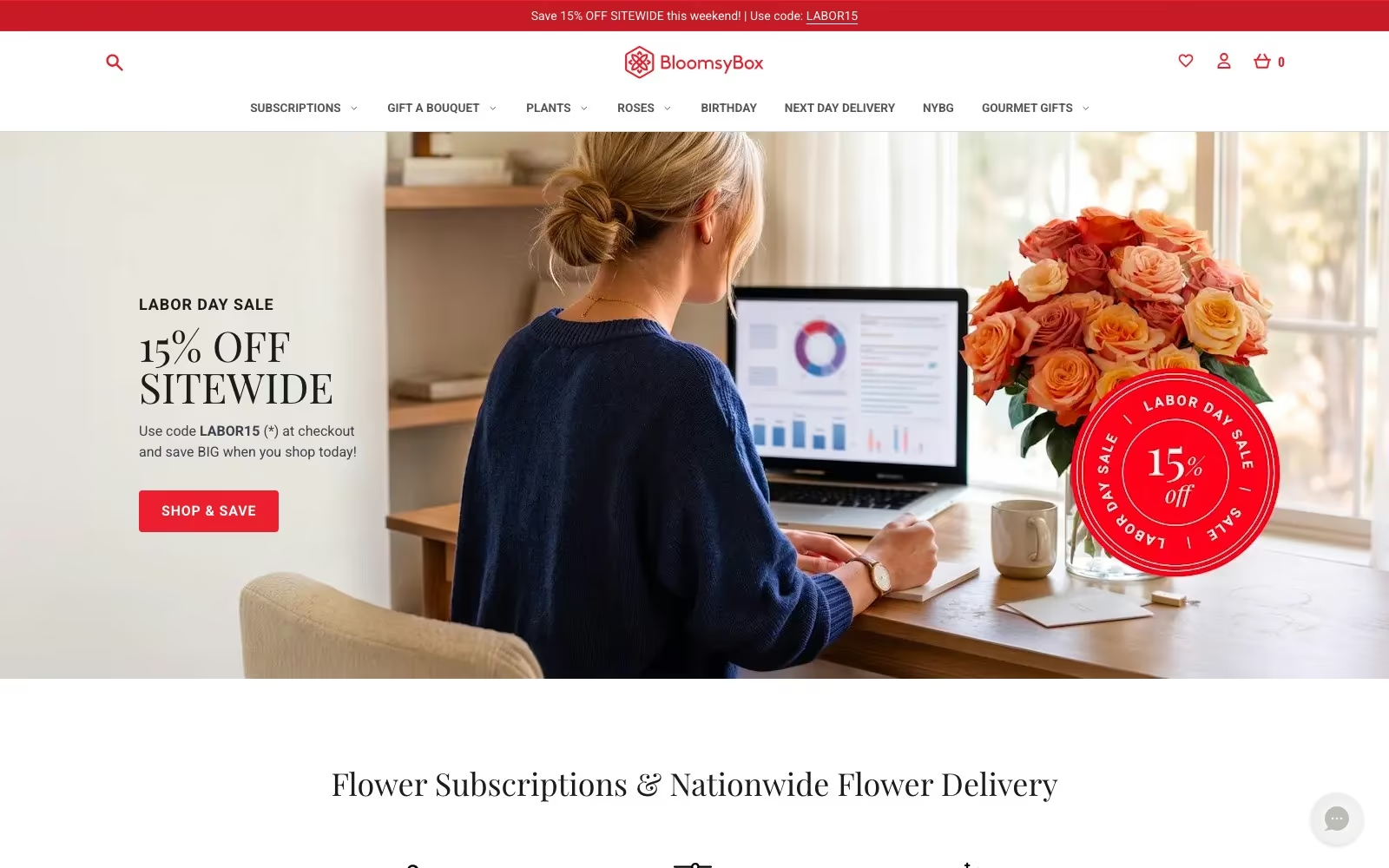
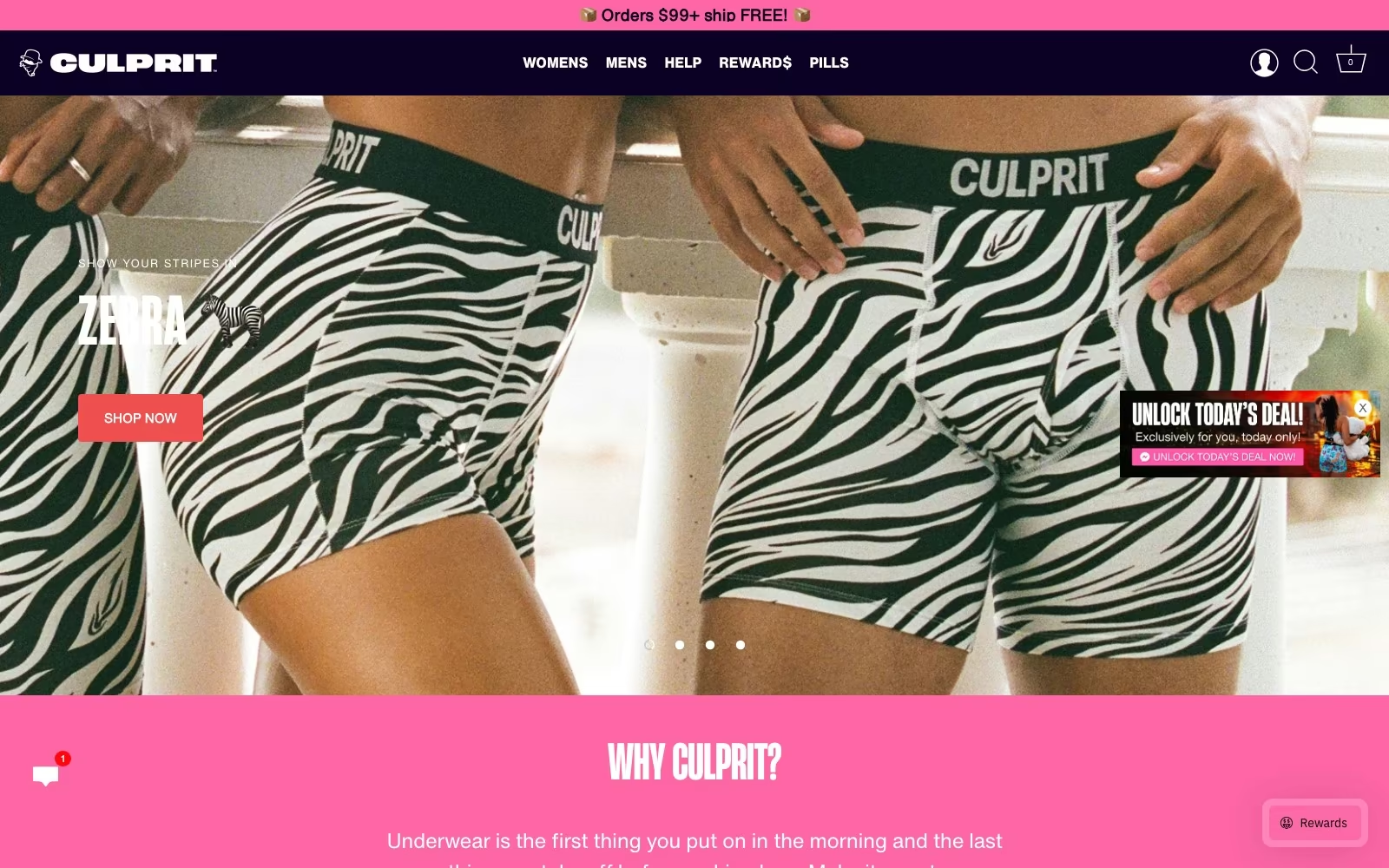
Website Portfolio
Video Ads
Static Ads























































EN

EN

EN


FR

FR

FR

FR

FR

FR

FR

FR


EN
FAQ
What firms ask before commissioning a marketing audit.
What does a personal injury marketing audit cover?
Nine areas, every time: measurement, paid search, paid social, spend efficiency, website and funnel, organic and AI search, offer and positioning, competitors, and lifecycle. For a firm that means Google Ads and Local Services Ads, Google Business Profile and local search, practice area and location pages, case results and attorney profiles, lead vendors, and intake from the first ring to the signed retainer. Every finding carries evidence, a severity band and a fix.
Why judge everything on cost per signed case?
Because cost per lead rewards the wrong marketing. Two channels can deliver identical lead volume while one produces soft tissue enquiries and the other produces the trucking or premises cases you built the firm around. We reconcile signed cases from your case management system, map sources to them once, and report cost per signed case by case type and market. Where the data cannot support that yet, the workbook says so and the plan fixes it first.
Do you audit our intake team?
We audit the intake process, with evidence, not the people. We place live test calls in and out of hours, submit forms and chats, review recordings against your own script, and time every response. Benchmark calling of 1,000 after-hours enquiries in February 2026 found 40.9% of personal injury firms gave no live answer and Friday was the worst day at roughly a 45% answer rate, so this is usually where the fastest gains sit.
Do you give legal or bar advertising compliance advice?
No. We review marketing and intake performance and give no legal, ethics or bar-advertising compliance advice, and we recommend no case acquisition arrangement. Where a finding touches advertising rules, disclaimers, testimonial use or fee language, the workbook flags it for your ethics counsel to decide, and the plan waits on their answer rather than guessing.
How is this different from a marketing audit checklist?
A checklist tells you what to look at. An audit produces findings about your firm, each with the measured evidence beside it, a severity band, what leaving it alone costs, and the fix. We keep the nine-area scope fixed so nothing is skipped, but every line comes from your analytics, ad accounts, call recordings, case management data, invoices and live site.
What does the audit cost?
A fixed fee quoted after a scoping call, with deliverables and dates written down before you commit. It varies with the number of markets, case types and ad accounts in scope and the state of your data, so publishing a rate would mislead most readers. For context on the market you compete in, more than $2.5 billion went into legal services advertising in 2024. Book a meeting for a scope and a number.
Do you run the campaigns afterwards?
Not as part of this. The audit is a project with a defined end and no retainer attached, which is what lets the workbook say that a channel we would happily sell is not worth funding for you. Your team, your current agency or another firm can execute the plan. If you later want us to run something, it is scoped and quoted separately.
Three vendors report the same client. How do you resolve that?
We set one standard and apply it. Signed cases are reconciled from your case management records, then sources are mapped to them once, so a single retainer is credited once instead of three times. Where tracking cannot support a conclusion, the finding is labelled directional and the repair goes into the plan. Building that reporting layer is marketing operations consulting, quoted separately.
Our case management data is incomplete. Should we clean it first?
No, that is part of what the audit measures. Validity's 2026 study of 500 organisations found 62% had lost revenue to poor client data and only 41% had a named governance owner, so waiting for clean data means waiting forever. We document what the data can and cannot support and put the repairs in the 90-day plan.
Does the audit cover television, radio and billboards?
Yes, where you run them, priced against what can be shown rather than what the rep promised. Television ad quantity for legal services peaked in 2023 above 16.4 million ads and radio peaked in 2024 above 6.8 million, so broadcast is still a real competitive force. We measure branded search lift, call volume by daypart and market, and say plainly where the evidence is thin.
How is this different from marketing strategy consulting?
Direction of travel. The audit looks backwards at evidence: what the marketing and intake function has been doing, what it signed, and what is broken. Marketing strategy consulting for injury firms looks forward and decides case type priority, positioning, channel roles and budget. Most firms buy the audit first, because a plan written on unverified numbers is a guess with headings.
How is this different from growth advisory?
Scope of the question. Growth advisory hunts the commercial constraint on growth wherever it sits, including case mix, capacity and settlement cycle. The marketing audit stays inside marketing and intake and produces evidence plus a 90-day plan.
Who needs to be involved from our side?
The partner who owns marketing, the intake manager, and someone who can grant access to analytics, ad accounts, call tracking and the case management system. Expect roughly three to four hours across the week: a kickoff, short interviews and the handover call. Everything else is our work on your data.
We are about to change agencies. Is now a good time?
It is one of the best moments for it. The workbook documents what the current setup produced, the plan states what the next partner has to deliver, and the cost per signed case framework gives you a baseline they inherit rather than reset. We hold no media, so nothing in the audit is written to win the retainer that follows.
What happens after the plan?
Your team runs it, and every action has a named owner and an acceptance test. Many firms book a review at ninety days to check the leading indicators, which takes half a day and is optional. Where you want a standing numbers habit, scorecard advisory sets one up and hands it back, and the parent engagement is the marketing audit itself.

.webp)
.webp)