A med spa marketing audit that ends in a plan, not a list of ideas.
ends in a plan
A marketing audit is a systematic review of your entire marketing function against your business goals: the numbers reported to ownership, spend by location and by treatment line, how quickly a new enquiry is answered and booked, what happens between consultation and treatment, membership and retention marketing, the local search footprint of each clinic, and the competitors taking aesthetic demand in your markets. Every finding is evidence-based, banded by severity, and tied to a fix with an owner. You get a findings workbook and a 90-day action plan in seven days, with no campaign work attached. Book a meeting and we will scope it honestly, including telling you when your marketing does not need auditing yet.






Tell us a little about your brand and we'll be in touch within 24 hours to lock in a time.



WHAT WE AUDIT
Four questions a medical spa marketing audit has to answer.
has to answer
Every marketing audit we run works through the same four questions, in this order, because answering them out of order produces confident advice built on numbers that were never true. In an aesthetics group the order matters more than usual: lead volume is reported by the ad platforms, revenue lives in the practice management system, and the two are rarely joined. Data and measurement are settled before anyone judges a channel or a med spa marketing program. The method is the same one described on our marketing audit page, read location by location.
Data, definitions and measurement
Spend by location and treatment line
Booking, response time and the patient journey
Local search, reviews, email and competitors
Can you trust the numbers before you act on them?
We start with measurement, because a marketing audit that skips it is guesswork with charts. That means analytics and tag configuration on the website and every online booking flow, call and form tracking per location and per source, conversion tracking on consultation requests, and whether the digital reporting reconciles with treatments and revenue recorded in the practice management system. We place live enquiries at several clinics and follow each one to a person and into the record.
The first finding is usually a definition, not a channel. One location counts a form fill as a lead, another counts a booked consultation, and the underlying client data is fragile: Validity's 2026 study of 500 organisations found 62% had lost revenue to poor CRM data and 67% had campaigns delayed or scrapped, while only 41% had a named data governance owner.
- Analytics, tag, consent and call tracking checked against live test events, including the online booking path
- Lead, consultation and treatment definitions compared across locations and restated once
- Key performance indicators traced back to the systems that produce them
- A list of numbers you should stop reporting until they are fixed
62%
of organisations lost revenue to poor customer data in 2026
Where the money goes, and what it buys per clinic.
Then the spend: paid search and paid social by location, the aesthetic treatment lines each campaign promotes, directory and aggregator programs, influencer and event spend, agency and platform fees, and the marketing bundled into device and injectable supplier programs. We rebuild the numbers from platform and invoice data, find waste by campaign, location and audience, and calculate cost per booked consultation and cost per treatment started rather than blended cost per lead.
The comparison that changes decisions is clinic against clinic on one set of definitions. The CMO Survey reports marketing spending grew just 1.7% over the prior twelve months across industries, so most of the money an aesthetics group can move this year is money it is already spending badly.
- Spend traced to campaigns, locations, treatment lines and measurable output
- Cost per booked consultation and per treatment started compared location by location
- Discount-led promotion separated from full-price demand instead of blended
- A reallocation model for the budget the group already has
1.7%
marketing spending growth across industries in the prior 12 months
What happens after the click, at every location.
Traffic is rarely the problem. We walk the journey as a prospective patient does, on a phone first: the website and its location pages, the treatment pages, online booking, the enquiry form, page speed on a real connection, and then the handling of that enquiry by the front desk or call centre. Response time is measured, not estimated, and the consultation-to-treatment step is examined with the same seriousness as the ad account.
The benchmark data is blunt about it. AmSpa's report on the CorralData H1 2026 benchmark of 100+ medspa brands found a small group answered new leads in under 13 minutes while the rest took four hours to 24 days, and every practice answering within 15 minutes and booking over 30% of appointments online landed in the top half of growth.
- Every step from search to booked consultation tested at several locations
- Lead response time recorded by location, channel and hour of day
- Online booking coverage, mobile experience and form friction documented
- Consultation-to-treatment conversion read from your own records
13 min
lead response time of the fastest medspa brands, against hours or days
The demand your clinics are not capturing, and who is.
The last block is demand and retention. A technical review of site health, indexation and internal links, local SEO position for every clinic, listings and reviews location by location, visibility in search and in AI answers, the searches your group should own in each market, email and membership lifecycle marketing, and a competitor analysis covering offer, paid media, organic footprint and content. A short SWOT closes the section.
Retention is where the money is, which is why lifecycle marketing is audited as rigorously as acquisition. In the same benchmark, single-visit clients spent $355 on average against $1,681 for clients who returned, and members spent 2.5 times more than non-members while retaining 35 percentage points better.
- Local search and map pack position measured per clinic
- Listings completeness, categories and review velocity location by location
- Email, membership and recall programs judged on revenue per recipient
- Competitor analysis and a short SWOT with the gaps to attack first
$1,681
average spend of returning clients against $355 for single-visit clients
Fixed scope with a defined end date, agreed in writing
Covered every time, so a weak area is a finding not a gap
A project, not a retainer, so findings cannot bend toward a sale
Workbook, plan and models handed over in files you can change
We made the difference for those brands

B2B software, fintech, insurance

Consumer tech and platforms

Retail & commerce

B2B software, fintech, insurance

Consumer tech and platforms

Creative, content, arts & culture

Consumer tech and platforms

B2B software, fintech, insurance

Apparel and lifestyle

Consumer tech and platforms

Consumer tech and platforms

Consumer tech and platforms

Food & beverage

Healthcare & regulated services

Food & beverage

Creative, content, arts & culture

Retail & commerce

Home essentials, appliances, kitchen & pet

Consumer tech and platforms

Healthcare & regulated services

B2B software, fintech, insurance

Creative, content, arts & culture

Retail & commerce

Apparel and lifestyle

Home essentials, appliances, kitchen & pet

Home essentials, appliances, kitchen & pet

Beauty, personal care & wellness

B2B software, fintech, insurance
Travel & mobility

Food & beverage

Consumer tech and platforms
Retail & commerce
01 — The challenge
Leads are up, the treatment schedule is not, and nobody can reconcile it.
The pattern is consistent in aesthetics groups. The ad platforms report more leads than ever. The schedule has gaps, injectors have idle hours, and two clinics carry the group's growth for reasons nobody has written down. Promotions keep arriving because they fill a week, and nobody has measured what they do to full-price demand or to retention. Somebody proposes a marketing audit, and what usually arrives is a generic med spa marketing checklist with no numbers from your own practice management system in it.
“The platform reported 400 leads last month. The schedule shows what actually happened, and neither report is wrong.”
The stakes are practical. The CMO Survey finds executives cut expenses 53.1% of the time when profits miss, and marketing is the category cut 45.4% of the time, while only 49% of senior marketing and finance leaders can measure how marketing drives business outcomes and 74% have killed an initiative they could not measure. A marketing audit that determines current performance with evidence turns the next budget conversation from an argument into a decision.
02 — Our approach
Seven days, evidence first, then a 90-day plan.
Fixed scope, a named senior lead, a start date, and no execution work attached. Day one is access and reconstruction: analytics, ad accounts, Search Console, call tracking, the booking platform, practice management reporting and every marketing invoice, so the audit argues from what happened rather than what was reported. Days two and three test measurement end to end, including live enquiries at several clinics that we follow to a person and into the record. Days three to five cover spend by location and treatment line, the website and booking path, lead response, local search position, reviews, email, membership and recall marketing, and a competitor analysis built from live assets rather than a tool summary. Day six is judgement: every finding written with the measured evidence beside it, a severity band, the cost of leaving it alone, and the fix. Day seven is the plan and the handover call.
Nine areas are covered every time: measurement, paid search, paid social, spend efficiency, website and funnel, organic and AI search, offer and positioning, competitors, and lifecycle. We review the marketing function only. We are not med spa business coaches, not brokers or valuation advisors, we give no medical, clinical, legal or advertising-compliance advice, and we do not run the campaigns afterwards. That last point is what lets the workbook state that a channel we sell is not worth funding for you. The workbook and the plan are yours in editable files.
03 — What we did
How the seven days actually run.
Access and reconstruction, then measurement and definitions, then the money, the booking path and the local footprint, then an action plan your team can start on Monday.
Days 1-2 / Reconstruct
Your own data, rebuilt from the sources that can be trusted
Analytics, ad accounts, call tracking, booking platform, practice management reporting and every marketing invoice, pulled into one view per clinic and one for the group.

Days 2-3 / Verify
Test enquiries followed from several clinics into the record
We submit real enquiries and place real calls at different locations, trace each one through tracking, tags and the booking system, then list what cannot be relied on.

Days 3-6 / Findings
Every finding with evidence, severity and a cost of inaction
Spend, booking, response time, treatment mix, local search, reviews, email and competitors, written one finding at a time and banded urgent, critical, needs attention or monitor.

Day 7 / Plan
A 90-day action plan with owners and acceptance tests
Each action names the findings it closes, what done means as a number or a verified state, an owner at group or clinic level, and an effort estimate.

WHAT YOU GET
Six deliverables, all editable, all yours.
all yours
One workbook, one action plan and the working files behind them, written for your group, your clinics and your treatment lines in plain language.

Findings workbook
Every finding with the measured evidence, a severity band, the cost of inaction, the fix, an owner and an effort estimate.

90-day action plan
Phased across three months, each action linked to the findings it closes and to an acceptance test rather than a vague outcome.

Spend and reallocation model
What the same money returns moved between locations, treatment lines and channels, with the assumptions visible and clinic impact shown.

KPI and measurement framework
The handful of key performance indicators worth reporting weekly at group and clinic level, how each is collected, and the tracking repairs needed first.

Competitor analysis and SWOT
Competitor by dimension: offer and proof, paid media, sites and listings, reviews and organic visibility, closed by a short strengths and weaknesses read.

Quick wins list
The fixes worth doing in the first week, each with the evidence behind it and who at group or clinic level can complete it.
HOW WE WORK
Operating standards, not promises.
Operating standards


Multi-location med spa groups
Several clinics reported as one number, with no agreed definition of a booked consultation.
MSO-backed aesthetics platforms
Clinics acquired at different levels of marketing maturity, reported on different metrics.
Dermatology and plastic surgery groups with an aesthetics line
Elective treatment demand competing for attention with insurance-driven services.


















Built on trust. Proven by results.
We partner with SMBs and Fortune 500 companies to deliver more than reach — we bring clarity, execution, and measurable outcomes. Every successful partnership starts with a strong culture fit and a shared drive to grow.







CASE STUDIES
Case studies
Website Portfolio
Video Ads
Static Ads






































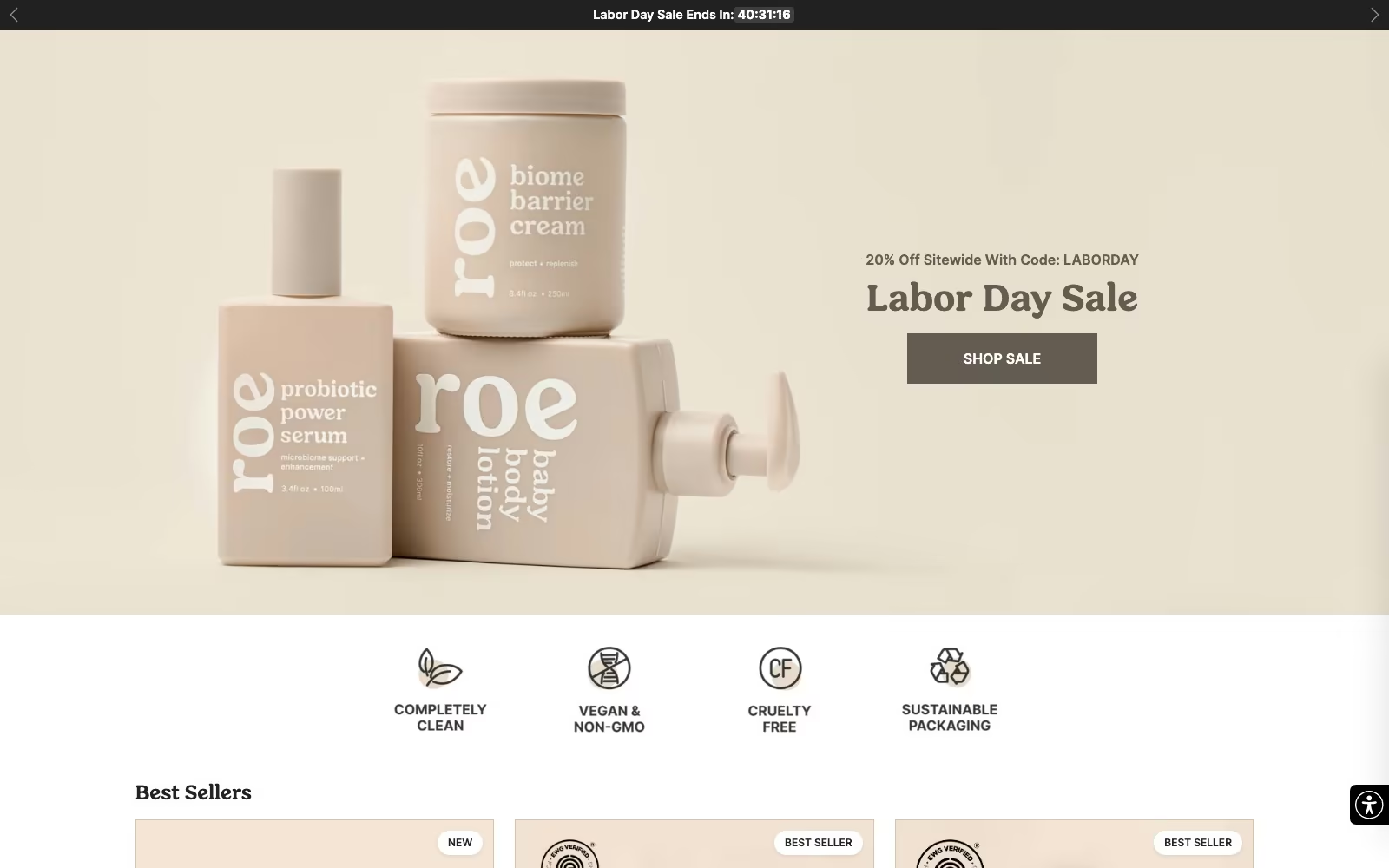

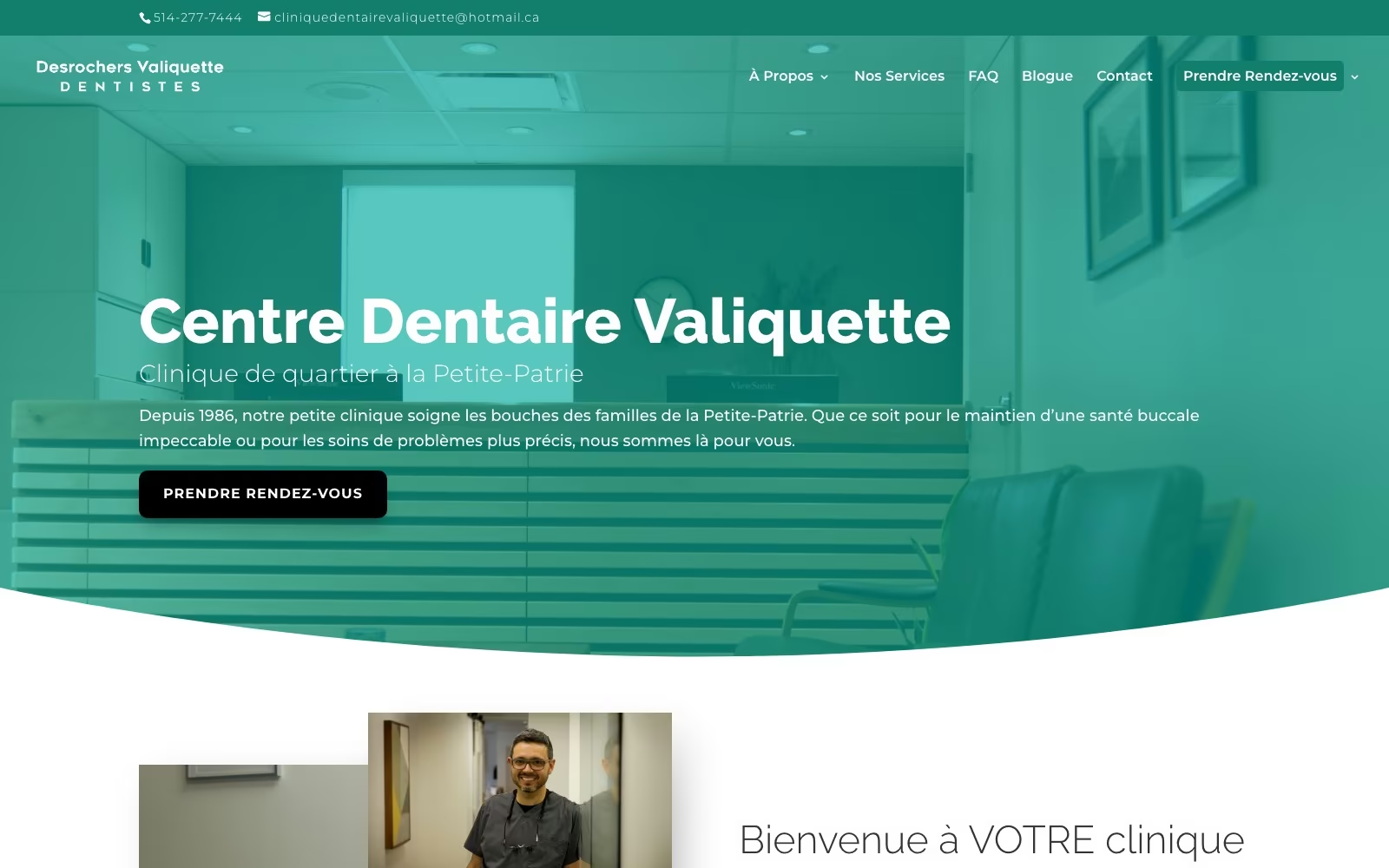

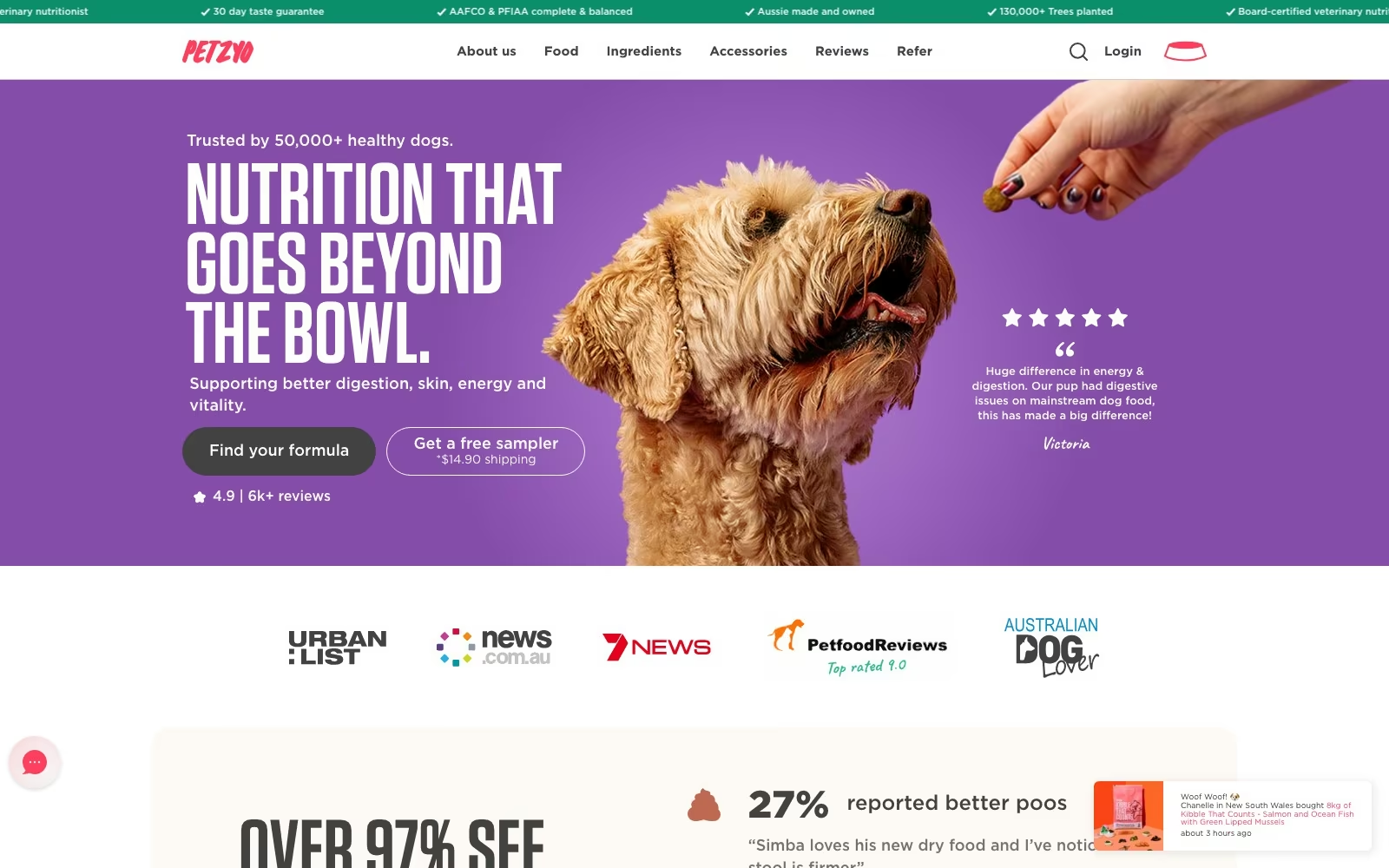















EN

EN

EN


FR

FR

FR

FR

FR

FR

FR

FR


EN
FAQ
What aesthetics groups ask before commissioning a marketing audit.
What does a medical spa marketing audit actually cover?
Nine areas, every time: measurement, paid search, paid social, spend efficiency, website and funnel, organic and AI search, offer and positioning, competitors, and lifecycle. For an aesthetics group we read them at two levels, group and clinic, so spend per location and treatment line, the online booking path, lead response time, membership and recall marketing, and local search for each clinic are all inside the scope. The output is a findings workbook with evidence and severity, plus a 90-day action plan.
How does the marketing audit process work step by step?
Access and reconstruction on days one and two, measurement testing on days two and three, then spend, website and booking, local search, reviews, email and competitor analysis through day five. Day six is judgement, where each finding is written with its evidence, a severity band and the cost of inaction. Day seven delivers the action plan and the handover call. The scope is fixed so nothing gets skipped when the week gets busy.
How is this different from a med spa marketing checklist?
A checklist tells you what to look at. An audit tells you what is true in your business. We use a fixed nine-area scope so nothing is missed, but every line in the workbook comes from your analytics, your ad accounts, your call records, your booking platform, your invoices and your live site. Findings are ranked by severity and cost of inaction rather than listed in the order the checklist happened to run.
Will the audit compare our locations against each other?
Yes, on one restated set of definitions. Spend, enquiries, booked consultations, treatments started, cost per consultation, local search position, listings health and review velocity are reported clinic by clinic, so a strong location stops subsidising a weak one in the reporting. Where a clinic is genuinely better run, the workbook documents what it does differently so the group can transfer it.
Do you audit lead response and front desk handling?
Yes, and it is often where the largest finding sits. We place live enquiries and calls, record how long each took to answer, how it was handled, and whether it reached the booking system at all. The CorralData H1 2026 benchmark reported by AmSpa found the fastest medspa brands answered new leads in under 13 minutes while others took four hours to 24 days. We audit the process; your team owns the staffing decision.
Does the audit look at membership and retention marketing?
It does, under lifecycle. Email, text, recall and membership programs are judged on revenue per recipient and on repeat visit behaviour from your own records. In the same benchmark, members spent 2.5 times more than non-members and retained 35 percentage points better, so a weak recall program is a revenue finding rather than a housekeeping note. Designing the membership economics itself is growth advisory.
Do you give medical, clinical or advertising-compliance advice?
No. We are not clinicians, we are not lawyers, and we do not advise on scope of practice, supervision, patient privacy or the rules governing how treatments may be advertised in your state. We audit the marketing function with evidence. Where a claim on your site or in an ad looks risky, the workbook flags it as a question for your own counsel and compliance team rather than answering it.
What does the audit cost?
A fixed fee quoted after a scoping call, with deliverables and dates written down before you commit. It varies with the number of locations and ad accounts in scope and the state of your data, so publishing a rate would mislead most readers. For context on scale, The CMO Survey puts marketing at 9.0% of company revenue and 33.6% of digital activity in the hands of outside agencies. Book a meeting for a scope and a number.
Do you run the campaigns afterwards?
Not as part of this. The audit is a project with a defined end, and no retainer is attached, which is what lets the workbook say that a channel we would happily sell is not worth funding for you. Your in-house team, your current agency or another firm can execute the plan. If you later want us to run something, it is scoped and quoted separately.
Our patient data is inconsistent across locations. Should we fix it first?
No, that is part of what the audit measures. Validity's 2026 study found 62% of organisations lost revenue to poor CRM data and only 41% had a named governance owner, so waiting for clean data means waiting forever. We document what the data can and cannot support, label directional findings as directional, and put the repairs in the plan. Building that layer is marketing operations consulting, quoted separately.
Is a marketing audit worth it in a growing aesthetics market?
Growth is exactly when waste compounds. AmSpa reports the medical aesthetics industry has eclipsed $17 billion and is growing by more than $1 billion a year, and the CorralData H1 2026 benchmark found the median practice grew revenue 19.2% while new-patient growth sat at 1.2%. That gap is a marketing and retention question, and it is answerable with evidence you already hold.
How is this different from med spa marketing strategy consulting?
Direction of travel. The audit looks backwards at evidence: what the marketing function has been doing, what it produced, and what is broken. Medical spa marketing strategy consulting looks forward and decides treatment-line and segment priority, positioning, channel roles, budget and measurement. Many groups buy the audit first because a plan written on unverified numbers is a guess with headings.
How is this different from growth advisory?
Scope of the question. Growth advisory hunts the commercial constraint on growth wherever it sits, including retention, membership design and provider or room utilisation. The marketing audit stays inside the marketing function and produces evidence and a 90-day plan. If you already know marketing is the problem, the audit is the cheaper first step.
Who needs to be involved from our side?
Whoever owns marketing, one operations leader who knows the clinics, and someone who can grant access to analytics, ad accounts, call tracking, the booking platform, reporting and invoices. A front desk lead helps, because their reality is the reality check. Expect roughly four hours of your team's time across the week: a kickoff, short interviews, and the handover call.
What happens after the action plan?
Your team runs it, and every action has a named owner and an acceptance test. Many groups book a review at ninety days to check the leading indicators, which takes half a day and is optional. Where you want a standing numbers habit, scorecard advisory sets one up and hands it back, and the parent engagement is the marketing audit itself.

.webp)
.webp)