Table of contents
X sells engagement for a $0.13 median cost and clicks from $0.18 - the cheapest inventory in paid social - and only 16% of its users go there to discover products. Both facts are true, and together they define exactly what a veterinary practice should and should not buy on the platform in 2026. Here are the numbers.
Key Takeaways
- Agency medians: $0.18 CPC, $0.13 cost per engagement, $21.55 CPA and a 0.59% engagement rate on average monthly spend of just $385 (7,000+ agencies).
- Broader CPC averages $0.74 against Meta’s $1.36, with CPM between $2.09 and $6.46 and $8-$15 for B2B conversion campaigns.
- About 40% of advertisers left between late 2022 and early 2024; X now holds 0.2% of global digital ad spend against Facebook’s 14.6%.
- 557 million monthly users, down 4.9%, and 245-251 million daily - with mobile daily users down 15.2%.
- Threads has passed X on daily mobile users: 141.5M versus 125M, and Bluesky has reached 41 million.
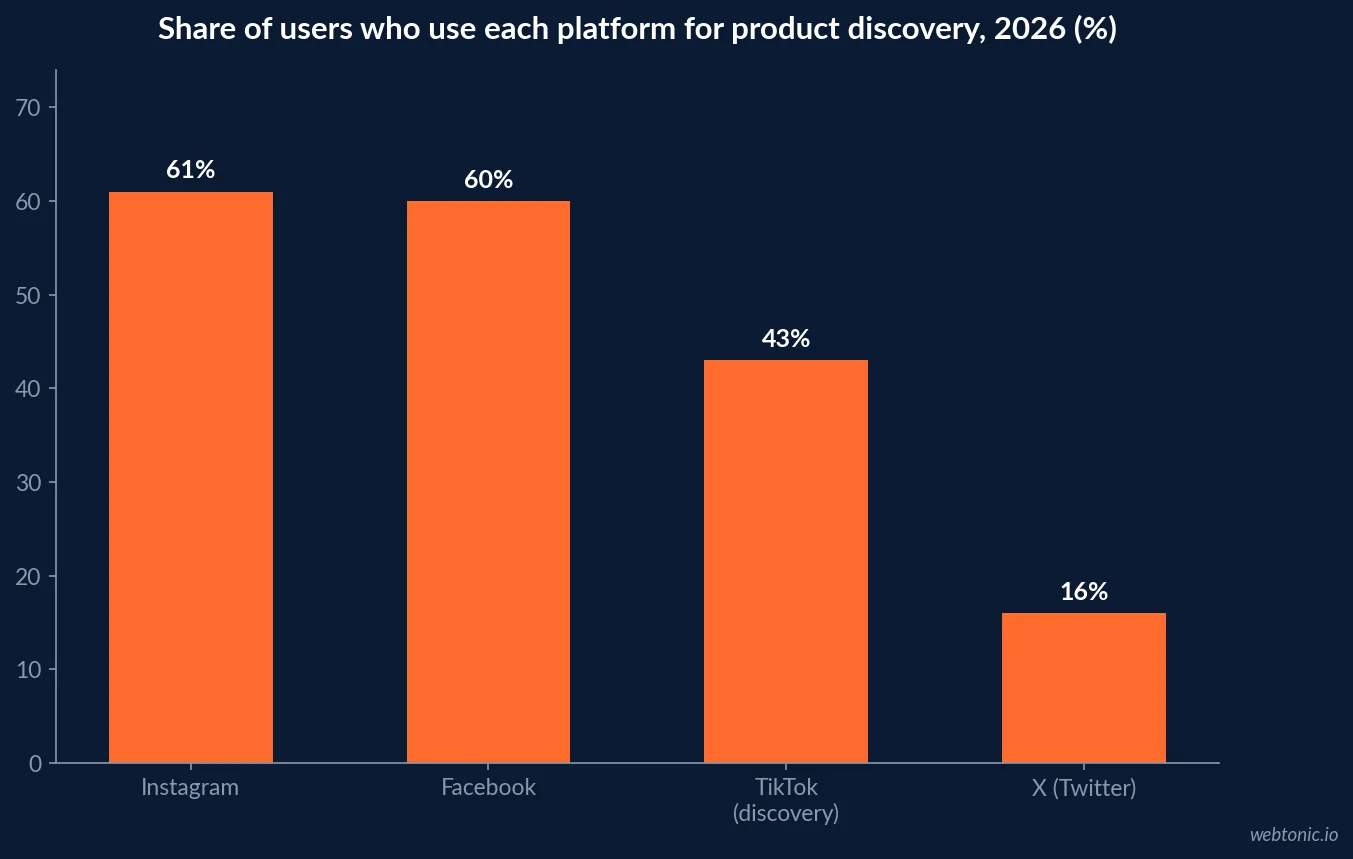
- Only 16% use X for product discovery versus 61% on Instagram; visitor-to-lead conversion is 0.77% against LinkedIn’s 2.74%.
- Video earns 3-4x the engagement of static, with 40-60% completion, 2-3x CTR and 40-50% lower cost per engagement.
- 70-80% of viewing is sound-off and 100M+ people watch vertical video daily.
- Users are 63.7% male, ~52% aged 18-34, and 25% of US users live in $100k+ households.
- Optimised CPLs run $21-$40; badly targeted campaigns hit $150-$250, and exclusion hygiene alone moves CPL 30-50%.
- Test budgets: $20-$50/day awareness, $50-$100/day conversion, $2,000-$5,000 over 60 days, payback assessed at 30-45 days.
- Veterinary context: DVM unemployment is 0.7%, an unfilled DVM seat costs $1,500-$3,000 a day, and placement fees run 18-25% of first-year salary - which is where cheap reach pays.
X is the cheapest paid social inventory in 2026 - and there is a reason
Start with why the prices look implausible. Platform statistics compiled by AutoFaceless report that X now captures just 0.2% of worldwide digital ad spending against Facebook’s 14.6% and TikTok’s 7.1%, that the advertiser exodus beginning in 2023 drove a more than 50% drop in ad revenue, and that the platform still carries $12 billion of acquisition debt with a $577 million net loss in Q3 2025 despite over $2 billion of revenue in the first nine months of that year. Fewer bidders means cheaper auctions.
Practitioner accounts put a number on the exodus and the floor it created. Analysis from Christoph Olivier Consulting reports the platform lost roughly 40% of its advertiser base between late 2022 and early 2024, that CPMs have stabilised at $8-$15 with CPCs of $0.80-$2.50 depending on audience size and seasonality, and that targeting precision never returned to 2021 levels - which is why custom audiences and contextual targeting now do the work that behavioural data used to.
| Cost metric | 2026 figure | Comparison | Source basis |
|---|---|---|---|
| Cost per click (agency median) | $0.18 | Meta $1.36 | 7,000+ agencies |
| Cost per engagement | $0.13 | n/a | 7,000+ agencies |
| Cost per acquisition | $21.55 | vet search CPA $48 | 7,000+ agencies |
| Engagement rate | 0.59% | platform CTR 0.86% | 7,000+ agencies |
| Average monthly spend | $385 | tiny commitments | 7,000+ agencies |
| CPC (broad average) | $0.74 | Facebook $1.36 | Cross-source |
| CPM (most objectives) | $2.09-$6.46 | Meta $14.19 | Cross-source |
| CPM (B2B conversion) | $8-$15 | $18-$25 in finance | Practitioner data |
| Cost per lead (optimised) | $21-$40 | LinkedIn ~$110 | Practitioner data |
| Cost per lead (badly targeted) | $150-$250 | fixable with exclusions | Practitioner data |

The audience: smaller, older news habit, more affluent
X has shrunk, and the shrinkage is not evenly distributed. The same platform statistics put 557 million monthly active users, down 4.9% year over year from 586 million, 245-251 million daily users - about 44% of the monthly base - and mobile daily active users down 15.2% to 132 million. Competitive pressure is real: Threads has overtaken X on daily mobile users, 141.5 million to 125 million, and Bluesky has grown to 41 million. Volume is still enormous: 500 million posts a day, roughly 350,000 a minute, with 32 minutes of daily use per user.
Demographic detail from Searchlab and Onclusive shows the audience is 63.7% male, roughly 52% aged 18-34 with 35-49s at 21.1% of the ad audience, concentrated in the US (~104 million) and Japan (~74.5 million), and comparatively wealthy - 25% of US users in $100,000-plus households and 26% in the $70,000-$99,000 band. For a clinic, that profile is not the general pet-owning public. It is journalists, professionals, local news followers and - importantly - veterinary staff.
| Audience metric | 2026 figure | Direction | Read for a clinic |
|---|---|---|---|
| Monthly active users | 557M | -4.9% YoY | Still large, shrinking |
| Daily active users | 245-251M | ~44% of MAU | Engaged core |
| Mobile daily users | 132M | -15.2% | Habit is eroding |
| Threads daily mobile | 141.5M | ahead of X’s 125M | Watch the substitute |
| Posts per day | 500M | ~350k/minute | Noise is the cost |
| Male share | 63.7% | stable | Skews against pet-owner base |
| Aged 18-34 | ~52% | stable | Young professionals |
| US households $100k+ | 25% | stable | Affluent, specialty-care capable |
The intent problem, stated honestly
Cheap clicks are only cheap if they lead somewhere. Evidence assembled across sources shows only 16% of users go to X for product discovery, against 61% on Instagram and 60% on Facebook, and visitor-to-lead conversion of 0.77% against LinkedIn’s 2.74%. Engagement rates are thin too: influencer-post engagement measured 0.39% in 2025 - up sharply from 0.09% the year before, but still a fraction of TikTok’s 3.7%. Advertiser trust fell from 22% to 12% over the same period.
There are counterweights worth knowing. Users reportedly spend 26% more time viewing ads than on comparable platforms, ad engagement rose 35% year over year, 82% of B2B companies maintain a presence, and an AI-driven targeting rebuild is credited with lifting conversions 16%. Cross-platform comparison from AdLibrary frames the trade correctly: most brands keep 80-90% of paid social budget on Meta, and X earns money only when a category lives in active conversation or needs brand reach without Meta’s CPM floor. It also warns that a $10 Meta CPM producing $0.80 CPAs beats a $5 X CPM producing $2.50 CPAs - cheap is not the metric.
Job one: urgent, public, time-critical communication
This is the use case where X’s architecture is genuinely better than the alternatives, and it is rarely priced as advertising at all. Real-time reach is what the platform was built for: 500 million posts a day, quote-posts and replies giving content a second life, and Trend Takeover and Timeline Takeover placements purpose-built for moments. For a veterinary practice or a regional group, the moments are specific and recurring:
- Outbreak and disease alerts - canine influenza, leptospirosis after flooding, parvo clusters in a neighbourhood.
- Toxic exposure warnings tied to seasons and holidays, the content that gets shared by local news accounts.
- Emergency capacity and closure notices during storms, heat waves and holiday weekends.
- Lost-pet amplification, where the reply-and-repost mechanic outperforms any feed algorithm.
- Recall communication for foods and medications, where speed protects clients and reputation simultaneously.
Priced against a $2.09-$6.46 CPM, a few hundred dollars can put a public-health message in front of an entire metro within hours. That is the cheapest crisis-communication channel a practice has, and it compounds the trust signal that 73% of pet owners rank first when choosing a clinic.
Job two: recruiting in the tightest labour market in healthcare
Veterinary hiring economics make cheap engagement disproportionately valuable. Industry data summarised by Digitail puts DVM unemployment at 0.7%, a need for 70,092 new veterinarians through 2032 against a projected shortfall above 17,000, average working weeks of 48.3 hours, and 94.7% of practices raising wages. The cost of the gap is concrete: an unfilled DVM seat runs $1,500-$3,000 a day and placement fees run 18-25% of first-year salary.
Against a $0.13 cost per engagement, a recruitment campaign on X is close to free relative to a recruiter invoice. The platform’s professional community concentration - the same feature that makes it useful for B2B, where 82% of B2B companies are present - means veterinary professionals, students and technicians are reachable through conversation and keyword targeting rather than demographics. Practically: run a 20-second clip of a technician saying what they like about the job, target conversations around veterinary conferences, licensing exams and specialty topics, and send clicks to a real careers page. One filled seat at $1,500-$3,000 a day of avoided vacancy repays a $2,000-$5,000 60-day test many times over. Our veterinary LinkedIn ads statistics cover the higher-cost, higher-precision half of the same recruiting problem.
Job three: cheap video-led share of voice
If a practice is new, relocating or defending a metro against a corporate group, X buys attention at a price Meta cannot match - provided the creative is video. Practitioner data reports engagement rates 3-4x higher on video than static images, video completion (50%+ watched) of 40-60%, click-through 2-3x higher and cost per engagement down 40-50% when switching from image to video. Platform-side, more than 100 million people watch vertical video daily - about 20% of usage on peak days - while 70-80% of viewing happens sound-off, so captions are not optional. Card formats add roughly 20% CTR, and seasonal CPM inflation of 15-20% lands in November-December and early September.
Operational advice from GrowthScribe adds two account-hygiene items that quietly decide outcomes in 2026: X has effectively eliminated unverified advertising, so a verified account is now a prerequisite for full Ads Manager access and unfiltered delivery, and boosting from the mobile app on iOS incurs Apple’s 30% service fee - meaning $1,000 spent in-app puts only $700 into media. Always buy from desktop. It also recommends a $10-a-day floor per campaign so the algorithm gets enough data, and vertical 9:16 creative as the default.
| Creative or setup decision | Measured effect | Clinic application |
|---|---|---|
| Image → video | 3-4x engagement, CPE -40-50% | Phone-shot exam-room clips |
| Video completion (50%+) | 40-60% | Keep clips 15-30 seconds |
| Vertical video | 100M+ daily viewers | Shoot 9:16 only |
| Sound-off viewing | 70-80% | Burn in captions |
| Card formats | +20% CTR | Use for careers and service pages |
| Verified account | required for full delivery | Verify before launching |
| Buying in-app on iOS | 30% lost to Apple fee | Buy on desktop only |
| Peak-season CPM | +15-20% (Nov-Dec, early Sept) | Shift tests to Q1 or Q3 |
| Veterinary hiring metric | 2026 figure | What cheap reach is worth |
|---|---|---|
| DVM unemployment | 0.7% | Passive candidates only |
| New veterinarians needed through 2032 | 70,092 | Structural shortage |
| Projected shortfall | 17,000+ | Competition will not ease |
| Average working week | 48.3 hours | Culture messaging matters |
| Practices that raised wages | 94.7% | Pay alone is not a differentiator |
| Cost of an unfilled DVM seat | $1,500-$3,000/day | The real ROI denominator |
| Placement fee | 18-25% of first-year salary | vs a $0.13 cost per engagement |
Targeting and waste control
Because X’s behavioural signal thinned after 2023, waste concentrates in delivery rather than in bidding. Documented practitioner work shows cost per lead falling from $250 to $25 after exclusion cleanup, with exclusion hygiene moving CPL 30-50% in ordinary accounts. Cold-audience CPLs run $30-$80 against $15-$40 on warm retargeting, so the sequence matters more than the bid.
A workable structure for a clinic or veterinary group:
- Geo-fence tightly. A practice draws from a 5-15 minute drive; metro-wide delivery is how a $0.18 click becomes a $250 lead.
- Target conversations, not demographics - keyword and follower-lookalike targeting is what survived the data rebuild.
- Exclude aggressively: job-seeker audiences from client campaigns, existing clients from acquisition, out-of-area followers from local pushes.
- Separate the three jobs into three campaigns - urgent reach, recruitment, brand video - because they need different objectives and different measurement.
- Retarget site visitors at $15-$40 CPL instead of chasing cold conversions at $30-$80.
- Cap it. $20-$50 a day awareness, $50-$100 a day conversion, $2,000-$5,000 over 60 days, reviewed at 30-45 days.
How X compares with the rest of a veterinary media plan
Placed beside the channels a clinic already runs, X is a specialist tool with a small budget line. Veterinary benchmarks from CUFinder put Google Ads CPC at $3.45 with 12.6% conversion and a $48 search CPA, animal-care paid-search leads at $31.50, Facebook CPC at $1.15 and CPM at $11.50, click-to-call at 18.3% and landing pages converting at 10.5% versus 4.2% site-wide. X’s $0.18 click is an order of magnitude cheaper than search and roughly 19 times cheaper than a LinkedIn click - and it converts far less often than either.
The correct allocation follows from that: search and Google Business Profile take demand capture, Meta takes local reach and retargeting at scale, LinkedIn takes precision B2B and senior recruiting, and X takes urgent reach plus cheap recruiting volume - typically the last 5% of the budget. Judge it on reach delivered, applications received and message velocity in a crisis, never on cost per booking. Our veterinary digital marketing statistics set the whole-plan context, and our veterinary analytics statistics cover how to measure a channel that will never win a last-click report, alongside our veterinary local SEO statistics for the demand-capture side.
Limits of this data
Two honest caveats. First, X publishes very little: the user figures above come from third-party estimates that disagree materially - one stricter definition puts the base near 349 million rather than 557 million - so treat scale as a range, not a fact. Second, no veterinary-specific X advertising benchmark exists. Every cost figure here is cross-industry or B2B, applied to veterinary economics; the platform’s $385 average monthly agency spend tells you how small most of these datasets are per account. Use them to size a test, not to forecast a return. Where a clinic needs predictable new clients, the evidence keeps pointing back at search, reviews and the phone - 58% of new-client interactions still start with a call.
Frequently Asked Questions
How much do X (Twitter) ads cost in 2026?
Less than any other paid social platform. Agency medians across 7,000+ agencies put cost per click at $0.18, cost per engagement at $0.13 and cost per acquisition at $21.55, on an average monthly spend of just $385. Broader datasets report CPC around $0.74 against Meta's $1.36, and CPM between $2.09 and $6.46 for most objectives, rising to $8-$15 for B2B conversion campaigns. The cheapness is structural: roughly 40% of advertisers left between late 2022 and early 2024 and X now captures only 0.2% of global digital ad spend.
Should a veterinary clinic advertise on X?
Not for appointments. Only 16% of users go to X for product discovery against 61% on Instagram, and visitor-to-lead conversion runs 0.77% versus 2.74% on LinkedIn. X earns a small budget for three specific jobs instead: urgent public communication (outbreak alerts, closures, toxic-food warnings, lost-pet amplification), recruiting into an unusually active veterinary professional community, and cheap video-led reach when a practice needs share of voice in a metro without paying Meta's CPM floor.
Who is still on X in 2026?
Roughly 557 million monthly active users, down about 4.9% year over year, with 245-251 million daily - though mobile daily users fell 15.2% and Threads has overtaken X on daily mobile use at 141.5 million to 125 million. The US is the largest market at about 104 million users, followed by Japan at 74.5 million. The audience is 63.7% male, roughly 52% aged 18-34, and unusually affluent: 25% of US users are in $100,000-plus households. It is a smaller, more influential, more professional room than Meta.
What creative works on X for a veterinary practice?
Video, and short video specifically. Practitioner data reports engagement rates 3-4x higher on video than static images, video completion (50%+ watched) of 40-60%, click-through 2-3x higher and cost per engagement down 40-50% when switching from image to video. More than 100 million people watch vertical video daily on the platform and 70-80% watch sound-off, so burn captions in. For clinics the winning formats are 15-30 second explainers, one-question answers and staff-voice recruiting clips - not repurposed Facebook offers.
What is a realistic X test budget for a clinic?
Small and time-boxed. Practitioner guidance suggests $20-$50 a day for awareness objectives and $50-$100 a day for conversion objectives, with a $2,000-$5,000 total over 60 days as a fair test and payback typically assessed at 30-45 days. Given that veterinary paid-search leads cost about $31.50 at 16%+ conversion, treat X as the last 5% of a clinic media plan and hold it to a job - reach, recruitment or urgent reach - rather than to a cost per booking.
Sources
AutoFaceless - X (Twitter) Statistics 2026
Christoph Olivier Consulting - X Ads in 2026
Searchlab - X (Twitter) Statistics 2026
Onclusive - X (Twitter) Statistics 2026
AdLibrary - X Ads vs Meta Ads 2026
GrowthScribe - How To Advertise On X (Twitter) In 2026
Digitail - Veterinary Statistics And Findings 2026
CUFinder - Veterinary Marketing Benchmarks 2026
HeyOz - Are X (Twitter) Ads Worth It For Businesses
Thunderbit - X Statistics And Advertising Data