Table of contents
LinkedIn is the wrong place to sell a wellness exam and the right place to fill a veterinarian seat. Animal-care paid search books leads at $31.50; LinkedIn’s median cost per lead is $110. But with veterinarian unemployment at 0.7% and an empty DVM chair costing $1,500-$3,000 a day, the math flips completely once the conversion you want is a hire or a practice-level deal.
Key Takeaways
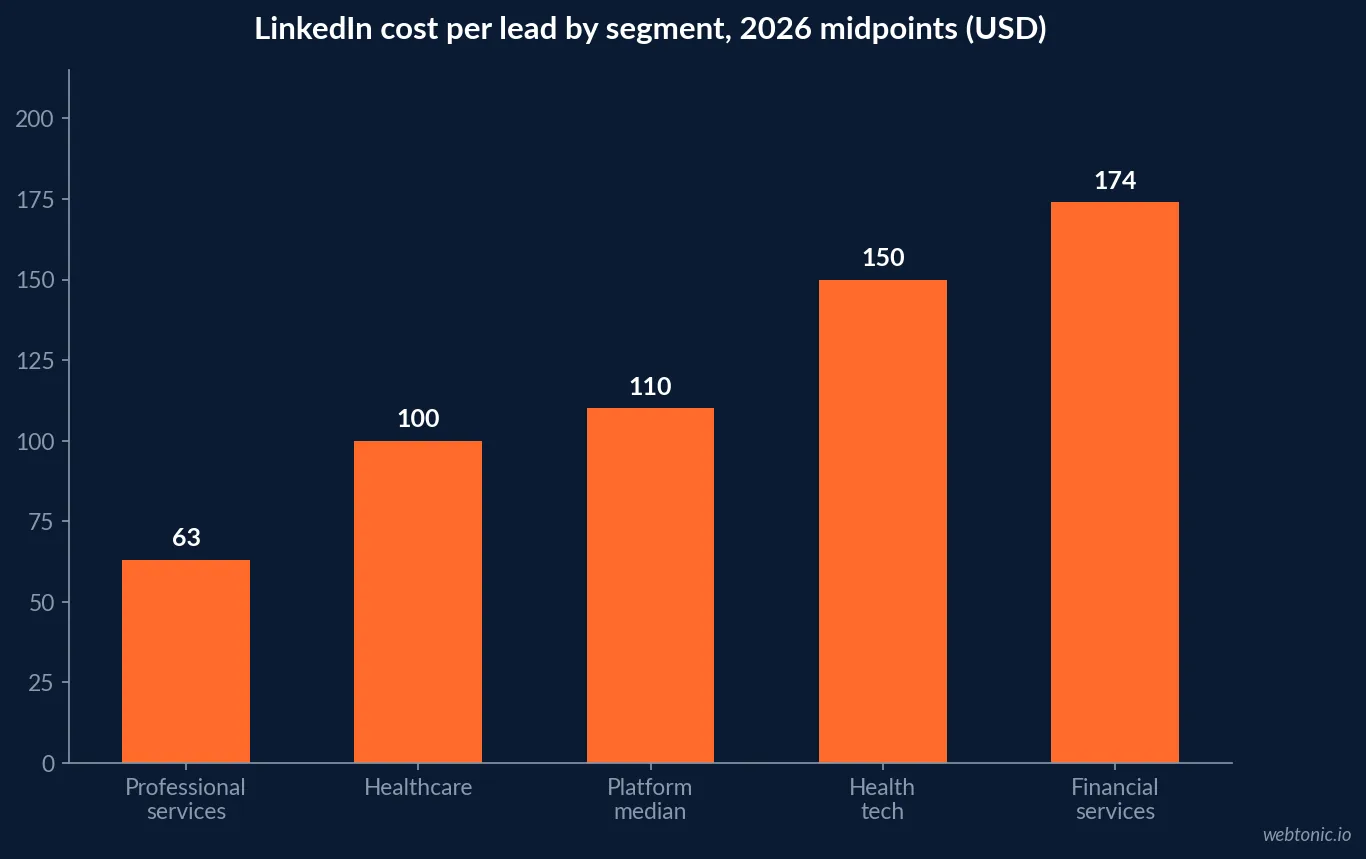
- Platform averages for 2026: CPC $5.26-$8.50 (about $6.50 average, up 8% YoY), CTR 0.44-0.65%, CPM $39.20, median CPL $110.
- Healthcare and life sciences: CPC $6.00-$12.40, CPL $80-$175, CTR 0.38-0.58%.
- Thought Leader Ads deliver a 2.68% CTR at $2.29 CPC - about 77% cheaper per click than single-image ads.
- Lead Gen Forms convert at 10-18% (median 13%) versus 2-6% for landing pages, cutting CPL 25-40%.
- But landing-page leads reach SQL at 40-55% against 25-40% for form leads.
- C-suite clicks cost $10-$24, six to twelve times individual-contributor targeting at $2-$4.
- LinkedIn returns 121% B2B ROAS against 67% for Google Search and 51% for Meta, and takes 41% of B2B paid social budgets.
- Veterinary context: 0.7% veterinarian unemployment, a projected shortfall of more than 17,000 veterinarians by 2032, and $1,500-$3,000 per day in vacancy cost.
- By contrast, animal-care paid search runs a $31.50 CPL at 16%+ conversion - which is why LinkedIn is a B2B and hiring channel here.
- Cost per ICP account is $257 on LinkedIn versus $560 on Google, making it 54% cheaper for reaching named accounts such as corporate groups.
LinkedIn benchmarks that apply to veterinary advertisers
There is no published veterinary-specific LinkedIn benchmark set, and anyone claiming one is extrapolating. What does exist is healthcare, life-sciences and professional-services data from large aggregated spend samples - which is the right proxy for animal-health vendors, veterinary software and practice-group recruiting.
| Metric | Platform 2026 | Healthcare / life sciences | Read |
|---|---|---|---|
| Average CPC | $5.26-$8.50 | $6.00-$12.40 | Seniority drives the range |
| Average CTR | 0.44-0.65% | 0.38-0.58% | Regulated creative underperforms |
| Average CPM | $39.20 | $33-$65 (to $125) | Healthcare is a premium segment |
| Cost per lead | $110 median | $80-$175 | Qualified, via Lead Gen Forms |
| Lead Gen Form CVR | 10-18% | 10-15% | Median about 13% |
| Landing page CVR | 2-6% | 2.5-5% | Fewer, better leads |
| C-suite CPC | $10-$24+ | $12-$24 | 2-3x director level |
| B2B ROAS | 121% | n/a | Google Search 67%, Meta 51% |
Why pet-owner acquisition does not belong on LinkedIn
The comparison is brutal and worth making once, clearly. Benchmarks collated by CUFinder put animal-care paid search at a $31.50 cost per lead and a $4.06 cost per click with conversion rates clearing 16%, alongside a 12.6% Google Ads conversion rate, a $48 search cost per acquisition and an 18.3% mobile click-to-call rate. Facebook reach costs $1.15 per click at an $11.50 CPM.
Against that, LinkedIn’s $39.20 average CPM and $110 median CPL - documented in FoundryCRO’s 2026 benchmark aggregation across Dreamdata, ZenABM, GrowthSpree and Stackmatix data - is three to four times the price for an audience that is not in the pet-owner mindset when it is on the platform. If your goal is booked appointments, put the budget where the intent is: see our veterinary Google Ads benchmarks and Facebook Ads benchmarks.
| Channel | Cost per lead / click | Conversion rate | Right job in veterinary |
|---|---|---|---|
| Google Search (animal care) | $31.50 CPL / $4.06 CPC | 16%+ | Client acquisition |
| Google Ads (all vet campaigns) | $48 CPA / $3.45 CPC | 12.6% | Booked appointments |
| $1.15 CPC / $11.50 CPM | 3.9% | Reach and reminders | |
| LinkedIn (platform) | $110 median CPL / $6.50 CPC | 13% via forms | Hiring and B2B |
| LinkedIn (healthcare) | $80-$175 CPL | 10-15% | Animal-health selling |
Job one: recruiting veterinarians and technicians
This is where LinkedIn earns veterinary budget in 2026, because the alternative costs more. Workforce data compiled by Digitail from AVMA and AAVMC sources shows veterinarian unemployment at 0.7% against a 3.9% U.S. rate, a projected need for 70,092 new veterinarians through 2032 with 45,280 of those openings created by turnover rather than growth, and a net shortfall of more than 17,000 veterinarians. Staffing analysis from Pulivarthi Group prices the consequence: permanent placement fees of 18-25% of first-year base salary, offset against a vacancy cost of $1,500-$3,000 per day for a DVM role.
Run that math against a LinkedIn CPL. At $130,000 base, a 20% contingency fee is $26,000. Even at a pessimistic $175 cost per applicant and a 15-applicant shortlist, a filled seat costs $2,625 in media. The channel does not have to be efficient in absolute terms - it only has to beat the fee and the daily bleed.
| Recruiting input | 2026 figure | What it implies for LinkedIn spend |
|---|---|---|
| Veterinarian unemployment | 0.7% | Passive candidates only - paid reach is mandatory |
| Projected DVM shortfall by 2032 | 17,000+ | Structural, not cyclical, competition |
| Openings from turnover | 45,280 of 70,092 | Retention content beats job ads |
| Vacancy cost per day (DVM) | $1,500-$3,000 | A 5-day faster hire funds a quarter of ads |
| Placement fee | 18-25% of salary | $23K-$33K on a $130K role |
| Average DVM week | 48.3 hours | Work-life messaging outperforms pay claims |
| Practices raising wages in past year | 94.7% | Pay is table stakes, not a differentiator |
| Practices with a wellness plan | 16.5% | A genuine, provable creative angle |
Job two: selling into practices and corporate groups
Animal-health manufacturers, PIMS vendors, diagnostics labs and service partners sell to practice owners, hospital administrators and medical directors - a defined, findable audience. Life-science marketing guidance from KDM Communications treats LinkedIn as the primary B2B engagement platform in veterinary medicine for thought leadership, launches and case studies. The account-level economics back it: FoundryCRO puts cost per ICP account at $257 on LinkedIn against $560 on Google - 54% cheaper - and LinkedIn-sourced deals closing at 28.6-35% higher ACV.
The caveat is deal size. Channel guidance from ADV.me draws a clean line: below roughly $15,000 annual contract value, LinkedIn CPLs of $75-$200 rarely clear ROI without tight retargeting; above $50,000, it is usually the highest-quality paid channel available. A $400-a-month software subscription sold to single-site clinics sits in the awkward middle and needs a content-led funnel rather than a demo-request campaign.
Formats and targeting: what the 2026 data rewards
Format choice moves cost more than audience tinkering does. Thought Leader Ads post a 2.68% CTR at $2.29 CPC versus 0.42% at roughly $10 for single-image ads; document ads promoting original research beat standard image ads by 2-3x on engagement with CPLs 30-40% below account averages. Benchmark data from Ryze AI across $47M of managed spend adds the targeting lever: ultra-specific job titles cut CPC 25-47% against broad titles, with one healthcare example dropping CPL from $154 to $89 and booking meetings at 2.3x the rate.
Translated to veterinary use: target "Practice Manager", "Hospital Administrator", "Medical Director" and "Practice Owner" rather than "Healthcare Professional", and run the creative from a named human. Message-ad and sponsored-content benchmarks for regulated medical audiences from Buzzbox Media put sponsored-content CTR at 0.4-0.9%, lead-form completion at 10-15%, CPC at $8-$15 and CPL at $50-$150 - a realistic planning band for animal-health campaigns.

Budgeting, learning and measurement
Three practical constraints. First, minimum viable budget: with a $110 median CPL and a 13% form conversion rate, a campaign needs roughly $3,000-$5,000 a month to generate enough weekly leads to optimise against - below that you are buying anecdotes. Second, measurement: veterinary B2B cycles run long, and lead-gen guidance from Red Brick Partners recommends syncing LinkedIn and Meta leads straight into the CRM for immediate nurture, because speed-to-lead drives conversion velocity for demos and CE registrations. Third, model choice: benchmark work from ZenABM separates high-commitment conversions (demo, meeting) at 2-5% from low-friction content offers at 10-15%, so a "book a call" campaign judged against a whitepaper benchmark will always look broken.
Attribute honestly, too. If a hire or a deal takes eleven touches over four months, last-click reporting will credit branded search and you will cut the channel that started it. Our veterinary digital marketing statistics cover the wider channel mix.
| Campaign objective | Realistic 2026 benchmark | Format to use |
|---|---|---|
| Recruit DVMs / technicians | $110-$175 per applicant | Lead Gen Form + Thought Leader Ad |
| Book demos (software, diagnostics) | 2-5% CVR | Conversation or sponsored content |
| Distribute research / CE content | 10-15% CVR | Document ads |
| Reach named corporate groups | $257 per ICP account | ABM audience + retargeting |
| Brand and trust building | 2.68% CTR | Thought Leader Ads |
| Awareness at low cost | $2-$4 CPC | Broad IC-level targeting, text ads |
Limits of this data
Be explicit about the gap: none of these benchmarks are veterinary-specific. They are healthcare, life-sciences and cross-industry aggregates from managed-spend samples ranging from 87 campaigns to $47M in spend, and every publisher slices "healthcare" differently - hospital systems, medtech and pharma sit inside the same bucket as animal health. The recruiting figures are stronger: unemployment, hours and wage data come from AVMA census and economic reporting, and the AAVMC shortfall projection is a published model rather than a vendor estimate. Vacancy cost per day is an industry planning figure, not an audited number. Use these as planning bands, then let 60 days of your own data replace them.
Frequently Asked Questions
Should a veterinary clinic advertise on LinkedIn in 2026?
Not to reach pet owners. Client acquisition economics do not work: animal-care paid search delivers a $31.50 cost per lead at a 16%-plus conversion rate, while LinkedIn's platform median cost per lead is $110 and healthcare segments run $80-$175. LinkedIn earns its place for two veterinary jobs instead - recruiting veterinarians and credentialed technicians, and B2B selling into practices (animal-health products, software, corporate groups). Both have a value per conversion high enough to absorb a three-figure cost per lead.
What do LinkedIn ads cost for healthcare and animal-health advertisers?
Benchmark sets for 2026 put healthcare and life-sciences CPC between $6.00 and $12.40 depending on seniority, with cost per lead from $80 to $175 for qualified leads through Lead Gen Forms. Platform-wide, average CPC sits at $5.26-$8.50 (about $6.50 on average, up 8% year over year) and average CPM around $39.20, with healthcare among the most expensive CPM segments at $33-$65 and outliers to $125. C-suite targeting costs $10-$24 per click, six to twelve times individual-contributor targeting at $2-$4.
Do LinkedIn Lead Gen Forms work for veterinary B2B and recruiting?
They convert far better and qualify slightly worse. Lead Gen Forms convert at 10-18% (median 13%) against 2-6% for external landing pages, and typically cut cost per lead 25-40%. The trade-off is downstream: landing-page leads convert to sales-qualified at 40-55% versus 25-40% for form leads. For recruiting, forms are close to ideal - the profile data you want is exactly what pre-fills.
What is the best-performing LinkedIn ad format in 2026?
Thought Leader Ads. Running creative from an individual profile rather than a company page produces a 2.68% CTR at a $2.29 CPC in aggregated benchmark data - roughly 77% cheaper per click than single-image ads at 0.42% CTR. For veterinary audiences, where trust in the individual clinician is the currency, promoting a medical director's or hospital administrator's post usually outperforms a branded creative.
How does LinkedIn compare with other channels for veterinary recruiting?
Compare it with the cost of the vacancy, not with a cost per click. Veterinarian unemployment sits at 0.7%, permanent placement fees run 18-25% of first-year base salary, and an unfilled DVM seat costs an estimated $1,500-$3,000 per day. At a $110-$175 cost per lead, LinkedIn only needs to shorten a vacancy by a couple of days to beat a contingency fee on a $130,000 salary.
The short version
LinkedIn is a veterinary hiring and B2B channel, not a client-acquisition one. Judge it against a $26,000 placement fee and a $1,500-a-day vacancy, run Thought Leader Ads from a named clinician, use Lead Gen Forms for applicants and landing pages for deals, and never compare its CPL with a $31.50 paid-search lead. If you want that built properly, our growth marketing team does exactly this - or just talk to us.
Sources
FoundryCRO - LinkedIn Ads benchmarks by industry 2026
Ryze AI - LinkedIn CPC and CPL benchmarks by industry 2026
ADV.me - B2B lead generation benchmarks 2026
ZenABM - LinkedIn Ads benchmarks 2026
Buzzbox Media - Sponsored content vs message ads for medical audiences
Datavinity - LinkedIn Ads benchmarks 2026
CUFinder - Veterinarians industry marketing benchmarks 2026
Digitail - Veterinary statistics that matter for 2026
Pulivarthi Group - Veterinary staffing costs and vacancy economics
KDM Communications - Digital marketing for veterinary brands
Red Brick Partners - 2026 lead gen essentials for veterinary B2B