Table of contents
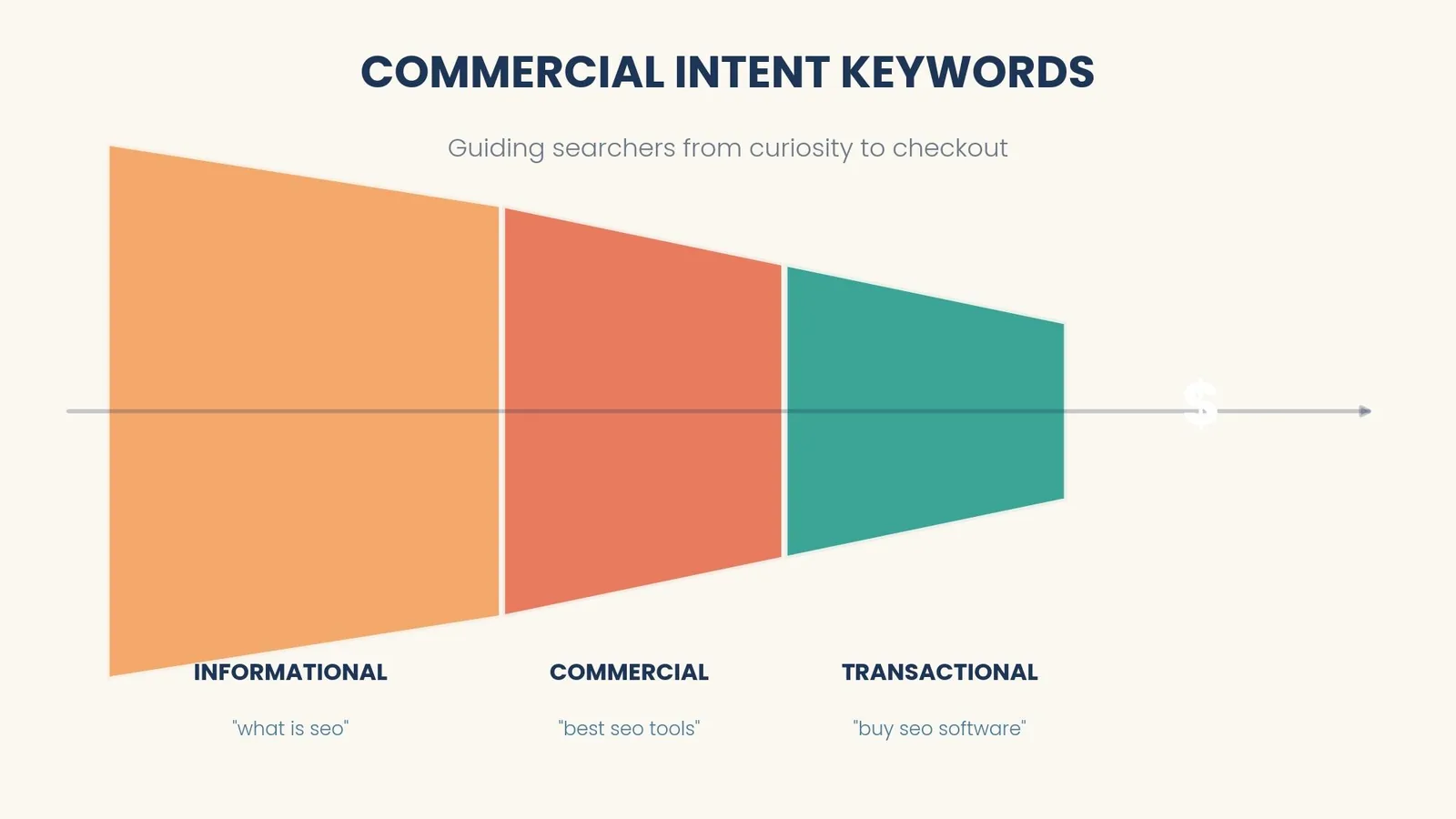
Not every visitor to your site is equally valuable. Someone typing "what is SEO" wants a definition. Someone typing "best SEO software for small business" wants a decision, and they're a few clicks from making one. Commercial intent keywords are the search terms behind that second group: queries from people who already know they want a solution and are actively comparing options before they buy.
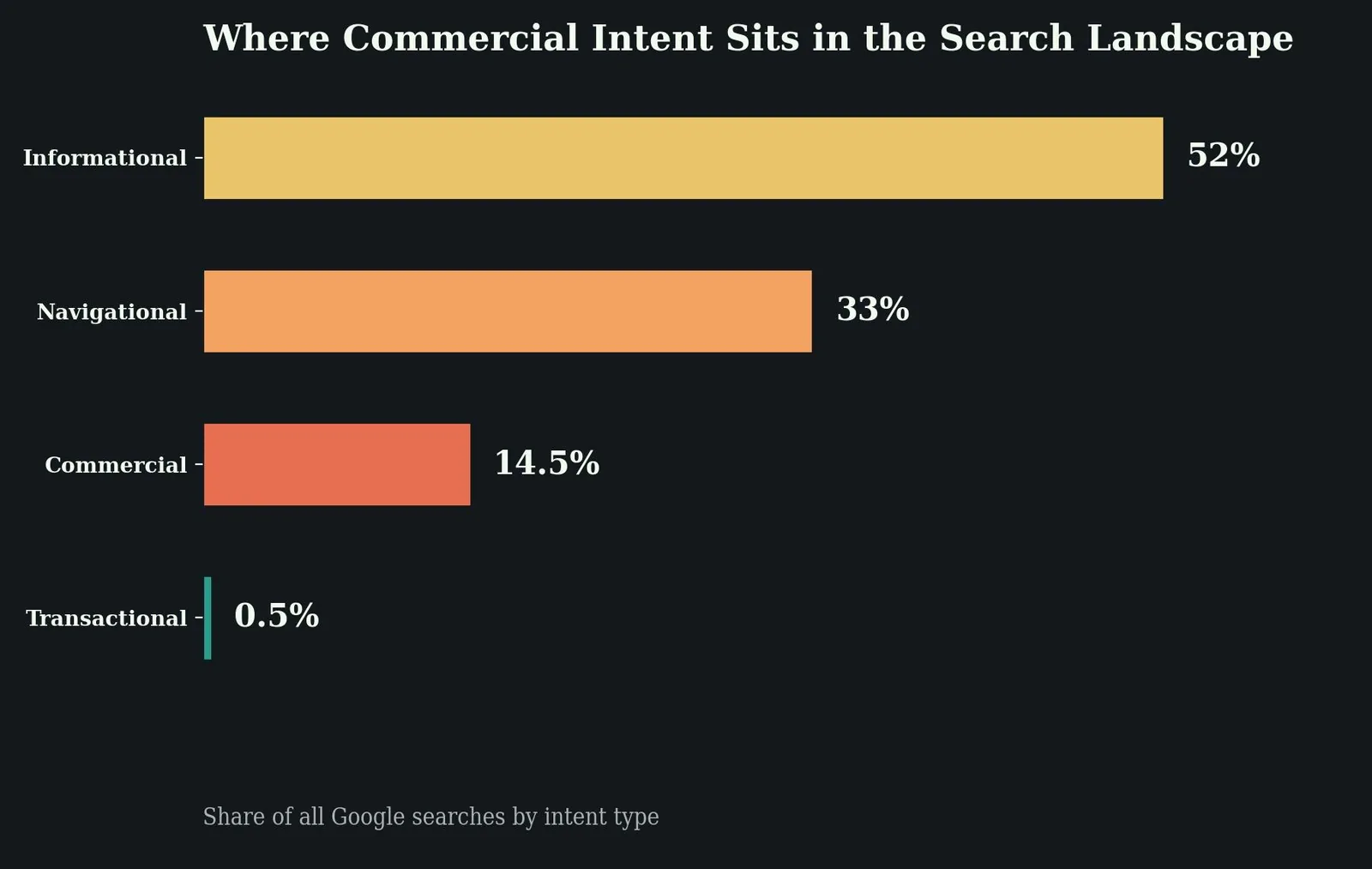
Getting this distinction right is the foundation of a sound SEO strategy. An oft-cited SparkToro analysis puts commercial searches at roughly 14.5 percent of all Google queries, against 52 percent informational and around a third navigational. Most keyword lists are dominated by traffic that will never convert. Learning to spot and target the smaller, higher-value slice is one of the highest-leverage moves in SEO and paid search (PPC) alike.
Key Takeaways
- Commercial intent keywords sit between informational and transactional searches, capturing users who are comparing options but haven't picked a winner yet.
- An oft-cited SparkToro analysis puts commercial searches at roughly 14.5 percent of all Google queries, so precision targeting matters more than volume.
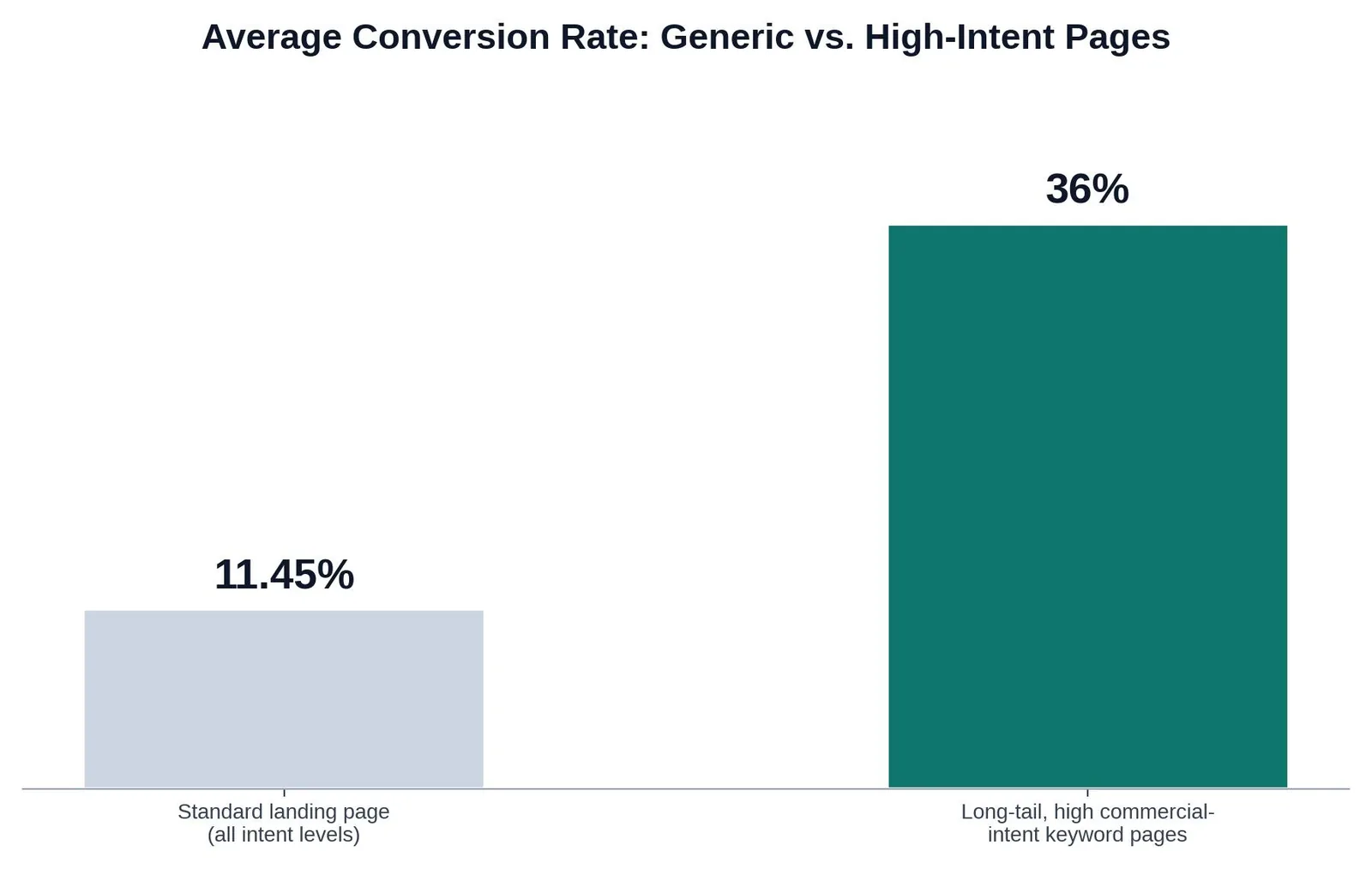
- Long-tail, high commercial intent pages convert at roughly 36 percent, compared to an 11.45 percent average for standard landing pages.
- Reliable signals include modifiers like "best," "top," "review," "vs.," and "pricing," plus SERP features like shopping ads, Google Shopping listings, and comparison-style top-10 results.
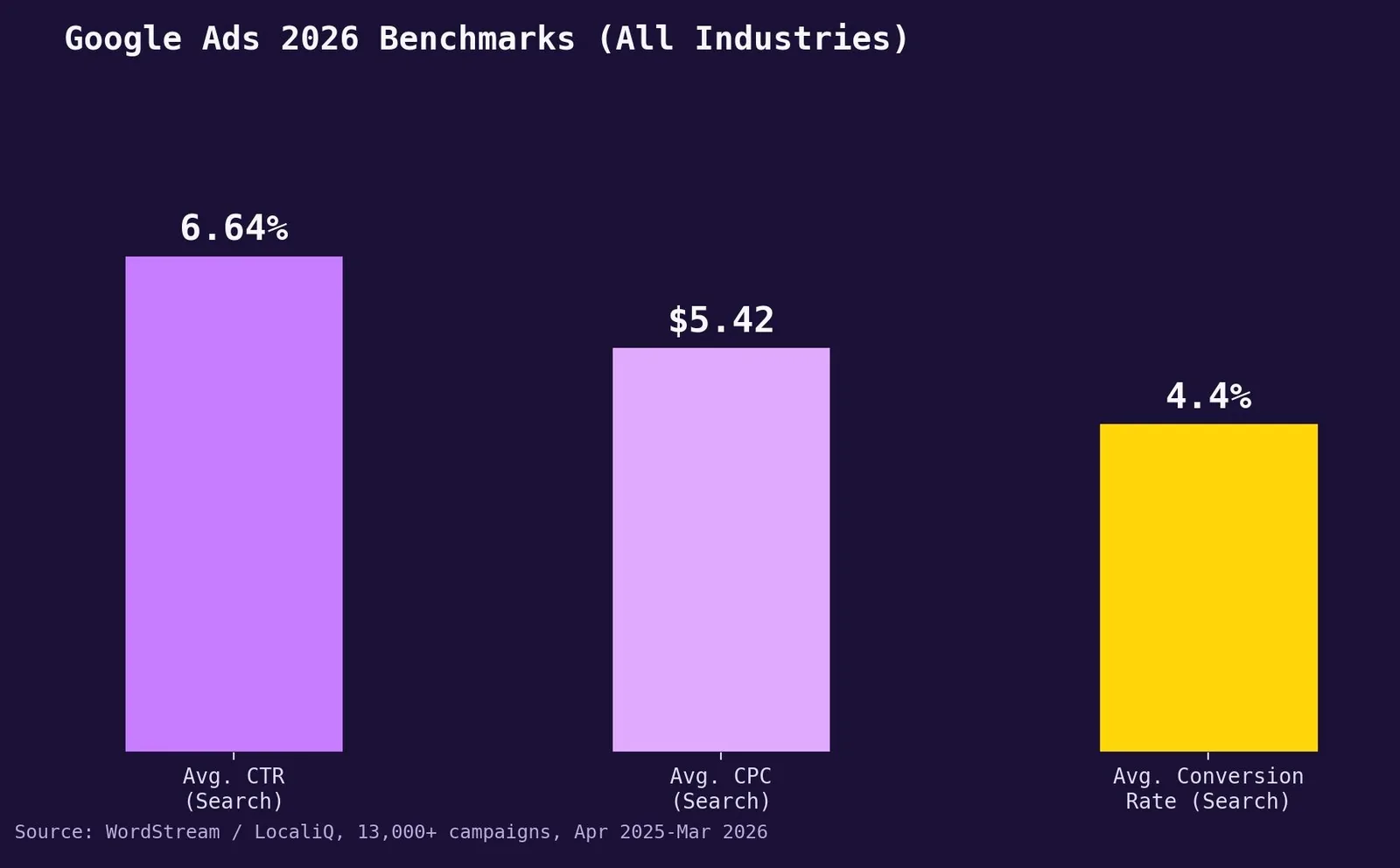
- The average Google Ads click-through rate sits at 6.64 percent, with an average CPC of $5.42 and an average conversion rate of 8.18 percent across industries in 2026.
- Content built for commercial intent (comparisons, buyer's guides, "vs." pages) should sit in the middle-to-bottom of your funnel, distinct from top-of-funnel informational content.
What are commercial intent keywords?
Commercial intent keywords are search terms used by people who are researching a purchase decision but haven't committed to a specific product, brand, or vendor yet. They sit in what's often called the "commercial investigation" phase, past the point of pure curiosity but before the moment of checkout.
Search intent is generally grouped into four categories. Google's own Search Quality Evaluator Guidelines describe a similar split, using the labels know, do, website, and visit-in-person. In everyday SEO terms, those map onto informational, transactional, navigational, and commercial intent. A search like "how does SEO work" is informational. "Sign up for HubSpot" is transactional. "HubSpot" alone is navigational. "Best SEO tools for agencies" is commercial: the searcher already knows they need a tool, they just haven't decided which one.
This is why commercial intent keywords tend to use recognizable modifiers: best, top, review, vs., alternative, comparison. Some practitioners lump these together under the broader label of high intent keywords, then split them further: buyer intent keywords point to a near-term purchase, commercial intent (or "commercial investigation") keywords point to active comparison, and low intent keywords point to casual browsing that's safe to deprioritize.
Commercial vs. the other search intent types
Not every keyword deserves the same content format. Matching intent to page type is one of the most consistent ranking factors across SEO research. A mismatched page, say, a blog post targeting a query where searchers expect a product page, tends to underperform regardless of writing quality.
| Intent type | What the searcher wants | Example query | Best content format |
|---|---|---|---|
| Informational | To learn or understand a topic | "what is search intent" | Blog posts, guides, FAQs |
| Navigational | To reach a specific brand or site | "Semrush login" | Optimized homepage, brand pages |
| Commercial | To compare options before deciding | "best project management software" | Comparison pages, reviews, buyer's guides |
| Transactional | To complete a purchase or sign-up now | "buy Nike Air Max" | Product pages, pricing pages, checkout flows |
Transactional keywords, unlike commercial ones, expect a direct path to checkout rather than more information. The practical takeaway: commercial intent keywords call for content that acts like a neutral, well-informed advisor, not a hard sell. Save the aggressive calls-to-action for transactional pages; commercial pages earn trust first, even when the underlying keyword and intent keyword are closely related.
Why commercial intent keywords convert better
The performance gap between generic and intent-matched content is substantial. Long-tail keywords with strong commercial intent convert at an average of around 36 percent, compared to an 11.45 percent average conversion rate for standard landing pages across intent levels. Searchers who are ready to buy but still comparing are simply easier to convert than a cold, top-of-funnel audience.
That gap compounds in paid search. Google Ads delivers an average click-through rate of 6.64 percent across industries in 2026, with an average cost per click of $5.42 and an average conversion rate of 8.18 percent. Advertisers already treat commercial and transactional keywords as their most valuable inventory. For local service businesses specifically, one agency's internal benchmarks put 70 to 80 percent of budget toward commercial and emergency-intent keywords, since research-stage terms convert at 2 to 3 times lower rates.
The same logic applies to organic content. A page built for commercial intent doesn't need traffic volume. It needs relevance to a searcher who is genuinely close to a decision.
How to find commercial intent keywords
1. Look for commercial modifiers. Words like best, top, review, vs., alternative, comparison, affordable, and pricing are strong signals. Deal-seeking terms like "discount" or "cheap" often blend commercial and transactional intent. B2B searchers use their own version of this pattern too, in queries like "enterprise CRM pricing" or "best Dell laptop under $800" for procurement research.
2. Read the SERP, not just the keyword. The clearest signal is what Google already ranks. If the top 10 results for a term are dominated by comparison articles, review roundups, or "X vs. Y" posts (think "Nike vs. Adidas running shoes"), that's commercial intent confirmed. If Google Shopping listings or product pages dominate instead, you're likely looking at transactional intent.
3. Check for paid ads and PAA boxes. Google Ads appearing above the organic results is a reliable proxy for commercial value, since advertisers only bid where conversions justify the cost. A "People Also Ask" (PAA) box full of evaluation questions ("is X worth it," "X vs. Y") reinforces the signal, and so do other SERP features like shopping carousels or a Google Business Profile pack for local commercial searches ("best plumber near me").
4. Mine your own data and third-party tools. Google Search Console shows which queries already bring traffic to your site, and where high impressions pair with low click-through rates, often a sign of a page misaligned with the searcher's actual intent. A keyword research tool like Semrush can label keyword intent automatically alongside search volume, which saves manual SERP-checking at scale. Set up conversion tracking in Google Analytics to confirm which of those keywords actually turn into leads rather than just clicks. Community platforms like Reddit or product reviews on Amazon are also worth mining, since they surface the exact phrases real buyers use before a purchase.
Use the checker below to score any keyword against the signals that matter most.
Free SEO tool
Is your keyword commercial intent?
Type a keyword, then check off what applies. Your commercial intent score updates as you go.
Commercial intent score
0 of 6
Check off what applies to your keyword to see its score.
Building content for commercial intent
Once a keyword's intent is confirmed, the content itself needs to earn the searcher's trust before asking for anything. A genuinely useful comparison works best: a "best X" or "X vs. Y" page should weigh real options fairly, downsides included, rather than steering every reader toward one predetermined winner.
Structure matters just as much as substance here. Commercial-intent searchers are evaluating multiple options in one sitting, so comparison tables, pros-and-cons lists, and clear subheadings let them find what matters to them quickly instead of reading linearly. The tone should stay calm and credible throughout; urgency and hard calls-to-action belong further down the funnel, on transactional pages built for readers who have already decided.
Internal linking closes the loop. A comparison page should link to whatever transactional page it should feed, a demo request or a pricing page, for example, so the reader has an easy next step once they've made up their mind.
Common mistakes to avoid
The most common mistake is treating high search volume as high value. A 50,000-search informational term will rarely outperform a 500-search commercial term on revenue, because the intent gap matters more than the traffic gap. Close behind that is writing a sales pitch for a research-stage keyword: commercial-intent searchers are comparing, not ready to be closed, and copy that pushes too hard tends to send them straight back to the SERP.
Skipping a SERP check before writing is another common trap. Without it, you might build a blog post for a query Google has already decided deserves a product or category page, or the reverse. And it's worth remembering that a large share of commercial research happens on mobile, so slow load times or clunky comparison tables cost conversions on exactly the traffic that was closest to converting.
Frequently asked questions
What's the difference between commercial and transactional intent?
Commercial intent reflects a searcher who is still comparing options, while transactional intent reflects someone ready to complete an action right now, like buying, signing up, or booking. A search for "best CRM software" is commercial; "sign up for HubSpot" is transactional.
Are commercial intent keywords worth targeting if they have low search volume?
Yes. Commercial and long-tail keywords typically convert far better than high-volume informational terms, since the searcher is closer to a decision. A smaller, well-matched audience usually outperforms a larger, poorly-matched one on revenue.
How do I know if a keyword is commercial intent?
Check the current SERP. Comparison articles, review roundups, and "vs." content in the top 10 signal commercial intent, while product pages and Google Shopping listings point to transactional intent. Modifiers like "best," "top," and "review" are additional clues, though the SERP itself is the most reliable signal.
Should commercial intent pages include pricing?
It depends on the stage. Commercial pages can reference general pricing tiers or ranges to help with comparison, but detailed, transaction-ready pricing and checkout flows belong on the transactional pages the commercial content links to.
Do AI Overviews affect commercial intent keywords?
AI Overviews have reduced clicks for many informational queries, but commercial and transactional long-tail terms have been comparatively unaffected. Searchers evaluating a purchase tend to click through for the specific detail or comparison an AI summary can't fully provide.
Turning intent into revenue
Commercial intent keywords reward precision over volume. The searchers behind them have already done the hard work of recognizing a need; the job is simply to be the clearest, most trustworthy option when they compare their choices. Get the intent match right, structure the content to support real comparison, and link it toward the transactional pages that close the loop, and a smaller audience will consistently outperform a larger, mismatched one.
Start by auditing your existing keyword list for true commercial intent, not just high search volume, and build or upgrade one comparison page around your strongest opportunity.
Need help turning search intent into pipeline?
Identifying commercial intent keywords is only half the work. Building and maintaining the comparison pages, internal linking, and paid search alignment to capture them is where most teams run out of bandwidth. Web Tonic's growth marketing team handles keyword-to-content mapping, SEO, and PPC as one connected system, so commercial-intent traffic actually converts instead of just visiting.
More from Web Tonic: growth marketing services, data & analytics.
Sources: vazoola.com · seobility.net · yoast.com · arfadia.com · wordstream.com · searchenginejournal.com · mediaspearhead.com · 1digitalagency.com · bloggersideas.com