Table of contents

A homeowner in Dallas notices a leak, opens Google, and types "roof repair near me." Three roofing companies show up in the map pack. Everyone else on that results page, no matter how good their work is, doesn't exist to that homeowner. That's the entire game of local SEO for roofers: there's no second chance to be one of those three names.
SEO for roofers is the work of earning that spot without paying for every single lead. A complete Google Business Profile, consistent reviews, and a roofing website built around the actual services people search for do more to fill a pipeline than most paid campaigns, at a fraction of the cost per lead. This guide covers how to build that presence and keep it working.
Key Takeaways
- Between 60 and 90 percent of roofing leads originate from the Google Maps Pack, making local visibility the single highest-ROI channel for any roofing company.
- 95 percent of local roofing contractors have fewer than five blog posts on their site, which means most of the organic content landscape in this trade is wide open.
- Non-branded Google Ads for roofing keywords average $124 per lead, while Google Local Services Ads run $40 to $120, compared to organic local SEO, which costs mostly effort once a roofing website ranks.
- A fully verified Google Business Profile with the correct "Roofing Contractor" category, 50 or more reviews, and a rating above 4.5 is the baseline for contractors who own the map pack in their market.
- Service-area pages built for every city a roofing company covers, not just the main location, capture searches like "roof replacement [city]" that a single homepage never will.
- Consistent name, address, and phone number (NAP) details across Google, Yelp, Angi, and HomeAdvisor prevent search engines and homeowners alike from losing trust in your listing.
What Is SEO for Roofers?
SEO for roofers is the practice of optimizing a roofing company's website and local listings so it ranks in search results and the map pack for the specific services and cities that company covers. It follows the same fundamentals as any search engine optimization work, technical health, relevant content, and local authority, but weighted heavily toward local intent, since almost nobody searches for a roofing contractor outside their own city. Strong roofing SEO earns the visibility; strong roofing services pages are what turn that visibility into a booked job.
That local weighting is why the map pack matters so much more here than in most industries. A homeowner searching for roof repair isn't comparing national brands, they're comparing whoever shows up for their specific address. A roofing business that hasn't built that local presence is invisible to the people searching roofing services in its own service area, regardless of how good the actual work is.
What Roofing Leads Really Cost by Channel
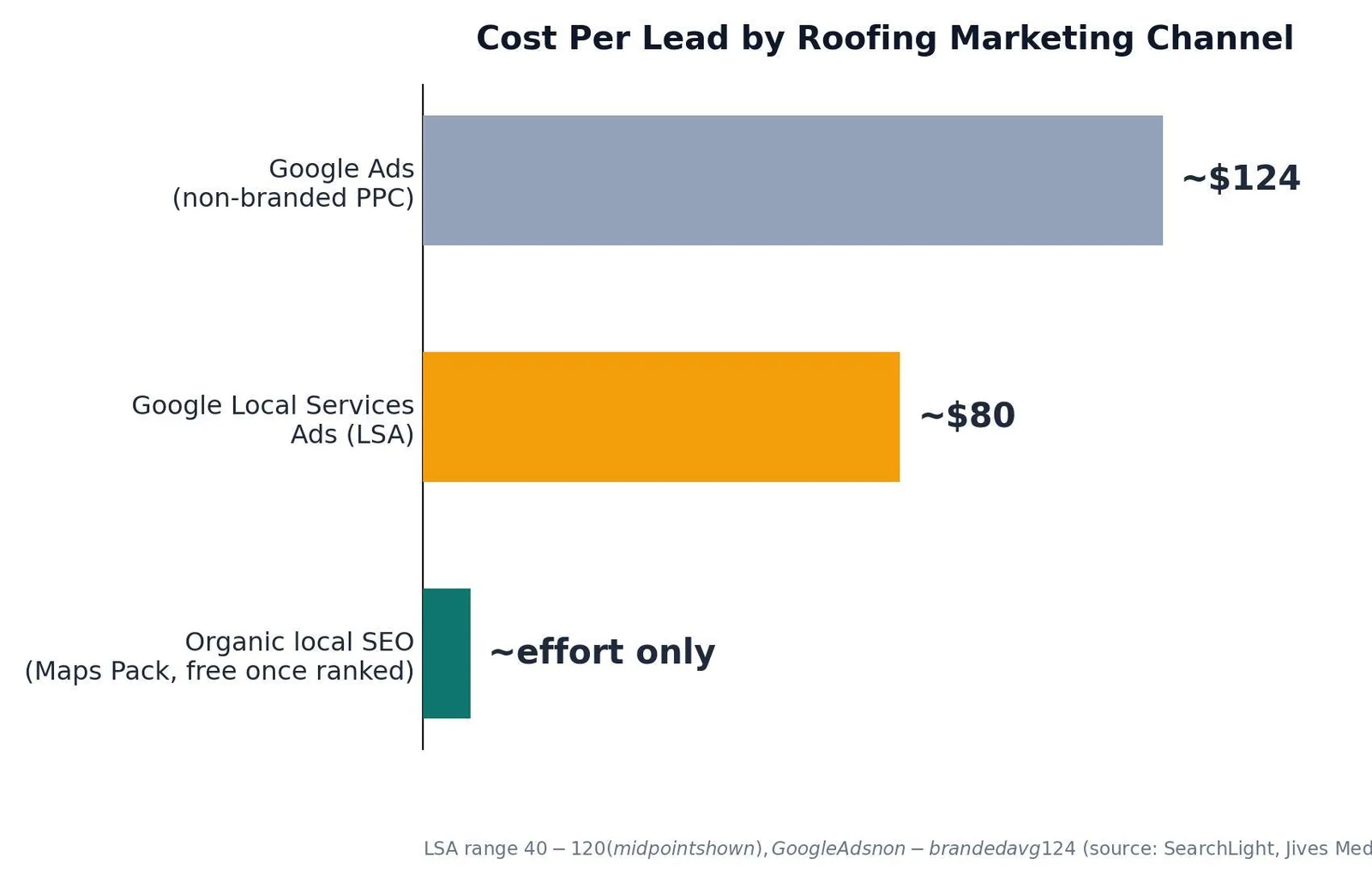
The economics make the priority order clear. According to SearchLight's 2026 benchmark data, tracked across $310,000 in ad spend, non-branded Google Ads for roofing average $124 per lead. Google Local Services Ads run cheaper, typically $40 to $120 per lead, with a strong lead-to-appointment conversion rate. Organic local SEO costs neither per click nor per lead once a page ranks, only the ongoing work of maintaining it.
None of this means paid channels are a bad idea. It means a roofing company relying only on paid leads is paying full price for traffic that consistent local SEO work could capture for a fraction of the cost.
Roofing Lead Channels Compared
| Channel | Typical Cost (USD) | Lead Intent | Best For |
|---|---|---|---|
| Organic local SEO / Maps Pack | Effort-based, no per-lead cost once ranked | High (searcher chose you specifically) | Long-term, compounding lead flow |
| Google Local Services Ads (LSA) | $40-$120 per verified lead | High (Google Guaranteed badge builds trust) | Fast leads while SEO builds |
| Google Ads (non-branded PPC) | ~$124 per lead average | Medium-high | Immediate visibility, competitive markets |
| Paid lead marketplaces (Angi, HomeAdvisor) | $40-$220+, often shared with competitors | Variable, often shared leads close lower | Filling gaps during slow weeks |
Most successful roofing companies run a portfolio: free and compounding channels first, then paid channels layered on top to fill gaps.
Where Roofing Leads Actually Come From
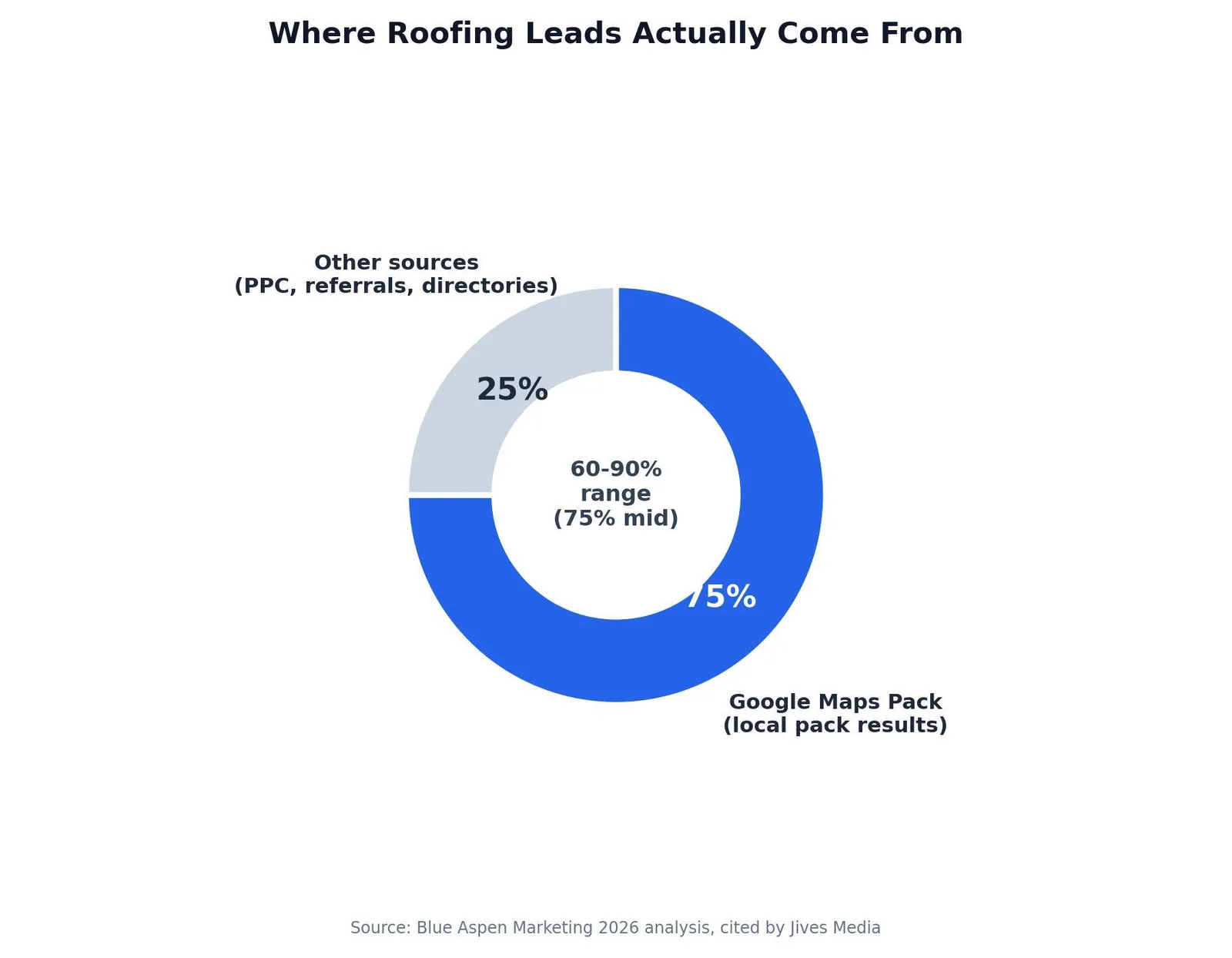
The map pack dominance is hard to overstate. Blue Aspen Marketing's 2026 analysis, cited by Jives Media, found that 60 to 90 percent of roofing leads originate from the Google Maps Pack, with more than 70 percent of those searches happening on mobile. The same research found that 74 percent of roofing companies not appearing in the top three map pack positions were losing high-intent traffic to a small group of competitors who had done the basic optimization work.
How Homeowners Choose a Roofer
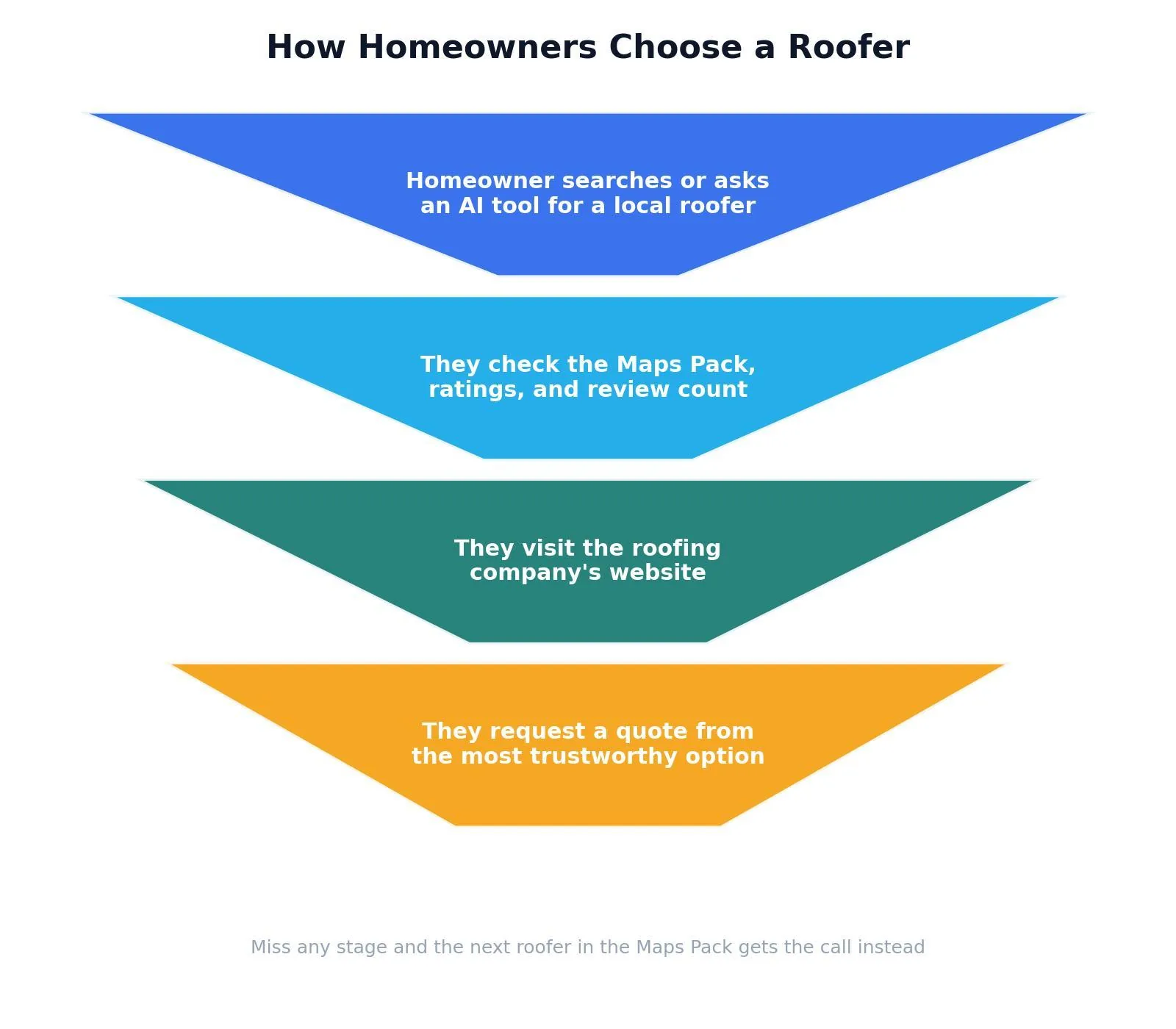
Most roofing jobs follow a predictable path. A homeowner searches Google or asks an AI tool for a roofer near them, checks the map pack along with ratings and review counts, visits the top options' websites to confirm licensing and service area, then requests a quote from whichever option looks most trustworthy. Miss any one of those stages, an incomplete profile, thin reviews, a slow site, and the next name in the map pack gets the call instead.
None of these six steps require hiring a dedicated roofing SEO company, though many roofing businesses eventually bring one in once lead volume justifies it. What matters more than who executes the work is having a clear strategy behind it, since scattered, one-off fixes rarely move a listing into the local map pack the way a coordinated approach does.
The Roofer SEO Roadmap
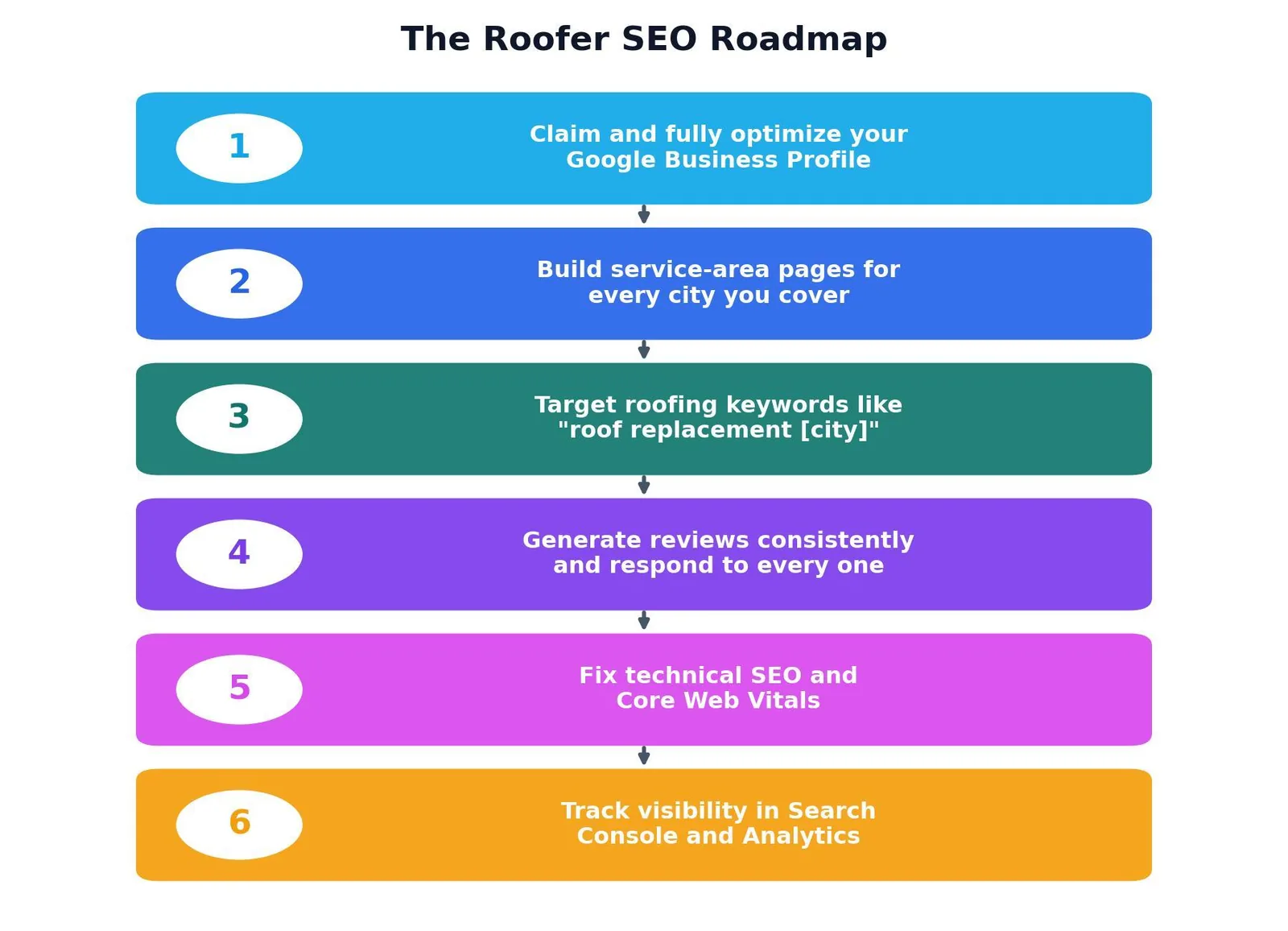
Step 1: Claim and fully optimize your Google Business Profile
This is the fastest, highest-leverage move available. Verify the profile under the correct "Roofing Contractor" category, add current photos, accurate service areas, and complete business hours. Google's own guidance confirms that businesses with complete, accurate profile information are more likely to surface in local search results, which is why this step comes first, before anything else on this list.
Step 2: Build service-area pages for every city you cover
A roofing business working across multiple cities needs a dedicated page for each one, not just a single "service area" list on the homepage. Pages built around roof replacement city and local roofing searches capture the specific, high-intent traffic a generic homepage never will.
Step 3: Target the keywords homeowners actually use
Terms like "roof repair," "roof replacement," and "roofing keywords" combined with a neighborhood or city name reflect real search behavior. In storm-prone markets like Florida, seasonal and emergency-specific terms spike hard and are worth building dedicated content around ahead of the season, not during it.
Step 4: Generate reviews consistently and respond to every one
Reviews are one of the strongest local ranking signals available. A roofing company with 50 or more reviews and a rating above 4.5, with the owner responding to every review, consistently outperforms competitors who treat reviews as an afterthought.
Step 5: Fix technical SEO and Core Web Vitals
A slow roofing website loses mobile leads before a homeowner ever reads a service page. Title tags, clean meta descriptions, and fast load times all directly affect whether a visit turns into a call.
Step 6: Track visibility in Search Console and Analytics
Google Search Console and Google Analytics show which searches bring homeowners to the site and which pages actually convert into requested quotes, which is the only reliable way to know whether the previous five steps are working.
Roofing SEO tool
Is your roofing company set up to win the Maps Pack?
Check off what's already true for your business. Your score updates as you go.
0 of 5
Check off items above to see how ready you are to own the Maps Pack.
Real Results: Local SEO for a Roofing Company
This isn't theoretical. Web Tonic's own work with Toitures LV, a Quebec-based roofing company, followed this playbook: localized keyword targeting, technical fixes, tailored content, and Google Business Profile optimization. The results: Google impressions increased by 11,724, a click-through rate above 20 percent on branded terms, and monthly inbound calls that grew from around 80 to over 760 after the Google Business Profile began appearing on page one.
Common SEO Mistakes Roofing Companies Make
The most common one is leaving the Google Business Profile incomplete, unverified, or listed under the wrong category, which costs map pack visibility that's otherwise free to earn.
Running one generic "service areas" page instead of dedicated pages per city is a close second. It wastes the chance to rank for the specific roof replacement city searches homeowners actually type.
Reviews often get the same passive treatment: accumulating without ever being requested or answered, which hands map pack ranking advantage to competitors who treat review generation as a real process.
Publishing little to no content rounds out the list. With 95 percent of roofing sites running fewer than five blog posts, even modest, consistent content puts a company ahead of most of its local competition.
Frequently Asked Questions
How is SEO for roofers different from general local SEO?
The mechanics overlap heavily with any local SEO roofing companies need: Google Business Profile, consistent listings, and reviews. What's different is the intensity of local intent. Almost every roofing search carries a specific city or neighborhood, which makes service-area pages and map pack visibility more central here than in less location-bound industries.
How much should a roofing company budget for SEO?
It depends heavily on market competition, city size, and whether the work is done in-house or outsourced, so there's no single figure that applies broadly. Get a quote specific to your market before committing budget, and treat any number quoted in USD as a starting point for negotiation.
Does paid search (Google Ads/PPC) still make sense alongside SEO?
Yes. Google Ads and Local Services Ads can fill the pipeline immediately, especially during storm season or in a new market, while organic local SEO builds the durable visibility that keeps generating leads long after any specific campaign budget runs out.
How long does it take to rank in the map pack?
It varies by market competition, but consistent work on Google Business Profile completeness, reviews, and service-area content typically shows measurable movement within a few months, faster in less competitive cities, slower in dense metros with many established competitors.
The Bottom Line on SEO for Roofers
Winning the map pack isn't about outspending competitors, it's about being more complete than they are. A fully verified Google Business Profile, steady reviews, dedicated pages for every city served, and a fast, well-built website routinely beat bigger ad budgets in local roofing search. The roofing companies capturing 60 to 90 percent of their leads from the map pack got there by doing the basic work most competitors still haven't done.
Start with your Google Business Profile this week. It's free, it takes an afternoon, and it's the single highest-leverage item on this entire list.
Ready to Own the Map Pack in Your Market?
Competing for roofing leads without a dedicated local SEO process is how good companies keep losing calls to smaller competitors with better-optimized listings. Web Tonic's growth marketing team has already run this playbook for a roofing client, turning local SEO into an 11,724-impression increase and a jump from 80 to over 760 monthly calls. If you'd rather build that kind of local dominance than keep paying per lead, that's the kind of work this team runs full-time.
More from Web Tonic: growth marketing services, data & analytics.
Sources: searchlightdigital.io · jivesmedia.com · support.google.com