



Table of contents
Search engine optimization is a system of interconnected components, and understanding each one determines whether your website ranks or stays invisible. The main components of SEO break down into three pillars — technical SEO, on-page SEO, and off-page SEO — each targeting a different layer of how search engines discover, evaluate, and rank your content.
Key Takeaways
- Pages with fully optimized on-page elements are 3.1× more likely to rank in the top 3 positions than those with partial optimization (Ahrefs, 2024 study of 3M pages).
- 80% of SEO professionals confirm that backlinks still directly influence search rankings (Editorial.link survey of 518 experts, 2026).
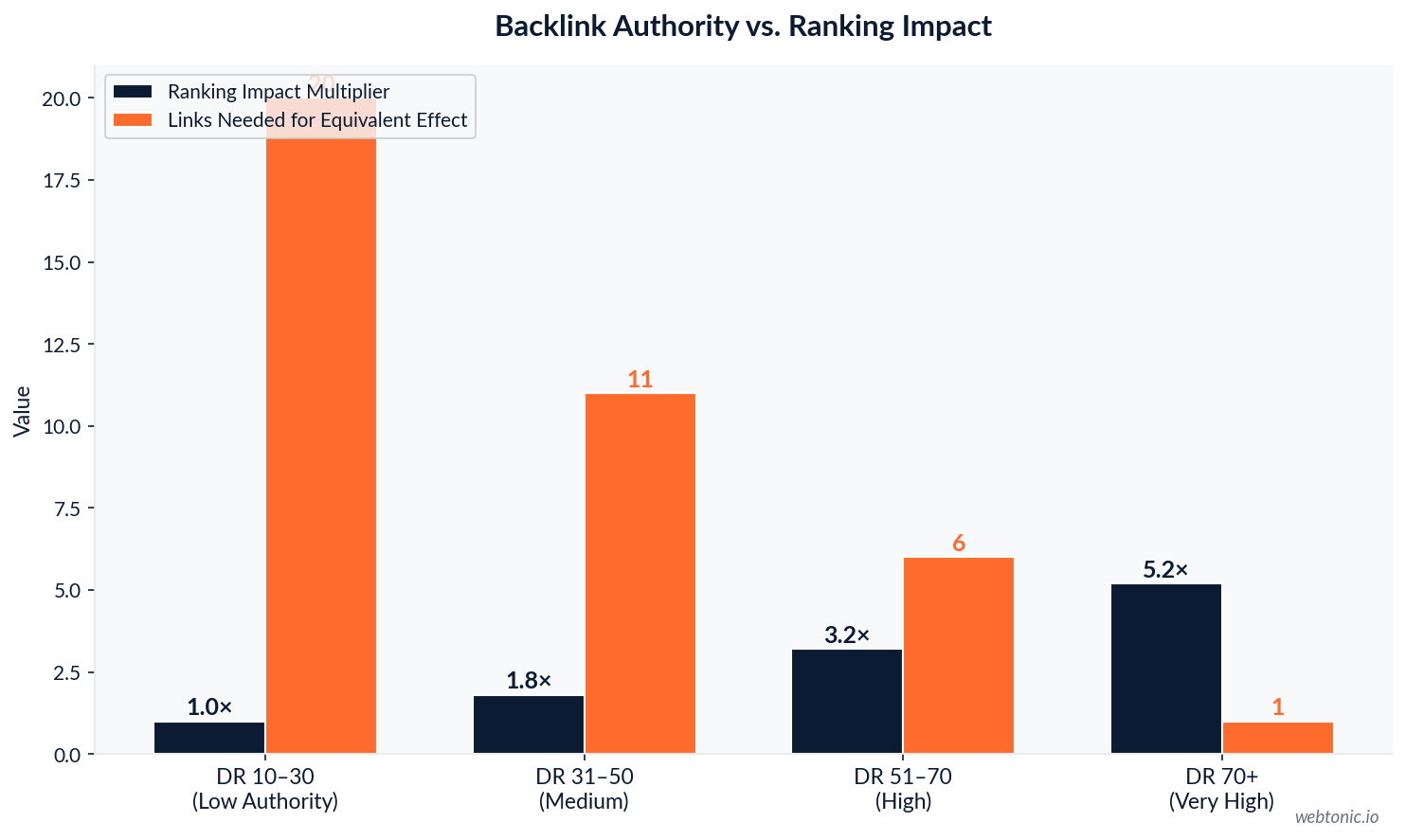
- Links from high-authority domains (DR 70+) deliver 5.2× more ranking impact than links from low-authority sites (Ahrefs, 2024).
- Google rewrites meta descriptions 71% of the time — direct-answer copy has the lowest rewrite rate (Zyppy SEO, 2025).
- Core Web Vitals are a confirmed ranking signal feeding into Google's core ranking systems alongside content relevance and links.
- Technical SEO, on-page optimization, and off-page authority form the three interdependent pillars every SEO strategy must address.
What Are the Main Components of SEO?
Search engine optimization is not a single tactic — it is a framework built on three core components. Each component addresses a different question search engines ask about your website:
| Component | What It Covers | Core Question It Answers |
|---|---|---|
| Technical SEO | Site speed, crawlability, indexation, structured data, Core Web Vitals | Can search engines find, crawl, and render this site? |
| On-Page SEO | Keywords, content quality, meta tags, internal links, user experience | Does the content match what users are searching for? |
| Off-Page SEO | Backlinks, brand mentions, social signals, digital PR | Does the web trust and reference this site as an authority? |
These three pillars work together. A site with excellent content but broken crawlability will not rank. A technically flawless site with thin content will be outranked. And a website with no external authority signals will struggle against competitors who have earned trust across the web. Understanding each component — and how they connect — is the foundation of any effective SEO strategy.
Technical SEO: The Foundation Search Engines Need
Technical SEO ensures that search engines can efficiently discover, crawl, render, and index your website. Without a solid technical foundation, even high-quality content and strong backlinks become invisible to Google search results. Think of technical SEO as the infrastructure layer — it does not create content, but it determines whether content can be found.
Crawlability and Indexation
Search engines use bots (like Googlebot) to crawl your website and add pages to their index. If Googlebot cannot reach a page, that page does not exist in search results. Key crawlability factors include:
- XML sitemaps — A clean, dynamic sitemap submitted through Google Search Console helps search engines discover all target pages.
- Robots.txt configuration — Validates that nothing critical is blocked from crawling. Misconfigured robots.txt files are one of the most common technical SEO errors.
- Crawl budget management — For sites with 10,000+ pages, optimizing crawl depth and eliminating duplicate content ensures Googlebot spends time on high-value pages.
- Canonical tags — Self-referencing canonical tags on all pages prevent duplicate content issues and consolidate ranking signals.
Core Web Vitals and Site Speed
Core Web Vitals are a confirmed Google ranking signal that measures real-user experience across three metrics:
| Metric | What It Measures | Target |
|---|---|---|
| LCP (Largest Contentful Paint) | Loading speed of the largest visible element | ≤ 2.5 seconds |
| INP (Interaction to Next Paint) | Responsiveness to user interactions | ≤ 200 milliseconds |
| CLS (Cumulative Layout Shift) | Visual stability during page load | ≤ 0.1 |
A 2025 study of 208,000 websites found that while Core Web Vitals are just one of many ranking factors, improving scores contributes to better user experience signals that search engine algorithms reward. Google integrates CWV data into its core ranking systems — it is not a standalone ranking system, but a real and measurable signal.
Structured Data and Schema Markup
Structured data helps search engines understand the context of your content beyond plain text. Implementing schema markup (using JSON-LD format) enables rich results — star ratings, FAQ dropdowns, how-to steps, and product information — that increase click-through rates from search engine results pages. Common schema types for SEO include Article, FAQPage, LocalBusiness, Product, and HowTo. Google Search Console provides a dedicated report to monitor structured data errors and valid items across your site.
On-Page SEO: Optimizing What Users and Search Engines See
On-page SEO covers everything you control directly on your website — the content, the HTML elements, and the user experience each page delivers. According to an Ahrefs study analyzing 3 million pages, pages with fully optimized on-page elements are 3.1× more likely to rank in the top 3 positions than those with partial optimization.
Keyword Research and Targeting
Effective keyword research identifies the terms your target audience actually searches for. The process goes beyond finding high-volume keywords — it requires understanding search intent (informational, navigational, commercial, transactional) and mapping keywords to specific pages. Long tail keywords (3+ word phrases) often convert better because they match specific user needs. Best practices for keyword targeting include placing primary keywords in the title tag, H1, first 100 words, and URL slug — without keyword stuffing, which increases DSEO danger scores and triggers search engine penalties.
Content Quality and E-E-A-T
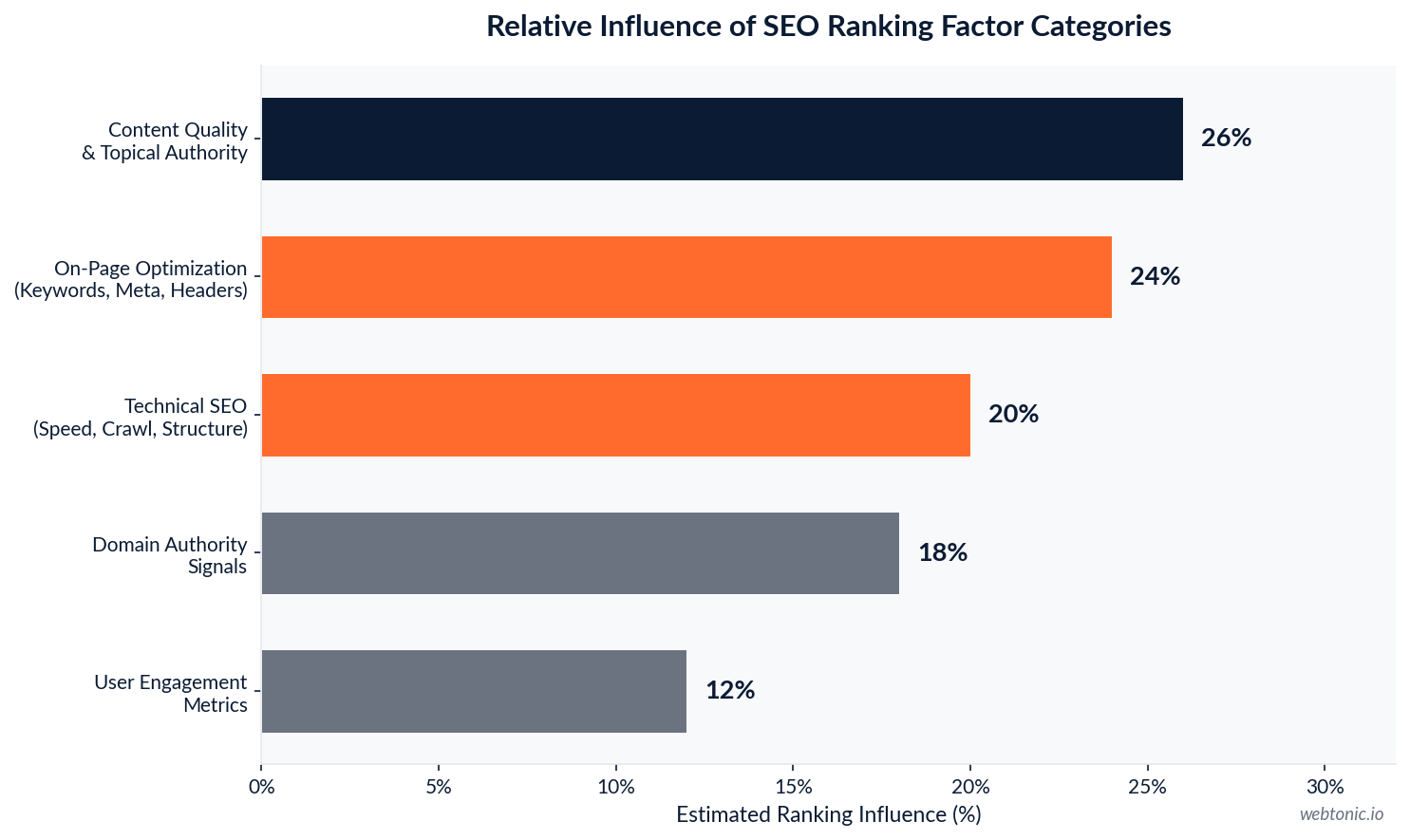
Google's search engine algorithms prioritize high quality content that demonstrates Experience, Expertise, Authoritativeness, and Trustworthiness (E-E-A-T). 41% of enterprise SEO budgets go to content creation, reflecting how central quality is to rankings. Quality content is not just about word count — it is about providing comprehensive, accurate answers that satisfy user intent better than competing pages. Consistent publication of satisfying content accounts for approximately 23% of ranking influence according to recent ranking factor analyses, while niche expertise and topical authority contribute roughly 13%.
Title Tags and Meta Descriptions
Title tags remain one of the strongest on-page ranking signals. Effective SEO title tag formulas balance primary keyword inclusion with click-worthy phrasing — staying within the 50–60 character display limit. Meta descriptions, while not a direct ranking factor, significantly influence click-through rates from search results. However, Google rewrites meta descriptions 71% of the time (Zyppy SEO, 2025). Writing direct-answer meta copy aligned with the page's highest-volume query intent produces the lowest rewrite rate.
Internal Linking Architecture
Internal links distribute ranking authority across your site and help search engines understand content hierarchy. A well-planned internal linking strategy connects related content through contextual anchor text, establishes pillar-cluster relationships, and ensures that no important page sits more than 3 clicks from the homepage. Internal links also help users navigate between related topics, improving dwell time and reducing bounce rate — both strong user experience signals that search engines monitor.
Off-Page SEO: Building Authority Beyond Your Website
Off-page SEO encompasses every signal from external sources that tells search engines your site is trustworthy, authoritative, and worth ranking. While on-page SEO optimizes what is on your site, off-page SEO builds your reputation across the web. The most impactful off-page factor remains link building — earning backlinks from other websites.
Backlinks and Link Building
Backlinks are votes of confidence from one website to another. 80% of SEO professionals confirm that backlinks still directly influence search rankings (Editorial.link survey of 518 SEO experts, 2026). The quality of those links matters far more than quantity:
- Links from high-authority domains (DR 70+) have 5.2× more impact on rankings than links from low-authority sites below DR 30 (Ahrefs, 2024).
- A single link from a DR 80+ domain can equal 10–20 links from DR 30–40 domains in ranking power.
- 73.2% of SEO experts believe backlinks influence the chance of appearing in AI-generated search results (Editorial.link, 2026).
- Links remain one of the top three factors influencing organic search rankings alongside content quality and search intent alignment.
Brand Signals and Digital PR
Beyond traditional link building, search engines evaluate brand authority through unlinked brand mentions, social media engagement, reviews, and media coverage. Digital marketing strategies that generate genuine brand awareness create a compounding SEO effect — branded search volume increases, click-through rates improve, and search engine algorithms associate your domain with topical authority. Google's ranking factors in 2026 fall into five core buckets: domain authority, topical authority, document quality, freshness, and engagement — and off-page signals contribute to at least three of those categories.
Social Media and Content Distribution
While social media signals are not a direct ranking factor, social platforms amplify content reach, drive referral traffic, and create opportunities for natural backlink acquisition. A piece of content that gains traction on LinkedIn, X (formerly Twitter), or industry forums is more likely to be referenced and linked to by bloggers, journalists, and other website owners. This indirect relationship between social media activity and search engine rankings makes content distribution an essential part of any off-page SEO strategy.
How the Three SEO Components Work Together
The main components of SEO are not independent silos — they form an interconnected system where weakness in one area undermines the others. Here is how the three pillars depend on each other:
| Scenario | What Happens | Why It Fails |
|---|---|---|
| Strong content, weak technical SEO | Pages are not indexed or load slowly | Search engines cannot crawl or render the content |
| Strong technical, thin content | Pages are indexed but rank poorly | Content does not satisfy search intent or cover the topic |
| Strong content + technical, no backlinks | Pages rank for low-competition terms only | No external authority signals to compete for harder keywords |
| All three components optimized | Pages are indexed, rank well, and maintain positions | N/A — the system works as designed |
A balanced SEO strategy invests proportionally across all three areas. Many businesses focus exclusively on content creation while neglecting technical SEO audits or link building campaigns. The highest-performing websites treat SEO as a continuous process — regularly auditing technical health, refreshing content, and earning new authority signals.
Building an SEO Strategy That Covers All Components
Implementing the main components of SEO requires a structured approach. Rather than tackling everything at once, prioritize based on current gaps and potential impact:
- Audit technical foundations first — Run a crawl using Google Search Console, Screaming Frog, or a data intelligence platform to identify indexation errors, slow pages, and broken links.
- Map keywords to content gaps — Identify where your existing content fails to match user search intent, then plan new pages or optimize existing ones.
- Optimize on-page elements systematically — Update title tags, headers, internal links, and structured data across priority pages first.
- Build off-page authority strategically — Focus on earning links from relevant, high-authority domains through content worth linking to, digital PR, and relationship-based outreach.
- Measure, iterate, and refine — Track rankings, organic traffic, Core Web Vitals, and backlink growth monthly. SEO is not a one-time project — search engine algorithms evolve constantly.

Common SEO Mistakes That Undermine Each Component
Even experienced digital marketing teams make errors that weaken their search engine optimization efforts. Here are the most impactful mistakes mapped to each component:
| Component | Common Mistake | Impact |
|---|---|---|
| Technical SEO | Blocking important pages in robots.txt | Pages disappear from search entirely |
| Technical SEO | Ignoring duplicate content and missing canonicals | Ranking signals split across multiple URLs |
| On-Page SEO | Keyword stuffing in content and meta tags | Triggers algorithmic penalties and reduces readability |
| On-Page SEO | Orphan pages with no internal links | Search engines cannot discover or prioritize the page |
| Off-Page SEO | Buying low-quality links from PBNs | Manual penalties from Google that tank entire domain |
| Off-Page SEO | Ignoring anchor text diversity | Unnatural link profile triggers algorithmic filters |

Local SEO as a Technical and On-Page Component
For businesses targeting geographic areas, local SEO bridges technical and on-page components. Setting up and optimizing a Google Business Profile, earning local citations, and ensuring NAP (Name, Address, Phone) consistency across directories all contribute to local search engine rankings. 46% of all Google searches have local intent, making local SEO an essential component for brick-and-mortar businesses. Technical elements like local schema markup and on-page signals like location-specific content work together to help search engines understand geographic relevance and serve local results.
How Search Engine Algorithms Evaluate SEO Components
Modern search engine algorithms use hundreds of signals organized around the core SEO components. Google's search engine uses machine learning systems to evaluate how well your website serves users — from the technical ability for search engines to crawl and index your pages, to the on-page quality of your content, to the off-page trust signals from other websites. Understanding how search engines understand your site through these three lenses helps prioritize which components need attention first. A site audit using tools like Google Search Console reveals technical gaps, while keyword research tools and backlink analyzers surface on-page and off-page opportunities.
Related reading
- SEO for Wedding Photographers: A Practical Growth Playbook
- SEO for Insurance Agents: A Practical Growth Playbook
- SEO for Manufacturers: A Practical Growth Playbook
- GEO & AEO services at Web Tonic
FAQ
What are the three main components of SEO?
The three main components of search engine optimization are technical SEO (crawlability, site speed, structured data), on-page SEO (content, keywords, meta tags, internal links), and off-page SEO (backlinks, brand authority, digital PR). All three must work together for a website to rank well in Google search results.
Which SEO component is most important for rankings?
No single component dominates — they are interdependent. However, if your site has technical crawl issues, fixing those first yields the fastest results because no amount of content or links helps a page that search engines cannot find. Once technical health is solid, high quality content and link building become the primary ranking drivers.
How do Core Web Vitals affect SEO rankings?
Core Web Vitals (LCP, INP, CLS) are a confirmed ranking signal within Google's core ranking systems. They measure page loading speed, interactivity, and visual stability. While their weight is smaller than content relevance or backlinks, improving Core Web Vitals enhances user experience metrics that contribute to better search engine rankings.
Are backlinks still important for SEO in 2025?
80% of SEO professionals confirm that backlinks still directly influence rankings (Editorial.link, 2026). Links from high-authority domains (DR 70+) deliver 5.2× more ranking impact than low-authority links. Additionally, 73.2% of experts believe backlinks influence visibility in AI-generated search results.
How often should you audit your SEO components?
Technical SEO audits should run monthly (automated) with quarterly deep-dives. On-page SEO reviews should happen whenever content is published or updated, with quarterly audits of top-performing pages. Off-page SEO monitoring (backlink profile, brand mentions) should be continuous, with monthly link building activity assessments.
Sources
RankSpark — On-Page SEO Checklist 2025
Editorial.link — Link Building Statistics Survey 2026
RankTracker — Backlink Statistics 2025
CoreWebVitals.io — CWV and SEO Rankings
Increv — Core Web Vitals Study 2025
WordStream — Google Ranking Factors 2026
Search Engine Land — On-Page SEO 2025
IndexCraft — On-Page SEO Guide 2026


