Table of contents
A plumber in Denver and a plumber in Austin can write the exact same blog post, target the exact same keyword, and still get completely different rankings. The difference usually isn't the content. It's the links. Google weighs geographic relevance heavily in local search, and the fastest way to prove that relevance is a backlink profile built from sites that are actually rooted in your community.
That's what local link building is: earning local backlinks from websites tied to your city, region, or industry association, rather than chasing generic national placements. Search engines and, increasingly, AI answer tools both lean on these geographic signals, and social media mentions can amplify a local link's visibility even when the platform itself doesn't pass ranking credit. This guide breaks down what local link building is, why it matters for local SEO, the tactics that actually work in 2026, and how to avoid the shortcuts that put your rankings at risk.
Key Takeaways
- Local link building means earning backlinks from websites genuinely connected to your city, region, or local industry, not just any site with a high domain rating.
- You don't need thousands of links to win a local pack spot. Top-ranking local pages often carry a modest, tightly relevant backlink profile rather than a massive one.
- A Google Business Profile and consistent NAP (name, address, phone number) data are the foundation, but links from local news, Chamber of Commerce pages, and community sites push rankings further.
- Unlinked brand mentions are the easiest wins available. Reaching out to turn an existing mention into a hyperlink converts at a very high rate.
- Buying links from local directories or press-release mills violates Google's link spam policies and can trigger a manual action.
- Digital PR and genuinely local partnerships now outperform generic outreach and directory submissions.
What Is Local Link Building?
Local link building is the process of earning backlinks from websites that are geographically or topically tied to your business, rather than links from anywhere on the internet. A link from a Chicago food blog to a Chicago restaurant carries local relevance that a random national directory link doesn't. Google uses these geographic and topical signals, alongside proximity and your Google Business Profile, to decide who deserves visibility for "near me" and city-specific searches.
This differs from traditional link building mainly in scope. Traditional link building casts a wide net for domain-wide authority. Building local link equity narrows that net to sites your actual customers already read, trust, and click through: community newspapers, business directories tied to your Chamber of Commerce, local sponsorships, and industry associations based in the same region. The goal is links local audiences already trust, not links that merely exist.
Why Local Link Building Matters for SEO
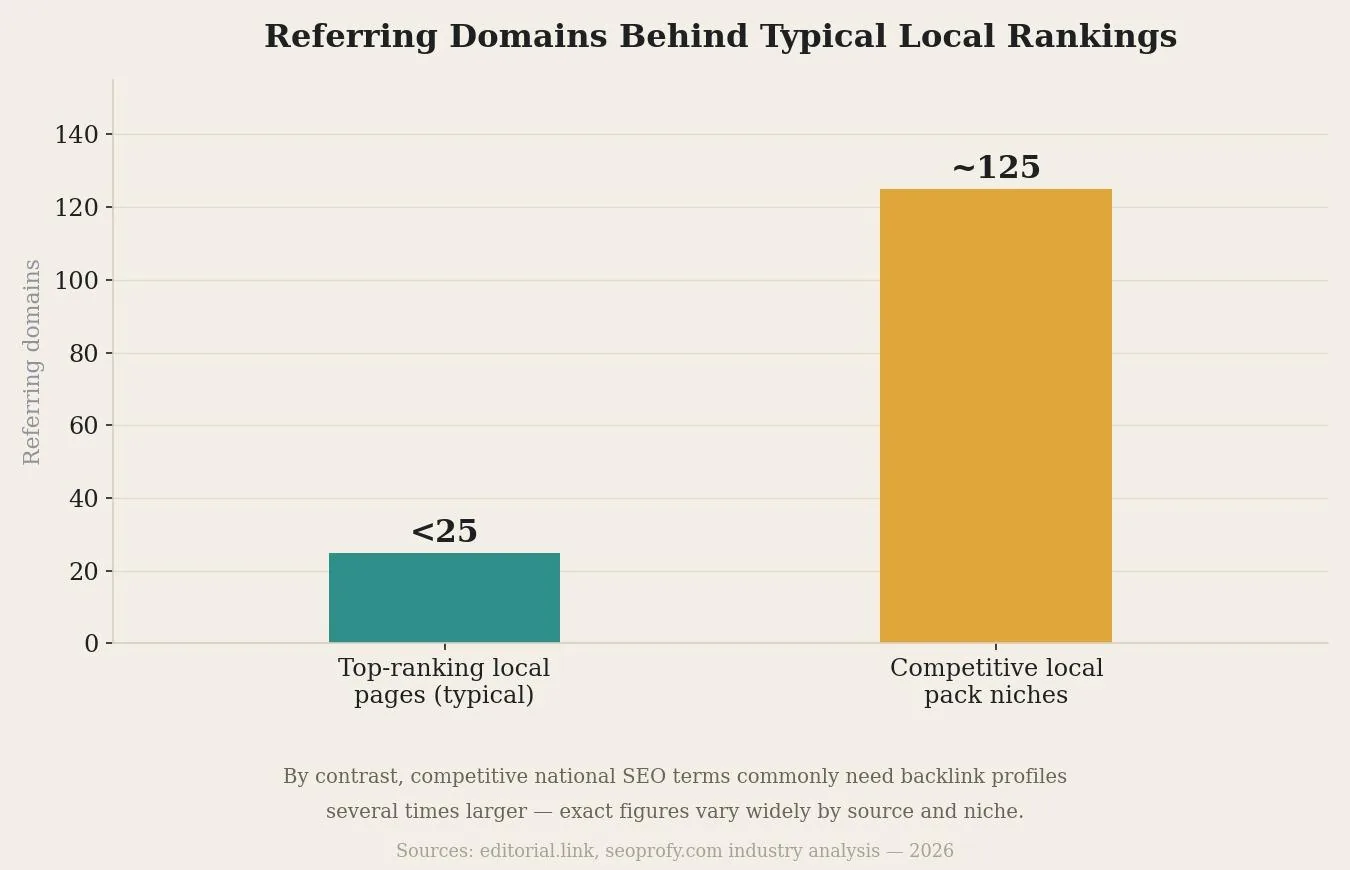
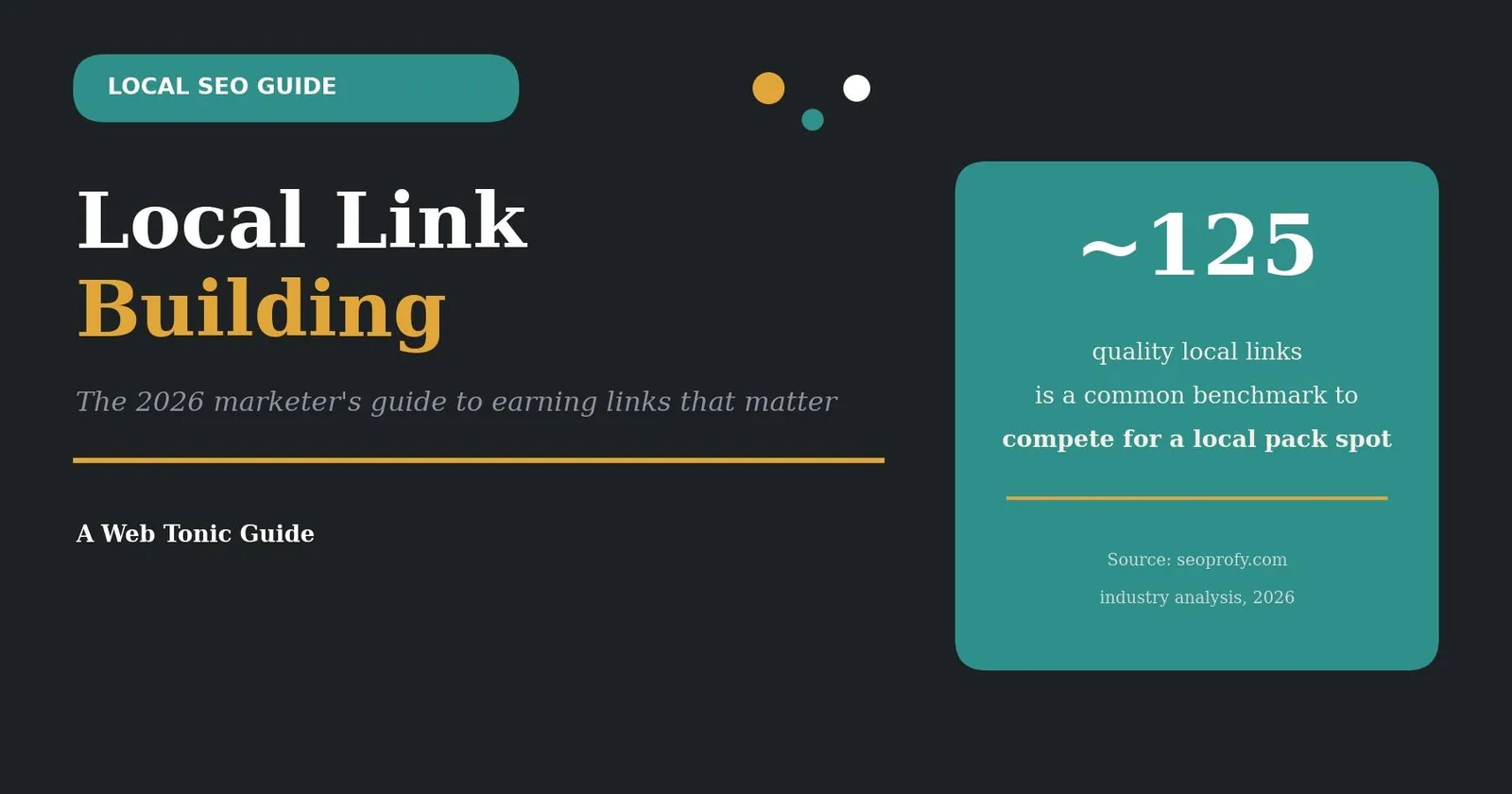
Local search doesn't reward the biggest backlink profile. It rewards the most relevant one. One analysis of local pack rankings found that around 125 high-quality links from trusted regional sites is typically enough to compete for a local pack spot, and that the exact number varies sharply by how competitive the niche is: a personal injury lawyer in a major metro needs a far stronger profile than an auto repair shop in a smaller market.
That's a very different bar from national SEO, where competitive terms can require backlink profiles far larger. A separate review of local SERPs found that top-ranking local pages often carry fewer than 25 referring domains, which means a handful of the right local links can outperform a much larger pile of generic ones.
Reviews compound the effect. According to BrightLocal's local SEO research, Google Business Profile management, content creation, and citation building are rated among the most valuable local SEO services by marketers themselves, and inbound link quality and authority remain one of the strongest influences on local organic rankings specifically. Local links aren't a nice-to-have add-on to a Google Business Profile strategy. They're a separate ranking lever that a spotless profile alone can't replace.
Local Link Building Tactics That Work in 2026
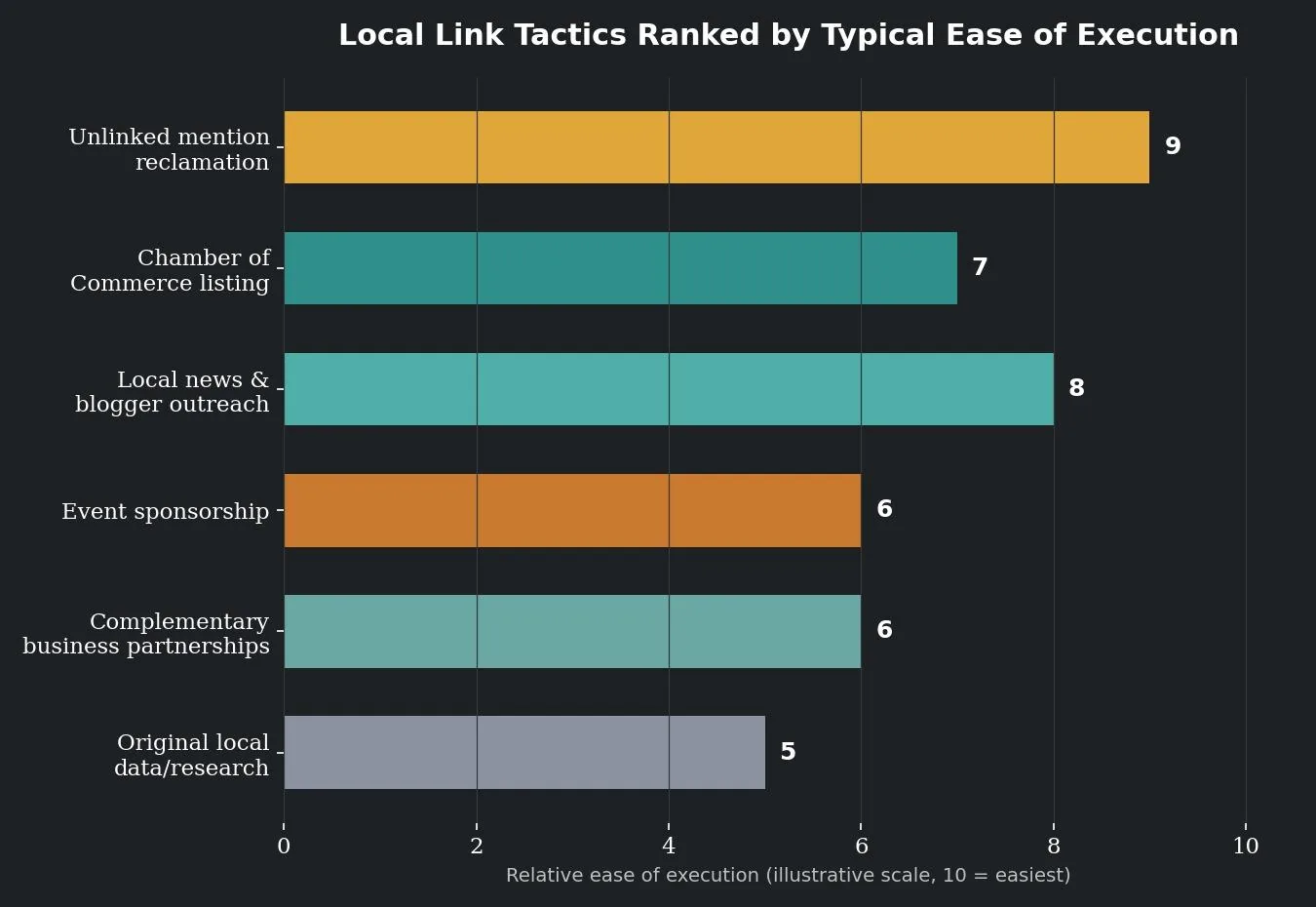
Claim listings on real local and industry directories
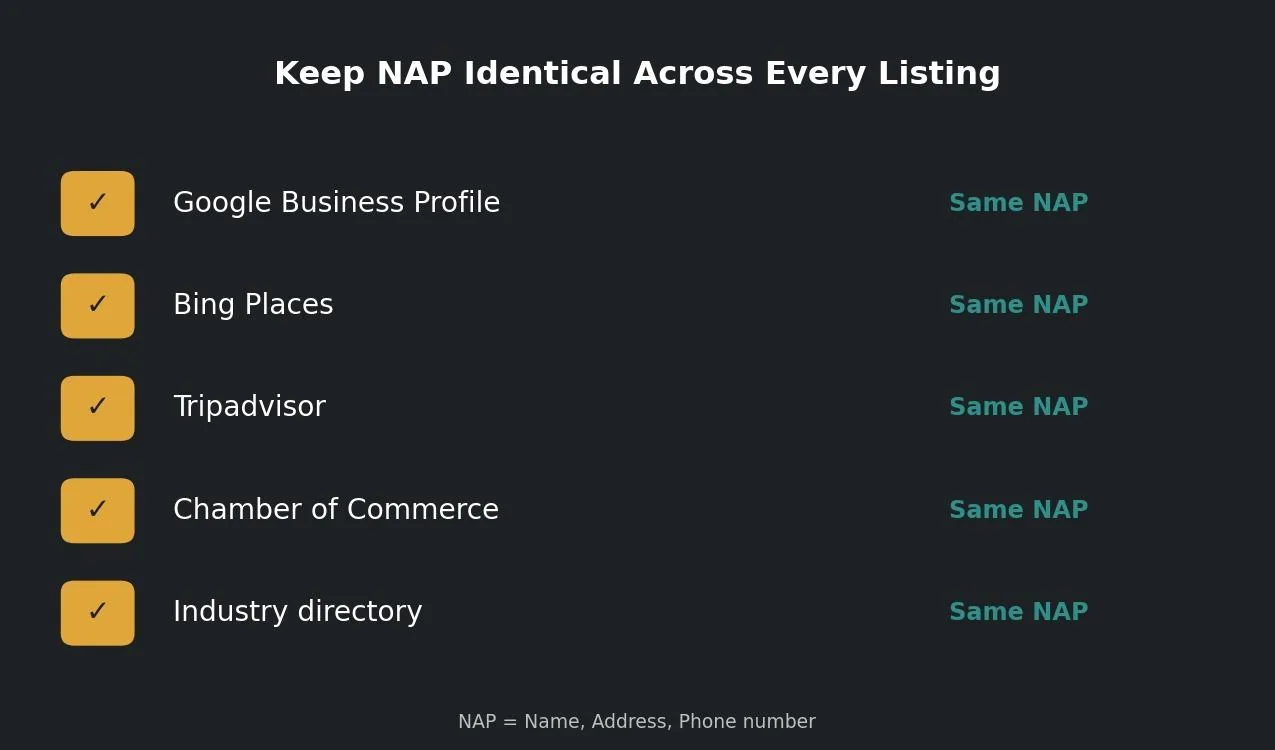
Skip the mass-submission directory farms. Focus on directories that carry actual weight: your city or state Chamber of Commerce, industry associations (a dental practice benefits from an American Dental Association-style listing, a law firm from a state bar directory), and platforms people genuinely browse, like Google Business Profile (still often called GMB, short for the platform's old Google My Business name), Bing Places, Google Maps, and Tripadvisor. Businesses with locations in multiple states, say a chain with outposts in New York and California, should keep separate Google Business Profiles fully filled out for each address rather than one listing trying to cover every market. Every listing should carry identical NAP (name, address, phone number) data. Inconsistent NAP across directories is one of the most common reasons a business fails to rank in the local pack.
Join your local Chamber of Commerce
A Chamber of Commerce membership typically comes with a directory listing and a backlink from a genuinely trusted local domain. One local link building breakdown frames it plainly: a Chamber of Commerce listing tells both the community and search engines that a business is real, local, and invested, and the listing typically carries the same NAP data that reinforces every other local citation. It's not a high-authority global site, but it's exactly the kind of geographically anchored link Google's local algorithms respond to, and it signals real local community investment rather than a rented address. Local websites like this are also where the backlinks local businesses actually need tend to concentrate, since they already reach the same audience your business is trying to reach.
Reclaim unlinked brand mentions
If a local news site, blog, or forum has mentioned your business name without linking to you, that's a fast, high-conversion opportunity. Set up a Google Alert or a mention-tracking tool for your brand name, then reach out and ask the site to turn the mention into a link. This tactic converts unusually well because the publisher already decided your brand was worth mentioning; you're just asking them to finish the job.
Sponsor or participate in local events
Sponsoring a 5K, a Little League team, a school fundraiser, or a community festival often earns a link from the event's website or a local news writeup, alongside real goodwill in your market. Local newspapers and regional outlets, from a Denver community paper to an Austin business journal, regularly link to sponsors and participants in event coverage.
Build relationships with local news and bloggers
Pitch a local reporter a genuinely newsworthy angle: a new location opening, a milestone, a city-specific data point your business is positioned to share. A single mention in a local newspaper or a regional outlet with real readership can outweigh a dozen directory links, and it's the kind of citation that also shows up well if your brand gets referenced in AI-generated answers. You don't need a Forbes or New York Times feature to see results locally; a well-read neighborhood outlet often does more for local relevance than a national mention ever could. Community-specific Reddit threads and local subreddits can also surface genuine, if unlinked, brand mentions worth tracking and following up on.
Partner with complementary local businesses
A bakery and a nearby coffee shop, a wedding photographer and a florist, an HVAC company and a plumber: businesses that serve the same local customers without competing directly can link to each other naturally on "recommended partners" or "local favorites" pages. This works because the link reflects a real relationship, not a manufactured one.
Publish original local data or research
A short local market report, salary data for your city, or a survey of your metro area gives local news outlets and bloggers something concrete to cite. This is slower than outreach-based tactics but tends to produce the highest-authority links, since publications like a regional business journal or a city magazine will cite original data on their own.
Local Link Building vs. Traditional Link Building
| Factor | Local Link Building | Traditional (National) Link Building |
|---|---|---|
| Primary goal | Prove geographic and community relevance | Build broad domain-wide authority |
| Typical sources | Chamber of Commerce, local news, community sites, local directories | Industry publications, guest posts, digital PR, national media |
| Volume needed | Often under 125 quality links for a competitive local market | Commonly cited as several times larger, varying widely by niche |
| Best quick win | Reclaiming unlinked brand mentions and NAP-consistent directory listings | Digital PR and original research |
| Key risk | Low-quality mass directory submissions | Paid link networks and link exchanges |
Local Link Building Tactics to Avoid
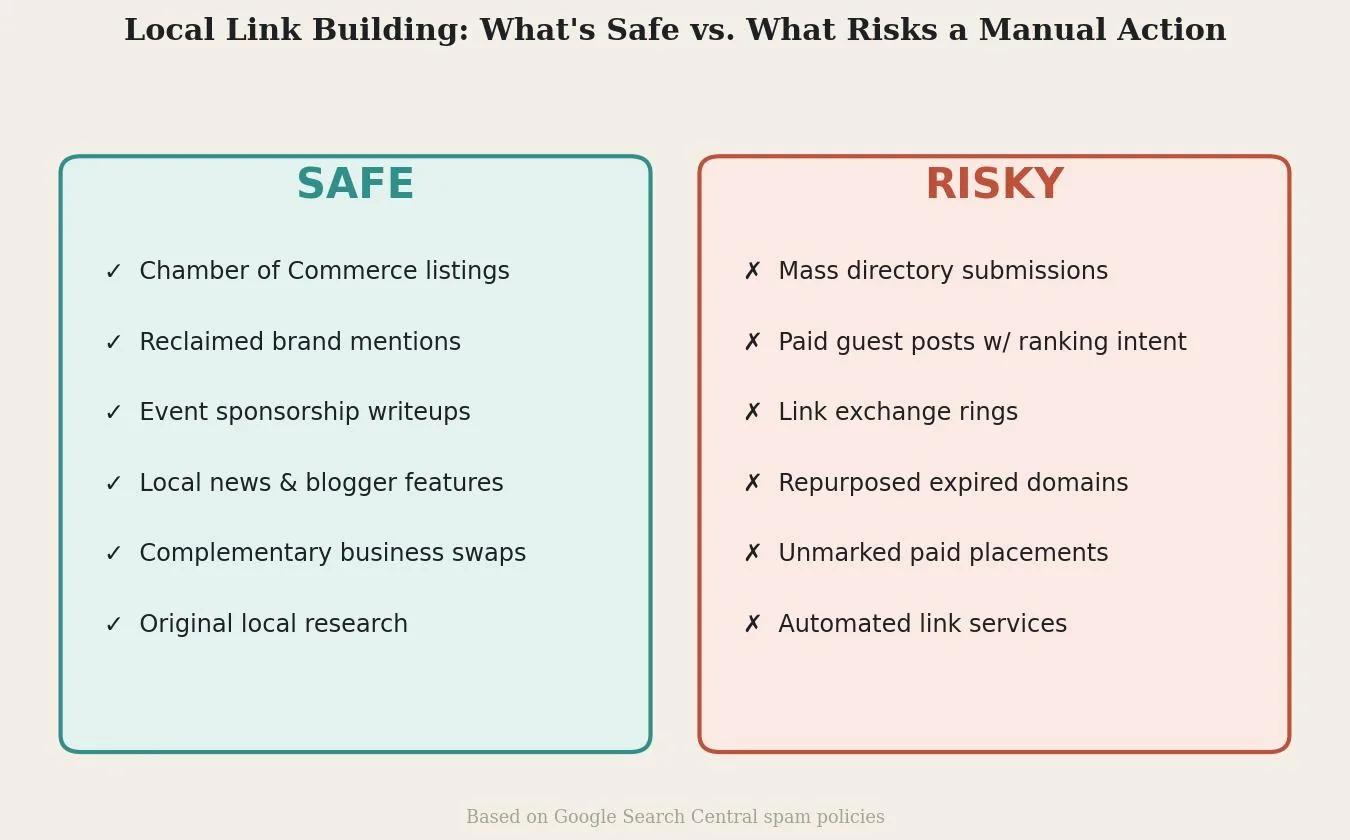
Google's own spam policies documentation is direct about this: buying or selling links for ranking purposes is a violation, and that includes exchanging money for placements in directories or press-release mills whose primary purpose is passing ranking credit rather than reaching a real audience. Google explicitly allows paid placements for advertising purposes, but only when they're marked with rel="nofollow" or rel="sponsored".
In practice, that rules out a few common shortcuts local businesses get pitched on:
- Mass directory submission services that list your business on hundreds of low-relevance directories overnight.
- Paid guest posts on unrelated local blogs, purely for a keyword-rich anchor link.
- Link exchange rings where a group of unrelated local businesses agree to link to each other on a dedicated "partners" page with no real relationship behind it.
- Expired local domains repurposed just to inherit old backlink equity with unrelated new content.
None of these are worth the risk. A manual action for unnatural links can wipe out rankings across an entire domain, and recovering from one means auditing and disavowing every flagged link before you can even request reconsideration.
Make Sure Your NAP and Local Schema Are Solid First
Before any outreach campaign, confirm the technical foundation is right. Google's LocalBusiness structured data documentation specifies that a business's name and address are required properties for local business rich results, with phone number, hours, and geographic coordinates recommended to strengthen the listing further. Getting this markup right, and keeping it identical to what's listed on your Google Business Profile, Bing Places, and every directory you're building links from, removes one of the most common reasons a business's local link building efforts underperform.
Google's guidance on establishing business details also confirms that a verified Business Profile is one of the direct channels Google uses to populate accurate information into a business's knowledge panel, which reinforces the same NAP data your local links are pointing to.
Try It: Local Link Opportunity Finder
Answer two quick questions to see which local link building tactic is the best starting point for your business.
Local link opportunity finder
Where should your local links come from?
Answer two quick questions about your business to see the local link tactic worth prioritizing first.
1. How established is your business in your area?
2. What do you have the most of right now?
Recommended starting point
—
—
Frequently Asked Questions
How many local links do I actually need to rank?
There's no fixed number. Competitive markets and competitive niches, like a personal injury lawyer in a major city, need a stronger profile than a lower-competition local service. Many local pages rank with well under 125 referring domains, and quality matters far more than volume.
Is a Chamber of Commerce link worth pursuing?
Yes. It's rarely a high-authority link on its own, but it's a genuinely local, topically relevant signal, and it usually comes bundled with real community visibility and networking value beyond SEO.
What's the fastest local link building win for a new business?
Reclaiming unlinked brand mentions and making sure NAP data is identical across your Google Business Profile, Bing Places, Tripadvisor, and any directory listings. Both are low-effort compared to outreach campaigns and directly support local pack visibility.
Can I buy local directory placements to speed this up?
You can pay for a placement, but it must be marked rel="nofollow" or rel="sponsored" if the payment is for advertising rather than editorial coverage. Paying specifically to pass ranking credit violates Google's link spam policies and risks a manual action.
Do local links help with AI-generated answers too?
They can. A citation from a genuine local news outlet or industry association carries the same real-world credibility signals that AI systems tend to weight when summarizing recommendations, alongside the direct SEO value of the link itself.
The Bottom Line on Local Link Building
Local link building isn't about accumulating the largest backlink count. It's about proving to Google, and increasingly to AI-driven search, that your business is a genuine, active part of the community it claims to serve. A Chamber of Commerce listing, a reclaimed brand mention, a sponsorship writeup, and a handful of relationships with local news and complementary businesses will typically outperform a directory-stuffing campaign many times over.
Start with the technical foundation: consistent NAP data and clean LocalBusiness structured data. Then work through the tactics in order of effort, from reclaiming mentions to building real local relationships, rather than trying to run all of them at once.
Ready to Build a Local Backlink Profile That Actually Ranks?
Local link building takes consistent outreach and relationship-building that's easy to deprioritize when you're running a business day to day. Web Tonic's growth marketing team builds local link acquisition into every local SEO engagement, from Google Business Profile optimization to citation cleanup and geo-targeted content, so your local visibility compounds instead of stalling out.
More from Web Tonic: growth marketing services, data & analytics, performance creative.
Sources: seoprofy.com · editorial.link · brightlocal.com · digitalseoland.com · developers.google.com