



Table of contents

Dental practices tracking the right KPIs outperform those relying on instinct. Below are the analytics benchmarks shaping dental operations in 2026 — from Henry Schein One's Catalyst Index to market data.
Key Takeaways
- The dental practice management software market is valued at $2.62 billion in 2026, growing at 11.12% CAGR through 2031.
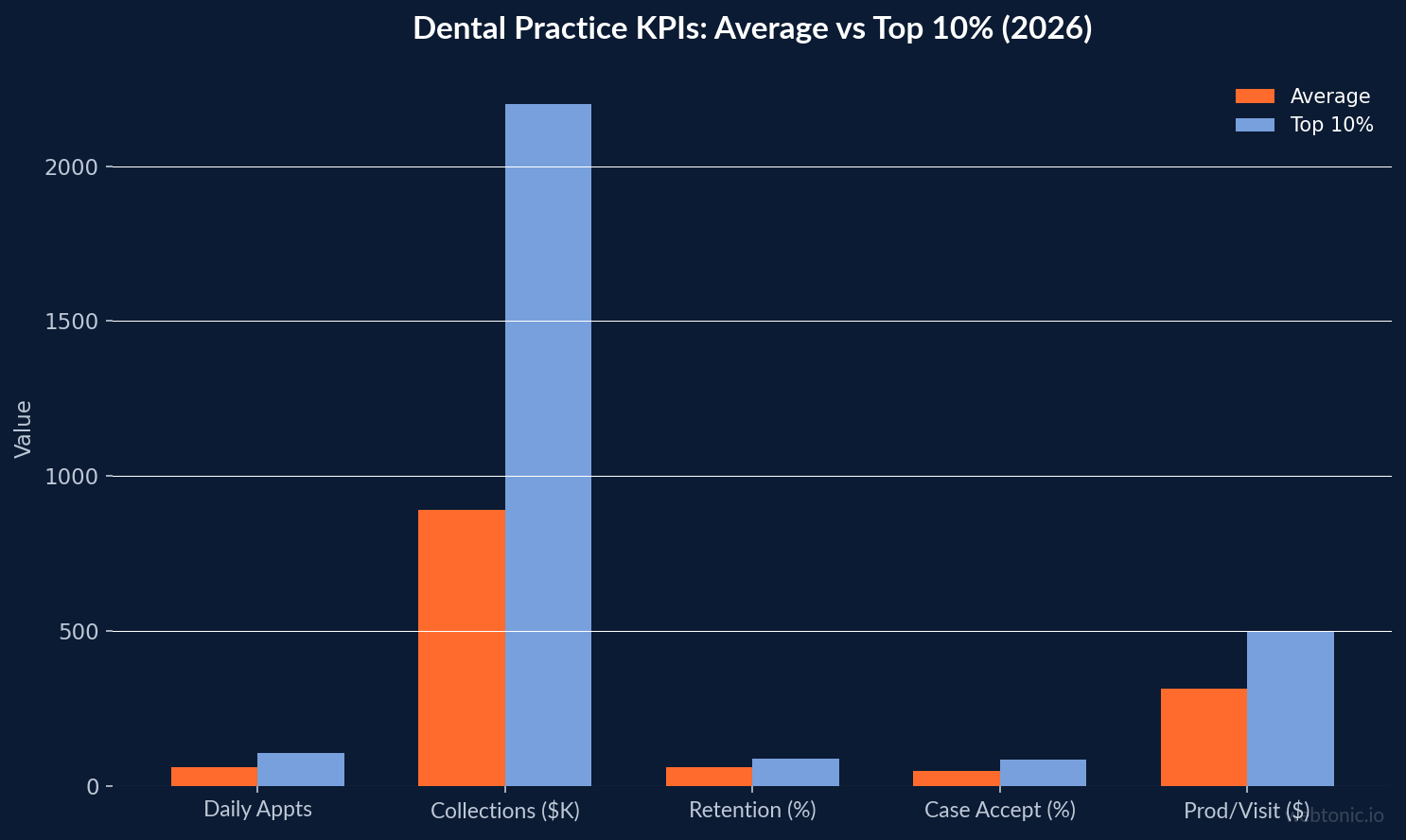
- Top-performing dental practices schedule 107 appointments daily, while the average practice manages only 62 — a 72% productivity gap.
- U.S. dental services revenue reached $186.4 billion in 2025, with continued growth driven by cosmetic dentistry and DSO expansion.
- Cloud-based practice management adoption reached 64% among dental clinics, up from 41% in 2022.
- Practices using data-driven marketing report 22% higher ROI than those without analytics tools or call tracking.
- Online appointment booking reduces no-show rates by 25–38% compared to phone-only scheduling systems.
- The average dental practice collects $780,000–$1.1 million annually, with the top 10% exceeding $2.2 million in collections.
Dental Practice Performance Benchmarks at a Glance
| KPI | Average Practice | Top 10% | Industry Target |
|---|---|---|---|
| Daily Appointments | 62 | 107 | 80+ |
| Annual Collections | $780K–$1.1M | $2.2M+ | $1M+ |
| Patient Retention Rate | 60–65% | 85–92% | 75%+ |
| Case Acceptance Rate | 45–55% | 80–90% | 65%+ |
| Production Per Visit | $280–$350 | $500+ | $400+ |
Dental Practice Management Software Market
The dental practice management software market reached $2.62 billion in 2026 and is projected to grow to $4.44 billion by 2031 at an 11.12% CAGR, according to industry market research. North America remains the largest market, while Asia Pacific shows the fastest growth trajectory. This expansion reflects the broader shift toward data-driven dental practice operations and the digitization of patient care workflows.
Key software platforms dominating the dental analytics landscape include:
- Dentrix (Henry Schein One) — the market leader with an estimated 35–40% share among U.S. practices.
- Eaglesoft (Patterson Dental) — strong in mid-size practices with integrated imaging and billing.
- Open Dental — the leading open-source alternative, preferred by tech-savvy practices and DSOs.
- Cloud-based solutions (Curve, tab32, Dentistry.One) — collectively growing at 28% year-over-year as practices migrate from on-premise systems. Cloud-based platforms allow dental professionals to access real-time production data and patient insights from any device, a capability that multi-location dental groups increasingly consider essential.
Appointment Scheduling and Patient Flow Analytics
According to Clerri's 2026 dental scheduling statistics, scheduling efficiency is the single strongest predictor of practice profitability. Top-performing practices schedule 107 appointments daily while the average practice manages just 62 — a 72% productivity gap driven primarily by appointment management technology and patient flow optimization.
Critical scheduling statistics for dental professionals:
- Online booking adoption reached 52% of dental practices in 2026, up from 34% in 2023.
- Practices offering online scheduling see 25–38% fewer no-shows compared to phone-only booking systems.
- Automated appointment reminders (SMS/email) reduce cancellations by 29% on average.
- The average patient wait time in high-performing practices is 8 minutes, compared to 22 minutes in average practices.
- Same-day emergency scheduling capability increases annual revenue by 8–12% for general dentistry practices.
- Post-treatment follow-up automation increases rebooking rates by 22% for hygiene visits, driving predictable recurring revenue for dental clinics focused on patient care continuity.
Marketing Analytics and ROI Tracking
DentalPrice.ai's 2026 marketing ROI guide highlights that practices with proper analytics infrastructure consistently outperform those without. Dental practices using Google Analytics and call tracking report 22% higher marketing ROI than those flying blind on attribution.
| Marketing Channel | Avg Cost Per Lead | Avg Cost Per Patient | Typical ROI |
|---|---|---|---|
| Google Ads (PPC) | $116.10 | $195–$280 | 3.5–5.2x |
| Meta Ads | $80.55 | $150–$250 | 2.1–3.8x |
| SEO (Organic) | $20–$40 | $40–$90 | 8–15x |
| Social Media (Organic) | $35–$65 | $70–$140 | 3–6x |
| Email Marketing | $5–$15 | $15–$40 | 12–20x |
U.S. Dental Industry Revenue and Market Trends
The American Dental Association (ADA) reports that U.S. dental services revenue reached approximately $186.4 billion in 2025, with continued growth expected through 2030. Dental service organizations (DSOs) now account for an estimated 30–35% of the total dental market in the U.S., up from approximately 18% in 2018 — reshaping how practices approach data analytics and patient care standardization.
Key dental market trends tracked by data-driven practices:
- Cosmetic dentistry is growing at 8–10% annually, driven by consumer demand for veneers, whitening, and clear aligners.
- Dental implant procedures grew 14% year-over-year, making implant-related analytics a critical revenue tracking category for practices offering oral surgery and restorative services.
- Teledentistry consultations account for 6–9% of initial patient interactions in multi-location dental practices, up from under 1% pre-2020.
- The U.S. has approximately 201,000 practicing dentists, with roughly 5,200 new graduates entering the market annually.
Patient Retention and Lifetime Value Analytics
Patient retention is where dental analytics delivers its highest impact on revenue. CuFinder's benchmarking data shows that increasing patient retention by just 5% can boost practice profitability by 25–95%, making retention metrics among the most valuable KPIs for any dental practice to monitor.
- The average dental patient lifetime value (LTV) ranges from $4,200 to $5,500, assuming a 7–10 year retention period with regular hygiene visits.
- Reactivation campaigns targeting lapsed patients cost 60–70% less than acquiring brand-new patients through paid advertising.
- Practices with automated post-treatment follow-up systems retain 18% more patients than those relying on manual billing and patient communication.
- Patient satisfaction scores above 4.5 stars correlate with 35% higher referral rates, creating a compounding growth effect tracked by advanced data intelligence platforms.
Cloud-Based Analytics and Technology Adoption
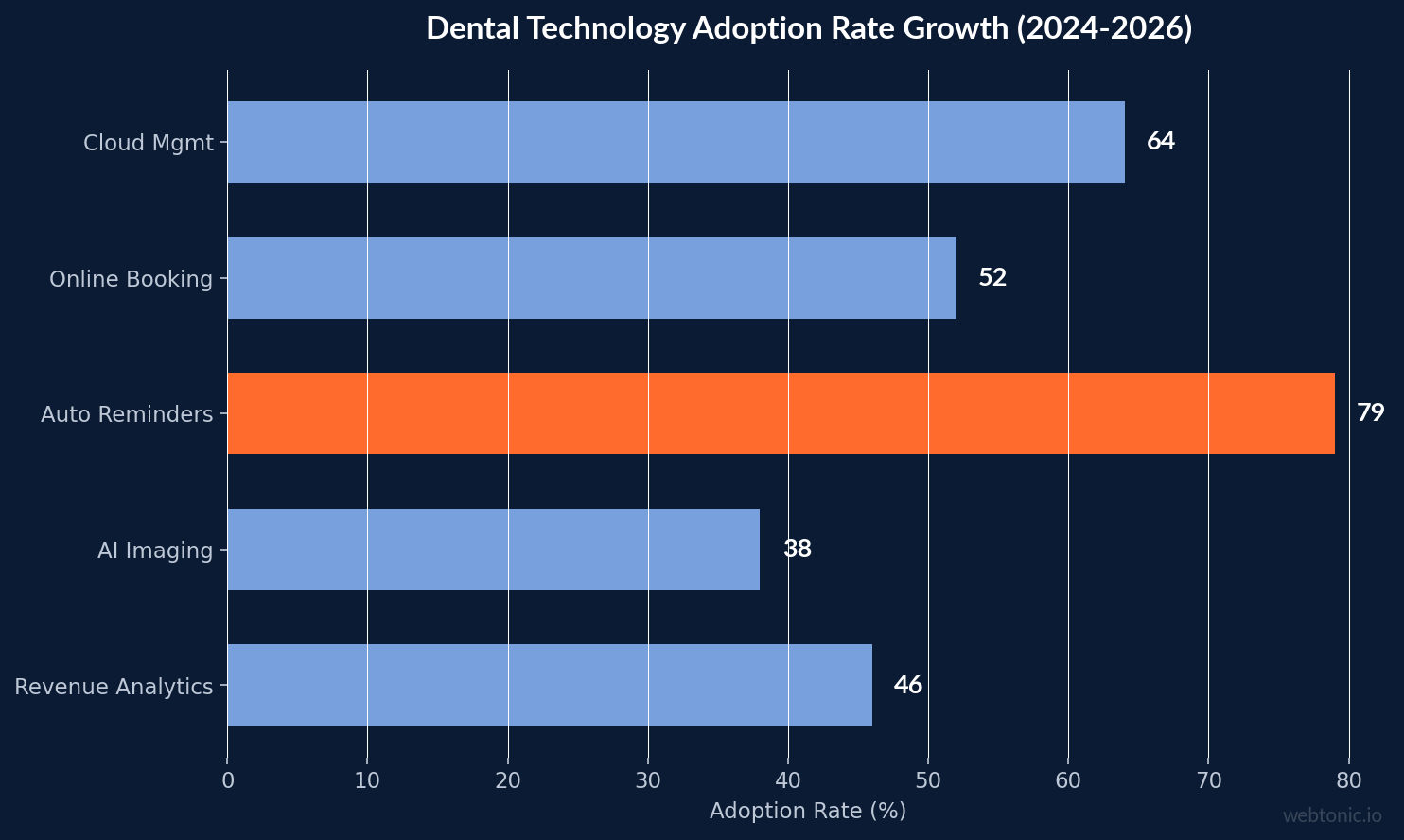
The shift toward cloud-based dental software is accelerating rapidly. Cloud-based practice management adoption reached 64% among dental clinics in 2026, up from 41% in 2022. This migration allows dental professionals to access real-time production reports, patient insights, and marketing analytics from any device — a capability that DSOs and multi-location dental practices increasingly consider non-negotiable.
| Technology | Adoption Rate (2024) | Adoption Rate (2026) | Growth |
|---|---|---|---|
| Cloud Practice Management | 48% | 64% | +16 pts |
| Online Booking | 40% | 52% | +12 pts |
| Automated Reminders | 68% | 79% | +11 pts |
| Digital Imaging (AI) | 22% | 38% | +16 pts |
| Revenue Cycle Analytics | 31% | 46% | +15 pts |
HIPAA Compliance and Data Security in Dental Analytics
Dental analytics platforms must navigate strict HIPAA compliance requirements. 73% of dental practices report concerns about data security when adopting new analytics tools, yet only 45% conduct regular HIPAA risk assessments. Practices in the U.S., Canada, Europe, and Australia face varying regulatory frameworks, but data privacy remains a universal priority for dental professionals handling protected health information.
Best practices for HIPAA-compliant dental analytics include encrypting patient data at rest and in transit, implementing role-based access controls within practice management systems, and ensuring that marketing analytics tools like Google Analytics are configured to exclude personally identifiable health information from tracking.
Digital Marketing Analytics by Channel
Understanding channel-specific analytics helps dental professionals allocate their marketing budget more effectively. Data from 1,500+ dental practices shows distinct performance patterns across channels:
- Google Ads drives the highest volume of trackable new patient leads, with 5.9% conversion rates and $6.85 average CPC for dental search campaigns. Practices tracking call extensions see 28% more attributable conversions.
- Social media marketing generates 22.1% of total dental website traffic, with Instagram and Facebook driving the majority. However, attribution remains challenging without proper UTM tagging and cross-channel analytics.
- Email marketing delivers the highest measurable ROI at 12–20x for dental practices with segmented patient lists. Reactivation campaigns targeting patients overdue for hygiene visits convert at 18–25%.
- SEO and organic search account for 16.5% of dental practice web traffic, with local search intent (e.g., "dentist near me") dominating the query mix. Practices with optimized Google Business Profiles see 3x more profile views than unoptimized listings.
The most analytically mature dental practices use multi-touch attribution models to understand how patients interact with multiple channels before booking. The average dental patient touches 4–7 marketing channels before scheduling their first appointment, making single-channel attribution models increasingly insufficient for accurate marketing spend optimization.
Revenue Cycle and Financial Analytics
Revenue cycle analytics is becoming a critical differentiator for dental practice profitability. Practices using automated revenue cycle management tools collect 12–18% more revenue than those relying on manual billing workflows. Key financial analytics benchmarks for dental practices in 2026 include:
- Average collection rate for top practices: 98–99%, compared to 91–94% for average practices. The gap translates to tens of thousands in lost revenue annually.
- Insurance claim denial rates average 5–8% across dental practices, with data-driven practices reducing denials to under 3% through automated pre-authorization checks.
- Accounts receivable over 90 days should not exceed 15% of total AR — practices above this threshold face cash flow constraints that limit growth investment.
- Production-to-collection ratio should target 95%+ for a well-managed dental clinic. Practices below 90% typically have billing, patient communication, or insurance processing bottlenecks.
Modern practice management systems like Dentrix and Eaglesoft now include built-in financial dashboards that surface these metrics in real time, allowing dental professionals to focus on patient care while maintaining data-driven oversight of their practice economics.
Benchmarking Against DSOs and Multi-Location Groups
Dental service organizations set the analytics standard that independent practices increasingly need to match. DSOs track an average of 42 KPIs per location, compared to just 8–12 KPIs monitored by the typical solo practice. This data advantage manifests in measurable performance differences:
- DSO-affiliated practices achieve 15–20% higher production per chair hour than independent practices, driven by scheduling optimization and treatment acceptance protocols.
- Multi-location dental groups spend 28% more on marketing analytics tools per location, but generate 35% lower cost per new patient through better campaign optimization and attribution.
- Centralized analytics dashboards enable DSOs to identify underperforming locations within 2 weeks, compared to months for practices without benchmarking data.
- Patient satisfaction surveys are deployed by 89% of DSOs versus 34% of independent practices, creating a measurable feedback loop for marketing messaging and service improvement.
Related reading
- Senior Living Tracking and Analytics Data Trends and Reports
- Most Practices Struggle With Digital Tracking: Mental Health Marketing Data
- Urgent Care vs Primary Care Tracking: 2026 Analytics Report
- Marketing Analytics services at Web Tonic
FAQ
What are the most important dental practice KPIs to track in 2026?
The top KPIs for dental practices include daily appointment volume, case acceptance rate, patient retention rate, production per visit, and cost per new patient. High-performing practices monitor these metrics in real time through integrated practice management software to identify revenue opportunities and operational bottlenecks.
How large is the dental practice management software market?
The dental practice management software market is valued at $2.62 billion in 2026 and is projected to grow to $4.44 billion by 2031 at an 11.12% CAGR. Cloud-based solutions are the fastest-growing segment, with adoption reaching 64% of dental clinics.
What is the average dental patient lifetime value?
The average dental patient lifetime value ranges from $4,200 to $5,500, based on a 7–10 year retention period with regular hygiene visits. This makes investing in patient retention analytics and post-treatment follow-up systems highly cost-effective for dental practices.
How do dental service organizations (DSOs) use analytics differently?
DSOs leverage centralized data analytics platforms to benchmark performance across locations, standardize patient care protocols, and optimize marketing spend allocation. With DSOs now accounting for 30–35% of the U.S. dental market, their focus on data-driven insights is raising the analytics maturity bar for independent practices as well.
How does online booking impact dental practice performance?
Online appointment booking reduces no-show rates by 25–38% and increases new patient conversion rates compared to phone-only scheduling. Practices offering 24/7 online booking through their website and ad campaigns capture patients who prefer self-service scheduling outside business hours.
Sources
henryscheinone.com — 2026 Dental Practice Benchmarking Report
clerri.com — 30 Dental Scheduling Stats to Fill More Chairs
dentalprice.ai — Dental Marketing ROI Guide 2026
cufinder.io — Dentists Industry Marketing Benchmarks 2026
petejohnsoniv.com — Dental Marketing Benchmarks 2026
ainora.lt — Dental Patient Acquisition Cost Statistics
benchmarketing.org — Dental Marketing Benchmarks 2026


