Table of contents
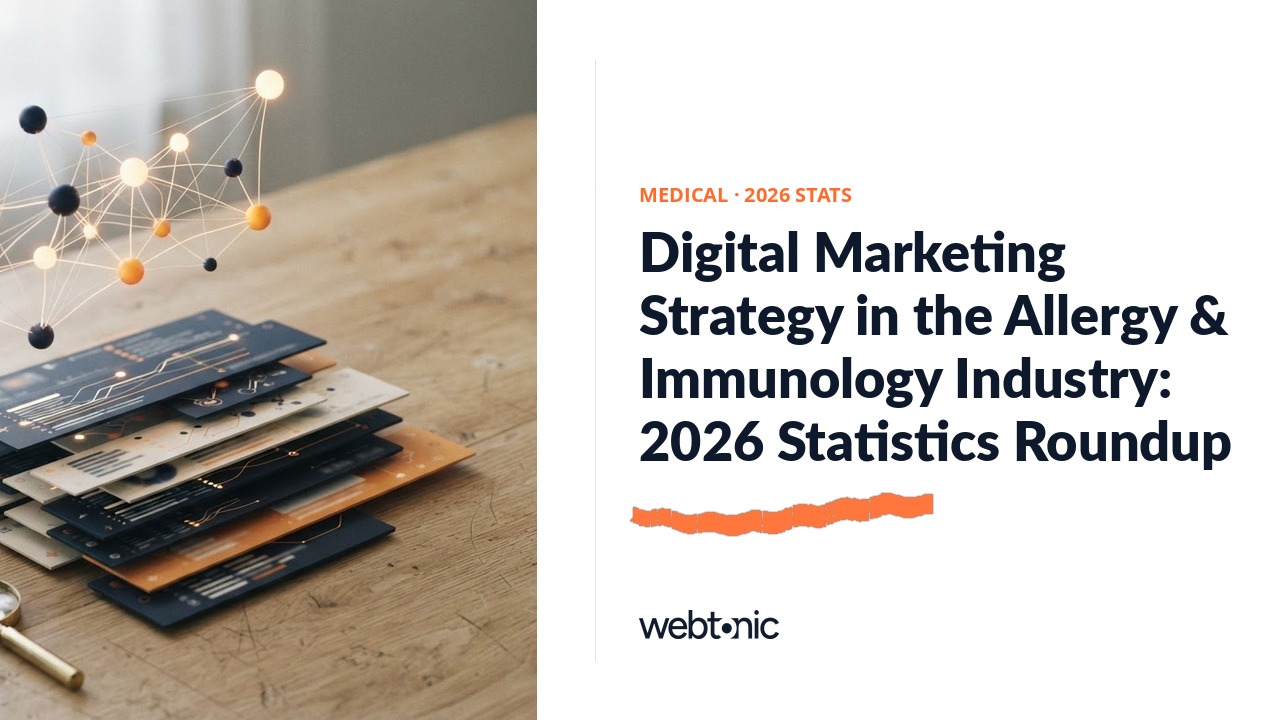
Allergy and immunology practices sit at a unique intersection of high demand and specialized marketing. With more than 106 million Americans experiencing allergies annually and the immunotherapy market projected to reach USD 5.4 billion by 2036, clinics that invest in online promotion hold a measurable advantage in lead acquisition, retention, and revenue growth. This roundup presents the data allergists and immunologists need to benchmark their marketing performance in 2026.
Key Takeaways
- Allergy clinics achieve a 6.8% Google Ads conversion rate — roughly double the 3.36% healthcare average — making paid search one of the highest-ROI online channels for the specialty.
- SEO drives 52% or more of healthcare website traffic, and condition-related keywords see seasonal surges that organic strategies can capture at near-zero marginal cost.
- Patient acquisition cost ranges from $42 (optimized Google Ads) to $140 for clinics just starting with online advertising, depending on tracking maturity and geographic competition.
- Healthcare digital ad spending reached $24.77 billion in 2025, growing 13.3% YoY, with practices in this space competing for share within this expanding market.
- Case studies show specialty practices achieving 9× more leads and 30% monthly growth through integrated online promotion strategies combining SEO, paid media, and prospect nurture campaigns.
- AI-powered marketing strategies have generated over 1,000 new prospect leads in a single month for the practices leveraging organic search optimization and paid audio campaigns.
- An immunotherapy candidate receiving immunotherapy can be worth $2,000–$10,000+ over a 3–5 year treatment course, making even a $150 cost per lead deliver exceptional ROI.
| Channel | Allergy Clinic Benchmark | Healthcare Average | Key Insight |
|---|---|---|---|
| Google Ads CTR | 4.84% | 3.27% | Strong intent signals from specialty-specific searches |
| Google Ads CPC | $4.24 | $5.52 | Lower competition vs. dental or dermatology |
| Google Ads Conv Rate | 6.8% | 3.36% | High urgency (symptom-driven) patient searches |
| Google Ads CPA | $42.00 | $78.09 | Efficient when landing pages match search intent |
| Meta Ads CTR | 1.52% | 1.08% | Educational allergy content drives engagement |
| Meta Ads ROAS | 2.8× | 2.1× | Retargeting + immunotherapy LTV amplify returns |
| Email Open Rate | 26.4% | 22.6% | Seasonal allergy updates drive high engagement |
| Landing Page Conv Rate | 6.4% | 3.80% | Dedicated symptom-specific pages outperform generic |

SEO Performance for Allergy and Immunology Practices
Search engine optimization remains the highest-leverage online channel for allergists. Organic search drives an estimated 52% of all healthcare website traffic, and for specialty practices specifically, SEO typically shows meaningful results in 3–6 months, with full system maturity — where all channels work together and compound — taking 6–12 months.
Condition-related search queries follow seasonal patterns that organic strategies can exploit. Allergic rhinitis keywords driven by pollen exposure surge in spring and fall, asthma-related queries peak during fall and winter, and food sensitivity searches remain relatively consistent year-round. An allergist who schedules content publication to align with these seasonal activity spikes can capture high-intent traffic at a fraction of the cost of paid channels.
The competitive landscape in allergy search optimization is less saturated than in dental or dermatology marketing. This means that a well-structured organic strategy for an specialty practice can reach first-page rankings faster and with lower investment than in more competitive healthcare verticals. Local search is especially important: patients searching for allergy testing, allergy shots, or an allergist near their location create high-conversion opportunities that paid search campaigns can complement.
Paid Advertising Benchmarks for Allergy Clinics
Google Ads remains the dominant online channel for allergy lead acquisition. According to Benchmarketing's 2026 specialty practice benchmarks, the industry achieves a 4.84% click-through rate and $4.24 CPC — significantly outperforming the broader healthcare average on both metrics.
A detailed case study from an specialty practice Google Ads campaign shows how the combination of better targeting, dedicated landing pages for each condition type, and digital paperwork integration achieved 9× more leads at 89% lower cost. The critical success factors were: specific landing pages for allergic rhinitis, food sensitivities, asthma, and allergy testing; automated patient intake; and server-side conversion tracking.
For practices entering online advertising, the recommended starting budget is $2,000–$3,500 per month, which typically yields 15–25 new lead acquisitions at an average cost per new prospect of $90–$140. The path from this initial cost down to the $42 CPA benchmark reflects the promotional maturity curve: as clinics refine their tracking, creative testing, and landing page optimization, costs decrease substantially.

Digital Marketing Case Studies in Allergy and Immunology
Real-world case studies provide the strongest evidence for online promotion effectiveness in the allergy industry. Documented specialty practice growth case studies show that integrated marketing strategies — combining SEO, paid search, social media, and email — can produce 30% monthly growth in booked appointments and sustained prospect pipeline expansion.
The lifetime treatment value calculation makes these results even more compelling. An immunotherapy candidate receiving immunotherapy (allergy shots or sublingual drops) can be worth $2,000–$10,000+ over a 3–5 year treatment course. When clinics calculate ROI against these LTV figures, even a $150 cost per lead delivers exceptional returns — and clinics with $42 CPAs are generating 47–238× returns on their online investment.
AI-powered online promotion is emerging as a force multiplier. One the practice generated over 1,000 new patient leads in a single month through AI-powered organic search strategies. Another allergy health company produced nearly 19,000 leads from a single AI-optimized audio ad campaign — a 197% performance increase over their previous approach.
Healthcare Digital Ad Spend and Industry Trends
The broader healthcare online advertising market provides context for specialty-specific investment. According to MM+M's 2026 healthcare promotion trend report, digital ad spend overtook linear TV spending for the first time in the healthcare and pharmaceutical industry. Key trends include:
- 60% of healthcare marketers increased online budgets in 2026
- AI-integrated media and search rose 50% in adoption
- Influencer marketing grew 44%, with emphasis on credible micro-influencers in healthcare
- Linear TV and print usage continue declining as budget shifts to online channels
For the specialty clinics, this macro shift means more competition in online channels but also more sophisticated marketing tools. Practices that leverage data-driven digital marketing — combining patient testing information, seasonal scheduling data, and omnichannel attribution — gain structural advantages over competitors still relying on traditional referral networks.
Continuing Medical Education and Promotional Integration
A distinctive feature of the the specialty vertical is the intersection with continuing medical education (CME). The American Academy of Allergy, Asthma & Immunology (AAAAI) and the Accreditation Council for Continuing Medical Education oversee CME activity requirements that influence how allergists engage with online content. Healthcare professionals can claim credit commensurate with the extent of their participation in qualifying educational activity.
CME-integrated content — such as webinars on new protocols, courses on immunotherapy advances, or AMA PRA Category 1 Credit-qualifying sessions — serves dual purposes. It educates referring physicians while simultaneously building the practice's authority and organic search visibility. Scheduling CME content releases alongside peak seasons creates compounded benefits: higher engagement from individuals searching for symptom relief and providers seeking credit for their professional development.
| Digital Marketing Channel | Time to Results | Best Use Case for Allergy Clinics | Estimated Monthly Cost |
|---|---|---|---|
| Google Ads (Search) | 1–2 months | Immediate lead acquisition for allergy testing | $2,000–$3,500 |
| SEO (Organic) | 3–6 months | Long-term traffic for allergic rhinitis, asthma queries | $1,500–$4,000 |
| Meta Ads (Facebook/Instagram) | 1–3 months | Awareness campaigns, educational content content | $1,000–$2,500 |
| Email Marketing | Ongoing | Seasonal alerts, appointment reminders, nurture | $200–$800 |
| Social Media (Organic) | 3–6 months | Patient education, community building | $500–$1,500 |
| AI-Powered SEO/Content | 2–4 months | Scale content production for food sensitivities, asthma topics | $2,000–$5,000 |
Patient Acquisition Funnel Analytics for Allergists
Building an effective online growth approach for an specialty practice requires understanding the patient acquisition funnel at each stage. The typical prospect journey moves from awareness (searching symptoms or seasonal allergy information) through consideration (comparing allergists, reading reviews, checking testing options) to action (scheduling an appointment for allergy testing or consultation).
At each stage, different channels play distinct roles. Growth marketing strategies that coordinate across channels — paid search capturing high-intent "allergist near me" queries, organic content capturing informational searches about food sensitivity or asthma symptoms, and email nurturing patients who browsed but did not schedule — produce compounding returns that single-channel approaches cannot match.
The data shows that full system maturity takes 6–12 months for an the practice's online outreach program. During this period, the practice should expect to see paid advertising generate leads within the first month, organic results materialize in months 3–6, and the combined effect of all channels working together — with proper attribution — deliver the strongest ROI from month 6 onward.
| Funnel Stage | Patient Activity | Best Digital Channel | Key Metric to Track |
|---|---|---|---|
| Awareness | Searching symptoms, seasonal allergy info | SEO, Social Media | Impressions, organic traffic |
| Consideration | Comparing allergists, reading reviews | Google Ads, Local SEO | CTR, time on site |
| Decision | Checking testing options, insurance | Landing Pages, Retargeting | Conversion rate, bounce rate |
| Action | Scheduling appointment, calling clinic | Google Ads, Call Tracking | CPA, booked appointments |
| Retention | Follow-ups, immunotherapy course adherence | Email, Patient Portal | LTV, retention rate |
Best Practices for Allergy Clinic Digital Marketing in 2026
- Build condition-specific landing pages — Create separate pages for allergic rhinitis, food allergy, asthma, allergy testing, and allergy shots to match specific search intent.
- Schedule campaigns around high-demand seasons — Ramp paid budgets and content publication before spring (pollen) and fall (dust mites, mold) peaks. Align your promotional activity calendar with seasonal patient demand.
- Invest in SEO as a long-term asset — Allergy search optimization competition is lower than other healthcare verticals. A consistent content and search strategy can deliver compounding organic traffic.
- Track lifetime treatment value, not just CPA — An immunotherapy course spans 3–5 years. Attribute revenue across the full patient relationship, not just the first booked appointment.
- Implement HIPAA-compliant conversion tracking — Use healthcare privacy platforms to safely share conversion data with ad platforms and analytics tools without risking PHI exposure.
- Leverage CME content for dual-purpose marketing — Continuing medical education content builds professional authority while generating organic search traffic from both patients and referring providers.
- Test AI-powered marketing tools — Practices in the sector using AI for content creation and campaign optimization are seeing dramatically higher lead volumes at lower costs.
Related reading
- Pool Building Digital Marketing Stats
- Surrogacy Digital Marketing Statistics
- Tax & Accounting Digital Marketing Stats
- Marketing Strategy Consulting services at Web Tonic
FAQ
What online channels work best for specialty practices?
Google Ads and SEO deliver the highest ROI for practices in this space. Google Ads produces immediate patient acquisition at a benchmark CPA of $42.00, while SEO drives 52% or more of website traffic over time. Combining both with email outreach and social media creates an integrated online growth strategy that compounds results over 6–12 months.
How much should an specialty practice spend on digital marketing?
A recommended starting budget for online advertising is $2,000–$3,500 per month for Google Ads alone, yielding approximately 15–25 new patient acquisitions. Total online investment — including SEO, social media, and email — typically ranges from $5,000–$12,000 per month for a single-location the practice.
How long does it take for digital marketing to produce results for allergists?
Paid advertising can generate leads within the first month. SEO typically shows meaningful results in 3–6 months. Full system maturity — where paid, organic, and nurture channels work together — takes 6–12 months to achieve. Case studies document 30% monthly growth in booked appointments once all channels are optimized.
What is the patient lifetime value for immunotherapy?
An allergy patient receiving immunotherapy (allergy shots or sublingual drops) can be worth $2,000–$10,000+ over a 3–5 year treatment course. This high LTV means that even acquisition costs of $100–$150 per patient deliver strong long-term returns, and clinics with a $42 CPA are achieving 47–238× ROI on their ad spending.
How does specialty practice SEO differ from other healthcare specialties?
Allergy SEO benefits from lower competition than dental or dermatology, seasonal keyword patterns that create predictable content calendars, and high patient urgency during symptom flares. Clinics that publish targeted educational content around allergic rhinitis, food allergy, asthma, and allergy testing can achieve first-page rankings faster and at lower cost than in more competitive healthcare verticals.
Sources
benchmarketing.org/benchmarks/industries/allergy-clinics
aragil.com – Google Ads for Allergy Clinics
aragil.com – Allergy Clinic Growth Case Studies
aragil.com – Digital Advertising for Allergy Clinics
aragil.com – Social Media Marketing for Allergy Clinics
mmm-online.com – Healthcare Marketers Trend Report 2026
claytonjohnson.com – AI Marketing for Allergists
futuremarketinsights.com – Allergy Immunotherapy Market
revenuememo.com – Healthcare Marketing Statistics