



Table of contents
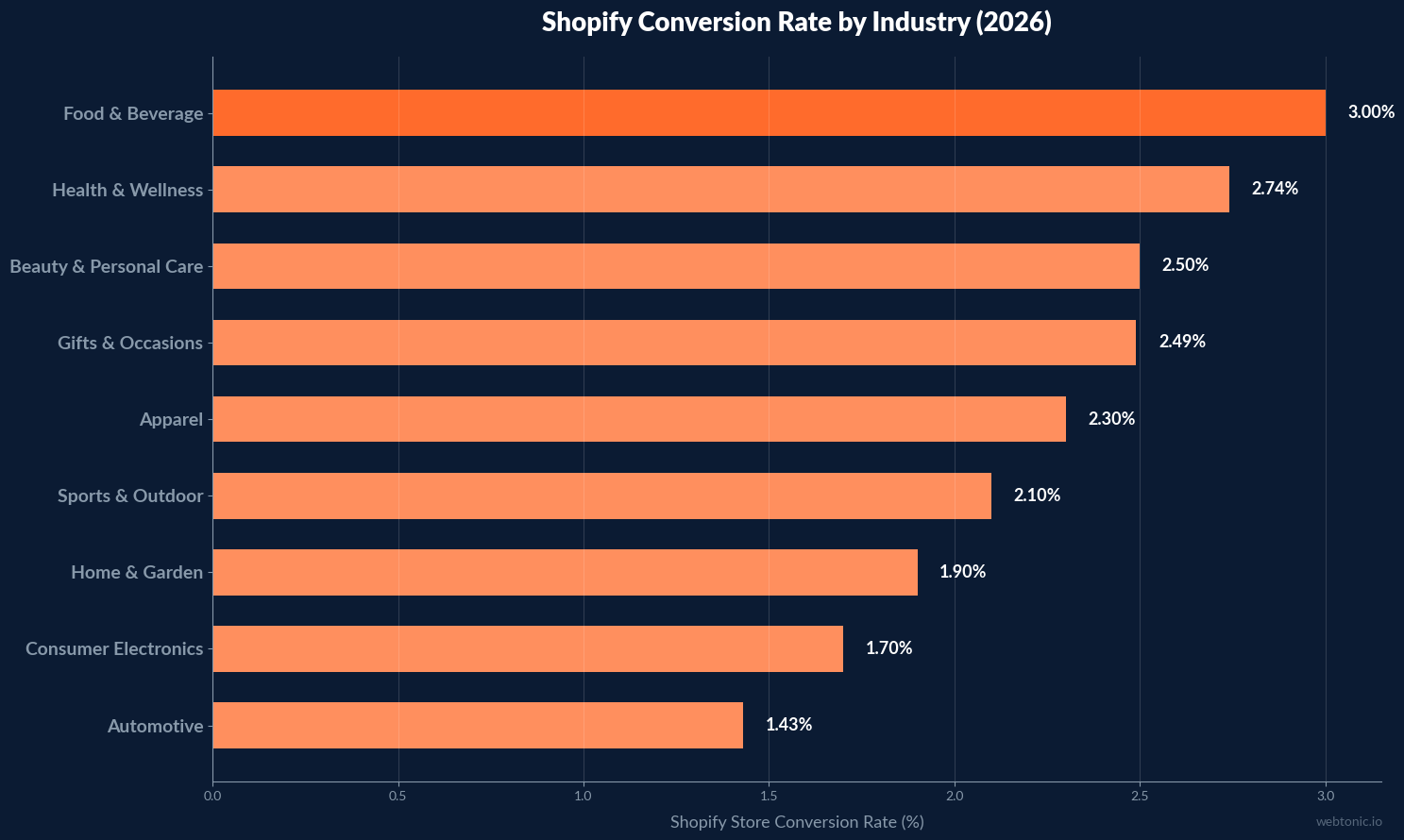
The surrogacy and fertility e-commerce market is growing rapidly as reproductive health brands, supplement companies, and surrogacy support platforms expand their Shopify presence. With the global surrogacy market projected to reach $11.94 billion by 2034 and health and wellness Shopify stores averaging a 2.74% conversion rate, the intersection of fertility commerce and e-commerce technology represents a fast-evolving opportunity.
Key Takeaways
- Health and wellness Shopify stores average a 2.74% conversion rate, above the cross-industry median of 2.49%.
- Average order value for health and wellness on Shopify is $72.66, driven by subscription supplements and bundled products.
- Cart abandonment in health and wellness runs 65–72%, with ingredient skepticism and clinical claims driving drop-off.
- The global surrogacy market is projected to reach $11.94 billion by 2034, fueling growth in adjacent e-commerce categories.
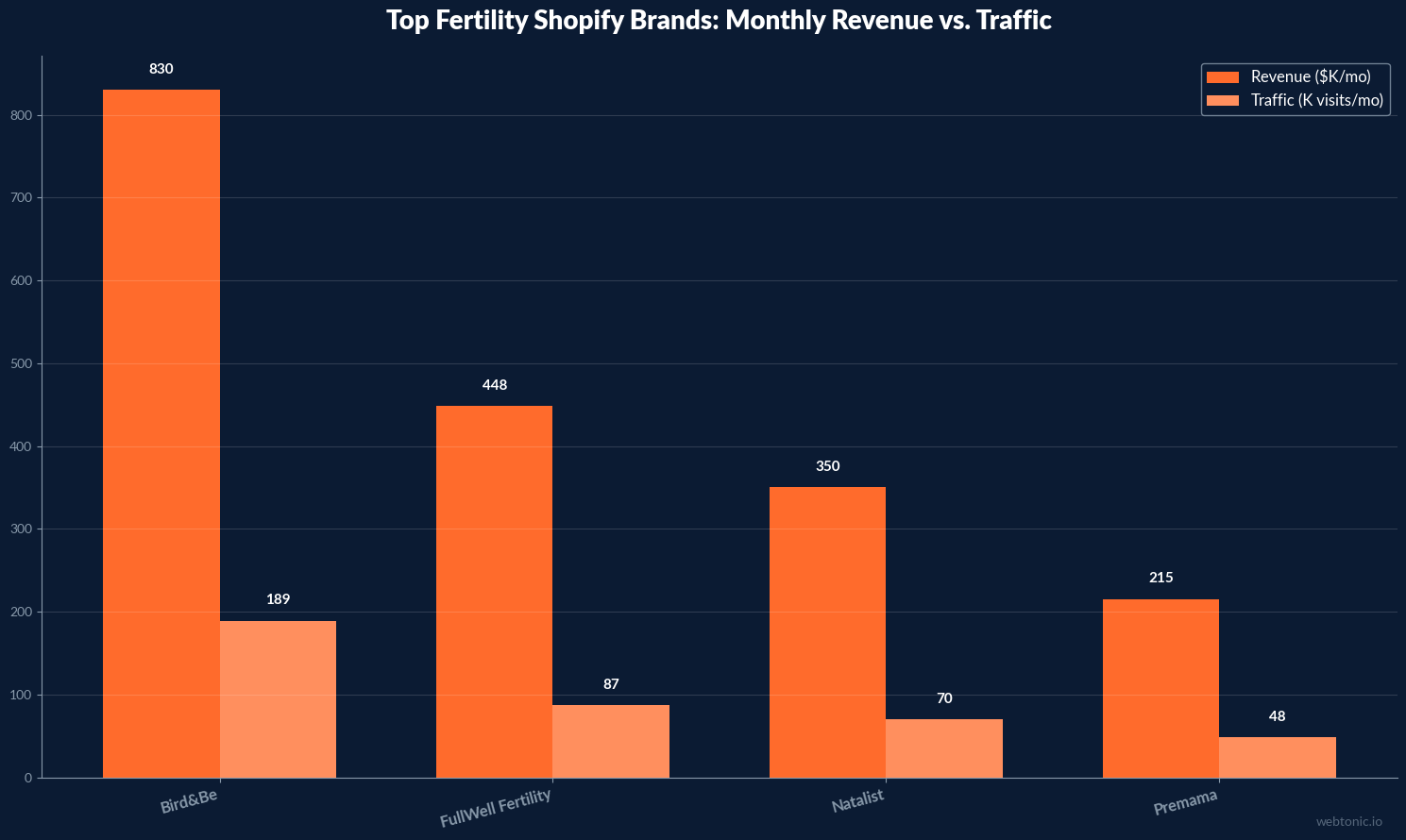
- Bird&Be (fertility supplements) generates $830K monthly revenue from 189K monthly visitors on Shopify.
- FullWell Fertility generates $448K monthly revenue from 87K monthly visitors on Shopify.
- Health and wellness ROAS averages 1.6× for new customer acquisition on Shopify, below the cross-industry 2.79×.
- Subscribe-and-save models reduce churn by 25–35% for fertility supplement brands on Shopify.
Fertility E-Commerce Benchmarks at a Glance
These benchmarks combine data from Polar Analytics (4,000+ Shopify brands), Fudge Shopify CVR analysis, and individual brand performance data. Understanding how growth marketing integrates with Shopify performance is essential for fertility brands scaling revenue.
| Metric | Health & Wellness | All Industries |
|---|---|---|
| Conversion Rate | 2.74% | 2.49% median |
| AOV | $72.66 | $85–$95 median |
| ROAS (New Customer) | 1.6× | 2.79× median |
| Cart Abandonment | 65–72% | 68–72% |
| Email Revenue Share | 12.79% | 10–15% |
| Returning Customer Rate | 34.08% | 28–32% |
| Mobile Revenue Share | 65–72% | 60–68% |
| Subscribe & Save Adoption | 18–25% | 12–18% |
Top Fertility Brands on Shopify: Revenue and Traffic Data
Several fertility-focused brands have built significant Shopify businesses, proving the commercial viability of reproductive health e-commerce. These brands demonstrate that performance creative tailored to the fertility audience drives exceptional unit economics.
| Brand | Monthly Traffic | Est. Monthly Revenue | Focus |
|---|---|---|---|
| Bird&Be | 189K visitors/mo | $830K/mo | Prenatal and fertility supplements |
| FullWell Fertility | 87K visitors/mo | $448K/mo | Practitioner-grade fertility nutrition |
| Natalist | 60–80K visitors/mo | $300–$400K/mo | TTC kits, tests, and supplements |
| Premama | 40–55K visitors/mo | $180–$250K/mo | Prenatal and fertility wellness drinks |
Shopify Conversion Rate Analysis for Fertility Products
Conversion rates for fertility products on Shopify outperform the general e-commerce average, driven by high purchase intent and strong brand loyalty in the reproductive health space. The DollarPocket 2026 benchmarks confirm that health and wellness stores benefit from repeat demand and niche loyalty, though regulatory claims restrictions limit certain conversion tactics. Integrating Meta Ads with Shopify storefronts is the primary paid acquisition channel for these brands.
- Health and wellness Shopify stores convert at 3.0–3.5% when optimized for mobile checkout and trust signals.
- Desktop conversion rate is 20–35% higher than mobile for fertility products, reflecting the considered nature of the purchase.
- Add-to-cart rates for fertility supplements average 8–12%, with product education pages converting higher than direct product listings.
- Checkout completion rate for health and wellness is 45–55%, below the 58–62% average for apparel.
- Clinical proof and ingredient transparency increase CVR by 15–25% compared to products without third-party testing badges.
- Subscription option on product pages lifts initial AOV by 10–18% for fertility supplements with recurring use.
Cart Abandonment and Checkout Optimization
Cart abandonment is the largest revenue leak for fertility Shopify stores, with rates running 65–72% in the health and wellness category. The PDQ Checkout Benchmarks track 130M+ checkout sessions across 500+ Shopify merchants.
| Abandonment Factor | Impact | Mitigation |
|---|---|---|
| Unexpected Shipping Costs | 48% of abandons | Free shipping threshold at 1.3× AOV |
| Ingredient / Claims Skepticism | 22% of abandons | Third-party testing badges, clinical citations |
| Account Creation Required | 16% of abandons | Guest checkout with post-purchase account prompt |
| Complex Checkout Flow | 12% of abandons | One-page checkout, Shop Pay integration |
| Price Comparison Shopping | 18% of abandons | Abandoned cart email series (3-touch) |
| Subscription Hesitation | 15% of abandons | "Skip anytime" messaging, no-commitment language |
Paid Advertising Performance for Fertility Shopify Stores
Paid advertising is the primary customer acquisition channel for fertility Shopify brands, with Meta Ads dominating the media mix. The lower ROAS compared to other e-commerce categories reflects the education-heavy purchase journey and the regulatory constraints on fertility-related ad claims.
| Ad Channel | ROAS (Health & Wellness) | Best For | Key Constraint |
|---|---|---|---|
| Meta Ads (Facebook/Instagram) | 1.6× | Brand awareness, lookalike audiences, DTC supplements | Claims restrictions on fertility outcomes |
| Google Shopping | 2.2–3.0× | High-intent product searches, branded terms | Limited keyword volume for fertility products |
| Google Search | 1.8–2.5× | "Best fertility supplements" intent queries | CPC of $3–$8 for competitive terms |
| TikTok Ads | 1.2–1.8× | Younger audience education, UGC creative | Fertility content sensitivity guidelines |
| Pinterest Ads | 1.4–2.0× | Trying-to-conceive journey boards, inspiration | Long attribution windows (30–90 days) |
| Email (Retention) | 8–12× | Subscription renewals, cross-sells, journey nurture | List quality and segmentation dependent |
Product Page Optimization for Fertility Shopify Stores
Product pages are the conversion battleground for fertility Shopify stores. Unlike impulse purchase categories, fertility products require extensive trust-building and scientific validation on the product page itself. Brands that invest in performance creative for their product pages see measurably higher conversion rates.
- Product pages with clinical study citations convert 18–28% higher than pages without third-party validation.
- Video on product pages increases time-on-page by 88% and boosts add-to-cart rates by 12–15% for fertility supplements.
- Ingredient transparency sections (full breakdown with sourcing) lift CVR by 10–15% over products that list only supplement facts.
- Customer reviews on product pages drive 15–20% of all conversions, with photo reviews converting 2× higher than text-only.
- Subscription toggle on product page increases initial AOV by 10–18% when positioned with clear savings messaging and skip-anytime guarantees.
- Mobile product page load time under 3 seconds is the threshold — pages loading in 5+ seconds see 40% higher bounce rates.
- Bundle offers on product pages (e.g., "3-month TTC kit") increase AOV by 30–45% compared to single-product purchases.
SEO Performance for Fertility Shopify Stores
Organic search drives the highest-margin traffic for fertility Shopify stores, but the category faces unique SEO challenges including YMYL content requirements, intense competition from informational publishers, and regulatory constraints on health claims. Brands that build data intelligence into their SEO strategy outperform those relying on generic optimization.
- Organic search drives 35–50% of total traffic for established fertility Shopify brands with consistent content publishing.
- Blog content targeting trying-to-conceive queries generates 40–60% of organic sessions for top fertility supplement brands.
- Product schema markup improves Shopify product listing CTR by 15–25% through rich snippets showing reviews, price, and availability.
- Category pages optimized for head terms rank 2–3× faster than individual product pages for competitive fertility keywords.
- Fertility Shopify brands publishing 8+ blog posts per month see 3× more organic traffic than those publishing 2 or fewer per month.
- Topical authority in the fertility niche takes 6–12 months to establish, with the compound traffic curve accelerating after month 8.
Surrogacy Market Size and E-Commerce Growth
The broader surrogacy market is expanding rapidly, creating adjacent e-commerce opportunities in fertility supplements, prenatal care products, surrogacy journey support tools, and post-birth essentials. The Insight Partners surrogacy market report projects significant growth through 2034.
- The global surrogacy market is projected to reach $11.94 billion by 2034, driven by rising gestational surrogacy adoption and cross-border arrangements.
- US surrogacy costs range from $140,000 to $180,000 per journey, with agency fees representing $25,000–$45,000 of total cost.
- 210,000 ART cycles were completed in 2025, each generating demand for prenatal supplements, monitoring tools, and care products.
- Fertility supplement market growth is 12–18% annually, outpacing the broader supplement category by 3–5 percentage points.
- Direct-to-consumer fertility brands capture 35–45% of the supplement market compared to 25% five years ago, driven by Shopify-native stores.
- Intended parent journey spending on non-medical products averages $2,000–$5,000 including prenatal vitamins, journey documentation, and newborn essentials.
Shipping and Fulfillment Benchmarks for Fertility Products
Shipping strategy directly impacts both conversion rates and customer lifetime value for fertility Shopify stores. The PDQ Health & Wellness Checkout Benchmarks reveal that shipping-related decisions are the primary lever for reducing cart abandonment in this category.
- Free shipping thresholds set at 1.3× AOV increase average order value by 12–18% while maintaining healthy margins.
- Same-day or next-day shipping options increase checkout completion by 8–12% for fertility products where timing matters.
- Subscription-based shipping (auto-refill every 30/60/90 days) reduces per-order fulfillment costs by 15–22% through batch processing.
- Discreet packaging is expected by 85%+ of fertility product customers and should be prominently communicated on product pages.
- International shipping capability expands addressable market by 25–40% for fertility brands, particularly to markets with limited local options.
- Shipping revenue as a percentage of total revenue runs 3–5% for health and wellness, lower than apparel due to lighter, subscription-optimized packages.
Email Marketing and Retention for Fertility Shopify Stores
Email is the highest-ROI retention channel for fertility Shopify stores, contributing 12.79% of total revenue for health and wellness brands. The emotional nature of the fertility journey creates natural email touchpoints that drive exceptional open rates. Brands with the best email marketing strategies segment by journey stage for maximum relevance.
| Email Metric | Fertility / H&W | E-Commerce Average |
|---|---|---|
| Revenue Share | 12.79% | 10–12% |
| Open Rate | 28–35% | 22–26% |
| Click Rate | 3.5–5.2% | 2.5–3.5% |
| Cart Recovery Rate | 8–14% | 5–10% |
| Subscription Renewal Email CVR | 22–30% | 15–20% |
| Welcome Series Revenue per Subscriber | $4.50–$7.20 | $2.80–$4.50 |
Related reading
- How Shopify Performs for Locksmith E-Commerce: 2026 Data & Benchmarks
- Manufacturing Shopify Statistics: 2026 B2B Ecommerce Benchmarks
- Med Spa Shopify & E-Commerce Statistics: Retail Revenue, AOV & Growth Data (2026)
- Custom Web Development services at Web Tonic
Frequently Asked Questions
What is the average Shopify conversion rate for fertility products?
Health and wellness Shopify stores, which include fertility products, average a 2.74% conversion rate across all traffic sources. When optimized for mobile checkout and trust signals, rates reach 3.0–3.5%. Desktop conversion rates run 20–35% higher than mobile for fertility products due to the considered nature of the purchase.
How much revenue do top fertility Shopify brands generate?
The top fertility Shopify brands generate significant revenue. Bird&Be earns approximately $830K per month from 189K monthly visitors, while FullWell Fertility generates $448K per month from 87K visitors. These brands have built strong subscription models, with subscribe-and-save options reducing churn by 25–35%.
What is the cart abandonment rate for health and wellness Shopify stores?
Cart abandonment for health and wellness Shopify stores runs 65–72%, driven primarily by unexpected shipping costs (48% of abandons), ingredient skepticism (22%), and account creation requirements (16%). Free shipping thresholds at 1.3 times average order value and third-party testing badges are the most effective mitigations.
How big is the surrogacy e-commerce market?
The global surrogacy market is projected to reach $11.94 billion by 2034, with the US accounting for the largest share driven by gestational surrogacy adoption and cross-border arrangements. This rapid growth creates adjacent e-commerce opportunities in fertility supplements (growing 12–18% annually), prenatal care products, monitoring tools, and journey support platforms. Direct-to-consumer fertility brands now capture 35–45% of the supplement market share, up from approximately 25% five years ago, primarily through Shopify-native direct-to-consumer stores with strong subscription models.
Sources
polaranalytics.com — Ecommerce Benchmarks 2026
fudge.ai — Shopify Conversion Rate Benchmarks by Industry
dollarpocket.com — Shopify Store Benchmarks 2026
coreppc.com — Shopify AOV Benchmarks 2026
prettydamnquick.com — Health & Wellness Checkout Benchmarks
theinsightpartners.com — Surrogacy Market Report
acrcglobal.com — Surrogacy Statistics 2026
brandsearch.co — Bird&Be Brand Analysis


