Table of contents

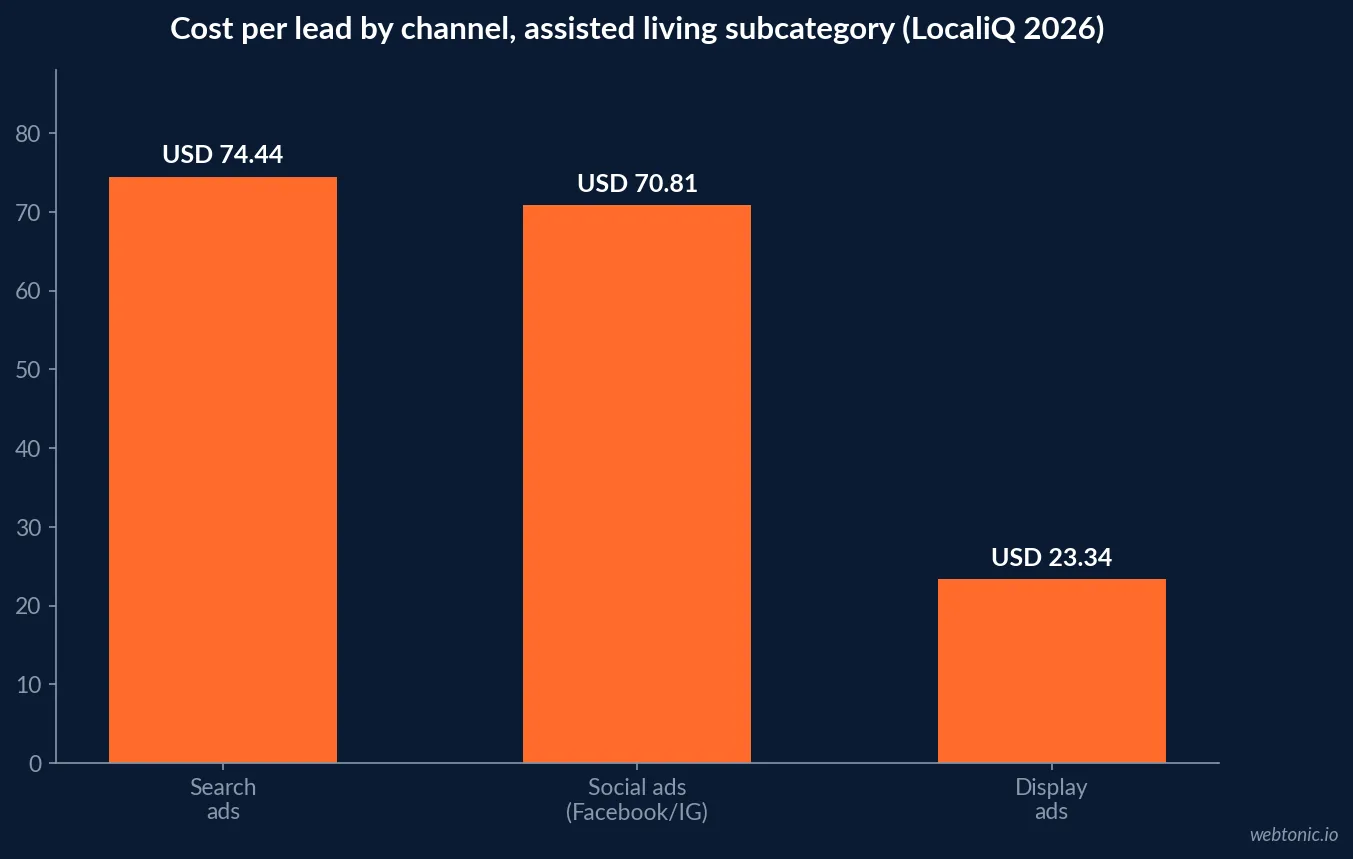
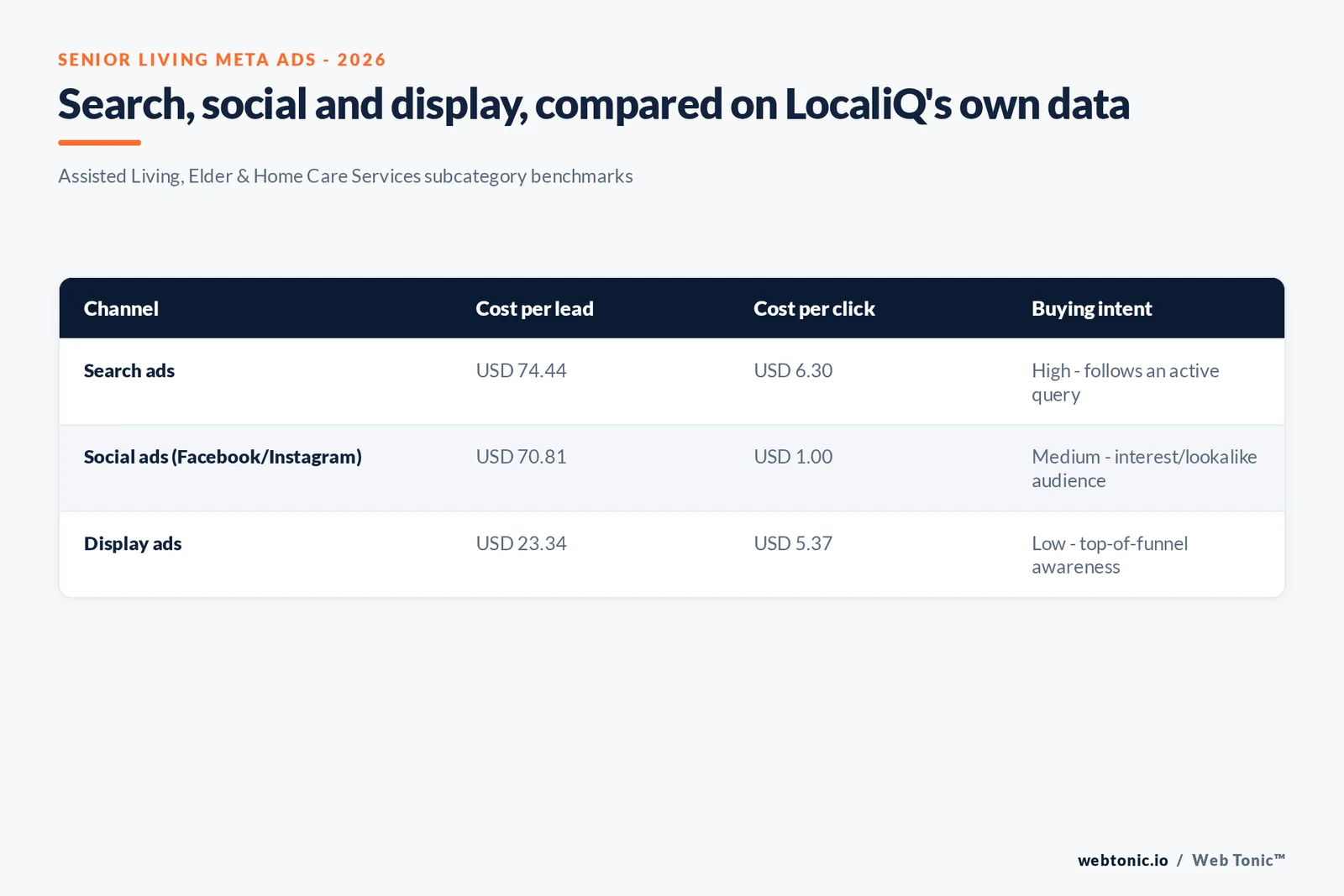
LocaliQ's own healthcare-vertical benchmarks put the average cost per lead for its Assisted Living, Elder & Home Care Services subcategory at $70.81 on Facebook and Instagram lead campaigns, against $74.44 for the same subcategory's search ads. No study prices "senior living Meta ads" as a standalone category, so this page treats LocaliQ's elder-care subcategory as the closest verified proxy and cross-checks it against Aline's own CRM conversion data across 5,000-plus communities.
Key Takeaways
- $70.81 average cost per lead on assisted living Facebook and Instagram lead campaigns (LocaliQ).
- $74.44 average cost per lead on the same subcategory's search ads (LocaliQ).
- 1.90% click-through rate on assisted living social ads, the highest of any LocaliQ healthcare subcategory.
- $1.00 average cost per click on social against $6.30 on search for the same subcategory.
- $23.34 cost per lead on assisted living display ads, the cheapest of the three channels LocaliQ tracks.
- 5.51% conversion rate on assisted living search ads against a 1.90% social click-through rate.
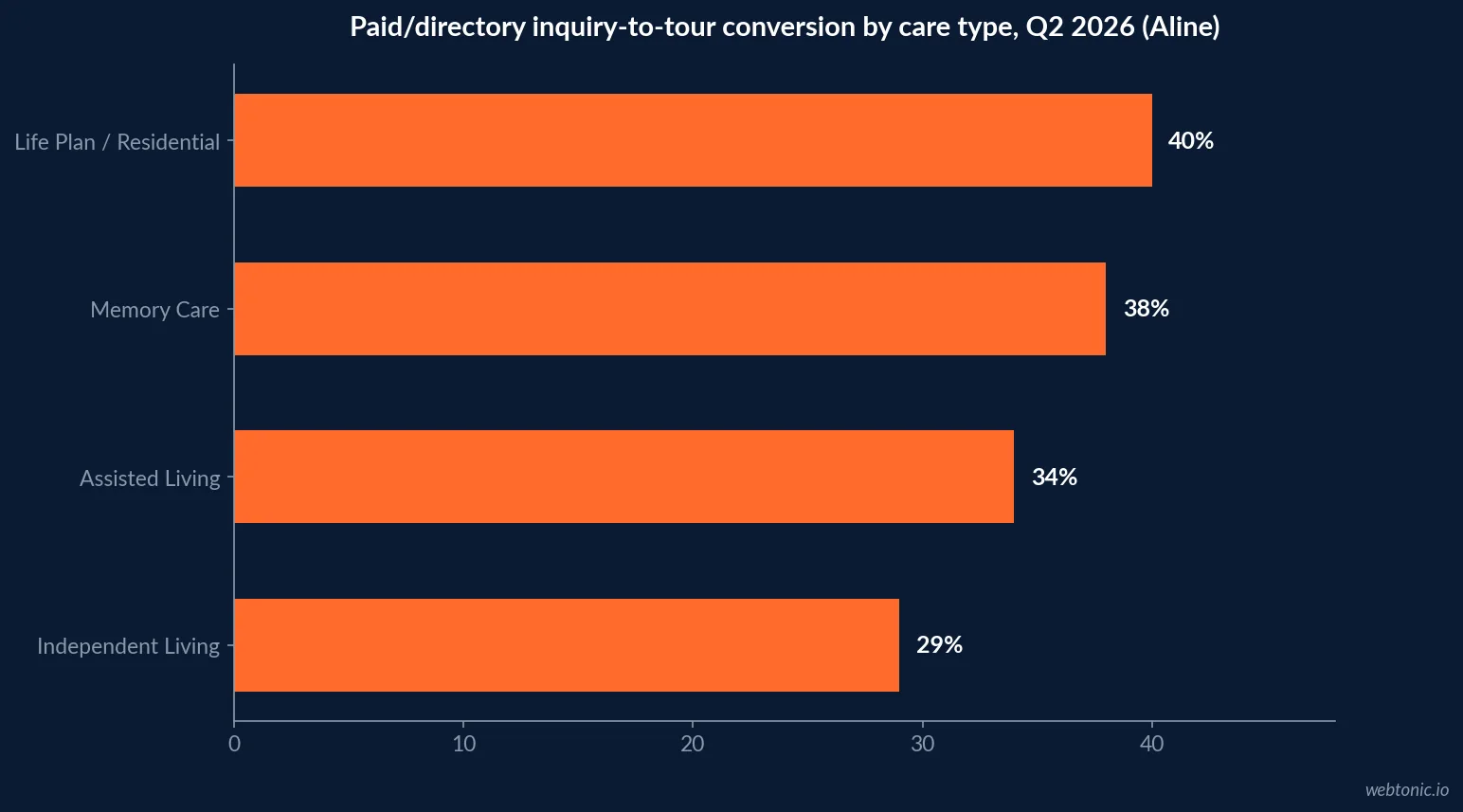
- 29% to 40% inquiry-to-tour conversion on paid-channel leads across four care types (Aline, Q2 2026).
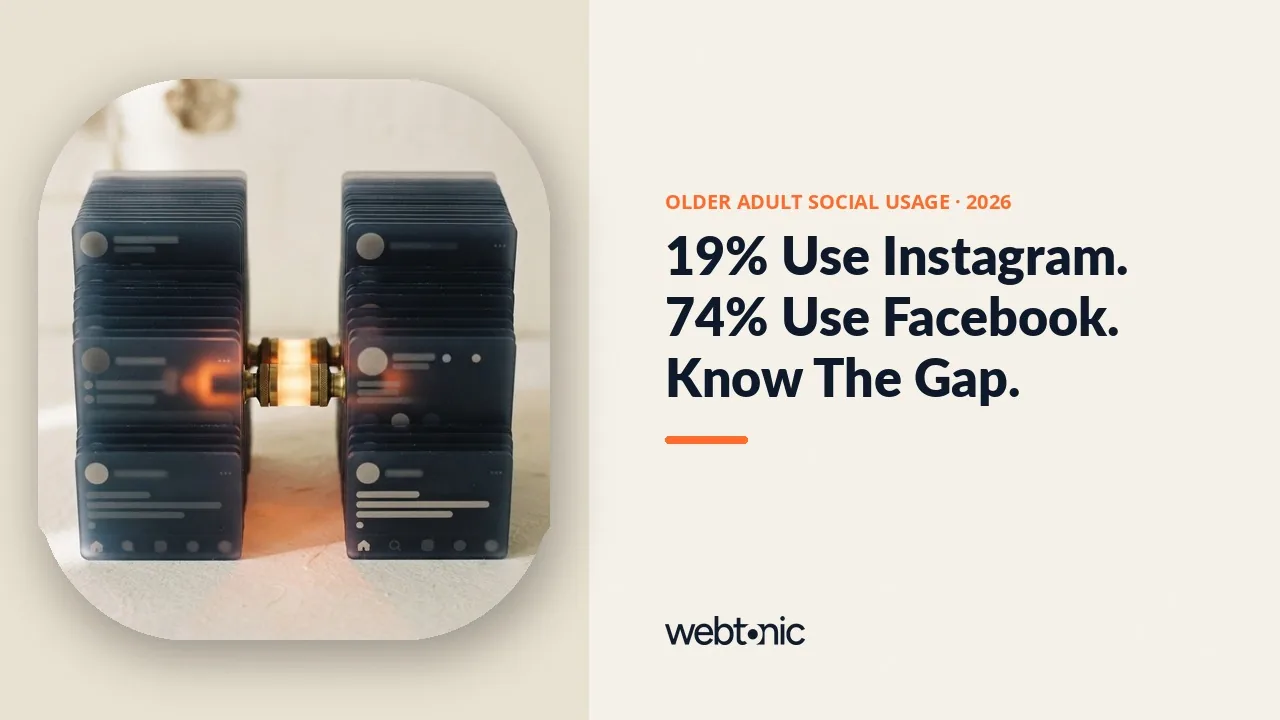
- 74% of adults 50 to 64 use Facebook against 57% of adults 65 and older (Pew Research).
- 59 million family caregivers of adults are the real audience behind most clicks (AARP 2026).
- 41,465 assisted living communities compete for that click nationwide (AHCA/NCAL).
- $626 average monthly spend on assisted living social lead campaigns against $1,250 on search (LocaliQ).
- 32% year-over-year CPC increase on assisted living search ads, among the steepest LocaliQ measured.
The closest verified number: LocaliQ's elder-care subcategory
No published benchmark study prices "senior living Meta ads" as its own line item. The closest verified figure comes from LocaliQ's healthcare advertising benchmarks, which tracks an "Assisted Living, Elder & Home Care Services" subcategory across search, display and social campaigns run through its own client base. It is a healthcare-wide vertical benchmark, not a senior-living-only study, and it bundles home care agencies in with residential communities - so treat every figure below as the nearest available proxy, labeled as such throughout.
| Channel (LocaliQ Assisted Living, Elder & Home Care) | Avg. cost per lead | Avg. CTR | Avg. cost per click | Avg. monthly spend |
|---|---|---|---|---|
| Search ads | $74.44 | 6.35% | $6.30 | $1,250 |
| Social ads (Facebook/Instagram, lead objective) | $70.81 | 1.90% | $1.00 | $626 |
| Display ads | $23.34 | 0.11% | $5.37 | $500 |
Why the cheaper social lead still needs a longer nurture
Cost per lead alone flatters social. The same LocaliQ dataset shows the assisted living subcategory's search ads converting clicks into leads at 5.51%, while its social ads carry a 1.90% click-through rate that is the highest of any healthcare subcategory LocaliQ measured - but click-through is not the same metric as conversion, and social lead forms typically capture earlier-stage interest than a search click that follows an active "assisted living near me" query. WordStream's 2026 Google Ads benchmarks put the all-industry average conversion rate at 8.18%, which puts assisted living search below the cross-industry average and social further behind still on true bottom-funnel intent.
| Metric | Assisted living search | Assisted living social | All-industry search (WordStream) |
|---|---|---|---|
| Average CTR | 6.35% | 1.90% | 6.64% |
| Average CPC | $6.30 | $1.00 | $5.42 |
| Average conversion rate | 5.51% | n/a (lead-form CTR shown) | 8.18% |
| Average cost per lead | $74.44 | $70.81 | $66.69 |
What happens after the click: Aline's paid-channel conversion data
Neither LocaliQ figure tracks what happens after the lead form, which is where Aline's Q2 2026 Sales & Marketing Benchmark Snapshot is useful. Aline is senior living operating software used across more than 5,000 communities, and its Q2 2026 snapshot reports inquiry-to-tour conversion specifically for paid, online-directory and lead-aggregator sources, broken out by care type - the paid-channel number a Meta or Google lead ultimately has to clear to become a real visit.
| Care type | Paid/directory inquiry-to-tour, Q2 2025 | Paid/directory inquiry-to-tour, Q2 2026 |
|---|---|---|
| Independent Living | 19% | 29% |
| Assisted Living | 30% | 34% |
| Memory Care | 31% | 38% |
| Life Plan / Residential | 34% | 40% |
Who is actually clicking the ad
The resident is rarely the one filling out the lead form. Pew Research's 2025 Social Media Fact Sheet, based on a survey of 5,022 U.S. adults, reports Facebook use at 57% among adults 65 and older against 74% for adults 50 to 64 - the age band that supplies most adult children researching care for a parent. AARP's Valuing the Invaluable 2026 update counts 59 million family caregivers of adults, contributing an estimated 49.5 billion hours of unpaid care in 2024 at an average value of $20.41 an hour. Meta's audience tools can target either age band; the funnel and the ad copy usually should not treat them the same way.
| Platform use by age (Pew 2025) | Adults 50-64 | Adults 65+ |
|---|---|---|
| 74% | 57% | |
| YouTube | 85% | 64% |
| 40% | 19% | |
| TikTok | 30% | 12% |
How crowded the auction is
Part of the reason assisted living search costs climbed is competitive pressure from a large, fragmented market. AHCA/NCAL's 2026 fast facts count 41,465 assisted living communities nationwide serving 1,016,424 residents, with an average yearly cost of care of $74,400 - meaning most of those 41,465 communities are bidding into the same keyword and interest pools LocaliQ's benchmark tracks. LocaliQ's data shows assisted living, elder and home care search CPCs rose 32% year over year, one of the steepest increases across the 16 healthcare subcategories it measured.
| Market fact (2026) | Figure | Source |
|---|---|---|
| Assisted living communities nationwide | 41,465 | AHCA/NCAL |
| Residents nationwide | 1,016,424 | AHCA/NCAL |
| Average yearly cost of care | $74,400 | AHCA/NCAL, citing Genworth/CareScout 2025 |
| YoY change, assisted living search CPC | +32% | LocaliQ healthcare search benchmarks |
The compliance layer Meta ads add
Senior living sits close enough to healthcare that Meta's advertising policy on health and wellness restricts certain claims and targeting, and the same pixel-based tracking that powers Meta's lead-ad optimization has drawn HHS Office for Civil Rights guidance on how tracking technologies interact with HIPAA when a covered entity's website or intake form collects protected health information. Any testimonial, review quote or before/after content used in ad creative also sits under the FTC's Health Products Compliance Guidance, which requires that an endorsement reflect the honest experience of the endorser and that any implied treatment or outcome claim be substantiated. None of this blocks a senior living Meta campaign; it does mean legal review of claims and a documented consent trail for any testimonial belongs in the creative process, not after a complaint.
| Compliance area | What it constrains | Source |
|---|---|---|
| Meta health & wellness ad policy | Targeting and claims on health-adjacent services | Meta advertising policy |
| HHS OCR tracking technology guidance | Pixel/analytics use on pages collecting health data | HHS Office for Civil Rights |
| FTC Health Products Compliance Guidance | Testimonials, before/after content, outcome claims | Federal Trade Commission |
The demand curve behind the auction
The auction assisted living operators are bidding into is getting more competitive on two fronts at once. U.S. Census Bureau projections put the share of the population 65 and older rising from 18.9% in 2025 to 23.4% by 2060, which grows the addressable audience Meta and Google ads reach over time. At the same time, NIC MAP data reported by the National Investment Center shows senior housing occupancy across the 31 Primary Markets crossing 90% in July 2026, a level last seen before the 2008 financial crisis. Tighter occupancy means fewer open units to sell into, which raises the cost of every qualified lead a paid channel produces even before the auction itself gets more competitive.
Reading the two cost-per-lead numbers together
The honest read of LocaliQ's own data is that assisted living social ads buy a cheaper lead than search ($70.81 against $74.44) at a fraction of the cost per click ($1.00 against $6.30), but on weaker buying intent than a search click that follows an active query. Aline's Q2 2026 data suggests the gap narrows once a lead reaches the tour stage: paid and directory sources converted inquiry-to-tour at 29% to 40% depending on care type, up from 19% to 34% a year earlier, which argues the funnel is tightening for every paid channel, not only Meta.
Our Meta Ads practice builds senior living funnels around that gap - cheaper top-of-funnel social spend feeding a nurture sequence built for the 50-to-64 decision-maker, rather than expecting a single lead form to close a five-figure annual purchase. Our growth marketing team sets the budget split between search and social against that same occupancy pressure, and a strategy call is the fastest way to check your own account against these benchmarks.
Budget benchmarks to plan against
LocaliQ's assisted living subcategory shows average monthly spend of $1,250 on search and $626 on social - both modest client account sizes, useful as a floor rather than a target for a multi-community operator. Scaling spend without also scaling creative volume is a common way senior living accounts burn through the cheaper social CPL without moving tour volume; see our breakdown of what Facebook ads cost across industries for the wider budgeting context.
Three ways to close the intent gap on social
- Route social leads into a longer nurture, not a single call: Aline's data shows tour conversion still climbing a year after inquiry volumes shift, which argues for a multi-touch sequence rather than a same-day close attempt.
- Segment creative by age band: adult children (50-64) and prospective residents (65+) use Facebook at different rates (74% against 57%, per Pew) and likely respond to different messaging about autonomy versus caregiving relief.
- Keep claims inside FTC and Meta health-ad guardrails: testimonial-heavy senior living creative is common and effective, but needs a documented consent and substantiation trail before it runs.
Frequently Asked Questions
What is a good cost per lead for senior living Meta ads?
LocaliQ's healthcare-vertical benchmarks put the average cost per lead for the Assisted Living, Elder & Home Care Services subcategory at $70.81 on Facebook and Instagram lead campaigns, against $74.44 for the same subcategory on Google and Microsoft search ads. Both are healthcare-wide vertical figures, not a published senior-living-only study, so treat them as the closest available proxy rather than an exact quote for your market.
Do Meta ads convert as well as search ads for senior living?
Not on the same metric. LocaliQ's data shows the assisted living subcategory converting at 5.51% on search ads against click-through of 6.35%, while its social ads benchmarks list a 1.90% click-through rate for the same subcategory - the highest of any healthcare subcategory LocaliQ tracks, but social campaigns are typically built for awareness, not the bottom-of-funnel inquiry a search ad captures. Aline's own CRM data backs this up: across four care types in Q2 2026, paid-channel leads converted from inquiry to tour at 29% to 40%, a wider and generally lower band than the 42% to 58% tour-to-move-in rates it reports overall.
Who is actually clicking on a senior living Facebook ad?
Mostly not the resident. Pew Research's 2025 survey puts Facebook use at 57% among adults 65 and older against 74% for adults 50 to 64 - the age band that supplies most adult children shopping for a parent. Meta's own ad system reaches both bands well, but the buying decision and the click usually sit with the 50-to-64 group, which is also the group AARP's Valuing the Invaluable 2026 update counts inside 59 million family caregivers of adults.
What compliance rules apply to senior living Meta ads?
Meta's health and wellness ad policy restricts targeting and claims on health-adjacent products and services, and HHS's Office for Civil Rights has issued bulletin guidance on how the Meta pixel and similar tracking technologies interact with HIPAA when a covered entity's website collects protected health information. Testimonial and before/after content used in senior living ad creative also falls under the FTC's Health Products Compliance Guidance on substantiated claims and honest endorser experience.
Why is the same LocaliQ subcategory cheaper on social than on search?
LocaliQ's own healthcare data shows lower funnel intent buys cheaper clicks: the assisted living search subcategory carries a $6.30 average cost per click against $1.00 on social, because a search click follows an active query while a social impression is served against an interest or lookalike audience. The tradeoff is the same subcategory's social display cost per lead falls even further to $23.34 in LocaliQ's display benchmarks, at the cost of the weakest buying intent of the three channels.
Sources
LocaliQ - Healthcare advertising benchmarks (search, display, social)
LocaliQ - Healthcare search ads benchmarks for 16 specialties
WordStream - 2026 Google Ads industry benchmarks
Aline - Q2 2026 Sales & Marketing Benchmark Snapshot
Pew Research Center - Social Media Fact Sheet, 2025
AARP - Valuing the Invaluable, 2026 update
AHCA/NCAL - Assisted Living Facts and Figures, 2026
U.S. Census Bureau - An Aging World, 2026 projections
NIC - Senior housing occupancy trends, 2026