



Table of contents

Meta advertising for phone and tech retailers averages a 0.9% CTR and $1.20–$1.80 CPC, with blended ROAS settling between 1.5× and 2.5× — well below the cross-industry median of 2.0–3.5×. Below are the benchmarks, spending trends, and audience data that shape Facebook and Instagram ad performance for consumer electronics brands in 2026.
Key Takeaways
- Electronics Meta ads average 0.9% CTR — roughly half the cross-industry 1.5% median, reflecting longer purchase consideration cycles.
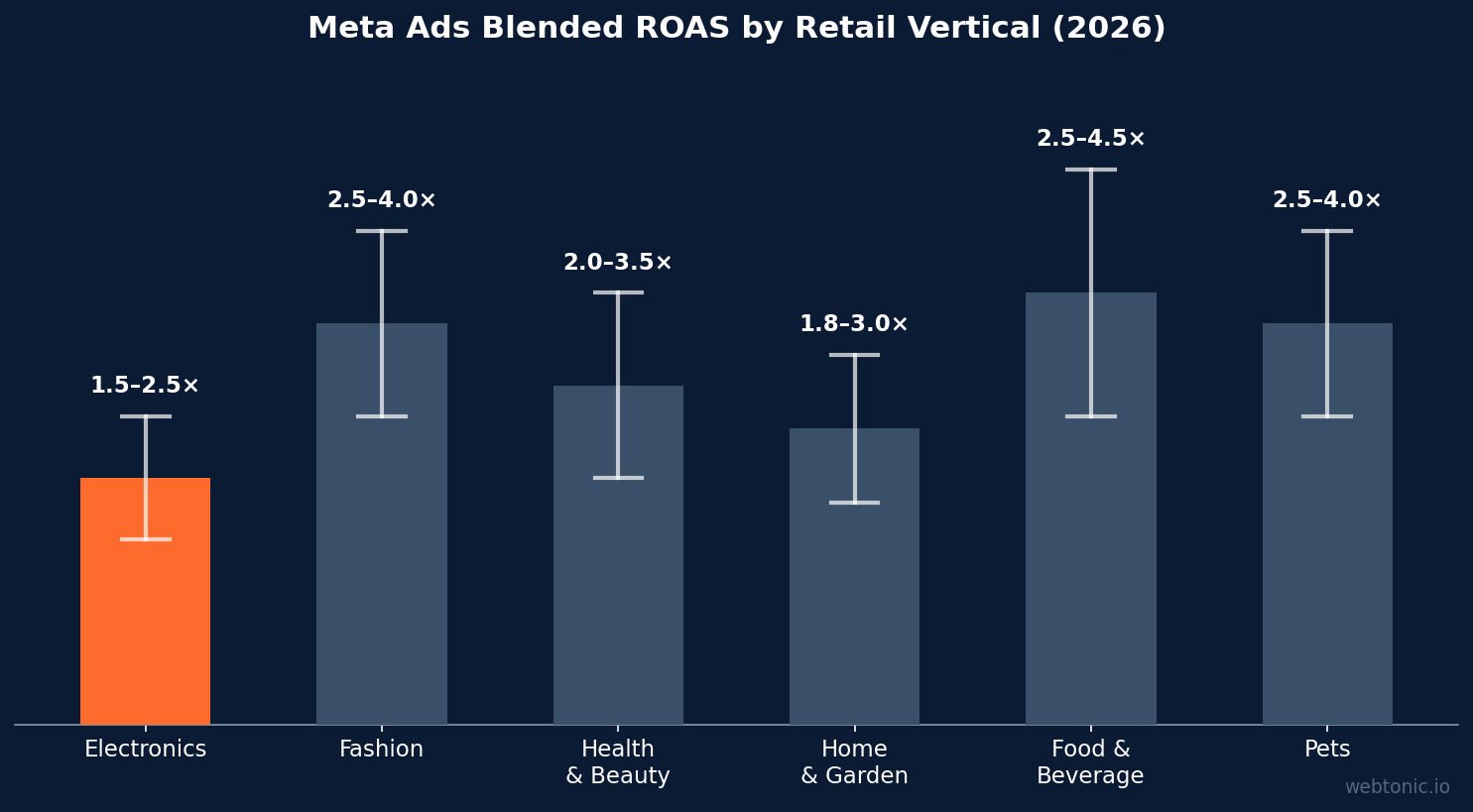
- Blended ROAS for electronics sits at 1.5×–2.5× on Meta, lagging fashion (2.5–4.0×) and food (2.5–4.5×) due to thinner margins.
- 68% of electronics shoppers use social media as their primary product research channel, making Meta a critical discovery platform (Zipdo).
- Social media advertising accounts for 41% of total electronics ad spend, the largest single channel allocation for the industry.
- Meta's Advantage+ Shopping Campaigns deliver 12–22% lower CPA versus manual campaigns in consumer electronics verticals.
- Mobile devices drive 78.4% of electronics retail traffic but convert at only 2.1% versus 3.9% on desktop.
- DTC electronics brands pay a median CPA of $52–$70 on Meta, compared to $38 median across all ecommerce verticals.
- Instagram Reels ads generate 23% higher engagement than static feed placements for tech product launches.
- Video ads drive 2.1× higher purchase intent than static image ads for consumer electronics (Meta internal data).
- Retargeting campaigns recover 8–15% of abandoned electronics carts at 4–6× ROAS, the highest-performing Meta tactic for tech retailers.
Phone & Tech Retail Meta Ads Benchmarks at a Glance
| Metric | Electronics Average | Cross-Industry Median | Gap |
|---|---|---|---|
| CTR (Link Click) | 0.9% | 1.5% | −40% |
| CPC (Link Click) | $1.20–$1.80 | $0.50–$1.80 | Higher end |
| CPM (Cold Audiences) | $12–$22 | $8–$18 | +33% |
| Blended ROAS | 1.5–2.5× | 2.0–3.5× | −25% |
| Conversion Rate | 2.1–3.4% | 3.5–5.0% | −35% |
| Median CPA (DTC) | $52–$70 | $38 | +55% |
Sources: AdLibrary 2026 Ecommerce Benchmarks, COREPPC 2026 Meta Ads Report, Mako Metrics CPA Benchmarks.
Electronics Social Media Ad Spend Allocation
Social media advertising commands 41% of total electronics marketing budgets, the largest single channel for the industry (Zipdo). Meta captures the dominant share of that social allocation, driven by Facebook's 3.07 billion monthly active users and Instagram's visual product discovery features.
Consumer electronics digital ad spending reached $26.32 billion in 2026, growing at 9.6% year-over-year (eMarketer). The shift toward social commerce is accelerating — social commerce in consumer electronics is projected to reach $2.9 trillion globally by 2028, with Meta platforms accounting for an estimated 38% of social-driven electronics transactions.
Within Meta's ecosystem, Instagram drives 34% of product discovery for electronics among users aged 18–34, while Facebook remains the primary conversion platform for higher-ticket items ($200+). Brands allocating 60–70% of Meta budgets to prospecting and 30–40% to retargeting report the highest blended ROAS in the electronics vertical.
CPC and CTR Trends for Consumer Electronics on Meta
Electronics advertisers face a structural CTR disadvantage on Meta. The 0.9% link-click CTR for electronics trails fashion (2.4%) by more than 60% (AdLibrary), largely because electronics purchases involve longer research cycles and higher price sensitivity.
CPC trends have shifted significantly. According to ConversionStudio's 2026 benchmarks, cross-industry Facebook CPC rose 12–18% year-over-year due to iOS privacy impacts and increased auction competition. For electronics specifically:
- Prospecting CPC: $1.40–$2.20 (cold audiences, interest-based targeting)
- Retargeting CPC: $0.60–$1.10 (site visitors, cart abandoners)
- Advantage+ Shopping CPC: $0.90–$1.50 (automated broad targeting)
CPM for electronics cold audiences runs $12–$22, with Q4 holiday spikes pushing CPMs 35–50% above baseline. Brands that front-load Q4 budgets into October see 15–22% lower CPMs than those concentrating spend in November–December.
ROAS by Ad Format and Campaign Type
| Campaign / Format | ROAS Range | Best Use Case |
|---|---|---|
| Retargeting (DPA) | 4.0–6.0× | Cart abandoners, product viewers |
| Advantage+ Shopping | 2.0–3.5× | Broad prospecting with catalog |
| Video Ads (Reels) | 1.8–2.8× | Product launches, feature demos |
| Static Image Ads | 1.3–2.0× | Price promotions, clearance |
| Carousel Ads | 1.5–2.5× | Multi-product, accessory bundles |
| UGC / Creator Ads | 2.2–3.8× | Social proof, unboxing reviews |
Sonos achieved a 19× ROAS on Facebook video ads for its PLAYBASE speaker launch, combining high-impact awareness creative with retargeting sequences (CaseStudies.com). While exceptional, it illustrates the outsized returns possible when creative, audience, and timing align for electronics brands.
UGC-style ads deliver 31% higher hook rates and 33% higher CTR compared to polished studio creative for electronics products (Benly.ai). Unboxing videos and hands-on reviews outperform spec-sheet creative because they address the trust gap that high-consideration electronics purchases create.
Mobile vs. Desktop Performance in Electronics Meta Ads
Mobile devices generate 78.4% of electronics retail website traffic but convert at just 2.1% — nearly half the 3.9% desktop conversion rate (CuFinder). This mobile conversion gap is wider in electronics than in most retail verticals because shoppers use phones for research but prefer desktop for high-ticket purchases.
Meta advertisers in the electronics space must optimize for this split behavior:
- Mobile-first creative is essential since 91% of Meta ad impressions are on mobile devices
- Express checkout integrations (Apple Pay, Shop Pay) lift mobile conversion rates by 15–37% for electronics retailers
- Instagram Shopping tags reduce friction and increase add-to-cart rates by 12–18% for products under $150
- Omnichannel strategies deliver a 287% higher purchase rate than single-channel approaches for electronics brands (Omnisend)
The mobile app install-to-purchase funnel is particularly valuable for electronics retailers — app users spend 6.6× more than mobile web users and convert at rates closer to desktop (Gitnux/Omnisend).
Audience Targeting Strategies That Move the Needle
Effective Meta advertising for electronics retailers depends on matching audience segments to the right funnel stage through growth marketing. 68% of electronics consumers use social media as their primary product research source (Zipdo), making top-of-funnel targeting on Meta essential.
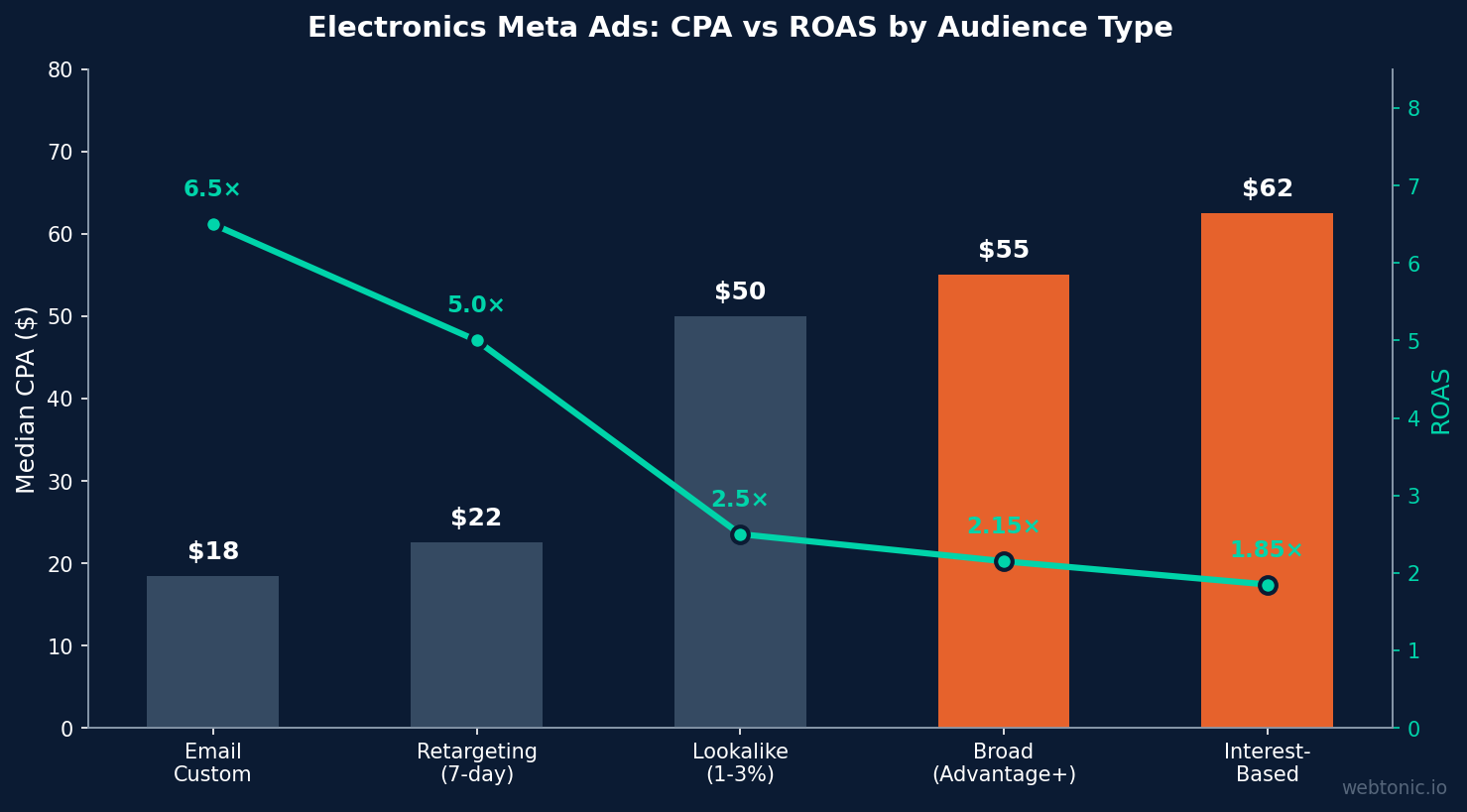
| Audience Type | CPA Range | ROAS | Best Practice |
|---|---|---|---|
| Broad (Advantage+) | $45–$65 | 1.8–2.5× | Let algorithm find buyers at scale |
| Interest-Based | $50–$75 | 1.5–2.2× | Layer tech interests + purchase behavior |
| Lookalike (1–3%) | $40–$60 | 2.0–3.0× | Seed from purchasers, not page visitors |
| Retargeting (7-day) | $15–$30 | 4.0–6.0× | Dynamic product ads with urgency |
| Email Custom Audience | $12–$25 | 5.0–8.0× | Cross-sell accessories, upsell warranties |
Advantage+ Shopping Campaigns have reduced electronics CPA by 12–22% compared to manually targeted campaigns, according to Meta's own internal benchmarks. The algorithm excels at finding high-intent electronics buyers when fed a broad product catalog and sufficient conversion data (50+ weekly conversions recommended).
Creative Formats That Drive Electronics Conversions
Creative format selection significantly impacts Meta ad performance for electronics. Video ads generate 2.1× higher purchase intent than static images for tech products, driven by the need to demonstrate features, build trust, and overcome the "can't touch it" barrier of online electronics shopping.
- Instagram Reels ads produce 23% higher engagement rates for tech product launches compared to standard feed placements
- Carousel ads with 4–6 product images deliver 72% higher conversion rates than single-image ads for accessory bundles
- Ads survive an average of 14.2 days on Meta before performance declines — electronics brands should plan for bi-weekly creative refreshes (AdSpyder)
- Short-form video (under 15 seconds) outperforms longer formats on mobile, with 73% of mobile users preferring short-form video content
- Feature-comparison overlays in carousel format increase CTR by 18–25% for electronics where spec differentiation matters
The most effective creative strategy combines 3–5 ad variations per ad set, rotating between UGC testimonials, product demos, lifestyle imagery, and promotional offers. Brands testing at least 4 creative concepts per month see 25–40% lower CPAs over time compared to those running fewer than 2 concepts.
Seasonal Spending Patterns and CPM Fluctuations
Electronics Meta advertising follows a pronounced seasonal cycle. Q4 accounts for 32–38% of annual electronics ad spend on Meta, driven by Black Friday, Cyber Monday, and holiday gift-giving. CPM inflation during this period creates strategic planning imperatives:
- October CPMs average $14–$19 for electronics — 15–22% below November peaks
- November CPMs spike to $18–$28, with Black Friday week reaching 40–50% above baseline
- January "resolution" period delivers the lowest CPMs ($10–$14) with strong demand for fitness tech, smart home, and productivity electronics
- H1 front-loading strategy: brands investing 55% of annual budget in H1 achieve 12–18% better overall CPA versus H2-heavy spenders
Product launch windows also matter. Apple's September event creates a 2–3 week CPM spike across the entire electronics category, even for non-Apple advertisers. Samsung's Galaxy Unpacked events similarly inflate costs in the Android accessories segment. Smart advertisers pause prospecting during these 72-hour windows and shift budget to retargeting where CPMs remain stable.
Electronics vs. Other Retail Verticals on Meta
| Vertical | Avg CTR | Avg CPC | Blended ROAS | Median CPA |
|---|---|---|---|---|
| Electronics | 0.9% | $1.50 | 1.5–2.5× | $52–$70 |
| Fashion & Apparel | 2.4% | $0.65 | 2.5–4.0× | $20–$35 |
| Health & Beauty | 1.6% | $0.90 | 2.0–3.5× | $28–$45 |
| Home & Garden | 1.3% | $1.10 | 1.8–3.0× | $35–$55 |
| Food & Beverage | 1.8% | $0.75 | 2.5–4.5× | $15–$30 |
| Pets | 2.0% | $0.80 | 2.5–4.0× | $22–$38 |
The data reveals that electronics brands face structurally higher customer acquisition costs on Meta than most retail verticals. The combination of higher AOV ($120–$400 typical), longer consideration periods, and price comparison behavior inflates CPA while compressing ROAS. However, lifetime value often justifies the higher CPA — electronics customers who purchase through Meta ads show a 35% higher repeat purchase rate within 12 months versus organic customers, particularly for accessories and consumables.
Best Practices for Electronics Meta Advertising
- Invest in Advantage+ Shopping Campaigns — allocate 40–50% of Meta budget to ASC for automated prospecting at 12–22% lower CPA than manual campaigns.
- Build a robust product catalog — dynamic product ads deliver 4–6× ROAS on retargeting, making catalog completeness and feed quality foundational.
- Prioritize video creative — with 2.1× higher purchase intent, video is non-negotiable for electronics. Budget for bi-weekly creative refreshes based on 14-day ad fatigue cycles.
- Leverage UGC and creator content — 31% higher hook rates and 33% higher CTR make UGC the highest-performing format for electronics trust-building.
- Segment mobile vs. desktop strategies — use mobile for awareness and consideration (78.4% of traffic), desktop for conversion (3.9% vs. 2.1% rate).
- Front-load spending into H1 and October — avoid the Q4 CPM crunch by investing 55% of annual budget before November for 12–18% CPA advantage.
- Implement express checkout — Apple Pay and Shop Pay integrations lift mobile conversions by 15–37%, directly improving Meta ad ROAS.
- Use email custom audiences for cross-sell — existing customer audiences deliver 5–8× ROAS on accessory and warranty campaigns at $12–$25 CPA.
FAQ
What is a good ROAS for electronics Facebook ads?
A healthy blended ROAS for electronics on Meta is 1.5–2.5×, though this varies by margin structure. Brands with 40%+ gross margins can profit at 2× ROAS, while those with typical electronics margins (20–30%) need 3×+ to achieve positive unit economics. Retargeting campaigns should target 4–6× ROAS to offset lower-ROAS prospecting spend.
How much should electronics retailers spend on Facebook ads?
Emerging electronics brands typically allocate 12–18% of revenue to Meta advertising, scaling down to 8–12% as organic channels mature. A minimum monthly budget of $3,000–$5,000 is recommended to exit Meta's learning phase and generate enough conversion data (50+ weekly) for Advantage+ optimization.
Why is electronics CTR lower than other retail verticals?
Electronics CTR averages 0.9% versus the 1.5% cross-industry median because electronics purchases involve extended research, price comparison across retailers, and higher financial risk. Shoppers are less likely to impulse-click on a $300 smartphone case than a $25 skincare product. Video and carousel formats help close this gap by providing more information per impression.
Do Instagram Reels ads work for electronics brands?
Yes — Reels ads generate 23% higher engagement than standard feed placements for tech product launches. The short-form video format is ideal for quick feature demos, unboxing reveals, and side-by-side comparisons. Electronics brands seeing the best Reels performance keep videos under 15 seconds with a strong visual hook in the first 2 seconds.
What creative format works best for electronics Meta ads?
UGC and creator-led content outperforms polished studio creative by 31% on hook rate and 33% on CTR for electronics. The most effective strategy combines 3–5 ad variations per ad set: UGC testimonials, feature demos, lifestyle shots, and promotional offers. Brands testing 4+ creative concepts monthly see 25–40% lower CPAs over time.
Sources
AdLibrary — Meta Ad Benchmarks Ecommerce 2026
COREPPC — Meta Ads Benchmarks by Industry 2026
ConversionStudio — Facebook Ads Benchmarks 2026
Mako Metrics — Facebook Ads CPA Benchmarks
Zipdo — Marketing in the Electronics Industry
CuFinder — Retail Mobile vs Desktop Benchmarks
Benly.ai — Cross-Platform Ad Creative Benchmarks
AdSpyder — Ad Format Survival Rate Data
Omnisend — Omnichannel Commerce Statistics
CaseStudies.com — Sonos Facebook Ads Case Study


