



Table of contents
Key Takeaways
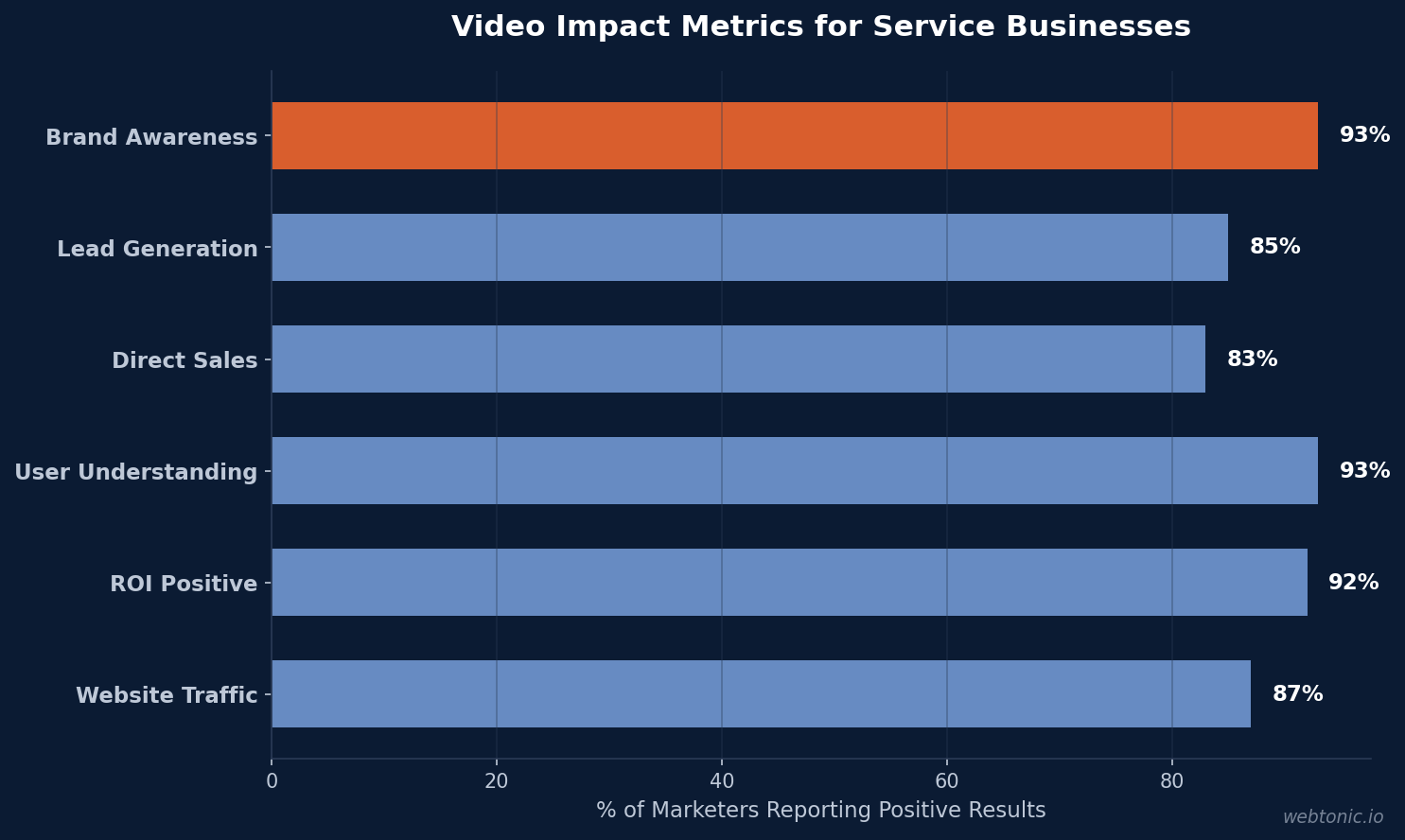
- 92% of marketers report a positive ROI from video marketing, with service businesses seeing the highest conversion lifts when video is embedded on landing pages (Wyzowl, 2026).
- Adding video to a landing page can boost conversion rates by up to 80%, directly reducing cost per lead for pest control companies that rely on high-intent local search traffic (Cambridge Filmworks).
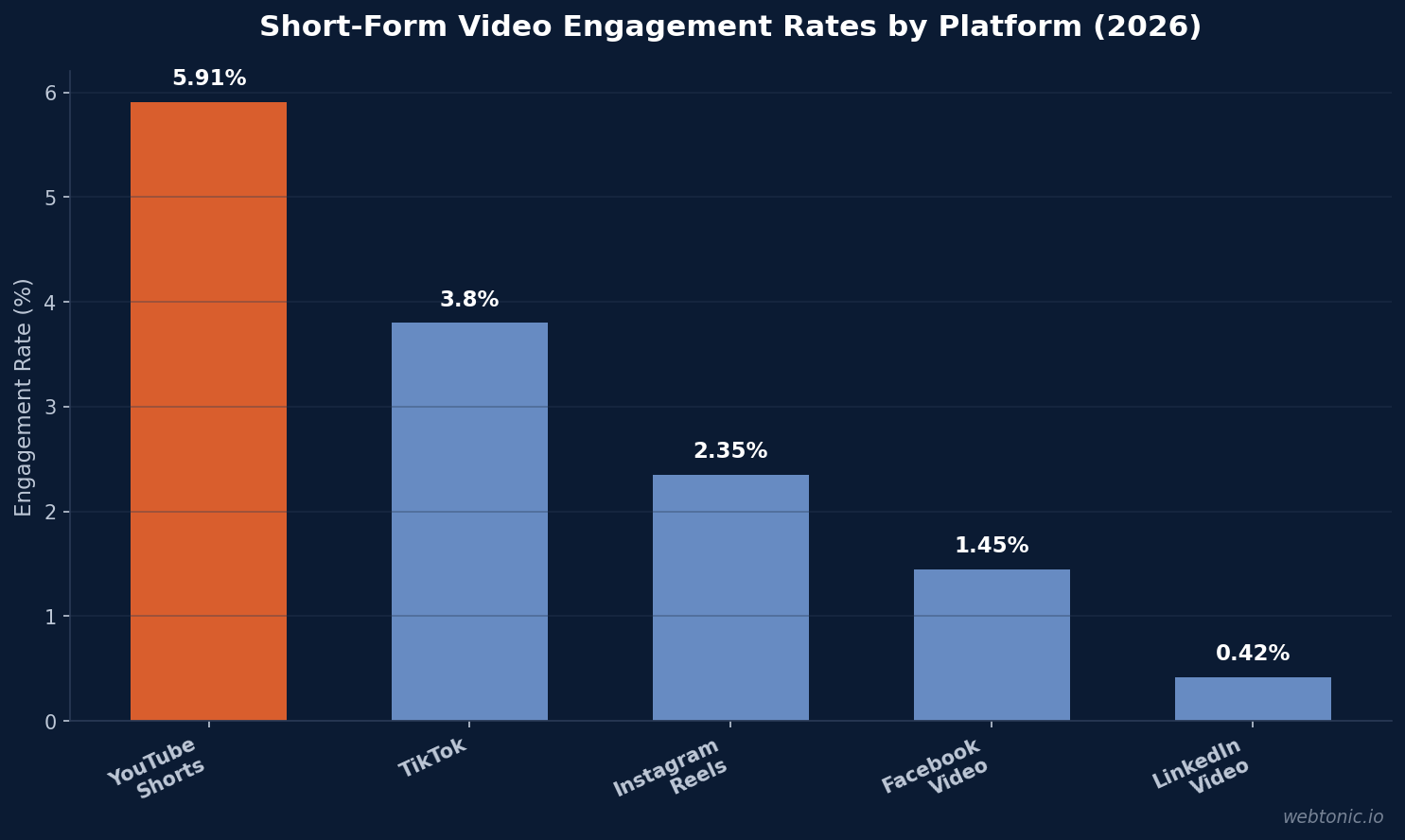
- YouTube Shorts delivers a 5.91% engagement rate, making it the highest-performing short-form platform for local service businesses seeking organic reach (Cube Creative, 2026).
- Orkin grew brand search volume by more than 350% after launching an educational YouTube content strategy with TrueView-optimized clips (Think with Google).
- Before-and-after treatment clips are the most persuasive video format for pest control providers, outperforming static posts on every engagement metric (Cube Creative, 2026).
- 84% of consumers say a brand video convinced them to make a purchase, compressing the trust-building cycle into a single viewing session (Monolit / Wyzowl, 2026).
Video has moved from a nice-to-have channel to the single highest-performing content format for pest control companies in 2026. The data below covers platform-specific benchmarks, ROI metrics, format comparisons, and real case studies so you can see exactly where the returns are.
Pest Control Video Performance at a Glance
| Metric | Value | Source |
|---|---|---|
| Businesses using video as a tool | 91% | Wyzowl, 2026 |
| Marketers reporting positive video ROI | 92% | Wyzowl, 2026 |
| Video marketers saying it generates leads | 85% | Wyzowl / Cube Creative |
| Landing page conversion lift from video | Up to 80% | Cambridge Filmworks |
| Video CTA click increase vs. static buttons | 380% | PipelineOn, 2026 |
| Consumers convinced to purchase by brand video | 84% | Monolit / Wyzowl |
| AI tool adoption for video creation | 63% | Wyzowl, 2026 |
| Short-form clips as % of mobile consumption | 73% | Monolit, 2026 |
Video ROI and Impact Metrics Across Service Industries
The chart below shows the percentage of marketers reporting positive outcomes from video across key business metrics. For pest control providers investing in growth marketing, these figures translate directly into more booked jobs and lower acquisition costs.
Platform-by-Platform Engagement Benchmarks
Not every platform delivers the same results for local service businesses. The table below breaks down engagement rates, audience demographics, and content shelf life across the major channels pest control companies should evaluate.
| Platform | Engagement Rate | Primary Audience | Content Lifespan | Best For |
|---|---|---|---|---|
| YouTube Shorts | 5.91% | 25-54 homeowners | Permanent (indexed by Google) | Local reach + SEO |
| TikTok | 3.80% | 18-34 renters & early homeowners | 48 hours peak | Awareness + virality |
| Instagram Reels | 2.35% | 25-44 homeowners | 7-14 days | Visual storytelling |
| Facebook Video | 1.45% | 35-65 homeowners | 24-72 hours | Community trust |
| LinkedIn Video | 0.42% | B2B / commercial decision-makers | 5-7 days | Commercial pest control |
Video Format Performance for Pest Control Companies
Before-and-after treatment clips are the highest-converting video format for pest control providers, according to Cube Creative's 2026 analysis. A 45-to-90-second clip showing a wasp nest removal or cockroach treatment completion tells a story that static images cannot replicate.
Short-form clips under 60 seconds account for 73% of all mobile consumption in 2026. Pest control companies that invest in consistent short-form posting report 2x the follower growth compared to businesses relying only on text or image posts (Monolit, 2026). Customer testimonial recordings rank second: 57% of video marketers have created testimonial content in 2026 (Wyzowl).
Explainer content — how to identify termite damage, when to schedule seasonal treatments — ranks third. 68% of video marketers produce explainer content, and when paired with data intelligence and tracking, these clips drive both organic discovery and retargeting audience building.
| Video Format | Avg. Length | Use Case | Marketer Adoption |
|---|---|---|---|
| Before-and-After Treatment | 45-90 sec | Trust-building, service proof | Top-performing for service businesses |
| Customer Testimonial | 60-120 sec | Social proof, conversion support | 57% of video marketers |
| Educational / Explainer | 2-5 min | SEO discovery, audience building | 68% of video marketers |
| Social Media Short-Form | 15-60 sec | Awareness, engagement, reach | 69% of video marketers |
| Live Action / Behind-the-Scenes | 1-3 min | Brand personality, team trust | 51% of video marketers |
| Video Ads (Paid) | 15-30 sec | Paid acquisition, retargeting | 48% of video marketers |
Video Conversion and Lead Generation Data
Landing pages with embedded video convert up to 80% better than pages without video, according to research compiled by Cambridge Filmworks. For pest control companies where the average website conversion rate sits between 2% and 4% (Marketing LTB, 2026), adding a 60-second treatment clip above the fold can push performance closer to the 7-10% range that top performers achieve.
Video CTAs generate 380% more clicks than static buttons on pest control landing pages (PipelineOn, 2026). When the average cost per lead on Google Ads ranges from $45 to $80 for pest control, and CPL has increased 10.51% year-over-year for 69% of home services businesses (LocaliQ, 2025), video-enhanced pages directly reduce dependence on paid search budgets by building organic trust that converts at a higher rate.
The economics are compelling: with an average pest control customer lifetime value between $1,200 and $3,600, every lost visitor represents a multi-thousand-dollar loss. Posts with video receive 48% more views, 3x more shares, and generate leads at a cost 66% lower than outbound marketing methods (Monolit, 2026). For pest control operators looking to optimize their paid media spend, video content working across both organic and paid channels provides compounding returns.
Pest Control Video Case Studies and ROI Evidence
Orkin's YouTube strategy increased brand search by more than 350% during peak pest season, according to a Think with Google case study. The company produced educational yet humorous TrueView content, growing video watch time by 275% and total channel views by 71%.
On TikTok, Acadia's work with Orkin grew the brand's following to 15,000 followers with 7.5 million total views. The inaugural "#BugWeek" activation generated millions of impressions, and overall the effort produced a 20% lift in brand awareness with Orkin's core demographic. Community management replies on 195+ posts generated 10,000+ engagements, placing Orkin in the top 5% of TikTok creators.
Smaller operators see proportional results. Pest Badger, a solo-operator pest control channel, generated 4.5 million views in 28 days with educational content on YouTube, growing to 140,000 subscribers and 60,000 Instagram followers through consistent treatment and educational clips (Cube Creative, 2026). This proves video reach is not exclusive to national brands.
AI Adoption in Video Production
63% of video marketers now use AI tools to create or edit content, up from 51% in 2025 (Wyzowl, 2026). For pest control companies with limited production budgets, AI-powered editing reduces turnaround from hours to minutes. 93% of video marketers consider video an important part of their overall strategy, and AI tooling removes the technical barriers that kept smaller operators from competing with national brands.
The most popular video types created in 2026 include social media clips (69%), explainer content (68%), testimonials (57%), and ads (48%). Live-action video remains the most common production style at 51%, which aligns perfectly with pest control's strength: real technicians solving real problems on camera.
YouTube vs. TikTok for Pest Control Operators
For most local pest control businesses, YouTube Shorts is the stronger long-term investment over TikTok, according to Handoff.ai's 2026 contractor analysis. The key difference is content permanence: YouTube Shorts are indexed by Google and live on your channel indefinitely, while TikTok clips that do not gain traction within 48 hours are buried by the algorithm.
TikTok's core demographic skews 18-34, which does not align well with the typical pest control buyer profile (homeowners aged 35-65). A 27-year-old renting an apartment is not hiring a pest control company for a $300 termite inspection. YouTube's search-driven discovery model, by contrast, connects pest control content with people actively researching pest problems — a 44-year-old homeowner searching "how to get rid of carpenter ants" on YouTube is a warm lead, not a passive viewer.
That said, TikTok offers unmatched viral distribution potential. 83% of small businesses report that YouTube builds their customer base (Cube Creative), but Orkin's TikTok #BugWeek proved that the platform can drive brand awareness at scale when targeting younger homeowners. The recommended approach for pest control companies: establish a consistent YouTube Shorts posting cadence first, then test TikTok if bandwidth permits and your service area skews younger.
Industry Spending and Market Context
The U.S. pest control industry is valued at $29.7 billion in 2026, growing at a 3.4% CAGR (NPMA / IBISWorld). As consolidation accelerates, digital channels including video become critical differentiators for independent operators competing against national advertising budgets.
Video CTAs generate 380% more clicks than static buttons on landing pages (PipelineOn, 2026), which matters when the average pest control cost per lead ranges from $45 to $80+. Embedding a 60-second treatment clip on a service page is one of the fastest ways to reduce your effective cost per acquisition without increasing ad spend.
Best Practices for Pest Control Video Content
- Start with before-and-after treatment clips. A 45-90 second transformation showing pest removal is your most persuasive asset. Caption it with the service performed and time required.
- Post short-form content at least 3 times per week. Consistency drives 2x follower growth. Prioritize YouTube Shorts for its 5.91% engagement rate and permanent indexing by Google.
- Optimize for mobile first. With 73% of content consumed in short-form on mobile, vertical video (9:16) should be your default shooting format.
- Embed clips on service landing pages. Video boosts landing page conversions by up to 80%. Place the clip above the fold alongside your primary CTA and a clickable phone number to complement your Google Ads strategy.
- Leverage AI editing tools. With 63% of marketers already using AI for video, tools like CapCut and Descript turn raw phone footage into branded content in minutes.
- Track leads, not just views. Measure leads generated, average watch duration, and conversion rate by video placement using YouTube Analytics and UTM parameters.
Pest Control vs. Other Home Services: Video Adoption
| Metric | Pest Control | HVAC | Plumbing | Roofing |
|---|---|---|---|---|
| Avg. CPL (Paid Search) | $45-$80 | $45 | $52 | $79-$187 |
| Landing Page Conv. Rate | 2%-4% | 2%-3% | 3%-5% | 2%-4% |
| Conv. Lift with Video | Up to 80% | Up to 80% | Up to 80% | Up to 80% |
| YouTube Shorts Engagement | 5.91% | 5.91% | 5.91% | 5.91% |
| Industry Revenue (2026) | $29.7B | $35.1B | $28.4B | $56.7B |
Related reading
- Pest Control Ad Creative Statistics: Formats, CTR & Testing Benchmarks (2026)
- Solar Energy Video Marketing Statistics: Engagement & ROI Data (2026)
- Surrogacy Video Marketing Statistics
- Branding services at Web Tonic
FAQ
What is the ROI of video marketing for pest control companies?
According to Wyzowl's 2026 survey, 92% of marketers report a positive return on investment from video. For pest control companies specifically, video embedded on landing pages can boost conversion rates by up to 80%, directly lowering cost per lead without increasing ad spend.
Which video platform is best for local pest control businesses?
YouTube Shorts delivers the highest engagement rate at 5.91% and content is permanently indexed by Google, making it the strongest platform for local pest control businesses. TikTok offers viral potential but skews younger and lacks geographic targeting precision.
How long should pest control video clips be?
Short-form content between 30 and 60 seconds performs best across platforms, accounting for 73% of mobile video consumption in 2026. Before-and-after treatment clips work best at 45 to 90 seconds, while educational content can run 2 to 5 minutes on YouTube.
Do small pest control companies benefit from video content?
Yes. Pest Badger, a solo operator, generated 4.5 million YouTube views in 28 days and grew to 140,000 subscribers through consistent educational content. Video reach is not exclusive to national brands when content quality and posting consistency are maintained.
How is AI changing video production for pest control marketers?
63% of video marketers now use AI tools for creation and editing, up from 51% in 2025. AI-powered captioning, script generation, and editing tools allow pest control companies with limited budgets to produce professional content in minutes.
Sources
Wyzowl — Video Marketing Statistics 2026
Cube Creative — Video Marketing for Pest Control
PipelineOn — Video Marketing for Home Service Companies
Think with Google — Orkin YouTube Case Study
Acadia — Orkin Social Media Case Study
Monolit — Video Marketing Statistics for Small Business 2026
NPMA — Pest Control Industry Fact Sheet 2026
Marketing LTB — Pest Control Marketing Statistics 2026
Handoff.ai — TikTok vs YouTube Shorts for Contractors


