



Table of contents

An AI text humanizer is a tool that rewrites AI-generated content to sound more natural, bypass AI detection, and match human writing patterns. Here is how these tools work, which ones deliver real results, and when humanizing content actually makes sense for your marketing strategy.
Key Takeaways
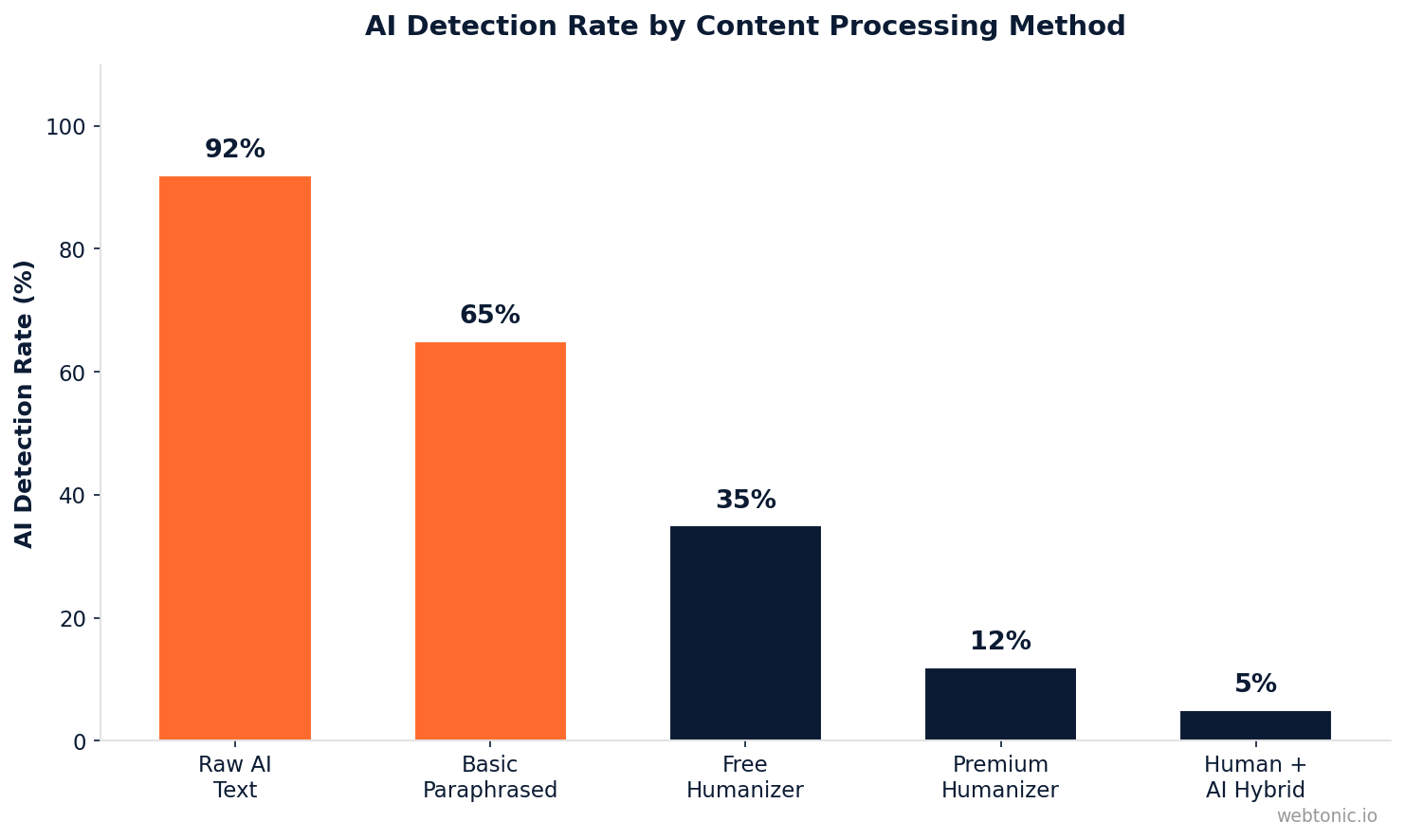
- AI detectors achieve 85–92% accuracy on unmodified AI-generated text, but humanized content passes detection at significantly higher rates (TextHumanizer).
- Google does not penalize AI content — it penalizes unhelpful content regardless of how it was produced, per official Search Central documentation (Google Search Central).
- Free AI humanizer tools typically handle up to 500–1,000 words per session, while paid plans offer unlimited humanization with advanced bypass capabilities (Humanio).
- AI humanizers use NLP to restructure sentence patterns, vary vocabulary, adjust tone, and introduce natural imperfections that AI detectors look for (Grammarly).
- The best humanizer tools preserve original meaning while transforming predictable AI writing patterns into text that reads like natural human writing (Junia AI).
What Is an AI Text Humanizer?
An AI text humanizer is a specialized tool designed to transform AI-generated text into content that reads like natural human writing. Unlike a basic paraphrasing tool that simply swaps synonyms, a dedicated humanizer tool analyzes the structural patterns that make generated text identifiable — predictable sentence lengths, formulaic transitions, and overly consistent tone — and rewrites them to match how humans actually write.
The core technology behind every AI humanizer relies on Natural Language Processing (NLP) models trained on large datasets of human writing. These models learn the subtle irregularities that characterize authentic human text: varied paragraph lengths, conversational asides, imperfect phrasing, and the kind of stylistic inconsistencies that AI content generators like ChatGPT, Gemini, and Claude tend to smooth out.
Most humanizer tools work in three steps. First, they analyze the input text to identify AI-telltale patterns. Second, they apply targeted transformations — restructuring sentences, varying vocabulary, adjusting formality, and introducing natural rhythm changes. Third, they output text that maintains the original meaning while eliminating the statistical fingerprints that AI content detectors flag.
| Feature | AI Text Humanizer | Paraphrasing Tool |
|---|---|---|
| Primary goal | Bypass AI detection while keeping original meaning | Reword text to avoid plagiarism |
| How it works | Restructures AI writing patterns at a deep level | Swaps synonyms and rearranges word order |
| Output quality | Preserves meaning + improves natural flow | May alter meaning or produce awkward phrasing |
| AI detection bypass | Specifically designed to pass detectors | Not optimized for detection bypass |
| Best for | Marketing content, blog posts, professional writing | Academic rewording, quick text changes |
How AI Content Detection Works
Understanding how AI detection works is essential before choosing a humanize text tool. Modern detectors like GPTZero, ZeroGPT, and Originality.ai analyze text across multiple dimensions to determine whether content was generated by a machine or written by a human.
Perplexity scoring measures how predictable the next word in a sequence is. Human writing tends to be more surprising — we use unexpected word choices, idioms, and creative phrasing. AI-generated text follows more predictable patterns because language models select the statistically most likely next token. Low perplexity signals machine-generated content.
Burstiness analysis examines variation in sentence structure. Human writing is "bursty" — we mix short punchy sentences with complex compound ones. Generated text from tools like GPT-based models tends to produce more uniform sentence lengths and complexity, creating a telltale flatness that detectors catch.
A quality AI text humanizer specifically targets these detection vectors, introducing natural perplexity variation and burstiness into the rewritten content. The most effective humanizer tools go beyond simple rewording — they rebuild the text's statistical profile to match human writing patterns while keeping the original meaning intact.
Top AI Text Humanizer Tools Compared
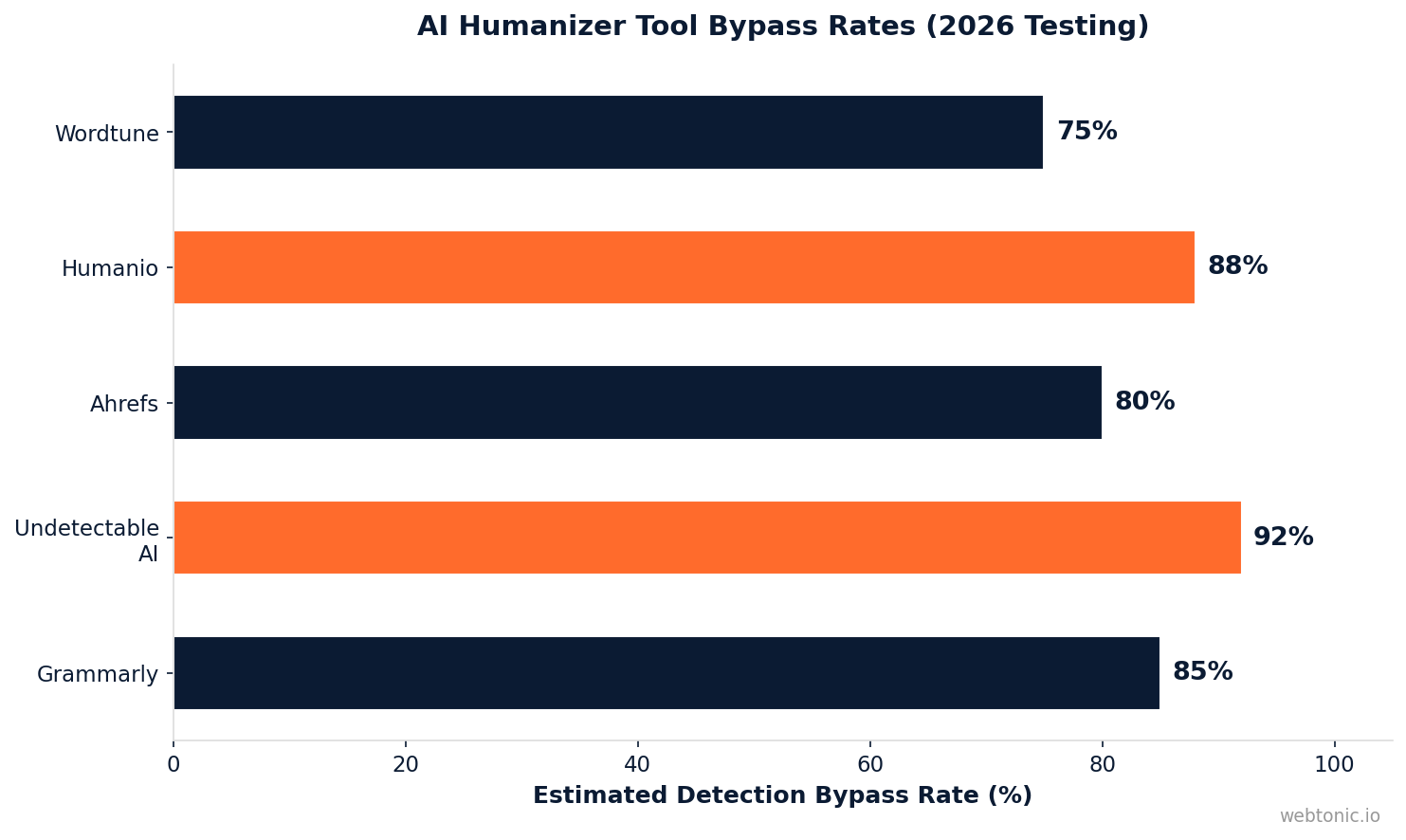
The market for AI humanizer tools has exploded, with dozens of options ranging from free humanizer platforms to enterprise solutions. Based on testing and industry reviews, here are the standout options for different use cases.
| Tool | Free Tier | Detection Bypass Rate | Best For |
|---|---|---|---|
| Grammarly AI Humanizer | Limited free, premium plans | ~85% | Professional and academic writing |
| Undetectable AI | 250 words free | ~92% | High-volume content operations |
| Ahrefs AI Humanizer | Free (with Ahrefs account) | ~80% | SEO-focused content teams |
| Humanio | 500 words free | ~88% | Bloggers and freelance writers |
| Wordtune | 10 rewrites/day free | ~75% | Quick edits and tone adjustments |
When evaluating any AI humanizer tool, prioritize three factors: detection bypass rate across multiple detectors (not just one), meaning preservation (the output should say what the input said), and natural readability (the humanized text should genuinely improve clarity and flow, not just scramble the original).
When to Humanize AI Content (And When Not To)
Not every piece of AI-generated content needs to run through a humanize text tool. The decision should be strategic, not reflexive.
Humanize when:
- Publishing thought leadership or bylined content that needs to reflect a specific voice
- Creating client-facing marketing content where authenticity matters for brand trust
- Producing content for platforms with active AI detection and content policies
- Writing email campaigns, ad copy, or social posts where natural human tone drives engagement
Skip humanization when:
- Generating internal documentation, SOPs, or data summaries where clarity trumps voice
- Creating first drafts that will undergo heavy manual editing anyway
- Producing technical content where precision matters more than stylistic naturalness
- Building content at scale where a performance creative team will overlay brand voice in the next step
Google's official position is clear: the search engine evaluates content based on helpfulness, not production method. As Google Search Central states, the focus is on whether content demonstrates experience, expertise, authoritativeness, and trustworthiness — regardless of whether a human or AI produced it. Using an AI humanizer purely to game detection is a fragile strategy. Using one to genuinely improve clarity and flow of generated content is legitimate content optimization.

How to Get the Best Results From an AI Humanizer
Simply pasting generated text into a free humanizer and copying the output rarely produces publication-ready content. The best results come from treating humanization as one step in a larger content workflow.
Start with a strong AI draft
The quality of your humanized output depends entirely on the quality of your input. Give your AI content generator (ChatGPT, Gemini, Claude, or any other tool) a detailed prompt with tone guidelines, audience context, and specific data points. A well-structured AI draft needs less aggressive humanization, which means the humanizer tool preserves more of the original meaning and structure.
Run through the humanizer in sections
Processing an entire 2,000-word article at once often produces inconsistent results. Break the text into logical sections — introduction, body paragraphs, conclusion — and humanize each one individually. This gives the humanize tool more context per section and produces more naturally flowing output.
Layer manual editing on top
Even the best AI text humanizer cannot replicate genuine expertise. After humanization, add personal insights, real examples from your experience, original data, and specific recommendations that only a human expert could provide. This combination of AI efficiency and human depth creates content that is both undetectable and genuinely valuable — the kind of content that ranks because it deserves to, not because it tricked a detector.
Verify with multiple detectors
Run your humanized text through at least two different AI content detectors before publishing. Each detector uses different models and thresholds, so passing one does not guarantee passing all of them. Tools like GPTZero and Originality.ai use different detection methodologies, so testing across both gives a more reliable confidence level.

The Ethical Dimension of AI Text Humanization
The rise of AI humanizer tools has sparked legitimate debate about transparency in content creation. Content Marketing Institute notes that the core ethical question is not whether to use AI, but whether the final content genuinely serves the reader.
Using an AI text humanizer to publish misleading, inaccurate, or thin content under a human byline is problematic — but the same criticism applies to poorly outsourced human writing. The tool itself is neutral. What matters is whether the humanized output meets the same quality bar you would hold any content to: accurate, helpful, well-researched, and genuinely useful to the reader.
For digital marketing teams, the practical standard is simple — would you be comfortable publishing this content under your name, in front of your most demanding client? If the answer is yes, the production method is secondary. If you need to hide the method, the content probably needs more work regardless of what tool produced it.
Common AI Humanizer Mistakes to Avoid
- Over-humanizing until meaning is lost. Running text through a humanize tool multiple times can distort the original message. One pass with light manual editing beats three automated passes.
- Ignoring the plagiarism checker. Some humanizer tools inadvertently introduce phrasing that matches existing published content. Always run the output through a separate plagiarism checker before publishing to avoid duplication issues.
- Using a free humanizer for high-stakes content. Free tools typically have word limits (500 words or less) and lower bypass rates. For mission-critical SEO content, client deliverables, or large-scale content operations, invest in a premium humanizer tool that consistently delivers natural human text quality.
- Treating humanization as a substitute for expertise. The best AI text humanizer converts generated text into a more natural format — it does not add subject matter expertise, original research, or genuine insight. Those still require a human content strategist.
- Forgetting about brand voice. Generic humanization produces generic writing. Configure your humanize tool for the specific tone, vocabulary level, and brand positioning your content needs.
Related reading
- AI Fails: 10 Documented Breakdowns and the 5 Reasons They Happen
- AI Content Agency: Services, Pricing, and How to Choose the Right Partner
- AI Marketing Advisory Statistics: Benchmarks and KPIs
- Marketing Strategy Consulting services at Web Tonic
Frequently Asked Questions
What does it mean to humanize AI-generated text?
To humanize AI text means using specialized software to rewrite content produced by AI generators like ChatGPT, Gemini, or Claude so it matches natural human writing patterns. The humanizer tool restructures sentences, varies vocabulary, adjusts tone, and introduces the kind of stylistic irregularities that distinguish human writing from machine-generated text — all while keeping the original meaning intact.
Is using an AI text humanizer ethical?
Using an AI humanizer is ethically neutral — the ethics depend on what you do with the output. Humanizing AI content to improve clarity and flow for readers is legitimate content optimization. Using it to pass off thin, unverified content as expert human writing is problematic. The standard should be whether the final text genuinely helps the reader, not how it was produced.
Can AI detectors still catch humanized text?
Modern AI detectors achieve 85–92% accuracy on unmodified generated text, but well-humanized content significantly reduces detection rates. The most effective humanizer tools report 80–92% bypass rates across major detectors. However, detection technology continues to evolve, and no humanize text tool guarantees permanent undetectability. The safest approach combines AI humanization with genuine human editing and original insights.
Are free AI humanizer tools worth using?
Free humanizer tools work well for short-form content, quick edits, and testing purposes. Most free plans limit you to 250–1,000 words per session and may have lower bypass rates than premium alternatives. For professional content operations producing more than a few articles per week, paid plans typically deliver better results, faster processing, and more consistent quality in the humanized output.
Does Google penalize AI-generated or humanized content?
No. Google has explicitly stated that it evaluates content based on quality and helpfulness, not production method. The search engine's guidelines focus on E-E-A-T (Experience, Expertise, Authoritativeness, Trustworthiness) signals. Content produced by AI and processed through an AI text humanizer is treated the same as any other content — if it provides genuine value, it can rank; if it is thin or unhelpful, it will struggle regardless of whether a human or machine wrote it.
Sources
grammarly.com/ai-humanizer
humanio.me/blog/best-ai-humanizers
texthumanizer.com/how-ai-detection-works
junia.ai/blog/ai-humanizer-vs-paraphraser
originality.ai/blog/ai-content-detection-accuracy
developers.google.cn/search/docs/fundamentals/creating-helpful-content
contentmarketinginstitute.com/articles/ai-content-creation
undetectable.ai
gptzero.me
zerogpt.com
ahrefs.com/writing-tools/ai-humanizer
wordtune.com


