



Table of contents
Key Takeaways
- Online pool and spa supply sales reached $260 million in 2025, with 2026 projections showing 5–10% growth as the category rebounds from a prior year decline (Grips Intelligence).
- Shopify holds 45.99% of the global e-commerce platform market in 2026, 2.6× the share of WooCommerce — making it the dominant infrastructure for pool supply retailers (TechnologyChecker).
- 12,752 active Shopify stores operate in the Home Improvement segment, with 431 new stores launched in the past 30 days (BootLeads).
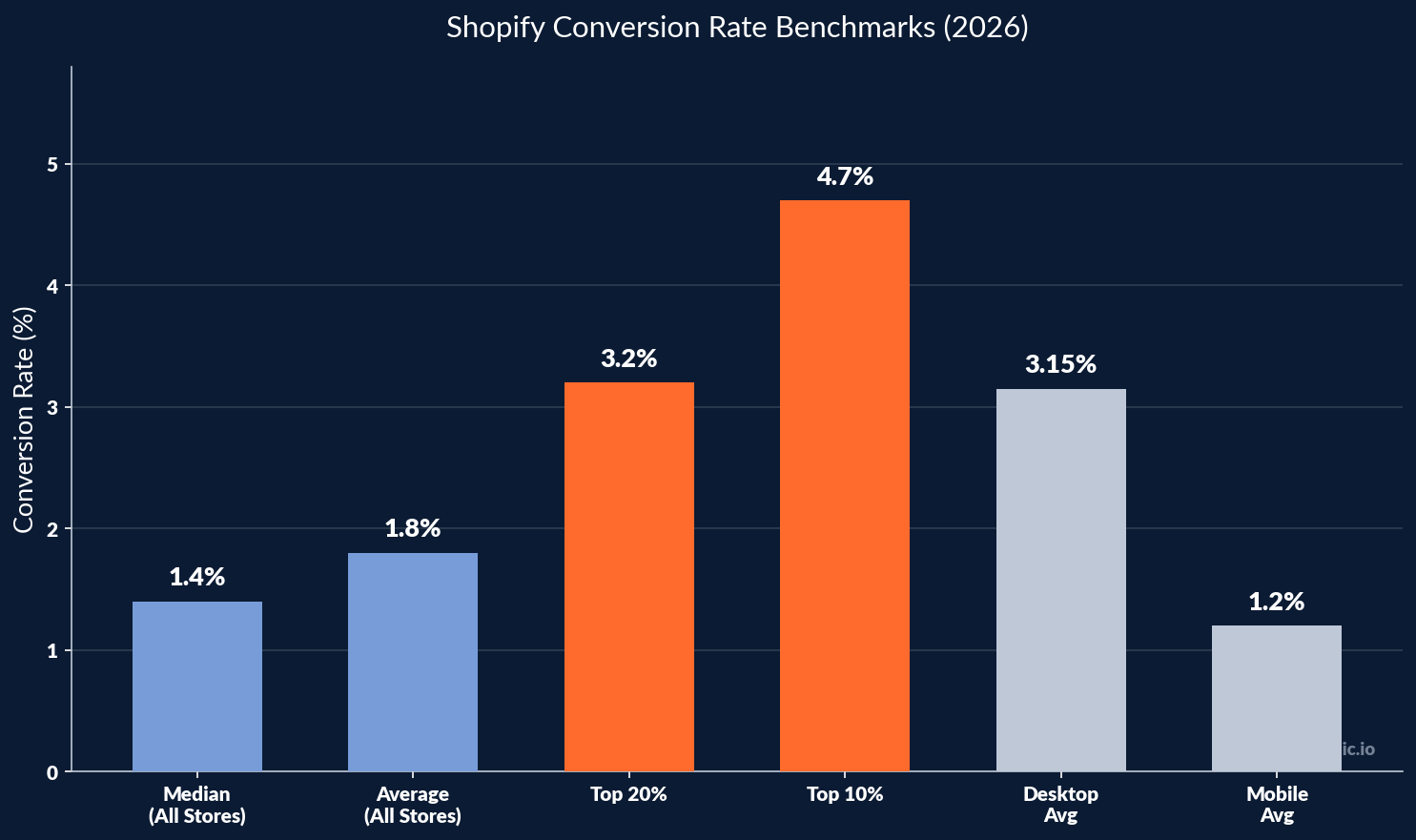
- The average Shopify store converts at 1.4–1.8%, while top 20% performers reach 3.2%+ and top 10% exceed 4.7% (Eevy).
- E-commerce platforms have reduced pool equipment prices by 15–25% versus traditional retail, driving the online direct-to-consumer channel to 15% market share (MarketIntelo).
- Shopify revenue reached $11.556 billion in FY2025 (+30% YoY), with Q1 2026 GMV hitting $100.743 billion — the second consecutive quarter above $100B (Axis Intelligence).
- Home improvement e-commerce AOV averages $135, slightly below the all-e-commerce average of $143 (WisePIM).
The swimming pool industry's shift toward online retail accelerated in 2026 as pool builders, supply distributors, and maintenance companies expanded their Shopify-based e-commerce operations. With online pool supply sales projected to grow 5–10% in 2026 after a challenging prior year, and Shopify commanding nearly 46% of the global e-commerce platform market, understanding platform-specific benchmarks is essential for pool industry retailers looking to capture digital revenue.
Pool Supply E-commerce Market Overview
| Metric | 2025 Actual | 2026 Projection |
|---|---|---|
| Online pool & spa supply sales | $260M | $273M–$286M (+5–10%) |
| Swimming pool supplies (tracked retailers) | $235M | $235M–$247M (+0–5%) |
| Pool maintenance & supplies (tracked) | $222M | $222M–$233M (+0–5%) |
| Pool equipment market (online share) | 15% of total | Growing at 11.2% CAGR |
| Pool equipment stores (U.S. industry size) | — | $8.0B |
| E-commerce price advantage vs. retail | 15–25% lower | Sustained |
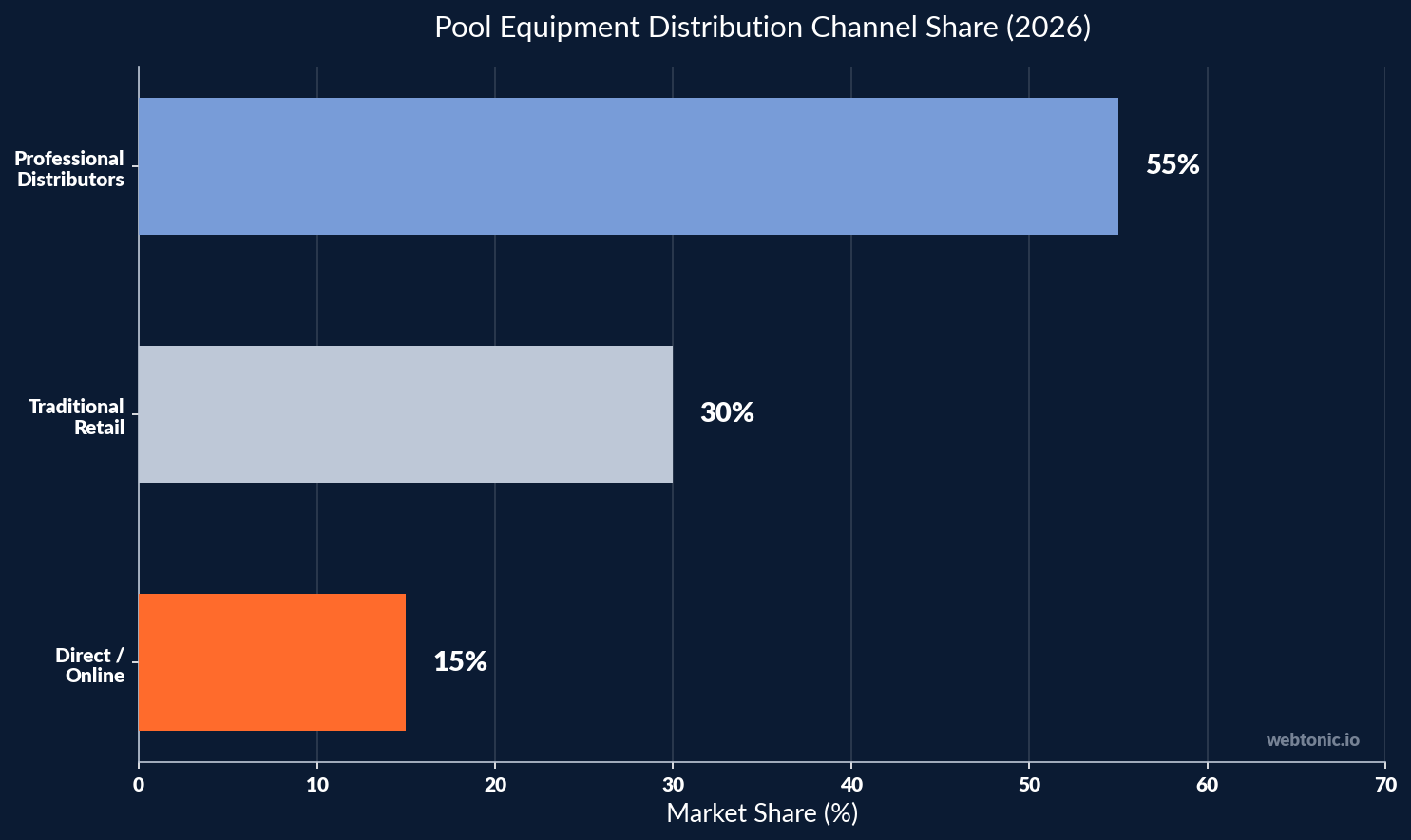
Pool supply sales are dominated by professional distributors (55% market share held by Pool Corp, SCP, and Superior), traditional retail (30% via Leslie's, Pinch A Penny, and local stores), and the growing direct/online channel at 15% (PoolDial). E-commerce platforms including Amazon, Walmart, and specialized pool retailers like SwimmingPool.com and IntheSwim.com are enabling direct-to-consumer sales that bypass traditional retail margins.
Shopify Platform Performance Benchmarks (2026)
Shopify's dominance as the leading e-commerce platform provides a robust foundation for pool supply retailers entering the online market. Key platform-level statistics:
| Shopify Metric | 2026 Value |
|---|---|
| Global market share | 45.99% |
| Revenue (FY2025) | $11.556B (+30% YoY) |
| Gross Merchandise Volume (Q1 2026) | $100.743B (+35% YoY) |
| BFCM 2025 sales | $14.6B in 4 days |
| Active Shopify stores globally | 2,898,351 (+11% YoY) |
| Home & Garden store share | 11.9% of all stores |
| Home Improvement stores | 12,752 active |
| New Home Improvement stores (30-day) | 431 launches |
The pool industry sits within Shopify's Home & Garden segment (11.9% of all stores), which remains the third-largest category on the platform after Apparel (27.1%) and Beauty & Fitness (10.9%) (Store Leads). Shopify stores in the home improvement niche carry a median of 108 products, with the middle 50% ranging from 26 to 520 SKUs and a median store-average product price of $50.86 — 24% above the platform median (BootLeads).
Shopify Conversion Rate Benchmarks for Pool Retailers
Conversion rate optimization is critical for pool supply e-commerce stores, where average order values tend to be higher than the platform norm. Key Shopify conversion benchmarks for 2026:
| Conversion Metric | Shopify Benchmark |
|---|---|
| Median store conversion rate | 1.4% |
| Average conversion rate | 1.8% |
| Top 20% of stores | 3.2%+ |
| Top 10% of stores | 4.7%+ |
| Desktop conversion rate | 2.8–3.5% |
| Mobile conversion rate | 1.2% |
| Shop Pay conversion lift | Up to +50% vs. guest checkout |
Pool supply stores face unique conversion challenges compared to typical Shopify merchants: many products require technical knowledge (pump sizing, chemical compatibility, voltage requirements), and individual order values are substantially higher than the platform average. Desktop conversion rates remain significantly stronger at 2.8–3.5% versus 1.2% on mobile (Eevy), suggesting that pool equipment buyers still prefer desktop for complex purchasing decisions. Enabling Shop Pay can lift conversion rates by up to 50% versus guest checkout (Thunderbit), making accelerated checkout adoption a priority for pool retailers.
Average Order Value and Revenue Benchmarks
Pool supply e-commerce stores typically achieve above-average order values due to the high cost of equipment like pumps, heaters, and automation systems:
- All-Shopify AOV: $85–$95 across all industries (Growth Suite)
- Home improvement e-commerce AOV: $135, reflecting the higher-ticket nature of the category (WisePIM)
- Top 20% Shopify stores: AOV above $120
- ePoolSupply.com annual sales: $5.6M in 2025, up 20–50% YoY with projected 10–20% growth in 2026 (Grips Intelligence)
- Mobile commerce: 41% of online pool purchases in 2025, driving the need for mobile-optimized Shopify themes (MarketIntelo)
The pool equipment direct-to-consumer segment is growing at a 11.2% compound annual growth rate, making it one of the fastest-expanding online channels in the home improvement vertical. Specialized pool retailers on Shopify benefit from lower overhead costs and competitive pricing strategies that undercut traditional retail by 15–25% on comparable products. Product bundling is especially effective in this category: pairing a variable-speed pump with a compatible filter and chemical starter kit can push average order values well above the $135 home improvement benchmark, while simultaneously simplifying the purchasing decision for first-time pool owners who are unsure which components they need.
Pool Industry E-commerce Distribution Channels
| Channel | Market Share | Key Players |
|---|---|---|
| Professional distributors | 55% | Pool Corp (POOLCORP), SCP, Superior |
| Traditional retail | 30% | Leslie's, Pinch A Penny, local stores |
| Direct / online | 15% | Amazon, Walmart, specialty e-commerce |
The online channel's 15% share is expanding rapidly as consumer comfort with e-commerce for high-ticket home improvement purchases increases. Pool supply Shopify stores like Shasta Pool Supply (1,444 products) and PoolPartsToGo operate on the platform, catering primarily to U.S. customers who prefer the convenience of direct-to-consumer ordering over visiting physical retail locations. The commodity chemicals segment — chlorine, pH balancers, and algaecides — shows the highest e-commerce penetration because pricing transparency and subscription models favor online purchasing.
Shopify Best Practices for Pool Supply Retailers
- Optimize for desktop conversions first — desktop converts at 2.8–3.5% versus 1.2% on mobile. Pool equipment purchases involve technical specs that buyers prefer to evaluate on larger screens.
- Enable Shop Pay and accelerated checkout — this single integration can lift conversion rates by up to 50% versus guest checkout, reducing cart abandonment on high-ticket pool equipment orders.
- Target $135+ AOV with bundling strategies — the home improvement e-commerce average is $135; bundle complementary items (pump + filter + chemicals) to exceed the category benchmark and improve per-order profitability.
- Build product expertise content — pool buyers need sizing guides, compatibility charts, and installation instructions. Content-rich product pages reduce return rates and increase buyer confidence.
- Leverage seasonal demand peaks — pool supply purchases surge in spring and early summer. Time ad campaigns and inventory builds for March–June to capture peak seasonal demand.
- Price competitively at 15–25% below retail — online pool retailers who match or beat this threshold capture price-conscious consumers who comparison-shop across channels.
- Implement subscription models for chemicals — recurring orders for maintenance chemicals create predictable revenue streams and increase customer lifetime value beyond the initial equipment purchase.
Shopify and the Swimming Pool Market Outlook
The pool and spa market reached $23.37 billion globally in 2026, growing at a 6.3% CAGR. Within this market, the equipment and supplies segment presents the strongest e-commerce opportunity:
- $8.0 billion — U.S. swimming pool equipment stores industry size in 2026 (IBISWorld)
- 14 million+ residential pools requiring ongoing maintenance supplies
- 60,000 new inground pools installed annually, each generating equipment and accessory purchases
- $65,909 average pool construction cost, supporting high-value equipment and automation add-ons
- 64% of pool industry revenue comes from maintenance and service — the recurring-revenue segment most suited to Shopify subscription models
For pool builders expanding into e-commerce, Shopify offers the most mature platform infrastructure, the largest app ecosystem for specialized needs (inventory management, subscription billing, B2B wholesale), and the strongest conversion optimization tools. The combination of a $23B+ total addressable market and a rapidly expanding online channel makes Shopify a strategic investment for pool industry retailers seeking to capture digital revenue alongside their construction and service operations.
Pool Industry Shopify Store Performance
Real-world data from pool supply Shopify stores demonstrates the category's growth potential and operational benchmarks:
- ePoolSupply.com generated $5.6 million in annual sales in 2025, with year-over-year growth of 20–50% and projected 2026 growth of 10–20% (Grips Intelligence).
- Shasta Pool Supply operates 1,444 products on Shopify, catering primarily to U.S. customers in the Home & Garden direct-to-consumer segment.
- PoolPartsToGo, established seven years ago in 2019, operates on Shopify with a team of 11–50 employees and focuses on high-value replacement parts and accessories.
These examples illustrate that both niche specialists and broader pool supply retailers can achieve meaningful revenue on Shopify. The platform's Home & Garden category has seen 11% year-over-year store growth, indicating sustained merchant interest in this vertical. Pool supply stores benefit from Shopify's built-in tools for product filtering, variant management, and integration with fulfillment services that handle oversized shipping — a critical capability for bulky pool equipment like filters, pumps, and heaters.
Mobile Commerce Trends for Pool E-commerce
Mobile commerce accounts for 41% of online pool equipment purchases in 2025, a figure expected to grow as younger homeowners enter the pool ownership market. However, the mobile-desktop conversion gap remains significant for pool supply retailers:
| Device | Conversion Rate | Share of Traffic |
|---|---|---|
| Desktop | 2.8–3.5% | ~59% |
| Mobile | 1.2% | ~41% |
The 2.3× conversion premium for desktop users reflects the complexity of pool equipment purchases — buyers frequently compare specifications, check compatibility with existing systems, and review installation requirements before committing. Pool retailers should focus on mobile product discovery and research experiences while ensuring the full checkout process is optimized for desktop completion. Shopify's responsive themes and Shop Pay accelerated checkout help bridge this gap by reducing friction at the critical payment stage.
Related reading
- Pool Building Landing Page Statistics: Conversion Rates, Benchmarks & CRO Data
- The State of WordPress in Pool Building: 2026 Stats & Trends
- Webflow Adoption & ROI in Pool Building: 72+ Key Stats (2026)
- Custom Web Development services at Web Tonic
FAQ: Frequently Asked Questions
How large is the online pool supply market?
Online pool and spa supply sales across tracked retailers totaled $260 million in 2025, with 2026 projections showing 5–10% growth. The direct and online channel holds roughly 15% of the total pool equipment market share and is growing at an 11.2% compound annual growth rate, outpacing traditional retail and professional distributor channels.
What is a good conversion rate for a pool supply Shopify store?
The median Shopify store converts at 1.4%, with the average slightly higher at 1.8%. Pool supply stores should aim for the top 20% threshold of 3.2%+ by optimizing product pages, enabling Shop Pay (which lifts conversion by up to 50%), and providing detailed technical specifications that reduce purchase hesitation on high-ticket items.
What average order value should pool e-commerce stores target?
The home improvement e-commerce average order value sits at $135, higher than the all-Shopify average of $85–$95. Pool supply stores selling equipment like pumps, heaters, and automation systems should comfortably exceed this benchmark. Implementing product bundles and cross-sell strategies can push AOV toward the $150–$200 range.
Is Shopify the best platform for pool supply e-commerce?
Shopify commands 45.99% of the e-commerce platform market in 2026, 2.6× larger than WooCommerce. For pool supply retailers, Shopify offers the most comprehensive app ecosystem, the best-in-class checkout experience (Shop Pay), and proven scalability — with over 12,752 active home improvement stores already operating on the platform.
How does e-commerce pricing compare to traditional pool retail?
E-commerce platforms reduce pool equipment prices by 15–25% versus traditional retail by eliminating physical store overhead and streamlining the supply chain. This pricing advantage is strongest for commodity products like chemicals, filter cartridges, and standard replacement parts, where consumers can easily compare prices across retailers. Online subscription models further amplify this value by offering predictable delivery schedules, automatic reorder discounts of 5–15%, and bulk pricing that traditional stores cannot match. As the pool supply e-commerce channel grows at 11.2% annually, the pricing transparency that platforms like Shopify enable will continue to shift market share away from brick-and-mortar retailers — particularly for recurring maintenance purchases where convenience and price compete directly with local store proximity.
Sources
Grips Intelligence — Pool and Spa Supplies Market Analytics
Axis Intelligence — Shopify Statistics 2026
TechnologyChecker — Shopify Analytics & Market Share 2026
Eevy — Shopify Conversion Rate Benchmarks 2026
BootLeads — Shopify Home Improvement Stores 2026
MarketIntelo — Pool Equipment Market Report
PoolDial — Pool Equipment Market Statistics 2026
Growth Suite — Shopify AOV Benchmarks 2026
Store Leads — The State of Shopify 2026
WisePIM — Home Improvement E-commerce Benchmarks 2026


