Table of contents
Med spas buy creator content in the cheapest niche on the market, but every patient result they post carries two rulebooks: HIPAA authorization and the FTC's typicality standard. There is no published med spa influencer benchmark, so this page pairs industry data from AmSpa with cross-industry creator data and labels which is which.
Key Takeaways
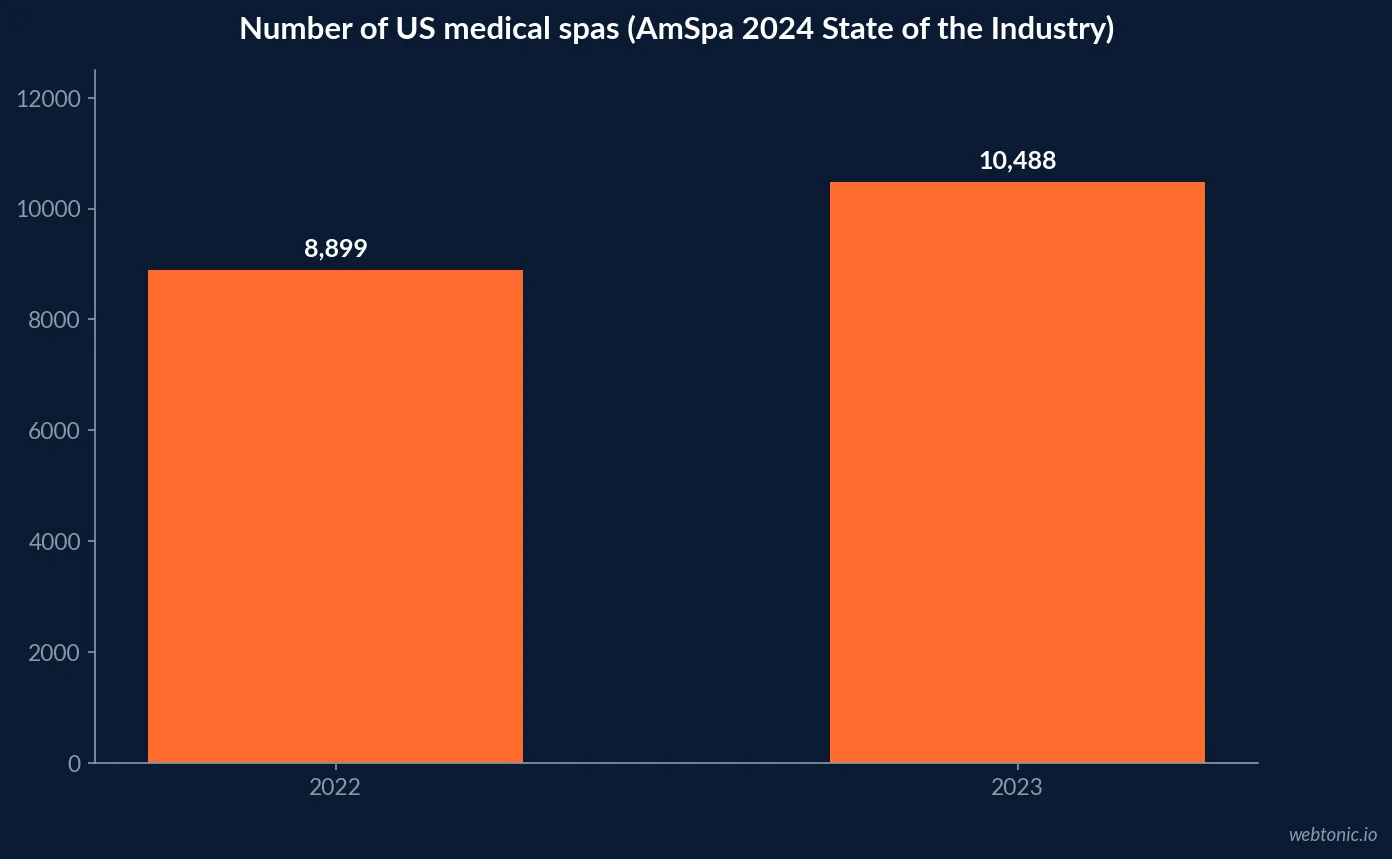
- 10,488 US med spas operated in 2023, up from 8,899 in 2022 (AmSpa).
- Average med spa revenue was USD 1,398,833 in 2023.
- 89% of med spa patients are female, and 54% are aged 35 to 54.
- 81% of med spas run a single location.
- Beauty is the cheapest creator niche at USD 210 per engagement (Collabstr 2026).
- UGC grew from 15% to 35% of Collabstr collaborations in one year.
- 80% of Collabstr creators are women; Beauty is 17% of their collaborations.
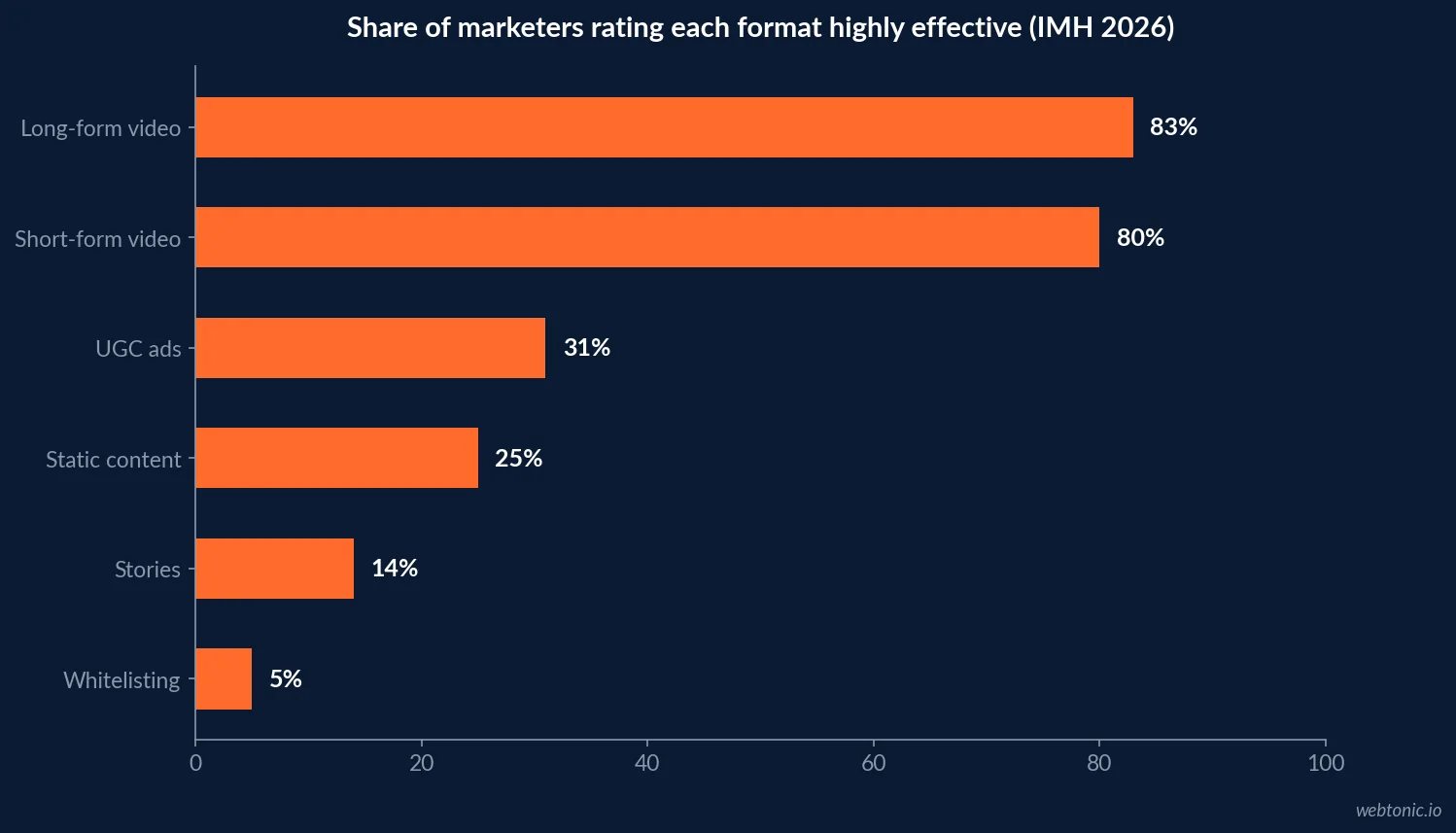
- Only 31% of buyers rate UGC ads as highly effective, against 83% for long-form video.
- Whitelisting scores just 5% on the same effectiveness question.
- 81% of enterprise marketers say repurposed creator content beats brand assets (Linqia).
- HIPAA requires written authorization to use patient information in marketing.
- 'Results may vary' does not cure an atypical before-and-after claim, per the FTC.
The market creators are selling into
The AmSpa 2024 State of the Industry executive summary counts 10,488 US medical spas in 2023, against 8,899 in 2022, with average annual revenue rising from USD 1,307,587 to USD 1,398,833. Single-location practices average USD 92,167 in monthly revenue, and 84% of respondents projected higher revenue for 2024. The association's industry report page now describes a sector of more than USD 17 billion growing by more than USD 1 billion a year.
That growth is also the reason creator costs matter: more practices are competing for the same local audience, and AmSpa notes that the pace of openings has pulled average patient visits per practice back toward pre-2021 levels.
| Med spa metric (AmSpa) | 2022 | 2023 | Why it matters for creator spend |
|---|---|---|---|
| Number of US med spas | 8,899 | 10,488 | More competitors per local audience |
| Average revenue per med spa | USD 1,307,587 | USD 1,398,833 | Sets how much content a practice can fund |
| Single-location share | - | 81% | Most buyers are local, not national |
| Monthly revenue, single location | - | USD 92,167 | Anchor for a monthly creator line |
| Projected revenue increase for 2024 | - | 84% of practices | Budgets likely to expand |
Who the patient is, and who the creator is
AmSpa reports patients who are 89% female, with 22% aged 18 to 34, 54% aged 35 to 54 and 24% aged 55 or older. On the supply side, Collabstr's 2026 report shows a creator base that is 80% female, with Beauty making up 17% of female creators' collaborations and Fashion 15%. The audience and the creator pool line up unusually well, which is part of why beauty content is cheap to source.
| Audience fact | Figure | Source | Creator-brief implication |
|---|---|---|---|
| Female share of med spa patients | 89% | AmSpa 2024 executive summary | Brief for a female audience first |
| Patients aged 35-54 | 54% | AmSpa 2024 executive summary | Avoid a Gen Z-only creator roster |
| Patients aged 55+ | 24% | AmSpa 2024 executive summary | Include mature-skin creators |
| Female share of creators | 80% | Collabstr 2026 | Deep supply of matching creators |
| Beauty share of female creators' work | 17% | Collabstr 2026 | Category is saturated, rates are low |
What beauty creators cost
Beauty is the most affordable niche on Collabstr at USD 210 per engagement, ahead of Cannabis and Gaming at USD 214 and Fashion at USD 217. The report puts that down to supply: many creators offering similar content keeps rates low. Across the platform, 80% of collaborations cost under USD 300 and the average UGC campaign costs USD 197. For a practice, the cheap rate is real, but the compliance cost of each patient asset is not reflected in it.
| Lowest-priced niches (Collabstr 2026) | Average per engagement | Supply signal | Med spa relevance |
|---|---|---|---|
| Beauty | USD 210 | Most crowded creator niche | Core fit for aesthetics |
| Cannabis | USD 214 | High supply | Not relevant |
| Gaming | USD 214 | High supply | Not relevant |
| Fashion | USD 217 | High supply | Adjacent lifestyle reach |
| Athlete and Sports | USD 233 | Fast-growing pool | Body-contouring angles only |
Influencers vs UGC: what buyers rate as effective
The Influencer Marketing Hub 2026 Benchmark Report asked 600+ marketers which formats work. Long-form video was rated highly effective by 83% and short-form by 80%, while 31% rated UGC ads highly effective, 25% static content, 14% Stories and just 5% whitelisting. UGC is treated as an amplifier, not the lead format. Planned investment still tilts small: 50.00% of respondents plan to grow UGC-creator work and 0% plan to stop it.
Linqia's 2026 survey of more than 200 enterprise marketers adds the reuse angle: 100% repurpose creator content beyond the creator's own page and 81% say it outperforms brand-made assets. For a med spa, that is the case for owning the asset, provided the patient authorization covers every place it will run.
Where creator collaborations actually happen
Collabstr's platform split shows why the influencer-versus-UGC question is live. In its 2026 report Instagram held 40% of collaborations, platform-agnostic UGC rose to 35% from 15% a year earlier, TikTok fell to 21% from 41%, YouTube took 3% and X 1%. The report reads the UGC jump as brands buying content they can reuse anywhere rather than a slot on one creator's feed. For a practice that also has to manage patient consent, owning the file is simpler than negotiating reuse rights after a post goes live.
AmSpa's own release for the 2024 report, based on a survey of US medical spa owners run with Gordian Solutions Group from September 2023 to March 2024, quotes more than 100,000 employees across more than 11,000 med spas. The release frames the sector as still far from capacity, which means more practices bidding for the same local creators each year.
| Platform (Collabstr 2026) | Share of collaborations | Change vs prior year | Med spa use |
|---|---|---|---|
| 40% | Still the leader | Local reach, Reels of treatments | |
| UGC (platform-agnostic) | 35% | Up from 15% | Practice-owned ad creative |
| TikTok | 21% | Down from 41% | Younger patient segment |
| YouTube | 3% | Up 1 point | Long treatment explainers |
| X (Twitter) | 1% | Roughly flat | Minimal |
HIPAA: the authorization every patient asset needs
A med spa operating as a HIPAA covered entity cannot treat a patient's photos as ordinary UGC. 45 CFR 164.508(a)(3) requires a written authorization for any use or disclosure of protected health information for marketing, with narrow exceptions for face-to-face communication and promotional gifts of nominal value. If a third party pays the practice for the marketing, the authorization must say so. A patient who films her own result and posts it is one thing; the practice reposting it, cutting it into an ad or handing it to a creator is another.
FTC: before-and-after is a results claim
The FTC Endorsement Guides, 16 CFR 255.2 say that a consumer endorsement of performance is read as a claim that the result is what others will get. Without substantiation that the result is representative, the ad must clearly and conspicuously disclose the generally expected performance. The FTC's endorsement FAQ adds that 'Results not typical' or 'Individual results may vary' will not change that reading, and its Health Products Compliance Guidance walks through a before-and-after photo example in which a fine-print disclaimer fails.
The same FAQ says free products or perks given with the expectation of promotion bring a post under the FTC Act. A complimentary treatment in exchange for content is a material connection to disclose.
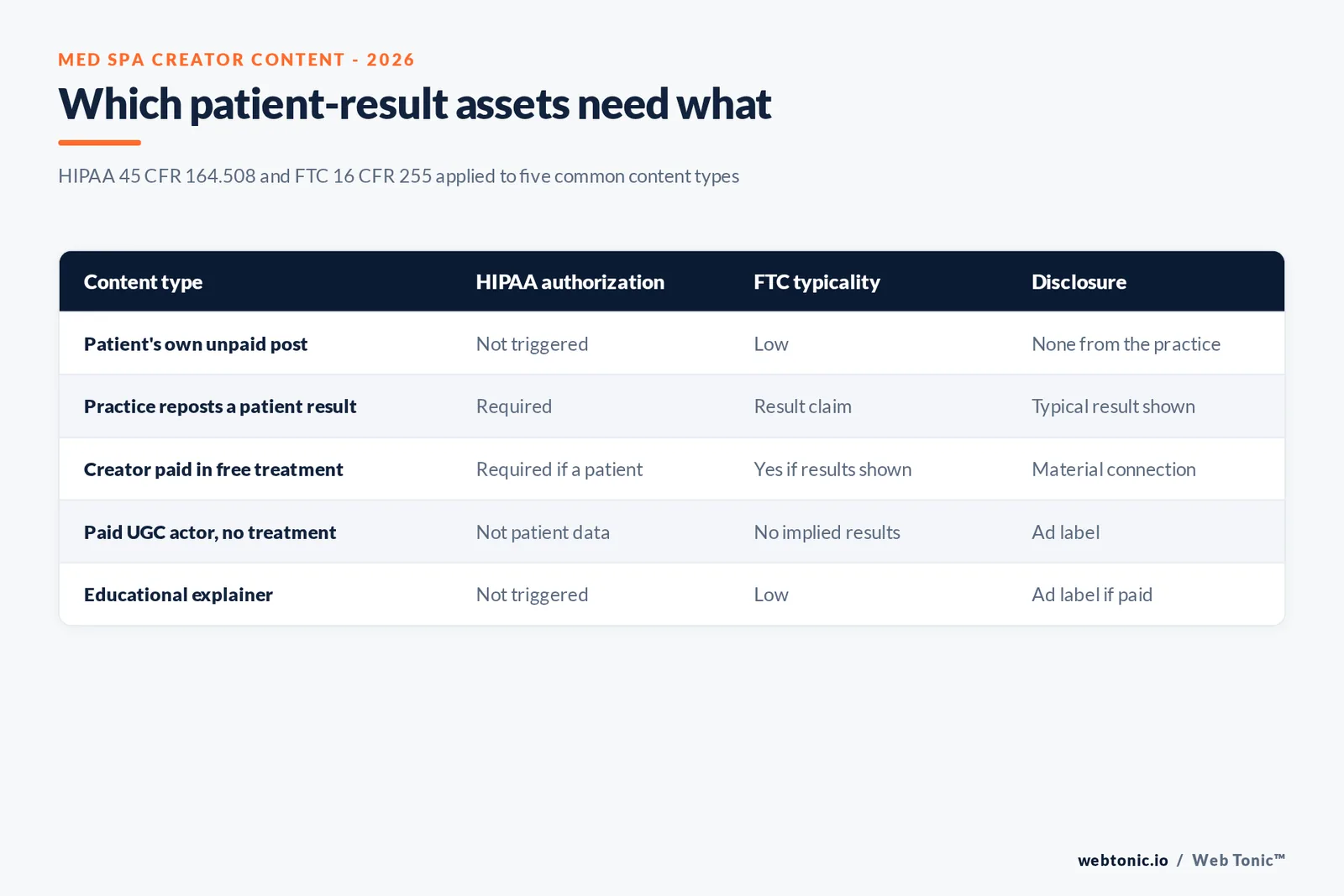
| Content type | HIPAA authorization | FTC typicality issue | Disclosure needed |
|---|---|---|---|
| Patient's own unpaid post, not reshared | Not triggered by the patient | Low | None from the practice |
| Practice reposts a patient result | Required for marketing use | Yes, result claim | Typical result or disclosure |
| Creator given a free treatment | Required if the creator is a patient | Yes, if results shown | Material connection disclosure |
| Paid UGC actor, no treatment | Not patient data | Must not imply real results | Ad disclosure |
| Educational explainer, no results | Not triggered | Low | Ad disclosure if paid |
Why patients look past the creator
The Bazaarvoice Shopper Experience Index 2026 found 97% of consumers consult multiple sources before buying. That is cross-category retail data, but an injectable or laser treatment is a considered purchase too. The creator clip opens the question; reviews, the provider's credentials and the consultation close it. Budget both halves, and look at our influencer marketing statistics for the cross-industry benchmarks behind these surveys.
A compliant creator workflow for a practice
- Separate patients from creators. Decide in the brief whether the creator is also a patient; if so, the HIPAA authorization comes before filming.
- Scope the authorization to every use. Organic, paid social, website and email each need to be covered in writing.
- Document the typical result. Keep the evidence for what most patients see, and state it on screen when the clip shows an above-average result.
- Disclose the perk. Free or discounted treatments are payment for FTC purposes.
- Keep claims inside the product's approved use. Treatment claims should match what the device or product is cleared or approved for.
Where to put the budget
With Beauty creators near USD 210 and most collaborations under USD 300, the content fee is the small line. The larger lines are the paid distribution that turns clips into local bookings and the review time that keeps each patient asset compliant. Our performance creative team builds those review steps into briefs, and our Meta Ads practice runs the paid side where most med spa creator content ends up.
What the data does not tell you
No source here reports a med spa engagement rate, cost per booking or return on creator spend, and we have not invented one. The AmSpa figures describe the industry; the creator figures are cross-industry. The honest test is a practice's own: cost per booked consultation from creator-led ads against its existing channels over the same weeks. To plan that test, contact our team.
Frequently Asked Questions
Can a med spa post a patient's before-and-after photos from a creator campaign?
Only with the right paperwork and the right framing. Under HIPAA, 45 CFR 164.508(a)(3) requires a covered entity to obtain a written authorization before using protected health information for marketing, and the authorization must state it if a third party pays the practice. On top of that, the FTC treats before-and-after results as a claim about what other patients can expect, so the result must be typical or the typical result must be disclosed.
Is 'results may vary' enough on a med spa before-and-after post?
No. The FTC's endorsement guidance says statements like 'Results not typical' or 'Individual results may vary' do not change how consumers read a results claim. The advertiser either needs proof the result is typical or must clearly and conspicuously disclose the generally expected result. Its Health Products Compliance Guidance gives a before-and-after example where a fine-print disclaimer fails.
Should a med spa use influencers or UGC?
The data points to using both for different jobs. Collabstr's 2026 marketplace shows platform-agnostic UGC rising from 15% to 35% of its collaborations, and Beauty creators averaging USD 210, the lowest niche rate. Influencers add reach in a local market; UGC gives the practice an asset it controls and can pair with the right patient authorization. Neither has a published med spa ROI benchmark.
How big is the med spa market creators are selling into?
AmSpa's 2024 State of the Industry executive summary counts 10,488 US medical spas in 2023, up from 8,899 in 2022, with average revenue of USD 1,398,833 per med spa. AmSpa describes an industry of more than USD 17 billion that grows by more than USD 1 billion a year, with patients who are 89% female.
Do FTC disclosure rules apply when a med spa gives a creator a free treatment?
Yes. The FTC's endorsement guidance says that if someone receives free products or other perks with the expectation of promoting them, the FTC Act applies. A complimentary filler appointment in exchange for a post is a material connection that must be disclosed clearly in the post itself.
Sources
AmSpa - 2024 Medical Spa State of the Industry executive summary
AmSpa - Medical Spa State of the Industry Report
AmSpa - 2024 State of the Industry Report release
eCFR - 45 CFR 164.508, uses and disclosures requiring an authorization
eCFR - 16 CFR Part 255, FTC Endorsement Guides
FTC - Endorsement Guides: What People Are Asking
FTC - Health Products Compliance Guidance
Collabstr - 2026 Influencer Marketing Report
Influencer Marketing Hub - Influencer Marketing Benchmark Report 2026
Linqia - 2026 State of Influencer Marketing
Bazaarvoice - Shopper Experience Index 2026 press release