Table of contents
Key Takeaways
- Google Ads delivers a 7.17% conversion rate for Industrial & Commercial campaigns at $5.70 average CPC, making search the highest-intent channel for manufacturers (LOCALiQ 2025).
- Creative quality drives roughly 56% of Meta ad performance — more than targeting and bidding combined — making ad creative the single largest lever for manufacturing advertisers (Meta).
- LinkedIn Document Ads achieve the highest CTR (0.50%–0.80%) among B2B ad formats, outperforming single image (0.40%–0.65%) and video (0.35%–0.55%) for manufacturing audiences (MetadataONE 2026).
- Video content usage in manufacturing marketing has grown 45% year-over-year, with 68% of marketers citing it as their highest-performing content format (ZipDo/Marketing LTB 2026).
- B2B Meta Ads campaigns using structured creative testing improved CTR from 1.3% to 4.3%, generating 81 qualified leads through systematic hook and format optimization (Digivonk 2026).
- Vertical video (9:16) generates 90% more impressions than square or horizontal formats on mobile feeds, fundamentally changing creative specifications for industrial advertisers (HubSpot).
- Manufacturing LinkedIn Ads average $4–$10 CPC with $40–$120 CPL, and a 7%–15% lead-to-opportunity conversion rate across the funnel (MetadataONE 2026).
Manufacturing Ad Creative Benchmarks at a Glance
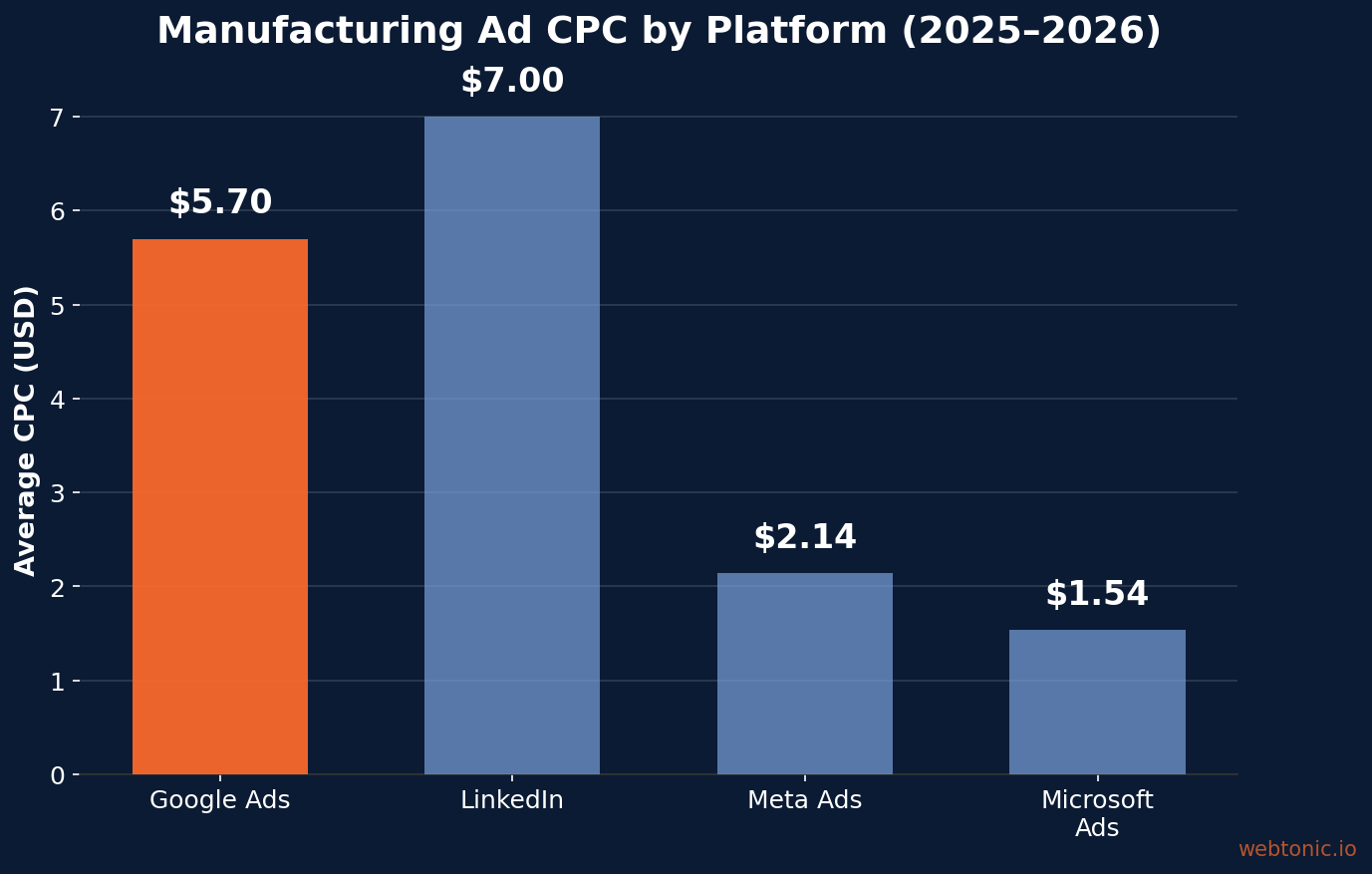
The table below consolidates the most important ad creative performance benchmarks for manufacturers across the four primary advertising platforms. These numbers provide the baseline every industrial marketing team needs before launching or optimizing campaigns.
| Platform | Avg. CPC | CTR | CVR / ROAS | CPL |
|---|---|---|---|---|
| Google Ads (Industrial) | $5.70 | 6.23% | 7.17% CVR | $85.63 |
| LinkedIn Ads | $4–$10 | 0.35%–0.80% | 7%–15% lead-to-opp | $40–$120 |
| Meta Ads (Industrial) | $2.14 | 0.50%–1.20% | 2.20:1 ROAS | $30–$80 |
| Microsoft Ads | $1.54 | 1.0%–2.5% | $41.44 CPA | $60–$150 |
Sources: The Snow Media (LOCALiQ 2025, DOCX Report 2025, Coupler.io 2025), MetadataONE 2026 (64,000 B2B ads).
Google Ads Creative Performance for Manufacturers
Google Ads remains the primary channel for capturing active purchase intent from manufacturing buyers. When a procurement officer searches for precision machining services or custom injection molding suppliers, they are actively evaluating vendors — and the ad creative determines whether they click.
The Industrial & Commercial category delivers strong conversion metrics because searches carry clear commercial intent. Dynamic Search Ads (DSAs) are particularly effective for manufacturers because they automatically capture long-tail technical queries — including part numbers, material specifications, and specialized process terms — that manual keyword lists cannot cover. According to The Snow Media, these technical queries often produce lower CPCs and higher conversion rates because they represent buyers who know exactly what they need.
Google Search campaigns for manufacturing averaged $0.81 CPC with a 5.35% CTR in 2025, though conversion rates varied between 0.50% and 6.09% depending on keyword specificity and landing page alignment (MDMPPC). The most consistent finding: manufacturers using video assets on YouTube as technical validation content — factory tours, equipment demonstrations, and quality control walkthroughs — shortened sales cycles by building credibility before the first sales conversation.
If you are planning a Google Ads strategy, remember that industrial campaigns benefit most from creative assets tailored to the technical buyer's evaluation process.
LinkedIn Ad Format Performance Comparison
LinkedIn is the most effective platform for reaching manufacturing decision-makers by job title, company size, and industry vertical. However, not all ad formats perform equally — and the data reveals clear winners for B2B industrial audiences.
| LinkedIn Ad Format | CTR Range | Median CTR | Best Use Case |
|---|---|---|---|
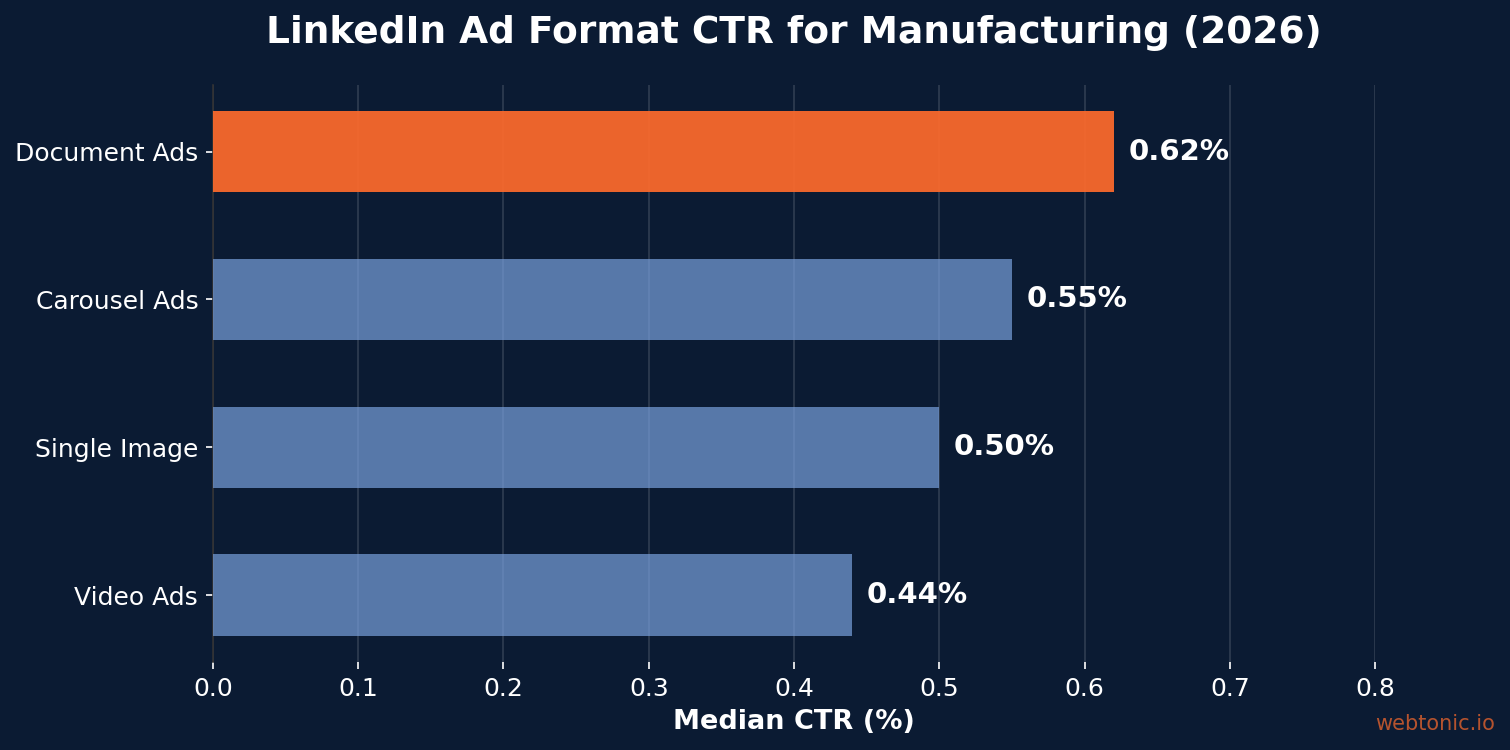
| Document Ads | 0.50%–0.80% | 0.62% | Whitepapers, spec sheets, technical guides |
| Carousel Ads | 0.45%–0.70% | 0.55% | Multi-product showcases, process overviews |
| Single Image | 0.40%–0.65% | 0.50% | Brand awareness, event promotion |
| Video Ads | 0.35%–0.55% | 0.44% | Factory tours, equipment demos, testimonials |
Source: MetadataONE LinkedIn Ads Benchmarks 2026.
Document Ads with whitepapers are the highest-performing format for manufacturing audiences because they deliver immediate value — procurement officers and engineers can review technical specifications without leaving the LinkedIn feed. According to MetadataONE's analysis of 64,000 B2B ads, LinkedIn CPC for manufacturing ranges from $4 to $10, with enterprise-focused campaigns targeting C-suite roles at large companies seeing $12–$25 CPCs.
93% of manufacturing marketers say LinkedIn is their most effective social media channel for B2B engagement (Content Marketing Institute via ManufacturingLeadGeneration). The platform's lead-to-opportunity conversion rate of 7%–15% significantly outperforms Facebook's 3%–8% for B2B industrial targeting, justifying the higher per-click cost. Explore how a dedicated performance creative approach can maximize these format advantages.
Meta Ads Creative Optimization for Industrial Brands
Meta's advertising ecosystem has matured significantly for B2B manufacturers. The data shows that creative quality is the dominant performance variable — Meta's own research indicates ad creative drives roughly 56% of campaign outcomes, more than targeting and bidding combined (Peak 10 Marketing).
For industrial services, Meta Ads deliver a 2.20:1 ROAS at $2.14 CPC for lead generation, with awareness campaigns achieving even lower costs at $0.496 CPC (The Snow Media). A B2B Meta Ads case study by Digivonk documented how structured creative testing improved CTR from 1.3% to 4.3% and generated 81 qualified leads by combining sharper targeting with systematic creative iteration.
The four pillars of manufacturing ad creative optimization, according to Peak 10's framework:
- Hook: 65% of viewers who watch the first 3 seconds will stay for at least 10 more — open with bold visuals and unexpected shots, not slow logo reveals.
- Format: Vertical video (9:16) generates 90% more impressions than square or horizontal on mobile (HubSpot).
- Message: Tailor creative by funnel stage — cold prospects need proof and education, warm leads need specs and case studies.
- Cadence: Refresh creative before audience fatigue sets in; the platform penalizes stale creative with higher CPMs.
Need help evaluating whether Facebook Ads are worth the investment? The data supports it for manufacturers who commit to structured creative testing.
Video Creative: The Fastest-Growing Format in Manufacturing
Video has become the fastest-growing creative format in manufacturing marketing, and the data explains why industrial advertisers are shifting budget toward it.
| Video Metric | Statistic | Source |
|---|---|---|
| Video usage growth (YoY) | 45% increase | ZipDo / Marketing LTB 2026 |
| Marketers citing video as top format | 68% | Marketing LTB 2026 |
| B2B buyers watching video before RFQ | 71% | Marketing LTB 2026 |
| Manufacturers using video in strategy | 72% | Marketing LTB 2026 |
| 3-second hook retention rate | 65% stay for 10+ sec | Peak 10 / Meta |
| Vertical video impression lift | +90% vs. square/landscape | HubSpot |
| Video testimonial conversion uplift | +31% | Marketing LTB 2026 |
71% of B2B manufacturing buyers watch videos before requesting a quote — making video creative not just a brand play but a direct influence on pipeline. Factory tours, equipment demonstrations, and quality control walkthroughs serve as "technical validation" content that shortcuts the evaluation process for engineers and procurement teams.
The most effective manufacturing video formats include behind-the-machine production reels (Meta awareness campaigns at $0.496 CPC), capability demonstrations for mid-funnel evaluation, and customer testimonial compilations that increase conversions by 31% over static creative. For Meta Ads campaigns, the combination of video creative with retargeting sequences is proving especially powerful for long-cycle industrial sales.
Creative Testing and A/B Optimization Results
Systematic creative testing separates high-performing manufacturing ad accounts from mediocre ones. The data shows that disciplined A/B testing and creative iteration deliver measurable, compounding gains across channels.
Key creative testing findings for manufacturers:
- Structured Meta Ads creative testing improved CTR by 230% (from 1.3% to 4.3%) in a documented B2B industrial campaign, with traffic campaign cost-efficiency improving 25% simultaneously (Digivonk).
- Manufacturing companies with dedicated content marketing teams produce 40% higher lead generation than those relying on ad-hoc creative efforts (ZipDo).
- B2B campaigns using personalized creative by funnel stage see Meta CPA decrease as message-to-market fit improves — cold audiences need proof and education, warm leads need specs and case studies (Peak 10).
- Manufacturers running remarketing campaigns with refreshed creative increase conversions by 27% (Marketing LTB 2026).
- Social proof elements (case studies, customer logos) on landing pages increase manufacturing conversions by 36% (Marketing LTB 2026).
The lesson is clear: creative is not a one-time production task but an ongoing optimization cycle. A dedicated Google Ads management partner can help structure this testing cadence across campaigns.
Ad Creative Spend and Budget Allocation Trends
Manufacturing marketing budgets have expanded dramatically, creating new opportunities — and pressure — for ad creative investment. The average manufacturing marketing budget jumped from 6.7% of revenue in 2024 to 9.5% in 2025, a 42% increase in a single year (Gartner via ManufacturingLeadGeneration). For a $10 million manufacturer, this translates to $400,000–$600,000 annually in digital marketing spend.
| Budget Metric | Value | Source |
|---|---|---|
| Avg. marketing budget (% revenue) | 9.5% (2025) | Gartner CMO Spend Survey |
| YoY budget increase | 42% (from 6.7%) | Gartner via ManufacturingLeadGeneration |
| Companies increasing budgets | 52.3% | 6sense |
| Digital's share of spend | Over 50% | ManufacturingLeadGeneration 2026 |
| Content marketing budget growth (expected) | 37% expect increase | Content Marketing Institute |
| Avg. marketing ROI | 2.5:1 (top: 5:1) | ZipDo / CMI 2023 |
With 52.3% of B2B organizations increasing marketing budgets and digital channels now commanding the majority of spend, manufacturers who invest in high-quality creative assets — video, interactive content, and platform-optimized formats — are positioned to capture disproportionate returns. The average manufacturing marketing ROI sits at 2.5:1, with top performers achieving 5:1 or higher through disciplined creative testing and channel optimization.
Best Practices for Manufacturing Ad Creative in 2026
Based on the performance data above, here are the creative principles that separate top-performing manufacturing ad accounts from the rest:
- Lead with specificity, not slogans. Technical buyers respond to concrete capabilities — materials, tolerances, certifications — not generic "quality" claims. Ads mentioning specific processes achieve higher CTR.
- Invest in vertical video (9:16). With 90% more impressions on mobile and 71% of buyers watching video before requesting quotes, vertical video is no longer optional for industrial advertisers.
- Use Document Ads on LinkedIn. With median CTR of 0.62%, Document Ads with whitepapers and spec sheets consistently outperform other formats for manufacturing audiences.
- Segment creative by funnel stage. Cold audiences need education and proof; warm leads need demos and specs; existing customers need loyalty incentives. Running the same creative to all stages wastes budget.
- Refresh creative on a cadence. Manufacturing accounts running remarketing with refreshed creative see 27% higher conversions. Set a 4–6 week refresh cycle to prevent audience fatigue.
- Add social proof to landing pages. Case studies, customer logos, and testimonial content increase conversions by 36% on manufacturing landing pages.
- Test DSAs for Google Ads. Dynamic Search Ads capture long-tail technical queries (part numbers, alloy grades, tolerance specs) that manual keyword lists miss — often at lower CPC with higher CVR.
- Track cost per RFQ, not cost per click. The gap between CPC ($0.51–$5.70) and CPL ($40–$200) varies dramatically by platform and creative quality. Optimize for the metric that reflects pipeline value.
Frequently Asked Questions
What is a good CTR for manufacturing ads on LinkedIn?
A good CTR for manufacturing ads on LinkedIn ranges from 0.40% to 0.80% depending on ad format. Document Ads with whitepapers achieve the highest median CTR at 0.62%, followed by Carousel Ads at 0.55%. Video Ads average 0.44% median CTR but deliver strong engagement for factory tours and equipment demonstrations. These benchmarks come from MetadataONE's 2026 analysis of 64,000 B2B ads.
How much do manufacturing companies spend on advertising?
Manufacturing companies spend an average of 9.5% of revenue on marketing as of 2025, up 42% from 6.7% in 2024 according to Gartner's CMO Spend Survey. For a $10 million manufacturer, this translates to $400,000–$600,000 in annual digital marketing spend. Digital channels now account for over half of total marketing budgets, with 52.3% of B2B organizations reporting budget increases.
What is the average cost per lead for manufacturing Google Ads?
The average cost per lead for manufacturing Google Ads is $85.63 in the Industrial & Commercial category, based on LOCALiQ's 2025 analysis of 16,446 U.S. campaigns. However, costs vary significantly: MDMPPC reports CPL ranging from $64.69 to $104.03 across three years of real account data, and specialized manufacturing websites report $80–$200+ per qualified RFQ lead depending on product complexity.
Does video content improve manufacturing ad performance?
Yes — video content usage in manufacturing marketing has grown 45% year-over-year, and 68% of manufacturing marketers cite it as their highest-performing format. B2B buyers are increasingly relying on video: 71% watch videos before requesting a quote. Video testimonials specifically increase conversions by 31%, and vertical video (9:16) generates 90% more impressions than square or horizontal formats on mobile.
Which ad platform delivers the best ROAS for manufacturers?
Each platform serves a different role. Google Ads delivers the highest conversion rate (7.17%) because it captures active search intent. Meta Ads deliver 2.20:1 ROAS at lower CPC ($2.14), making them cost-effective for awareness and retargeting. LinkedIn has the highest lead quality with a 7%–15% lead-to-opportunity rate but the highest CPCs ($4–$10). Microsoft Ads offer the lowest CPC ($1.54) and reach desktop-heavy B2B audiences during business hours.
Sources
thesnowmedia.com/resources/manufacturing-ad-benchmarks
metadataone.com/blog/b2b-ad-benchmarks-2026
metadataone.com/blog/linkedin-ads-benchmarks-2026
peak10marketing.com/blog/the-4-pillars-of-creative-ad-optimization
digivonk.com/meta-ads-case-study
manufacturingleadgeneration.com/manufacturing-marketing-statistics
marketingltb.com/blog/statistics/manufacturing-marketing-statistics
mdmppc.com/google-ads-benchmarks/manufacturing-industrial
zipdo.co/marketing-in-the-manufacturing-industry-statistics