Table of contents
TikTok's own Branded Content Policy explicitly bans paid partnerships for "accounting, legal and immigration services" - a platform-level restriction, not a gray area firms can negotiate around. This report lays out exactly what that policy covers, what it does not, and the cross-industry TikTok ad-cost data that remains useful context for immigration firms budgeting around the platform.
Key Takeaways
- TikTok's Branded Content Policy prohibits "legal and immigration services" under Prohibited Industries, alongside accounting.
- That prohibition applies to paid partnership / sponsored creator posts, per TikTok's published policy text, not automatically to every Ads Manager format.
- 80% of law firms maintain a social media presence, per ABA's 2025 survey, but TikTok does not appear among the top platforms named (LinkedIn 78%, Facebook 53%, Instagram 22%, X 18%).
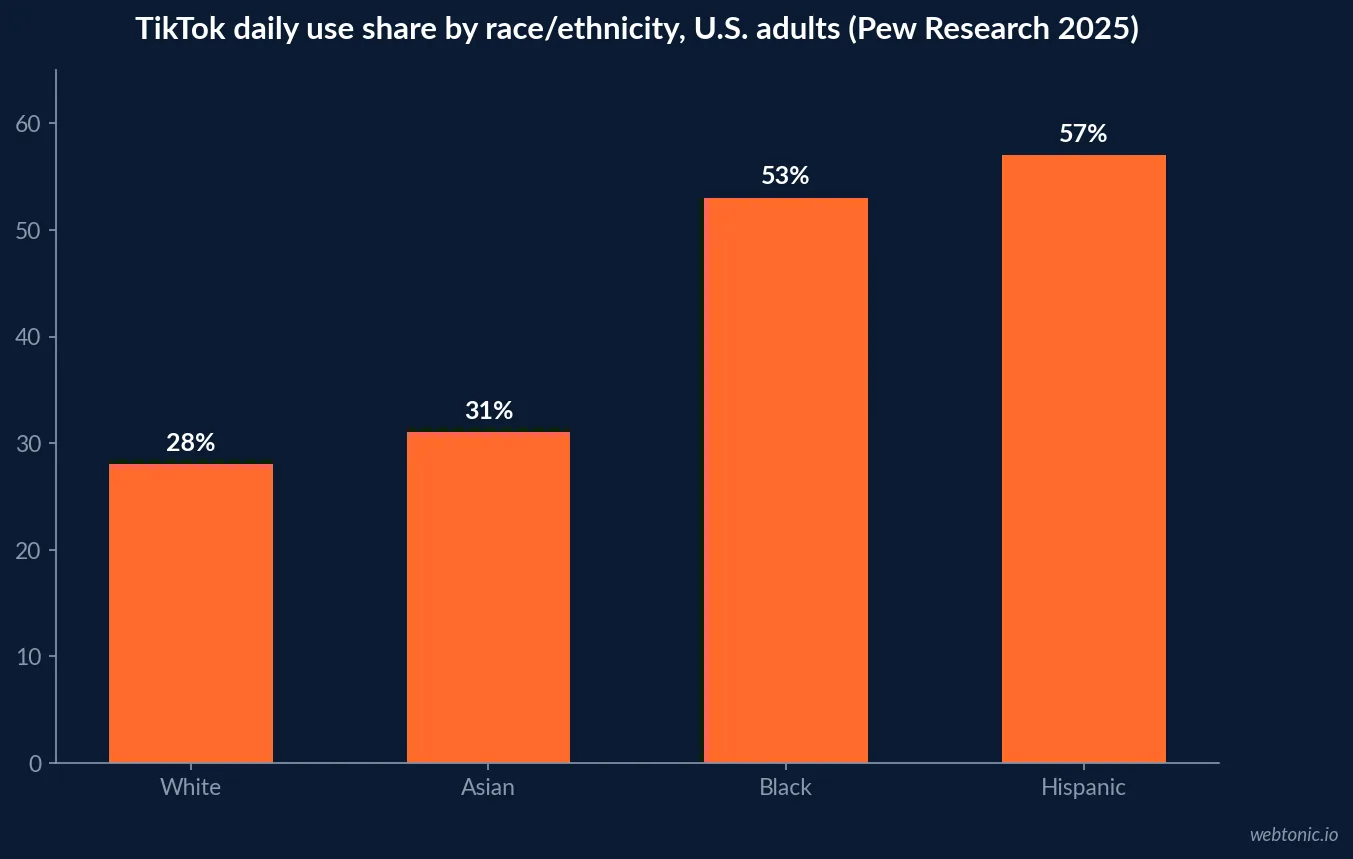
- TikTok daily use is highest among Hispanic adults at 57% and Black adults at 53%, per Pew Research's 2025 Social Media Use report, versus 28% for White adults and 31% for Asian adults.
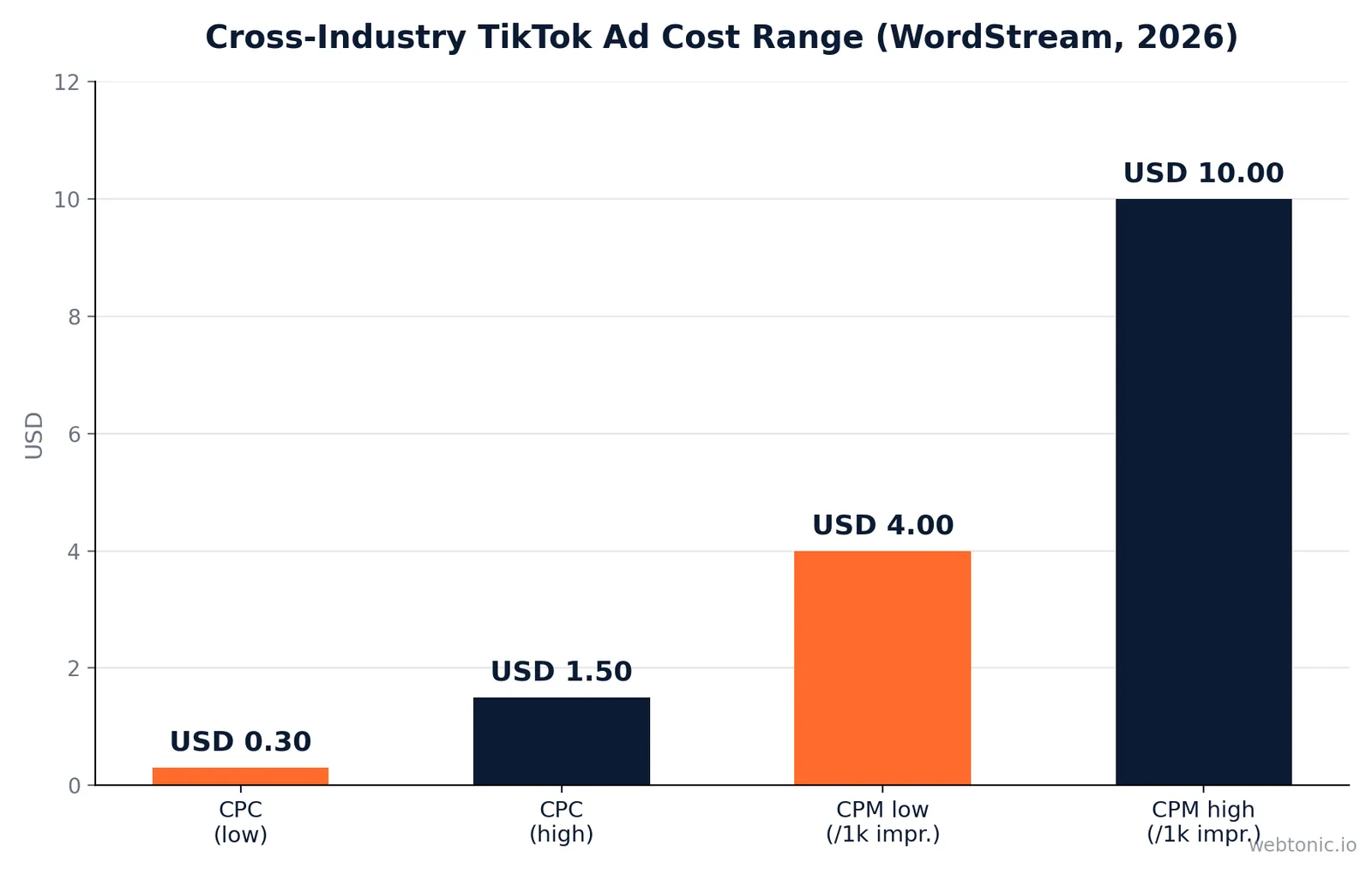
- Cross-industry TikTok ads typically run $0.30 to $1.50 per click, per WordStream's own benchmark data - not a legal-specific figure.
- The same cross-industry data puts CPM at $4 to $10 per 1,000 impressions and cost-per-view at $0.01 to $0.07.
- 26.5 million U.S. residents are limited-English-proficient, a share of the audience TikTok's short-form, visual format could reach more easily than text-heavy channels - where the ad format is available.
- The immigration court backlog held near 3.75 million pending cases in Sept. 2025, the demand base a firm's overall marketing - TikTok or otherwise - is competing to reach.
The policy line, verified at the source
TikTok's own Branded Content Policy lists, under its Prohibited Industries section: "Professional services - Including accounting, legal and immigration services." This is a direct, current statement from TikTok's own legal page, not a third-party interpretation. It means TikTok does not allow creators or businesses to run paid partnership content - sponsored posts flagged as branded content, typically the mechanism behind creator/influencer TikTok marketing - promoting immigration legal services, regardless of the firm's budget or the creator's disclosure practices.
| What TikTok's Branded Content Policy says | Status for immigration law |
|---|---|
| Paid partnership / sponsored creator posts | Prohibited (named explicitly) |
| Organic, non-sponsored educational content | Not covered by this policy |
| Standard TikTok Ads Manager campaigns | Governed by a separate ad-policy review, not this document |
What the ban does not say
It is important to be precise about scope. TikTok's Branded Content Policy governs paid partnership posts specifically - the creator-sponsorship mechanism, not TikTok's general advertising product. TikTok's separate advertiser-facing policy materials describe most products and services as falling into a "Restricted" review category rather than an outright ban, with eligibility varying by region and ad format. Firms should not read the branded-content prohibition as proof that every TikTok Ads Manager format is closed to legal services - that determination sits in a different policy document and should be confirmed directly in Ads Manager before any spend is committed.
Legal's near-absence from TikTok, by the platform data firms do report
Independent of the branded-content policy, the ABA's 2025 Legal Technology Survey found 80% of firms maintain a social media presence - led by LinkedIn (78%), Facebook (53%), Instagram (22%), and X (18%). TikTok does not appear among the platforms the survey names, which is consistent with both the policy restriction above and legal's broader pattern of adopting newer platforms slowly (the same survey line of research showed it took law firms three years to move video adoption from 24% to 30%).
| Platform | Share of law firms present (ABA 2025) |
|---|---|
| 78% | |
| 53% | |
| 22% | |
| X (Twitter) | 18% |
| Any social media presence | 80% |
| TikTok | not reported / below threshold |
The audience is there, even where the ad format isn't
Pew Research's 2025 Social Media Use fact sheet found TikTok's U.S. daily-use rate is highest among Hispanic adults at 57% and Black adults at 53%, compared with 28% for White adults and 31% for Asian adults. Those demographic patterns overlap with the communities an immigration practice most often serves. That overlap is exactly why the branded-content restriction is worth tracking rather than writing off the platform entirely - the audience fit is real, even while the paid-partnership door is currently closed.
Cross-industry TikTok ad cost data (labeled, not legal-specific)
Because no primary source reports legal or immigration-specific TikTok ad performance, the closest usable reference is WordStream's own cross-industry TikTok ad cost data, compiled from the accounts it manages plus other large-scale studies it reviewed. WordStream puts typical TikTok CPC between $0.30 and $1.50, CPM between $4 and $10 per 1,000 impressions, and cost-per-view between $0.01 and $0.07. These figures describe TikTok advertising broadly across industries - not law firms specifically - and should be treated strictly as a directional cross-industry reference for any format TikTok does eventually clear for legal advertisers.
| Metric (cross-industry, WordStream) | Typical range |
|---|---|
| CPC | $0.30 - $1.50 |
| CPM (per 1,000 impressions) | $4 - $10 |
| Cost per view | $0.01 - $0.07 |
The fraud risk TikTok's restriction is arguably guarding against
TikTok's branded-content ban on legal and immigration services should be read alongside a second, related risk: the FTC's own 2023 consumer alert on immigration scams warns specifically about "notarios" - unlicensed individuals who impersonate immigration legal help, often through exactly the kind of short-form, sponsored-looking video content that branded content policies are designed to police. USCIS's own fraud-prevention guidance repeats the same warning. A platform-wide ban on paid partnerships for this category removes one distribution path scammers could otherwise buy their way into, even if it also closes the door on legitimate firms wanting to use the same paid format.
For a licensed immigration firm, the practical takeaway is that any organic TikTok content that does run should lead with credentials - bar number, firm name, attorney headshot - precisely because the platform's own restricted-content environment means viewers cannot rely on a "verified advertiser" signal the way they might on a paid ad. 26.5 million limited-English-proficient U.S. residents are exactly the population most exposed to notario-style scam content, which raises the stakes on a firm's organic presence being unambiguous about who it is.
This is also a reason to treat TikTok's restriction as a compliance signal worth watching rather than a permanent wall. If TikTok extends legal-services eligibility to standard Ads Manager formats in the future, the platforms that already carry legal ads - Google and Meta - show what that eligibility tends to require: identity verification, licensing disclosure, and geographic restrictions tied to where an attorney is actually barred to practice. An immigration firm building a TikTok content library now, even organically, is better positioned to move quickly on that transition than one starting from nothing once the policy shifts.
Comparing TikTok's cost profile to channels immigration firms already use
Even treated as a purely directional cross-industry number, a TikTok CPC of up to $1.50 looks inexpensive next to the $131.63 average cost per lead WordStream's 2025 Google Ads Benchmarks report found for Attorneys & Legal Services. That gap is a reason to keep watching TikTok's policy evolution rather than a reason to expect the same math to hold once (or if) TikTok clears branded content for legal services - a category this tightly regulated on other platforms is unlikely to stay this cheap once compliance and disclosure requirements catch up to it, the way they already have on Google and Meta, where Meta's own legal-services cost per lead sits at $18.17.
| Channel | Cost metric | 2025 figure | Scope |
|---|---|---|---|
| TikTok Ads (cross-industry proxy) | CPC | $0.30 - $1.50 | Cross-industry, not legal-specific |
| Google Ads (Attorneys & Legal Services) | Cost per lead | $131.63 | Legal-specific |
| Meta Ads (Attorneys & Legal Services) | Cost per lead | $18.17 | Legal-specific |
Where the demand for a channel like this comes from
None of this changes the size of the audience immigration firms are trying to reach. The Department of Justice's Executive Office for Immigration Review reported a pending caseload near 3.75 million as of September 2025, while Migration Policy Institute counts 26.5 million limited-English-proficient U.S. residents - a population that short-form video, in principle, communicates with more easily than dense legal text. The constraint is not audience size or fit; it is the specific, named platform policy on branded content that firms need to plan around today.
What to do with a TikTok line item in 2026
Three practical moves follow. First, do not budget paid creator partnerships for immigration legal services on TikTok - the platform's own policy names the category directly, and no workaround changes that. Second, confirm current Ads Manager eligibility for standard (non-branded-content) campaign formats directly with TikTok before assuming the branded-content ban extends further than it states. Third, if the firm wants a TikTok presence in 2026, build it as organic educational content from the firm's own account - answering the visa-process and document questions immigrant communities actually search for - and treat the audience-fit data above as the case for staying active organically while revisiting paid options as policy evolves. Budget the immigration marketing dollars TikTok cannot currently take toward channels with no such restriction, like Google Search and Meta paid programs, where the industry's own cost-per-lead benchmarks are well documented. Firms weighing whether TikTok belongs in a 2026 media plan at all can talk through the channel mix against their actual case-type volume rather than a generic industry benchmark.
Frequently Asked Questions
Can an immigration law firm run paid partnerships on TikTok?
Not under TikTok's current Branded Content Policy. TikTok's own policy page lists 'Professional services - Including accounting, legal and immigration services' under Prohibited Industries for branded content, meaning paid partnership posts and creator sponsorships promoting immigration legal services are not allowed on the platform, regardless of budget.
Does that ban cover standard TikTok Ads Manager campaigns too, or just influencer partnerships?
TikTok's published Branded Content Policy specifically governs paid partnership posts (organic content flagged as sponsored, typically through creators). Standard TikTok Ads Manager campaigns fall under a separate advertising policy review that varies by region and ad format, and TikTok's own introductory ad-policy materials describe most products and services as falling into a 'Restricted' review tier rather than an outright ban. Firms should confirm current ad-format eligibility directly with TikTok's Ads Manager before building a media plan, since branded content and standard ads are governed by different policy documents.
Is there any legal-industry-specific TikTok ad cost data?
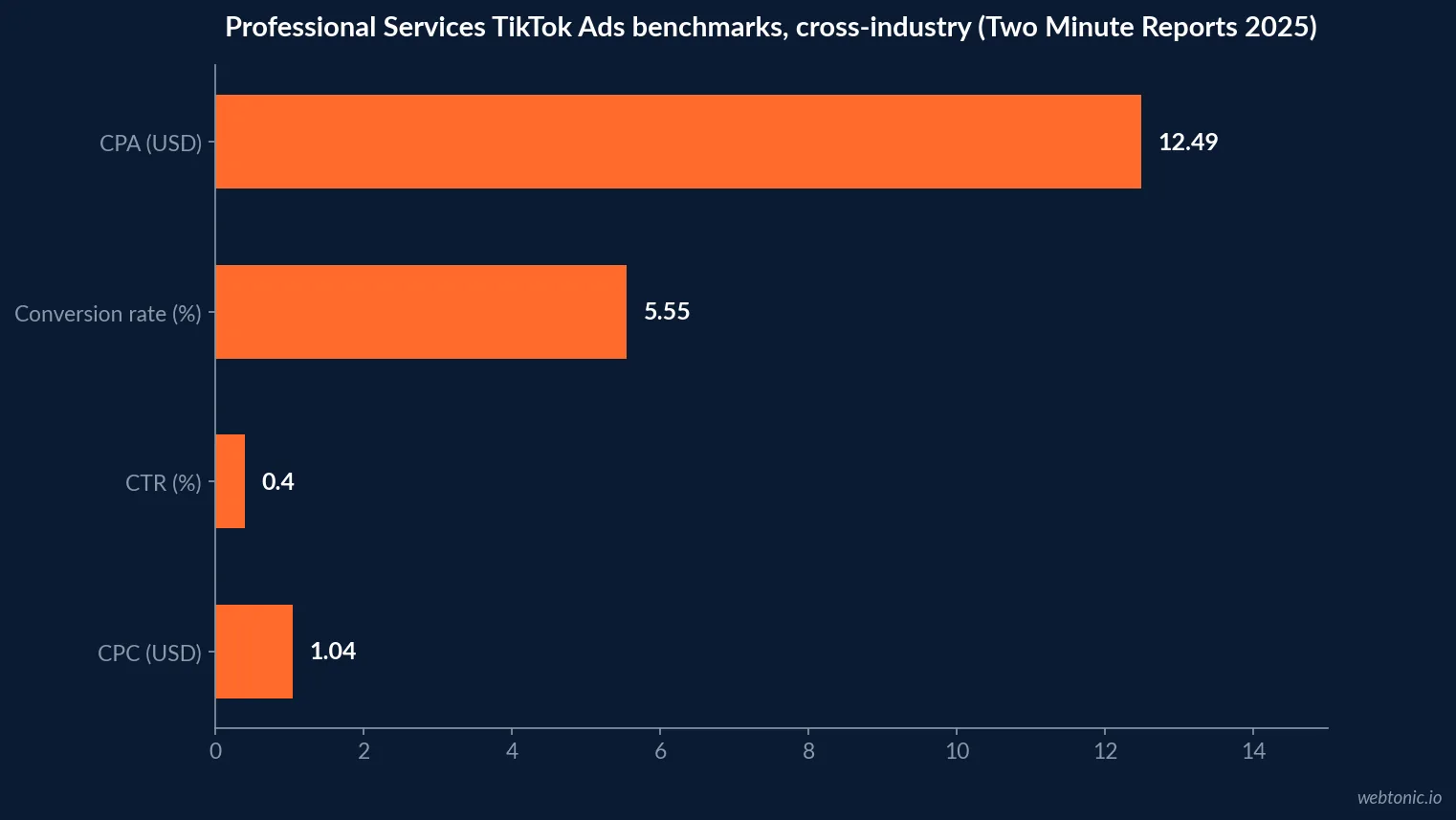
No credible primary-source benchmark set breaks out legal or immigration-law TikTok ad costs specifically - the category is too thin on the platform for vendors to report on. The closest available figures are Professional Services category benchmarks from ad-analytics vendors, which should be read as a cross-industry proxy, not a legal-specific number.
Does TikTok's audience actually overlap with immigration law's client base?
Yes, more than the platform's restrictions might suggest. Pew Research's 2025 Social Media Use survey found TikTok's U.S. daily-use share is highest among Hispanic (57%) and Black (53%) adults, ahead of White adults (28%), with Asian adults at 31%. Those demographic patterns overlap meaningfully with immigrant communities that make up an immigration firm's client base - the audience is there, even where the ad format currently is not.
What can an immigration law firm actually do on TikTok in 2026?
Given the branded-content restriction, the realistic play is organic, non-sponsored educational content - explainer videos on visa categories, court process, or document requirements - posted from the firm's own account without a paid-partnership flag, plus off-platform paid channels (Google Search, Meta) that carry no such prohibition. Firms should treat TikTok as an organic-trust and brand-awareness channel for now, not a lead-generation ad channel, and revisit as TikTok's own policy language evolves.
Sources
TikTok, Branded Content Policy
American Bar Association, 2025 Legal Technology Survey Report
Pew Research Center, Social Media Fact Sheet (2025)
WordStream/LocaliQ, TikTok Ads Cost 2026
WordStream/LocaliQ, 2025 Google Ads Benchmarks
WordStream/LocaliQ, 2025 Facebook Ads Benchmarks
DOJ Executive Office for Immigration Review, Sept. 2025 milestones release
Migration Policy Institute, Language Access for Individuals with Limited English Proficiency