Table of contents
No 2026 study scores hospitality ad creative as a standalone category, so the honest answer to whether it still works is built from three adjacent data sets: how Travel search ads perform against other industries, what marketers report about video-format effectiveness, and what a named dedicated-format case study actually delivered. Read together, they say creative still converts, but intent and format choice do more of the work than the headline itself.
Key Takeaways
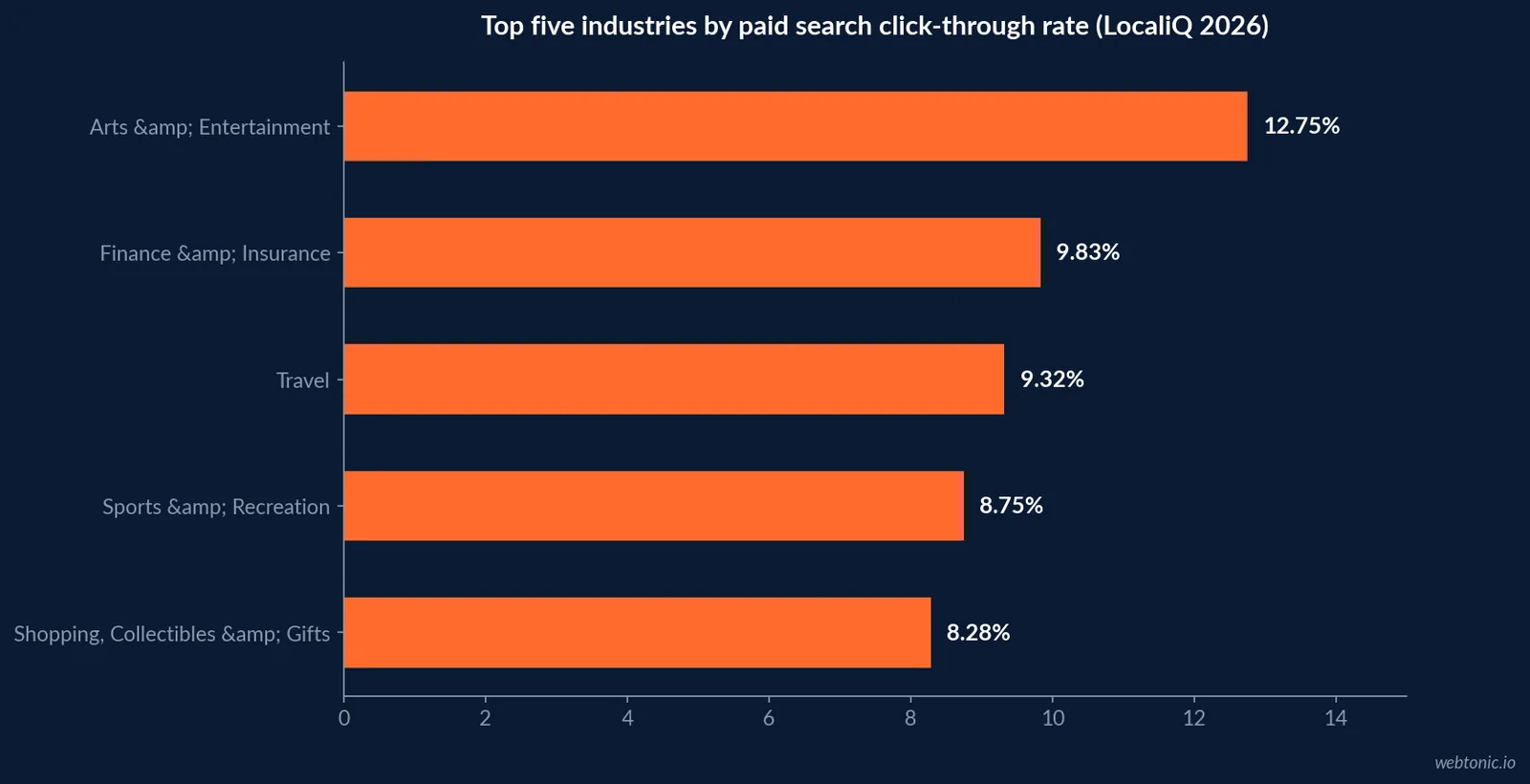
- Travel holds a 9.32% average search click-through rate, third-highest of 23 industries LocaliQ tracks.
- Travel's average cost per click is USD 2.14, among the cheapest of any tracked category.
- 85% of consumers say video convinced them to buy a product or service, per Wyzowl's 2026 survey.
- 63% would rather learn about a purchase from a short video than any other format.
- 89% of consumers say video quality affects their trust in a brand.
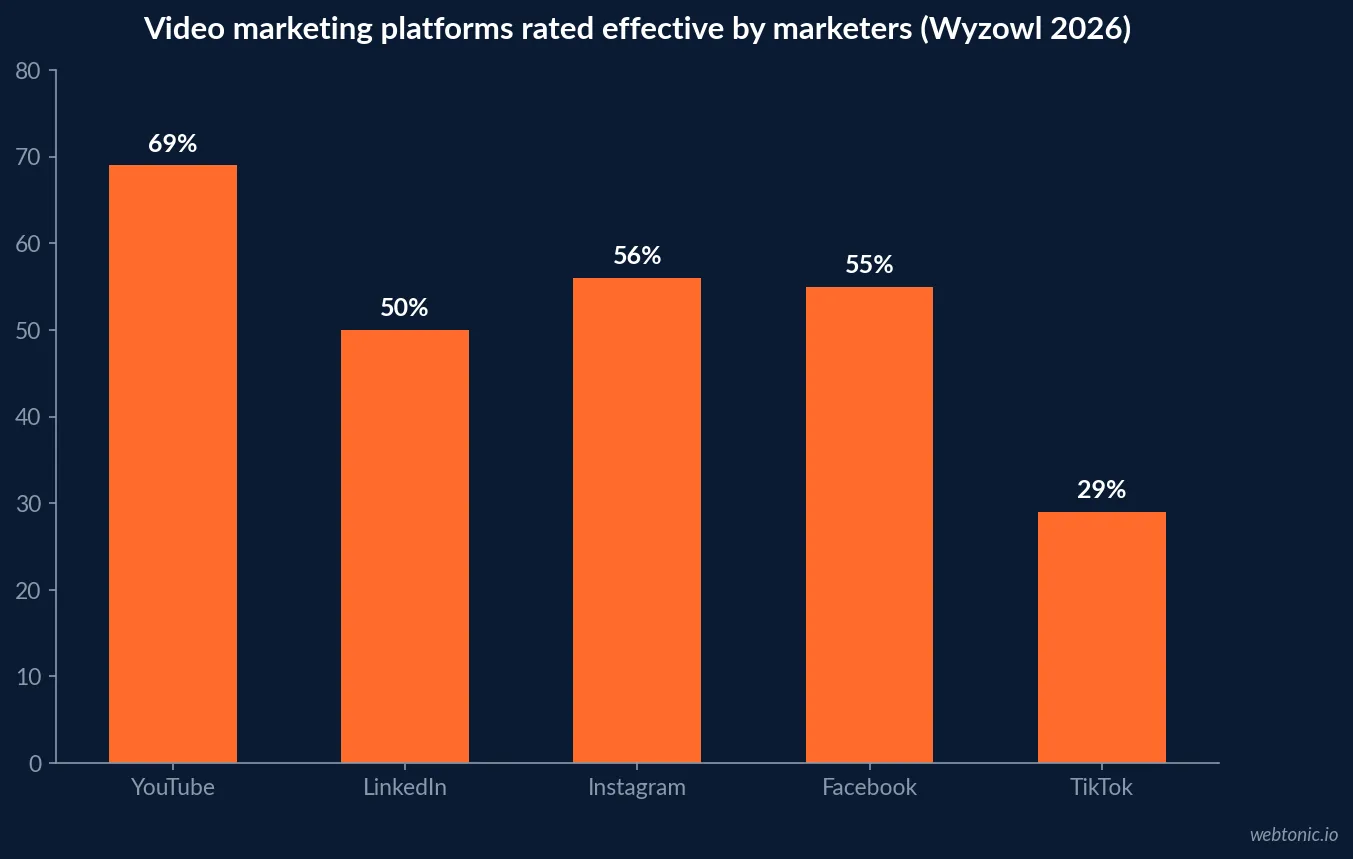
- YouTube is rated effective by 69% of video marketers, the highest of any platform.
- TikTok usage (40%) far outpaces its rated effectiveness (29%) among video marketers.
- 82% of businesses post video to YouTube, more than any other platform.
- 91% of businesses now use video as a marketing tool, back near an all-time high.
- 82% of marketers say video gives them a good return, down from 93% the year before but still dominant.
- Google Hotel Ads lifted Hilton's conversion rate 45% against its own traditional search ads.
- That same shift produced a 12% stronger ROI for Hilton.
- Search plus YouTube together drive 21% higher ROAS than any other media combination, per Google's 2026 travel research.
- 96% of people have watched an explainer video to learn about a product or service.
Start with what search creative is actually up against
LocaliQ's 2026 benchmark study, covering more than 13,000 US search campaigns from April 2025 through March 2026, ranks Travel's average click-through rate at 9.32% - third of the 23 industries measured, behind Arts & Entertainment (12.75%) and Finance & Insurance (9.83%). Travel's average cost per click sits at USD 2.14, among the cheapest tracked.
A high CTR on a cheap click is a favourable starting position, but it is largely an intent effect, not a creative one: a traveller searching a specific destination or date range clicks on nearly any relevant result. The honest reading is that Travel's headline copy gets partial credit it did not fully earn.
| Rank | Industry | Average CTR (LocaliQ 2026) | Where Travel sits |
|---|---|---|---|
| 1 | Arts & Entertainment | 12.75% | Above Travel |
| 2 | Finance & Insurance | 9.83% | Above Travel |
| 3 | Travel | 9.32% | Reference row |
| 4 | Sports & Recreation | 8.75% | Below Travel |
| 5 | Shopping, Collectibles & Gifts | 8.28% | Below Travel |
What actually moves a booking decision: the video evidence
Wyzowl's 2026 State of Video Marketing survey is not travel-specific, but its consumer-side findings map directly onto a high-trust, high-visual purchase like a hotel stay or a destination trip. 85% of people say they have been convinced to buy a product or service after watching a video, 96% have watched an explainer video to learn more about one, and when asked how they would prefer to learn about a product, 63% chose a short video over text articles (12%), infographics (7%), sales calls (5%) or ebooks (4%). 89% say video quality affects their trust in the brand behind it - a real risk for hospitality creative shot on a phone and treated as good enough.
| Consumer response to video (Wyzowl 2026) | Figure | Relevance to hospitality creative |
|---|---|---|
| Convinced to buy after watching a video | 85% | Directly supports video-led destination/room creative |
| Have watched an explainer video | 96% | Explainer format fits amenity and destination content |
| Prefer short video to learn about a purchase | 63% | Beats every other format by a wide margin |
| Say video quality affects brand trust | 89% | Production quality is not optional for travel creative |
| Want to see more brand video in 2026 | 84% | Demand side is not fatigued, consistent 8 years running |
Where marketers are actually posting it, and where it works
Usage and effectiveness are not the same thing, and the gap matters for budget decisions. 82% of businesses upload video to YouTube, followed by LinkedIn (70%), Instagram (69%), Facebook (66%) and TikTok (40%). But rated effectiveness tells a different story: YouTube is called effective by 69% of video marketers, then Instagram (56%), Facebook (55%) and LinkedIn (50%) - while TikTok's usage of 40% far outpaces its 29% effectiveness rating, the widest usage-to-effectiveness gap of any major platform in the survey.
| Platform | Businesses posting video (usage) | Rated effective by marketers | Usage vs. effectiveness gap |
|---|---|---|---|
| YouTube | 82% | 69% | -13 pts |
| 70% | 50% | -20 pts | |
| 69% | 56% | -13 pts | |
| 66% | 55% | -11 pts | |
| TikTok | 40% | 29% | -11 pts |
The one named case study that actually isolates the creative format
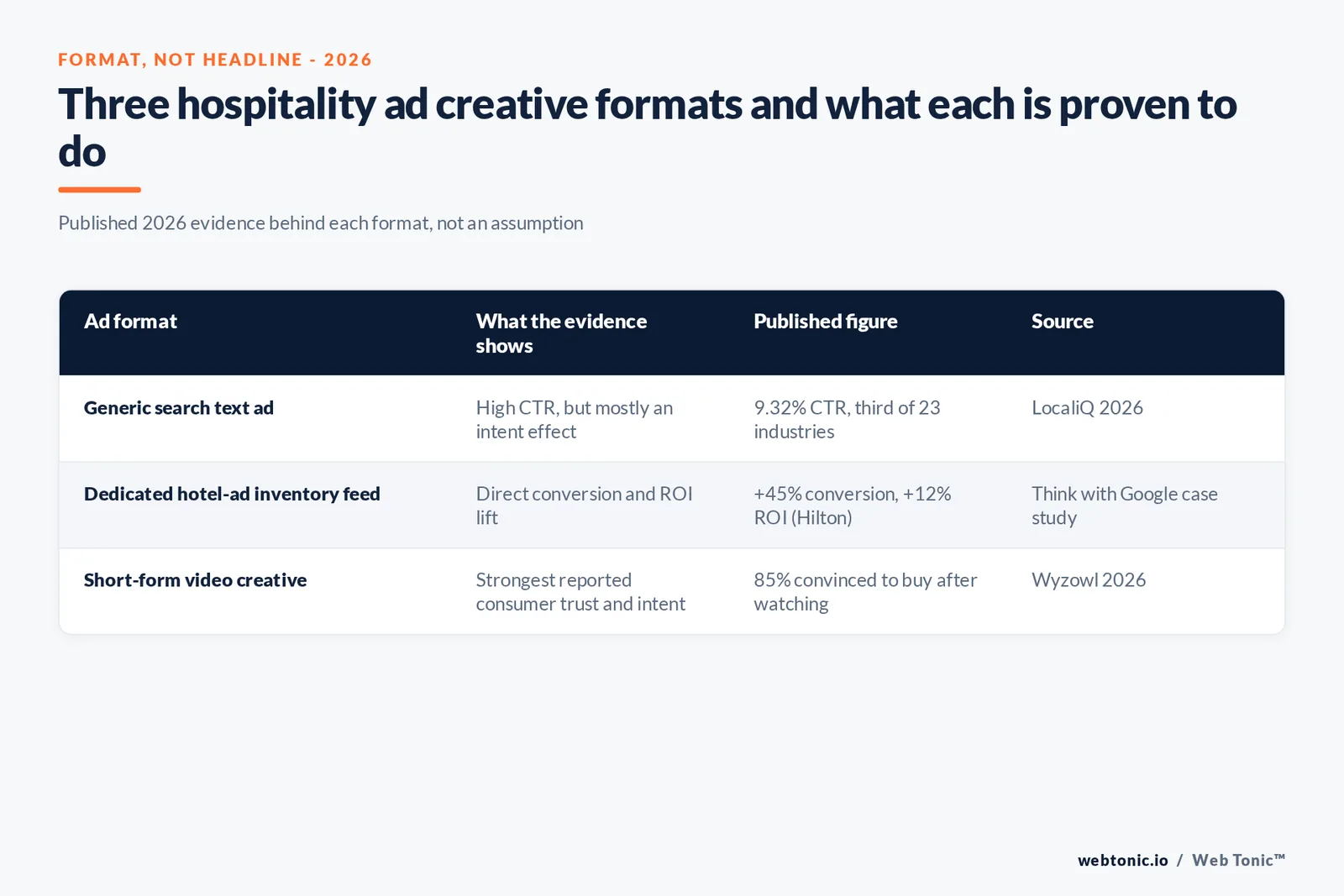
Nearly all of the evidence above is cross-industry. The clearest hospitality-specific number Google has published is older but still instructive: in its Hotel Ads case study, Hilton Worldwide - more than 4,250 properties across 93 countries at the time - opted every property into Google Hotel Ads and reported a 45% improvement in conversion rate and 12% stronger ROI compared with its traditional search ad campaigns. The lift did not come from a cleverer headline; it came from replacing a generic text ad with a live, bookable inventory feed carrying real prices and availability.
That is the honest shape of the answer to this page's title: search-ad copy alone is not doing the heavy lifting Travel's 9.32% CTR suggests. Format - video for discovery, live inventory feeds for the booking moment - is where the measurable lift actually sits.
| Format change (Hilton Worldwide case study) | Metric | Result | Source |
|---|---|---|---|
| Traditional search ads -> Google Hotel Ads | Conversion rate | +45% | Think with Google |
| Traditional search ads -> Google Hotel Ads | Overall ROI | +12% | Think with Google |
| Combined Search + YouTube vs. all other media | ROAS | +21% higher | Think with Google (2026) |
What AI-assisted search does to the creative brief
Google's 2026 travel research adds a complication for anyone still optimising headlines the old way: users of AI Overviews and AI Mode report deciding faster (77%) and more confidently (75%) because of them. If a synthesized answer is doing more of the comparison work before a traveller ever reaches an ad, the ad's job shifts from persuading to confirming - which favours a fast, trustworthy visual (video, a live price) over a clever line of search copy competing for attention inside a shrinking click.
Our performance creative team builds hospitality ad concepts around that shift - video-first for discovery, inventory-accurate for the booking click - rather than treating every format as a headline problem. See also our take on whether paid social ROI still holds up in 2026 before reallocating hospitality budget toward any single platform.
What this changes about how a hospitality creative brief gets written
The practical takeaway is a briefing discipline, not a tactic list. Every hospitality ad concept should name which of the three evidenced levers it is actually pulling - intent-matched search copy, a live-inventory feed, or trust-building video - instead of treating "creative" as one undifferentiated spend line. A campaign that spends its whole budget on clever headline variants while skipping the inventory feed and the video is optimising the lever with the weakest attributable evidence behind it.
That discipline also changes how a hospitality marketer reads a competitor's ad account. A rival running only text ads with strong CTR is not necessarily winning the format war - they may simply be capturing high-intent clicks that were always going to convert somewhere, while leaving the 45% conversion and 21% ROAS gains documented above unclaimed.
| Creative lever | What the evidence actually attributes to it | Where it fits in the funnel |
|---|---|---|
| Search headline / ad copy | High CTR is mostly an intent effect, not a copy effect | Top of funnel, high-intent capture |
| Live-inventory feed (Hotel Ads style) | +45% conversion, +12% ROI, Hilton case study | Booking moment, direct response |
| Short-form video | 85% convinced to buy; 63% prefer it to learn | Discovery and trust-building |
| Search + video combined | +21% higher ROAS than any other media mix | Full-funnel, not single-format |
The honest verdict
Ad creative in hospitality and travel is still working, but not for the reason the category's 9.32% CTR implies on its own. Intent explains most of the click; format - a real video, a live inventory feed - explains most of the conversion lift the data can actually attribute. Brands still shipping a static search ad with a generic headline and no video or live-price feed are leaving the 45%-conversion, 21%-ROAS gains other formats have already demonstrated on the table. Read our paid social cost breakdown before deciding how much of that budget shifts toward video production.
Frequently Asked Questions
Is there a study that directly scores hospitality ad creative performance?
No, and claiming otherwise would be dishonest. No public 2026 study rates hospitality ad creative as its own category. What exists is adjacent evidence: LocaliQ's search benchmarks show how Travel ads perform against other industries, Wyzowl's marketer survey shows which video formats travel and other brands report as effective, and Google's own Hotel Ads case study shows what a dedicated feed format did for one named advertiser. This page treats each as what it is, not as a unified creative scorecard.
Does video creative actually move hospitality bookings?
The consumer-side evidence is strong even if it is not travel-specific: Wyzowl's 2026 survey found 85% of people say they have been convinced to buy a product or service after watching a video, and when asked how they would prefer to learn about something, 63% chose a short video over text articles (12%), ebooks (4%) or webinars (4%). Hospitality decisions - a hotel room, a destination - are exactly the kind of visual, trust-dependent purchase this format favours.
Which platform actually works for hospitality video creative?
By marketers' own reported effectiveness in Wyzowl's 2026 survey, YouTube leads at 69%, followed by Instagram (56%), Facebook (55%) and LinkedIn (50%). TikTok, despite high usage (40% of video marketers post there), is rated effective by only 29% - a usage-versus-effectiveness gap worth checking before shifting hospitality creative budget toward it.
Why does Travel keep such a high click-through rate if the creative is generic?
Part of it is not the creative at all - it is intent. LocaliQ's 2026 data ranks Travel's 9.32% average search CTR third of 23 industries, behind only Arts & Entertainment (12.75%) and Finance & Insurance (9.83%). High-intent, high-urgency searches (a specific destination, a specific date range) click on almost any relevant headline. That is a targeting effect the creative gets credit for.
Does a dedicated ad format actually beat a generic search ad for hotels?
Google's own published case study on Hilton Worldwide is the clearest number available: moving from traditional search ads to Google Hotel Ads across all of Hilton's then-4,250 properties produced a 45% conversion-rate improvement and a 12% stronger ROI. The case study is not new, but the underlying logic - a bookable-inventory feed beats a generic text ad for a product with real-time price and availability - still applies to 2026's AI-assisted search results.
Sources
LocaliQ - Search Advertising Benchmarks for Every Industry (2026 data)
Wyzowl - Video Marketing Statistics 2026
Think with Google - Hilton Worldwide Drives 12% Higher ROI With Google Hotel Ads (case study)
Think with Google - AI in travel marketing: winning the new era of Search (2026)
Think with Google - From Search to solve: how AI is powering the travel industry
Skift Research - State of Travel 2026