Table of contents
Key Takeaways
Link building in health and wellness operates under stricter rules than almost any other industry. Google classifies health content as Your Money or Your Life (YMYL), meaning backlink quality, source credibility, and E-E-A-T signals carry far more weight than raw link volume. Health websites need a median Domain Authority of 42 just to compete, and YMYL niches require 2–3× more backlinks for top-10 positions than non-YMYL verticals. These are the benchmarks, case studies, and outreach statistics every health-and-wellness SEO team needs.
Link Building Benchmarks at a Glance
| Metric | Health & Wellness | All-Industry Avg | Source |
|---|---|---|---|
| Median Domain Authority | 42 | — | SeoJuice |
| Page-1 Avg Backlinks | 1,915 | 907 (median RDs) | VastCope / Rankz |
| Avg Referring Domains (Health) | 207 | — | SearchLab |
| YMYL Backlink Multiplier | 2–3× | 1× (baseline) | SearchLab / Ahrefs |
| Target DR for Rankings | 55–75+ | 30–55 | Digital Khired |
| Monthly New Domain Target | 71 | — | VastCope |
Why Health & Wellness Link Building Is Different
Google's YMYL classification places health content under heightened scrutiny, making every backlink a trust signal—or a liability.
- YMYL niches like health and finance require an average of 2–3× more backlinks for top-10 positions than non-YMYL niches, according to Ahrefs data analyzed by SearchLab (SearchLab).
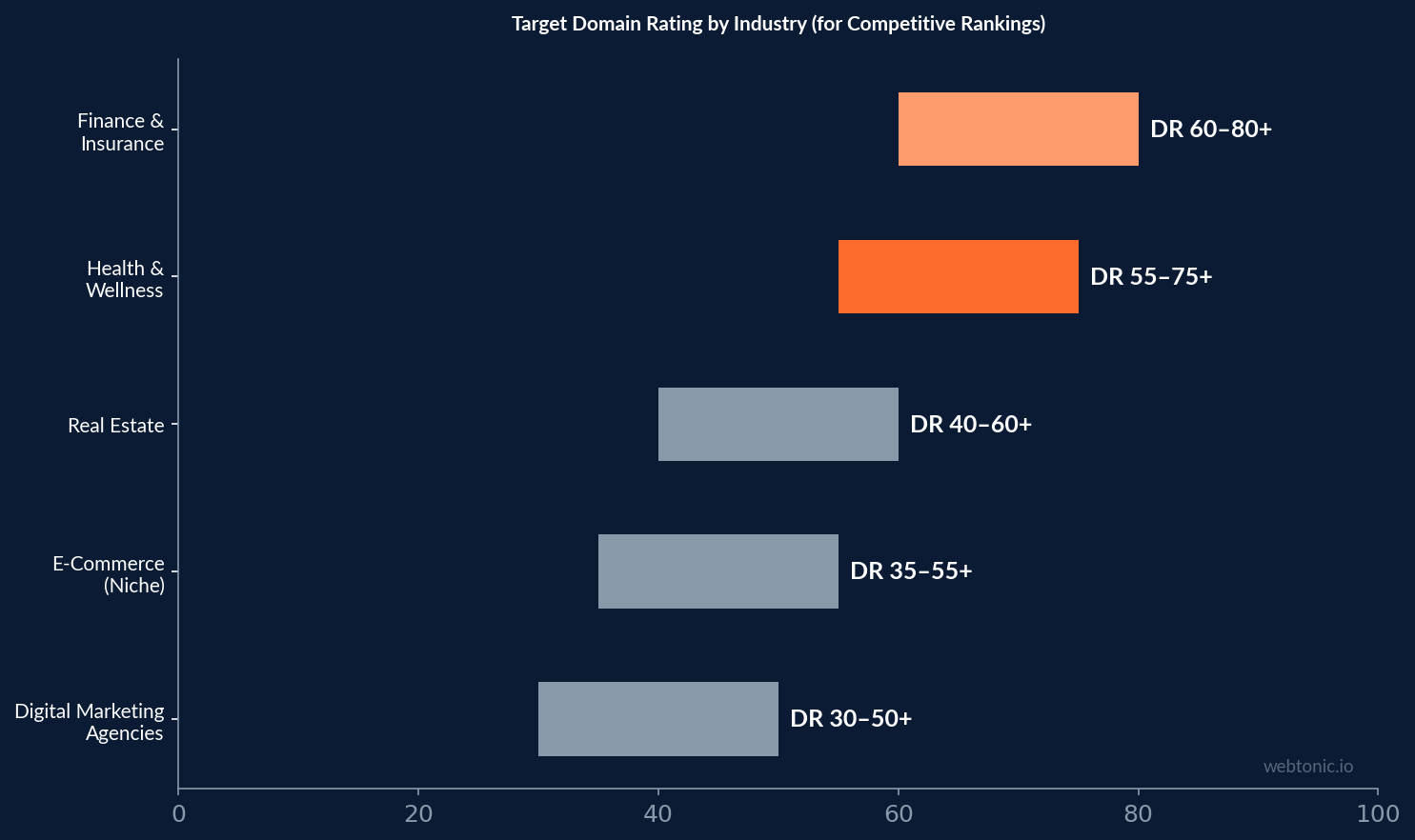
- Health websites need a minimum Domain Rating of 55–75+ to compete for competitive medical keywords, while e-commerce niches can rank with DR 35–55 (Digital Khired).
- Links from NHS pages, hospital networks, medical universities, and respected health journalism sites carry disproportionate weight in Google's assessment of health content trustworthiness (Rankved).
- Credentialed authorship is now a prerequisite for health link building—a pitch from a certified expert or nutritionist is significantly more likely to secure a placement than one from a generic marketer (OutreachDesk).
Backlink Volume and Domain Authority Benchmarks
Understanding how many links and referring domains health-and-wellness sites need provides realistic targets for SEO campaigns and growth marketing budgets.
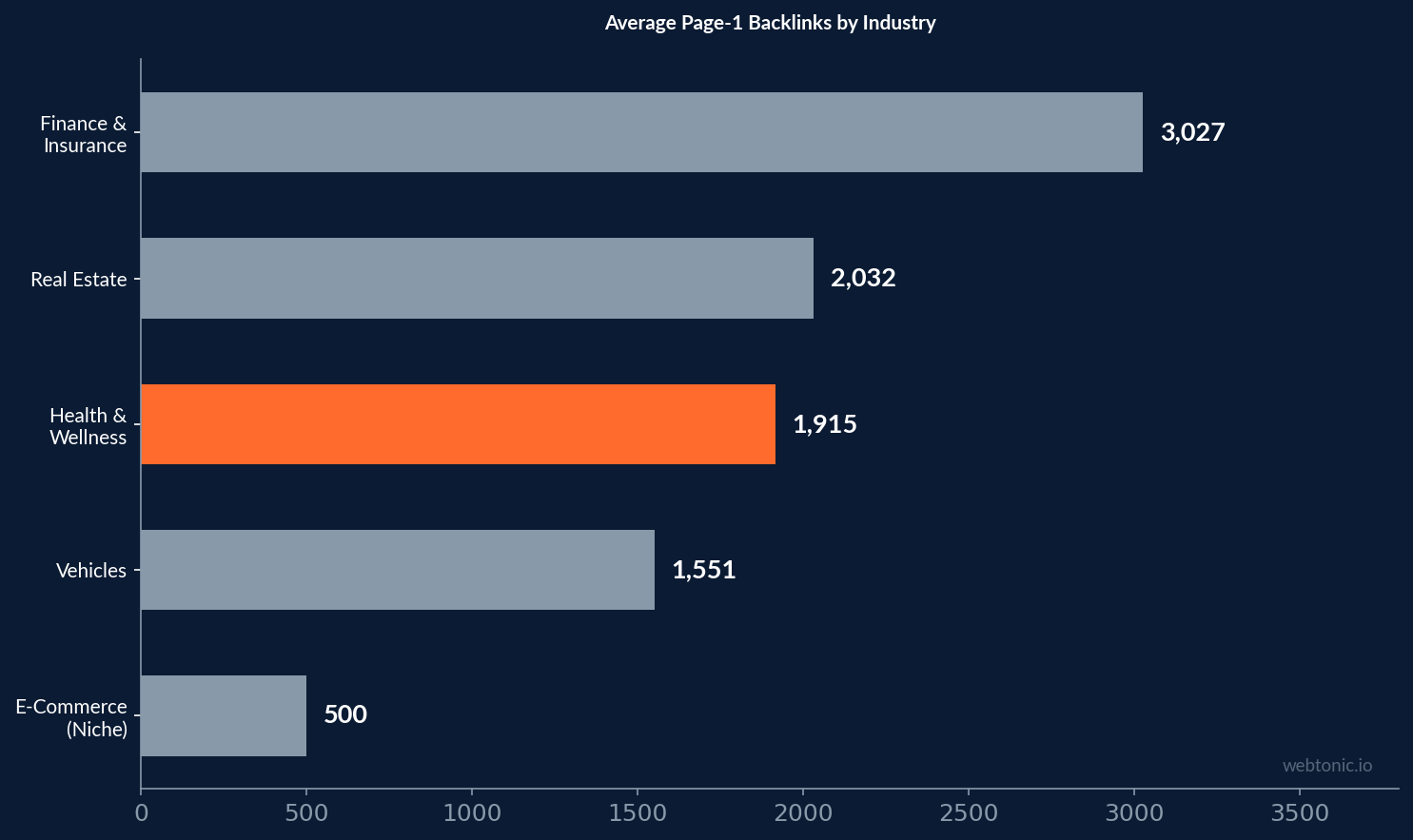
- The average page-1 result in the health niche has 1,915 backlinks, ranking fifth among all industries—behind only finance (3,027), real estate (2,032), vehicles (1,551 for page-1 link count), and ahead of most consumer categories (VastCope).
- The median Domain Authority for healthcare websites is 42, based on an analysis of 256 sites (SeoJuice).
- Health-and-medical websites average 207 referring domains, a figure that represents the industry baseline for competitive organic visibility (SearchLab).
- One link from a DR 70+ domain is on average 12× more valuable than 12 links from DR 20–30 domains, and Google's SpamBrain update in 2025 further devalued low-quality links (Rankz).
- The monthly target for steady health-niche progress is 71 new referring domains, calibrated to industry velocity and competitive pacing (VastCope).
Link Building ROI and Case Studies
Real-world results prove that strategic link building in health and wellness delivers measurable organic growth and revenue.
- A wellness brand grew organic traffic 143% in 90 days through targeted link building, increasing referring domains by 10% (from 1,085 to 1,204) and top-3 keywords by 133% (from 285 to 666) (DigitalWebSolutions).
- RZone Fitness generated a $28,620 estimated revenue pipeline from link building—15 qualified website leads at $1,908 annual value per member, using neighbourhood-specific anchor targeting (ProntoMarketing).
- A health-and-wellness D2C brand placed 25 contextual backlinks on DA 30–70 domains through a structured digital PR strategy, with relevance-focused placements in health and fitness content (Amwhiz).
- Domain authority growth from editorial backlinks in wellness has an outsized compounding effect, with bloggers, fitness journalists, and health publications providing the highest-value links over time (AuthoritySpecialist).
Outreach and Digital PR Statistics
Getting links in health and wellness requires a more targeted, credentialed approach than most industries. The data reveals how outreach response rates, placement success, and compliance requirements shape campaign design.
- Cold outreach reply rates have collapsed from 8.5% to 3.43% across large email datasets, making personalization and niche relevance non-negotiable (Affinco).
- Only 8.5% of outreach replies actually convert into a placed backlink, meaning the effective placement rate from cold outreach is roughly 0.29% (Affinco).
- Personalizing subject lines lifts outreach response rates by 33%, a critical lever given the low base rates in health verticals (Affinco).
- Healthcare PR faces the strictest compliance checks from journalists—finance and business content has a 30% placement success rate, but health claims undergo additional editorial scrutiny (Affinco).
- 86% of journalists instantly reject generic pitches, making health-specific expertise and credentialed authors essential for digital PR placement (Affinco).
- BuzzStream is the most popular digital PR outreach tool, used by 52% of link building professionals, followed by other CRM-based systems for managing health-sector journalist relationships (BuzzStream).
- Digital PR email outreach tools have surged in adoption from 3% market share to dominant usage, reflecting the industry's shift from manual outreach to systematized campaigns (BuzzStream).
- Guest post outreach converts at 5–10% response rate, yielding 2–3 published posts per batch, making it one of the more reliable channels for health content placement (Consolety).
E-E-A-T and YMYL Link Quality Factors
In health and wellness, the types of sites linking to you matter more than the number. Google's Quality Rater Guidelines place extraordinary weight on the authoritativeness and trustworthiness of linking domains.
| Link Source Type | E-E-A-T Weight | Example Sources |
|---|---|---|
| Medical Universities / Teaching Hospitals | Highest | .edu medical schools, NHS, Mayo Clinic |
| Government Health Agencies | Highest | CDC, NIH, WHO |
| Health Journalism / Major Publications | Very High | Healthline, WebMD, Verywell |
| Industry Associations | High | AMA, AHA, specialty boards |
| Wellness Bloggers / Fitness Journalists | Moderate–High | Niche health blogs with author bios |
| General Directories / Low-DR Sites | Low | Unvetted directories, PBNs |
Link Building Costs and Investment Benchmarks
Link building in health and wellness commands a premium over most industries, reflecting the higher editorial standards and compliance requirements of YMYL content.
- The average cost per acquired backlink ranges from $100 to $1,500+ in health verticals, depending on domain authority of the target site and whether the placement is earned editorially or through sponsored content (Affinco).
- Digital PR campaigns in healthcare produce 3–5× higher-authority links than transactional guest posting, though they require longer lead times and credentialed spokespeople (Affinco).
- Websites ranking on page one across all industries have a median of 907 referring domains, but health's 1,915 average backlinks per page-1 result shows the elevated baseline in YMYL verticals (Rankz).
- Google's SpamBrain update in 2025 further devalued low-quality links, making the ROI case stronger for fewer high-DR links over volume-based strategies in health niches (Rankz).
Content Types That Earn Health & Wellness Backlinks
Not all health content attracts links equally. The following formats consistently outperform in earning editorial backlinks for data-driven health brands.
- Original research studies and proprietary health surveys earn 3–5× more natural backlinks than standard blog content in the health niche, because journalists and editors prioritize citable first-party data (LinkBuildingJournal).
- Health statistics pages and benchmarking reports function as linkable assets that accumulate referring domains passively over time—a compounding advantage that short-form content cannot replicate (Topozicev).
- Three types of links earn Google's heaviest weighting in medical contexts: institutional (.edu, hospital networks), governmental (CDC, NIH, WHO), and established health journalism sites (LinkBuildingJournal).
- Patient outcome data, when anonymized and ethically presented, produces the highest journalist response rates in health digital PR, surpassing market-sizing statistics and trend commentary (ReporterOutreach).
- Healthcare AI visibility now depends on both historical authority and real-time backlink signals—LLMs scan live web indexes for the most current information, making ongoing link acquisition essential for AI search inclusion (VarnHealth).
Best Practices for Health & Wellness Link Building
Building links in a YMYL vertical requires a fundamentally different approach than link building in e-commerce or SaaS. These practices reflect what leading agencies use to build durable authority for health brands.
- Lead with credentials. Every outreach email should identify the author's medical or health credentials. Certified experts get 2–3× higher placement rates than generic marketers in health verticals.
- Target DR 50+ domains exclusively. In YMYL niches, links from low-authority sites add marginal value and can trigger SpamBrain penalties. Focus on hospital networks, medical journals, and established health publications.
- Create original research. Proprietary studies, patient surveys, and benchmarking reports attract natural editorial links at 3–5× the rate of standard content in the health niche.
- Use digital PR over guest posting. Pitching health data stories to journalists at Healthline, WebMD, and niche health outlets produces higher-DR links than transactional guest post exchanges.
- Monitor link velocity. Aim for ~71 new referring domains per month to match industry pacing. Sudden spikes or drops trigger manual reviews in health verticals.
- Audit existing backlinks quarterly. Disavow links from unvetted health directories, PBNs, and sites with thin or inaccurate medical content.
Health & Wellness Link Building vs. Other Industries
The cost, complexity, and quality threshold for link building in health and wellness exceed most industries, reflecting Google's elevated trust requirements for YMYL content.
| Industry | Avg Page-1 Backlinks | Target DR | YMYL Status |
|---|---|---|---|
| Finance & Insurance | 3,027 | 60–80+ | YMYL |
| Real Estate | 2,032 | 40–60 | Partial YMYL |
| Health & Wellness | 1,915 | 55–75+ | YMYL |
| Vehicles | 1,551 | 35–55 | No |
| E-Commerce (Niche) | Varies | 35–55 | No |
| Digital Marketing | Varies | 30–50 | No |
Related reading
- Health & Wellness SEO Statistics: 2026 Benchmarks, Traffic Data & ROI Trends
- Mold Removal Link Building Statistics: Backlink Costs, DA Benchmarks & ROI Data (2026)
- Mortgage Link Building Statistics: 2026 Benchmarks, Costs & ROI Data
- Link Building Services services at Web Tonic
Frequently Asked Questions
How many backlinks do health and wellness websites need to rank?
Health websites on page one average 1,915 backlinks, and YMYL niches require 2–3× more backlinks than non-YMYL verticals for equivalent rankings. The key metric is not raw volume but referring domain quality—a single link from a DR 70+ domain equals roughly 12 links from DR 20–30 sites.
What Domain Authority is needed for health websites?
The median Domain Authority for healthcare websites is 42, but competitive medical keywords typically require a DR of 55–75+. Credentialed authorship and links from medical institutions accelerate DA growth faster than volume-based approaches.
What is the outreach response rate for health link building?
Cold outreach reply rates have dropped to 3.43%, and only 8.5% of replies convert into placed backlinks. Personalizing subject lines lifts response rates by 33%, and using credentialed health authors further improves placement success.
Is guest posting effective for health and wellness SEO?
Guest post outreach converts at 5–10% response rate, yielding 2–3 published posts per batch. However, digital PR pitches to established health publications produce higher-authority links. Both strategies should be combined, with a bias toward earned editorial placements for YMYL compliance.
How does YMYL status affect health link building strategy?
YMYL classification means Google evaluates health backlinks through the lens of E-E-A-T (Experience, Expertise, Authoritativeness, Trustworthiness). Links from medical universities, hospitals, and government health agencies carry the highest weight, while links from unvetted directories or thin health content can trigger penalties.
Sources
searchlab.nl — Link Building Statistics 2026
vastcope.com — Backlink Benchmarks 2026
rankz.co — Backlinks to Rank
seojuice.com — Healthcare SEO Benchmarks
digitalwebsolutions.com — Wellness Brand Case Study
affinco.com — Link Building Statistics
affinco.com — Digital PR Statistics
linkbuildingjournal.co.uk — Health & Medical Link Building
authorityspecialist.com — Health Wellness SEO Stats
topozicev.com — Health Fitness Link Building