Table of contents
LinkedIn Ads for a cleaning company only make sense if the buyer is a facility or property manager signing a commercial contract, not a homeowner booking a maid. This page prices that specific audience and states plainly where the data is B2B-wide rather than cleaning-specific.
Key Takeaways
- LinkedIn Ads cost USD 202 per lead in 2026 B2B benchmark data (Metadata).
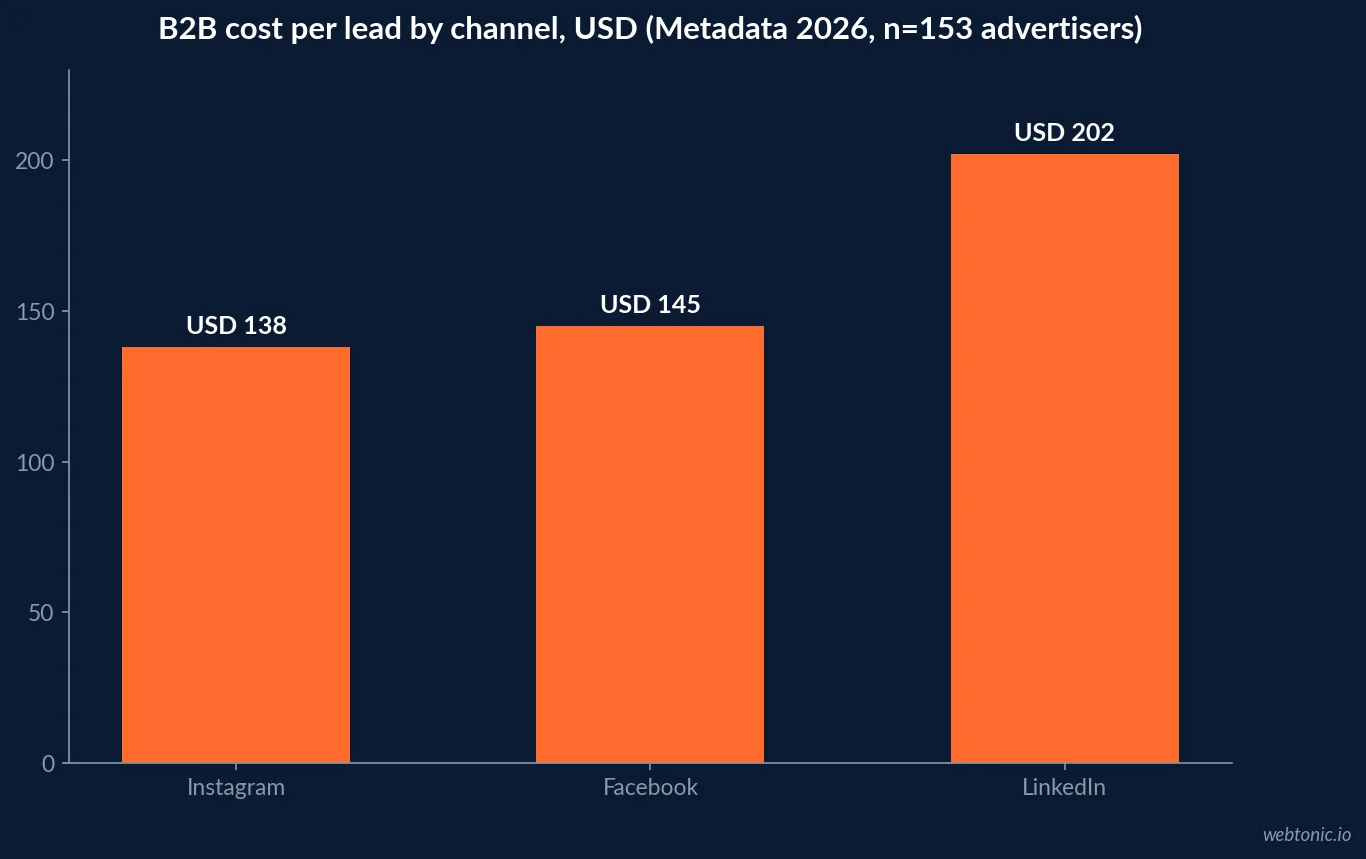
- That is the highest cost per lead of four channels measured, ahead of Facebook and Instagram.
- Click-through rate on LinkedIn B2B ads runs 0.67%, cost per click USD 9.39.
- Only 5.9% of LinkedIn clicks convert to a lead in that same dataset.
- LinkedIn Ads delivered 121% return on ad spend in Dreamdata's 2026 report.
- That beats Google Search at 67% ROAS and Meta at 51% in the same customer base.
- LinkedIn now commands 41% of B2B ad budgets, up 2 points year over year.
- LinkedIn's ad influence grows as deals near close, unlike the year before.
- Facilities managers number roughly 151,400 in the US labor market (BLS/O*NET, 2024).
- Their median wage is USD 106,660 a year as of 2025.
- The US janitorial market is roughly USD 112 billion (ISSA, 2026).
- About 1.23 million janitorial businesses compete for that revenue.
- Firm count is growing about 4.2% a year, faster than the 2.7% market growth.
The audience question that decides whether this page even applies
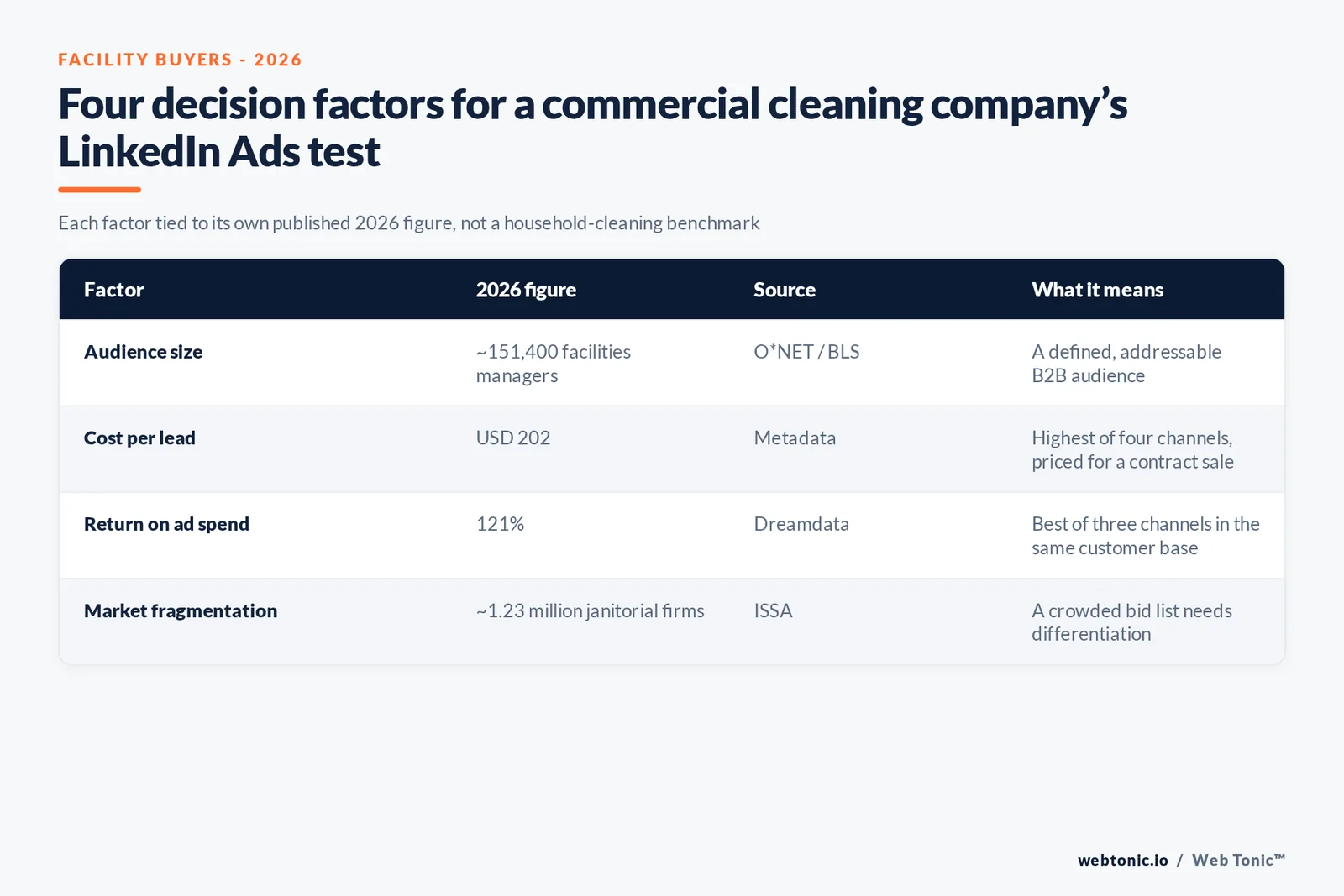
No published benchmark exists for "LinkedIn Ads for house cleaning," and none should, because the platform's targeting and cost structure only pay off against a B2B buyer. The relevant buyer for a cleaning company on LinkedIn is a facility manager or property manager evaluating vendors for a recurring janitorial, office, or multi-site cleaning contract - a role the Bureau of Labor Statistics counts at roughly 151,400 people nationally as of 2024, with a 2025 median wage of USD 106,660.
If your cleaning business sells only to homeowners, the rest of this page is not your channel - Meta and local search will consistently out-convert LinkedIn for that audience, and the cost data below will confirm why.
| Audience type | Is LinkedIn the right channel? | Better-fit channel instead |
|---|---|---|
| Homeowner booking a recurring house clean | No | Google Local Services Ads, Meta, local SEO |
| Facility manager, single office contract | Yes | LinkedIn Ads, targeted by job title |
| Property manager, multi-site portfolio | Yes | LinkedIn Ads, targeted by company size |
| Procurement/purchasing lead at an enterprise | Yes, with account-based targeting | LinkedIn Ads + direct outreach |
What a LinkedIn lead actually costs in 2026
Metadata's 2026 B2B advertising benchmark, built from 153 B2B advertisers who spent a combined USD 57.6 million in 2025 and generated 211,000 leads, with its method and dataset published openly, puts LinkedIn at a 0.67% click-through rate, a USD 9.39 cost per click, and a USD 202 cost per lead - the highest of the four channels it tracks, against USD 145 on Facebook and USD 138 on Instagram. Only 5.9% of LinkedIn clicks convert into a lead in that dataset.
That is expensive per lead by design: LinkedIn's targeting reaches fewer, more qualified professional decision-makers than a broad consumer feed, which is exactly the tradeoff a commercial cleaning contract - worth far more per year than a single house clean - can absorb.
| Channel (Metadata 2026, n=153 advertisers, $57.6M spend) | CTR | CPC | Cost per lead |
|---|---|---|---|
| 0.67% | $9.39 | $202 | |
| 0.79% | $1.95 | $145 | |
| 0.65% | $2.82 | $138 | |
| Google Ads (B2B) | 6.33% | $9.76 | $524 |
Why the higher cost per lead can still be the better trade
Dreamdata's 2026 LinkedIn Ads Benchmarks Report, drawn from its customers' aggregated data across more than 66 million sessions and 3.5 million customer journeys, found LinkedIn Ads delivering 121% return on ad spend in 2025, up from 113% the year before, against 67% for Google Search and 51% for Meta in the same accounts. LinkedIn now commands 41% of total B2B ad budgets in Dreamdata's customer base, up two points year over year.
The report also found LinkedIn's ad influence strengthening, not fading, as a deal approaches close - a pattern relevant to a multi-month facilities-contract sales cycle, where the buying committee is still engaging with content close to the signature, not just at first discovery.
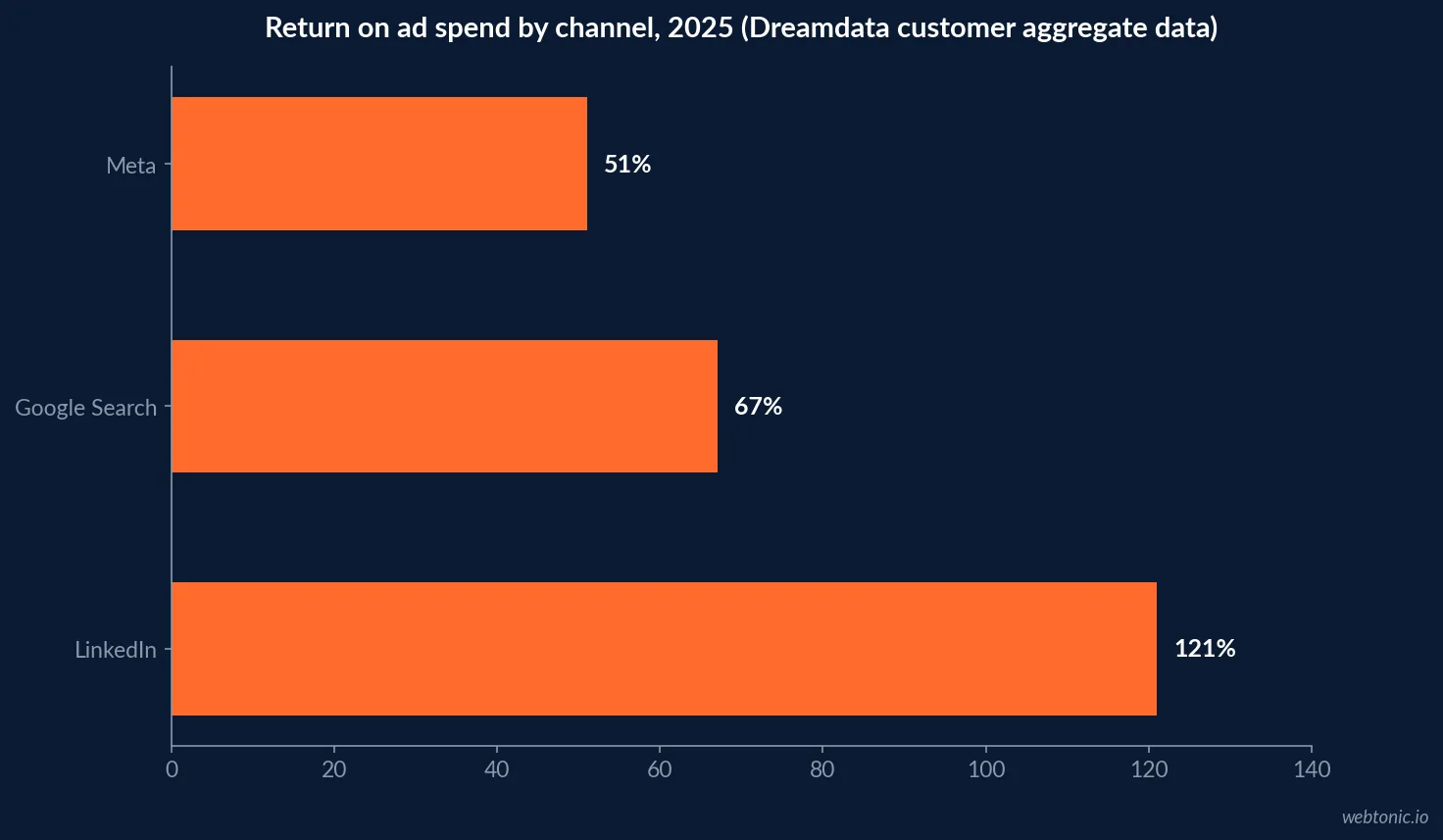
| Dreamdata 2026 metric | Figure | Why it matters for a commercial cleaning contract |
|---|---|---|
| LinkedIn ROAS | 121% | Best of three channels measured, up from 113% |
| Google Search ROAS | 67% | Still positive, second best |
| Meta ROAS | 51% | Weakest of the three for B2B |
| LinkedIn share of B2B ad budget | 41% | Already the largest single line for B2B buyers |
| LinkedIn ad influence at deal close | Strengthens near close | Fits a multi-month contract sales cycle |
Sizing the market you would be competing in
ISSA, the worldwide cleaning industry association, sizes the US janitorial market at roughly USD 112 billion in 2026, growing about 2.7% a year, spread across an estimated 1.23 million janitorial businesses - with the number of competing firms growing faster, around 4.2% a year, than the market itself. A facility manager fielding vendor pitches has no shortage of near-identical options, which is precisely the environment where a specific, credible LinkedIn presence - case studies, staff credentials, compliance certifications - differentiates a bid instead of just adding to the noise.
On the buyer side, the addressable audience is bounded but real: roughly 151,400 facilities managers nationally at a USD 106,660 median wage, per O*NET's aggregation of BLS occupational data, plus the property managers and office administrators who also hold cleaning-vendor decisions in smaller organizations.
| Industry/audience fact | Figure | Source |
|---|---|---|
| US janitorial/cleaning market size, 2026 | ≈ $112 billion | ISSA |
| Market growth rate | ≈ 2.7% a year | ISSA |
| Growth in competing firms | ≈ 4.2% a year | ISSA |
| US facilities managers employed (2024) | ≈ 151,400 | O*NET / BLS |
| Facilities manager median wage (2025) | $106,660 | O*NET / BLS |
What the same commercial buyer costs on Google, for comparison
WordStream by LocaliQ's 2026 Google Ads Benchmarks report, drawn from more than 13,000 US campaigns, puts the all-industry average cost per lead at USD 66.69 - roughly a third of LinkedIn's USD 202. That gap is expected, not a reason to skip LinkedIn: search ads capture existing demand from a facility manager who is already searching for a vendor, while LinkedIn ads can reach a buyer before they start that search, during the budget-planning stage of a facilities contract.
The two channels answer different parts of the buying cycle. A commercial cleaning company with budget for only one paid channel should generally start with search, where cost per lead is lower and intent is already qualified, and add LinkedIn once there is a defined list of target accounts to reach earlier in their planning cycle.
| Channel | Cost per lead (2026 data) | Buying-cycle stage it serves best |
|---|---|---|
| Google Search Ads (all-industry avg.) | $66.69 | Active vendor search, near-term contract need |
| LinkedIn Ads (B2B avg.) | $202 | Early planning stage, before a search begins |
| Facebook Ads (B2B avg.) | $145 | Broader awareness, weaker intent signal |
What has to be on the company page before the ad budget starts
Dreamdata's 2026 report found that only 1 in 5 closed B2B deals involved a buying committee member visiting the company's LinkedIn Page before close - but for those that did, the average time from that first organic page visit to closed revenue was just 90 days. For a commercial cleaning vendor, that means the page itself - case studies, compliance certifications, staff credentials - needs to be built out before a single ad dollar is spent, since a clicked ad that lands on a thin company page wastes the USD 202 it cost to generate the click.
The same trust logic that governs a residential landing page applies here in a B2B register: BrightLocal's 2026 survey found that 97% of consumers read reviews before choosing a local provider; a facility manager vetting a commercial cleaning vendor runs the same due-diligence instinct against case studies and client logos instead of star ratings.
The compliance line for B2B case studies and client claims
Any client logo, quote or "increased satisfaction scores by X%" claim used in LinkedIn ad creative or on the company page is bound by the same FTC rule that governs consumer reviews: no fabricated or undisclosed-incentive testimonials, with civil penalties for knowing violations. For a commercial cleaning vendor pitching multi-site contracts, a named, permissioned client case study clears that bar and is also simply a stronger sales asset than an anonymized quote.
Basic targeting structure for a first LinkedIn test
LinkedIn's ad platform lets a commercial cleaning company target by job title, function, company size and geography simultaneously - the practical structure is job titles like Facilities Manager, Property Manager, Office Manager or Operations Manager, layered with a company-size band that matches the contract size the business wants (a solo janitorial operator and a five-site portfolio need different targeting), inside the specific metro or region actually served.
| Targeting layer | Example setting | Why it matters |
|---|---|---|
| Job title/function | Facilities Manager, Property Manager, Office Manager | Matches the 151,400-person addressable role |
| Company size | 51-200 or 201-1,000 employees | Matches the contract size the business can service |
| Geography | Metro area or defined service radius | A cleaning contract cannot be delivered remotely |
| Seniority | Manager to Director level | Avoids spend on roles with no budget authority |
The single biggest targeting mistake to avoid
The most common failure mode for a first LinkedIn test is targeting too broadly - a generic "business services" or "facility management" interest audience instead of the specific job-title and company-size combination the contract actually needs. At USD 202 a lead, a broad audience burns through budget on job titles with no purchasing authority before the campaign has generated enough qualified leads to judge fairly.
How to budget the first LinkedIn test
Given a USD 202 cost per lead and a 5.9% click-to-lead rate, a first test needs enough spend to generate a double-digit number of leads before judging the channel - roughly USD 2,500 to USD 4,000 for an initial 15-20 lead sample, targeted narrowly at facilities/property manager job titles inside a defined geography, not a broad "business services" audience. Measure against actual signed-contract value, not cost per lead alone, since Dreamdata's ROAS data suggests LinkedIn's real payoff shows up later in the pipeline than the first click.
For the cost side of a broader paid mix, our Google Ads pricing guide and cost-per-lead benchmarks by industry are useful companion reads, and our growth marketing team can help scope a B2B testing budget.
Frequently Asked Questions
Should a residential house-cleaning business advertise on LinkedIn?
Almost never. LinkedIn's audience is professionals making work-related decisions, and the platform's own cost data - USD 202 per lead in Metadata's 2026 B2B benchmark - only pays off against a B2B sale, such as a recurring janitorial contract. A homeowner booking a $150 house clean is not a LinkedIn-native decision, and Meta or Google local search will out-convert LinkedIn for that audience every time.
Who is the actual buyer for a commercial cleaning company's LinkedIn ads?
Facility managers and property managers, not consumers. The Bureau of Labor Statistics' facilities manager occupation counted roughly 151,400 people employed in the role as of 2024 with a median wage of USD 106,660 in 2025 - a defined, addressable, white-collar audience that LinkedIn's targeting is actually built to reach, unlike a residential homeowner list.
What does a LinkedIn lead cost for a B2B service like commercial cleaning?
Metadata's 2026 B2B advertising benchmark, built from 153 advertisers who spent USD 57.6 million in 2025 and generated 211,000 leads with a published, open method, puts LinkedIn at a 0.67% click-through rate, a USD 9.39 cost per click, and a USD 202 cost per lead - the highest cost per lead of the four channels in that dataset, alongside the highest average deal sizes.
Is LinkedIn worth the higher cost per lead compared to Facebook or Google?
Dreamdata's 2026 LinkedIn Ads Benchmarks Report, built on more than 66 million sessions and 3.5 million customer journeys across its customer base, found LinkedIn delivering 121% return on ad spend versus 67% for Google Search and 51% for Meta in the same accounts - and LinkedIn's B2B ad influence gets stronger, not weaker, the closer a deal gets to close. For a five- or six-figure janitorial contract, that pattern matters more than the per-click cost.
How fragmented is the commercial cleaning market LinkedIn ads would be targeting?
Very. ISSA, the worldwide cleaning industry association, sizes the US janitorial market at roughly USD 112 billion in 2026 across an estimated 1.23 million businesses, with firm count growing faster (≈4.2% a year) than the market itself (≈2.7%). A facility manager fielding contract pitches has many near-identical vendors to choose from, which raises the value of a credible, differentiated LinkedIn presence rather than lowering it.
Sources
Metadata - B2B Advertising Benchmarks 2026 (153 advertisers, $57.6M spend)
Dreamdata - 2026 LinkedIn Ads Benchmarks Report
ISSA - The state of the cleaning and facility solutions industry, 2026
O*NET OnLine - Facilities Managers (BLS occupational data)
LinkedIn Newsroom - About Us, membership figures
WordStream by LocaliQ - 2026 Google Ads Benchmarks by Industry
BrightLocal - Local Consumer Review Survey 2026
Federal Trade Commission - Final rule banning fake reviews and testimonials