



Table of contents
How we vet every listicle
Every agency featured on Web Tonic passes our 84-point editorial review before a single listicle goes live. This is how we vet each pick:
Verified client outcomes: We require real case studies with measurable KPIs — revenue, ROAS, CPA, retention — tied to the exact category being ranked. No cherry-picked wins, no unverifiable numbers.
Independent reputation: We cross-check Clutch, Google, G2, and Trustpilot ratings, and screen for review-bombing or suspicious patterns. Only operators with a consistent, verifiable track record make the cut.
Beyond that, every listing goes through a quarterly re-audit. We check 84 criteria across 6 pillars to make sure it still holds up — here are some of the checks we run:
Best Online Reputation Management Companies: How to Protect Your Brand in 2026
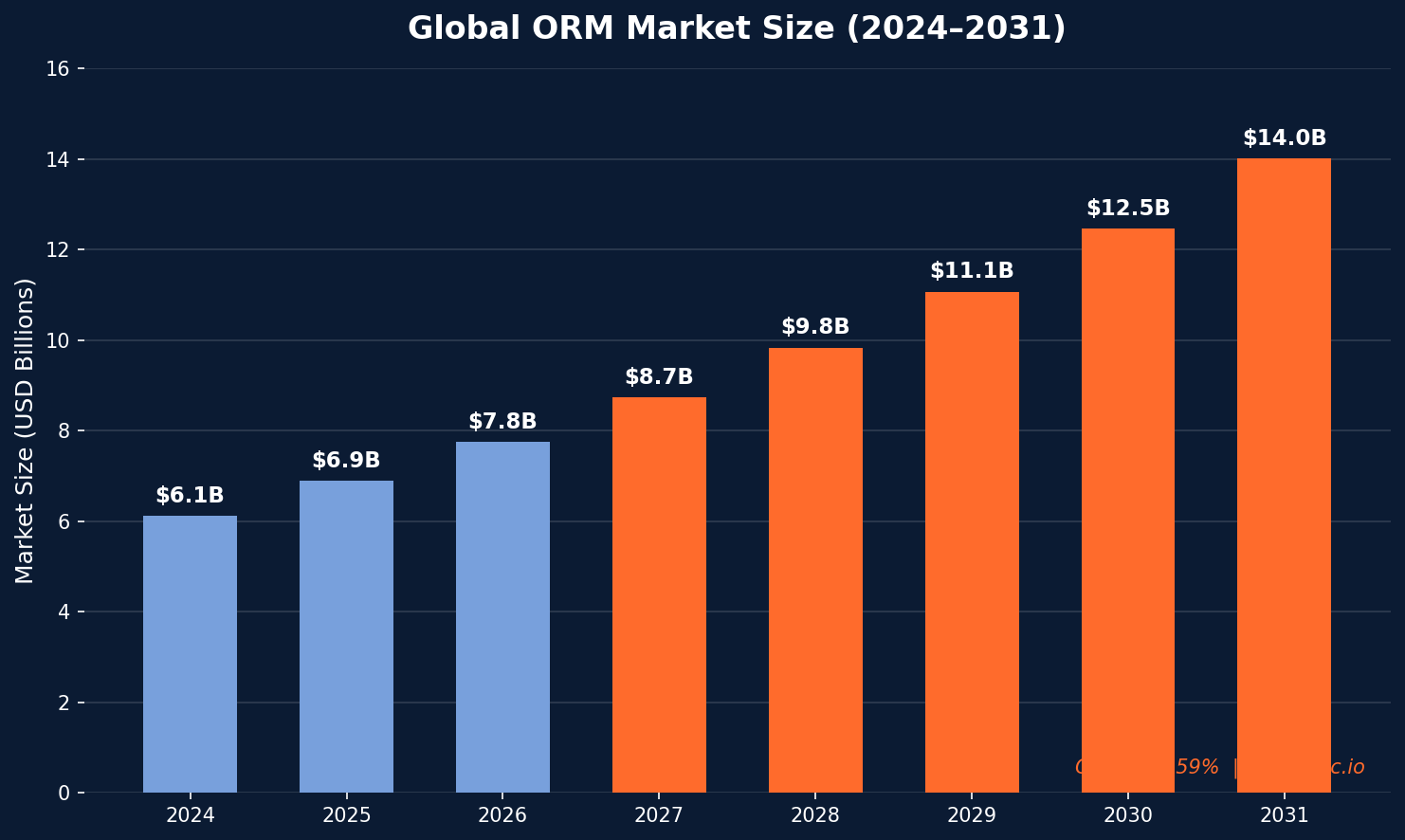
Your online reputation decides whether potential customers click "buy" or bounce to a competitor. 93% of consumers say online reviews directly influence their purchasing decisions, and a single negative article on page one of Google can cost a business up to 22% of its revenue. The global reputation management market hit $7.75 billion in 2026 and is racing toward $14.01 billion by 2031 at a 12.59% CAGR — proof that brands of every size are investing heavily in reputation protection.
This guide compares the best online reputation management companies across pricing, services, industry fit, and track record so you can find the right partner to monitor reviews, suppress negative content, and build lasting brand trust.
Key Takeaways
- The reputation software segment is growing at a 17.09% CAGR, outpacing consulting-led services as companies shift to AI-enabled platforms.
- North America holds 38.7% of the global market share, making it the most competitive region for reputation management services.
- Cloud-based deployments account for 73.35% of the market, reflecting a decisive shift away from on-premise solutions.
- 86% of consumers are willing to pay more for a product or service from a company with higher online ratings.
- Businesses risk losing up to 22% of customers when a single negative article appears on the first page of search results.
- Pricing ranges from $75/month for basic review management to $10,000+/month for full-service enterprise programs.
- Top-rated platforms like Birdeye monitor 200+ review sites from a single dashboard, centralizing brand protection across the digital landscape.
What Is Online Reputation Management?
Online reputation management (ORM) is the practice of monitoring, influencing, and improving how your brand appears across search engines, review sites, social media platforms, and news outlets. A strong strategy combines review management, content creation, search engine optimization, and crisis response to ensure that positive, accurate information dominates when someone searches your business name. This guide will help you understand how these services work, step by step, so you can make an informed decision.
Unlike basic social media monitoring, comprehensive reputation management addresses the full digital footprint — from Google Business Profile reviews and Better Business Bureau ratings to Reddit threads and industry forums. The best reputation management companies deploy proprietary technology alongside a dedicated team of human experts to deliver measurable improvements in brand visibility, online presence, and search result positioning. Their work touches every aspect of your digital strategy, from proactive monitoring to crisis response.
How We Evaluated the Best Reputation Management Companies
We assessed each reputation management company across five weighted criteria to determine the best fit for different business needs:
| Criterion | Weight | What We Measured |
|---|---|---|
| Service Breadth | 25% | Review management, content suppression, social media monitoring, SEO, crisis response |
| Technology & Platform | 20% | AI capabilities, dashboard quality, reporting depth, multi-location support |
| Industry Expertise | 20% | Sector-specific experience, case studies, client roster diversity |
| Pricing Transparency | 15% | Published pricing, contract flexibility, free trial or consultation availability |
| Client Results | 20% | G2 ratings, verified testimonials, measurable reputation improvements |
Top 10 Online Reputation Management Companies Compared
The following table provides a side-by-side comparison of the leading reputation management companies, ranked by overall service quality and client satisfaction:
| Company | Best For | Starting Price | Key Strength |
|---|---|---|---|
| NetReputation | Content removal & suppression | Custom quote | Hands-on negative content removal with guaranteed results |
| Reputation.com | Enterprise CX programs | From $80/mo | AI-powered reputation scoring across 125+ locations |
| Birdeye | Reviews + listings combined | From $300/mo | Monitors 200+ review sites from one dashboard |
| Podium | Messaging-led conversion | From $399/mo | Review collection integrated with customer messaging |
| SOCi | Franchises & multi-location | Custom quote | Localized reputation management for franchise networks |
| Brand24 | Social listening & monitoring | From $199/mo | Real-time brand mention tracking across social media |
| ReviewTrackers | Review analytics & insights | From $89/mo | Deep sentiment analysis and competitive benchmarking |
| Reputation Rhino | Small business & personal ORM | From $1,000/mo | Dedicated strategist for personalized reputation repair |
| Status Labs | High-profile individuals & executives | Custom quote | Executive and personal brand reputation management |
| NiceJob | Local service businesses | From $75/mo | Automated review funnels for home services and local pros |
Detailed Reviews of the Best Reputation Management Companies
1. NetReputation — Best for Content Removal and Suppression
NetReputation specializes in removing and suppressing negative online content, making it the top choice for businesses facing damaging search results. Their team uses a combination of legal takedown requests, content suppression strategies, and positive content creation to push unwanted results off page one. NetReputation guarantees measurable improvements within a defined timeline, which sets it apart from competitors that offer vague promises.
Their services cover Google search result management, negative review suppression, social media cleanup, and personal brand reputation. The company works across industries including healthcare, finance, legal, and technology. For businesses dealing with a reputation crisis, NetReputation's hands-on approach delivers the fastest path to restoring brand image.
2. Birdeye — Best All-in-One Review Management Platform
Birdeye is the #1-rated online reputation management software on G2, with a 95% customer satisfaction score. The platform monitors over 200 review sites from a single dashboard, making it ideal for multi-location businesses that need centralized control over their online image. Birdeye's AI agents automatically track reputation trends, send targeted review requests, and generate performance insights for every location.
Beyond review management, Birdeye offers business listings management, customer surveys, social media management, and competitive benchmarking. The platform's review reporting agent highlights trends and flags issues instantly, giving marketing teams the data they need to improve customer experience and protect brand reputation at scale.
3. Reputation.com — Best for Enterprise Customer Experience
Reputation.com targets mid-market and enterprise organizations with a platform that connects reputation management to broader customer experience strategies. Their Rep Core plan starts at $80/month and includes reviews management, AI-powered responding, and business listings optimization. The Rep Core + Pulse tier ($115/month) adds advanced sentiment analytics and an AI Reputation Manager.
What makes Reputation.com stand out is its proprietary Reputation Score — a single metric that aggregates review ratings, response rates, listing accuracy, and social sentiment into one actionable number. For enterprises with 125+ locations, custom infrastructure and a dedicated Customer Success Manager ensure consistent reputation management across every market.
How to Choose the Right Company for Your Business
Selecting the best reputation management firm depends on your specific needs, budget, and business model. Consider these factors before committing to a long-term partnership:
| Business Type | Recommended Solution | Why It Fits |
|---|---|---|
| Small Business / Local | NiceJob or ReviewTrackers | Affordable review automation with local SEO benefits |
| Multi-Location / Franchise | SOCi or Birdeye | Centralized management across dozens or hundreds of locations |
| Enterprise / Brand | Reputation.com or Edelman | Strategic consulting + platform for complex brand ecosystems |
| Crisis / Negative Content | NetReputation or Status Labs | Aggressive content removal and suppression with guarantees |
| Personal / Executive | Reputation Rhino or BrandYourself | Individual brand protection with dedicated strategist support |
Before signing any contract, take the step of verifying that the company avoids black hat techniques like fake review posting or link manipulation. Reputable reputation management firms will never guarantee specific Google rankings — they guarantee a transparent process, measurable improvements in online presence and sentiment, and a clear strategy roadmap that helps your team track progress over time.
Reputation Management Pricing: What to Expect in 2026
Reputation management pricing varies dramatically based on service scope, business size, and the severity of existing reputation challenges. Here is a realistic breakdown of what companies charge:
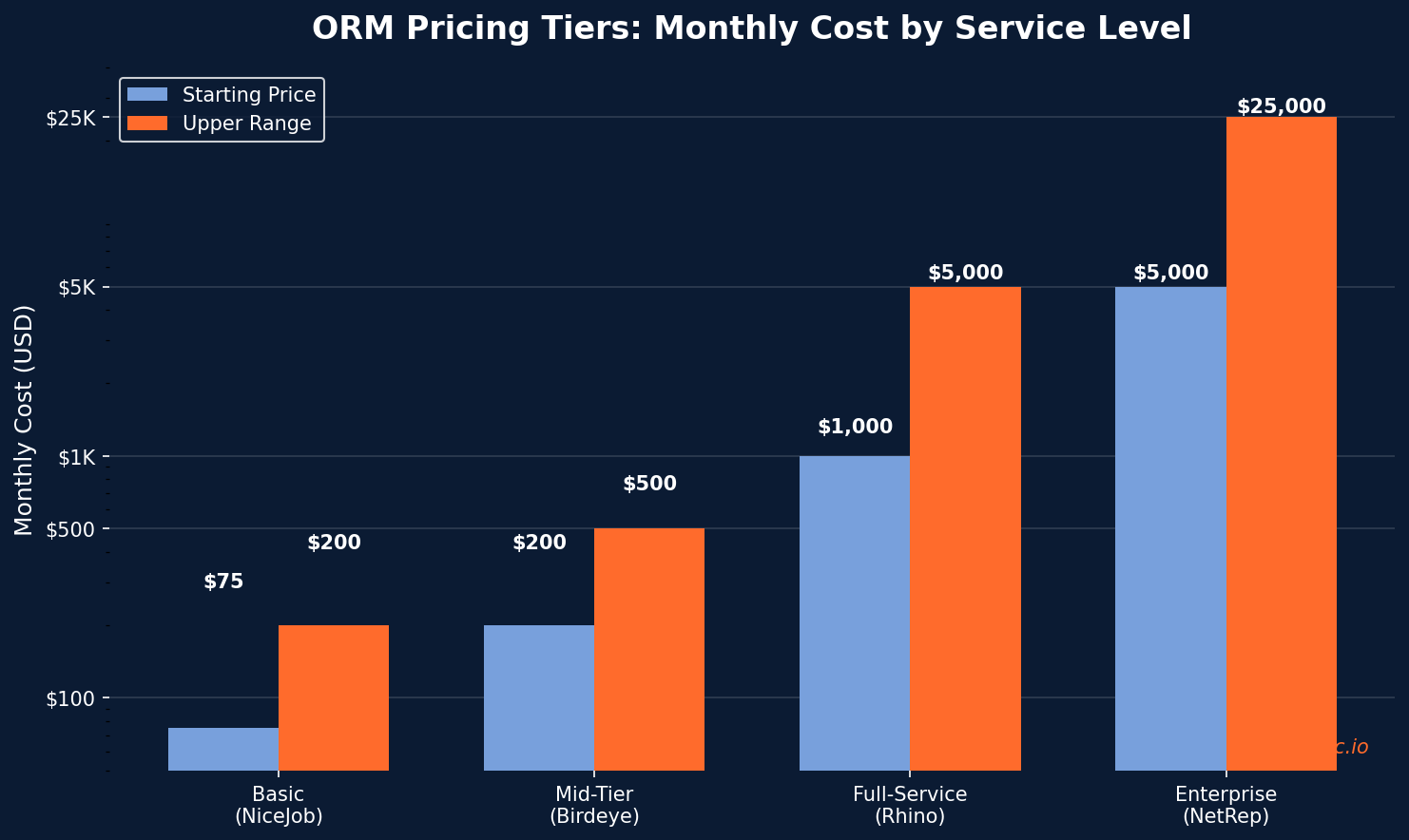
- Basic review management tools: $75–$200/month — platforms like NiceJob and Brand24 that automate review collection and social monitoring
- Mid-tier platforms: $200–$500/month — Birdeye, Podium, and ReviewTrackers with advanced analytics, multi-site management, and AI features
- Full-service agencies: $1,000–$5,000/month — Reputation Rhino and similar firms offering dedicated strategists, content creation, and suppression campaigns
- Enterprise and crisis management: $5,000–$25,000+/month — NetReputation, Status Labs, and Edelman for high-stakes brand protection, legal strategies, and executive reputation management
The right investment level depends on whether you need proactive monitoring (lower cost) or reactive reputation repair (higher cost). Most businesses work with a mid-tier platform first and escalate to agency-level support only when facing a specific crisis or competitive threat. A phased strategy helps your team build internal expertise before committing to a high-cost, long-term engagement.
Key Features to Look for in a Reputation Management Platform
Not all reputation management solutions are created equal. The best companies help you improve your brand visibility and deliver a combination of technology and human expertise across these core capabilities:
- Feedback monitoring and response: real-time alerts and AI-assisted responses across major platforms like Yelp, Facebook, and industry-specific sites
- Search result management: content creation and SEO strategies that push positive results to page one while suppressing negative content
- Social media monitoring: tracking brand mentions, sentiment trends, and emerging issues across social media platforms in real time
- Competitive intelligence: benchmarking your online reputation against competitors to identify strengths and gaps
- Crisis response protocols: pre-built playbooks and rapid response teams for managing negative press, viral complaints, or public relations emergencies
- Reporting and analytics: dashboards that translate reputation data into actionable business insights with clear ROI metrics
- Multi-location support: centralized management for brands operating across multiple regions, with location-level granularity
The Business Impact of Online Reputation
Investing in reputation management is not a vanity exercise — it directly impacts revenue, customer acquisition, and long-term brand equity. The data tells a compelling story:
- A one-star increase in Yelp rating leads to a 5–9% increase in revenue for restaurants and local services (Harvard Business School research)
- 86% of consumers will pay more for services from a company with higher ratings
- Damaging search results cost brands an average of 22% of potential customers per harmful article on page one
- Responding to customer feedback increases trust by 45% compared to brands that ignore it — a step that takes minimal work but delivers outsized returns
- 72% of job seekers won't apply to a company with a poor digital image, making brand protection an essential part of your talent acquisition strategy and overall online presence
For digital marketing teams, reputation management is now a strategic function that sits alongside growth marketing and local SEO in the broader acquisition strategy. Agencies like Web Tonic integrate brand reputation into full-funnel campaigns so every touchpoint — from paid media to organic search — reinforces a positive brand image.

FAQ
What is the best online reputation management company for small businesses?
For small businesses, NiceJob (from $75/month) and ReviewTrackers (from $89/month) offer the best value. Both platforms automate review collection and monitoring without the complexity or cost of enterprise solutions. NiceJob is particularly strong for local service businesses like contractors, dentists, and home service providers that depend heavily on Google and Facebook reviews.
How much does online reputation management cost?
Costs range from $75/month for basic tools to $25,000+/month for enterprise crisis management. Most mid-market companies spend $200–$500/month on platforms like Birdeye or Podium. Full-service agencies that include content creation, SEO work, and dedicated strategists typically charge $1,000–$5,000/month.
Can negative reviews be removed from Google?
Google only removes reviews that violate its content policies — including fake reviews, spam, conflicts of interest, or reviews containing hate speech. Legitimate negative reviews cannot be deleted by the business. However, reputation management companies like NetReputation specialize in suppressing negative content by creating and optimizing positive content that outranks damaging results in search engines.
How long does it take to improve an online reputation?
Results depend on the severity of the issue. Basic campaigns show results within 30–60 days as new positive feedback accumulates. Suppression campaigns typically require 3–6 months to push unwanted articles off page one of search results. For severe damage involving legal or media issues, a 12-month+ engagement with a full-service firm is common.
Should I hire an agency or use software?
If your primary need is review monitoring and collection, a platform like Birdeye, Podium, or NiceJob is sufficient and more cost-effective. If you're dealing with negative press, content removal, or a public crisis, an agency like NetReputation or Reputation Rhino provides the strategic expertise and hands-on execution that software alone cannot deliver. Many businesses start with software and add agency support when specific challenges arise.
Sources
Nadernejad Media — Top 50 Reputation Management Statistics (2026)
Ranked Solutions — 19 Best Reputation Companies Reviewed (2026)
Built In — Top Brand Reputation Management Services (2026)
Reputation.com — Platform Pricing & Plans
Birdeye — AI Review Management Platform
Harvard Business School — Reviews, Reputation, and Revenue
BrightLocal — Local Consumer Review Survey 2025
Podium — Messaging & Review Management


