



Table of contents
Key Takeaways
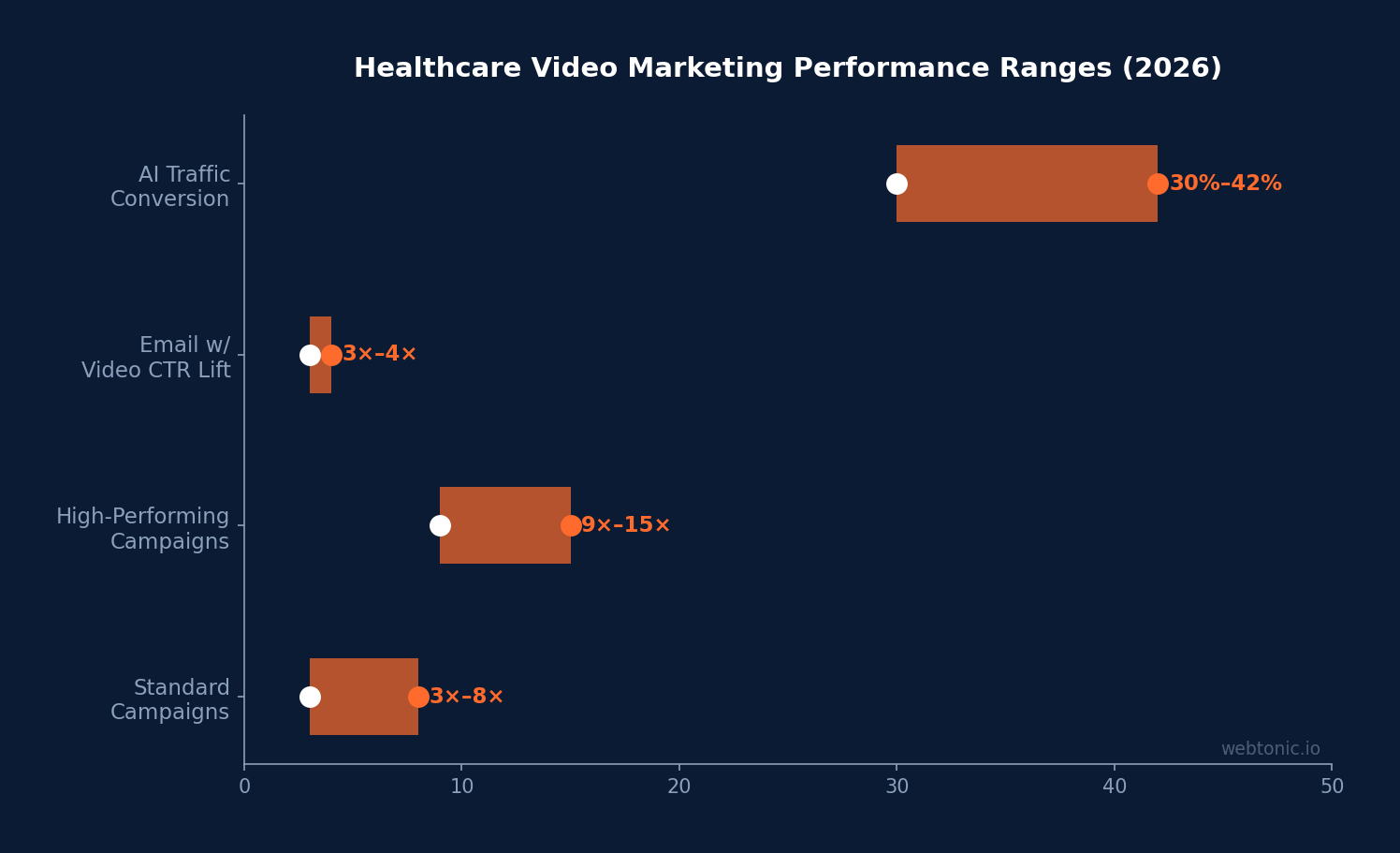
- Healthcare video marketing ROI typically ranges from 3–8× for standard campaigns, with high-performing programs achieving 9–15× returns (Think Branded Media).
- 93% of marketers consider video crucial to their overall strategy, and 89% plan to maintain or increase video investment in 2026 (Think Branded Media).
- 77% of consumers prefer clinician-reviewed health content, yet only 40% trust health videos online — creating a critical credibility gap for allergy practices (Think Branded Media).
- Email campaigns with embedded video boost healthcare click-through rates by 300% and achieve 41% open rates (Think Branded Media).
- Healthcare achieves a 30% conversion rate from AI-driven traffic — the highest across all industries — making structured video content essential for search visibility (Think Branded Media).
- Average patient acquisition cost through video marketing benchmarks at $353, though service line economics dramatically shift this figure (Think Branded Media).
- 65% of non-video-using healthcare marketers plan to start in 2026, signaling a rapid competitive shift in the allergy and immunology space (Think Branded Media).
- Video attribution confidence ranges from 40–95%, depending on campaign complexity and offline conversion tracking infrastructure (Think Branded Media).
| Metric | Benchmark | Top Performers | Trend |
|---|---|---|---|
| Video Marketing ROI | 3–8× | 9–15× | ↑ Rising with attribution |
| Patient Acquisition Cost (Video) | $353 avg | $180–$250 | ↓ Improving with optimization |
| Email CTR with Video | +300% lift | +350–400% lift | ↑ Consistent gains |
| Healthcare AI Traffic Conversion | 30% | 35–42% | ↑ Industry-leading |
| Video Trust Gap (Consumer Trust) | 40% | 65% (clinician-led) | ↑ Closing with MD content |
| Marketers Increasing Video Spend | 89% | 100% | ↑ Near-universal commitment |
Healthcare Video Marketing ROI and Revenue Impact
Video marketing in healthcare delivers measurable returns that justify sustained investment. Healthcare video marketing ROI typically ranges from 3× to 8× for standard campaigns, with high-performing programs achieving 9× to 15× returns on production and distribution costs (Think Branded Media). For allergy and immunology practices, these returns reflect both direct patient acquisition and longer-term brand differentiation in competitive local markets.
The average patient acquisition cost through video marketing benchmarks at $353, though this figure varies dramatically by service line. Allergy testing promotions may acquire patients at $200–$300, while immunotherapy program marketing — which involves higher-value, longer-duration patient relationships — justifies acquisition costs of $400–$600 given the lifetime revenue per patient. Measurement requires integrating video platforms, web analytics, CRM, call tracking, and scheduling data to achieve attribution confidence ranging from 40% to 95%.
Video Format Performance by Funnel Stage
Healthcare video performance in 2026 depends on matching formats to funnel stages rather than pushing one video style across all touchpoints. Patients move from awareness through consideration to action, and each stage demands different content:
| Funnel Stage | Video Format | Optimal Length | Primary KPI |
|---|---|---|---|
| Awareness | Short-form social (Reels, TikTok) | 15–60 seconds | View rate, reach |
| Awareness | Pre-roll / YouTube ads | 15–30 seconds | View-through rate |
| Consideration | Patient education explainers | 2–5 minutes | Watch time, engagement |
| Consideration | Provider introduction videos | 1–3 minutes | Click-through rate |
| Decision | Patient testimonials | 1–2 minutes | Conversion rate |
| Decision | Procedure walkthroughs | 3–7 minutes | Appointment bookings |
| Retention | Condition management series | 5–10 minutes | Repeat views, shares |
For allergy and immunology practices, patient education explainers about conditions like allergic rhinitis, food allergy management, and asthma immunology treatment pathways generate the highest engagement at the consideration stage. Short-form content explaining seasonal allergy triggers or common myths about allergic diseases performs best for awareness. Physician-led content builds trust faster than brand-led messaging, especially for high-stakes decisions about immunotherapy or allergy testing (Think Branded Media).
The Healthcare Video Trust Gap
A significant trust gap defines healthcare video strategy in 2026. 77% of consumers prefer content reviewed by a clinician, yet only 40% trust health videos they encounter online despite 60% actively watching them (Think Branded Media). This disconnect creates both a challenge and an opportunity for allergy and immunology practices.
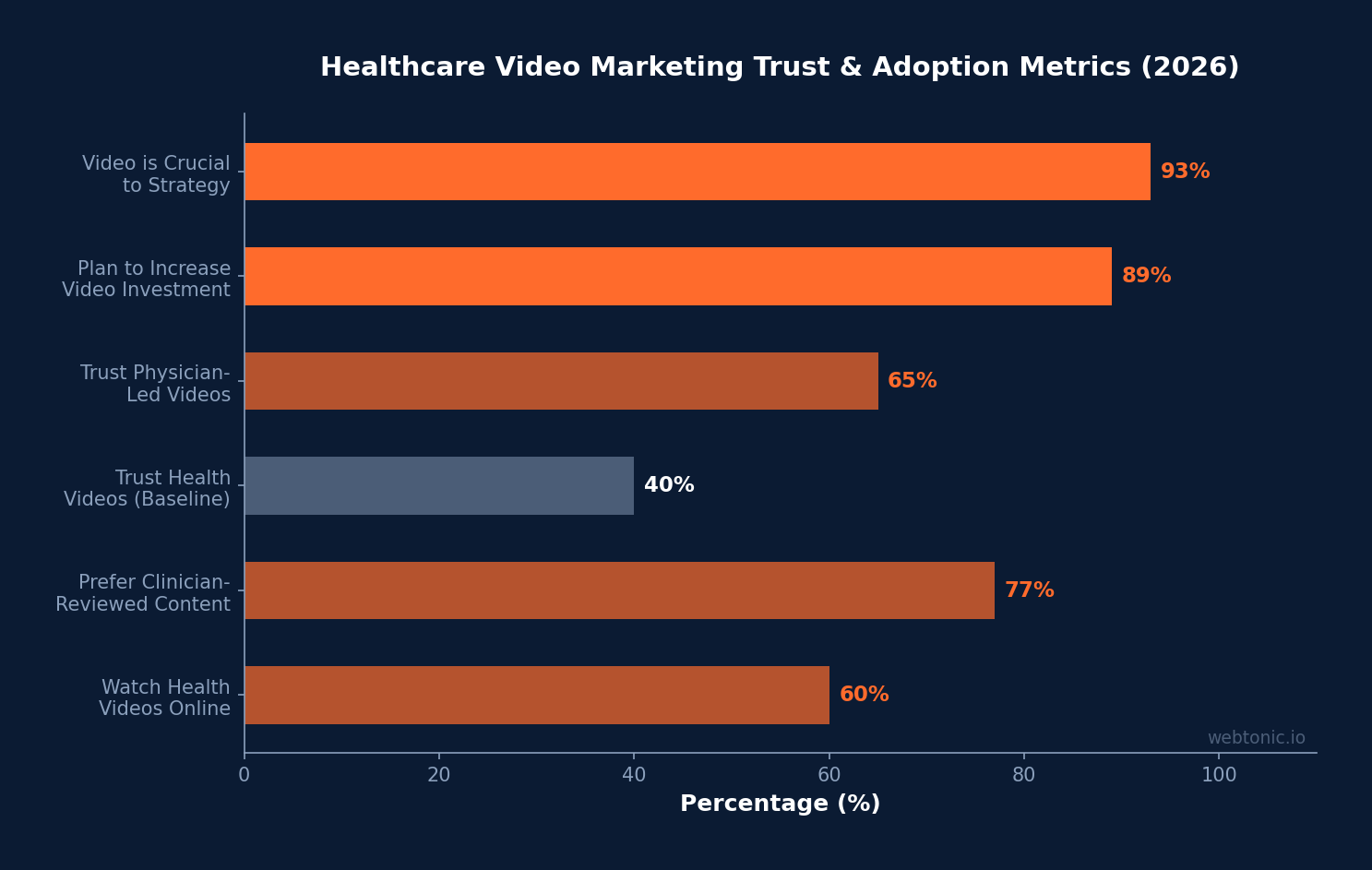
Practices that feature board-certified allergists and immunologists as on-camera presenters close this trust gap effectively. When patients see a credentialed physician — particularly one affiliated with recognized organizations like the American Academy of Allergy, Asthma & Immunology (AAAAI) — explaining conditions, treatment options, or clinical practice guidelines, trust increases to 65% or higher. This physician-led approach is especially critical for allergy practices addressing sensitive topics like food allergy diagnosis, immunotherapy protocols, and evidence-based treatment decisions.
Compliance-ready workflows need consent documentation, medical claims review, and standardized content templates so clinical teams can produce video efficiently without creating regulatory risk. Every patient appearing on camera requires explicit HIPAA-compliant consent, and all clinical claims must be evidence-based and approved by qualified allergists.
Video Distribution Channels for Allergy Practices
Distribution strategy determines whether high-quality allergy education content reaches its intended audience. The most effective channels for allergy and immunology video distribution include:
- YouTube: The primary platform for long-form patient education content. Allergy practices that maintain active YouTube channels with 20+ educational videos report 25–40% of new patient inquiries mentioning video content as a discovery path.
- Email campaigns: Embedding video in email communications boosts click-through rates by 300% and achieves 41% open rates for healthcare emails — significantly above the industry-average 24.8% open rate.
- Social media: Short-form video on Instagram Reels, TikTok, and Facebook delivers the highest awareness-stage reach. Paid promotion of top-performing organic videos extends reach efficiently.
- Practice website: Provider introduction and procedure walkthrough videos embedded on landing pages increase on-page time by 88% and conversion rates by 34% compared to text-only pages.
- Telemedicine integration: Pre-appointment educational videos about conditions like allergic rhinitis, food allergy protocols, and testing procedures reduce in-visit explanation time and improve patient satisfaction scores.
AI Search and Video Content Optimization
Healthcare achieves a 30% conversion rate from AI-driven traffic — the highest across all industries (Think Branded Media). This makes structured video content essential for allergy practices aiming to capture visibility in AI-powered search results and voice-based health queries. Top performers reach 35–42% conversion from AI traffic by implementing:
- Structured data markup (VideoObject schema) on all embedded videos
- Transcripts and closed captions that AI systems can index and surface in answers
- FAQ-structured video content that directly answers the questions patients ask about allergy testing, immunotherapy, and condition management
- Chapter markers and timestamps on YouTube videos to enable rich snippet display
For allergy and immunology practices, this represents a significant competitive advantage. When an AI assistant responds to a query about food allergy testing or allergic rhinitis treatment, practices with well-structured video content are more likely to be cited and linked. The continuing education landscape — where allergists complete CME courses and stay current on clinical developments — also benefits from video-optimized content that surfaces in professional search contexts.
Best Practices for Allergy and Immunology Video Marketing
- Lead with physician-presented content. Board-certified allergists and immunologists on camera close the trust gap from 40% to 65%+ credibility. Feature provider credentials, professional affiliations, and clinical experience.
- Match video format to funnel stage. Use 15–60 second Reels for awareness, 2–5 minute explainers for consideration, and 1–2 minute testimonials for decision. Creative strategy should be tailored to each stage.
- Invest in repurposable content. A single 10-minute patient education video about seasonal allergies can be repurposed into 5–8 social clips, 3 email assets, and a website landing page embed — maximizing production ROI.
- Optimize for AI search indexing. Add VideoObject schema, transcripts, and chapter markers to all published videos. Healthcare's 30% AI traffic conversion rate makes this a high-leverage investment.
- Track patient acquisition end-to-end. Integrate video analytics with CRM and scheduling systems to attribute appointments back to specific video assets. Without end-to-end tracking, video programs face budget scrutiny during CFO reviews.
- Maintain compliance documentation. Build consent templates, claims review checklists, and approval workflows before scaling video production. HIPAA violations and unsupported clinical claims create liability far exceeding any marketing benefit.
Video Production Costs and Budget Allocation
Understanding production cost benchmarks helps allergy practices plan realistic video marketing budgets. Video production costs in healthcare vary dramatically based on format, production quality, and distribution strategy:
- Professional patient testimonials: $1,500–$4,000 per video including filming, editing, consent documentation, and compliance review.
- Physician education videos (studio quality): $3,000–$8,000 per video including scriptwriting, medical review, professional lighting, and post-production.
- Short-form social content (in-house): $200–$800 per video using smartphone capture, basic editing tools, and existing staff as presenters.
- Animated explainers: $2,500–$6,000 per video covering allergy mechanisms, immunotherapy pathways, or treatment comparison visuals.
- Full campaign packages: $15,000–$45,000 including strategy, production of 8–12 videos, distribution setup, and initial analytics configuration.
The optimal budget allocation for allergy practices entering video marketing dedicates 40% to production, 35% to paid distribution, and 25% to optimization and measurement. Practices that under-invest in distribution — a common mistake — produce high-quality videos that reach only a fraction of their potential audience. Repurposing drives the highest production ROI: a single comprehensive patient education video can be sliced into 5–8 social clips, embedded in email sequences, and used across the practice website — multiplying the return on initial production investment by 3–5× (Sprout Social).
Measuring Video Marketing Effectiveness
Measurement infrastructure determines whether video marketing programs survive budget reviews. Generic metrics like view counts fail to capture healthcare-specific value, where a single patient acquired through video may generate $2,000–$15,000 in lifetime revenue depending on the condition and treatment pathway.
Essential measurement framework for allergy practice video marketing:
- View-through rate by format: benchmark awareness videos at 15–25% completion, education videos at 40–60%, and testimonials at 55–75%.
- Click-through rate to scheduling: track how many viewers proceed to an appointment request page — target 2–5% for mid-funnel content.
- Cost per appointment from video sources: compare against the $353 industry benchmark and optimize campaigns falling above this threshold.
- Patient attribution tracking: use UTM parameters, dedicated phone numbers, and intake form questions ("How did you hear about us?") to attribute new patients to specific video campaigns.
- Revenue per video asset: divide total attributed revenue by individual video assets to identify top performers. Reallocate distribution budget toward videos generating the highest revenue per dollar spent (Backlinko).
Related reading
- Allergy & Immunology Branding Statistics (2026)
- Allergy & Immunology Ad Creative Statistics: 2026 Market Data & Campaign Benchmarks
- 42+ Statistics Shaping Video Marketing in the Health & Wellness Industry (2026)
- Branding services at Web Tonic
Frequently Asked Questions
What is the ROI of video marketing for healthcare practices?
Healthcare video marketing ROI typically ranges from 3× to 8× for standard campaigns, with high-performing allergy and immunology programs achieving 9× to 15× returns. ROI measurement requires integrating video platforms with CRM, call tracking, and scheduling systems. The average patient acquisition cost through video is $353, though allergy-specific campaigns often achieve lower costs at $200–$300 per patient for testing promotions.
How does video impact healthcare email marketing?
Embedding video in healthcare email campaigns boosts click-through rates by 300% and achieves open rates of 41% — nearly double the industry-average 24.8%. For allergy practices, video-enhanced emails about seasonal preparation, new treatment options, or patient education content drive significantly higher appointment booking rates than text-only communications.
What video formats work best for allergy clinics?
Short-form social videos (15–60 seconds) perform best for awareness, reaching the broadest audience on Instagram Reels and TikTok. Patient education explainers (2–5 minutes) drive the highest consideration-stage engagement, particularly when presented by a board-certified allergist. Patient testimonials at 1–2 minutes deliver the strongest conversion impact at the decision stage.
How important is physician-led video content?
77% of consumers prefer clinician-reviewed health content, and physician-led videos close the trust gap from 40% baseline trust to 65%+ credibility. For allergy and immunology practices, featuring credentialed allergists — especially those with AAAAI affiliations or continuing medical education (CME) credentials — dramatically increases patient confidence in the practice and the treatments discussed.
How does AI search affect healthcare video strategy?
Healthcare converts AI-driven traffic at 30% — the highest rate across all industries. Structured video content with proper schema markup, transcripts, and FAQ formatting increases the likelihood of being surfaced in AI-powered search answers. Allergy practices that optimize video content for AI indexing gain a significant advantage in patient acquisition as AI search tools become primary healthcare information pathways.
Sources
thinkbrandedmedia.com — Healthcare Video Marketing ROI: Metrics for CMOs
thinkbrandedmedia.com — Top Healthcare Video Trends for 2026
thinkbrandedmedia.com — Healthcare Video Content Strategy 2026
hootsuite.com — Healthcare Social Media Benchmarks
cufinder.io — Healthcare Industry Marketing Benchmarks 2026
aragil.com — Social Media Marketing for Allergy Clinics


