



Table of contents
Key Takeaways
- 62% of healthcare practices still cannot attribute revenue to specific marketing channels, creating a measurement blind spot that disproportionately affects allergy and immunology clinics with multi-touch patient journeys.
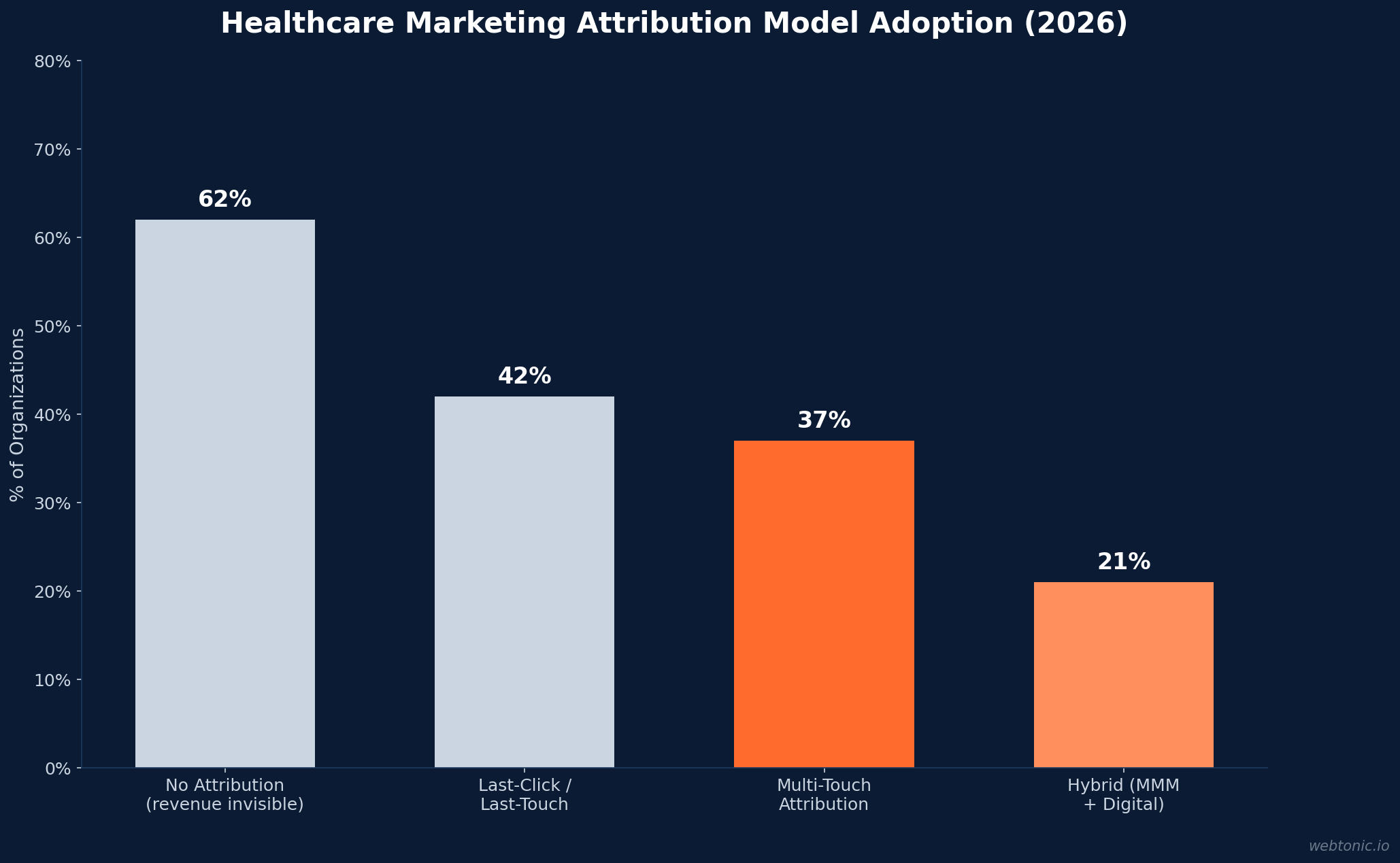
- Only 37% of healthcare organizations use multi-touch attribution, and just 21% have adopted hybrid models combining media mix modeling with digital attribution.
- The average patient interacts with 6 touchpoints before choosing a healthcare provider, including websites, reviews, social media, and referrals — with allergy patients often needing 8–12 due to the referral-heavy specialty.
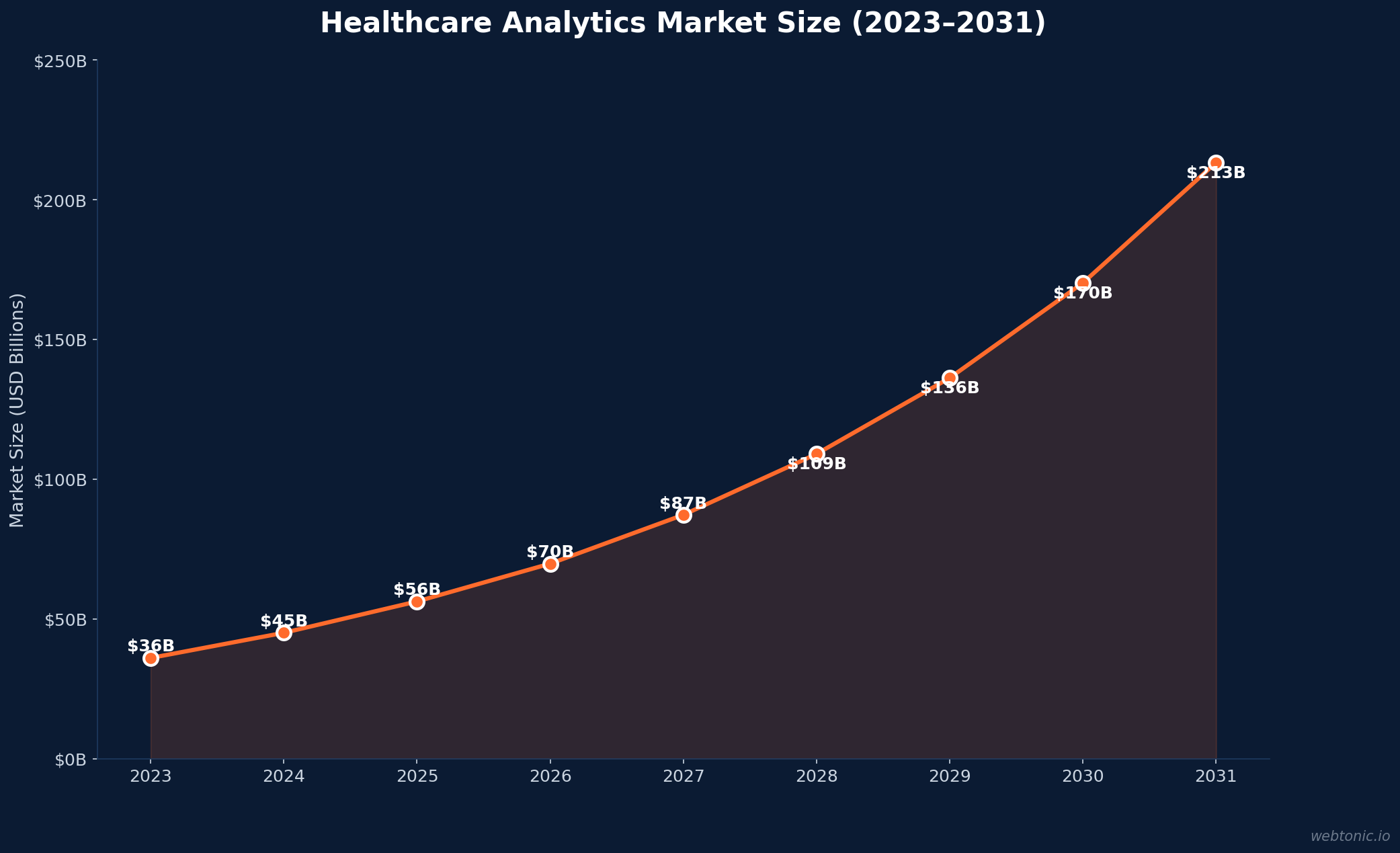
- The healthcare analytics market reached $56.22 billion in 2025 and is projected to hit $213.27 billion by 2031, growing at a 25.1% CAGR as attribution tools become essential infrastructure.
- Only 42% of healthcare organizations have adopted HIPAA-compliant analytics tools, leaving 58% exposed to regulatory risk while simultaneously unable to measure marketing ROI.
- Allergy Partners reduced their CPL from $300 to $12 after implementing privacy-compliant attribution tracking through Freshpaint's platform.
Healthcare Attribution Adoption Rates at a Glance
| Attribution Model | Adoption Rate | Accuracy Level | Best For |
|---|---|---|---|
| Last-Click / Last-Touch | 42% | Low | Simple direct-response campaigns |
| Multi-Touch Attribution | 37% | Medium-High | Multi-channel patient journeys |
| Hybrid (MMM + Digital) | 21% | High | Enterprise health systems |
| No Attribution Model | 62% (no revenue link) | None | — |
Marketing attribution in allergy and immunology is uniquely challenging. Patient journeys span 6 to 18 months, involve physician referrals that are difficult to track digitally, and include offline touchpoints like phone calls and in-office consultations. According to the Improvado Healthcare Marketing Attribution Guide (2026), 62% of healthcare practices still cannot connect marketing spend to patient revenue — a gap that costs allergy clinics thousands in misallocated budget every quarter.
The Healthcare Measurement Gap
The Freshpaint State of Healthcare Marketing 2026 report, based on survey data from 200 senior healthcare marketing leaders, documents the scale of the attribution challenge:
- 82% of marketers say measurement is critical for budget justification, yet most lack the infrastructure to deliver it
- 37% have adopted multi-touch attribution — up from an estimated 22% in 2023
- 21% use hybrid models combining media mix modeling with digital attribution — the "leading edge" of healthcare measurement
- 10–25% of marketing spend can be directly tied to outcomes at organizations with mature attribution
For allergy and immunology practices, these numbers are likely worse. The specialty's referral-dependent patient acquisition model means a significant portion of new patients arrive through primary care physician referrals — a touchpoint that standard digital attribution cannot capture without CRM-to-EMR integration.
Multi-Touch Attribution Requirements for Healthcare
Improvado's hospital marketing ROI measurement guide establishes the technical thresholds needed for reliable attribution in clinical settings:
| Requirement | Minimum Threshold | Impact if Below Threshold |
|---|---|---|
| Patient match rate (CRM → EMR) | >85% | Revenue attribution becomes unreliable |
| Phone call tracking coverage | >80% | Larger blind spots than single-touch models |
| Form conversion tracking | >95% | Online lead volume understated |
| Referral source tagging | >70% | Physician referral channel invisible |
| Touchpoint-to-appointment linking | Within 72 hours | Delayed attribution loses context |
Allergy practices that fall below the 85% patient match rate threshold produce attribution models that are actually less accurate than simple last-touch, according to Improvado's analysis. This counterintuitive finding explains why many clinics abandon multi-touch attribution after initial implementation — the data quality isn't there yet.
Patient Journey Touchpoints in Allergy & Immunology
Zipdo's healthcare industry research found that the average patient interacts with 6 touchpoints before choosing a provider. For allergy and immunology, this number is typically higher due to:
- Primary care referral step — most allergy patients start with their PCP
- Insurance verification — specialty coverage checks add a digital research phase
- Review consultation — online reviews influence 73% of patient provider choices
- Symptom-research phase — patients often research conditions (allergic rhinitis, asthma, food allergy) before seeking a specialist
- Location/convenience evaluation — allergy treatment often requires weekly or bi-weekly visits for immunotherapy
Each touchpoint represents an attribution data point that most allergy practices fail to capture. The result: marketing appears less effective than it actually is, leading to budget cuts in channels that are quietly driving patient volume.
HIPAA Compliance and Analytics Adoption
Empire325 Marketing's 2026 report reveals a critical gap: only 42% of healthcare organizations have adopted HIPAA-compliant analytics tools, leaving 58% using non-compliant analytics that expose them to regulatory risk. For allergy clinics, this creates a double bind:
- Standard analytics tools (Google Analytics with client-side tracking) risk exposing protected health information (PHI) through ad pixel data
- Removing tracking entirely eliminates attribution capabilities, making marketing ROI invisible
- HIPAA-compliant alternatives (Freshpaint, Piwik PRO, server-side tracking) require technical implementation that most small-to-mid practices lack
The Allergy Partners case study demonstrates what happens when this gap is closed: by implementing Freshpaint's HIPAA-compliant platform, the multi-site allergy practice dropped their cost per lead from $300 to $12 — not through better ads, but through accurate conversion data that let their existing campaigns optimize properly.
Healthcare Analytics Market Growth
The infrastructure supporting healthcare attribution is experiencing explosive growth. MarketsandMarkets projects the healthcare analytics market at:
- 2025: $56.22 billion (base year)
- 2026: $69.74 billion (current market size)
- 2031: $213.27 billion (projected)
- CAGR: 25.1% (2026–2031)
This growth is driven by the convergence of regulatory pressure (HIPAA enforcement actions), payer demands for outcomes data, and marketing teams demanding ROI visibility. For allergy and immunology practices, the implication is clear: attribution tooling that feels optional today will be standard infrastructure within 2–3 years.
Attribution ROI: Healthcare Case Studies
| Organization | Attribution Change | Result | Source |
|---|---|---|---|
| Allergy Partners | Implemented HIPAA-compliant tracking | CPL dropped from $300 to $12 | Freshpaint |
| Cardinal Digital client | Privacy-safe measurement framework | CPA dropped 26%, new patients +17% | Cardinal Digital |
| Aragil allergy clinic client | Full-funnel tracking (Google + Meta) | 9× leads, 30% monthly growth | Aragil |
| Enterprise health system (Improvado) | CRM-EMR revenue matchback | Eliminated 30-hour monthly reporting | Improvado |
Allergy-Specific Attribution Challenges
Allergy and immunology practices face attribution complications that general healthcare does not. The specialty's clinical workflow creates unique data gaps:
- Referral-heavy acquisition: an estimated 55–70% of new allergy patients arrive through primary care physician referrals, a touchpoint that most digital attribution platforms cannot track without manual intake-form data entry
- Long treatment cycles: subcutaneous immunotherapy (SCIT) patients visit weekly for 3–5 years, generating revenue that standard 30-day or 90-day attribution windows cannot capture
- Multi-condition patients: a single patient may present for allergic rhinitis, asthma, and food allergy — each generating different billing codes and treatment plans that complicate revenue attribution to a single marketing channel
- Seasonal demand variance: allergy clinic call volume can spike 200–300% during spring pollen season, creating attribution noise if seasonal patterns are not modeled separately
Cardinal Digital Marketing's allergy strategy guide recommends building attribution models that account for the dual-funnel nature of allergy marketing: direct-to-patient (Google search, social media, reviews) and physician-to-physician (referral networks, medical conferences, LinkedIn). Most attribution tools only capture the first funnel, leaving 30–50% of patient acquisition invisible.
Attribution Technology Stack for Allergy Practices
Building effective attribution requires layering multiple technologies. Based on the Improvado and Freshpaint frameworks, the recommended stack for allergy clinics includes:
| Layer | Technology | Function | HIPAA Status |
|---|---|---|---|
| Website Analytics | Server-side tracking (Freshpaint, Piwik PRO) | Page views, form fills, chat interactions | Compliant with BAA |
| Call Tracking | CallRail, Invoca | Call source, duration, outcome tracking | Compliant with BAA |
| CRM | HubSpot, Salesforce Health Cloud | Lead management, pipeline tracking | Compliant versions available |
| EMR Integration | Epic, athenahealth APIs | Revenue matchback, patient verification | Compliant by design |
| BI / Dashboard | Looker, Power BI, Improvado | Unified reporting, attribution modeling | Compliant with configuration |
The critical integration point is CRM-to-EMR: without linking the marketing lead record to the patient's treatment record in the EMR, revenue attribution remains a guess. The Improvado guide recommends achieving >85% match rate before trusting multi-touch attribution outputs — otherwise the model's blind spots exceed those of simple last-touch.
Best Practices for Allergy & Immunology Attribution
- Start with call tracking. Phone calls drive 60%+ of allergy appointment bookings. Without call tracking, more than half of your conversions are invisible to attribution models.
- Integrate CRM and EMR data. Achieving the >85% patient match rate threshold is the single most impactful step for reliable multi-touch attribution.
- Use HIPAA-compliant analytics from day one. Non-compliant tracking creates regulatory risk AND produces data that may need to be discarded during an audit.
- Tag physician referral sources. Build a simple intake-form field asking "Who referred you?" and map it to your CRM. This captures the offline touchpoint that digital attribution misses entirely.
- Measure patient lifetime value, not just CPL. An allergy immunotherapy patient is worth $2,000+ over their treatment course, making a $120 CPL extremely profitable even when surface-level CPA looks expensive.
- Adopt incrementality testing. The 21% of organizations using hybrid models report the highest confidence in budget allocation decisions — start with a simple holdout test on one channel.
Attribution Model Comparison for Allergy Marketing
Choosing the right attribution model depends on the allergy practice's data maturity and patient journey complexity. Response Mine's 2026 healthcare attribution guide compares model types against common allergy marketing scenarios:
| Model Type | Strengths for Allergy Clinics | Weaknesses | Data Requirements |
|---|---|---|---|
| Last-Touch | Simple to implement, clear conversion credit | Ignores referral and research touchpoints | Low (ad platform data only) |
| First-Touch | Credits awareness channels fairly | Overlooks conversion-driving touchpoints | Low |
| Linear Multi-Touch | Distributes credit across all touchpoints | Treats all touchpoints equally (unrealistic) | Medium (CRM + call tracking) |
| Time-Decay | Weights recent touchpoints higher | Undervalues long-cycle research phases | Medium |
| Data-Driven / Algorithmic | Custom weighting based on actual conversion paths | Requires high conversion volume (>300/month) | High (CRM + EMR + call) |
For most allergy practices generating 50–200 new patients per month, the linear multi-touch model offers the best balance of accuracy and feasibility. Practices with higher volume should consider data-driven models, but only after meeting the >85% patient match rate threshold and implementing comprehensive call tracking across all marketing channels.
Related reading
- Inside Allergy & Immunology Email Marketing: Key Statistics & Insights for 2026
- Allergy & Immunology Dashboards & Reporting Statistics: 2026 Insights
- Inside Automotive Attribution & BI: Key Statistics & Insights for 2026
- Marketing Attribution services at Web Tonic
Frequently Asked Questions
What percentage of healthcare practices use marketing attribution?
According to the Freshpaint State of Healthcare Marketing 2026 report, 37% use multi-touch attribution and 21% use hybrid models. However, 62% still cannot connect marketing spend to revenue, with most relying on last-click or no attribution model at all.
How many touchpoints does an allergy patient have before booking?
The average healthcare patient interacts with 6 touchpoints before choosing a provider. Allergy patients typically have 8–12 touchpoints due to the referral step, insurance verification, and the need for recurring visit locations — each adding complexity to attribution.
What is a good cost per lead for allergy clinics?
Allergy clinics with proper attribution tracking achieve CPLs of $12–$75 depending on the channel. Without proper tracking, apparent CPL can reach $200–$300 because conversions are underreported. The Allergy Partners case study showed a 96% CPL reduction after implementing compliant attribution.
Is HIPAA-compliant marketing attribution possible?
Yes. Platforms like Freshpaint, Piwik PRO, and server-side tracking solutions enable full conversion tracking without exposing PHI. Only 42% of healthcare organizations have adopted these tools, but adoption is accelerating as enforcement actions increase.
How large is the healthcare analytics market?
The healthcare analytics market was valued at $56.22 billion in 2025 and is projected to reach $213.27 billion by 2031 at a 25.1% CAGR, according to MarketsandMarkets. This includes attribution platforms, BI tools, and predictive analytics infrastructure.
Sources
improvado.io — Healthcare Marketing Attribution Guide 2026
freshpaint.io — State of Healthcare Marketing 2026
improvado.io — Hospital Marketing ROI Measurement Guide
empire325marketing.com — Healthcare Marketing Statistics 2026
zipdo.co — Marketing in the Healthcare Industry Statistics
marketsandmarkets.com — Healthcare Analytics Market Report
freshpaint.io — Allergy Partners Case Study
cardinaldigitalmarketing.com — Privacy-Safe Measurement Case Study
aragil.com — Allergy Clinic Growth Case Studies
aragil.com — Google Ads for Allergy Clinics


