Table of contents
88% of nursing homes are operating below the staffing level their residents' clinical needs require, according to a 2026 analysis of federal payroll-based journal data. That gap - not consumer lead generation - is where senior living LinkedIn ad budgets are actually heading in 2026: toward recruiting nurses and caregivers, and toward the referral partners who send families into care.
Key Takeaways
- 88% of nursing homes are understaffed against residents' clinical needs (LTCCC analysis, 2026).
- Facilities average 24.6% fewer nursing hours than expected, per that analysis.
- Roughly 1.15 million residents live in facilities with insufficient staffing.
- 95% of senior living workers say purpose keeps them in the role (Argentum/Activated Insights, 2026).
- 512,300 people work in assisted living nationwide, across 41,465 communities (AHCA/NCAL, June 2026).
- Cross-industry LinkedIn B2B CPL runs USD 202, from $57.6M in tracked 2026 spend (Metadata).
- Cross-industry LinkedIn B2B CPC runs USD 9.39, cross-industry (Metadata).
- Cross-industry LinkedIn B2B CTR runs 0.67%, cross-industry (Metadata).
- Cross-industry LinkedIn B2B conversion rate runs 5.9%, cross-industry (Metadata).
- Senior housing occupancy hit 89.9% in Q2 2026 - more units filled means more staffing pressure, not less (NIC MAP).
- 1,016,424 residents now live in assisted living nationwide (AHCA/NCAL).
- 63 million family caregivers exist nationwide, the referral-adjacent audience LinkedIn does not reach directly (AARP).
Why the LinkedIn conversation is a workforce conversation
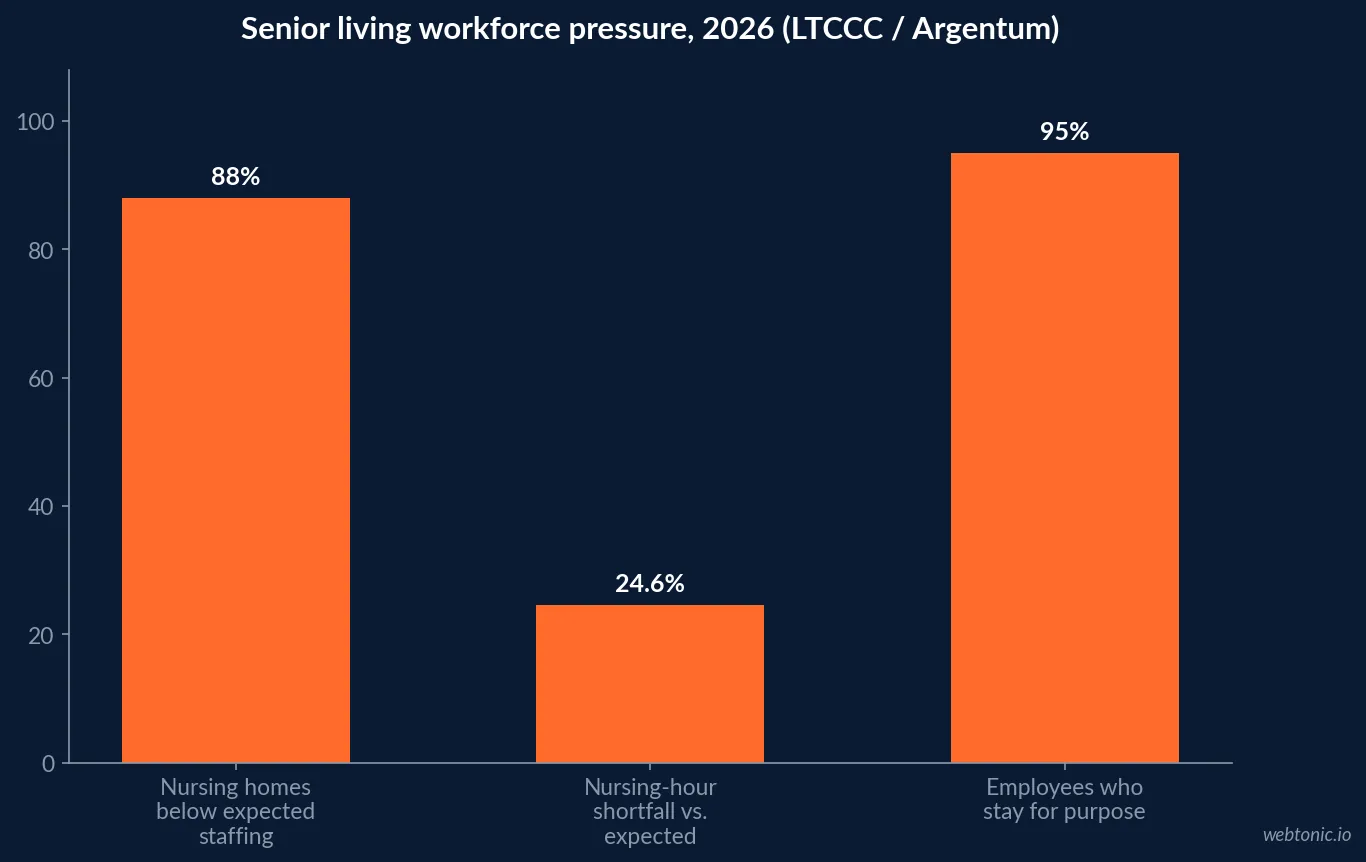
LTCCC's analysis of CMS's Q1 2026 Payroll-Based Journal staffing data found 88% of U.S. nursing homes operating below the staffing levels expected to meet residents' clinical needs, with facilities averaging 24.6% fewer nursing hours per resident day than expected and roughly 1.15 million residents living in under-staffed buildings. That is the demand side of a senior living LinkedIn campaign: operators are not short on families researching care, per NIC MAP's 89.9% occupancy figure - they are short on the nurses and caregivers to staff the units those families are already filling.
| Staffing metric (2026) | Figure | Source |
|---|---|---|
| Nursing homes below expected staffing | 88% | LTCCC analysis of federal payroll data |
| Nursing hours per resident day vs. expected | 24.6% shortfall | LTCCC analysis |
| Residents in under-staffed facilities | ~1.15 million | LTCCC analysis |
| Assisted living employees nationwide | 512,300 | AHCA/NCAL, June 2026 |
| Assisted living communities nationwide | 41,465 | AHCA/NCAL, June 2026 |
What LinkedIn recruiting ads cost - cross-industry, labeled
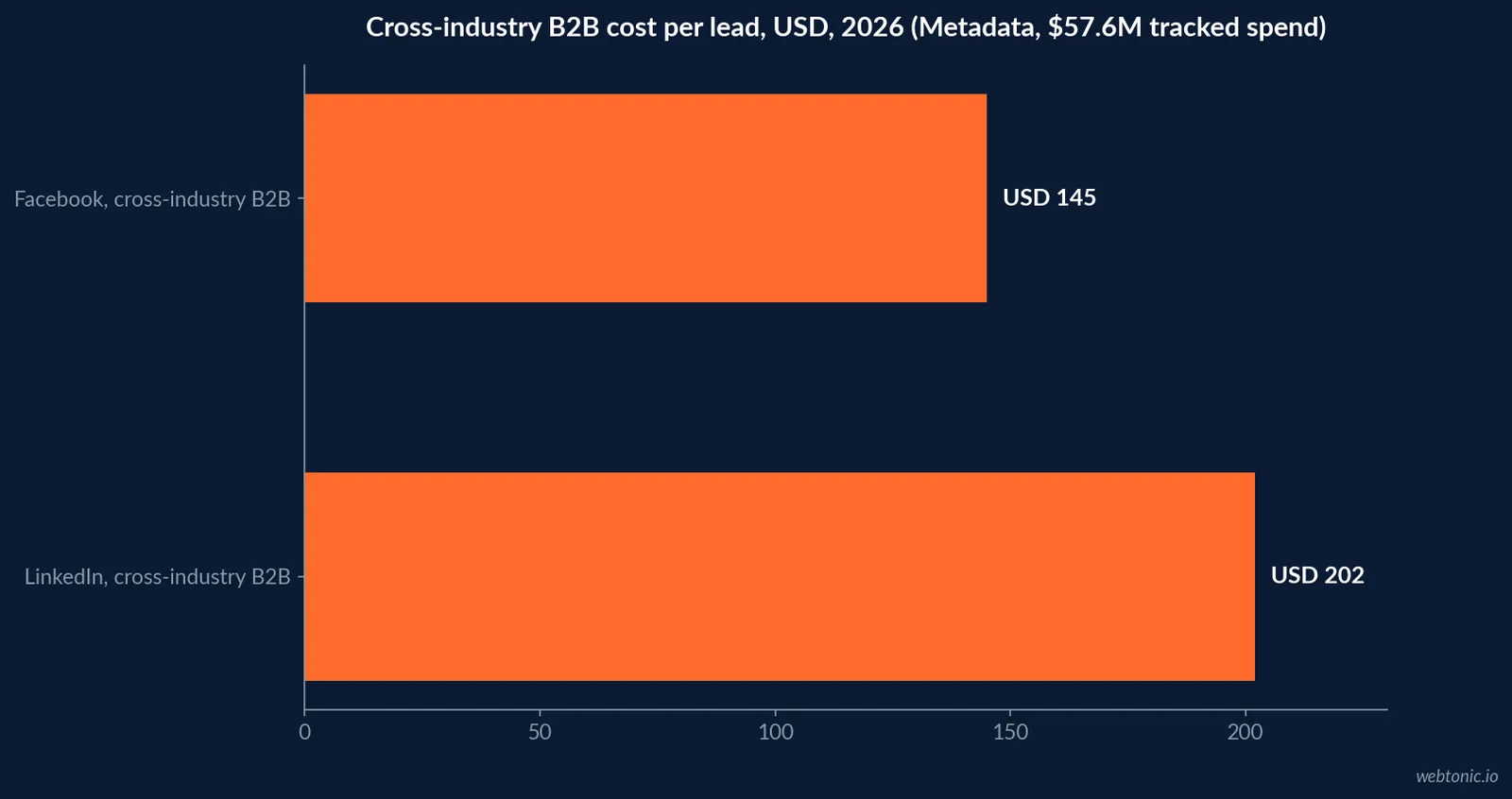
No senior-living-specific LinkedIn recruiting benchmark exists, so the nearest labeled proxy is Metadata's 2026 B2B Advertising Benchmark, built from USD 57.6 million in tracked ad spend across 138 LinkedIn advertisers within a broader cohort of 153 B2B advertisers. Cross-industry, it reports a median cost-per-click of USD 9.39, a median cost-per-lead of USD 202, a click-through rate of 0.67% and a conversion rate of 5.9%. These describe general B2B lead generation on LinkedIn, not healthcare recruiting specifically - use them as a rough planning ceiling, not a quote.
| Metric (cross-industry B2B) | LinkedIn figure | Facebook figure | Source |
|---|---|---|---|
| Cost-per-click | USD 9.39 | USD 1.95 | Metadata 2026 |
| Cost-per-lead | USD 202 | USD 145 | Metadata 2026 |
| Click-through rate | 0.67% | 0.79% | Metadata 2026 |
| Conversion rate | 5.9% | 2.6% | Metadata 2026 |
LinkedIn costs more per click and per lead than Facebook in this cross-industry data, which is the trade-off professional targeting always carries - the audience is more precisely defined (job title, seniority, industry) but smaller and more competitive to reach, which matters for a recruiting campaign trying to reach RNs and LPNs specifically rather than a broad consumer audience.
The message that keeps a hire once the ad works
Argentum's 2026 Perceptions of Careers in Senior Living report, developed with Activated Insights, found nearly 95% of senior living employees say they are likely to stay in a role where they feel their work has purpose - identifying purpose, compensation and management support as the three levers that determine whether a recruiting ad's click turns into a retained hire. A LinkedIn ad that only advertises pay competes on the one lever candidates rate lowest against purpose; creative built around mission and resident relationships is the better-supported message.
| Workforce retention lever | Employee sentiment (2026) | Source |
|---|---|---|
| Purpose/meaningful work | ~95% say it keeps them in a role | Argentum/Activated Insights |
| Compensation | Cited as a top structural pressure | Argentum/Activated Insights |
| Management support | Cited as a top structural pressure | Argentum/Activated Insights |
The second use case: referral partners, not families
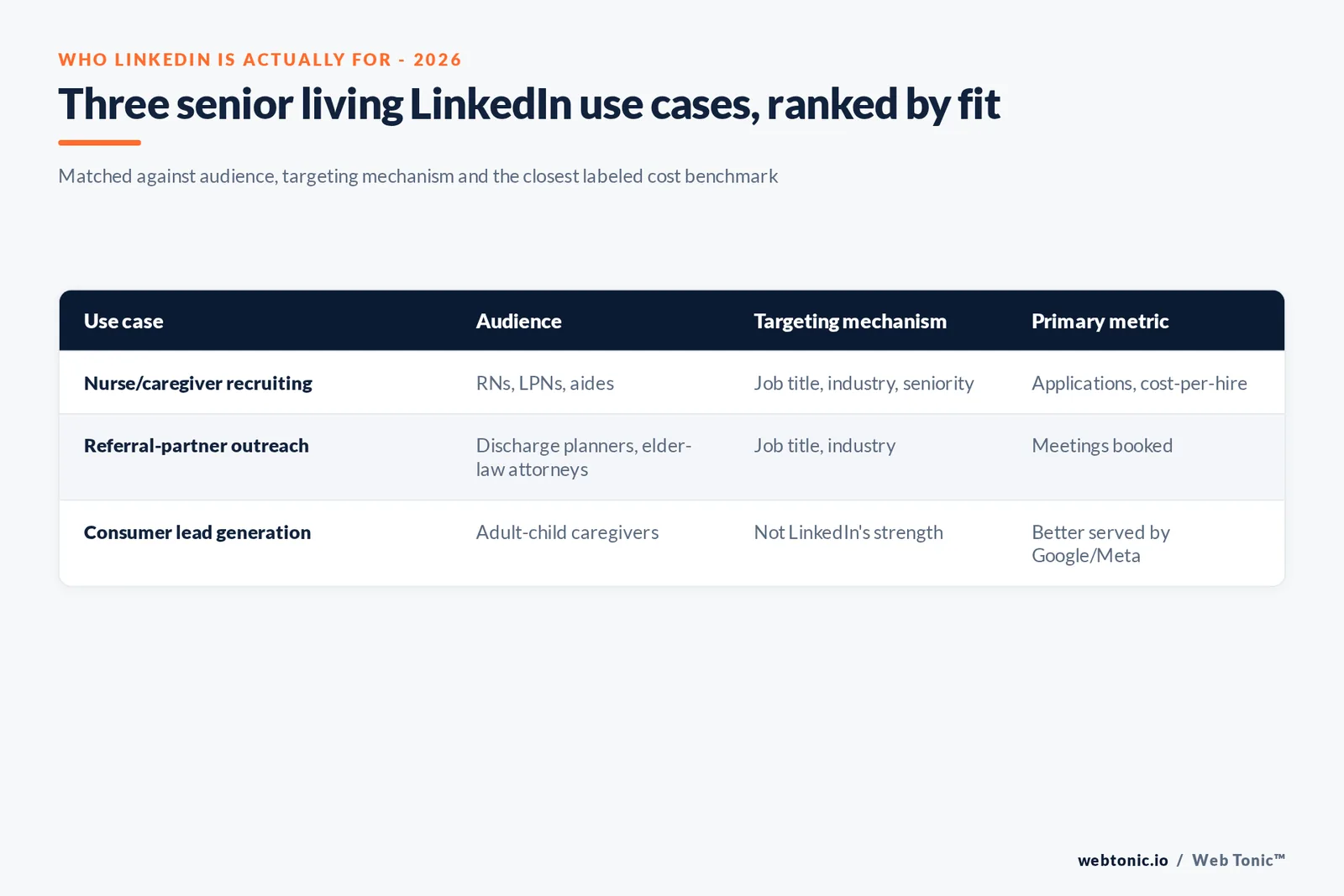
The other defensible LinkedIn use case in this category is reaching the professionals who refer families into care - hospital discharge planners, home health agency staff, geriatric care managers and elder-law attorneys - by job title and industry, a targeting precision consumer platforms cannot match. This is a narrower, lower-volume campaign than recruiting, aimed at relationship-building rather than direct lead capture, and it uses the same job-title targeting mechanics that make LinkedIn effective for staffing.
What it is not suited for is reaching the family filling out a tour-request form. AARP counts 63 million family caregivers nationwide, but no published data shows this audience researching senior living options on LinkedIn the way they do on Google, A Place for Mom or the operator's own site - the platform's professional framing does not match how families search for care.
| Use case | Audience | Targeting mechanism | Primary metric |
|---|---|---|---|
| Nurse/caregiver recruiting | RNs, LPNs, aides | Job title, industry, seniority | Applications, cost-per-hire |
| Referral-partner outreach | Discharge planners, elder-law attorneys | Job title, industry | Meetings booked |
| Consumer lead generation | Adult-child caregivers | Not LinkedIn's targeting strength | Better served by Google/Meta |
Why 2026 raises the stakes on the recruiting side specifically
NIC MAP's Q2 2026 data put senior housing occupancy at 89.9%, the highest level since 2015, with assisted living at 88.4% - more units filled means more residents to staff, at a moment when 88% of nursing homes are already understaffed. That combination is why LinkedIn budgets in this category are shifting toward recruiting and partnerships rather than consumer campaigns: the constrained resource in 2026 is staff, not inquiries. Our growth marketing practice helps operators split media budgets across the consumer and workforce sides of the plan, and our breakdown of what paid social actually costs is a useful comparison point when deciding how much of next year's budget moves toward recruiting.
Sizing a recruiting budget against the vacancy, not a rate card
No published source prices a "cost per hired nurse" figure, so the more honest planning approach is working backward from the vacancy itself. Metadata's cross-industry data puts the median B2B cost-per-lead at USD 202 on LinkedIn; if a lead in this context is a qualified application, a facility trying to close even a handful of open RN or LPN roles against an average 24.6% staffing shortfall is very likely to find that spend justified relative to overtime and agency-staffing costs, which routinely run several multiples of a comparable salaried hire. This is a directional argument, not a published ROI figure - no source in this research quantifies the agency-staffing premium precisely enough to cite here.
| Planning input | Figure | How it informs the budget | Source |
|---|---|---|---|
| Median LinkedIn B2B cost-per-lead | USD 202 | Cost per qualified application, roughly | Metadata 2026 |
| Average nursing-hour shortfall | 24.6% | Sizes the urgency of each open role | LTCCC 2026 |
| Employees retained by purpose | ~95% | Argues for mission-first ad creative | Argentum 2026 |
| Assisted living employees nationwide | 512,300 | The base the shortage is measured against | AHCA/NCAL 2026 |
What this means for next year's media plan
The practical takeaway is a split budget, not a bigger one: keep consumer acquisition spend on Google and Meta, where the audience research behavior is actually documented, and treat LinkedIn as a separate workforce and partnerships line owned jointly by marketing and HR. Reviewing both halves together at least quarterly - occupancy on one side, staffing ratio on the other - keeps a facility from over-investing in tours it cannot staff to serve. Our data and analytics practice builds that joint dashboard when a client asks for it.
The budget-owner question this raises internally
Because a recruiting-focused LinkedIn campaign and a consumer-focused Google or Meta campaign serve two different internal stakeholders, the practical first step before setting a media plan is agreeing who owns the LinkedIn line. In most organizations that answer is HR or talent acquisition, not the marketing team that owns consumer paid media - and a campaign built by marketing without HR's input on job descriptions, application flow and candidate experience tends to generate clicks that never convert to hires. Naming the owner before the first dollar is spent avoids that mismatch.
Frequently Asked Questions
Should a senior living operator run LinkedIn ads to reach prospective residents or families?
Rarely as the primary use case. LinkedIn's user base skews toward working professionals, and while some adult-child caregivers are on the platform, there is no published data showing family caregivers research senior living options there the way they do on Google or through A Place for Mom. The stronger, evidence-backed use cases are staff recruiting and referral-partner outreach - both audiences LinkedIn is built for.
What does LinkedIn recruiting advertising cost in 2026?
No senior-living-specific LinkedIn recruiting rate exists, so the closest labeled proxy is Metadata's 2026 B2B Advertising Benchmark, built from $57.6 million in ad spend across 138 LinkedIn advertisers: a median cost-per-click of $9.39, cost-per-lead of $202, and click-through rate of 0.67%, all cross-industry B2B figures, not specific to healthcare or senior living recruiting.
Why is staff recruiting the urgent LinkedIn use case right now?
Because the staffing gap is measured, not anecdotal. Analysis of skilled nursing facility data found 88% of nursing homes operating below the staffing level their residents' needs required, averaging 24.6% fewer nursing hours than expected, with roughly 1.15 million residents living in under-staffed facilities. Argentum's own 2026 workforce survey separately found 95% of senior living employees say they are likely to stay in a role where they feel their work has purpose - a message LinkedIn's professional targeting is well suited to carry to nurses and caregivers evaluating a move.
What is the referral-partner angle on LinkedIn for senior living?
Hospital discharge planners, home health agencies, geriatric care managers and elder-law attorneys are professional audiences LinkedIn can target directly by job title and industry - a channel built for B2B outreach reaching the professionals who refer families into senior living, rather than the families themselves. This is a smaller, more targeted spend than a recruiting campaign, but it uses the same platform strength: precise professional targeting that consumer platforms cannot match.
How much of a senior living marketing budget should go to LinkedIn?
There is no published benchmark answering this for the category specifically. Directionally, treat LinkedIn spend as a workforce and partnerships budget line separate from the consumer acquisition budget that funds Google, Meta and the website - the audiences, messages and even the internal budget owner (HR/recruiting versus marketing) are usually different people, and blending the two into one media plan tends to under-serve both.
Sources
AHCA/NCAL - Assisted Living Fast Facts and Figures, June 2026
Argentum - 2026 Perceptions of Careers in Senior Living report
Metadata - 2026 B2B Advertising Benchmarks
NIC - Senior Housing Occupancy Climbs in Second Quarter 2026
AARP - 2026 Tech Trends and Adults 50-Plus
CMS - Payroll-Based Journal Daily Nurse Staffing Data (Q1 2026)