Table of contents
Budgeting plumbing cold email is mostly budgeting for deliverability infrastructure, not for the email tool subscription line most quotes lead with. This page prices the channel from what Google, Yahoo, the FTC and two outbound vendors have actually published for 2026, aimed at B2B contacts -- property managers, general contractors, distributors -- since plumbing companies do not cold-email homeowners.
Key Takeaways
- Google's bulk-sender rule triggers at 5,000 messages a day per domain.
- Google's own spam-complaint ceiling sits at 0.3%.
- Yahoo requires at least a p=none DMARC policy.
- SPF, DKIM and DMARC have all been mandatory above the volume line since Feb 1, 2024.
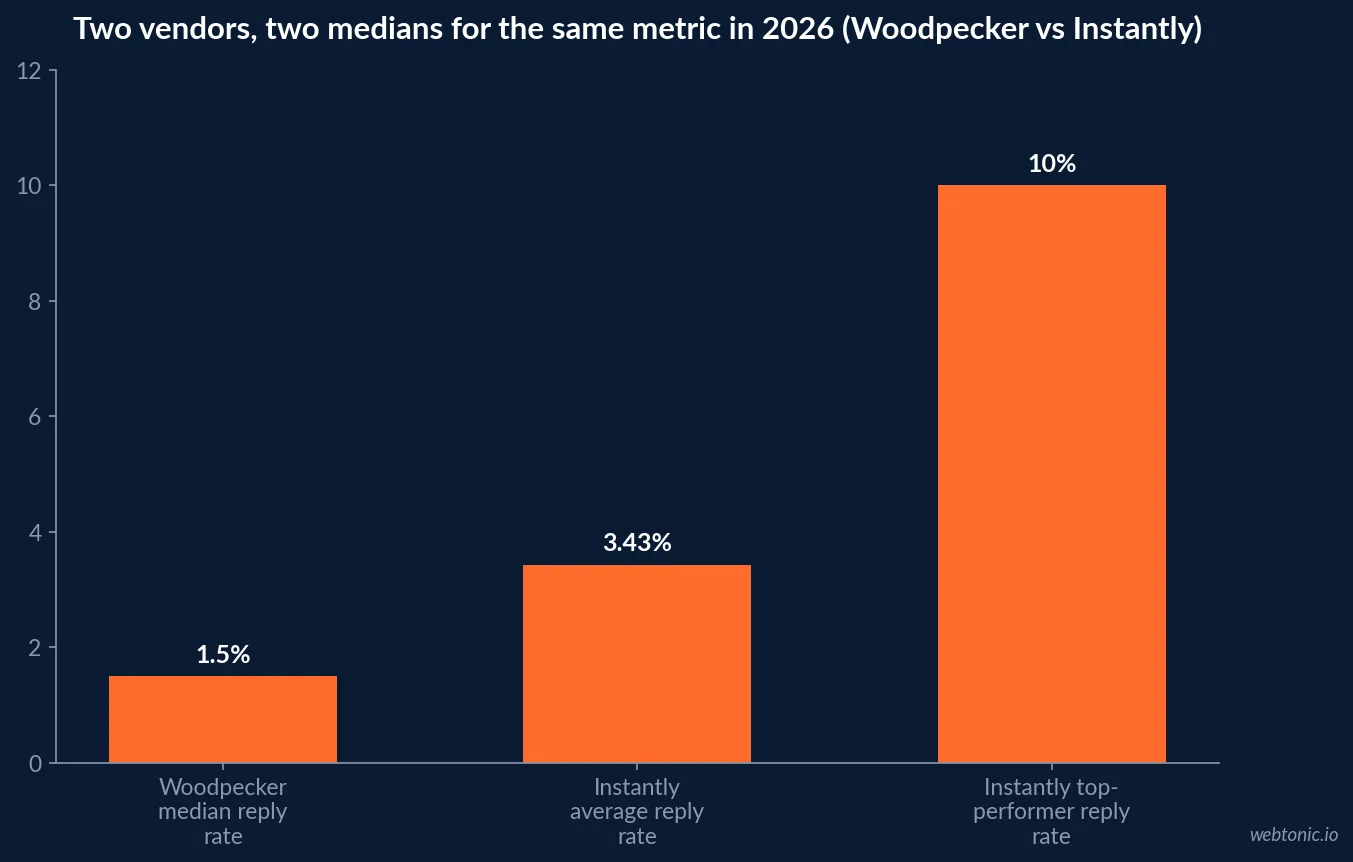
- One vendor's median reply rate across 56,614 campaigns is 1.5%.
- Another vendor's average across billions of emails is 3.43%.
- Top-performing senders in that same dataset exceed 10%.
- Median open rate on one platform sits at 26%, from 37,000 campaigns.
- 58% of replies land on the first message of a sequence.
- The other 42% require a follow-up to land.
- CAN-SPAM's 16 CFR 316 requires a real postal address on every send.
- Opt-outs must be honored within 10 business days under CAN-SPAM.
- LinkedIn's own 2026 data reports a 28.5% connection acceptance rate.
- That LinkedIn figure is drawn from 13.2 million connection requests.
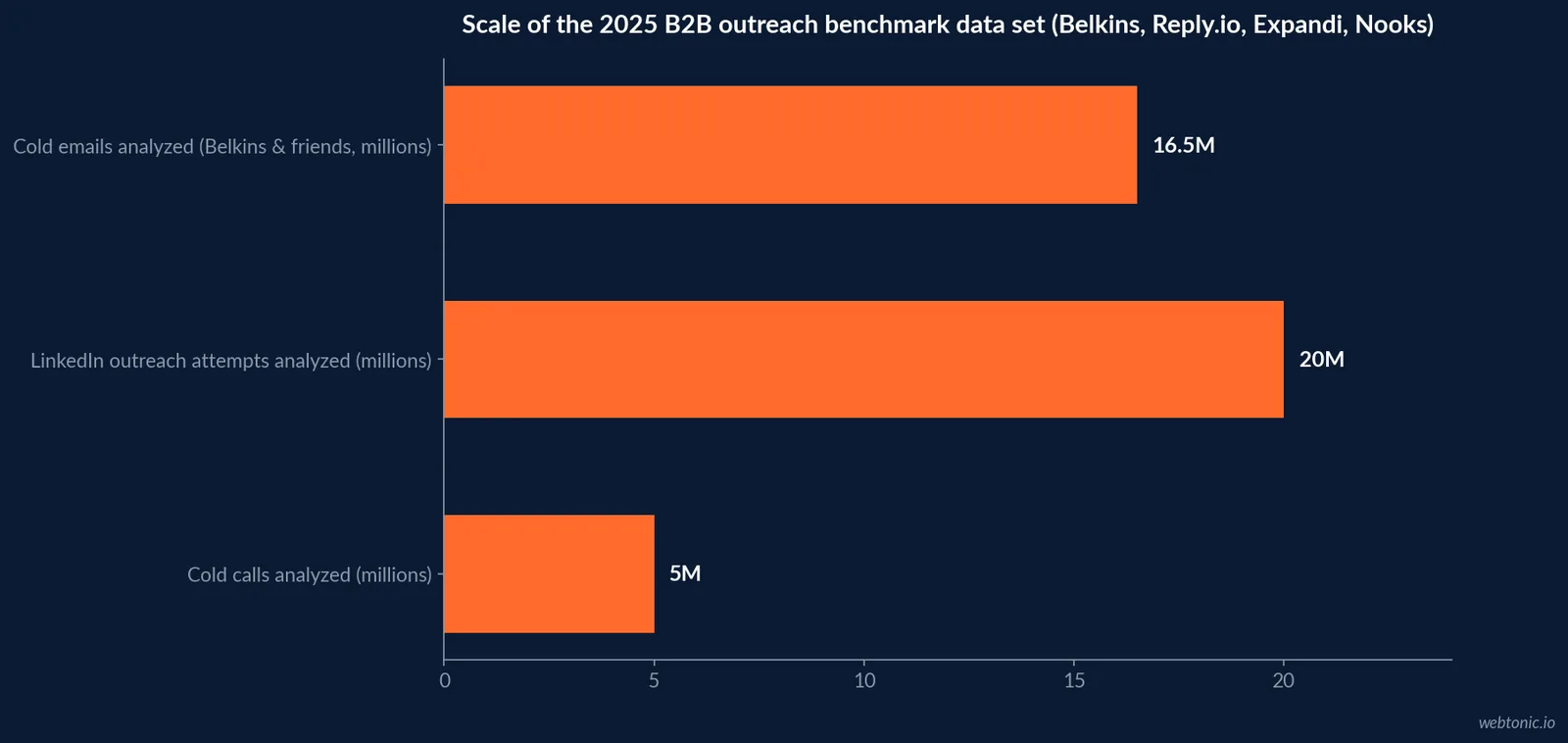
- A 2025 cross-vendor benchmark analyzed 16.5 million cold emails.
What the invoice is really for
Most cold email quotes lead with the software subscription, but the software is the smallest line item in a compliant, working campaign. The real budget covers four things: enough separate sending domains and warmed inboxes to stay under Google's bulk-sender volume threshold, a verified B2B contact list built from property managers, general contractors and distributors rather than a scraped or purchased consumer list, the platform itself, and the time to test sequences against a realistic reply-rate floor. Skipping the first two to save money on the fourth is the most common way a plumbing company's first campaign fails on deliverability before it ever gets a chance to fail on copy.
| Budget line | What it actually buys | Why it cannot be skipped |
|---|---|---|
| Sending domains + warmed inboxes | Volume spread under Google's per-domain threshold | One flagged domain stops every message, not just the flagged one |
| Verified B2B contact list | Property managers, GCs, distributors -- not consumers | Plumbing companies do not legally or commercially cold-email homeowners |
| Outbound platform subscription | Sequencing, tracking, deliverability monitoring | Smallest real cost once infrastructure is right |
| Compliance review | CAN-SPAM headers, opt-out, physical address | FTC enforcement risk is real regardless of B2B framing |
| Copy and sequence testing time | Sequences built around proven reply-rate data | Determines whether the other four lines pay off |
The deliverability rules that set the infrastructure budget
Since February 1, 2024, Google's bulk-sender guidelines require SPF, DKIM and DMARC authentication, a spam complaint rate kept below 0.3%, and one-click unsubscribe from any domain sending 5,000 or more messages a day to Gmail addresses. Yahoo's own sender requirements mirror the authentication stack and require a DMARC policy of at least p=none published on the domain, without naming an exact volume line. Underneath both sits the CAN-SPAM Rule, which requires a real physical postal address, honest header information, and an opt-out honored within 10 business days on every commercial email regardless of recipient count.
| Compliance requirement (2024-2026) | Threshold or rule | Source |
|---|---|---|
| Google bulk-sender authentication trigger | 5,000+ messages/day to Gmail | support.google.com/a |
| Google spam-complaint ceiling | Below 0.3% | support.google.com/a |
| Yahoo DMARC minimum | p=none published | senders.yahooinc.com |
| CAN-SPAM opt-out window | 10 business days | FTC / 16 CFR 316 |
| CAN-SPAM sender identity | Real physical postal address required | FTC / 16 CFR 316 |
Two vendors, two medians -- budget on the lower one
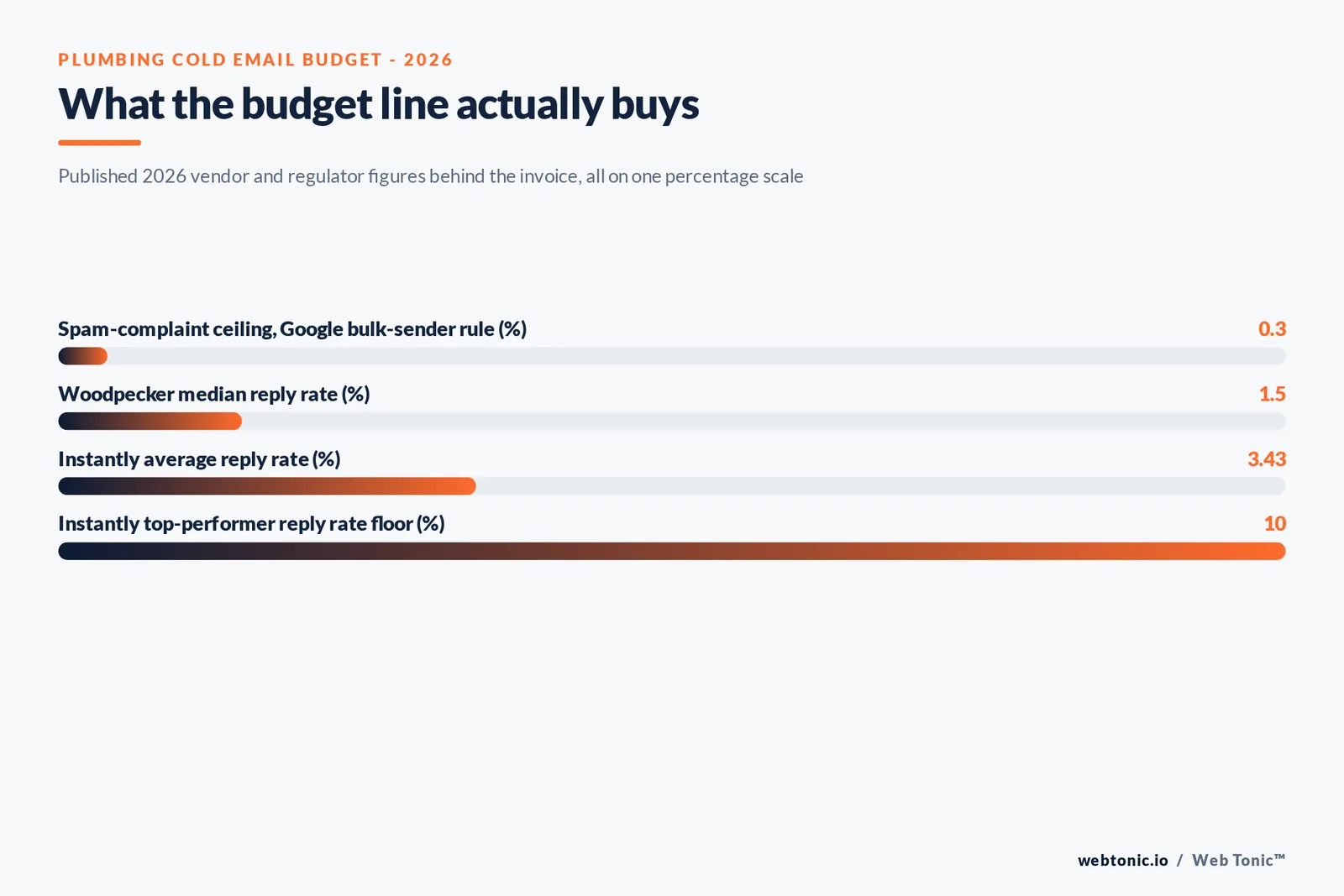
The reply-rate figure that anchors a budget is genuinely contested between vendors, and both figures are worth showing rather than picking whichever is more flattering. Woodpecker's own benchmark tool, built from platform data across 56,614 measured campaigns, reports a median reply rate of 1.5% and a median open rate of 26% across 37,000 campaigns. Instantly's Cold Email Benchmark Report 2026, drawn from billions of emails across more than 700,000 businesses, reports an average of 3.43% with top performers exceeding 10%. The gap reflects different sender populations, not a measurement error in either report -- Instantly's figure includes more actively optimized senders, Woodpecker's median is pulled down by every campaign on its platform regardless of targeting quality. Build the meetings-booked math on 1.5% and treat anything above it as margin.
| Reply-rate figure to budget against (2026) | Use it for |
|---|---|
| 1.5% (Woodpecker median, 56,614 campaigns) | Conservative volume math -- contacts needed per meeting |
| 3.43% (Instantly average, billions of emails) | Realistic target once list and copy are proven |
| 10%+ (Instantly top performer) | Aspirational ceiling, not a planning assumption |
| 58% (share of replies from message one) | Sizing the first-touch subject line and offer |
| 42% (share of replies from follow-ups) | Justifying budget for a multi-step sequence, not one blast |
List sourcing is the budget line most often underfunded
None of the deliverability spend matters if the list behind it is a purchased or scraped consumer file rather than a verified set of property managers, general contractors and distributors. A verified B2B list costs more per contact than a bulk consumer list, but it is the input that determines whether the 1.5% to 3.43% reply-rate range is achievable at all -- both published figures come from sends built on maintained, opted-in-adjacent B2B databases, not cold purchased files, and neither vendor's benchmark should be read as applying to the latter.
Where LinkedIn fits the budget, not replaces it
Expandi's State of LinkedIn Outreach: H2 2026, built from 13.2 million connection requests, reports a 28.5% connection acceptance rate. A separate cross-vendor benchmark from Belkins together with Reply.io, Expandi and Nooks analyzed 16.5 million cold emails and more than 20 million LinkedIn outreach attempts in the same 2025 data set, underscoring that the two channels are usually run together, not as alternatives. LinkedIn's own per-seat weekly connection limits cap how much budget can be spent there regardless of appetite, which is the practical reason cold email remains the higher-volume line item in a combined outbound budget.
A simple first-quarter budget model
Price two to three warmed inboxes on a dedicated subdomain before pricing the platform subscription itself, since a single flagged domain can silence every message regardless of tool spend. Size the contact list to the 1.5% reply-rate floor, not the 3.43% average, when calculating how many verified contacts a booked-meeting target requires. Build every sequence for at least one follow-up, since 42% of the achievable replies depend on it. Revisit spam complaint rates against Google's 0.3% ceiling weekly, not quarterly, since it is the fastest-moving number in the whole budget.
What this buys against a paid-channel alternative
Cold email's marginal cost per additional contact is close to zero once infrastructure is built, unlike a paid channel where cost scales with volume by design. That makes it a reasonable complement to, not a replacement for, paid demand generation aimed at the same facilities and property-management audience; our growth marketing practice models the two side by side, and our breakdown of what paid search actually costs is a useful comparison point for the same B2B audience.
A vendor-selection checklist before signing
The tool itself is the smallest budget line, but the wrong tool can still sink a compliant campaign if it does not support the authentication and sending-limit controls the rules above require. Our data and analytics practice runs this exact checklist before recommending a stack. A short checklist covers most of the risk before a contract is signed.
| Vendor question to ask | Why it matters |
|---|---|
| Does it support per-domain sending limits? | Keeps volume under Google's 5,000/day threshold automatically |
| Does it monitor spam complaint rate in real time? | Catches drift toward the 0.3% ceiling before it throttles delivery |
| Does it enforce SPF/DKIM/DMARC setup? | Removes the most common cause of first-campaign failure |
| Does it support list verification before sending? | Protects the reply-rate range this page budgets against |
| Does it log CAN-SPAM-required opt-outs automatically? | Removes manual compliance risk from every send |
Sizing the budget against a booked-meeting target
Working backward from a booked-meeting goal, using the conservative 1.5% reply rate and assuming roughly one in five replies converts to a booked meeting -- a plumbing-specific conversion figure no vendor publishes, so it should be validated against a company's own first month of data -- a target of 10 booked meetings a month implies roughly 3,300 verified B2B contacts reached that month, which in turn sets the list-sourcing and inbox-count lines above.
| Planning variable | Conservative assumption | What it drives |
|---|---|---|
| Reply rate | 1.5% (Woodpecker median) | Contacts needed per booked meeting |
| Reply-to-meeting conversion | Company's own first-month data | Realistic monthly meeting target |
| Contacts per inbox per day | Comfortably under Google's threshold | Inbox count needed |
| Follow-up sequence length | At least 2-3 touches | Time budget per contact |
Frequently Asked Questions
What does a plumbing company's cold email budget actually pay for?
Four things, in order of what breaks a campaign fastest if skipped: sending domains and warmed inboxes to stay under Google's bulk-sender authentication threshold, a verified B2B contact list of property managers and general contractors rather than a purchased consumer list, an email tool or platform subscription, and the time to write and test sequences against a realistic reply-rate target rather than an assumed one.
Is cold email even legal for a plumbing company to send?
Yes, to business contacts, provided it follows the CAN-SPAM Act's 16 CFR 316 rule: an honest subject line and header, a functioning opt-out honored within 10 business days, and a valid physical postal address in every message. CAN-SPAM does not require prior opt-in for B2B commercial email the way some other jurisdictions' laws do, but it does require every one of those disclosures regardless of recipient.
How many inboxes does a plumbing company actually need?
Enough to keep each domain's daily volume comfortably under Google's 5,000-message bulk-sender threshold and under Google's own 0.3% spam-complaint ceiling, since crossing either invites the authentication and throttling scrutiny that guideline was built to trigger. A company sending a few hundred B2B messages a day to property managers and GCs typically needs only a small number of properly warmed inboxes on a dedicated sending domain, not the mailbox count a high-volume ecommerce sender would need.
Which reply rate should the budget actually assume?
The conservative one. Woodpecker's own platform data across 56,614 measured campaigns puts the median reply rate at 1.5%; Instantly's 2026 report, drawn from billions of emails across more than 700,000 businesses, puts its average at 3.43% with top performers above 10%. Building the budget on 1.5% and treating 3.43% as the target once list quality and copy are proven avoids under-forecasting the number of contacts required to hit a booked-meeting goal.
Is LinkedIn outreach a cheaper substitute for cold email?
Not a substitute -- a complement with a different cost structure. Expandi's own H2 2026 report, based on 13.2 million connection requests, found a 28.5% connection acceptance rate, well above either vendor's email reply rate, but LinkedIn outreach volume is capped per seat per week by the platform itself, which caps how much of a budget can even be spent there. Cold email has no such platform-imposed volume ceiling, only the deliverability ceiling a sender builds for itself.
Sources
Google - Email sender guidelines
Yahoo - Sender best practices
eCFR - 16 CFR Part 316, CAN-SPAM Rule
FTC - CAN-SPAM Act compliance guide for business
Woodpecker - Cold email benchmarks (own platform data)
Instantly - Cold Email Benchmark Report 2026
Expandi - State of LinkedIn Outreach: H2 2026
Belkins (with Reply.io, Expandi, Nooks) - B2B Cold Outreach Benchmarks 2025