Table of contents
Key Takeaways
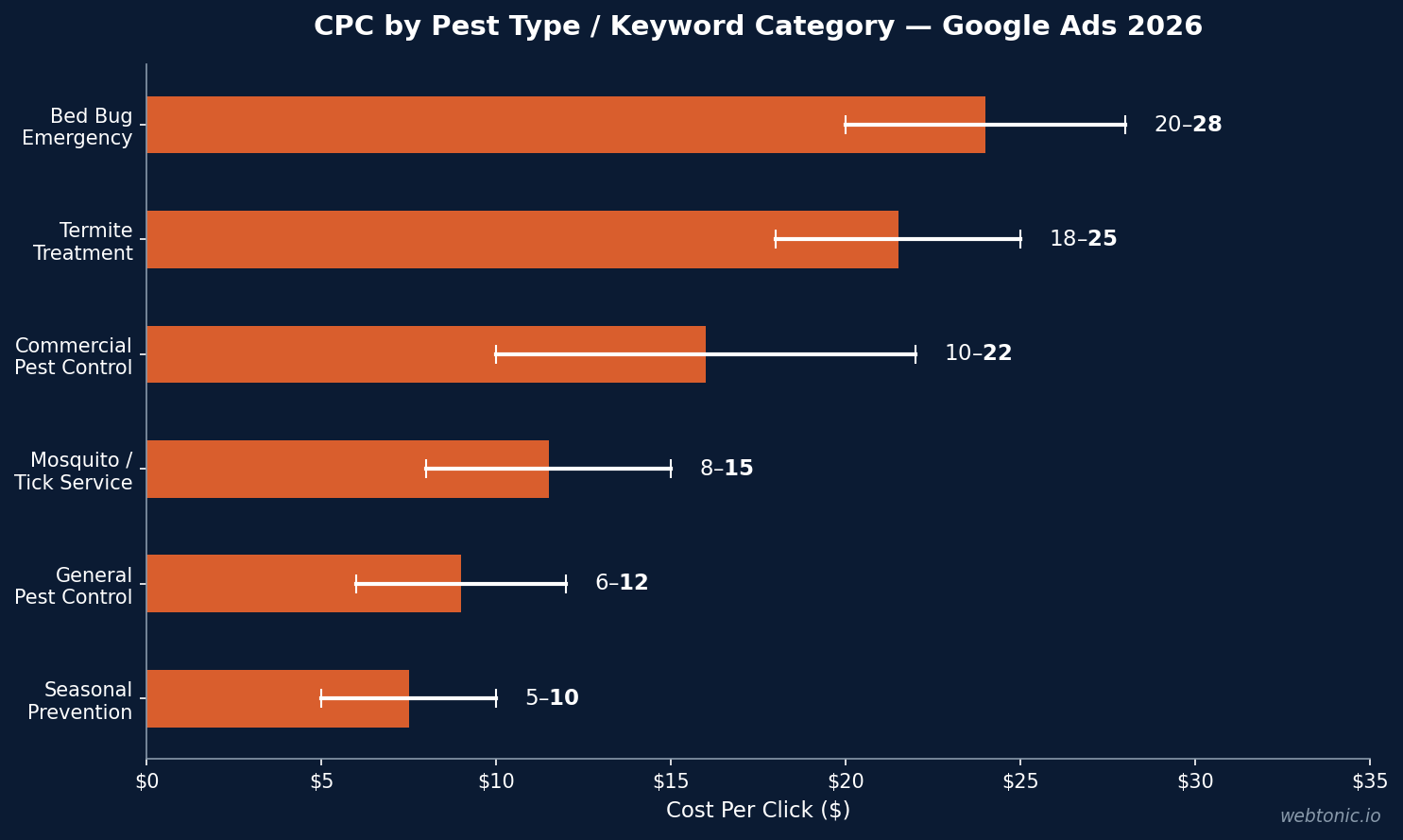
- Pest control Google Ads CPC ranges from $6 to $28 depending on keyword intent, with general pest control terms at the low end and bed bug and termite emergency terms at the top (Blue Grid Media).
- Target CPL ranges from $35 to $140, scaling from general pest plans to commercial multi-year contracts (Blue Grid Media).
- Google Search Ads average $90.92 CPL for pest control based on WordStream/LocaliQ 2025 benchmarks (BaaDigi).
- Google Local Services Ads deliver the lowest CPL at $20–$30 per lead, with LSA booking/close rates of 38–45% (Cube Creative, BaaDigi).
- Commercial pest control Google Ads achieve 4.62% CTR and 5.8% conversion rate with a $58 CPA across the Benchmarketing cohort (Benchmarketing).
- Pest control customer lifetime value ranges from $1,200 to $2,100 for quarterly residential plans, making aggressive CPL targets rational when viewed against recurring revenue (Blue Grid Media).
- About 11.2% of Google Search clicks are invalid, and broad match buys informational/DIY traffic that never converts — match type selection directly controls true cost per verified call (Elevarus).
Pest Control Google Ads Benchmarks at a Glance
| Metric | Benchmark | Source |
|---|---|---|
| CPC Range | $6–$28 | Blue Grid Media 2026 |
| Avg CPC (Animals & Pets) | $3.97 | WordStream 2025 |
| Commercial CPC | $3.84 | Benchmarketing 2026 |
| CPL — Google Search Ads | $90.92 | WordStream/LocaliQ 2025 |
| CPL — Google PPC | $40–$60 | Cube Creative 2026 |
| CPL — Local Services Ads | $20–$30 | Cube Creative 2026 |
| Commercial CTR | 4.62% | Benchmarketing 2026 |
| Commercial Conversion Rate | 5.8% | Benchmarketing 2026 |
| Commercial CPA | $58 | Benchmarketing 2026 |
| LSA Close Rate | 38–45% | BaaDigi / Blue Grid Media |
| Customer LTV (Quarterly Plan) | $1,200–$2,100 | Blue Grid Media 2026 |
Cost Per Click by Keyword Category
CPC varies dramatically by keyword intent and pest type. Emergency and bed bug keywords command premium pricing, while general pest control and seasonal prevention terms remain affordable. Data compiled from Blue Grid Media, Elevarus, and Benchmarketing.
Cost Per Lead by Marketing Channel
Not all pest control lead channels carry the same cost. Google Local Services Ads deliver the lowest CPL at $20–$30, while pay-per-lead aggregator platforms like Angi and HomeAdvisor run $90–$150+ per lead with lower close rates (Cube Creative).
| Channel | Avg CPL | Conversion Rate | Notes |
|---|---|---|---|
| Google Local Services Ads | $20–$30 | 38–45% close rate | Pay-per-lead, Google Guaranteed badge |
| Google PPC (Search) | $40–$60 | 5.8% | Highest intent, most competitive |
| Google PPC (Broad Match) | $90–$150 | 2–3% | Includes informational/DIY clicks |
| Organic SEO | N/A (content cost) | 14.6% | Highest quality, longest ramp-up |
| Facebook Ads | $29–$45 | 6–12% | Awareness + retargeting |
| Pay-Per-Lead Platforms | $90–$150+ | 15–25% | Shared leads, lower exclusivity |
Why Customer Lifetime Value Redefines Acceptable CPL
Pest control economics differ fundamentally from one-time service industries. 74% of pest control revenue is recurring (BaaDigi, citing NPMA/PCO Bookkeepers 2025), and customer lifetime value for quarterly residential plans ranges from $1,200 to $2,100 (Blue Grid Media). Commercial contracts can exceed $30,000 over a multi-year term (BaaDigi).
This means a $140 CPL on a $2,100 LTV customer represents a 15:1 return — a result that makes aggressive bidding on high-intent keywords rational for operators with strong close rates and plan conversion discipline. The one-time-service-to-recurring-plan conversion rate sits at 28–45% for well-run pest control companies (Blue Grid Media).
Regional CPL Variation Across the United States
The national average CPL for pest control sits between $150 and $250 when all channels are blended, but this figure masks dramatic regional differences (Cube Creative).
| Region | Avg CPL Range | Key Market Factors |
|---|---|---|
| Southeast (FL, GA, NC, SC) | $180–$320 | Year-round pest pressure, high competition |
| California | $200–$350 | Dense metros, premium CPC, regulatory costs |
| Southwest (TX, AZ, NM) | $140–$250 | Scorpion/termite demand, moderate competition |
| Midwest (OH, IL, IN) | $100–$180 | Seasonal demand, lower CPC |
| Mountain West (CO, UT, MT) | $90–$160 | Lower competition, smaller service areas |
| Northeast (NY, NJ, MA) | $160–$280 | Dense population, high cost of living |
Budget Allocation by Pest Control Company Size
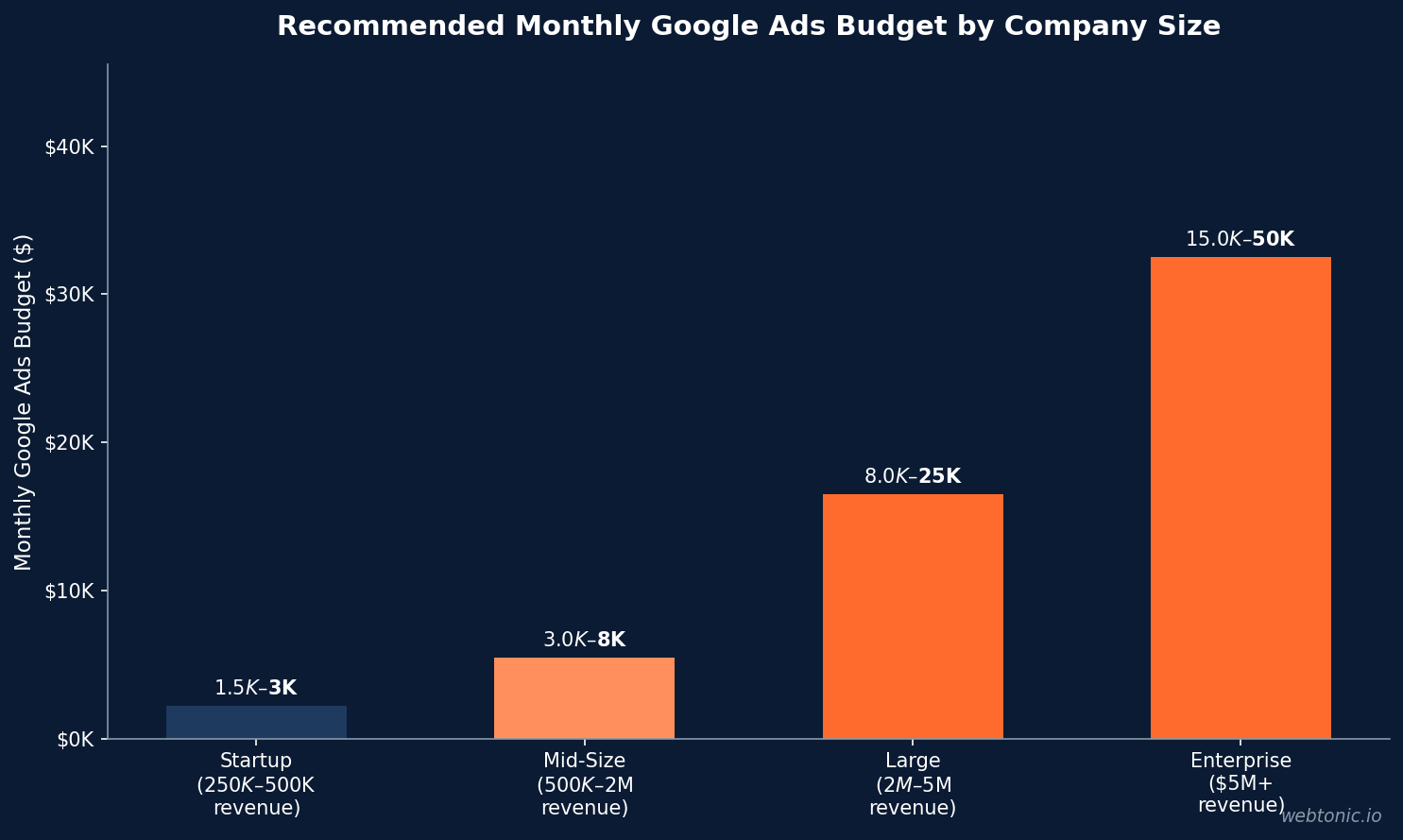
Marketing spend as a percentage of revenue averages 6.6% industry-wide (BaaDigi, citing NPMA/PCO Bookkeepers 2025). The chart below shows recommended monthly Google Ads budget ranges by company revenue tier, based on data from Blue Grid Media and Cube Creative.
Invalid Clicks and Match Type Leakage
About 11.2% of Google Search clicks are invalid, ranging from bot traffic to accidental taps, according to Fraud Blocker data cited by Elevarus. Beyond invalid clicks, broad match targeting in pest control campaigns buys informational and DIY traffic ("how to get rid of ants naturally") that never calls a professional.
The real cost control lever is match type selection. Exact and phrase match keywords on high-intent terms ("pest control near me," "termite treatment [city]") deliver significantly lower cost per verified call than broad match. Smart pest control advertisers audit their search term reports weekly and maintain aggressive negative keyword lists to block DIY, academic, and unrelated queries.
Best Practices for Pest Control Google Ads Campaigns
- Run Google Local Services Ads alongside standard search campaigns — LSA delivers $20–$30 CPL with the Google Guaranteed badge that builds trust.
- Structure campaigns by pest type and service urgency — emergency bed bug and termite campaigns warrant higher bids and dedicated landing pages.
- Target at least 30 conversions per campaign per month so Smart Bidding algorithms have enough data to optimize effectively (Blue Grid Media).
- Use call tracking with revenue attribution — 41% of users call directly from Google search results, and tracking call-to-close rates is essential for true ROI measurement (MarketingLTB).
- Measure cost per verified call, not raw CPL — raw CPL includes spam, wrong numbers, and unqualified inquiries that inflate apparent efficiency.
- Leverage Google Business Profile optimization — GBP optimization increases calls by 45% and listings with photos receive 42% more direction requests (MarketingLTB).
- Adjust seasonal bids 30–60 days before peak pest pressure — termite season (March–May), mosquito season (June–August), rodent season (October–November).
- Build dedicated landing pages per pest type — conversion rates jump from 1–3% (homepage) to 6–12% (dedicated landing page).
Campaign Structure by Pest Type and Service Urgency
Effective pest control Google Ads campaigns segment by pest type and urgency level rather than running a single "pest control" campaign. This structural approach lets operators bid aggressively on high-LTV pests while controlling costs on commodity services (Blue Grid Media).
| Campaign Segment | Example Keywords | Typical CPC | LTV Potential |
|---|---|---|---|
| Emergency — Bed Bugs | bed bug exterminator, bed bug treatment near me | $20–$28 | $800–$2,500 (multi-treatment) |
| Emergency — Termites | termite treatment, termite damage repair | $18–$25 | $1,500–$4,000+ (treatment + warranty) |
| Recurring — General Pest | pest control near me, quarterly pest service | $6–$12 | $1,200–$2,100 (quarterly plan) |
| Seasonal — Mosquito/Tick | mosquito treatment, tick spray yard | $8–$15 | $400–$900 (seasonal plan) |
| Commercial | commercial pest control, restaurant pest service | $10–$22 | $5,000–$30,000+ (multi-year contract) |
How National Brands Compete on Pest Control Keywords
Pest control operators compete against well-funded national brands (Orkin, Terminix, Aptive, Massey) whose advertising budgets dwarf local operators. Understanding their competitive behavior informs local strategy (Blue Grid Media):
- National brands dominate broad, high-volume keywords — "pest control near me" and "exterminator" attract national brand bidding that inflates CPC for local operators competing on the same terms.
- Local operators win on specificity — long-tail keywords like "termite inspection [city]" or "scorpion treatment [neighborhood]" attract fewer national bids and deliver lower CPC with higher intent.
- Google Local Services Ads level the playing field — LSA placement depends on proximity, reviews, and responsiveness rather than budget size, giving well-reviewed local operators visibility alongside nationals.
- Branded search defense is essential — national chains bid on local competitor brand names. Local pest control companies should run branded campaigns on their own name to prevent competitor ads from capturing intent traffic.
Rollins Inc. (Orkin parent) reports residential plan customer lifetime value data in shareholder disclosures. This publicly available data confirms the $1,200–$2,100 LTV range for quarterly residential plans that drives aggressive CPL tolerance across the industry (Blue Grid Media).
Seasonal Bidding Patterns by Pest Type
Pest control search volume follows predictable seasonal patterns that smart advertisers exploit through proactive bid adjustments. Seasonal demand spikes increase traffic by 40% in summer months (MarketingLTB), but costs also rise during peak competition periods.
- March–May — Termite swarm season. CPC rises 20–35% as both national chains and local operators increase bids. Launch campaigns in February to build quality scores before peak demand.
- June–August — Mosquito, tick, and general pest peak. Highest overall search volume. Broad pest control terms see maximum competition.
- September–November — Rodent migration and fall ant surges. Lower competition than summer creates better CPL opportunities for proactive operators.
- December–February — Lowest search volume. Smart operators maintain reduced spend to hold ad rank and quality score while competitors pause campaigns entirely.
The operators who capture the most value adjust budgets and bids 30–60 days before each seasonal peak rather than reacting after demand surges. This allows campaigns to exit the learning phase and optimize before peak costs arrive.
Google Local Services Ads: The Highest-ROI Channel for Pest Control
Google Local Services Ads (LSA) have emerged as the single most cost-effective Google advertising channel for pest control companies. Key LSA performance data for pest control:
- CPL of $20–$30 per lead — the lowest of any Google advertising format (Cube Creative).
- LSA booking/close rate of 38–45% — significantly higher than standard search ads because LSA leads have already seen pricing context and reviews before calling (BaaDigi).
- Google Guaranteed badge — builds trust with homeowners who are comparison-shopping between multiple pest control providers. Businesses with the badge receive preferential placement above standard search ads.
- Pay-per-lead model eliminates wasted clicks — unlike standard CPC campaigns, you only pay when a potential customer contacts you directly through the LSA listing.
- Review velocity matters — LSA ranking depends heavily on review quantity, recency, and rating. Companies with 100+ reviews get 2× more leads than those with fewer reviews (MarketingLTB).
The combination of low CPL, high close rates, and the trust-building Google Guaranteed badge makes LSA the recommended starting point for any pest control company entering Google advertising. Once LSA is running profitably, operators should layer standard search campaigns for keywords and pest types that LSA does not cover.
Frequently Asked Questions
What is the average CPC for pest control Google Ads?
Pest control Google Ads CPC ranges from $6 to $28 depending on keyword intent (Blue Grid Media 2026). General pest control terms sit at the lower end, while emergency bed bug and termite keywords command $20–$28. The broader "Animals & Pets" category averaged $3.97 CPC in WordStream's 2025 benchmarks, though pest-specific terms trend higher.
How much does a pest control lead cost on Google Ads?
Google Search Ads average $90.92 CPL for pest control (WordStream/LocaliQ 2025), while well-optimized campaigns achieve $40–$60 CPL (Cube Creative 2026). Google Local Services Ads deliver the lowest CPL at $20–$30 per lead with 38–45% close rates. Regional factors heavily influence actual CPL — Southeast and California markets often exceed $200.
What is a good conversion rate for pest control PPC campaigns?
Commercial pest control Google Ads achieve a 5.8% conversion rate (Benchmarketing 2026 cohort). Landing pages optimized for specific pest types typically convert at 6–12% (MarketingLTB), while generic homepages convert at 1–3%. The one-time customer to recurring plan upsell rate sits at 28–45% for companies with structured plan offers.
Should pest control companies use Google Local Services Ads?
Yes — LSA delivers the lowest CPL ($20–$30) of any Google advertising channel for pest control. The Google Guaranteed badge increases trust, and the pay-per-lead model eliminates wasted spend on clicks that don't convert. LSA booking/close rates of 38–45% (BaaDigi/Blue Grid Media) outperform standard search ads significantly.
How much should a pest control company spend on Google Ads monthly?
Marketing spend averages 6.6% of revenue industry-wide (NPMA/PCO Bookkeepers 2025). For Google Ads specifically, startups typically allocate $1,500–$3,000/month, mid-size operators spend $3,000–$8,000/month, and large multi-location companies invest $8,000–$25,000+/month. Budget should be calibrated to generate at least 30 conversions per campaign for Smart Bidding to work effectively.
Sources
Blue Grid Media — Google Ads for Pest Control (2026)
BaaDigi — Pest Control Marketing Benchmarks 2026
Cube Creative — Pest Control Cost Per Lead 2026 Regional Data
Elevarus — Google Ads for Pest Control: What You Actually Pay For
Benchmarketing — Commercial Pest Control Marketing Benchmarks 2026
MarketingLTB — Pest Control Marketing Statistics 2026
Coalmarch — 2026 Pest Control Marketing Benchmark Report
Web Tonic — Google Ads Agency
Web Tonic — How to Create a Google Ads Strategy
Web Tonic — How Much Does Google Ads Cost?
Web Tonic — Best Google Ads Agencies
Web Tonic — Contact